The 30 Minute Rule begins May 21 at 7:00 PM EDT. An Initial Bid Must Be Placed By May 21 at 6:00 PM EDT To Participate After 6:00 PM EDT
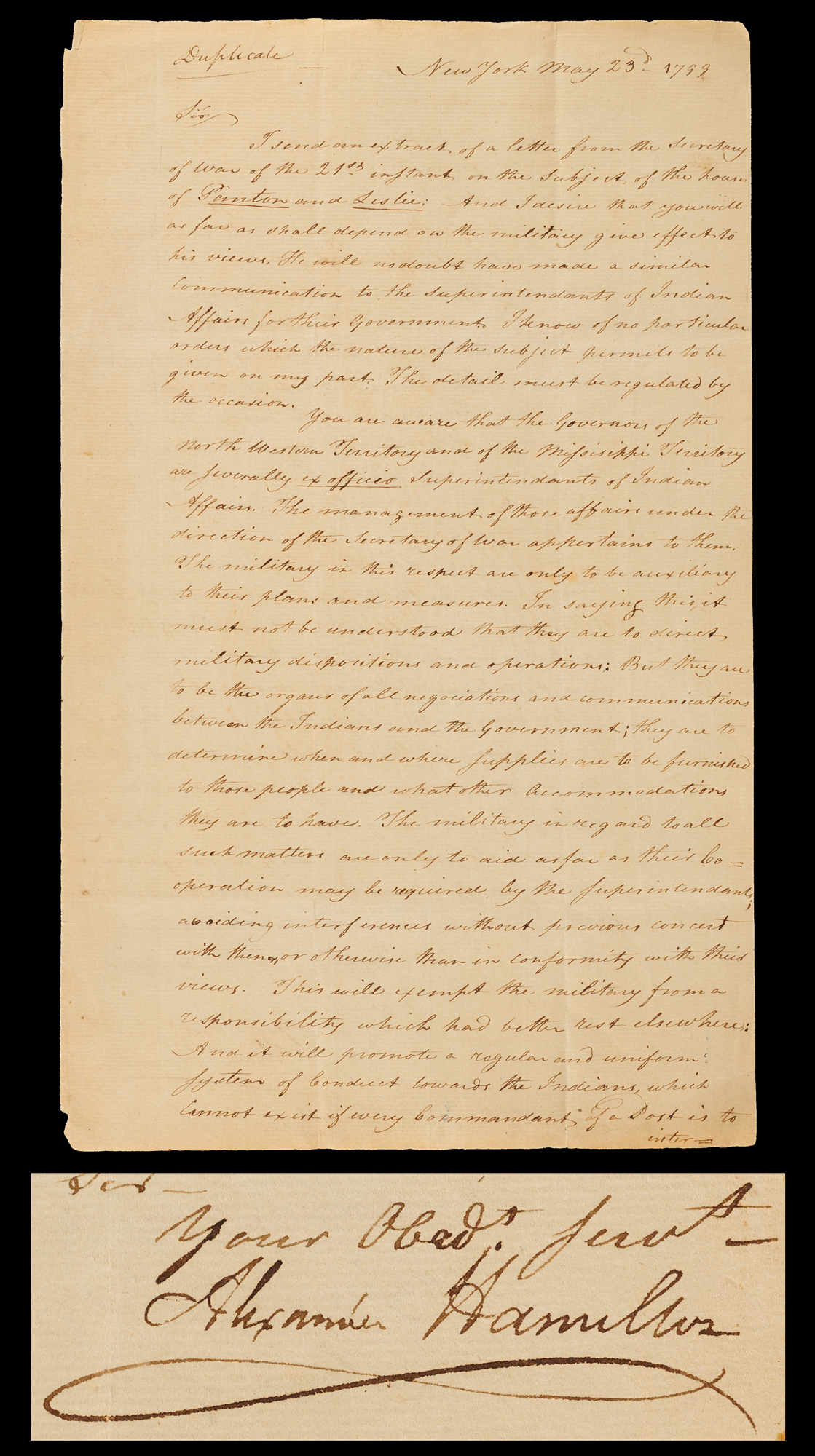
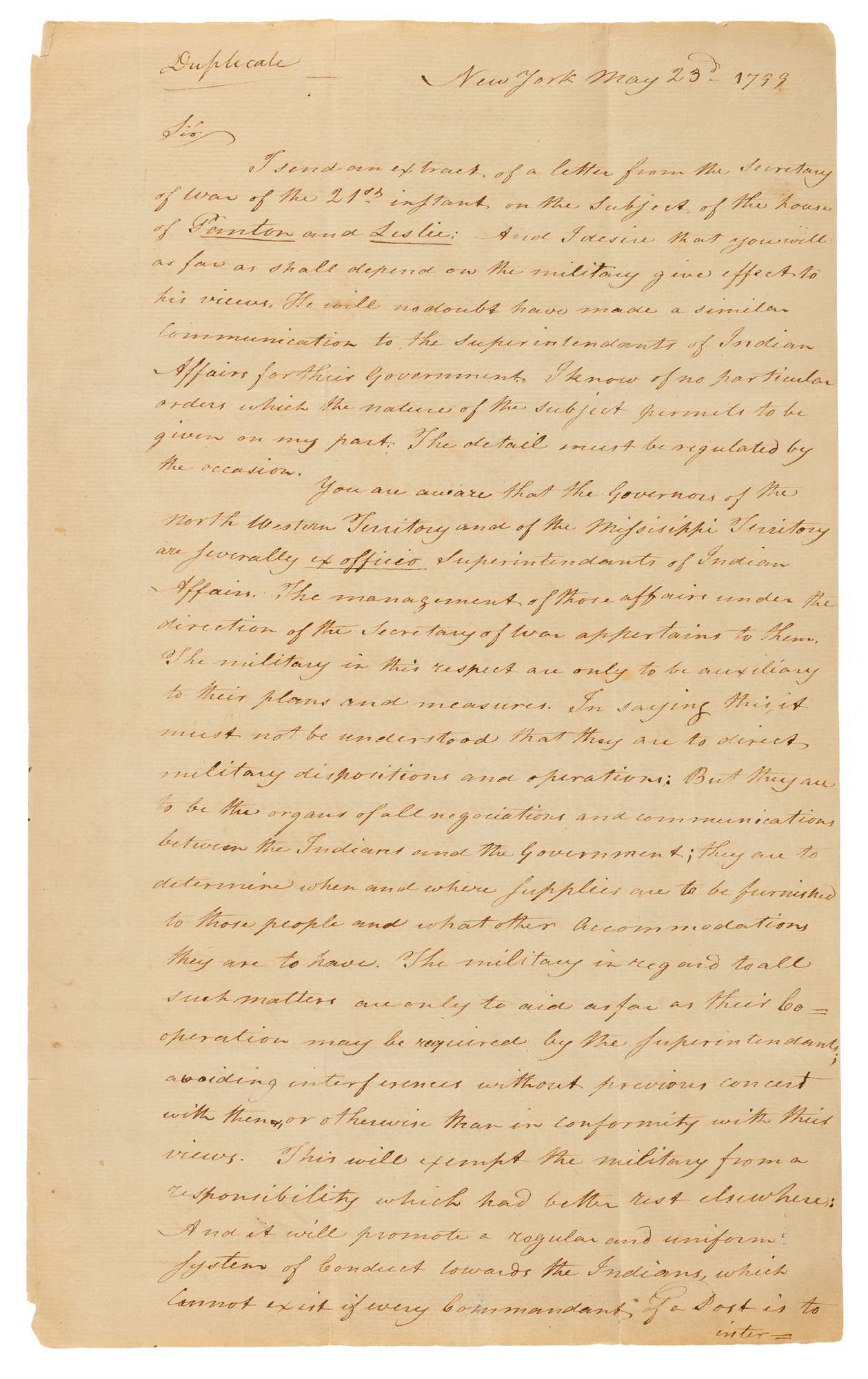
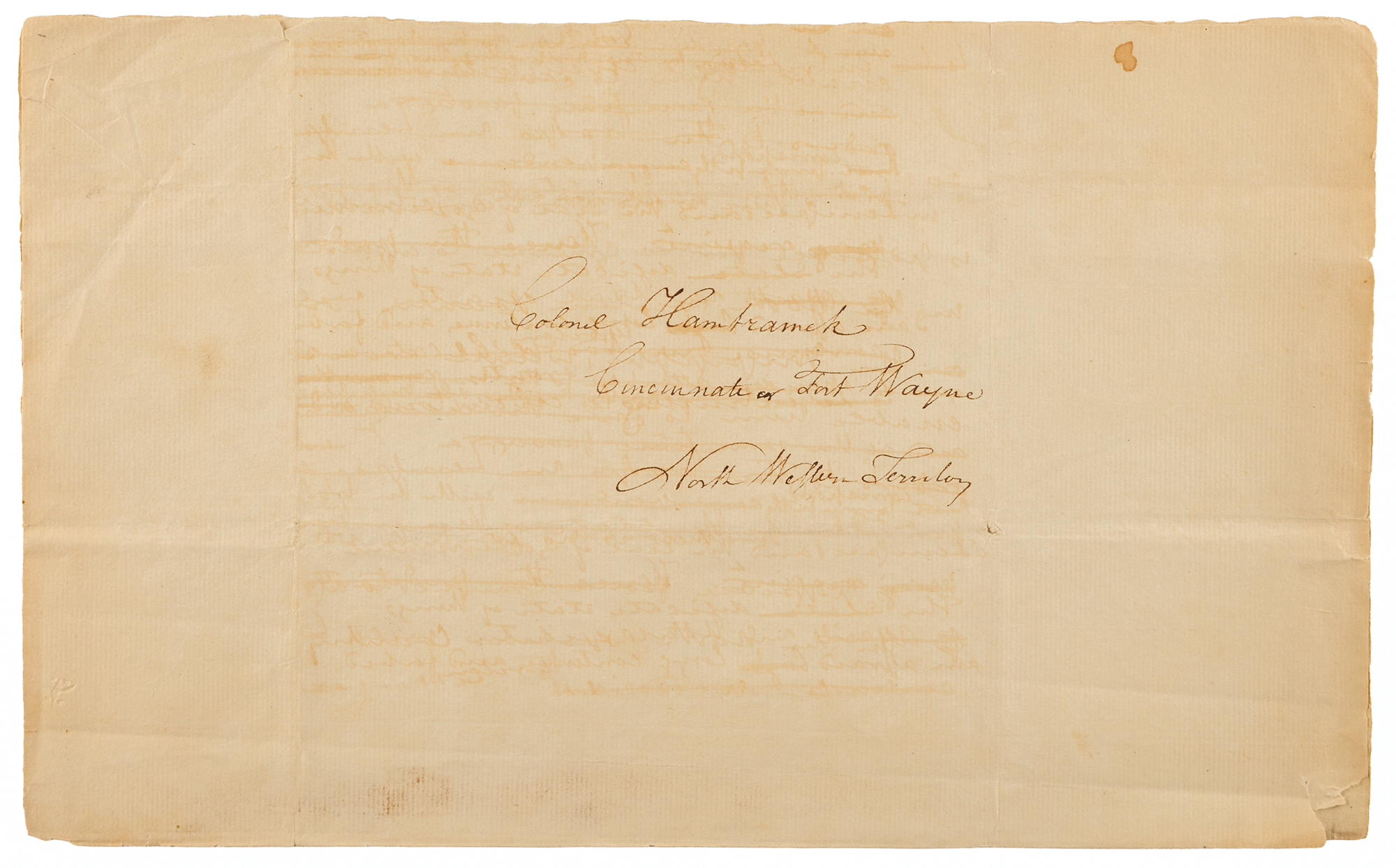
LS, one page both sides, 8 x 13, May 23, 1799. Addressed from “New York,” a contemporary copy of a letter marked “Duplicate,” sent to Colonel Jean Francois Hamtramck, stationed in “Cincinnati or Fort Wayne, North Western Territory.” The letter, in full: “I send an extract of a letter from the Secretary of War of the 21st Instant on the Subject of the house of Panton and Leslie: And I desire that you will as far as shall depend on the military give effect to his views. He will no doubt have made a similar communication to the superintendants of Indian Affairs for their Government. I know of no particular orders which the nature of the subject permits to be given on my part. The detail must be regulated by the occasion.
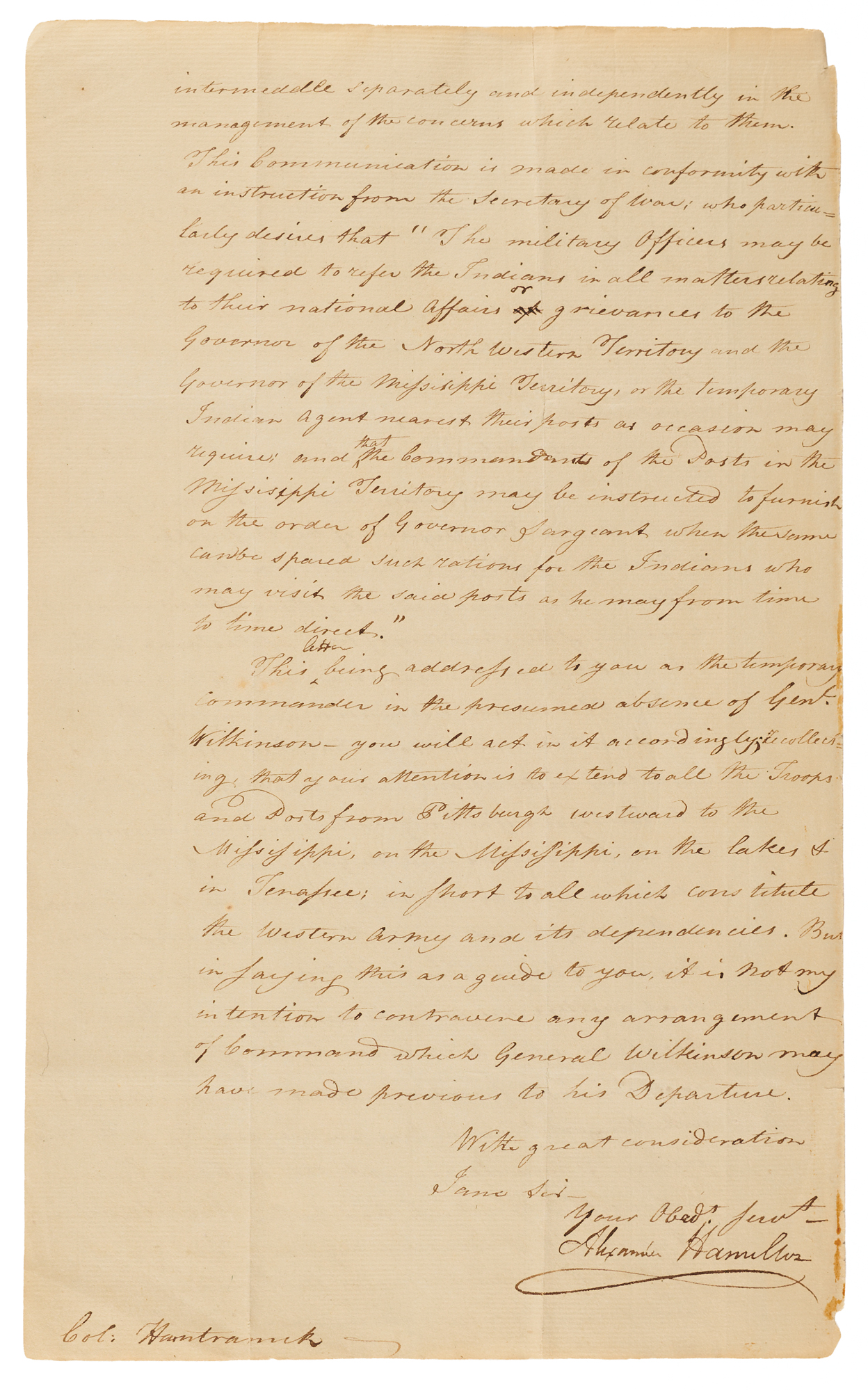
You are aware that the Governors of the North Western Territory and of the Mississippi Territory are severally ex officio Superintendants of Indian Affairs. The management of those affairs under the direction of the Secretary of War appertains to them. The military in this respect are only to be auxiliary to their plans and measures. In saying this, it must not be understood that they are to direct military dispositions and operations: But they are to be the organs of all negociations and communications between the Indians and the Government; they are to determine when and where supplies are to be furnished to those people and what other accommodations they are to have. The military in regard to all such matters are only to aid as far as their Cooperation may be required by the superintendants; avoiding interferences without previous concert with them, or otherwise than in conformity with their views. This will exempt the military from a responsibility which had better rest elsewhere: And it will promote a regular and uniform system of Conduct towards the Indians, which cannot exist if every Commandant of a Post is to intermeddle separately and independently in the management of the concerns which relate to them.
This Communication is made in conformity with an instruction from the Secretary of War; who particularly desires that ‘The military Officers may be required to refer the Indians in all matters relating to their national affairs or grievances to the Governor of the North Western Territory and the Governor of the Mississippi Territory, or the temporary Indian agent nearest their posts as occasion may require; and that the Commandant of the Posts in the Mississippi Territory may be instructed to furnish on the order of Governor Sargent when the same can be spared such rations for the Indians who may visit the said posts as he may from time to time direct.’
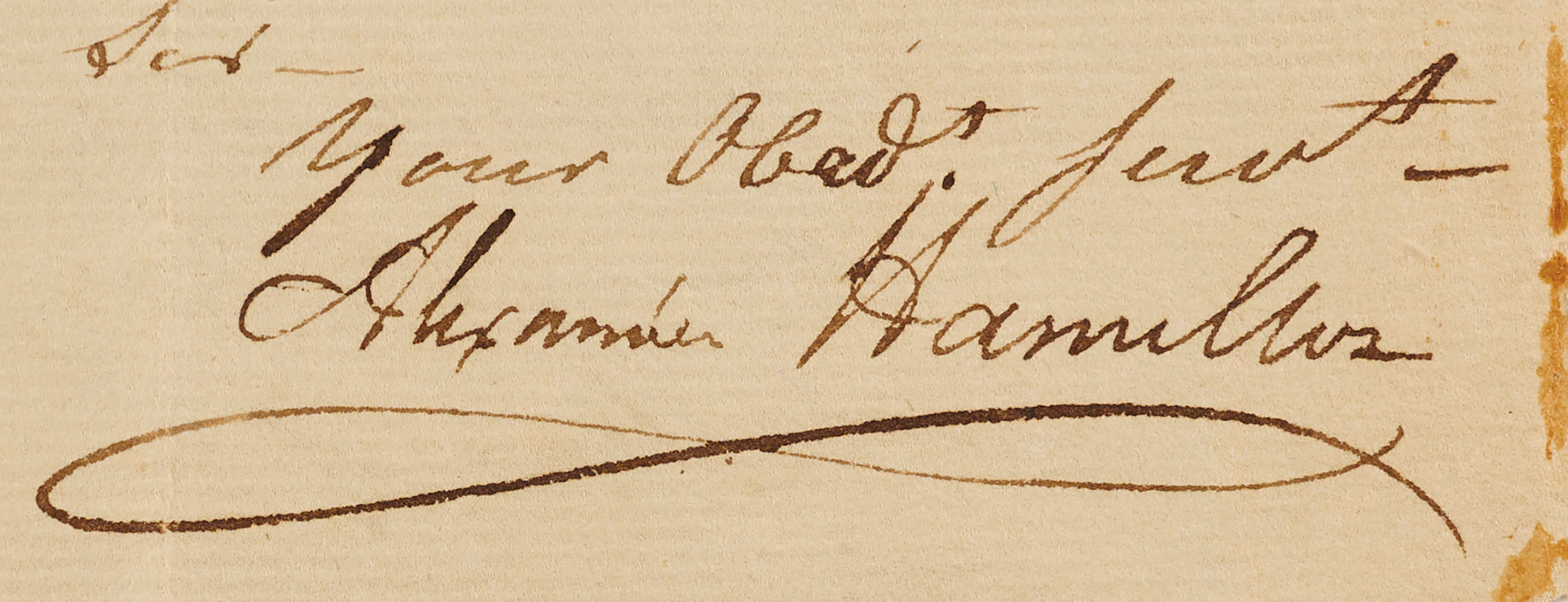
This letter being addressed to you as the temporary commander in the presumed absence of Genl. Wilkinson — you will act in it accordingly; recollecting that your attention is to extend to all the Troops and Posts from Pittsburgh westward to the Mississippi, on the Mississippi, on the lakes & in Tennessee; in short to all which constitute the Western Army and its dependencies. But in saying this as a guide to you, it is not my intention to contravene any arrangement of Command which General Wilkinson may have made previous to his Departure.” Signed at the conclusion by Alexander Hamilton as as inspector general of the United States Army. The clerical annotation of “Duplicate” indicates that this is a contemporaneous second copy sent via an alternate route to ensure delivery; such duplicates were a common and practical safeguard in early American military correspondence. In fine condition.
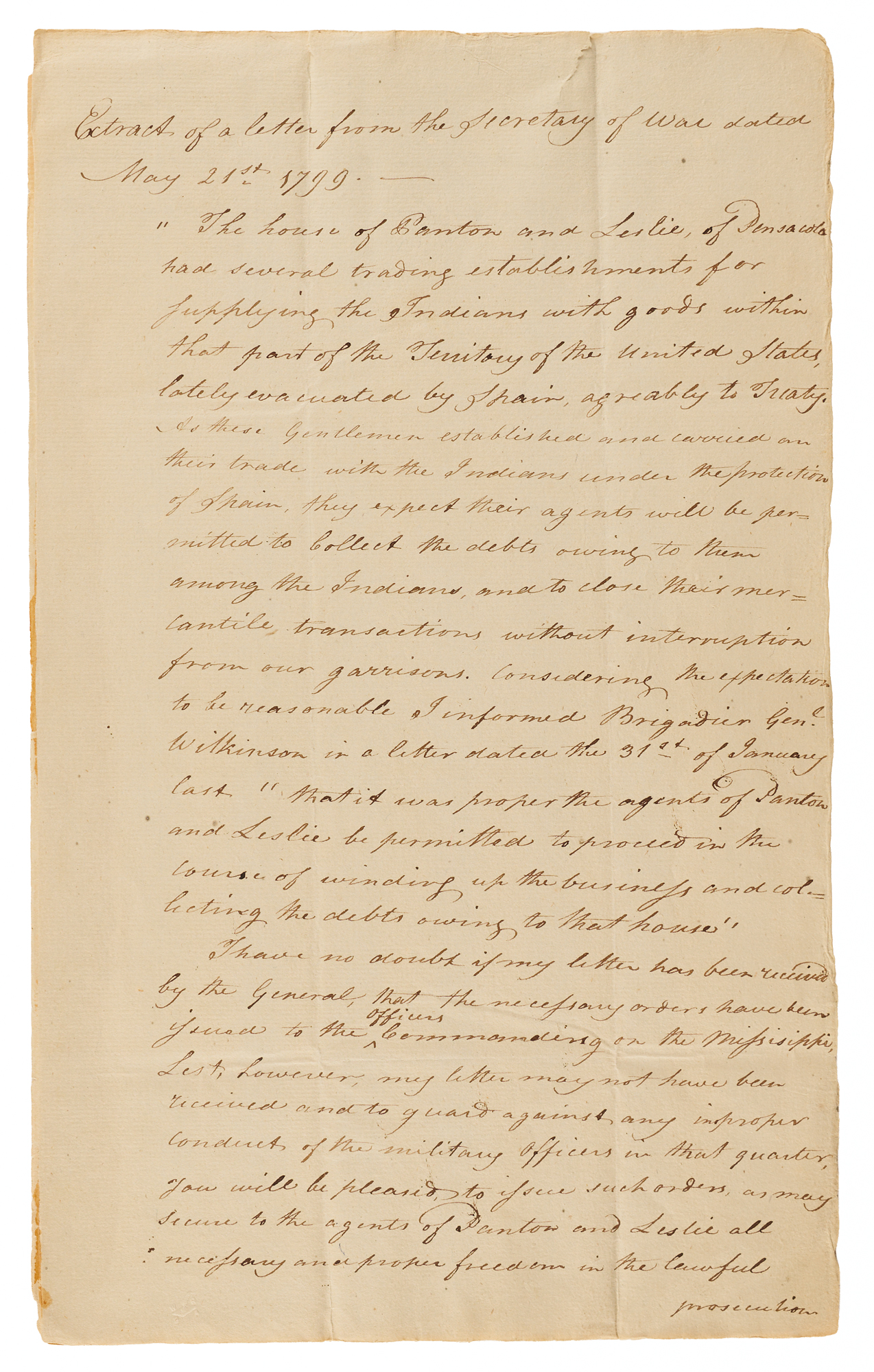
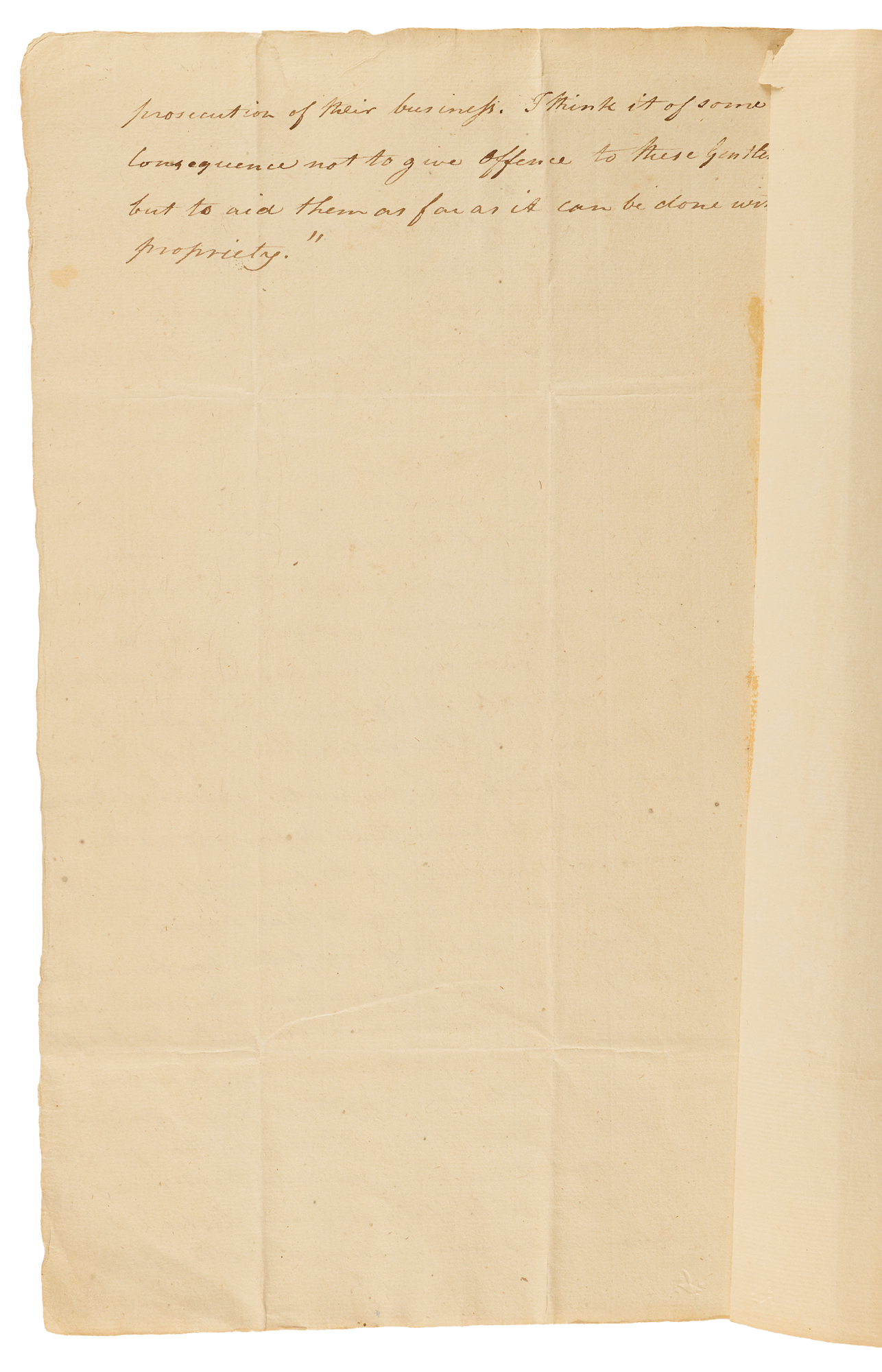
Included with this letter is the referenced “extract of a letter from the Secretary of War,” James McHenry, which reads: “The house of Panton and Leslie, of Pensacola has several trading establishments for supplying the Indians with goods within that part of the Territory of the United States, lately evacuated by Spain, agreeably to Treaty. As these Gentlemen established and carried on their trade with the Indians under the protection of Spain, they expect their agents will be permitted to Collect the debts owing to them among the Indians, and to close their mercantile transactions without interruption from our garrisons. Considering the expectation to be reasonable I informed Brigadier Genl. Wilkinson in a letter dated the 31st of January last ‘that it was proper the agents of Panton and Leslie be permitted to proceed in the course of winding up the business and collecting the debts owing to that house.’
I have no doubt if my letter has been received by the General, that the necessary orders have been issued to the officers Commanding on the Mississippi. Lest, however, my letter may not have been received and to guard against any improper conduct of the military officers in that quarter, you will be pleased to issue such orders, as may secure to the agents of Panton and Leslie all necessary and proper freedom in the lawful prosecution of their business. I think it of some Consequence not to give offence to these Gentlemen but to aid them as far as it can be done with propriety.’”
When Hamilton issued these instructions, he was second in command of the army, the inspector general, with the rank of major general, but this sought-after appointment did not come easily because of his prickly relationship with President John Adams. It was eventually obtained through the intervention of General Washington, who had threatened to resign. Thus, ‘for two years [Hamilton] was absorbed in the military duties thus imposed upon him and his genius for organization comes out strongly in his correspondence relating to the formation, distribution, and discipline of the army [Appleton’s Cyclopaedia of American Biography].’ What Hamilton really wanted to do was to lead his army into Spain’s Louisiana and the Floridas and other points south, but never did. He had hoped to effect conquests on an impressive scale when Adams suddenly dissipated both the war and these dreams of glory, and by the order of Congress disbanded the provisional army. Hamilton resigned his commission in June 1800 and, in retaliation, tried to prevent Adams’s reelection.
On the subject at hand, William Panton and other loyalists from Georgia established a trading company in East Florida, then under British jurisdiction, during the American Revolution. When Florida was returned to Spain after the war, the Spanish authorities allowed the company to remain, and by 1788, Panton, Leslie & Company was the sole trading firm authorized to deal with the Creeks, Choctaws, and Chickasaws. Intimately associated with the Creek chief, Alexander McGillivray, the firm soon became the principal instrument with which Spain won and held the southern Indians. The company furnished the arms and munitions that the Indians used in their struggle with the Americans, and the directors of the firm actively exploited the hostility between southern tribes and the American frontiersmen in their efforts to exclude rival traders.
Nevertheless, when the United States took possession of the territory ceded by Spain under the terms of Pinckney’s Treaty, American officials tolerated the firm’s activities, waiting until their own system of trading houses could be set up before expelling the British. Panton, Leslie & Company was so firmly established, however, that it and its successor, Forbes & Company, continued to handle most of the Indian trade along the Florida border until shortly after the War of 1812.
The Western Americana auction of Jochen Zeitz.

This item is Pre-Certified by PSA/DNA
Buy a third-party letter of authenticity for
$200.00
*This item has been pre-certified by a trusted third-party authentication service, and by placing a bid on this item, you agree to accept the opinion of this authentication service. If you wish to have an opinion rendered by a different authenticator of your choosing, you must do so prior to your placing of any bid. RR Auction is not responsible for differing opinions submitted 30 days after the date of the sale.

