Sold For $15,125
*Includes Buyers Premium
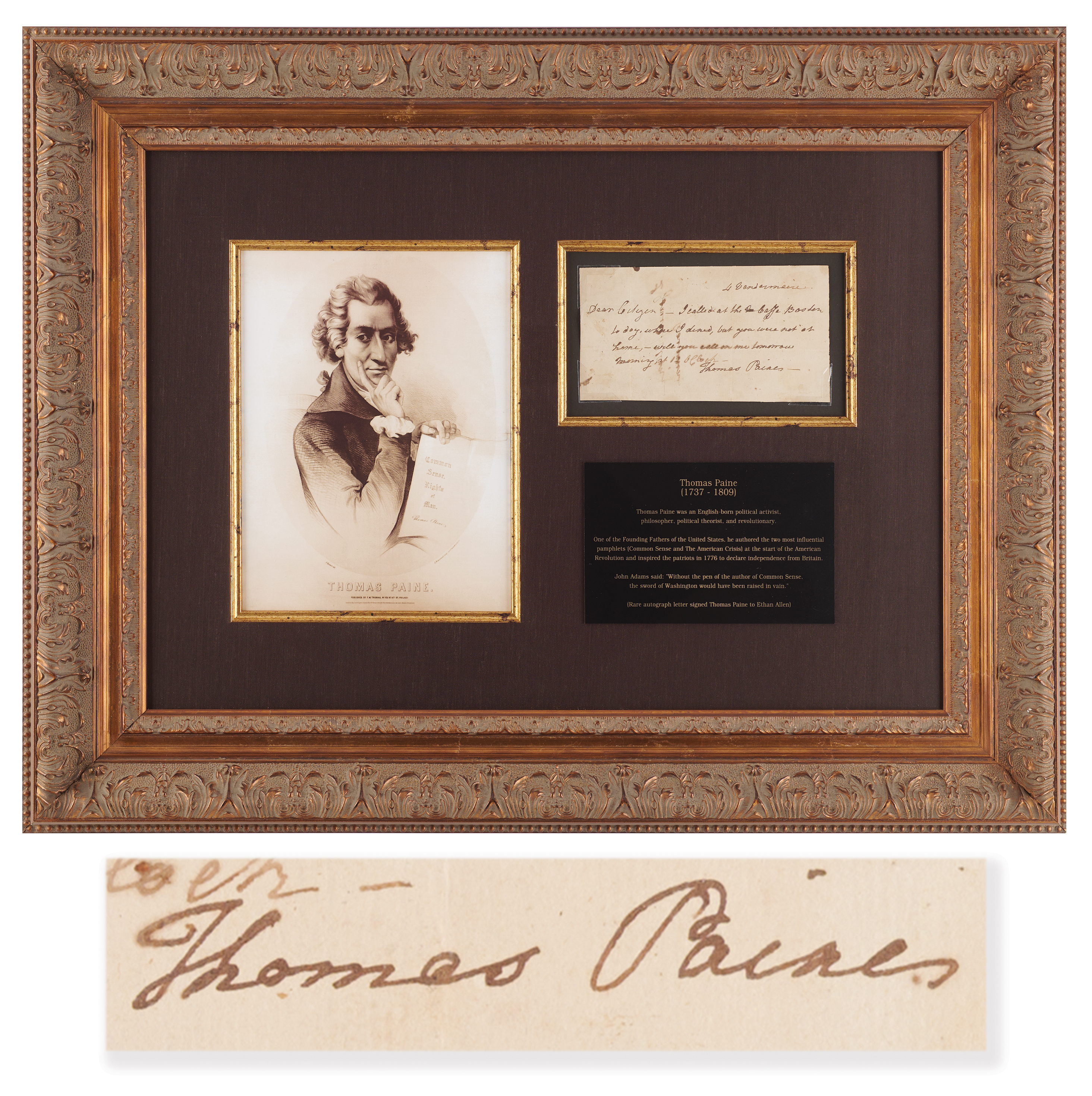
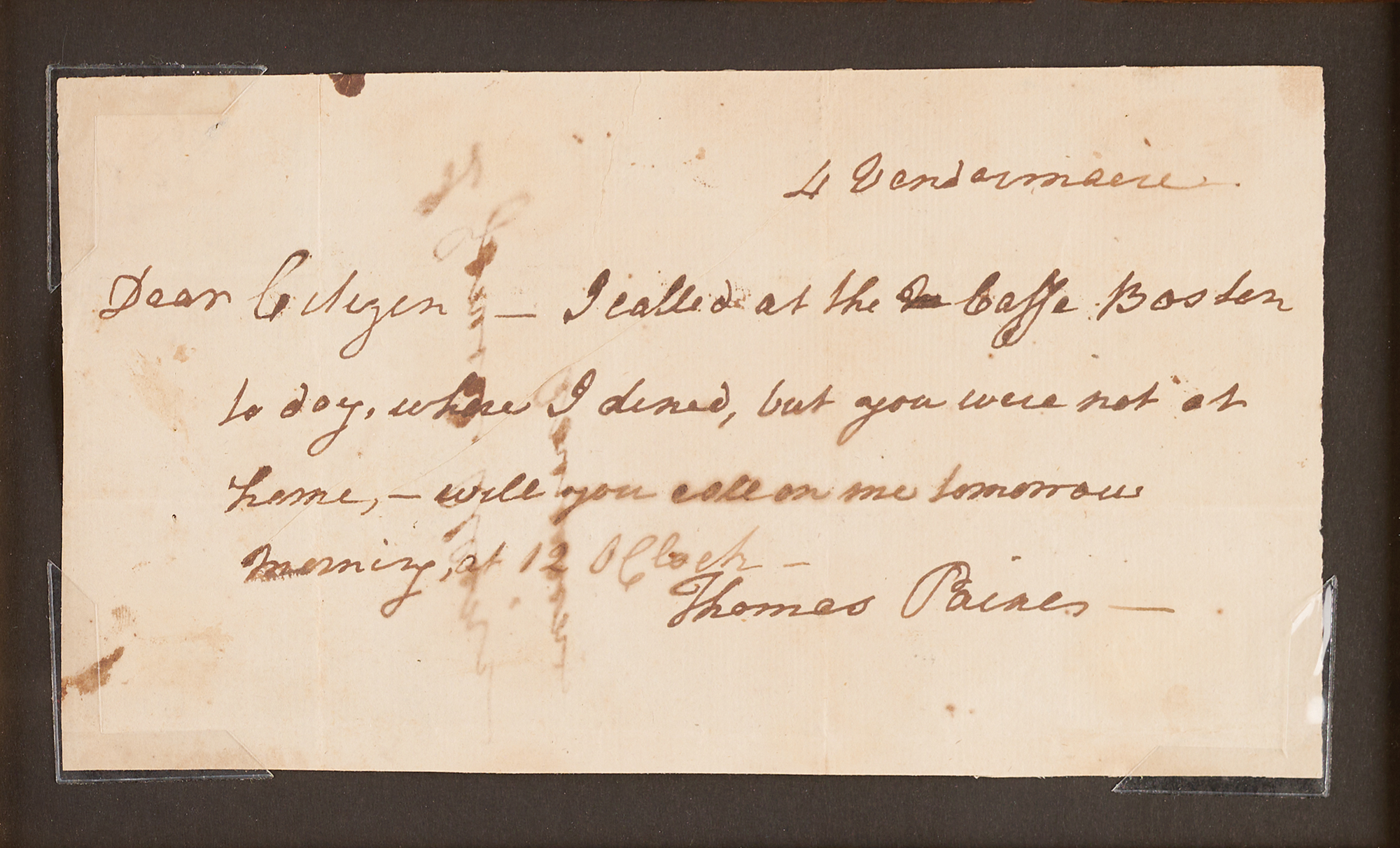
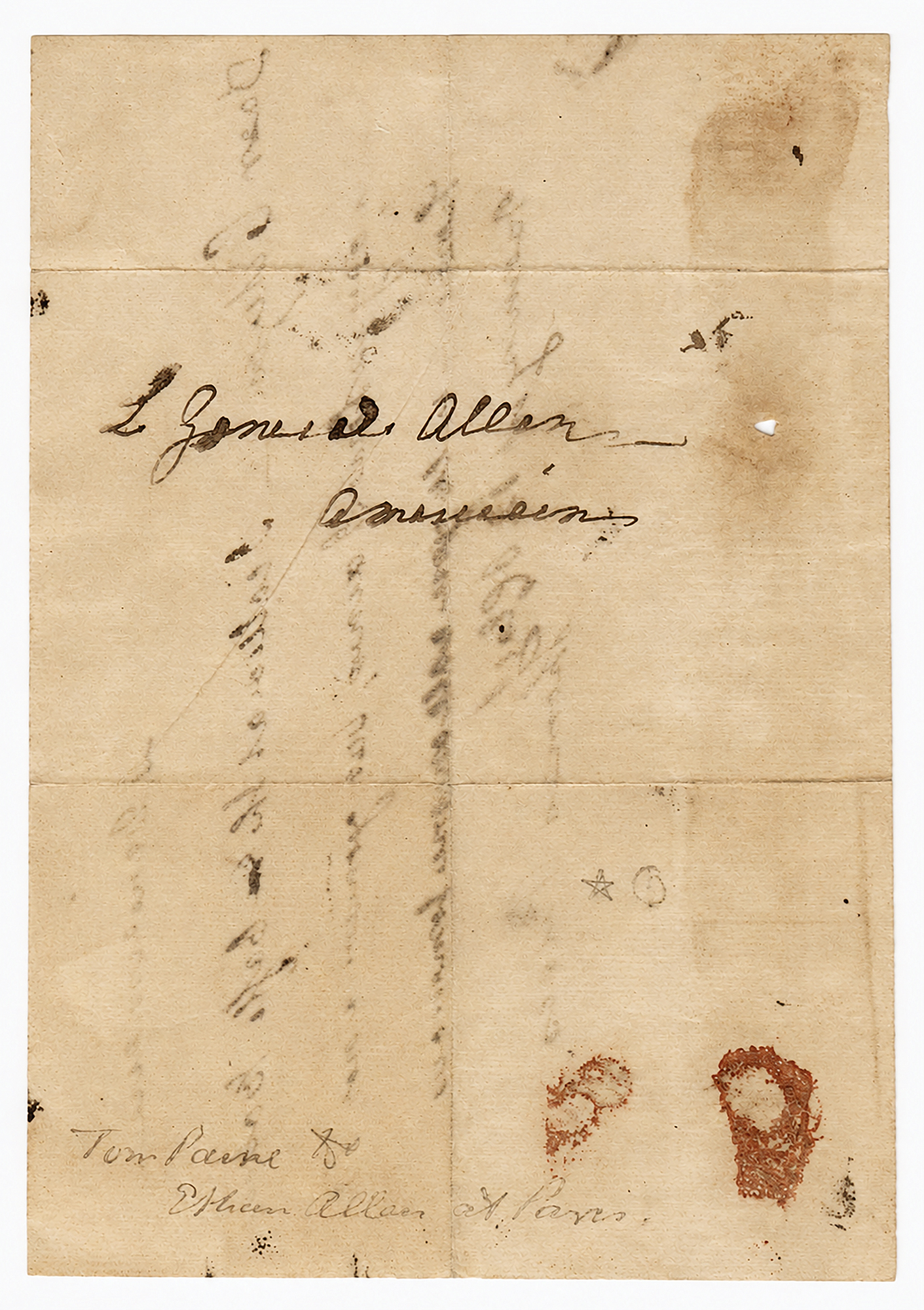
English-born political philosopher and Founding Father (1737-1809) whose revolutionary pamphlets Common Sense and The American Crisis galvanized support for American independence. One of the Enlightenment's most influential political writers, his advocacy of liberty, republican government, and natural rights helped shape both the American and French revolutions. ALS, one page, 7 x 4, dated "4 Vendémiaire" (the first month of the French Republican calendar, in effect from 1793 to 1806). Addressed from Paris, a handwritten letter from Thomas Paine, bearing the salutation, "Dear Citizen." Although framed, photographic evidence of the reverse reveals the recipient as "Le General Allen, American," strongly suggesting the letter was sent to Revolutionary patriot Ira Allen, brother of Ethan Allen. The use of the French Republican calendar places the letter in the 1790s, by which time Ira Allen was living and traveling extensively in Europe on diplomatic and commercial business, including prolonged stays in France. The letter reads, in full: “I called at the Caffé Boston today, where I dined, but you were not at home, – will you call on me tomorrow morning at 12 OClock.” Archivally and impressively cloth-matted and framed with a plaque and a modern print portrait of Paine to an overall size of 29.5 x 23; the accompanying plaque erroneously identifies the recipient as Ethan Allen. In fine condition, with show-through from docketing on the reverse.
Thomas Paine fled to France in September 1792 to escape a British indictment for seditious libel following publication of Rights of Man. Despite speaking no French, he was elected to the National Convention, where his plea for clemency during the trial of Louis XVI earned him the enmity of the increasingly radical Jacobin faction. Arrested in December 1793, Paine remained imprisoned in Paris until his release in November 1794, ultimately residing in France until returning to the United States in 1802.
The recipient is very likely Ira Allen, who held the rank of major general in the Vermont militia, matching the docketing on the reverse, "Le General Allen, American." The letter's use of the French Republican calendar effectively rules out Ira's older brother, Ethan Allen, who died in 1789 before the calendar's adoption. Ira Allen traveled to France in 1795 to procure muskets and cannon on Vermont's behalf. After the arms ship Olive Branch was seized by the British in 1796, he was detained in England before returning to the Continent, where French authorities, suspecting him of espionage, confined him for nearly two years before his release around 1800.
The proposed meeting place, the Café Boston, was known as a gathering place for English-speaking foreigners in Paris, making it a fitting location for an informal meeting between two American revolutionaries living abroad during the upheaval of the French Revolution. The letter provides a rare glimpse into the personal interactions of two prominent figures whose lives were profoundly shaped by the revolutionary movements of their age.

This item is Pre-Certified by PSA/DNA
Buy a third-party letter of authenticity for
$25.00
*This item has been pre-certified by a trusted third-party authentication service, and by placing a bid on this item, you agree to accept the opinion of this authentication service. If you wish to have an opinion rendered by a different authenticator of your choosing, you must do so prior to your placing of any bid. RR Auction is not responsible for differing opinions submitted 30 days after the date of the sale.
Third-party authentication service applies only to signatures and handwriting, and does not cover the addition of sketches, artwork, musical quotations, etc.

