The 30 Minute Rule begins October 14 at 7:00 PM EDT. An Initial Bid Must Be Placed By October 14 at 6:00 PM EDT To Participate After 6:00 PM EDT
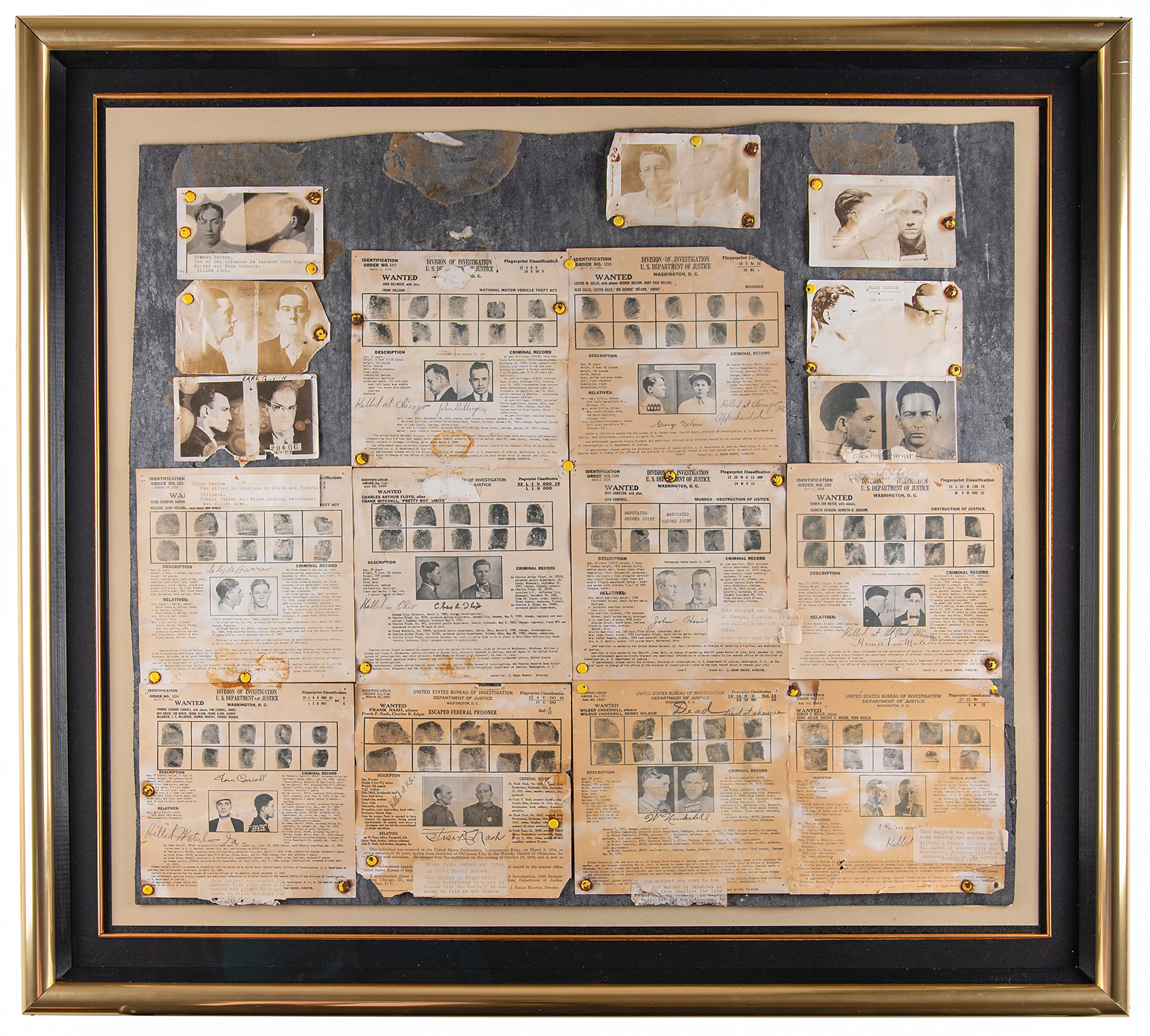
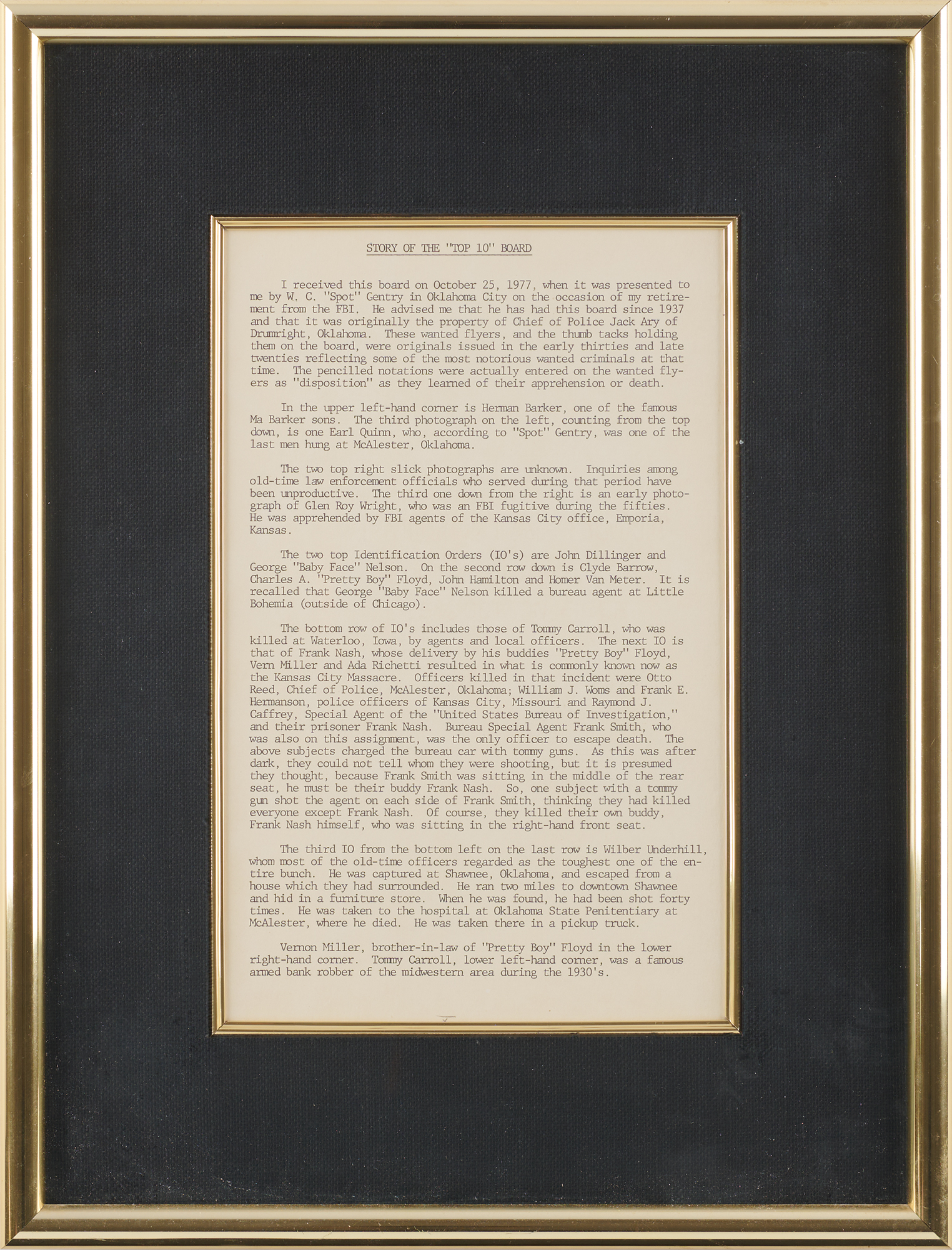
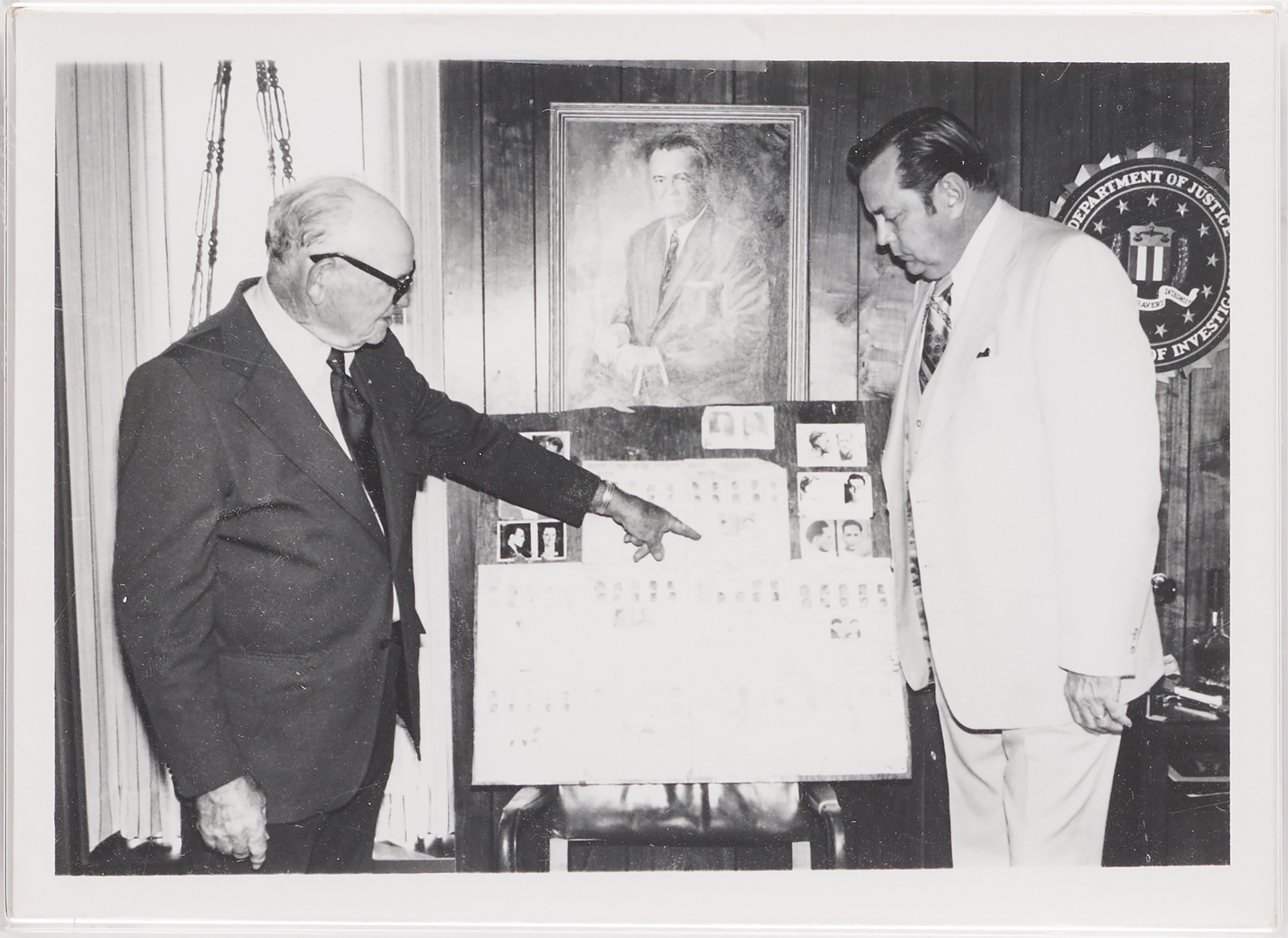
Incredible original police bulletin board assembled and maintained by the Chief of Police in Drumright, Oklahoma, 32.5 x 29.5, displaying 10 original United States Bureau of Investigation and Division of Investigation wanted circulars for many of the Prohibition era's most infamous public enemies, issued between 1932 and 1934, accompanied by seven contemporary mug shots and identification photographs. According to an accompanying provenance statement, the board originally belonged to Drumright Chief of Police Jack Ary, remained in law enforcement hands after being acquired in 1937 by Oklahoma City officer W. C. ‘Spot’ Gentry, and was presented in 1977 to retiring Oklahoma FBI bureau chief Kenneth W. Whittaker.
The wanted notices include John Dillinger, Clyde Barrow, Charles Arthur 'Pretty Boy' Floyd, Lester M. 'Baby Face' Nelson, Homer Van Meter, John Hamilton, Wilbur Underhill, Tommy Carroll, Frank Nash, and Verne Miller. Many of the circulars bear contemporary handwritten notations recording each outlaw's ultimate fate, such as "Killed at Chicago," "Killed in Ohio," and "Killed at St. Paul," while several retain typed update slips reporting later developments, including deaths and captures. The board also incorporates additional mounted mug shots of lesser-known criminals, including Herman Barker and Earl Quinn, creating a working 'rogues' gallery' that remained in active use as events unfolded during the FBI's war against organized crime.
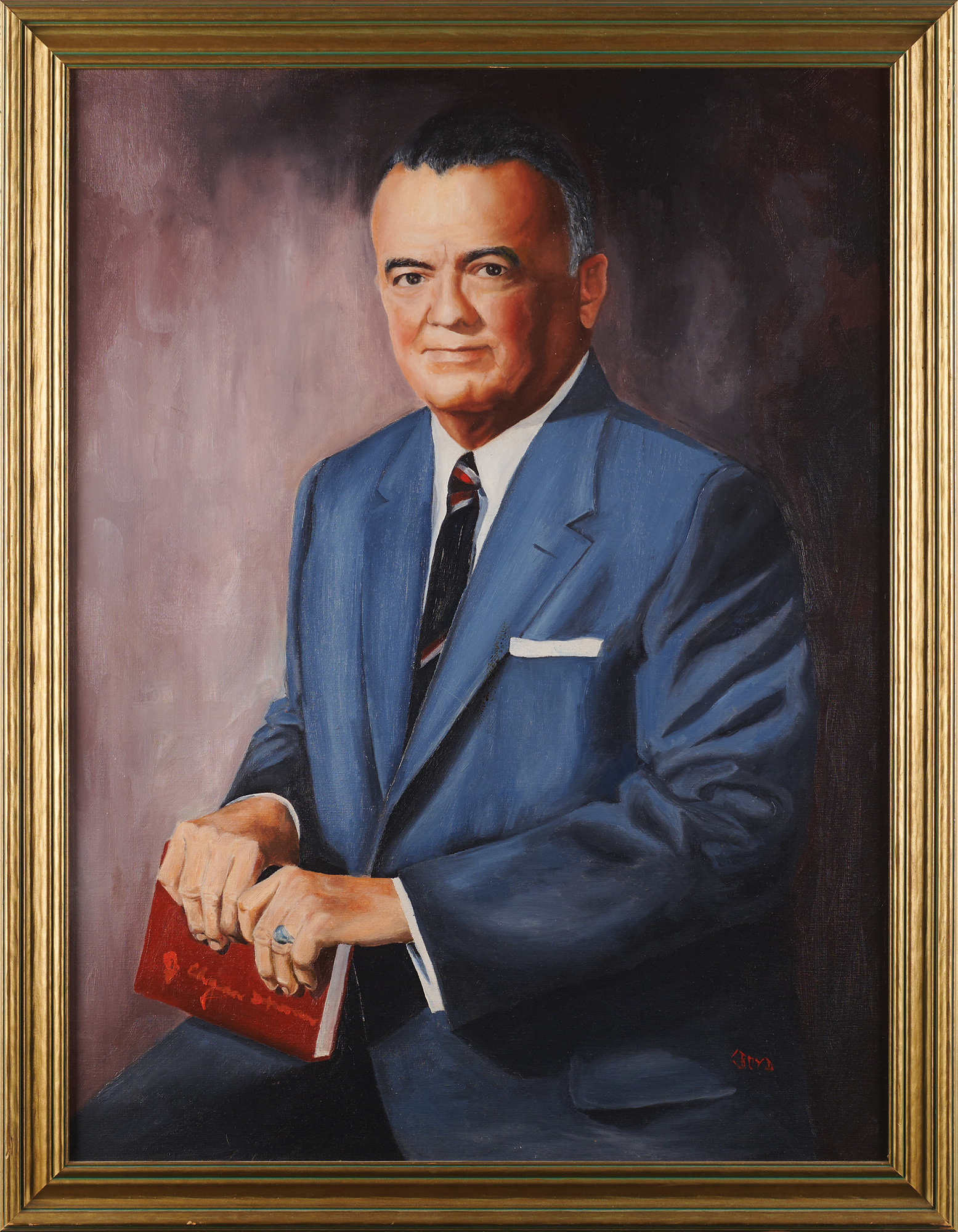
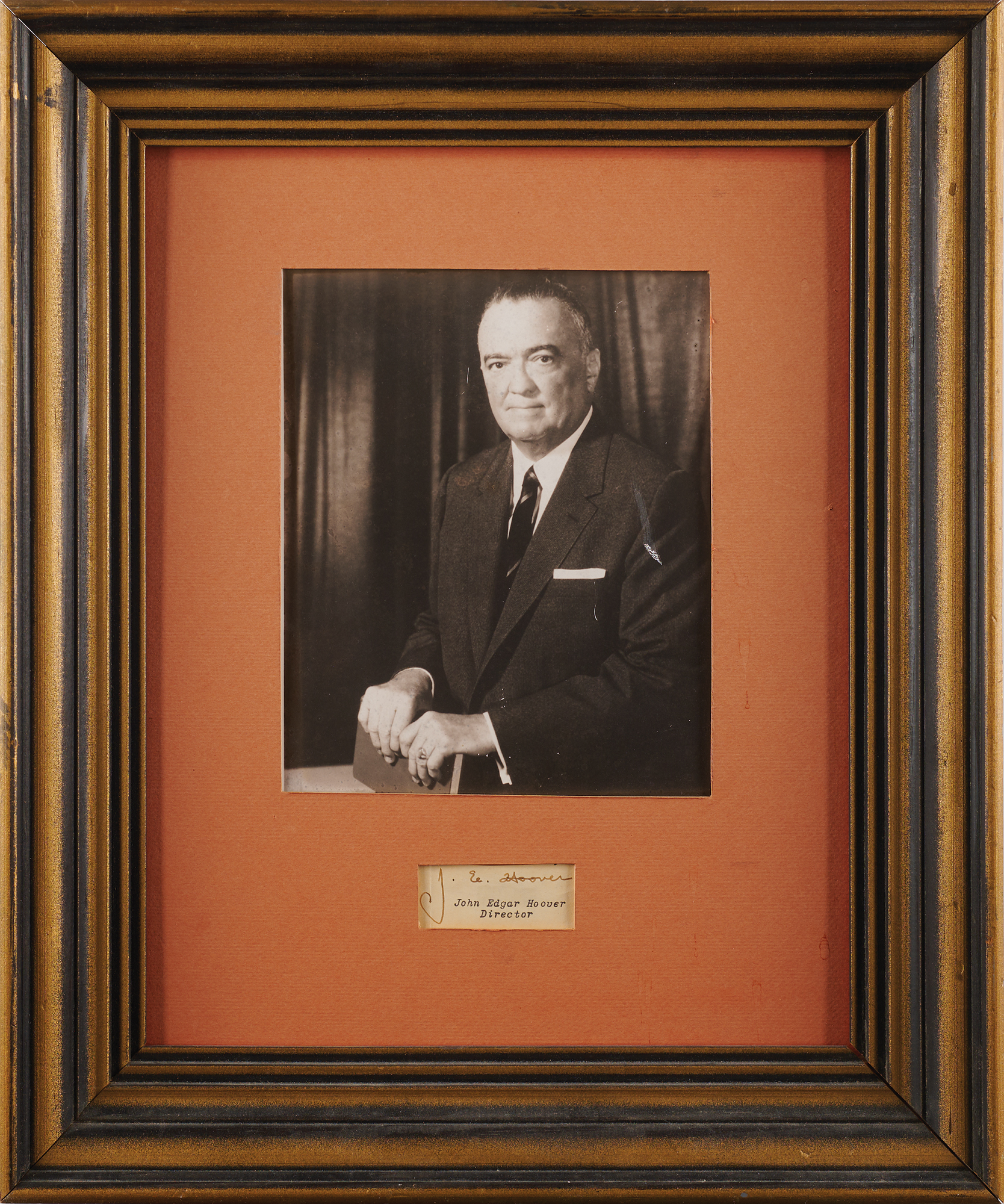
In overall very good condition, with assorted stains, toning, tears, and areas of paper loss. Accompanied by the referenced provenance statement, a photo of Whittaker standing next to the board, a clipped signature of J. Edgar Hoover, and an original portrait painting of Hoover, each individually framed and ranging in size from 13 x 17 to 20.5 x 26.25.
Preserved as an authentic working law-enforcement reference board rather than a later collector's display, it reflects how local police departments tracked the Public Enemy manhunts of the early 1930s. Contemporary handwritten annotations and typed update slips record the deaths, captures, and other dispositions of many of America's most notorious fugitives, preserving the board much as it appeared in active use. Its documented provenance through local police and the FBI—including Kenneth W. Whittaker, a former aide to J. Edgar Hoover who later served as Special Agent in Charge of the FBI's Miami Field Office—further enhances its significance as an artifact of Depression-era law enforcement.

