The 30 Minute Rule begins September 16 at 7:00 PM EDT. An Initial Bid Must Be Placed By September 16 at 6:00 PM EDT To Participate After 6:00 PM EDT
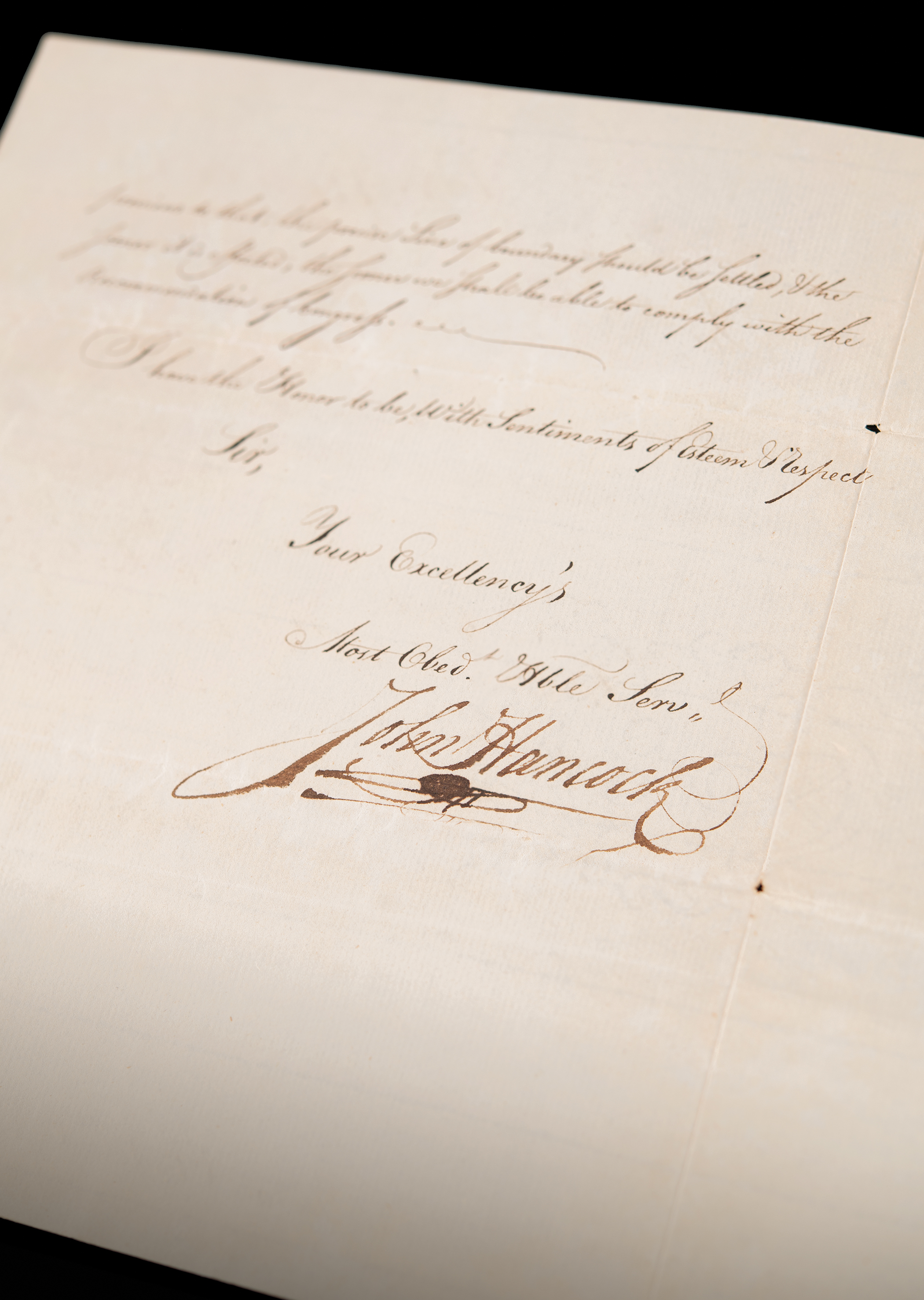
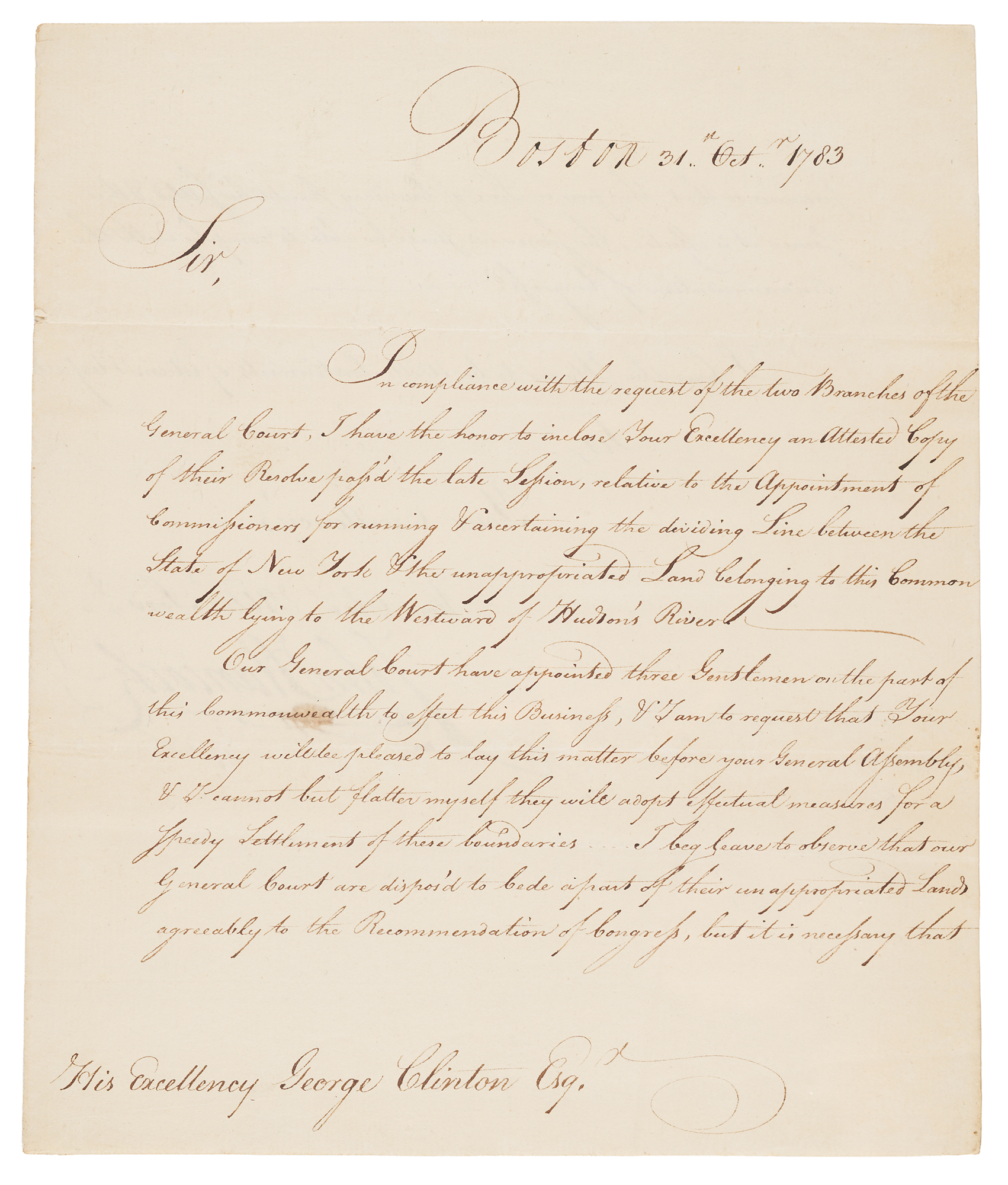
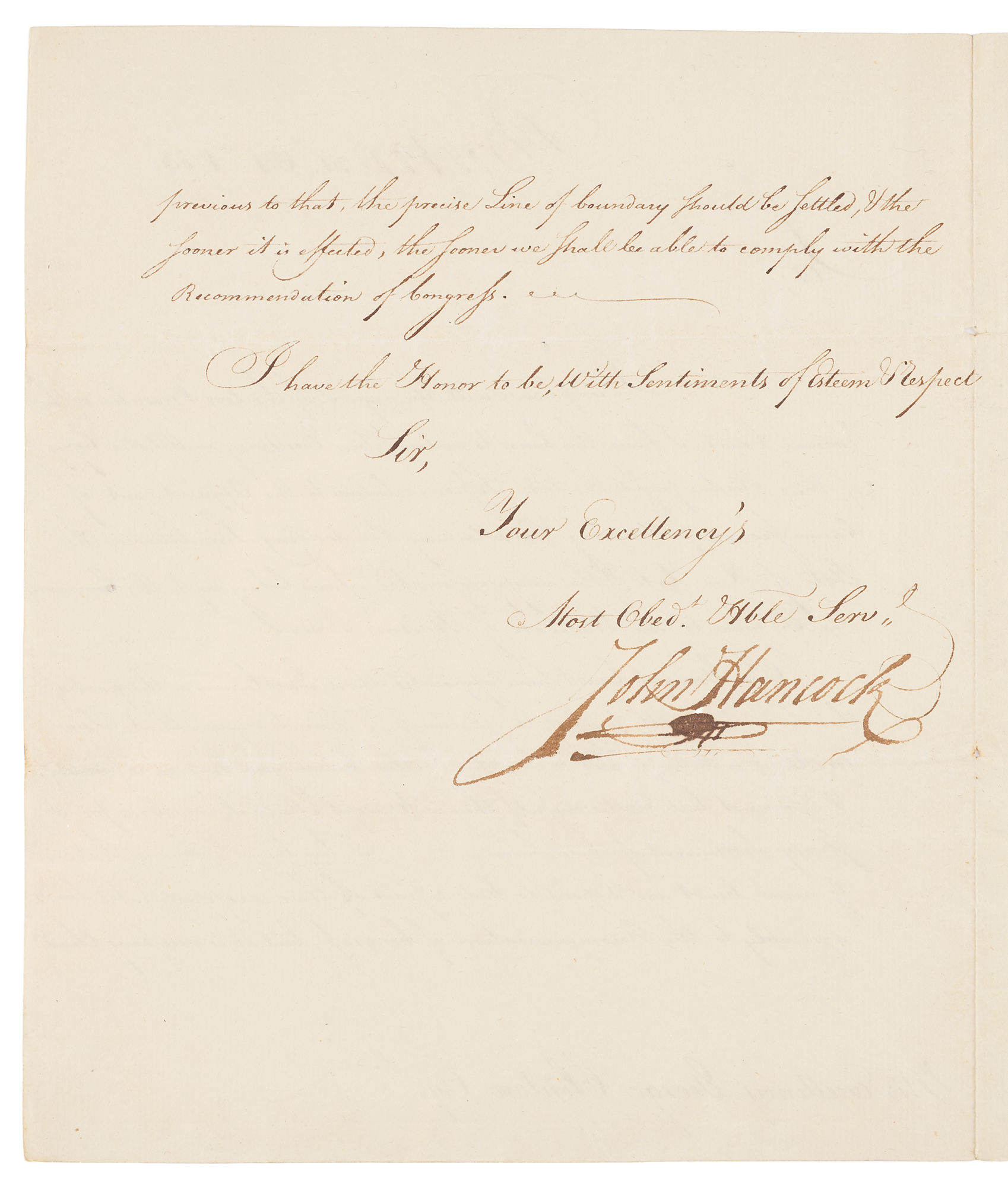
LS as governor of Massachusetts, one page both sides, 7.5 x 8.75, October 31, 1783. Addressed from Boston, a letter to New York Governor George Clinton, signed roughly two months after the war-ending Treaty of Paris, in full: “In compliance with the request of the two Branches of the General Court, I have the honor to inclose Your Excellency an Attested Copy of their Resolve pass'd the late Session, relative to the Appointment of Commissioners for running & ascertaining the dividing Line between the State of New York & the unappropriated Land belonging to this Commonwealth lying to the Westward of Hudson's River. Our General Court have appointed three Gentlemen on the part of this Commonwealth to affect this Business, & I am to request that Your Excellency will be pleased to lay this matter before your General Assembly & I cannot but flatter myself they will adopt effectual measures for a speedy Settlement of these boundaries…I beg leave to observe that our General Court are dispos'd to Cede a part of their unappropriated Lands agreeably to the Recommendation of Congress, but it is necessary that previous to that, the precise Line of boundary should be Settled, & the sooner it is effected, the sooner we shall be able to comply with the recommendation of Congress.” In fine condition.
Written less than two months after the signing of the Treaty of Paris ended the Revolutionary War, this letter documents the effort to resolve one of the most consequential colonial boundary disputes inherited by the newly independent United States. Hancock urges New York Governor George Clinton to appoint commissioners to establish the boundary between Massachusetts and New York, explaining that Massachusetts could not comply with Congress's recommendation to cede part of its western lands until the state line had been precisely determined.
When negotiations later stalled, the dispute became one of the earliest interstate controversies considered under Article IX of the Articles of Confederation, which empowered Congress to arbitrate boundary disputes between the states. Although the federally constituted tribunal ultimately proved unnecessary, as the states reached a negotiated settlement through the Treaty of Hartford (1786), the dispute remains an early example of the interstate boundary controversies addressed under the Articles of Confederation. Such conflicts later influenced the framers' decision to vest the United States Supreme Court with original jurisdiction over controversies between states under Article III of the Constitution.

This item is Pre-Certified by PSA/DNA
Buy a third-party letter of authenticity for
$250.00
*This item has been pre-certified by a trusted third-party authentication service, and by placing a bid on this item, you agree to accept the opinion of this authentication service. If you wish to have an opinion rendered by a different authenticator of your choosing, you must do so prior to your placing of any bid. RR Auction is not responsible for differing opinions submitted 30 days after the date of the sale.
Third-party authentication service applies only to signatures and handwriting, and does not cover the addition of sketches, artwork, musical quotations, etc.

