The 30 Minute Rule begins July 8 at 7:00 PM EDT. An Initial Bid Must Be Placed By July 8 at 6:00 PM EDT To Participate After 6:00 PM EDT
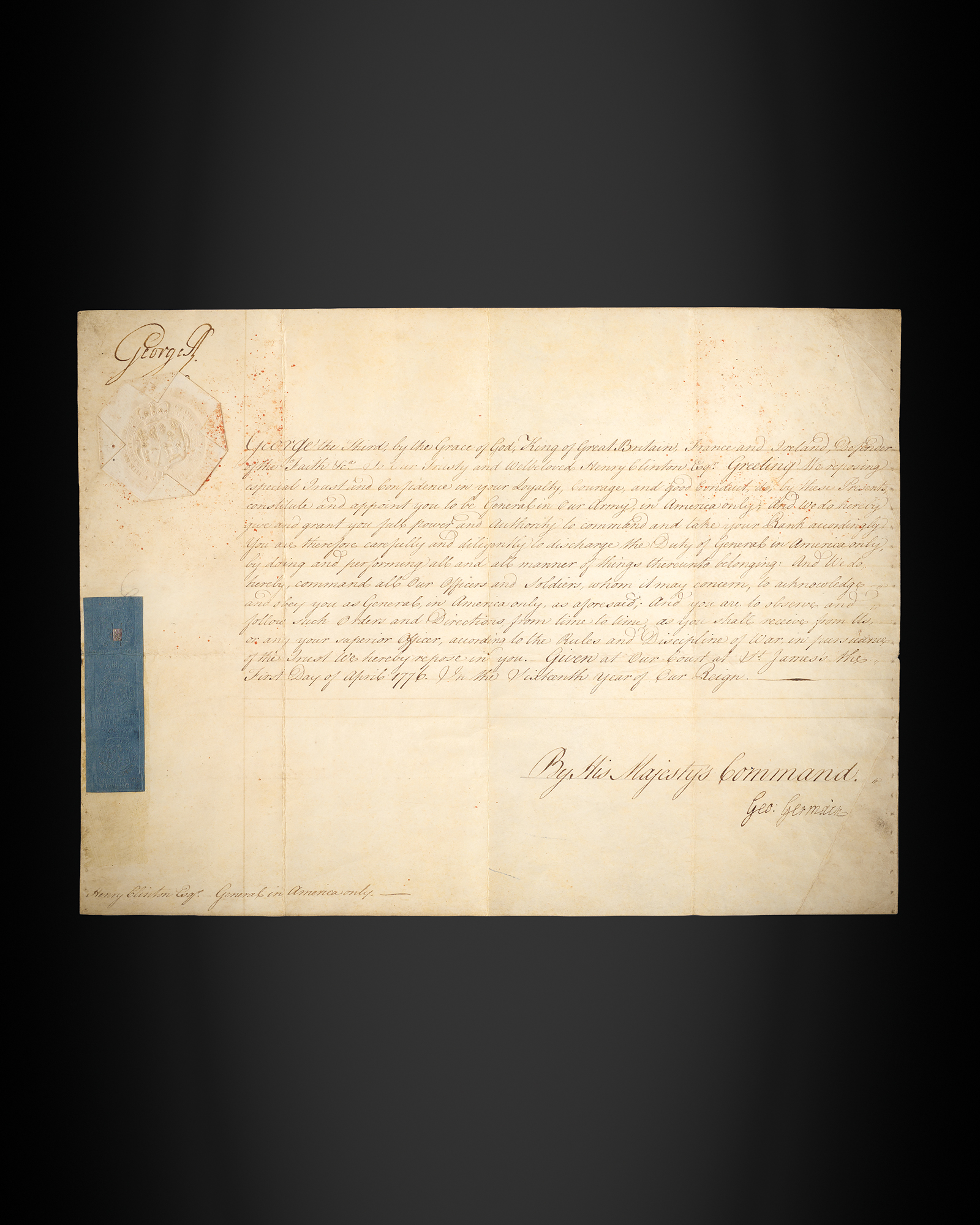
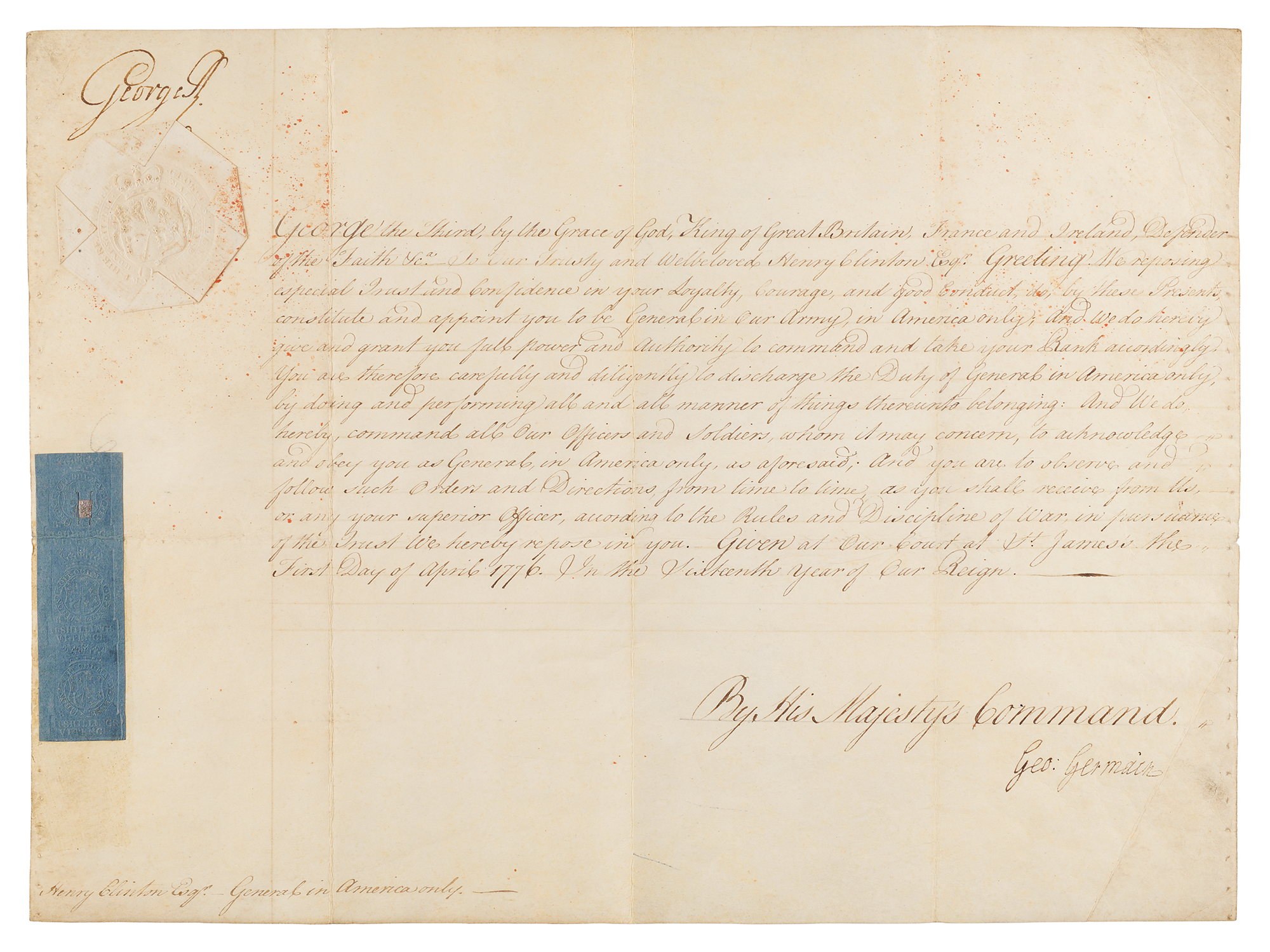
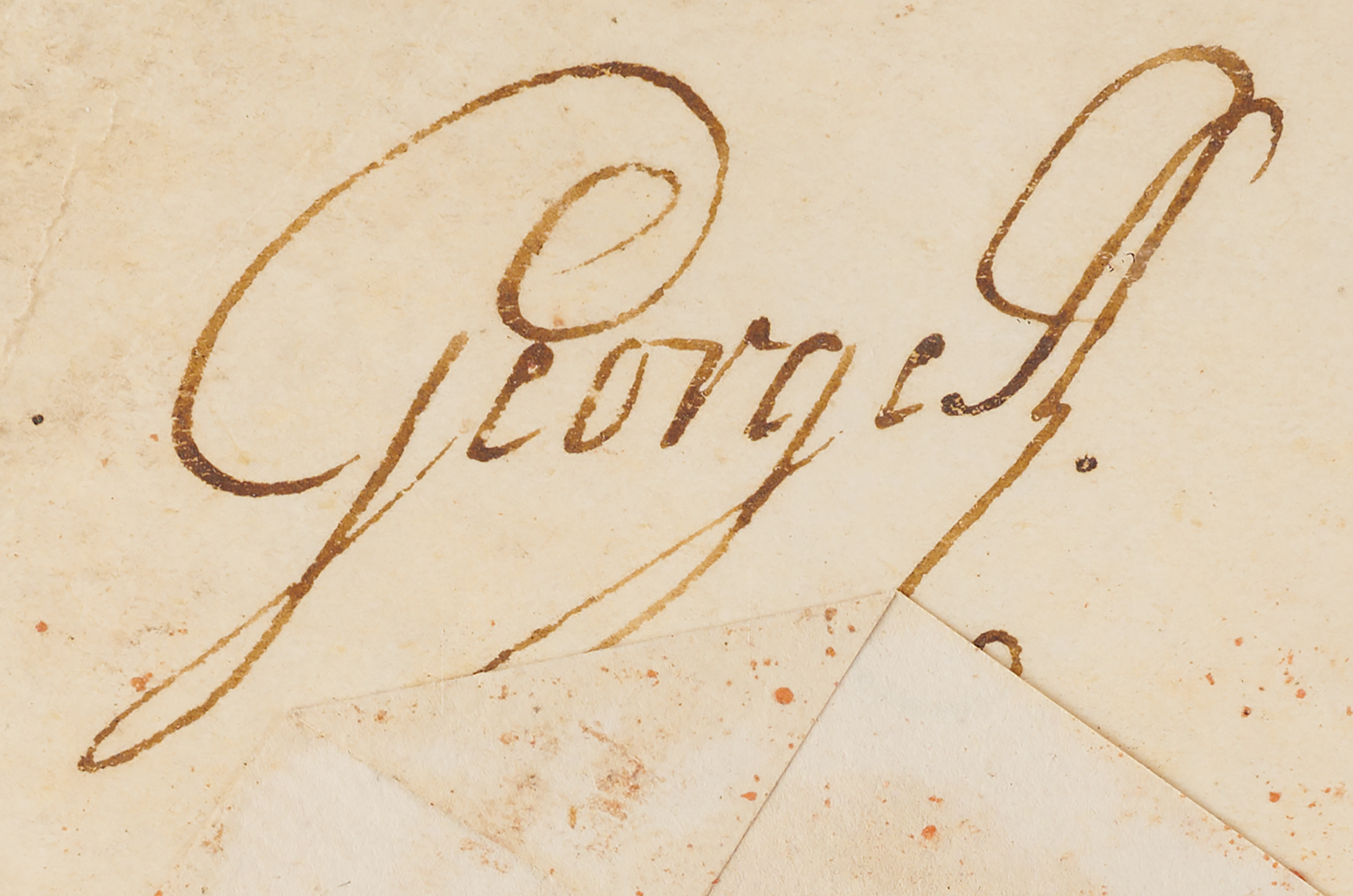
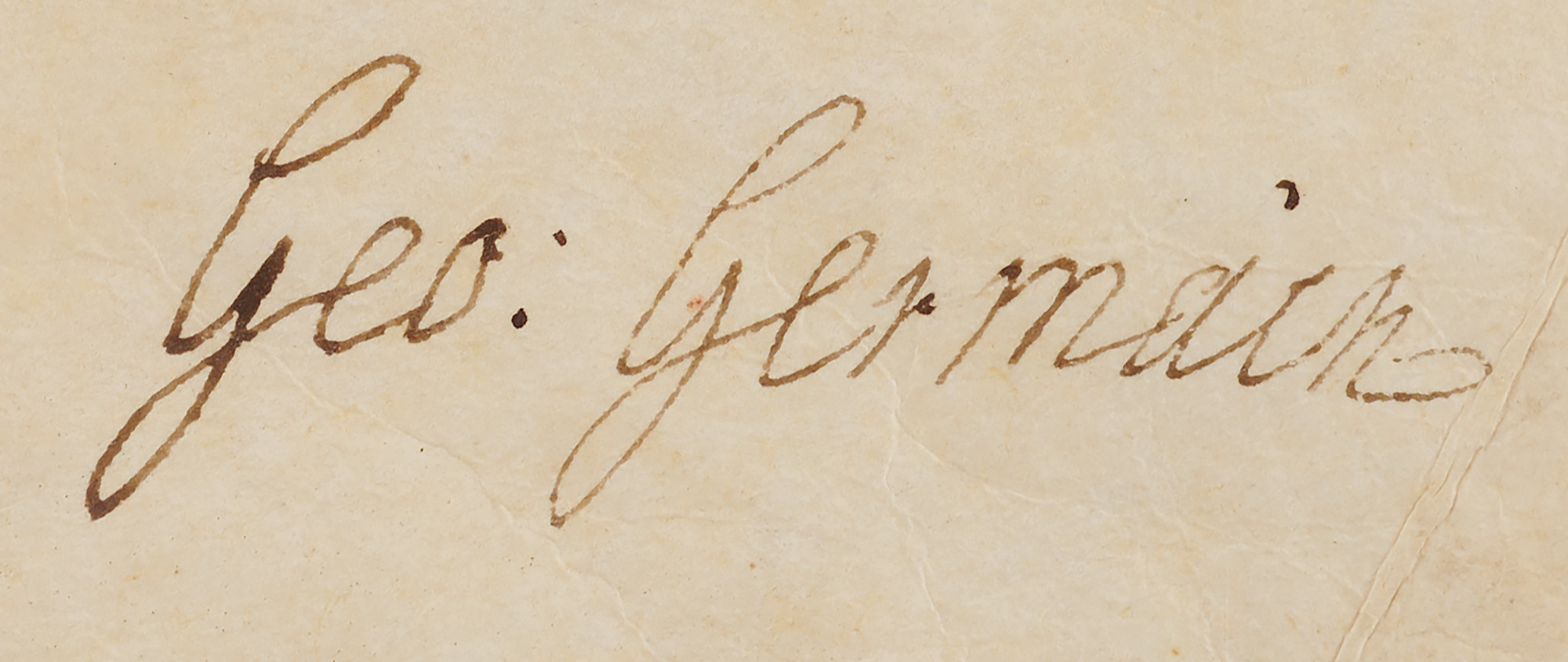
Revolutionary War-dated manuscript DS, signed “George R.,” one page, 16.25 x 12, April 1, 1776. Issued at the Court of St. James’s, an official military commission appointing Lieutenant General Sir Henry Clinton as “General in America only” during the opening year of the Revolutionary War. The document grants Clinton authority to “discharge the Duty of General in America only, by doing and performing all and all manner of things thereunto belonging,” while directing him to observe “such Orders and Directions from time to time as you shall receive from Us, or any your superior Officer, according to the Rules and Discipline of War.” Signed boldly in the upper left corner by King George III, and countersigned at the conclusion by Lord George Germain. The left side retains the original paper seal and blue paper revenue stamp. In fine condition.
Issued less than three months before the adoption of the Declaration of Independence, the commission dates to a pivotal moment in Britain’s military effort to suppress the American rebellion. Countersigned by Lord George Germain, Secretary of State for the American Colonies from 1775 to 1782, the document bears the signature of the British minister principally responsible for directing the Crown’s wartime strategy against the colonies. At the time the commission was issued, Britain still believed the rebellion could be subdued through military force, and preparations were underway for the massive British campaigns of 1776 following the evacuation of Boston only weeks earlier.
The designation “General in America only” points to a deliberate feature of British military commission practice during the Revolutionary War period. By limiting Clinton’s command and seniority to the North American theater, the Crown prevented the commission from altering rank precedence elsewhere in the British Army while still granting Clinton wide authority in the colonies. The specific language of the limitation makes the document an unusually explicit surviving example of how the British Army managed command structure, seniority, and political tensions among its senior officers during the American Revolution.
Tensions between Clinton and General Sir William Howe would soon emerge over military strategy and operational authority, frustrations subtly reflected in the commission’s directive that Clinton obey “such Orders and Directions from time to time as you shall receive from Us, or any your superior Officer.” Two years later, following Howe’s resignation, Clinton succeeded him as commander-in-chief of British forces in North America, overseeing major campaigns including the capture of Charleston and subsequent southern operations.

This item is Pre-Certified by PSA/DNA
Buy a third-party letter of authenticity for
$150.00
*This item has been pre-certified by a trusted third-party authentication service, and by placing a bid on this item, you agree to accept the opinion of this authentication service. If you wish to have an opinion rendered by a different authenticator of your choosing, you must do so prior to your placing of any bid. RR Auction is not responsible for differing opinions submitted 30 days after the date of the sale.
Third-party authentication service applies only to signatures and handwriting, and does not cover the addition of sketches, artwork, musical quotations, etc.

