Sold For $6,000
*Includes Buyers Premium
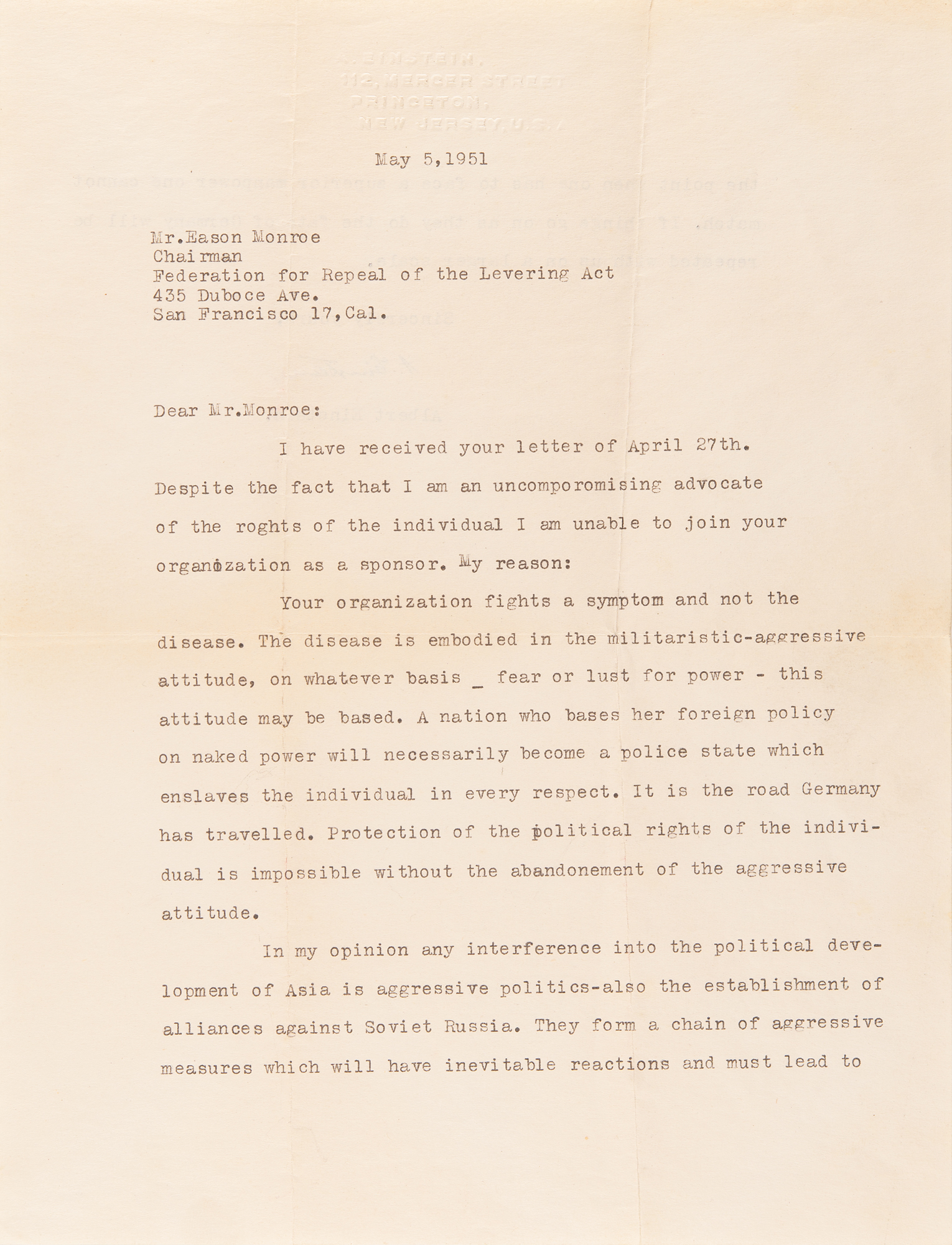
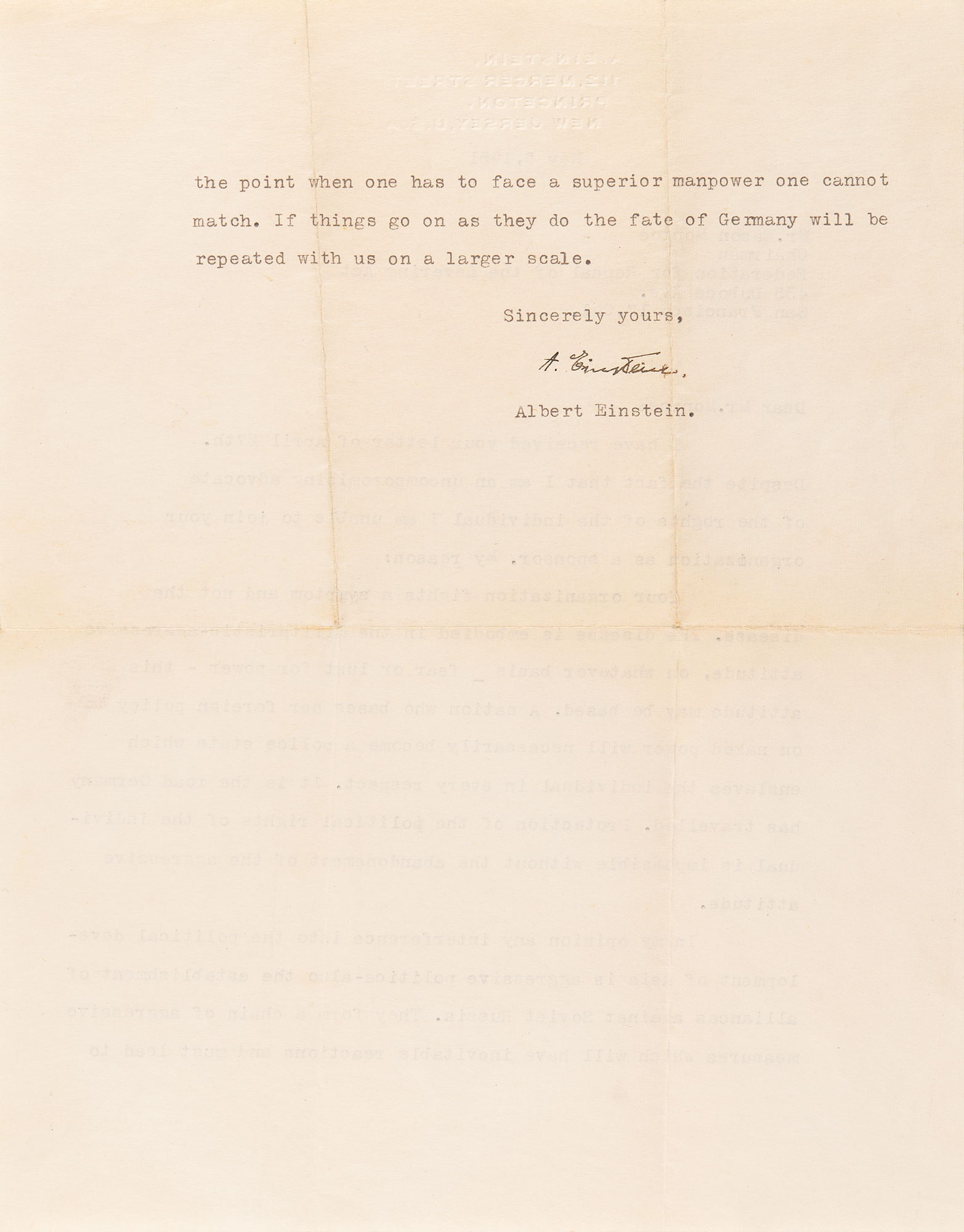
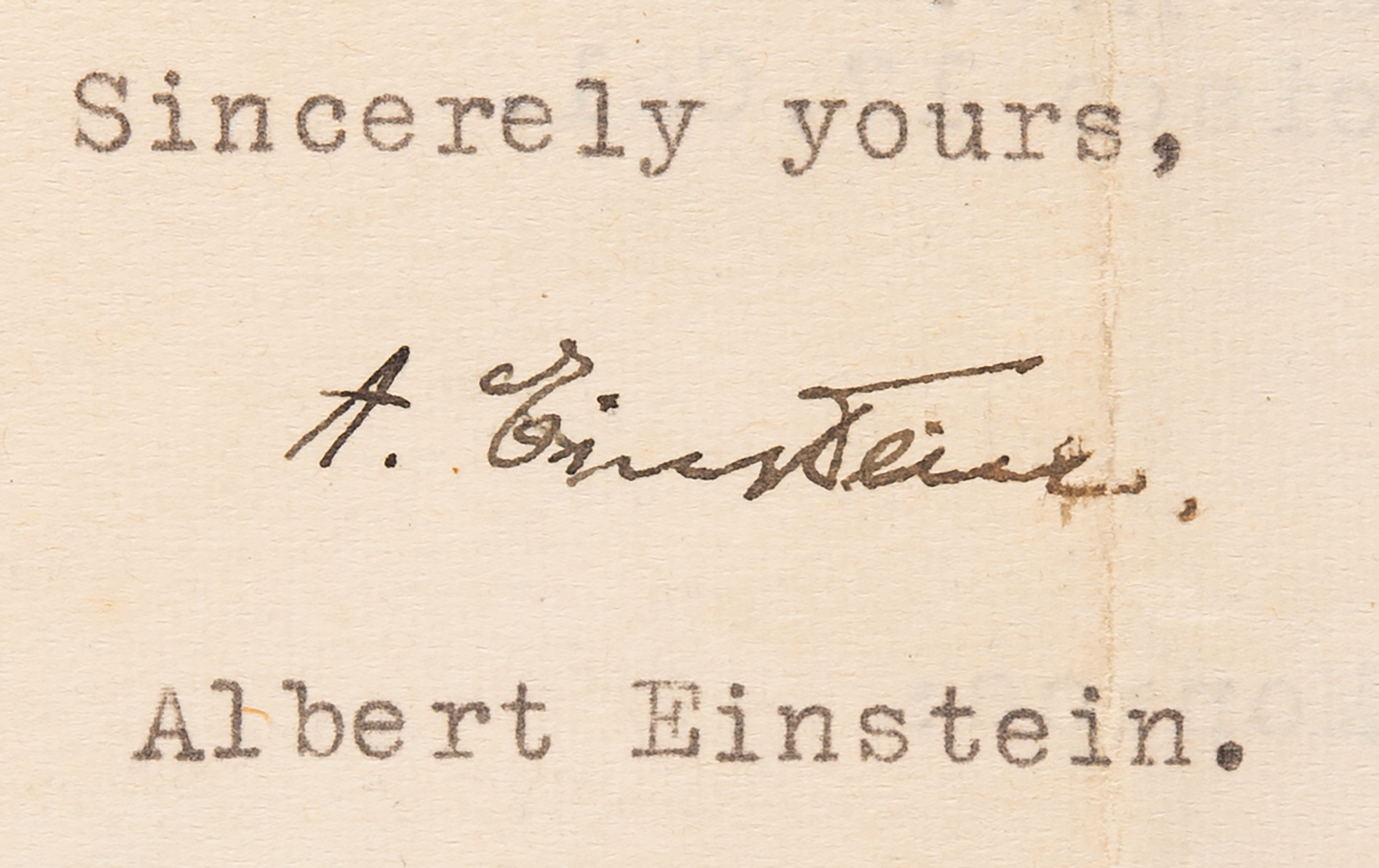
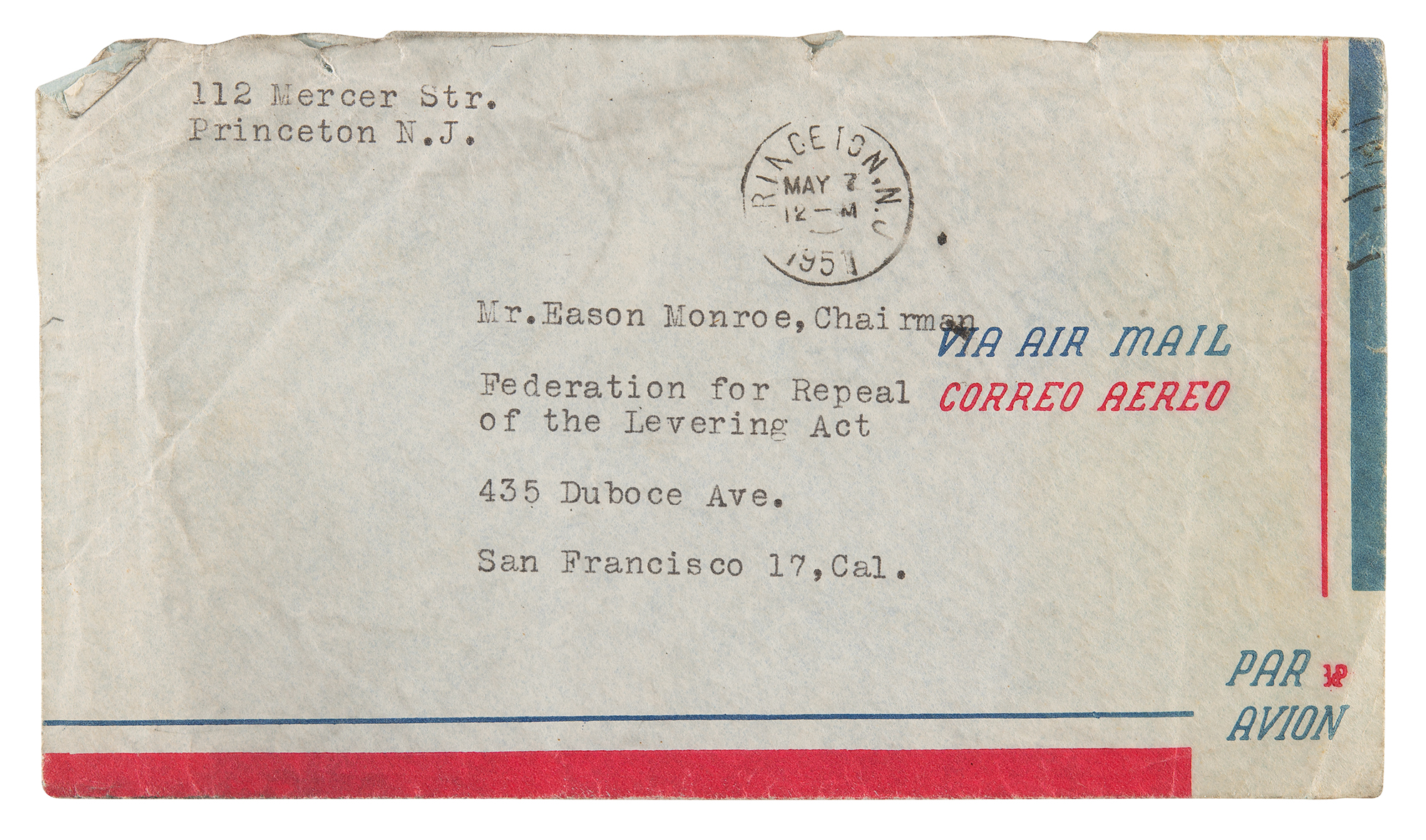
TLS signed “A. Einstein,” one page both sides, 8.5 x 11, blindstamped personal Princeton letterhead, May 5, 1951. Letter to Eason Monroe, chairman of the Federation for Repeal of the Levering Act, in part: "Despite the fact that I am an uncompromising advocate of the rights of the individual I am unable to join your organization as a sponsor. My reason: Your organization fights a symptom and not the disease. The disease is embodied in the militaristic-aggressive attitude, on whatever basis fear or lust for power this attitude may be based. A nation who bases her foreign policy on naked power will necessarily become a police state which enslaves the individual in every respect. It is the road Germany has travelled. Protection of the political rights of the individual is impossible without the abandonment of the aggressive attitude.
In my opinion any interference into the political development of Asia is aggressive politics—also the establishment of alliances against Soviet Russia. They form a chain of aggressive measures which will have inevitable reactions and must lead to the point when one has to face a superior manpower one cannot match. If things go on as they do the fate of Germany will be repeated with us on a larger scale." In fine condition. Accompanied by a booklet entitled "California's New Loyalty," distributed by Monroe's organization.
Einstein’s letter was written at the height of Cold War anxieties, amidst the nationwide expansion of loyalty-oath requirements aimed at rooting out alleged subversives. California’s Levering Act—passed in 1950—mandated that all state employees sign loyalty oaths disavowing radical affiliations, a measure widely condemned by civil-liberties advocates as an infringement on constitutional rights. Eason Monroe, who had been fired from his faculty position at the San Francisco State University, organized efforts to challenge the act on the grounds that it criminalized dissent and fostered an atmosphere of political intimidation. Einstein, a vocal critic of McCarthyism, responds here with characteristic philosophical breadth—sympathizing with the goal yet insisting that the deeper danger lay not in a single statute, but in the nation’s growing tendency to justify repression in the name of national security.
The letter also reflects Einstein’s consistent warnings about the militarization of American foreign policy following World War II. Having fled Nazi Germany, he was acutely sensitive to early signs of authoritarian drift, and he saw the emerging East–West confrontation as a catalyst for policies that could erode democratic freedoms from within. His reference to “the road Germany has travelled” underscores these fears. In this powerful and prescient communication, Einstein links domestic civil liberties to global political conduct, arguing that true protection of individual rights is impossible without a fundamental commitment to peaceful international engagement.

This item is Pre-Certified by PSA/DNA
Buy a third-party letter of authenticity for
$150.00
*This item has been pre-certified by a trusted third-party authentication service, and by placing a bid on this item, you agree to accept the opinion of this authentication service. If you wish to have an opinion rendered by a different authenticator of your choosing, you must do so prior to your placing of any bid. RR Auction is not responsible for differing opinions submitted 30 days after the date of the sale.
Third-party authentication service applies only to signatures and handwriting, and does not cover the addition of sketches, artwork, musical quotations, etc.

