Sold For $3,125
*Includes Buyers Premium
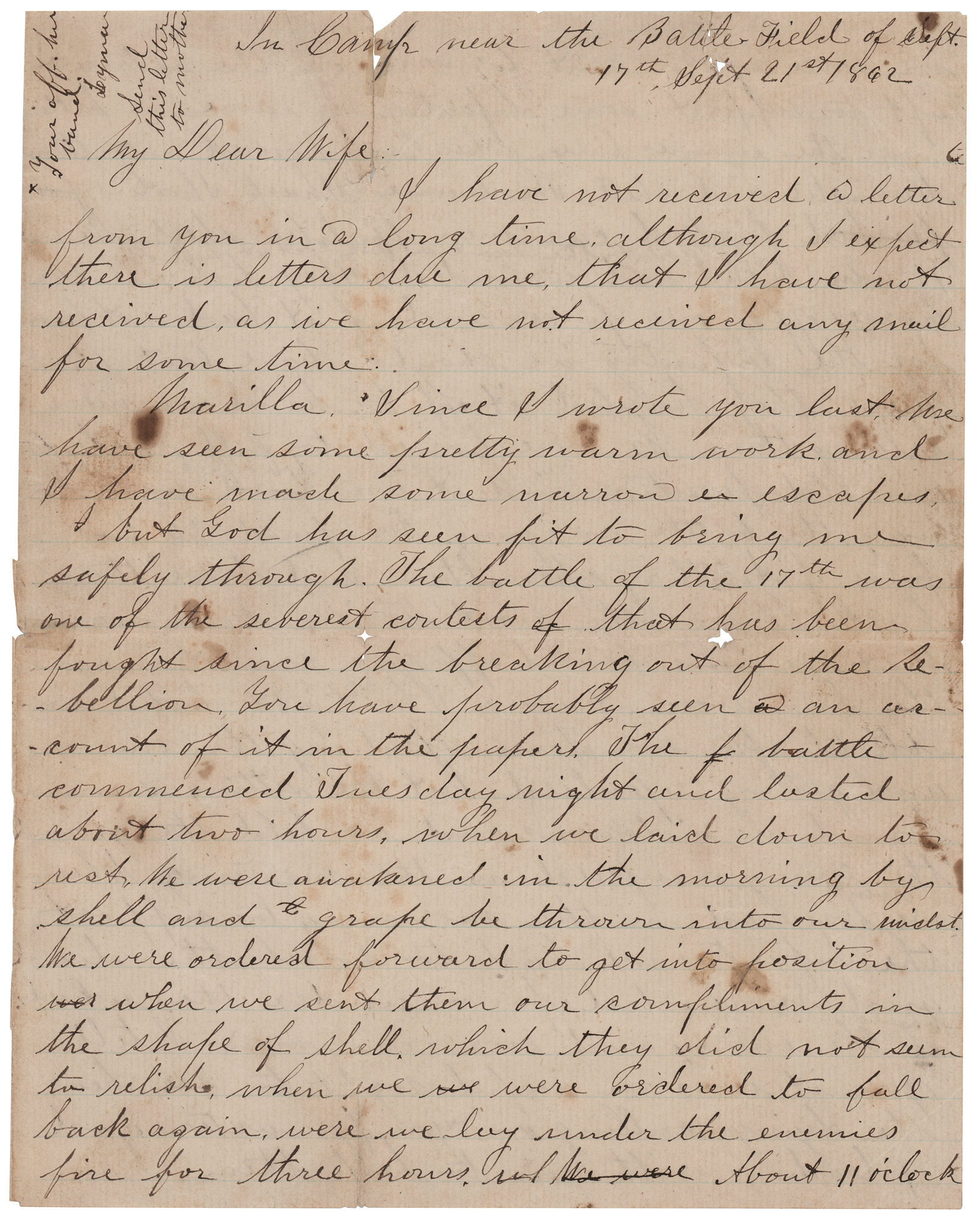
Remarkable Civil War-dated ALS from Union soldier Lyman Nicholas of the 1st Rhode Island Light Artillery, Battery D, describing the harrowing events of the Battle of Antietam, four pages, 7.25 x 9.25, September 21, 1862. Handwritten letter to his wife, addressed “In Camp near the Battle Field of Sept. 17th,” in full: “I have not received a letter from you in a long time, although I expect there is letters due me that I have not received, as we have not received any mail for some time.
Marilla, since I wrote you last, we have seen some pretty warm work and I have made some narrow escapes, but God has seen fit to bring me safely through. The battle of the 17th was one of the severest contests that has been fought since the breaking out of the rebellion. You have probably seen an account of it in the paper. The battle commenced Tuesday night and lasted about two hours, when we laid down to rest. We were awakened in the morning by shell and grape be thrown into our midst. We were ordered forward to get into position when we sent them our compliments, in the shape of shell which they did not seem to relish, when we were ordered to fall back again, where we lay under the enemy's fire for three hours.
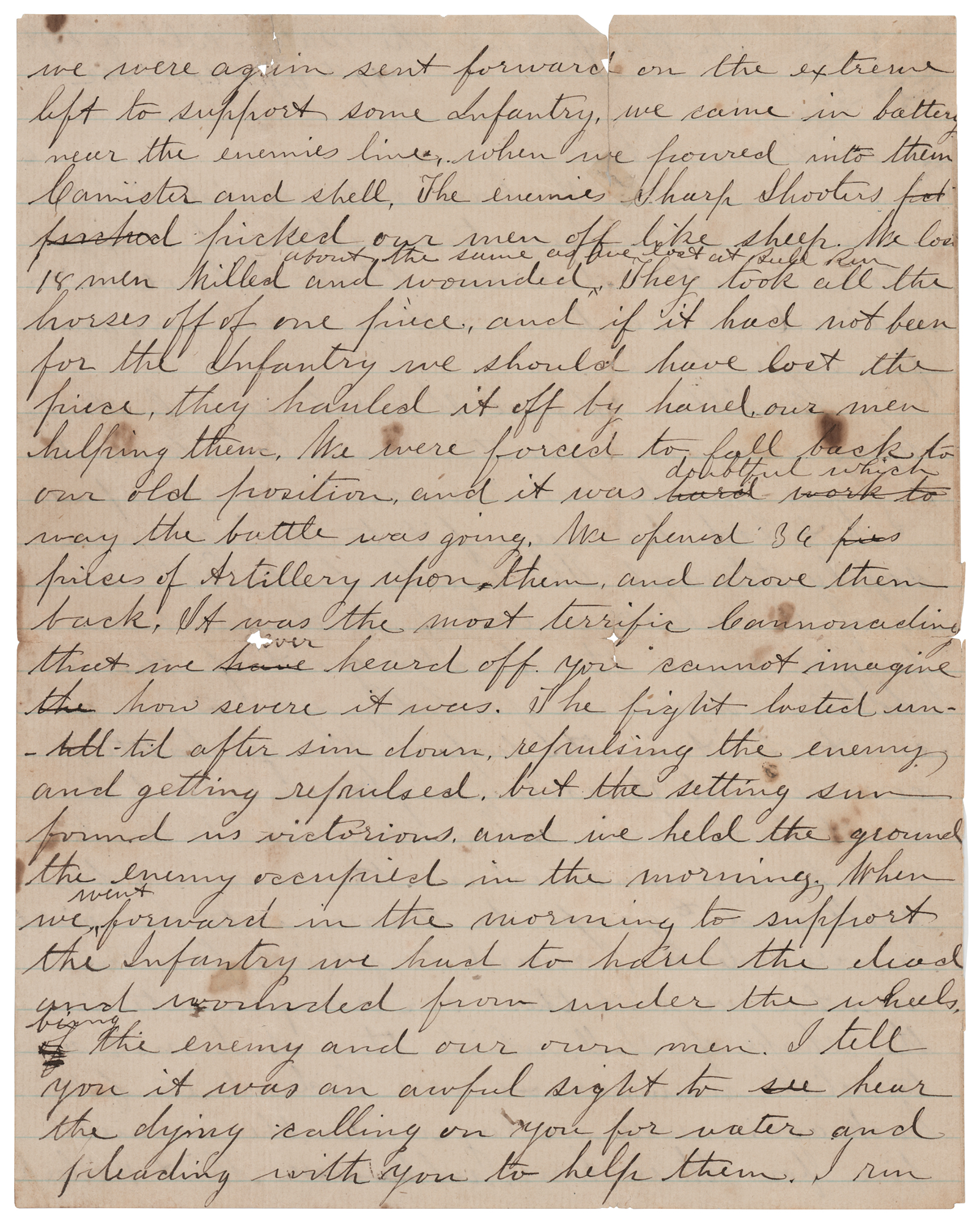
About 11 o'clock we were again sent forward on the extreme left to support some Infantry. We came in battery near the enemy's line when we poured into them canister and shell. The enemy's sharp shooters picked our men off like sheep. We lost 18 men killed and wounded (about the same as we lost at Bull Run). They took all the horses off of one piece, and if it had not been for the Infantry, we should have lost the piece. They hauled it off by hand, our men helping them. We were forced to fall back to our old position, and it was doubtful which way the battle was going. We opened 36 pieces of Artillery upon them and drove them back. It was the most terrific cannonading that we ever heard of. You cannot imagine how severe it was. The fight lasted until after sun down, repulsing the enemy and getting repulsed, but the setting sun found us victorious, and we held the ground the enemy occupied in the morning.
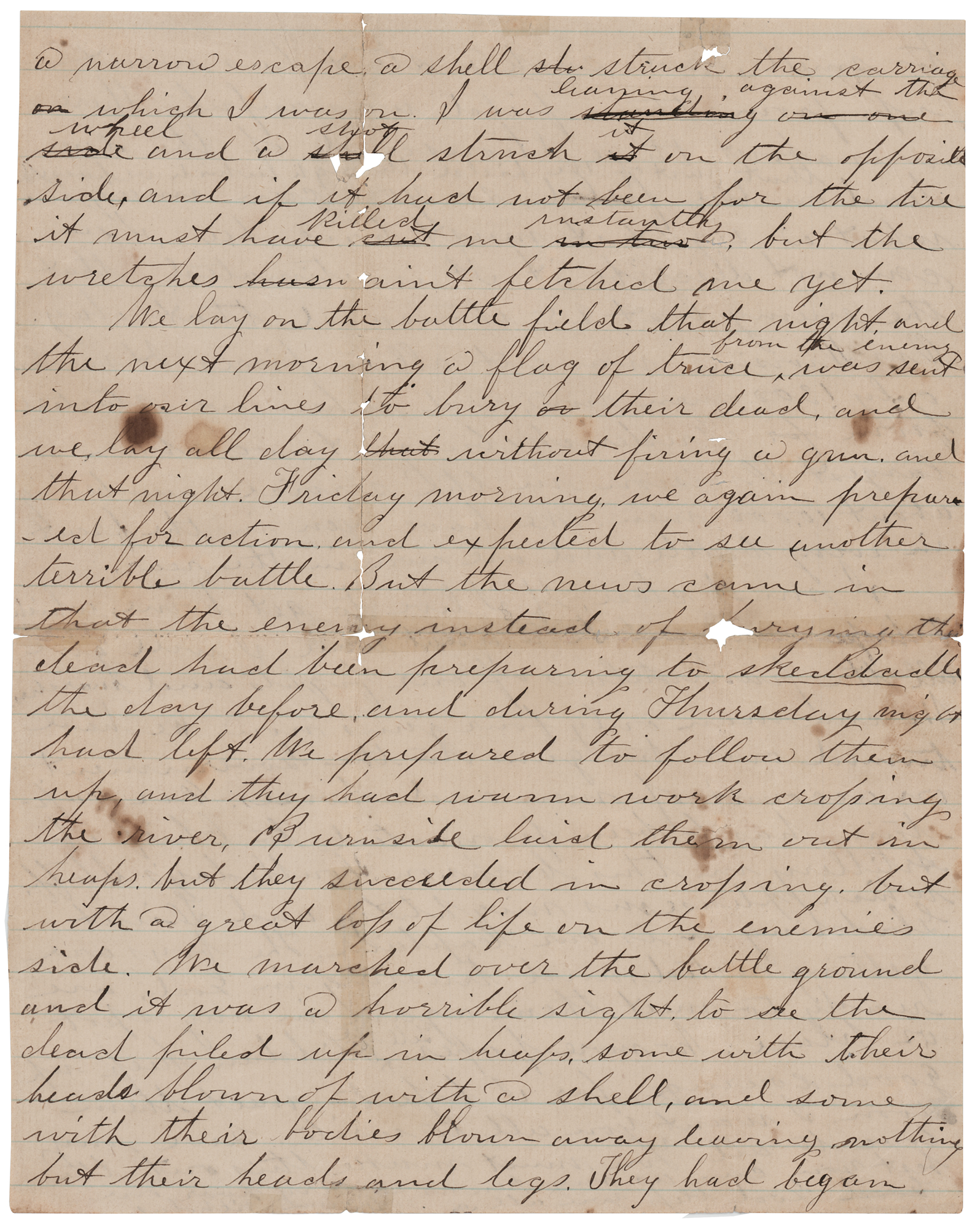
When we went forward in the morning to support the Infantry, we had to haul the dead and wounded from under the wheels between the enemy and our own men. I tell you it was an awful sight to hear the dying calling on you for water and pleading with you to help them. I ran a narrow escape. A shell struck the carriage which I was on. I was leaning against the wheel and a shot struck it on the opposite side, and if it had not been for the tire, it must have killed me instantly, but the wretches ain't fetched me yet.
We lay on the battle field that night, and the next morning a flag of truce from the enemy was sent into our lines to bury their dead, and we lay all day without firing a gun and that night. Friday morning we again prepared for action and expected to see another terrible battle. But the news came in that the enemy, instead of burying the dead had been preparing to skedaddle the day before and during Thursday night had left. We prepared to follow them up, and they had warm work crossing the river. Burnside laid them out in heaps, but they succeeded in crossing, but with a great loss of life on the enemy's side.
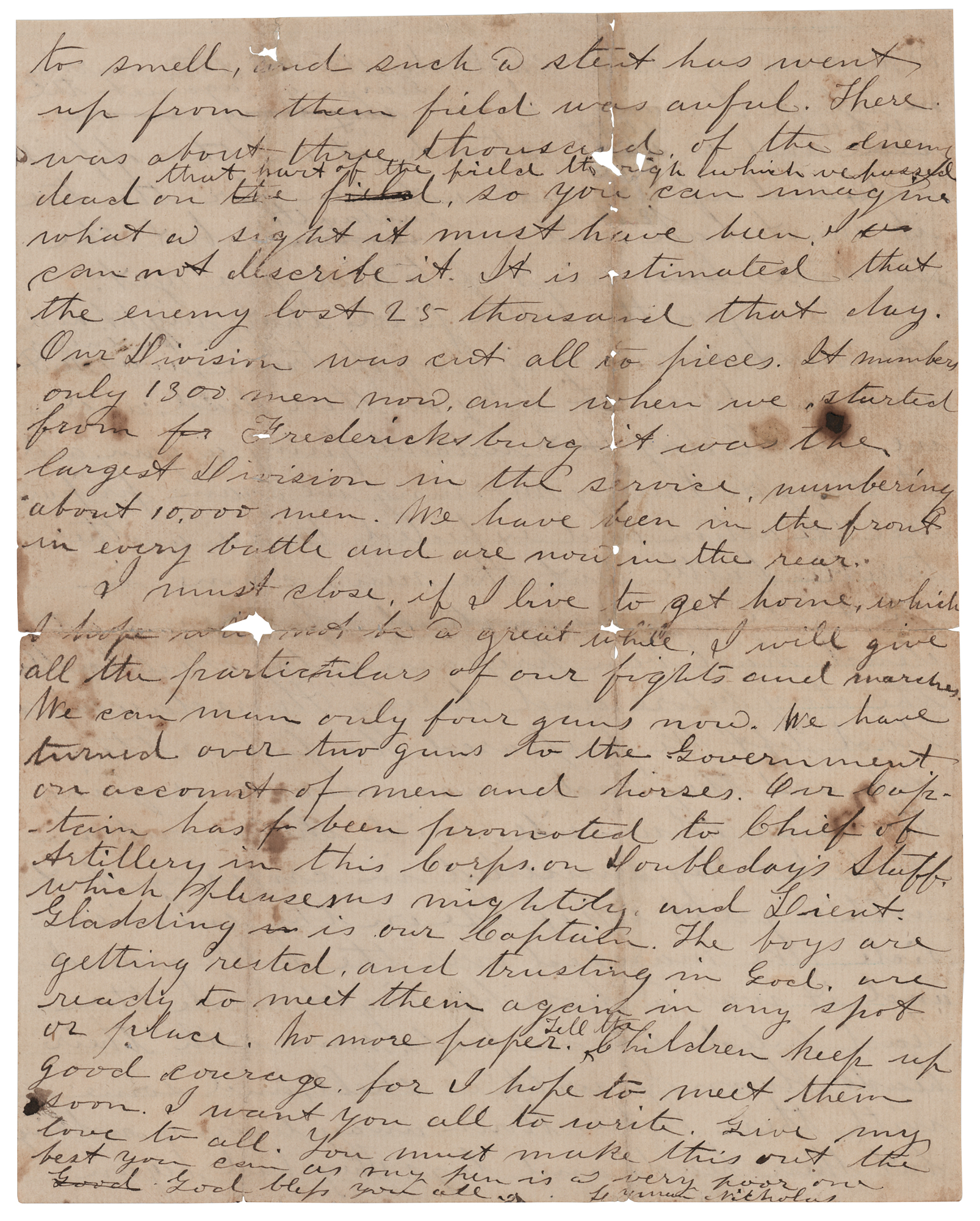
We marched over the battle ground and it was a horrible sight, to see the dead piled up in heaps, some with their heads blown off with a shell, and some with their bodies blown away leaving nothing but their heads and legs. They had begun to smell, and such a stench has went up from the field was awful. There was about three thousand of the enemy dead on that part of the field through which we passed, so you can imagine what a sight it must have been. I cannot describe it. It is estimated that the enemy lost 25 thousand that day. Our Division was cut all to pieces. It numbers only 1,300 men now, and when we started from Fredericksburg, it was the largest Division in the service, numbering about 10,000 men. We have been in the front in every battle and are now in the rear.
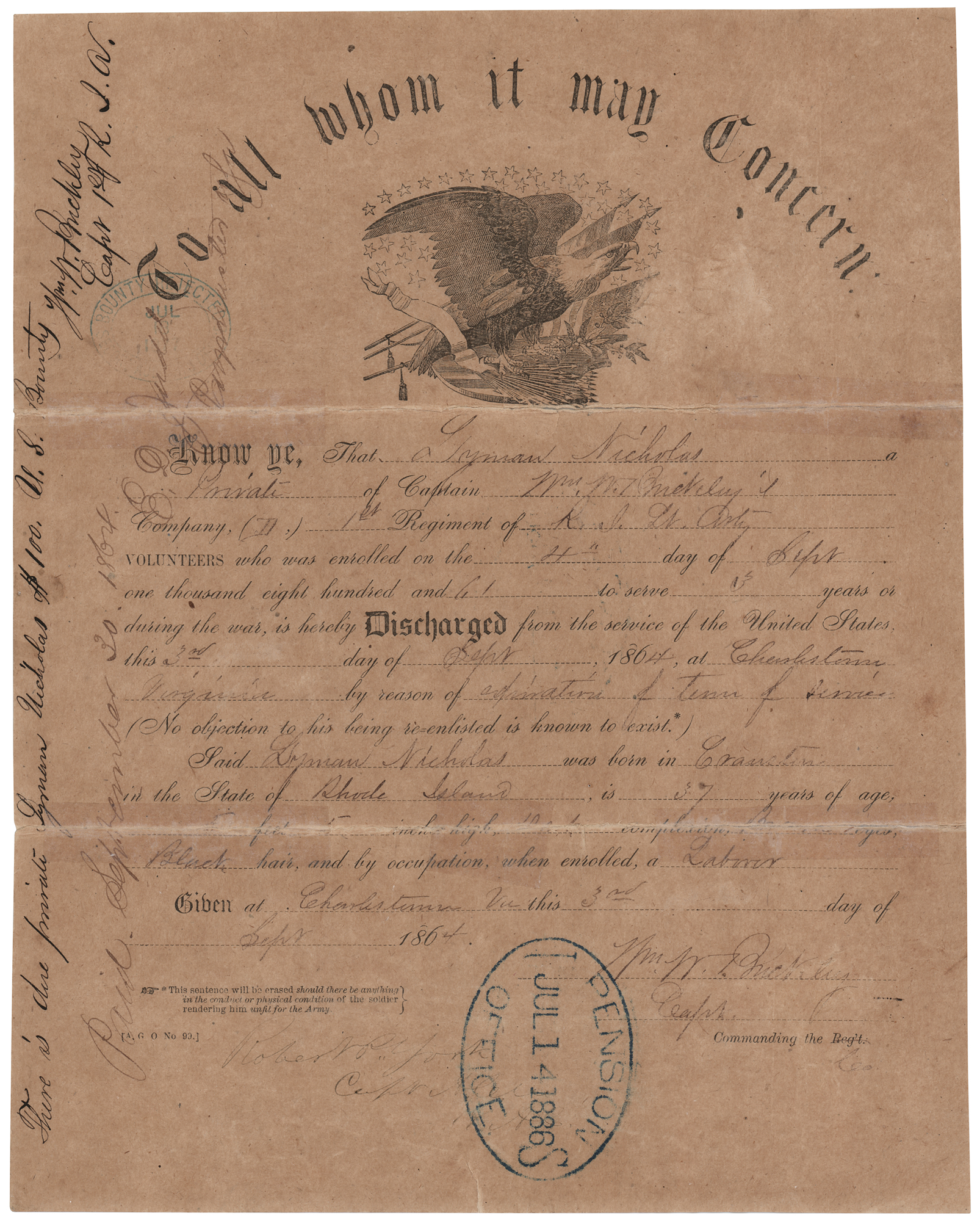
I must close, if I live to get home, which I hope will not be a great while, I will give all the particulars of our fights and marches. We can man only four guns now. We have turned over two guns to the Government on account of men and horses. Our Captain has been promoted to Chief of Artillery in the Corps on Doubleday's Staff which pleases me mightily, and Lieut. Gladding is our Captain. The boys are getting rested, and trusting in God, we're ready to meet them again in any spot or place. No more paper. Tell the children keep up good courage, for I hope to meet them soon. I want you all to write. Give my love to all. You must make this out the best you can as my pen is a very poor one. God bless you all.” At the top of the first page, Nicholas signs again, “Your aff. husband, Lyman. Send this letter to mother.” In very good to fine condition, with scattered stains, and minor paper loss along the intersecting folds. Accompanied by Nicholas’s official discharge papers from the United States Army, dated September 3, 1864, due to “expiration of term of services.”

