Sold For $10,208
*Includes Buyers Premium
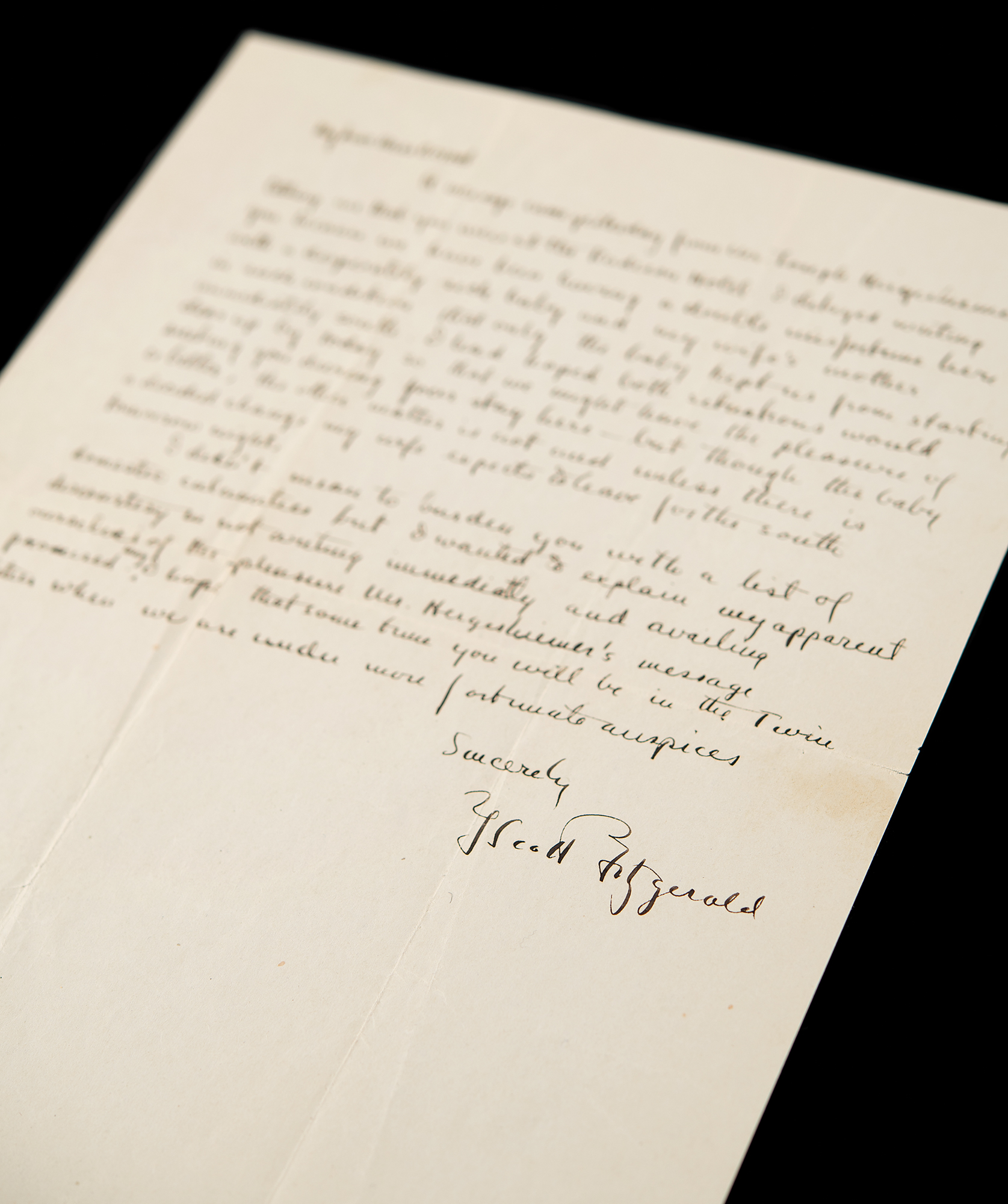
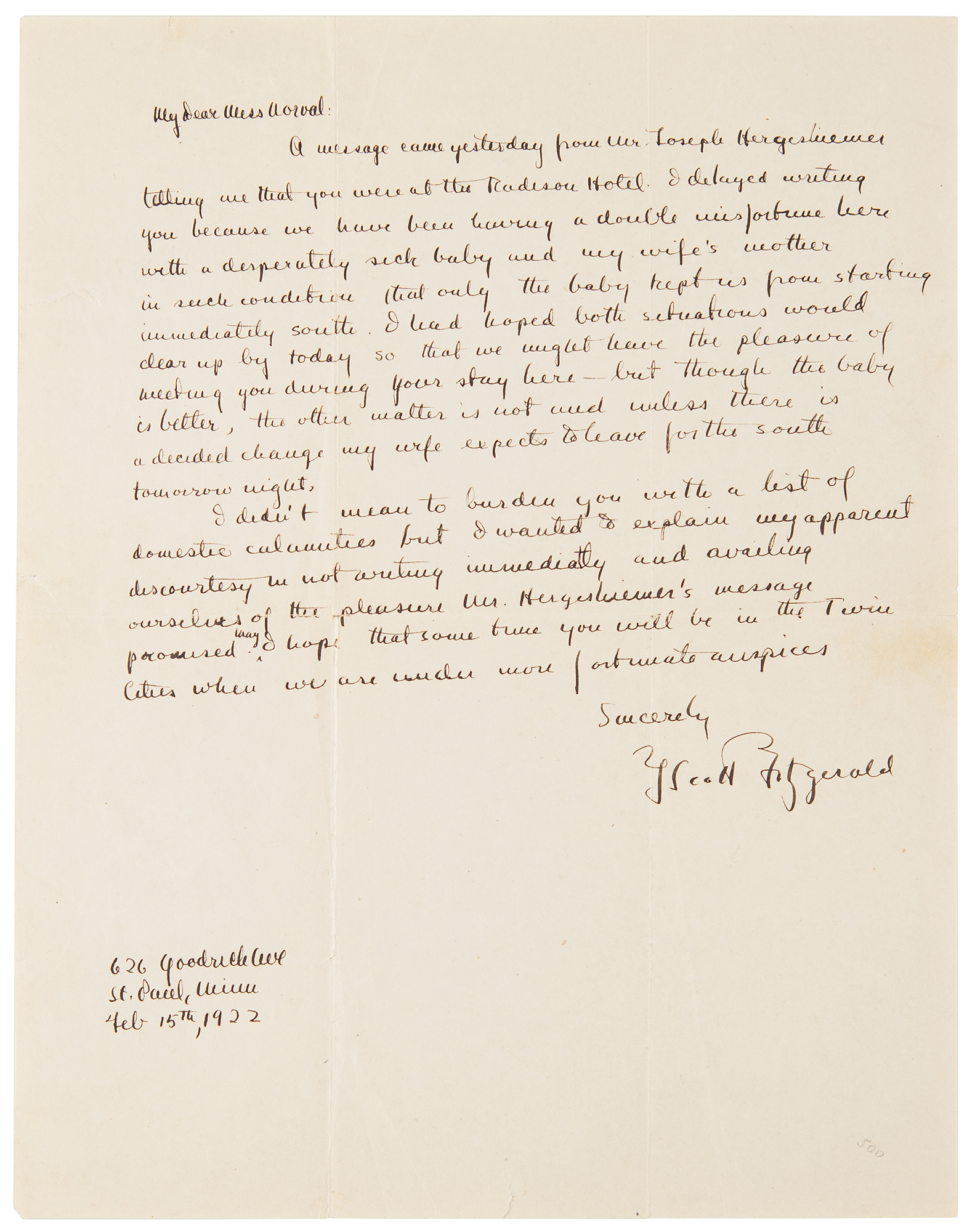
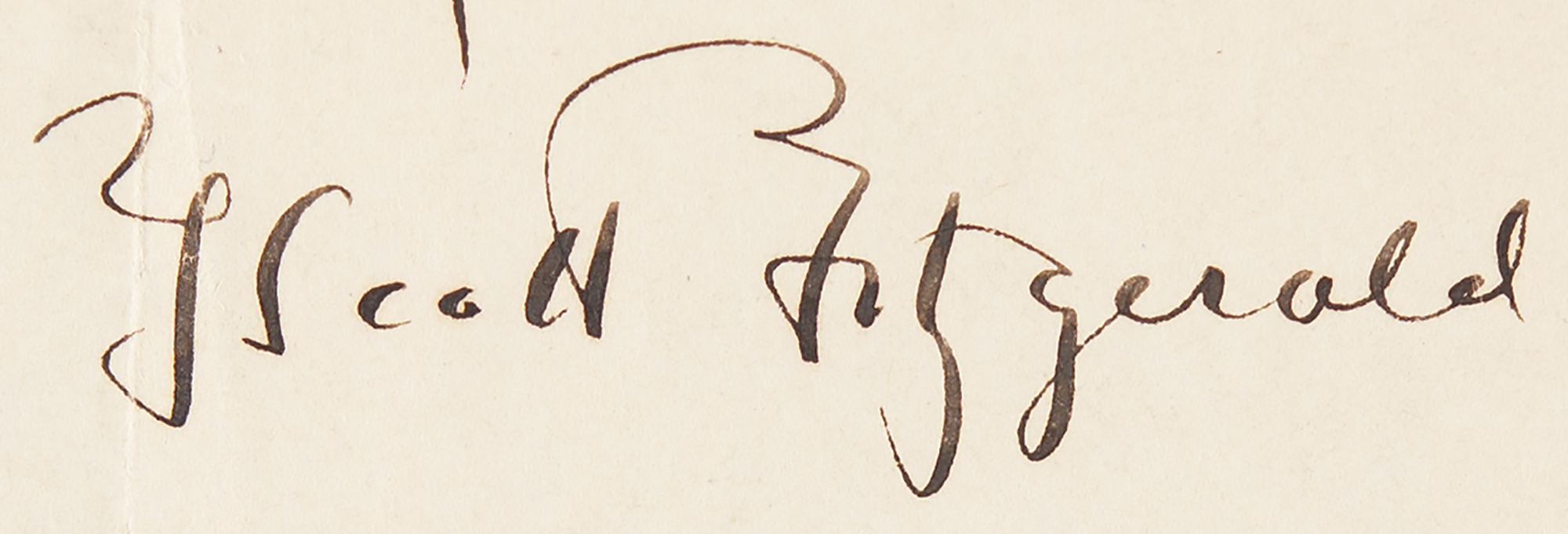
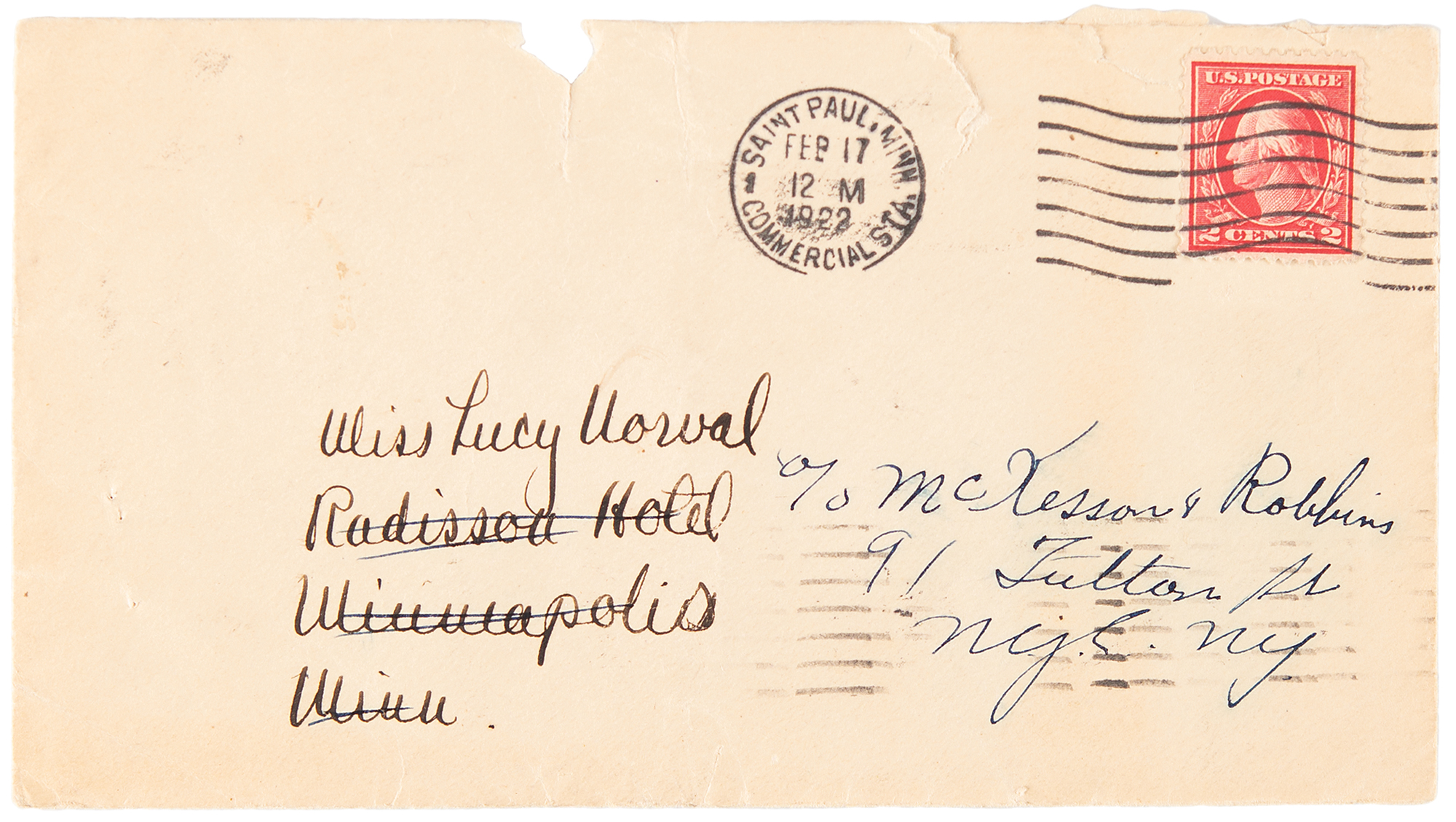
Exceptional ALS, one page, 8.5 x 11, February 15, 1922. Addressed from St. Paul, Minnesota, a handwritten letter from F. Scott Fitzgerald to "Lucy Norval," a friend of the author Joseph Hergesheimer, explaining that he won’t be able to meet her at Saint Paul's Radisson Hotel due to a "desperately sick" baby and an equally sick mother-in-law, the latter of whom Fitzgerald anticipated traveling south to visit thus preventing the meeting. The letter, in full: “A message came yesterday from Mr. Joseph Hergesheimer telling me that you were at the Radisson Hotel. I delayed writing you because we have been having a double misfortune here with a desperately sick baby and my wife's mother in such condition that only the baby kept us from starting immediately south. I had hoped both situations would clear up by today so that we might have the pleasure of meeting you during your stay here but though the baby is better, the other matter is not unless there is a decided change my wife expected to leave for the south tomorrow night. I didn't mean to burden you with a list of domestic calamities but I wanted to explain my apparent discourtesy in not writing immediately and availing ourselves of the pleasure Mr. Hergesheimer's message promised. May I hope that some time you will be in the Twin Cities when we are under more fortunate auspices.” In fine condition. Accompanied by the original mailing envelope addressed in the hand of Fitzgerald; the right side bears a correction in an unidentified hand, sending it care of McKesson & Robbins in New York.
In the winter of 1921, Fitzgerald moved to his home in St. Paul, Minnesota, where he finished work on his second novel, The Beautiful and Damned, and where his wife, Zelda, gave birth to their daughter, and only child, Frances Scott ‘Scottie’ Fitzgerald on October 26, 1921. As this letter indicates, the Fitzgeralds were still in St. Paul when Fitzgerald wrote this letter, which dates roughly two weeks before the release of The Beautiful and Damned, chapters of which had been serialized in Metropolitan Magazine from September 1921 to March 1922, before it was published by Charles Scribner's Sons on March 4, 1922.
Fitzgerald had a long, mercurial acquaintance with prominent American writer Joseph Hergesheimer, during which he vacillated between deriding Hergesheimer's work and lauding his literary accomplishments. The pair met when Fitzgerald went to his favorite bookshop and encountered Hergesheimer, approaching him at the height of his lucrative fame. 'Mr. Hergesheimer,' said Fitzgerald, 'a writer's life is full of bitterness, frustration, and despair. Don't you think it would be better to be born with a talent for, say, carpentry'… 'For Christ's sake!' [Hergesheimer] snapped, 'I lived for years in the mountains of Virginia, eating hominy grits and black-eyed peas and writing on a broken-down machine before I sold one Goddamned line. And you talk to me about despair!' (Turnbull, 128). They went on to be close acquaintances, even friends, engaging in outings with friends to yacht clubs and the like.
Hergesheimer began his career as the writer of historical romances, but his ‘later works explore the manners and milieu of America in the 1920s in a way that bears comparison with F. Scott Fitzgerald’ (Stringer, 299). In an October 1925 letter to his friend, Maxwell Perkins, Fitzgerald wrote: ‘Gatsby is just the sort of book which the English say that Americans can't write, which they praise Hergesheimer for almost writing.’ Indeed, Hergesheimer was the father of literary aestheticism, and Gatsby was arguably the finest example of the genre. However, Fitzgerald also referred to Hergesheimer's work as ‘vile’ and ‘awful’ to mutual friends. He also jealously assessed Hergeheimer's work in an August 1935 letter to Margaret Case Harriman: ‘Of course he is more established than I am, in the same way that Hugh Walpole is more 'established' than D.H. Lawrence established with whom? And I like his talent in half a dozen fine scenes and don't compare Walpole to him intellectually.’ Yet, when the chips were down, Fitzgerald turned to the more famous and more successful Hergesheimer. In the fall of 1935, he wrote to Hergesheimer begging him to reassess his views of Tender Is the Night, arguing that the presence of an actress was just a ‘catalytic agent’ and thus Hergesheimer's contention that it was ‘almost impossible to write a book about an actress’ wasn't relevant.
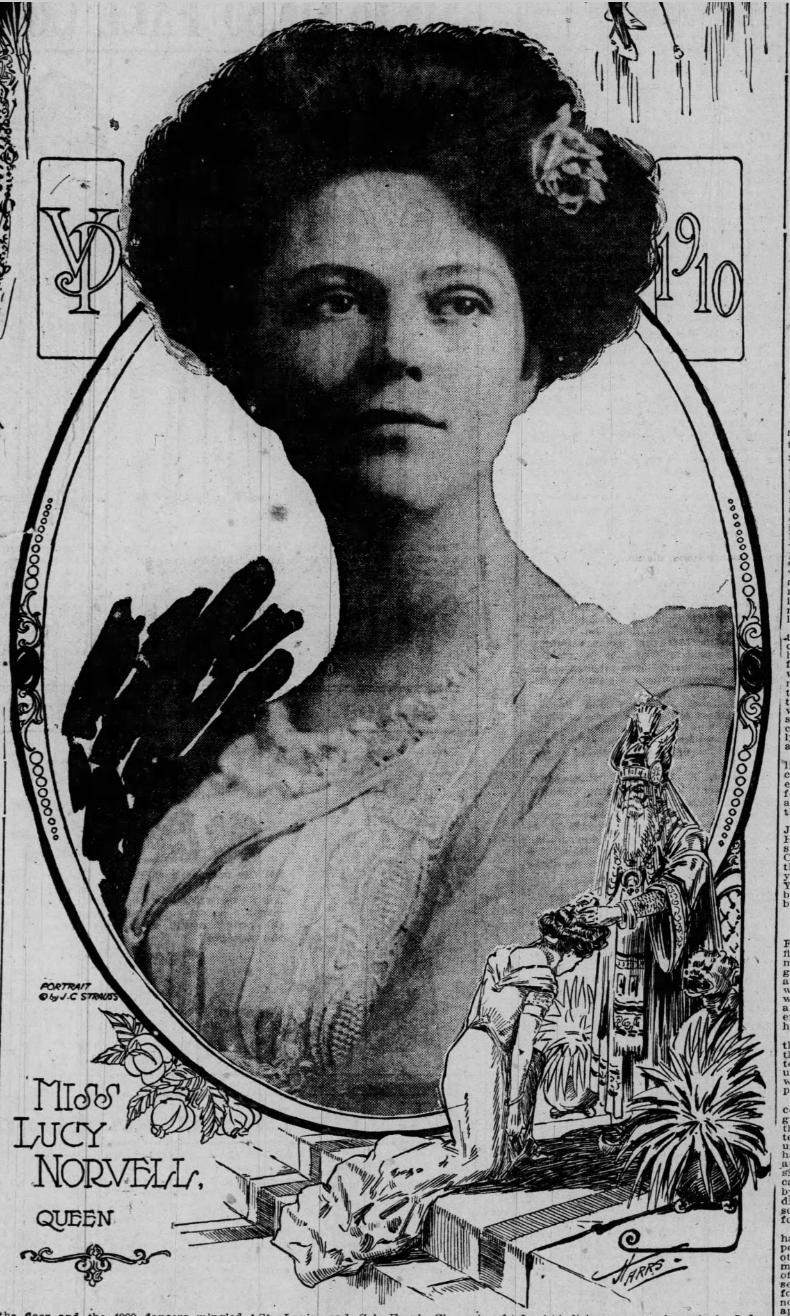
Lucy Norvell was a Midwestern-born NYC socialite who had wanted to meet Fitzgerald when she was visiting Saint Paul in February of 1922. Hergesheimer, a fellow Scribner author of Fitzgerald's, wrote a letter of introduction for her to Fitzgerald. In the latter’s response, he apologizes for not responding immediately, explaining “a double misfortune” prevented him. The Fitzgeralds’ baby daughter, Scottie, had been "desperately sick," and Zelda’s mother, Minnie, in Alabama, was "in such condition that only the baby kept us from starting immediately south." In truth, the entire Fitzgerald family had been sick with influenza, a precarious and occasionally lethal illness in the 1920s. By the time he did write, Scottie was better, but Minnie was not, and Zelda was preparing to go to Montgomery (in the end, she didn't). Lucy had left the Radisson Hotel in Minneapolis by the time the letter arrived, and it was forwarded to her at one of her father’s business addresses, care of McKesson & Robbins, on Fulton Street in New York City.
Provenance: Purchased by Charlie Watts, the Rolling Stones drummer, at Bauman Rare Books (folder included); sold at Watts’s ‘Literature and Jazz’ estate sale by Christie's in 2023.

This item is Pre-Certified by PSA/DNA
Buy a third-party letter of authenticity for
$50.00
*This item has been pre-certified by a trusted third-party authentication service, and by placing a bid on this item, you agree to accept the opinion of this authentication service. If you wish to have an opinion rendered by a different authenticator of your choosing, you must do so prior to your placing of any bid. RR Auction is not responsible for differing opinions submitted 30 days after the date of the sale.
Third-party authentication service applies only to signatures and handwriting, and does not cover the addition of sketches, artwork, musical quotations, etc.

