Sold For $6,248
*Includes Buyers Premium
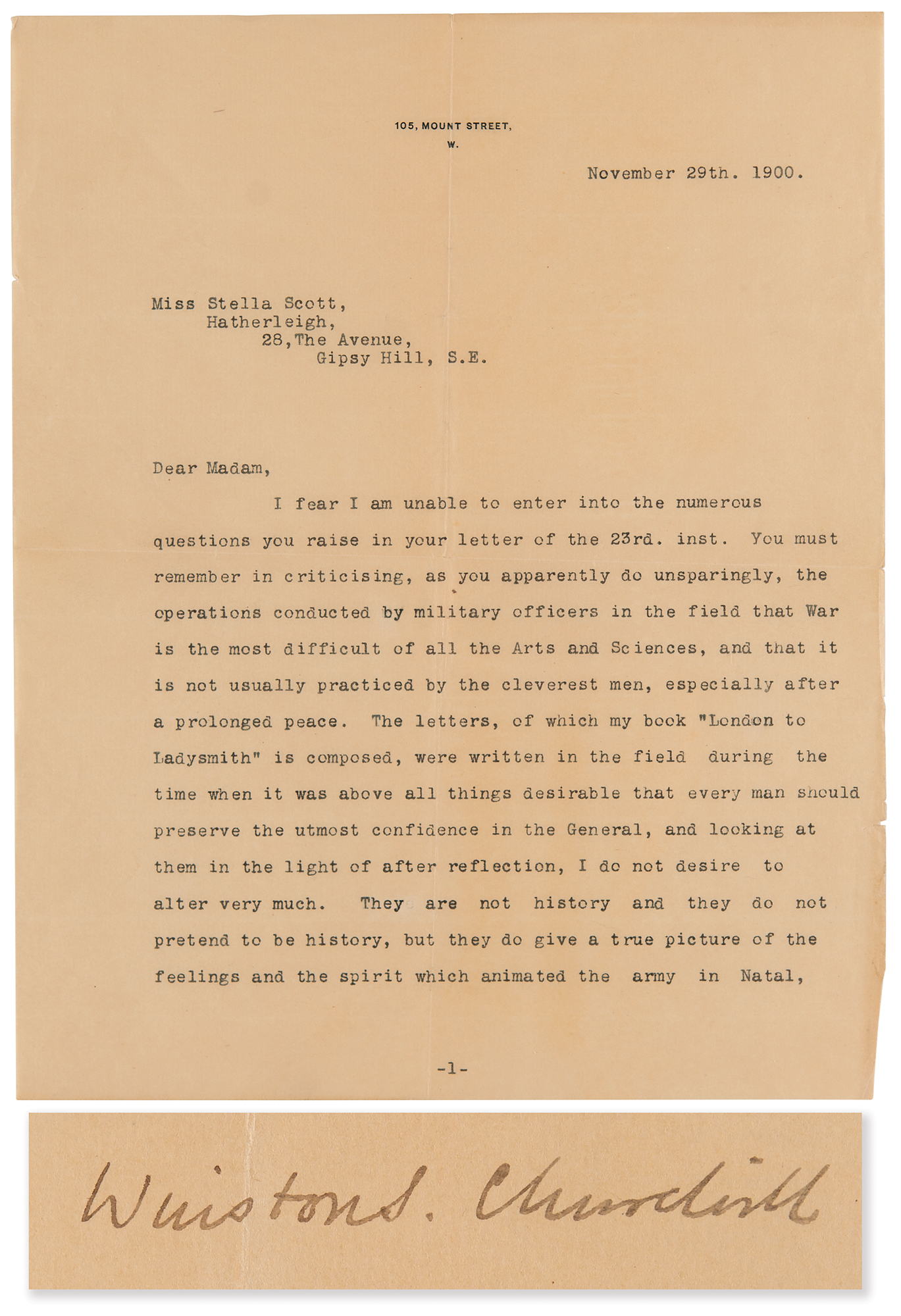
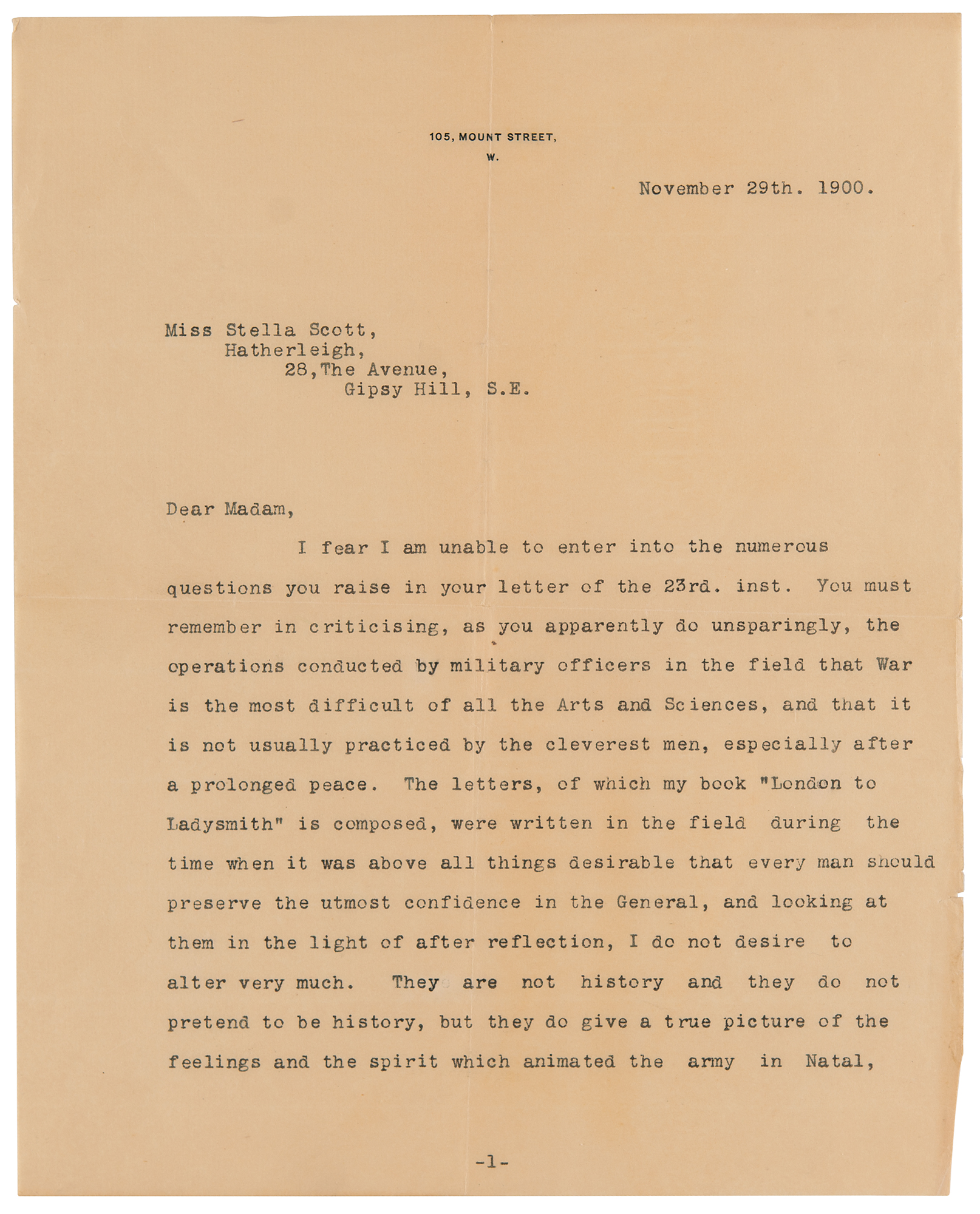
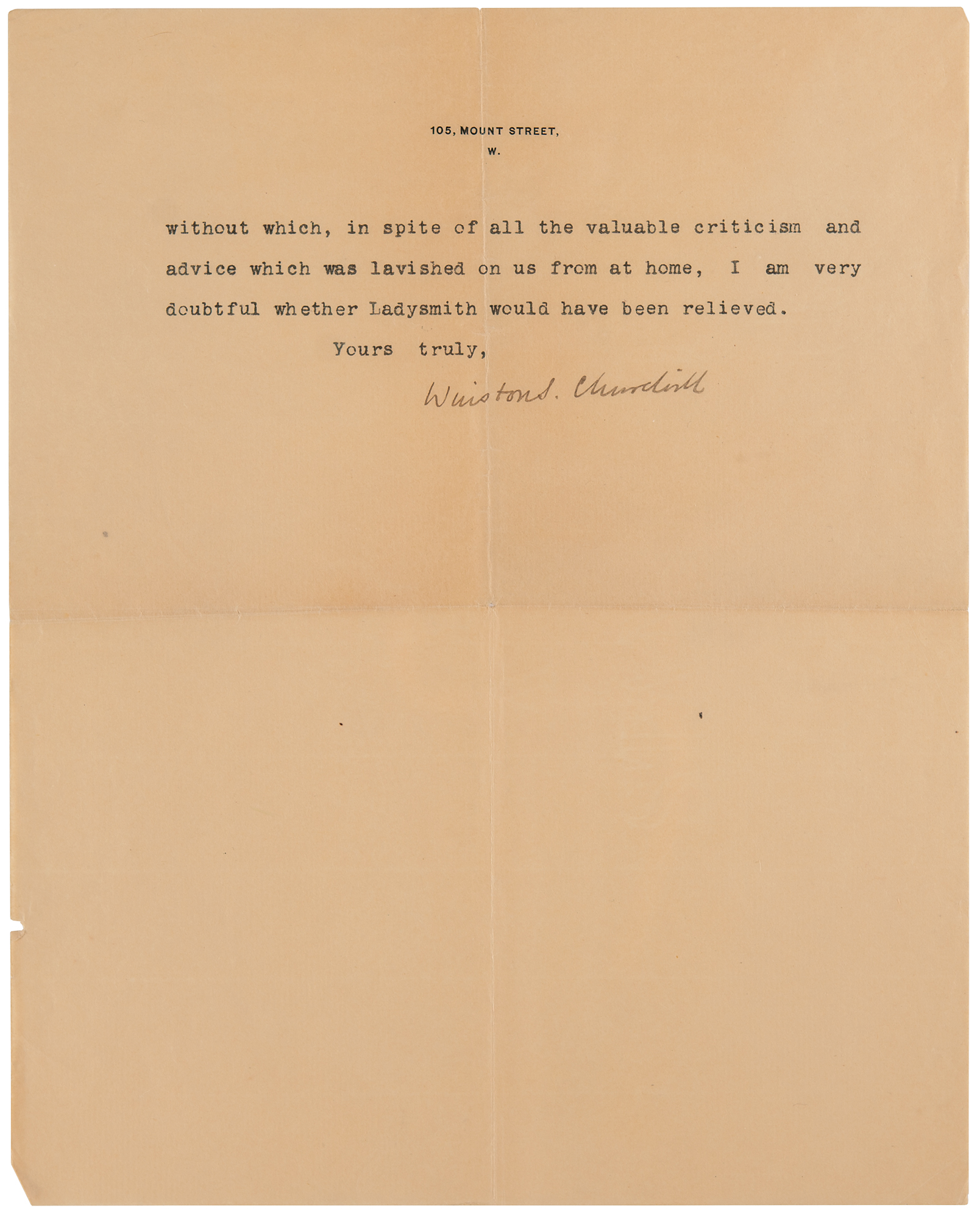
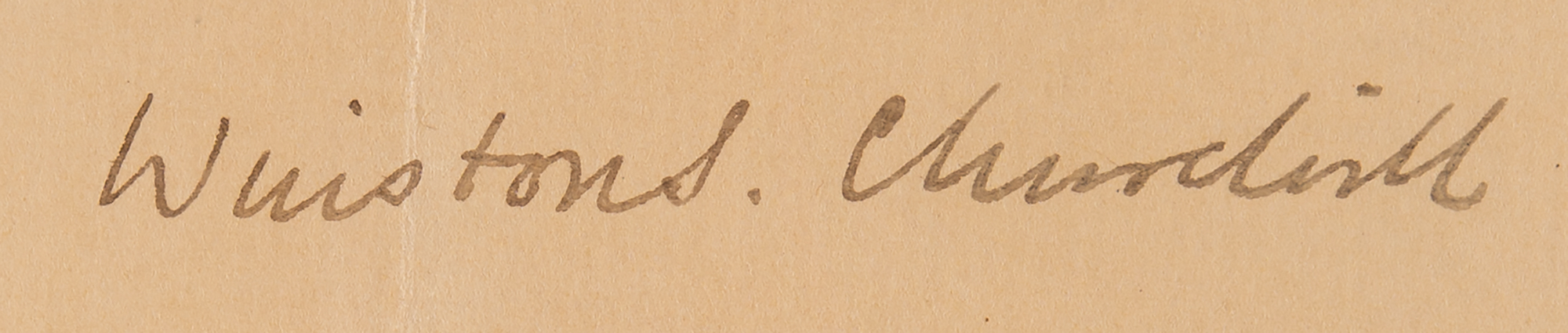
Early TLS signed “Winston S. Churchill,” two pages, 8 x 10, 105 Mount Street, W. letterhead, November 29, 1900. Letter to Stella Scott, in full: “I fear I am unable to enter into the numerous questions you raise in your letter of the 23rd. inst. You must remember in criticising, as you apparently do unsparingly, the operations conducted by military officers in the field that War is the most difficult of all the Arts and Sciences, and that it is not usually practiced by the cleverest men, especially after a prolonged peace. The letters, of which my book ‘London to Ladysmith’ is composed, were written in the field during the time when it was above all things desirable that every man should preserve the utmost confidence in the General, and looking at them in the light of after reflection, do not desire to alter very much. They are not history and they do not pretend to be history, but they do give a true picture of the feelings and the spirit which animated the army in Natal, without which, in spite of all the valuable criticism and advice which was lavished on us from at home, I am very doubtful whether Ladysmith would have been relieved.” In fine condition.
The work referenced by Churchill is London to Ladysmith via Pretoria, a personal record of Churchill's impressions during the first five months of the Second Boer War. Published in 1900 and dedicated to the staff of the Natal Government railway, the book features an account of the Relief of Ladysmith, as well as the story of Churchill's capture and dramatic escape from the Boers.
In 1899, a 24-year-old Churchill, who had left his regiment, the 4th Hussars, earlier that March, remained determined to stay near the front line of battle. He secured a position as a war correspondent for The Morning Post, departed from Southampton aboard the Dumottar Castle on October 14th, and arrived in Cape Town on October 31st. During his assignment as a military reporter, Churchill was captured but ultimately made a daring escape from a prison camp. The escape, comprised of a 300-mile journey to Mozambique, briefly elevated him to the status of a national hero in Britain.
However, rather than returning home, Churchill joined General Redvers Buller's army on its mission to relieve the British forces at the Siege of Ladysmith and capture Pretoria. While continuing his role as a war correspondent, Churchill also received a commission in the South African Light Horse Regiment. He was among the first British troops to enter both Ladysmith and Pretoria. Remarkably, Churchill and his cousin, the Duke of Marlborough, managed to get ahead of the advancing troops in Pretoria, where they secured the surrender of 52 Boer guards at the prison camp.

This item is Pre-Certified by PSA/DNA
Buy a third-party letter of authenticity for
$100.00
*This item has been pre-certified by a trusted third-party authentication service, and by placing a bid on this item, you agree to accept the opinion of this authentication service. If you wish to have an opinion rendered by a different authenticator of your choosing, you must do so prior to your placing of any bid. RR Auction is not responsible for differing opinions submitted 30 days after the date of the sale.
Third-party authentication service applies only to signatures and handwriting, and does not cover the addition of sketches, artwork, musical quotations, etc.

