Sold For $1,880
*Includes Buyers Premium
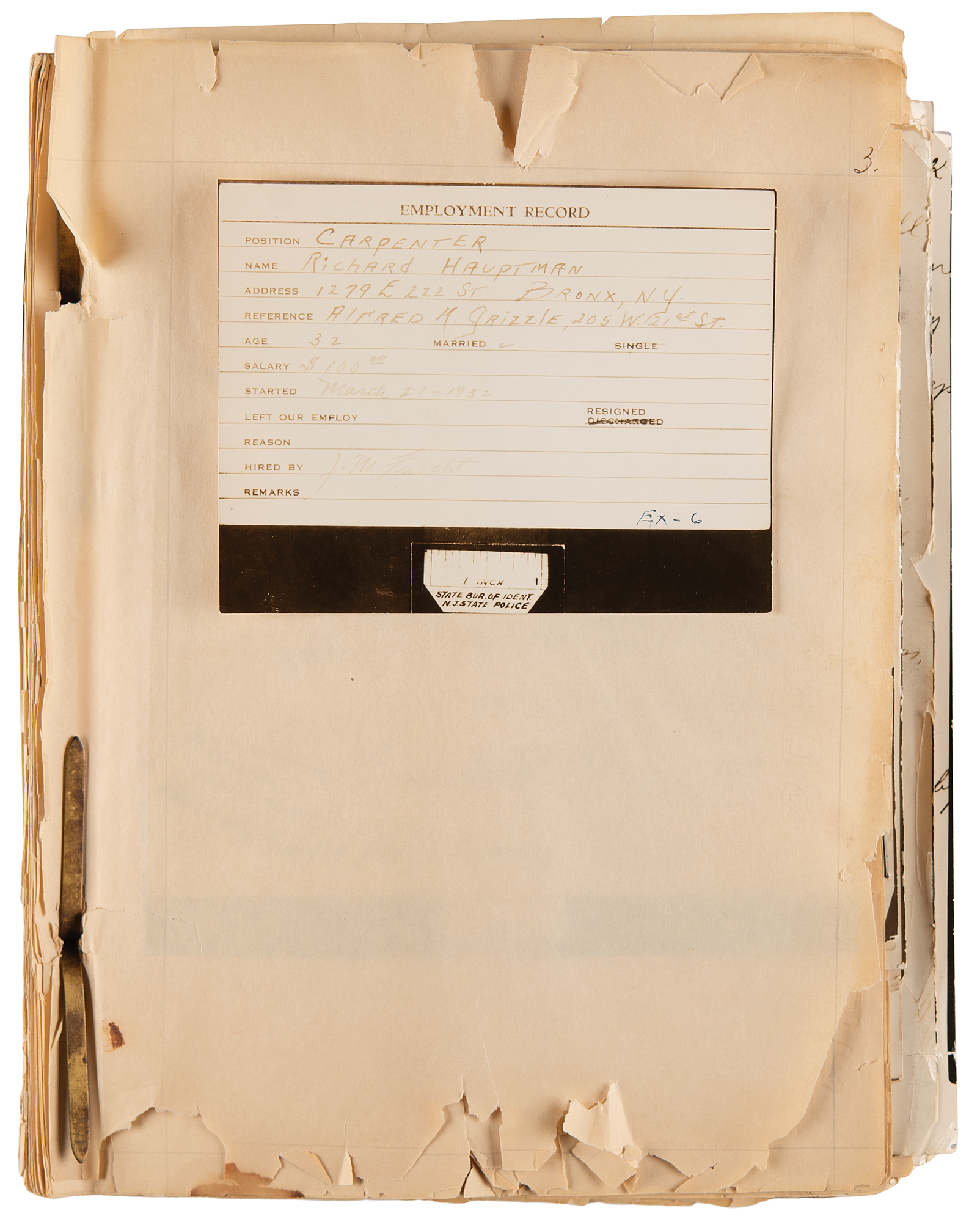
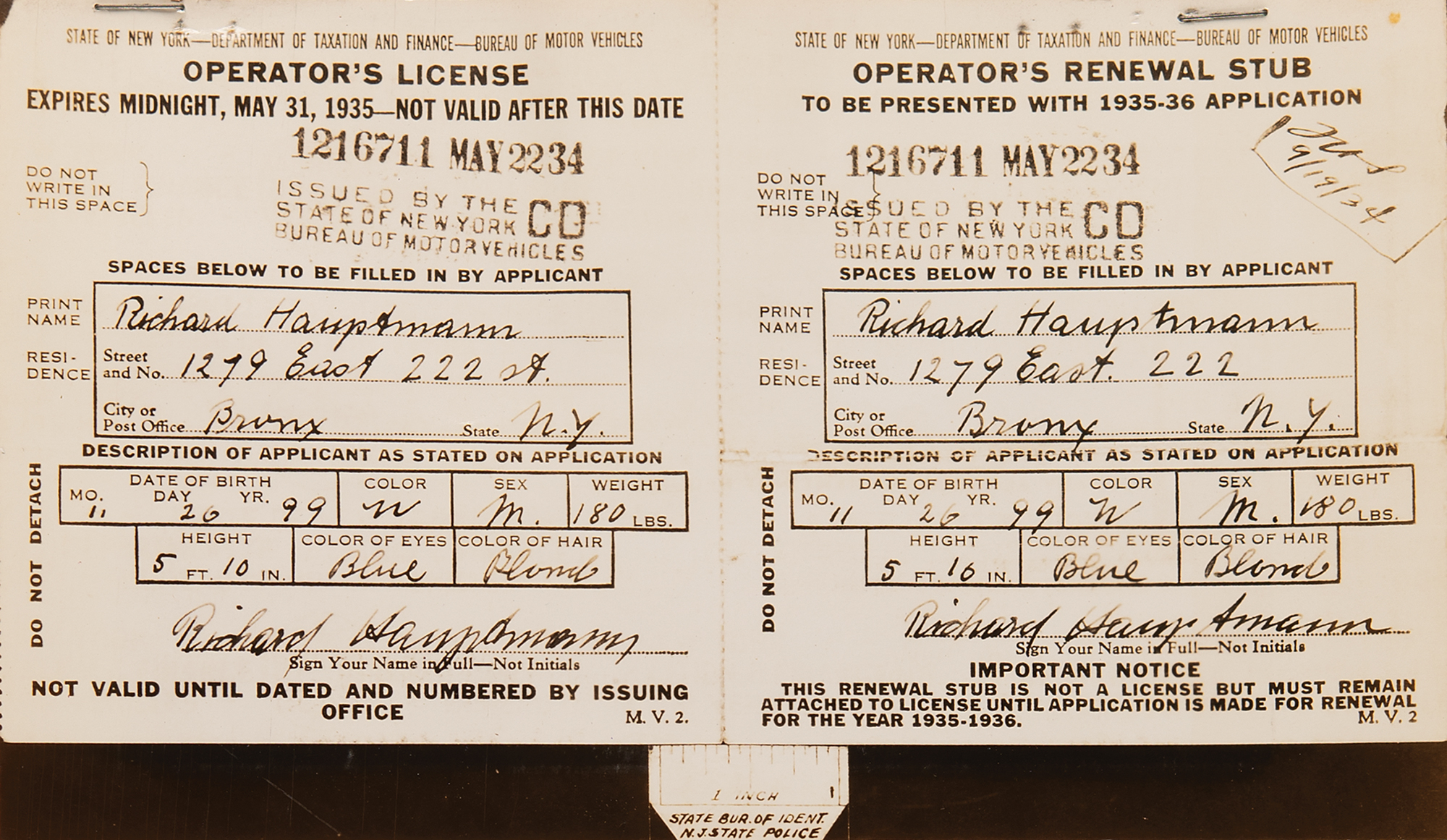
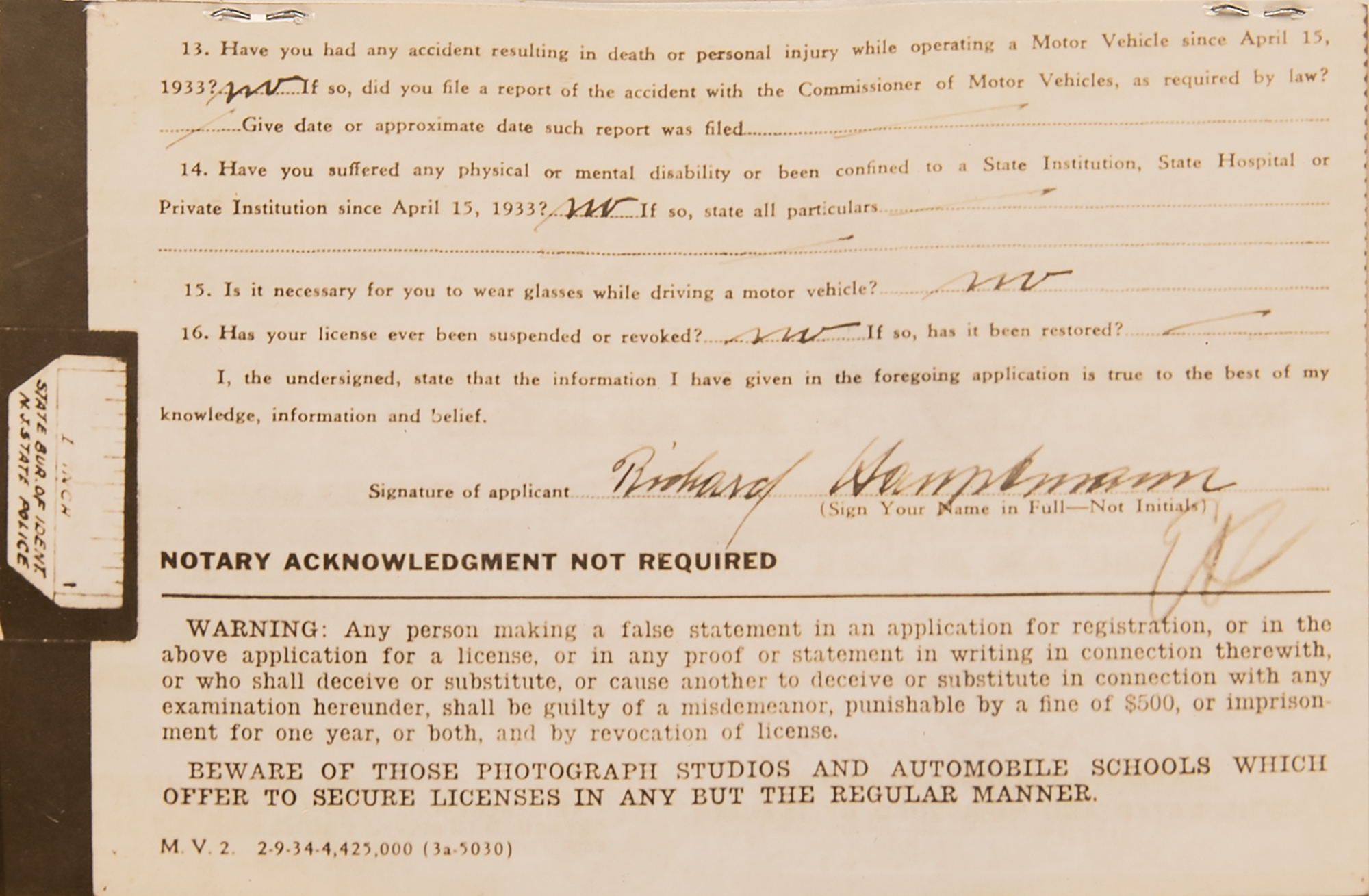
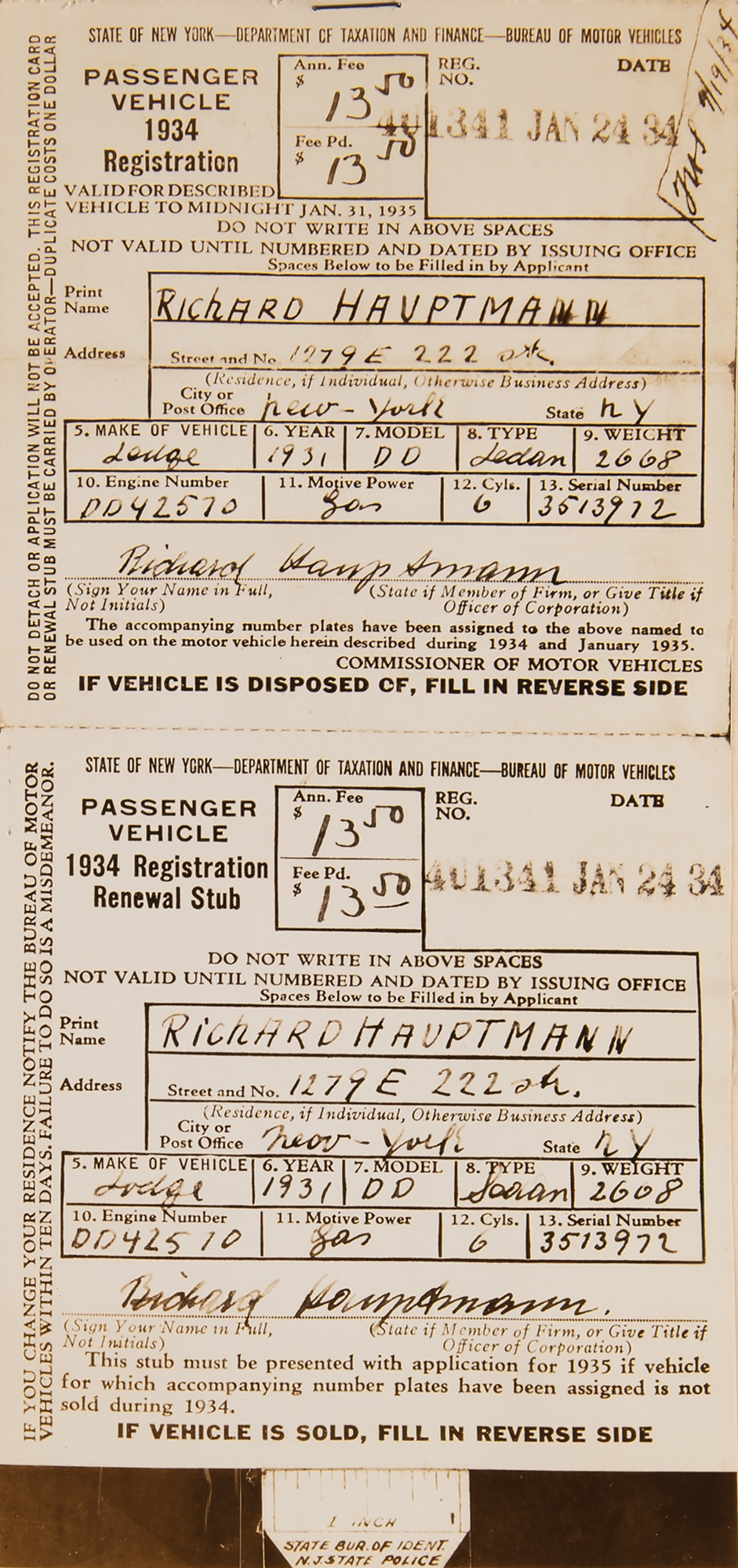
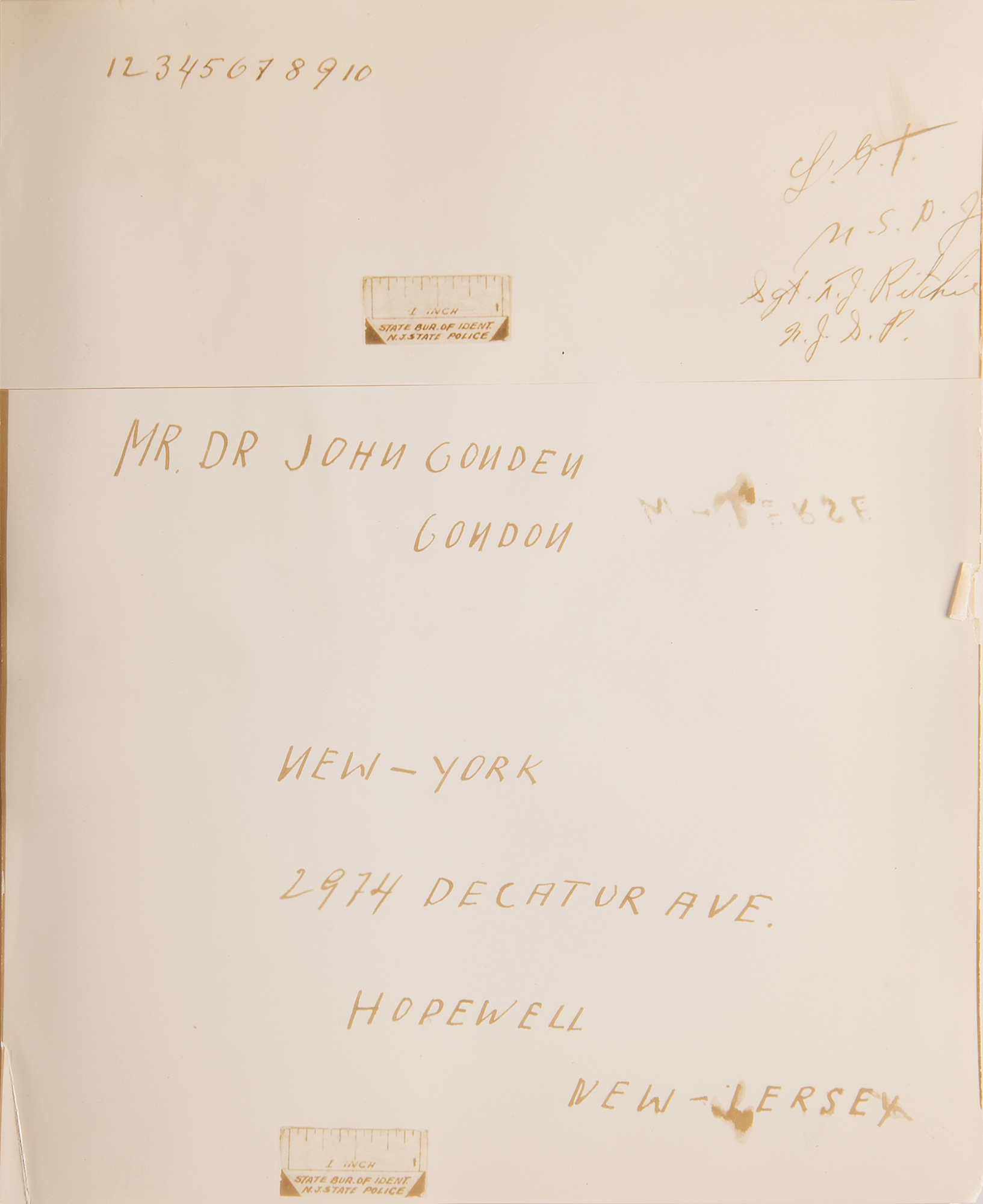
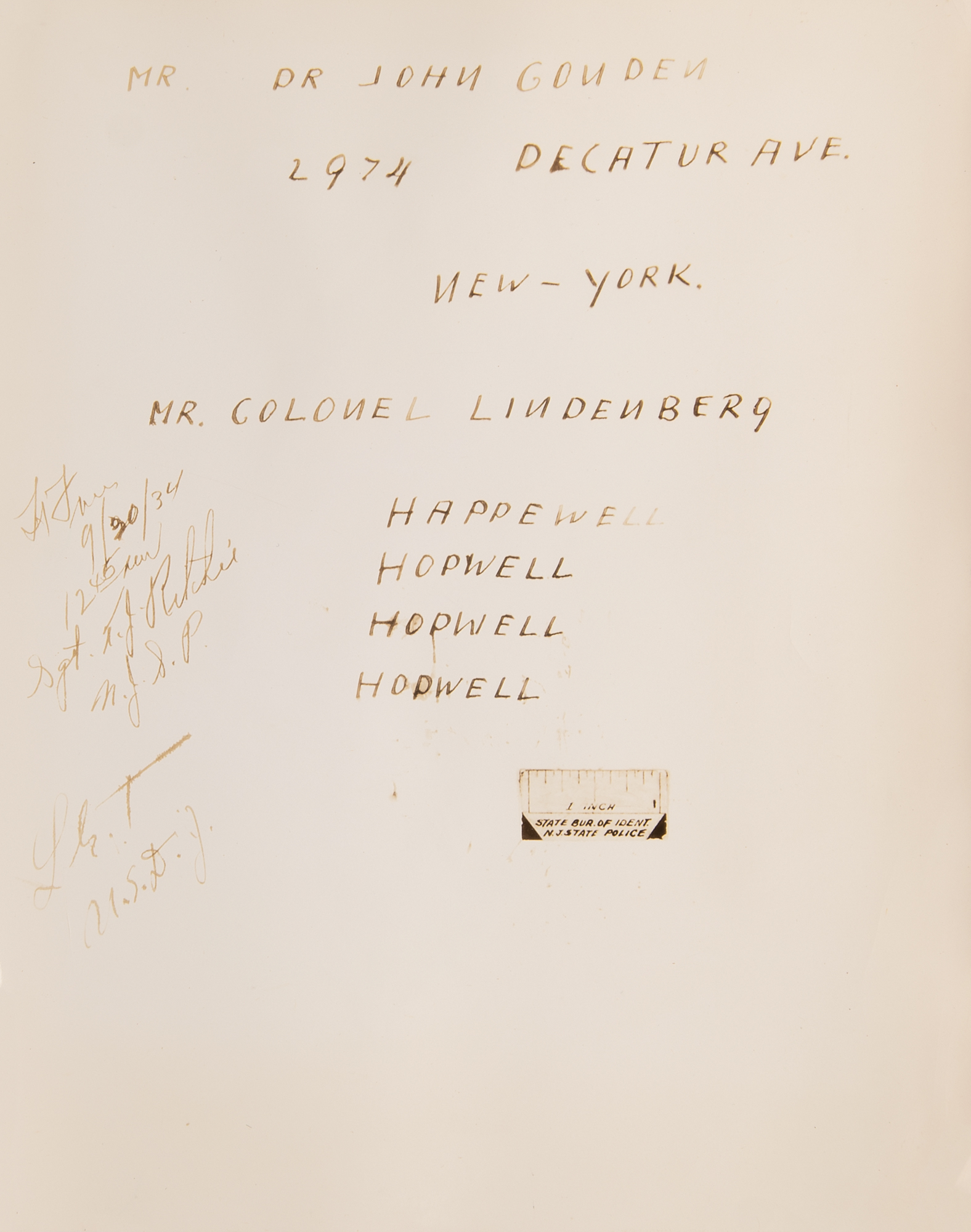
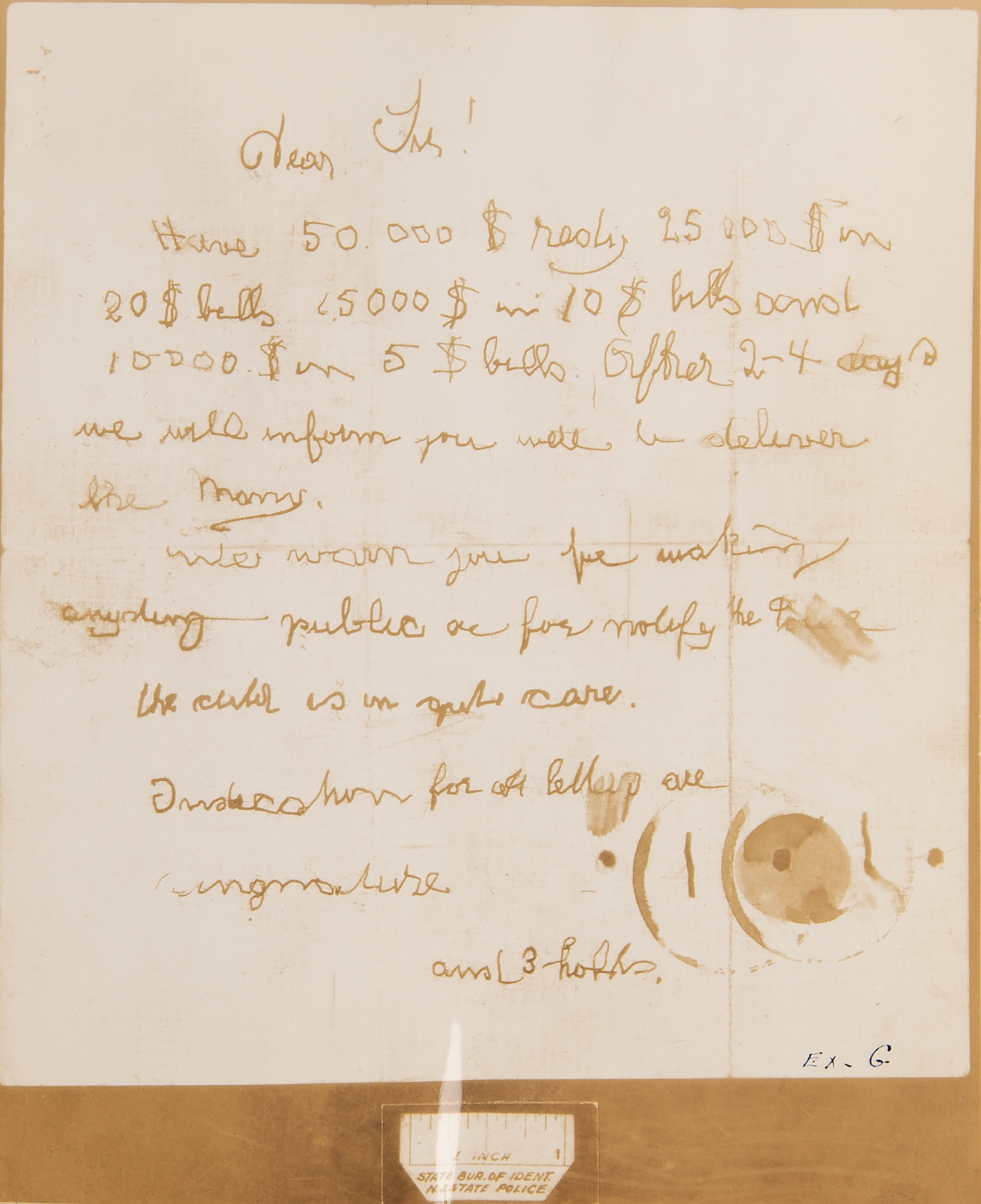
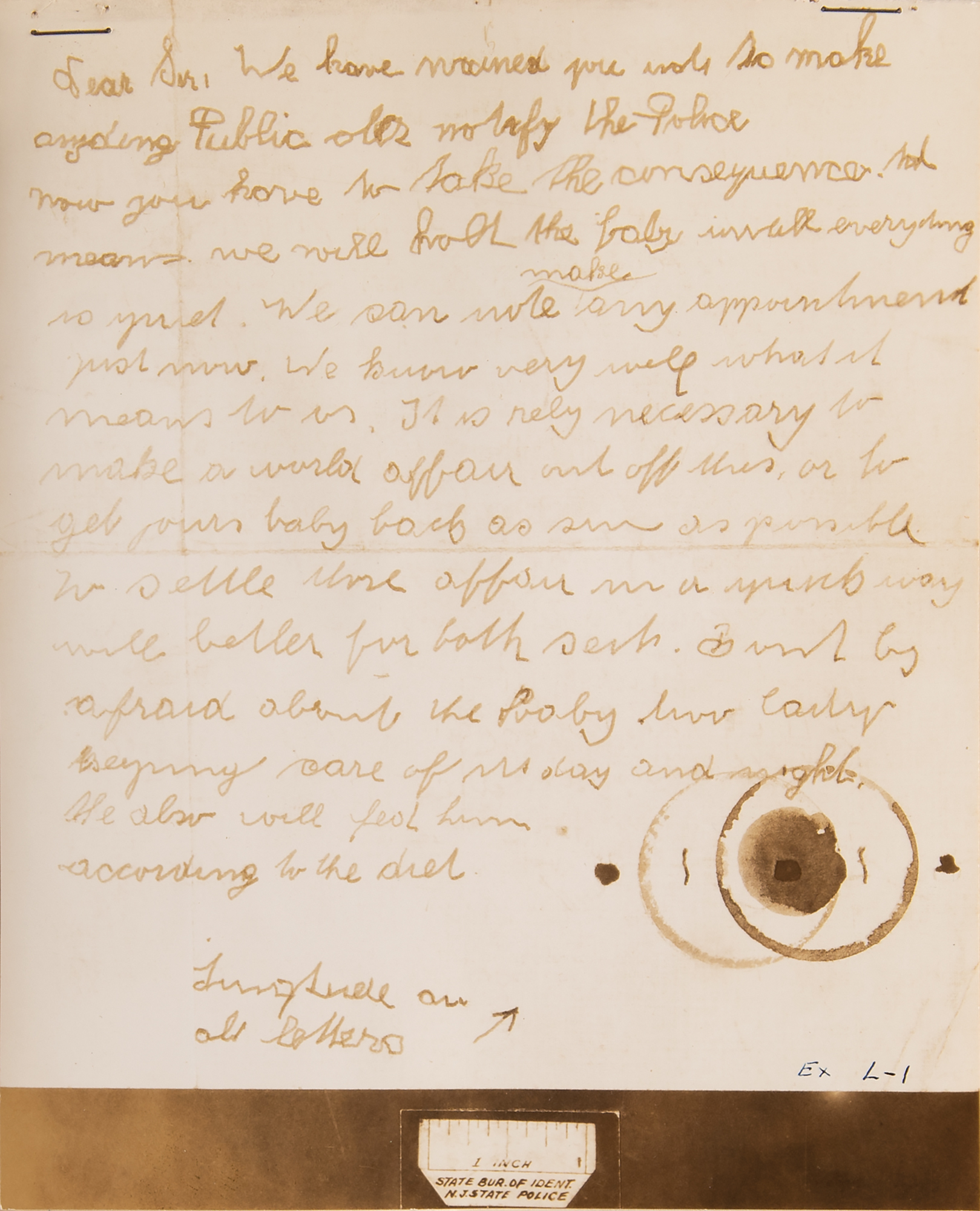
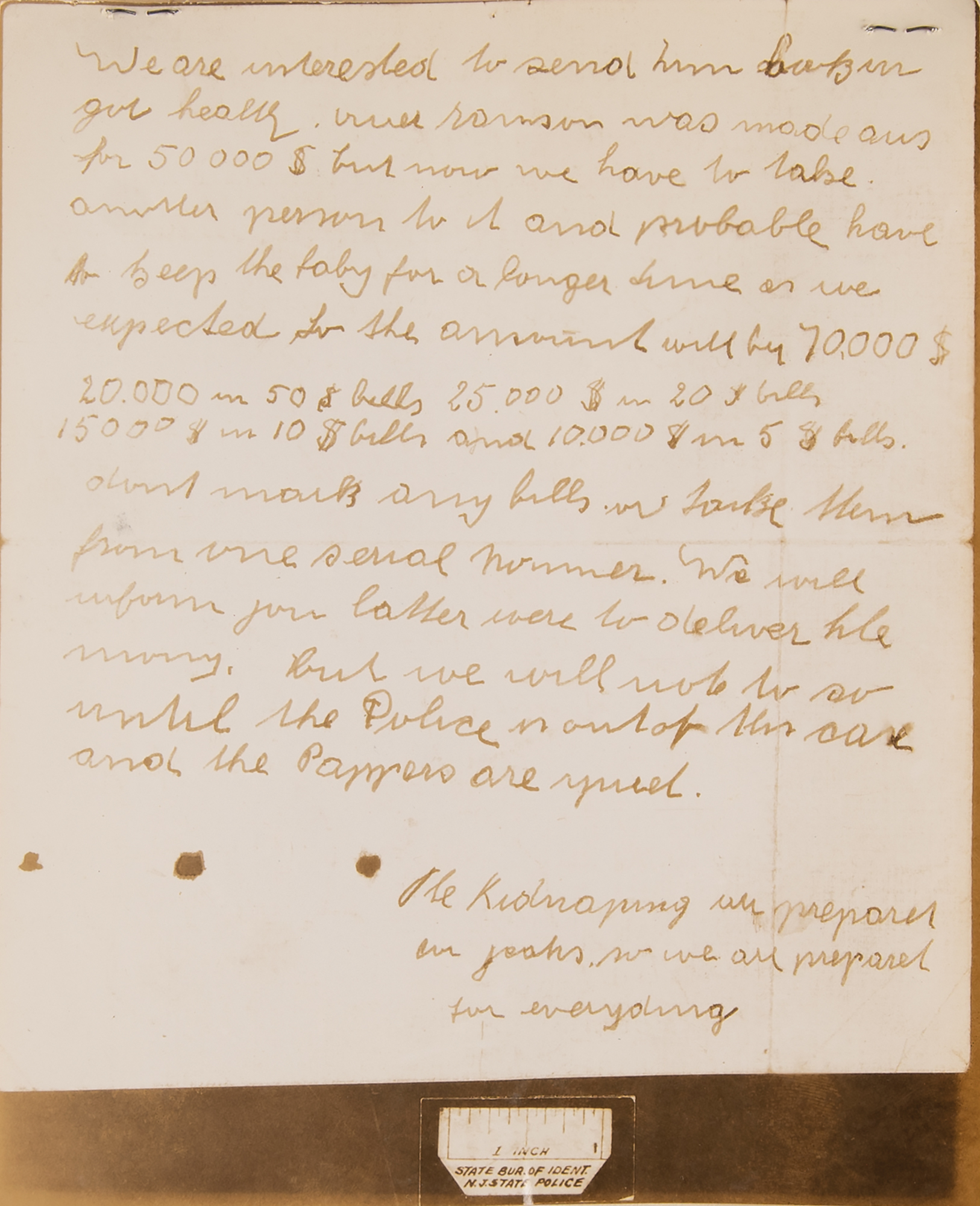
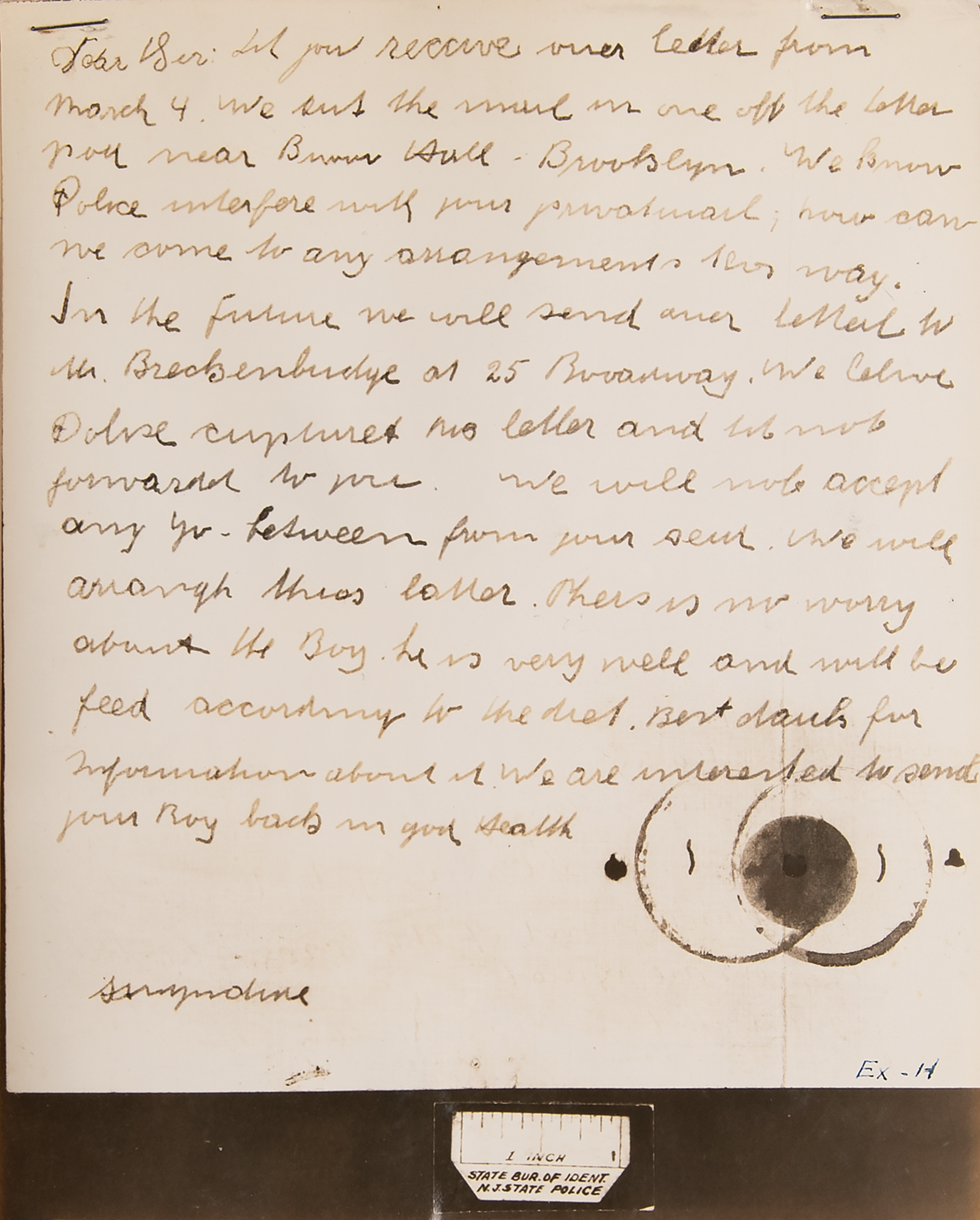
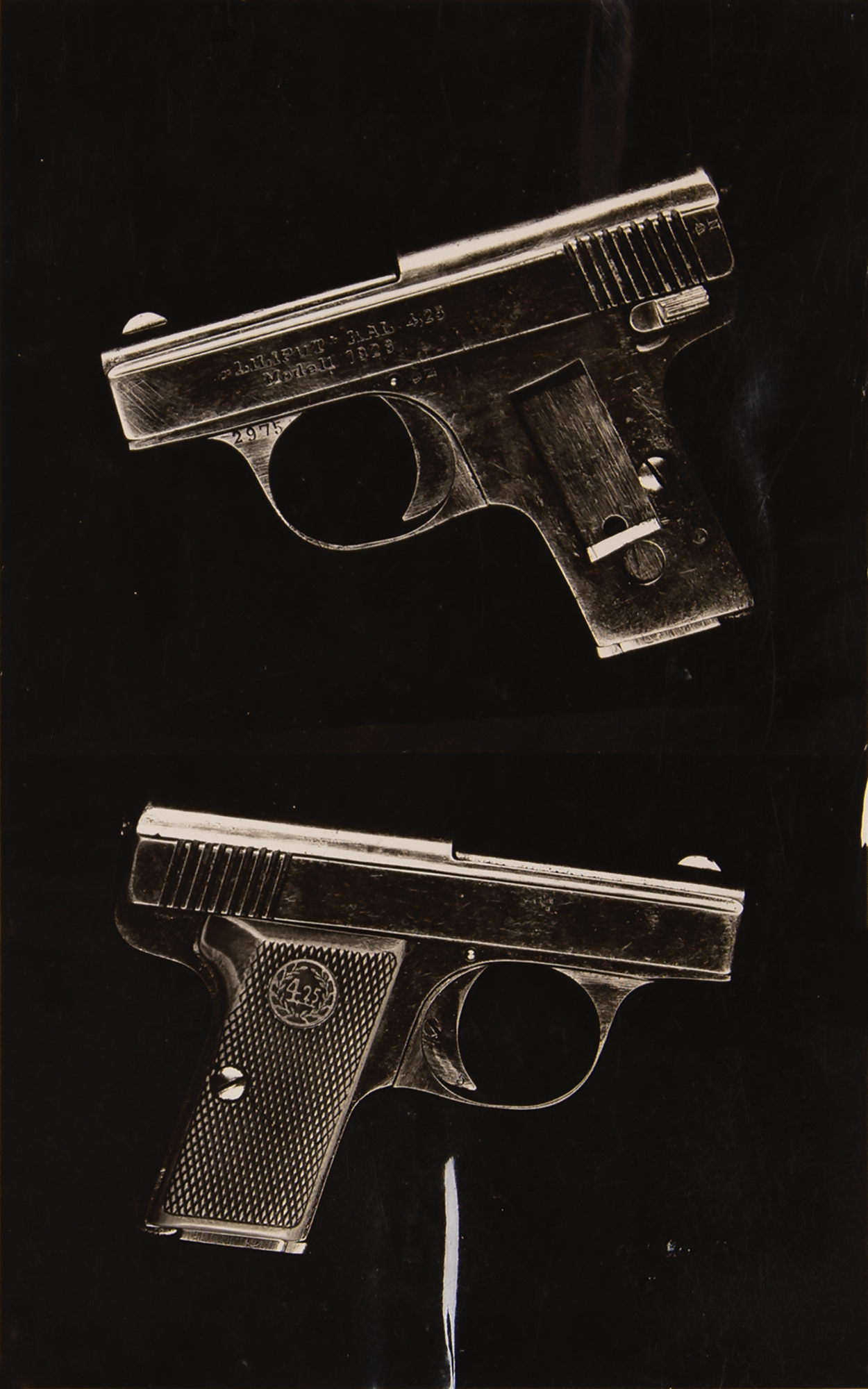
Unique clasp-bound notebook, approximately 50 leaves, 7.75 x 10.25, containing affixed photographs of the evidence presented against Bruno Richard Hauptmann in his 1935 trial for capital murder of Charles Lindbergh, Jr., held at the Hunterdon County Courthouse in Flemington, New Jersey, from January 2 to February 13, 1935. The sharp, original silver gelatin photographs are largely of documents related to Hauptmann's life and career, including his employment record, driver's license and vehicle registration forms and applications, handwriting samples found in Hauptmann's home, and his pistol.
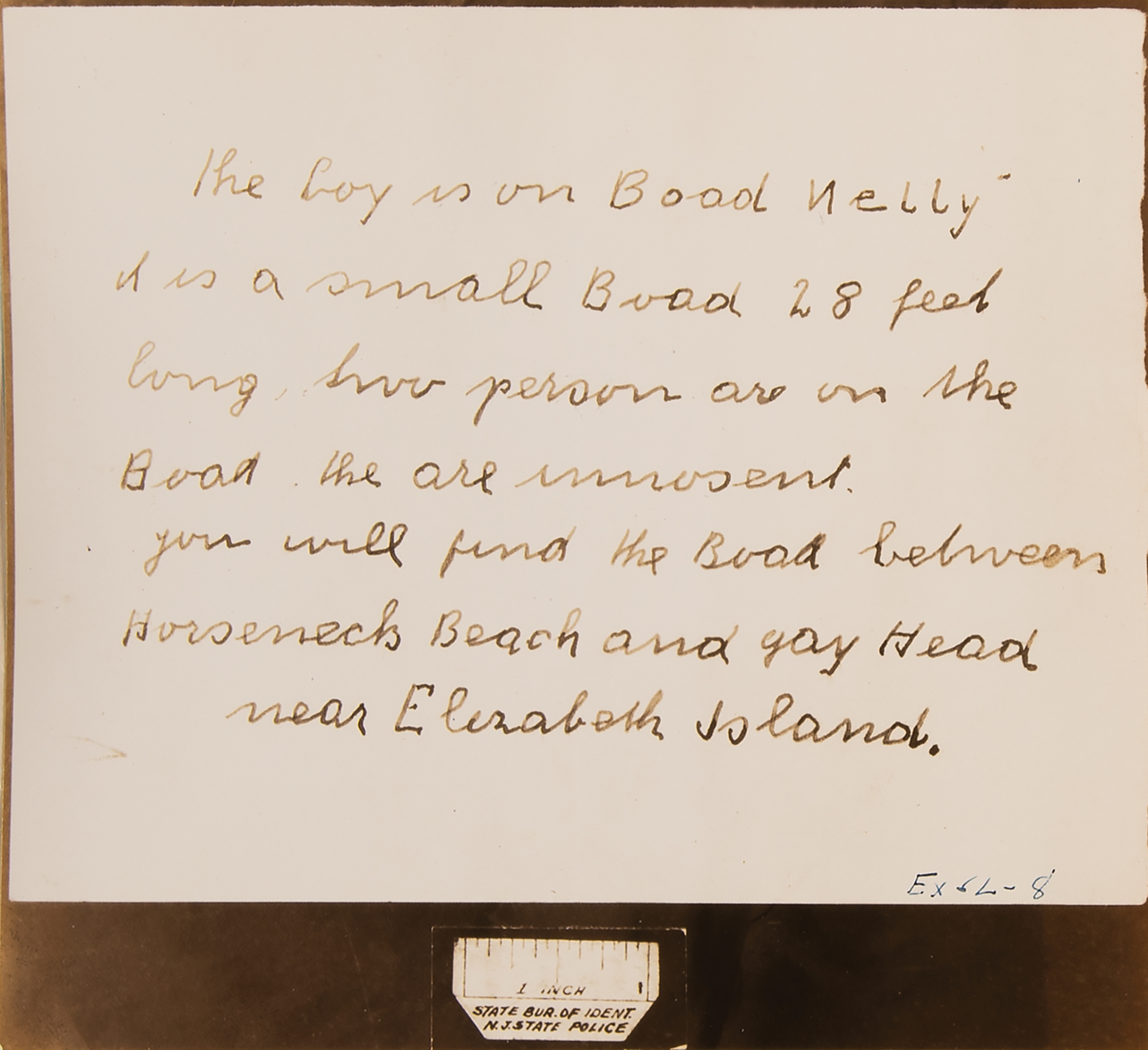
Of especial interest are photos of Hauptmann's sworn statements explaining his whereabouts on the day of the kidnapping and several of ransom notes and related communications, addressed to Lindbergh and John Condon, who acted as a go-between and ultimately delivered the ransom to the kidnappers. This includes the first ransom note demanding $50,0000, which had been left at the Lindbergh home, as well as the kidnappers' misleading correspondence which claimed that the boy was safe and being held on a boat, 'Nelly,' off the coast of Massachusetts: "The boy is on the Boad Nelly. It is a small boad 28 feet long. Two persons are on the boad. The are innosent. you will find the Boad between Horseneck Beach and gay Head near Elizabeth Island." In very good to fine condition, with tears, chipping, and losses to the brittle pages, and crazing to the emulsion of many photos.
Charles, Jr., the 20-month-old son of Charles and Anne Lindbergh, was kidnapped from their home near Hopewell, New Jersey, on March 1, 1932. In his stead, a ransom note demanding $50,000 was found on the windowsill of the child's nursery. Affected by the plight of the Lindberghs, John F. Condon, a well-known Bronx personality and retired school teacher, wrote an open letter to the abductors, offering his services as an intermediary. His letter was published in the Bronx Home News on March 8, 1932, and a day later, he received a letter from the kidnappers acquiescing to his request. Anxious to have their child returned, the Lindberghs hastily signed this offered document that formally authorized Condon to proceed on their behalf.
Condon, who used the newspaper codename ‘Jafsie,’ a name devised from his initials, met with kidnapper, John, twice during the ransom negotiations: first to ascertain the welfare of the child; and later to deliver the ransom money. Both meetings took place in cemeteries. During the ransom delivery meeting on April 8th, Condon was informed that the baby was safe and in the care of two innocent women. The Lindberghs’ worst fears came true when, a month later on May 12th, the corpse of a child was found in a grove of trees within five miles of their family home. Betty Gow, the Lindberghs’ family nurse identified the body as being Charles and a coroner determined the boy had been dead for about two months, the result of a blow to the head.
In September 1934, Richard Hauptmann, a carpenter and illegal immigrant from Germany, was arrested for the crime. During the now famously known ‘Trial of the Century,’ evidence quickly piled up against Hauptmann, including the discovery of ransom money in his garage, items related to the construction of a ladder used in the kidnapping, and paperwork with handwriting and spelling similar to that found on the ransom notes. Given his face-to-face contact with the kidnapper, Condon served as a key witness at the trial and his testimony was seen as crucial to the final verdict. Hauptmann was found guilty and sentenced to death in February 1935, and his execution via electric chair was carried out a year later.

