The 30 Minute Rule begins November 11 at 7:00 PM EST. An Initial Bid Must Be Placed By November 11 at 6:00 PM EST To Participate After 6:00 PM EST
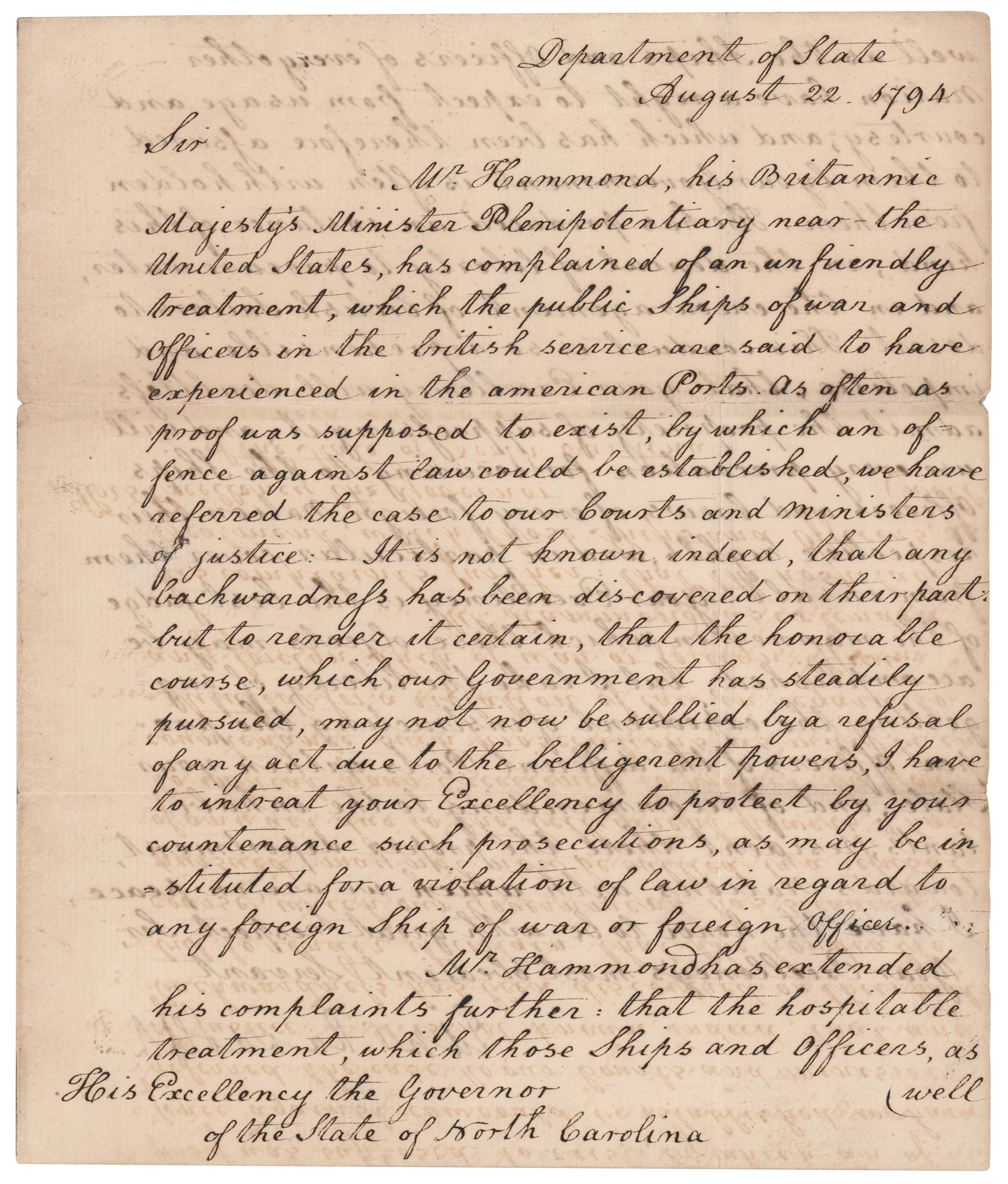
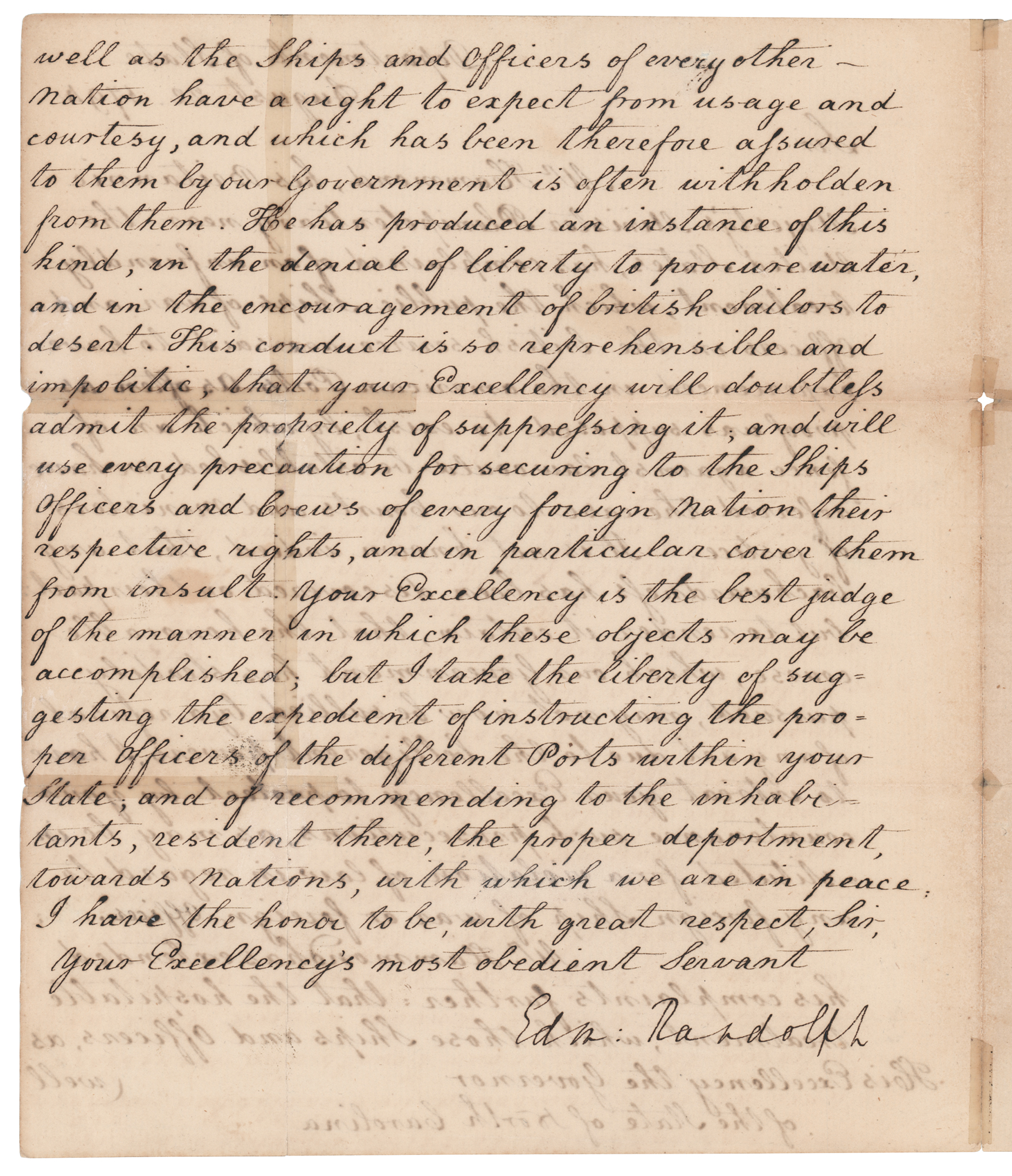
LS as secretary of state, signed “Edm: Randolph,” one page both sides, 7.75 x 9, August 22, 1794. Letter to Constitution signer and North Carolina Governor Richard Dobbs Spaight, Sr., in full: “Mr. Hammond, His Britannic Majesty's Minister Plenipotentiary near the United States, has complained of an unfriendly treatment, which the public ships of war and officers in the British service are said to have experienced in the American ports. As often as proof was supposed to exist, by which an offense against law could be established, we have referred the case to our Courts and Ministers of justice. It is not known, indeed, that any backwardness has been discovered on their part; but to render it certain that the honorable course which our government has steadily pursued, may not now be sullied by a refusal of any act due to the belligerent powers, I have to intreat your Excellency to protect, by your countenance, such prosecutions, as may be instituted for a violation of law in regard to any foreign Ship of war or foreign Officer.
Mr. Hammond has extended his complaints further: That the hospitable treatment, which those ships and officers, as well as the Ships and Officers of every other nation have a right to expect from usage and courtesy, and which has been therefore assured to them by our Government, is often withholden from them. He has produced, in an instance of this kind, in the denial of liberty to procure water, and in the encouragement of British sailors to desert. This conduct is so reprehensible and impolitic, that your excellency will doubtless admit the propriety of suppressing it; and will use every precaution for securing to the ships' officers and crews of every foreign nation their respective rights, and in particular cover them from insult. Your Excellency is the best judge of the manner in which these objects may be accomplished; but I take the liberty of suggesting the expedient of instructing the proper officers of the different ports within your State; and of recommending to the inhabitants, resident there, the proper deportment towards nations, with which we are in peace. I have the honor to be, with great respect, Sir, your Excellency's most obedient servant.” In very good to fine condition, with tape repairs to the intersecting folds and show-through from writing on the reverse.
Edmund Randolph had recently succeeded Thomas Jefferson as Secretary of State, taking office in January 1794 after inheriting Jefferson's protracted friction with George Hammond, Britain's first minister to the United States. This letter to North Carolina Governor Richard Dobbs Spaight, Sr., himself a signer of the Constitution, reflects a recurring category of dispute that ran through Randolph's tenure: complaints from Hammond over the treatment of British ships of war and officers in American ports, including denial of water and the encouragement of desertion. Surviving correspondence between Randolph and Washington from the same year documents a closely related episode: in May 1794, Rhode Island authorities detained the officers of the British sloop of war Nautilus at Newport amid allegations of impressed American seamen, prompting a formal protest from Hammond and a drafted response from Randolph to Washington that July. The letter to Spaight appears to be part of the same larger effort, enlisting individual state governors to help maintain federal neutrality policy and protect the rights of foreign vessels and officers in American ports.
The date situates the letter within an especially strained period in Anglo-American relations. John Jay had been in London since May 1794 negotiating what would become the Jay Treaty, signed that November, and the two nations remained at odds over British seizures of American vessels trading with the French West Indies. Randolph's instruction to Spaight to shield British officers from insult and ensure their treatment met the standards owed a power at peace with the United States reflects the administration's parallel effort to preserve neutrality at the state and port level while Jay pursued a formal settlement abroad.
This item is Pre-Certified by PSA/DNA
Buy a third-party letter of authenticity for
$50.00
*This item has been pre-certified by a trusted third-party authentication service, and by placing a bid on this item, you agree to accept the opinion of this authentication service. If you wish to have an opinion rendered by a different authenticator of your choosing, you must do so prior to your placing of any bid. RR Auction is not responsible for differing opinions submitted 30 days after the date of the sale.
Third-party authentication service applies only to signatures and handwriting, and does not cover the addition of sketches, artwork, musical quotations, etc.

