Sold For $10,664
*Includes Buyers Premium
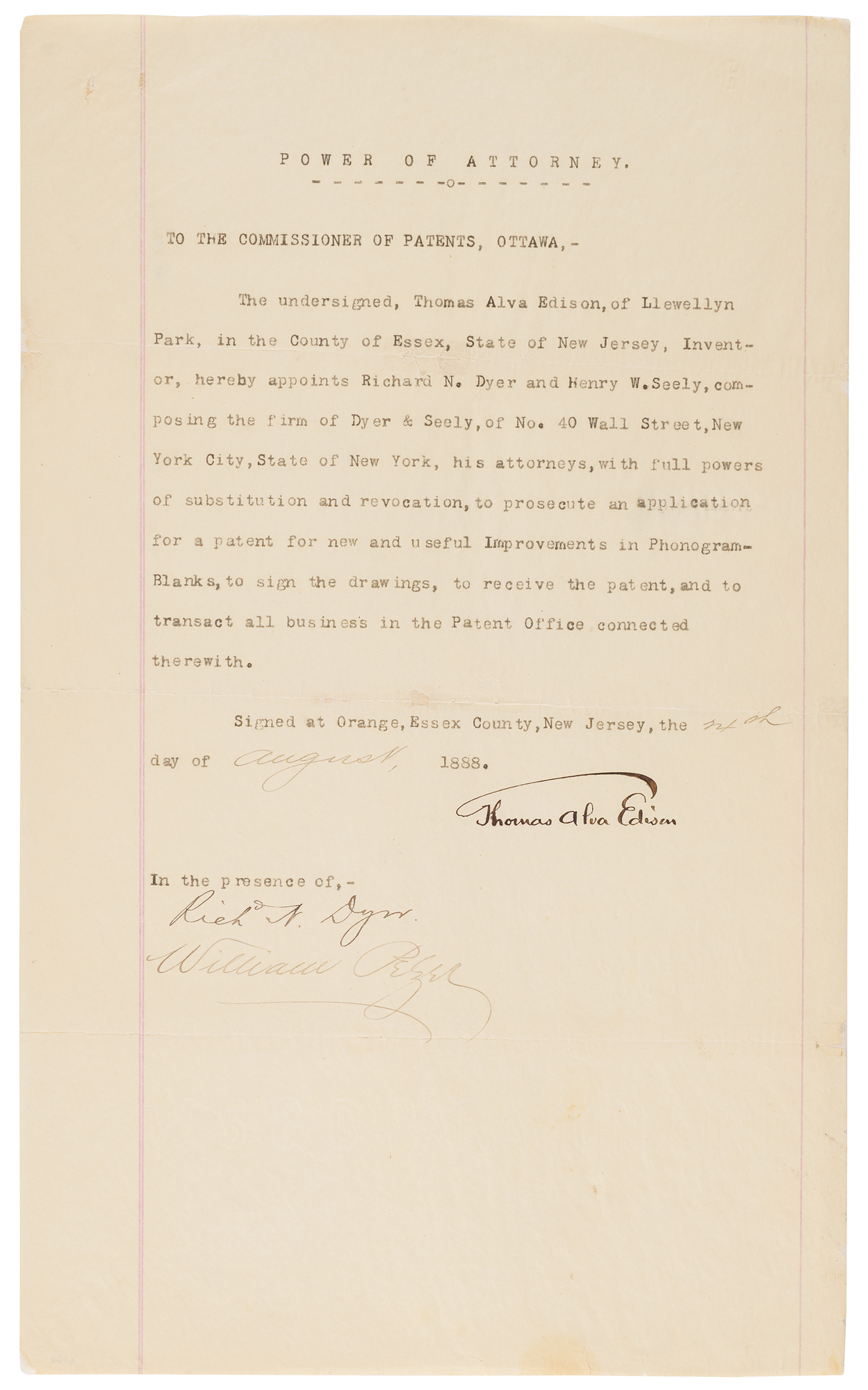
DS, signed “Thomas Alva Edison,” one page, 8 x 13, August 24, 1888. Power of Attorney document appointing patent attorneys Richard N. Dyer and Henry W. Seely to represent Edison before the Canadian Patent Office in connection with an application covering “new and useful Improvements in Phonogram-Blanks.” In part: “The undersigned, Thomas Alva Edison, of Llewellyn Park…Inventor, hereby appoints Richard N. Dyer and Henry W. Seely, composing the firm of Dyer & Seely, of …New York City…his attorneys, with full powers of substitution and revocation, to prosecute an application for a patent for new and useful Improvements in Phonogram-Blanks, to sign the drawings, to receive the patent, and to transact all business in the Patent Office connected therewith. Signed at the conclusion in bold ink by Edison with his large, attractive ‘umbrella’ signature. In fine condition. Accompanied by a full letter of authenticity from PSA/DNA.
This document dates to a pivotal period in the development of Edison's phonograph. After returning to the invention in 1887, Edison introduced his Improved and Perfected Phonographs in 1888, advancing the machine from an experimental device toward a commercially viable recording system. Central to that effort were improvements to the recording medium itself, the “phonogram blanks” referenced here, which took the form of the wax cylinders that would become the foundation of the early sound-recording industry. The timing is particularly significant because Edison was working amid intense competition from the Bell-Tainter Graphophone, developed by Charles Sumner Tainter and Chichester Bell, whose advances in wax recording media and sound reproduction challenged Edison to refine and protect his own technology. This Canadian patent filing reflects Edison's effort to secure intellectual-property protection for improvements to the phonograph's recording medium at precisely the moment the technology was entering commercial use.

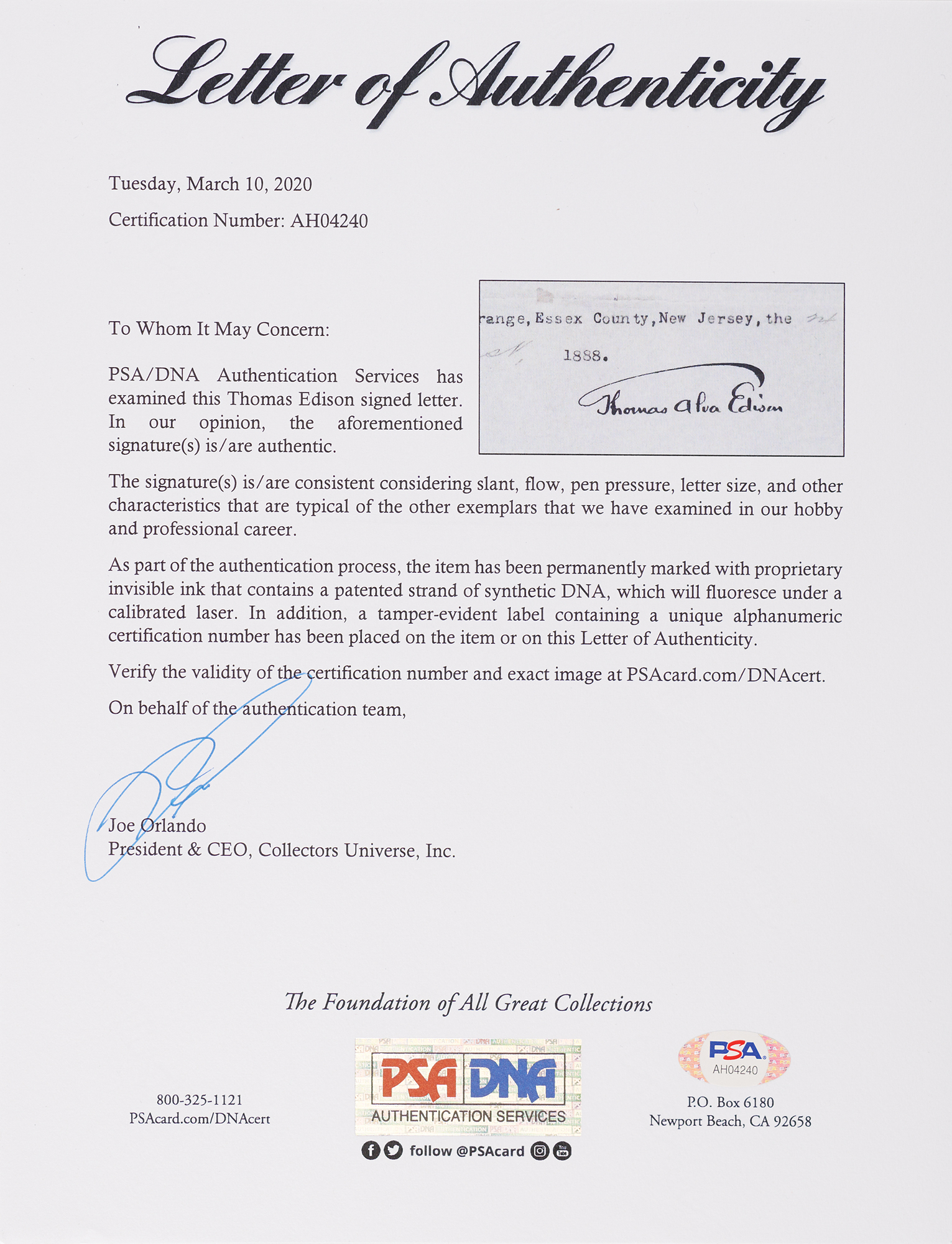
*This item has been pre-certified by a trusted third-party authentication service, and by placing a bid on this item, you agree to accept the opinion of this authentication service. If you wish to have an opinion rendered by a different authenticator of your choosing, you must do so prior to your placing of any bid. RR Auction is not responsible for differing opinions submitted 30 days after the date of the sale.
Third-party authentication service applies only to signatures and handwriting, and does not cover the addition of sketches, artwork, musical quotations, etc.

