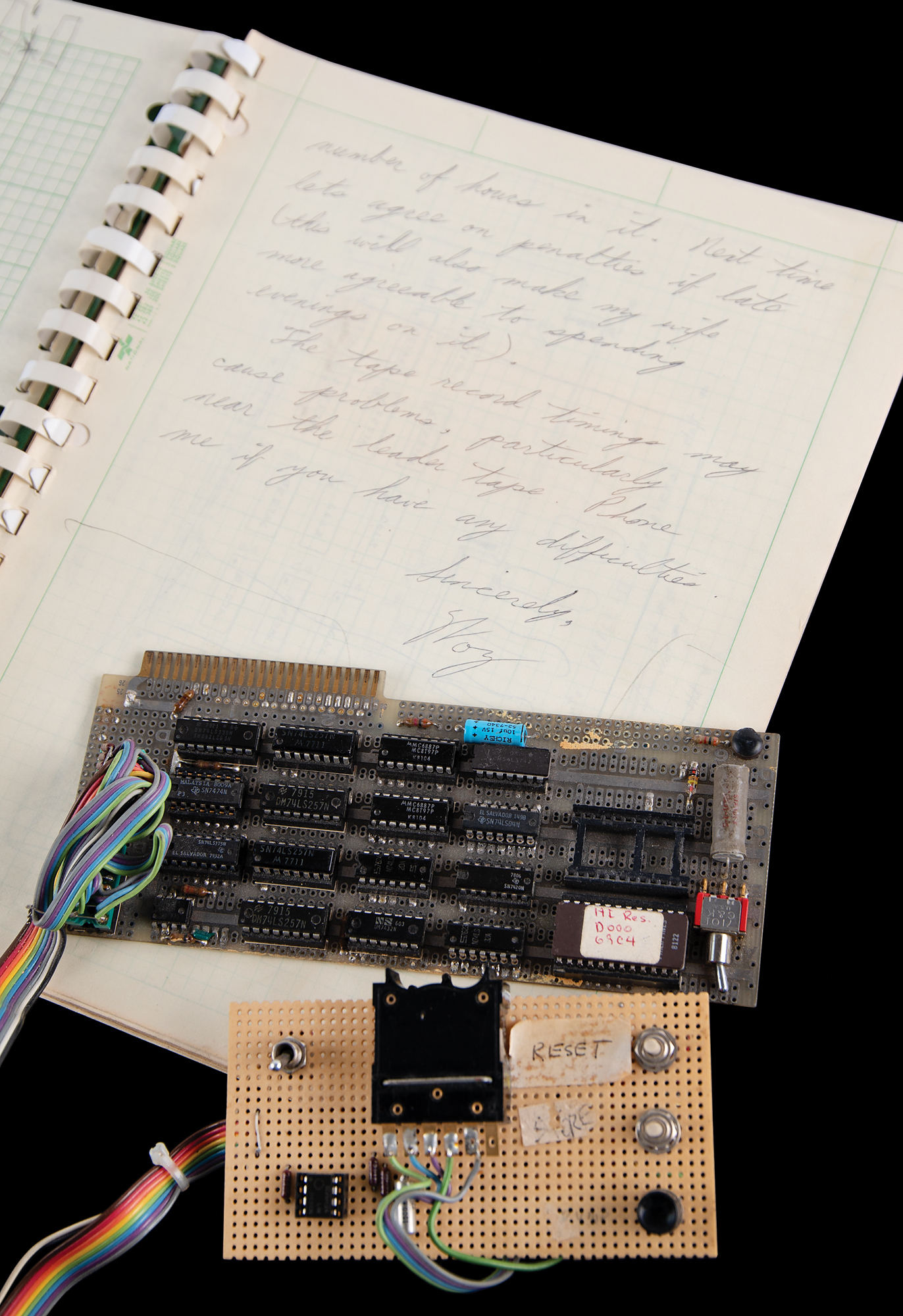
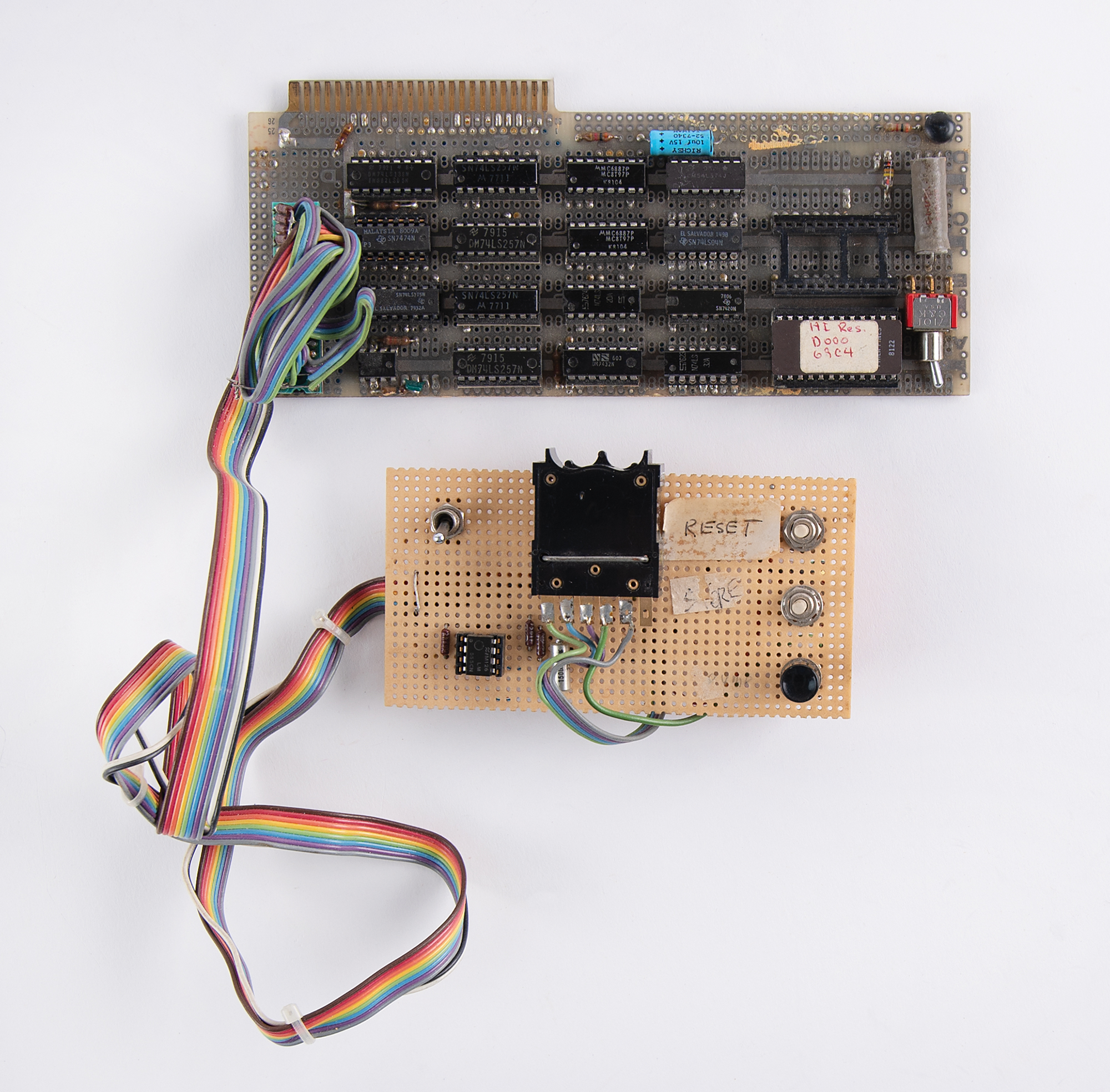
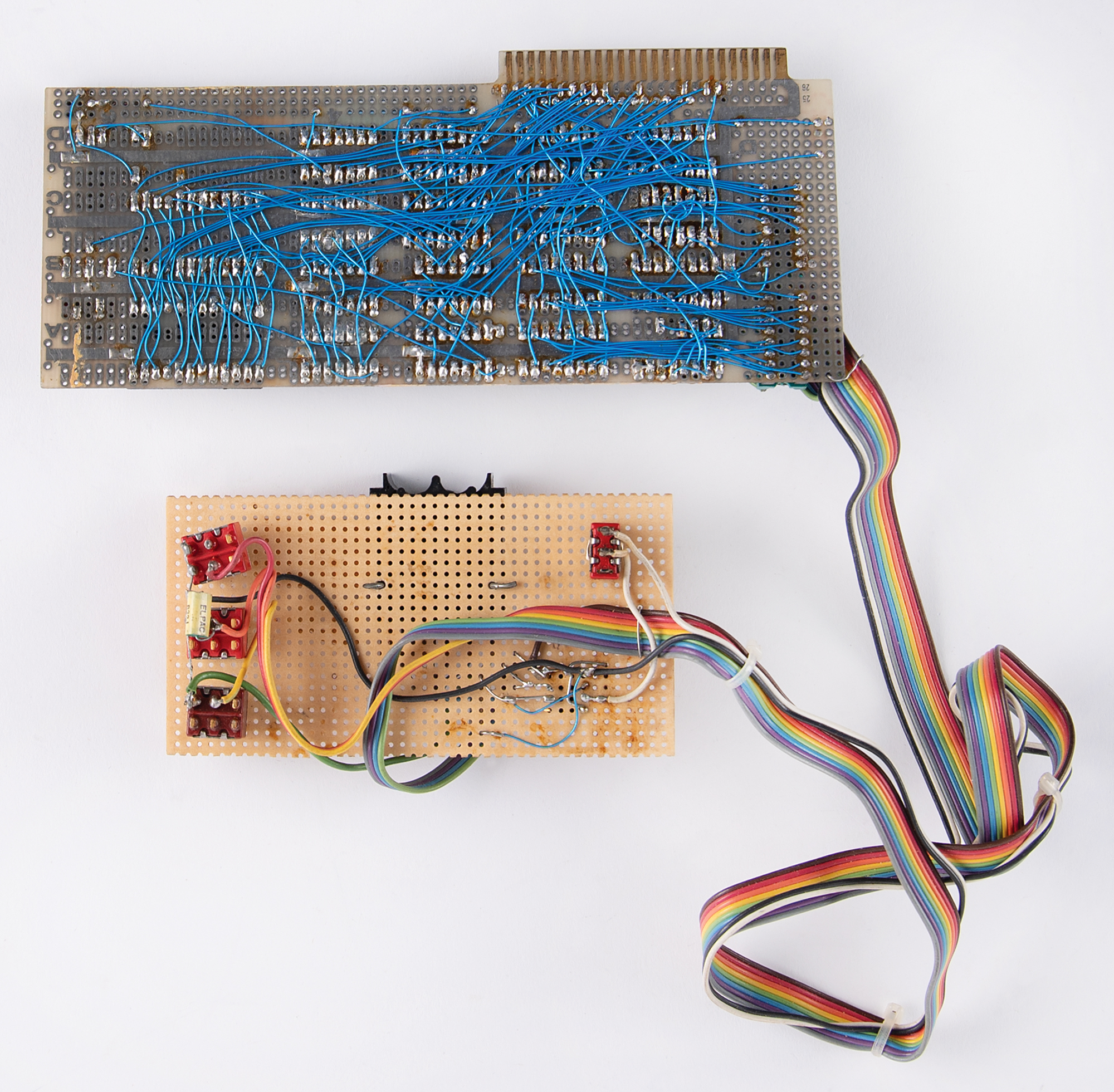
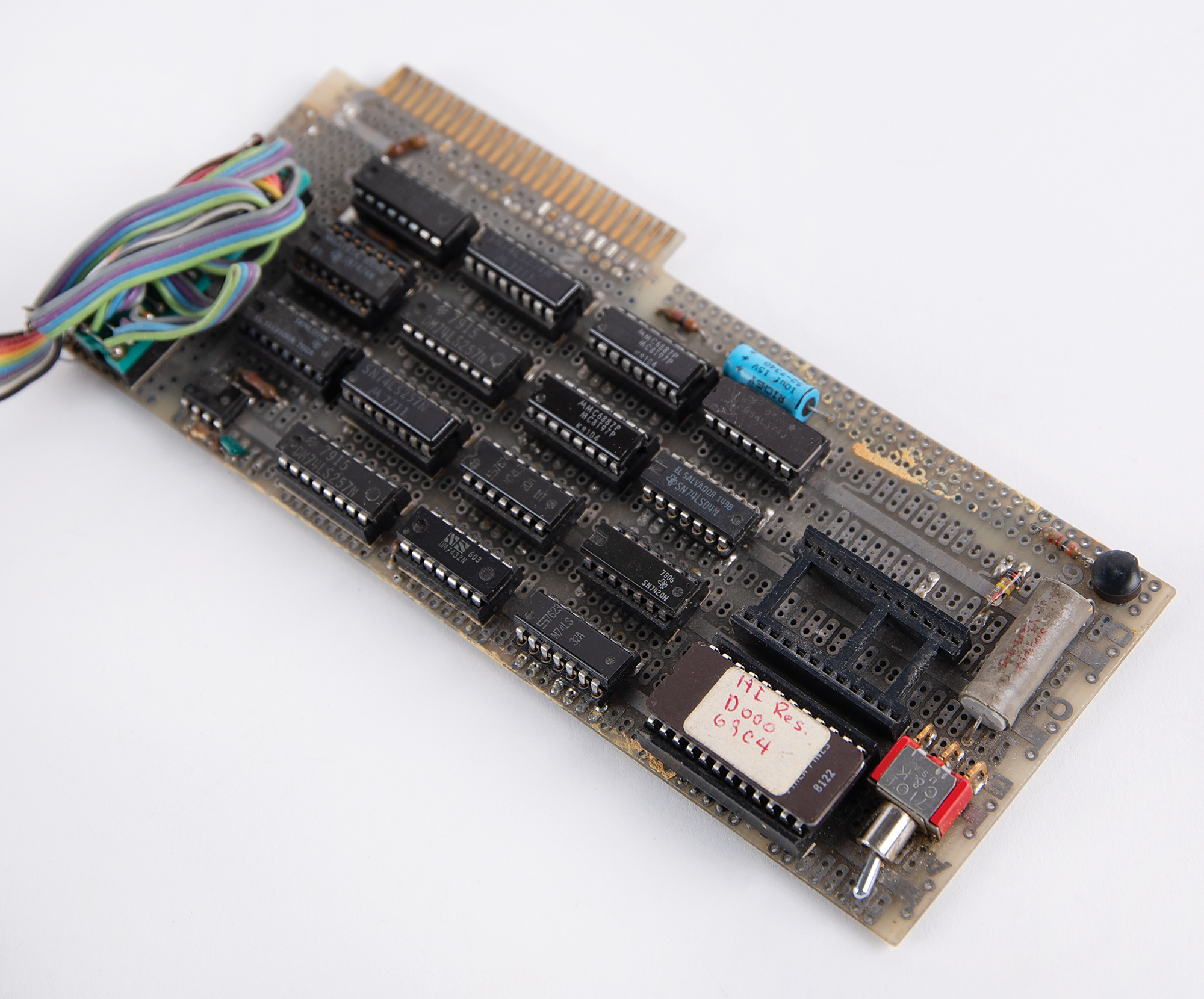
Custom Apple II data-acquisition interface system designed and developed by Steve Wozniak in 1977 for a private industrial client, accompanied by Wozniak’s original two-page ALS and a 29-page engineering binder documenting the system’s design, operation, programming, and data-storage architecture. Developed during the Apple II’s first year of production, the system was created to replace banks of analog galvanometers used to chart electrical signals, enabling an Apple II computer to acquire incoming data, display it graphically in real time, and store records to cassette tape.
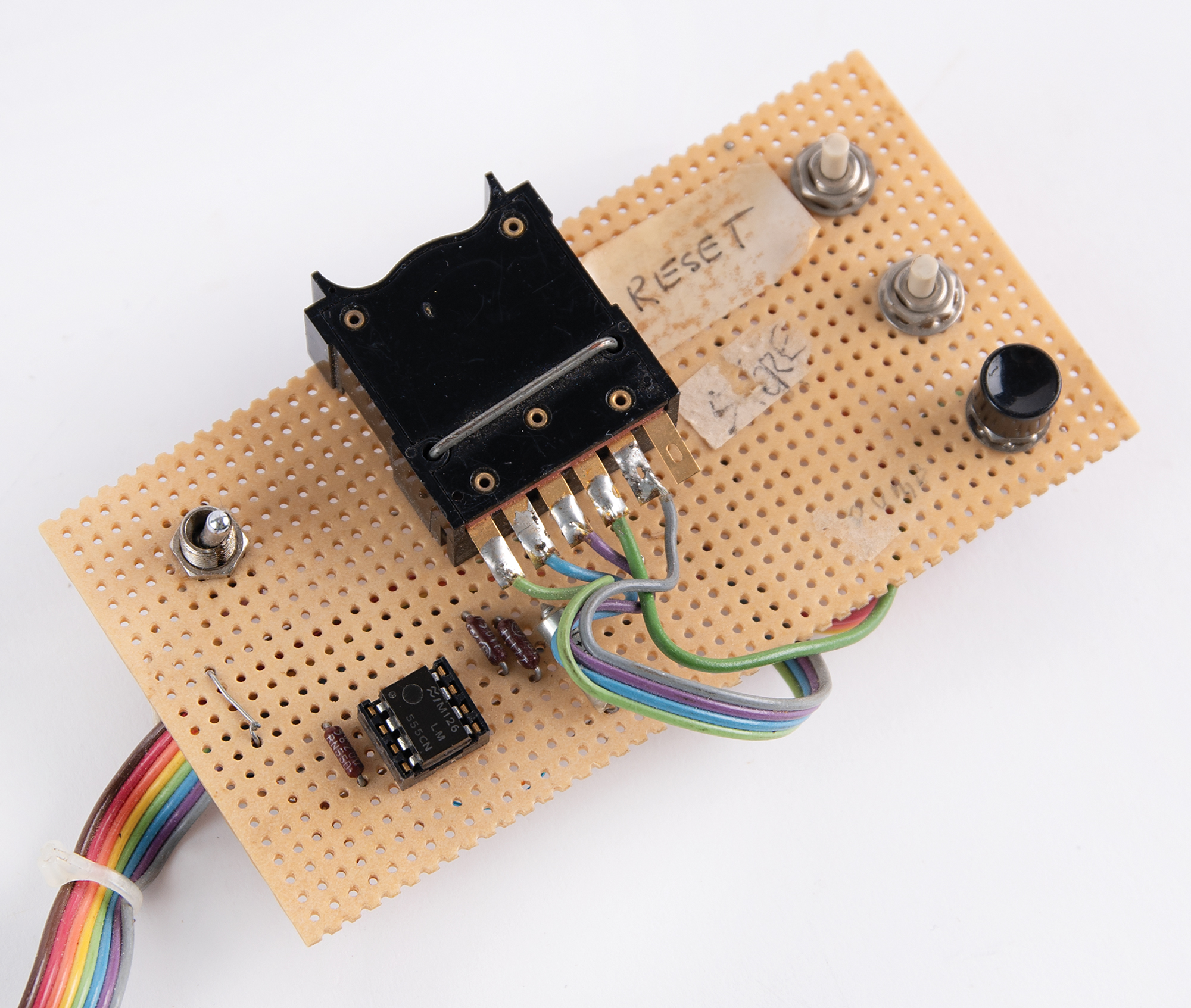
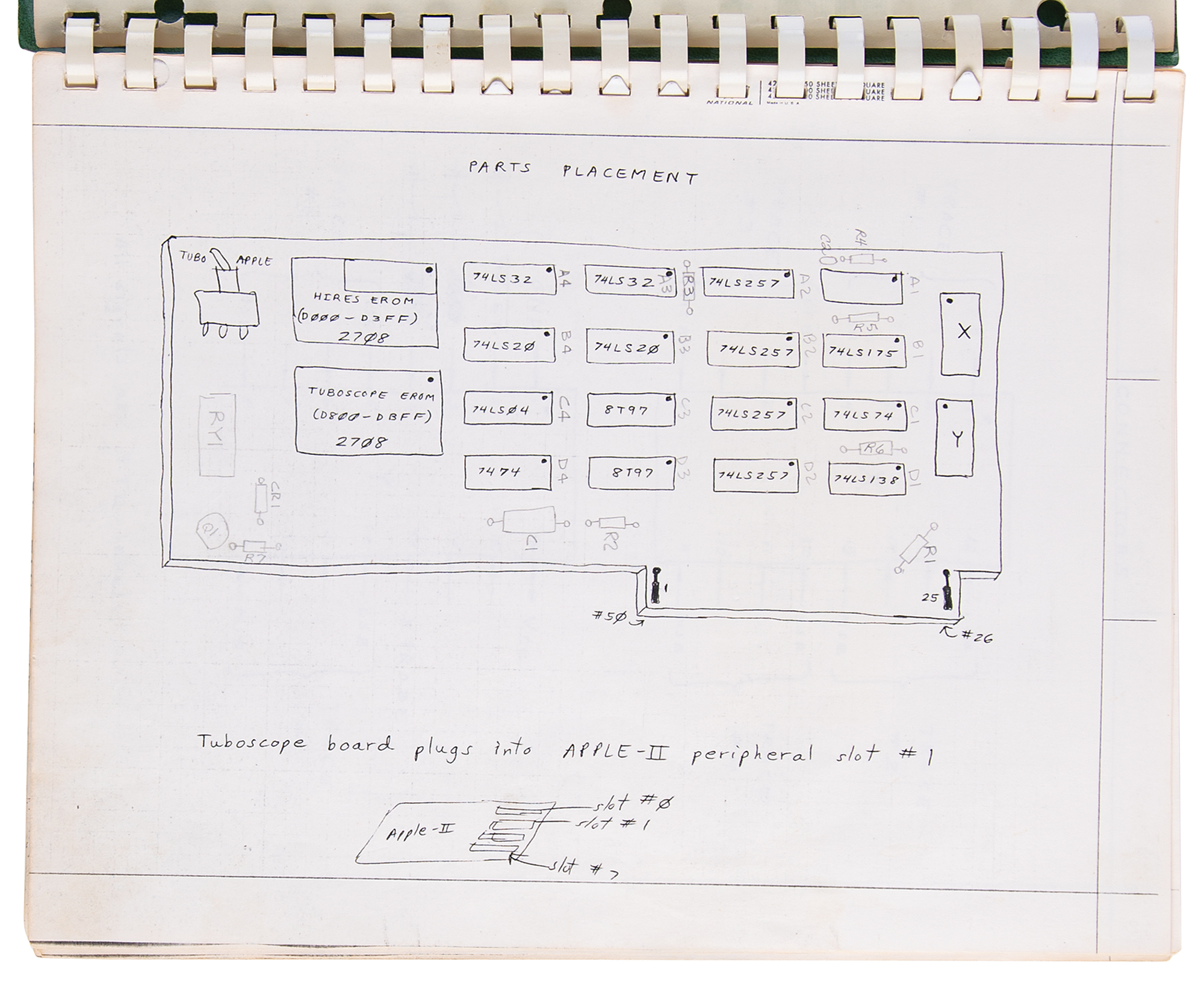
The original custom interface hardware is comprised of a hand-built Apple II expansion card incorporating dedicated HIRES and TUBOSCOPE EROMs, custom TTL-based interface circuitry, and six-channel trace-display capability, together with an associated external control assembly connected by ribbon cable and designed for cassette-based data storage and retrieval.
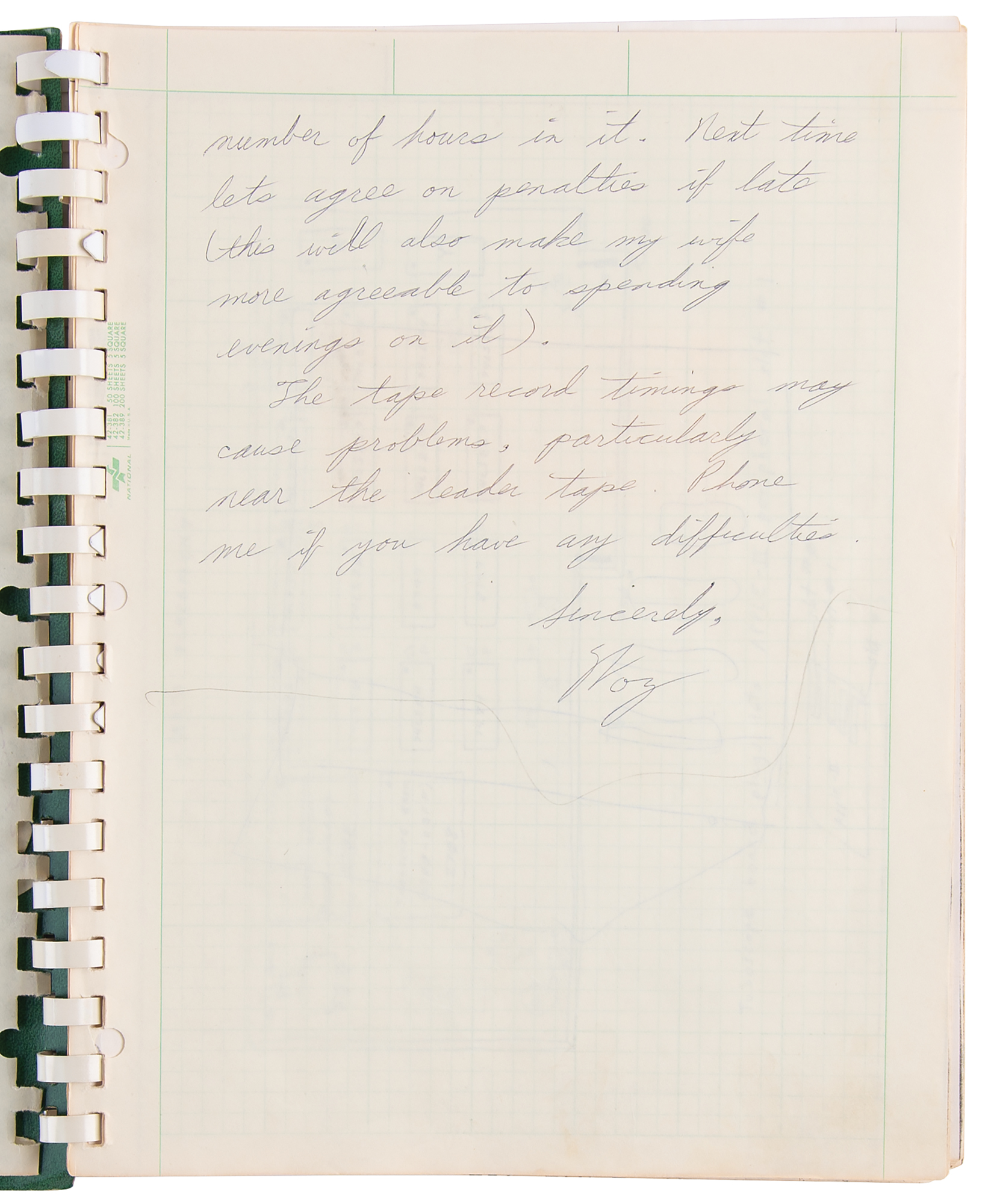
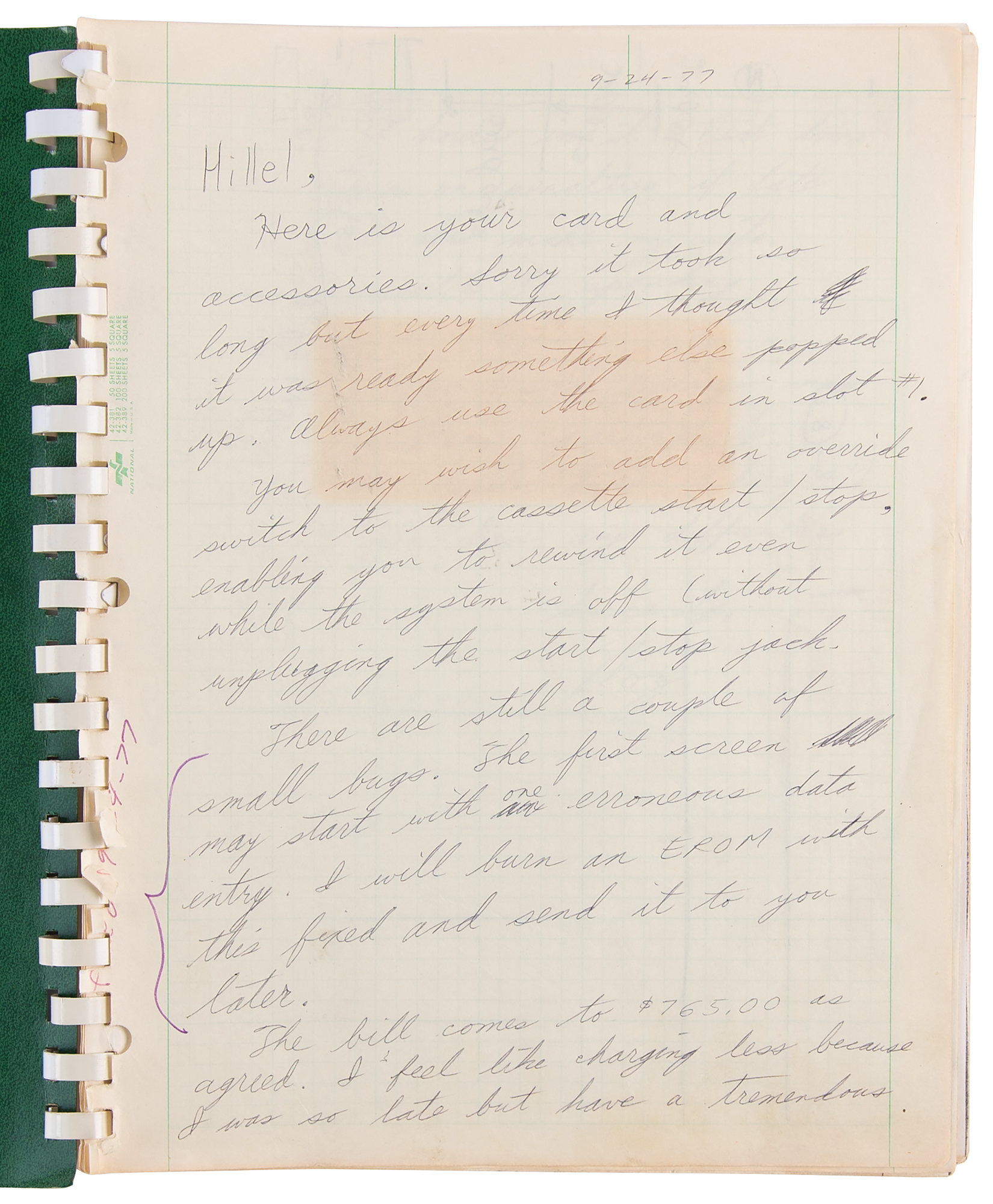
The two-page ALS, handwritten by Wozniak on September 24, 1977, provides remarkable firsthand insight into the creation and delivery of the system. Addressed to the original customer, Wozniak discusses operation of the interface card, cassette controls, software bugs, future EROM updates, and tape-recording issues, writing in part: “There are still a couple of small bugs. The first screen may start with one erroneous data entry. I will burn an EROM with this fixed and send it to you later.” He further notes: “The tape record timings may cause problems, particularly near the leader tape. Phone me if you have any difficulties.” The letter also references the project's cost, delivery delays, and Wozniak's intention to provide an updated EROM containing software fixes.
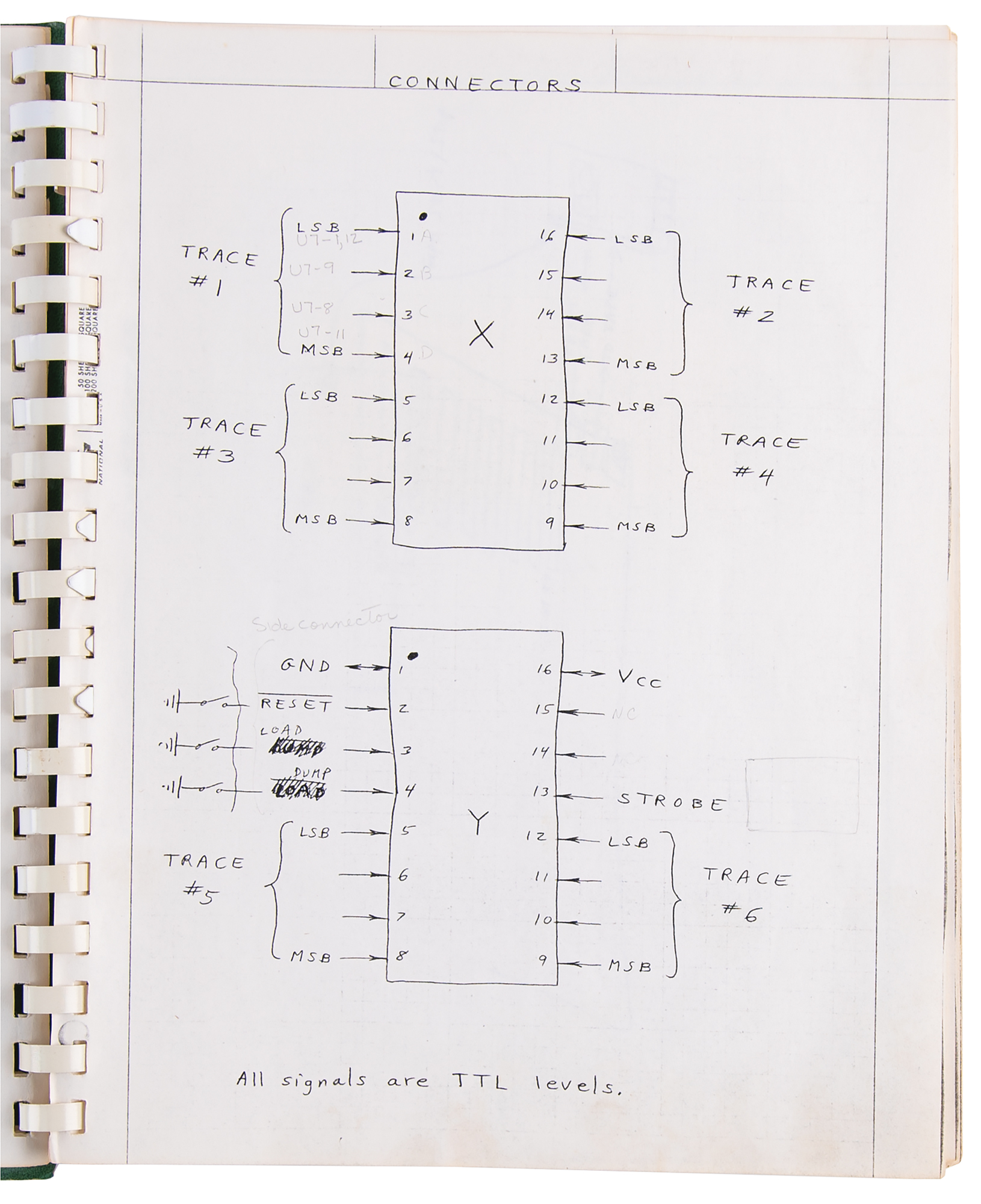
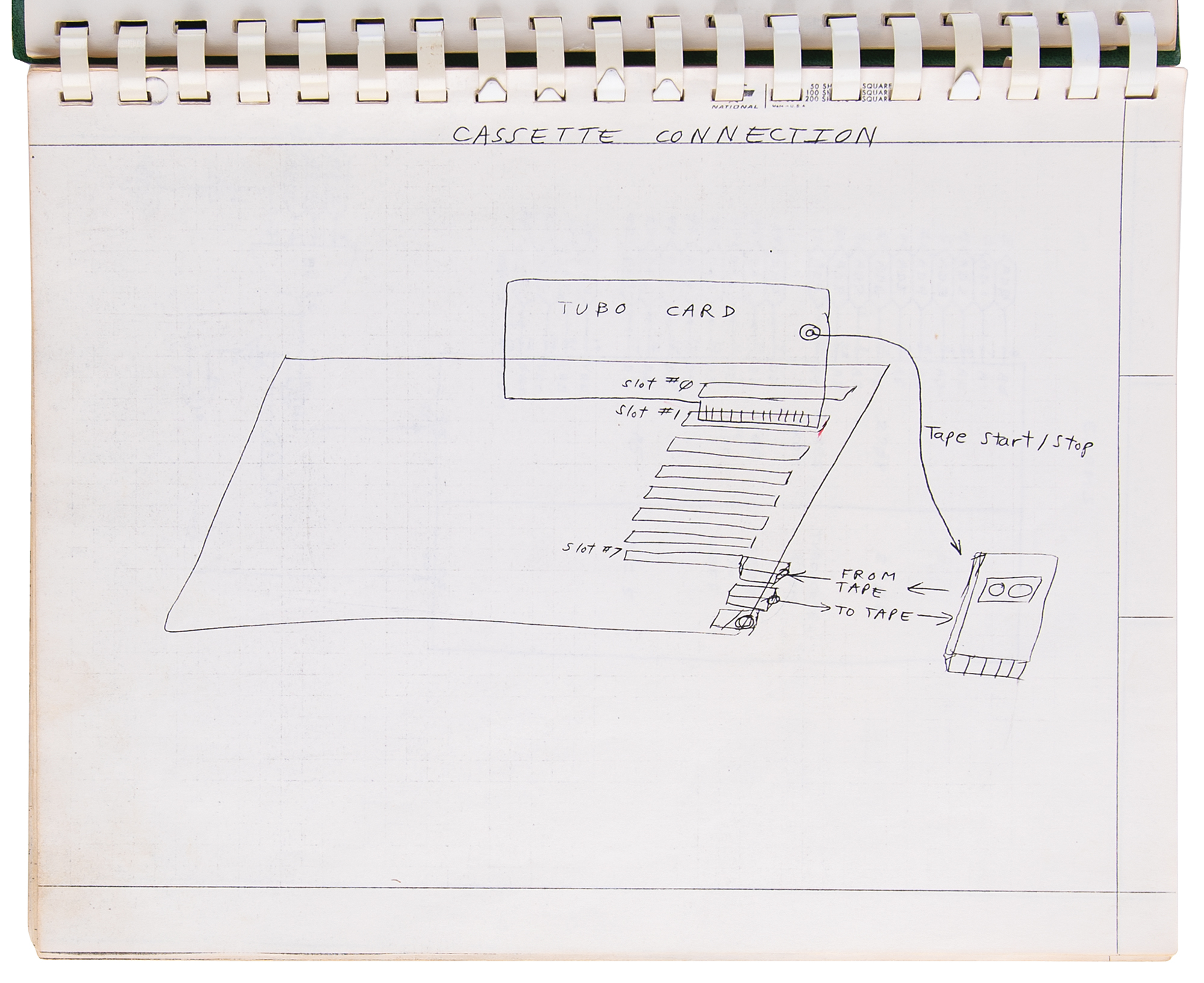
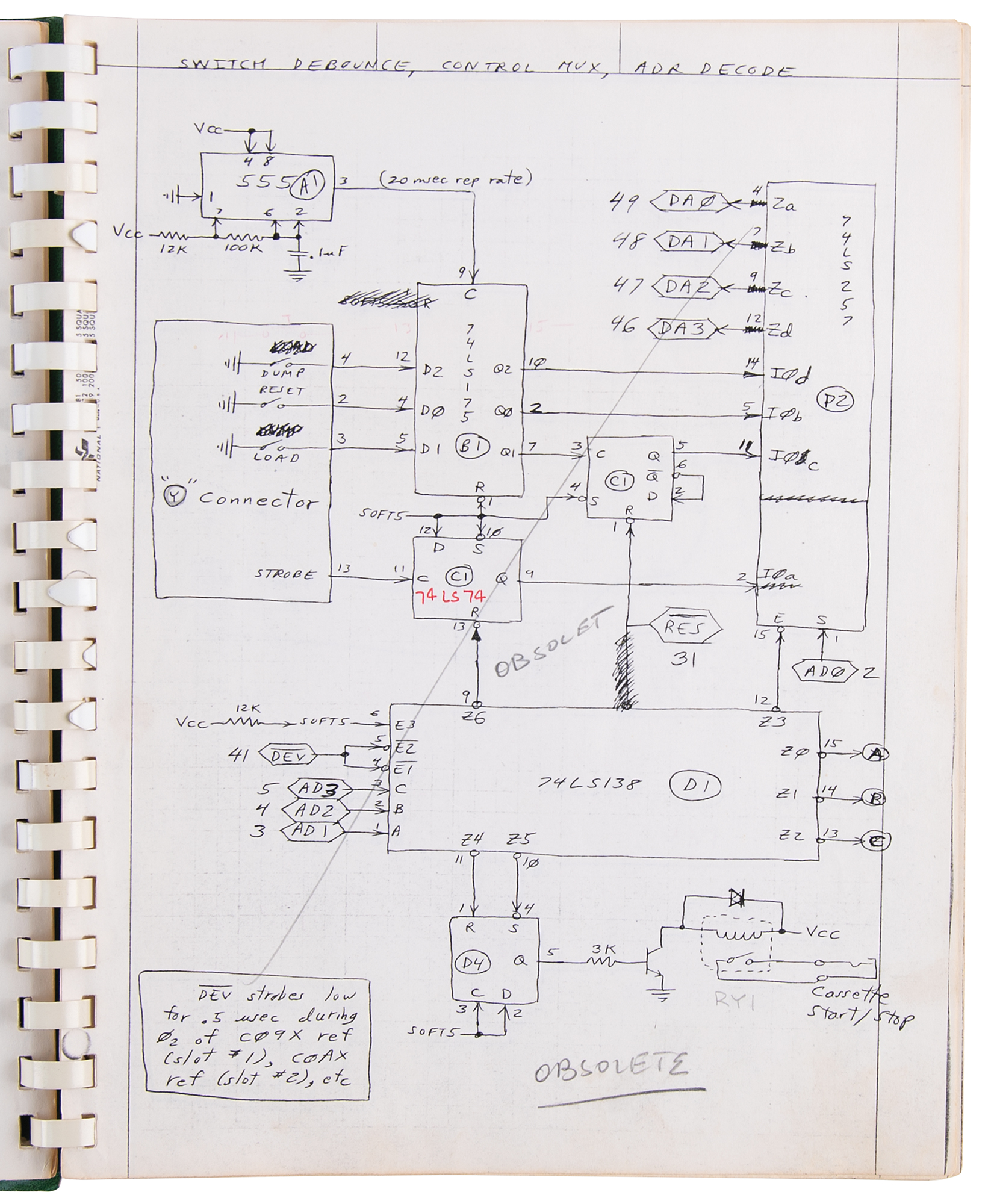
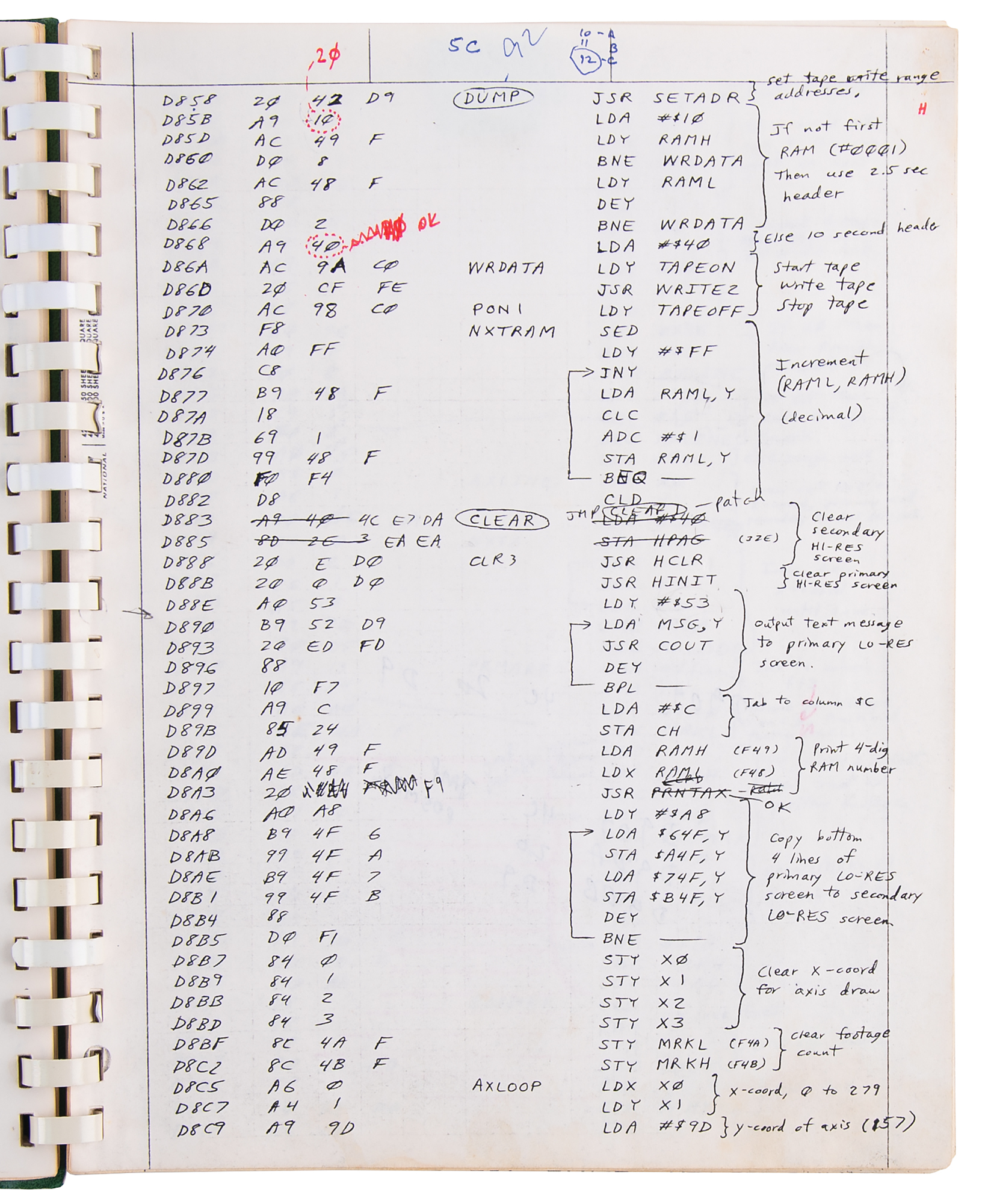
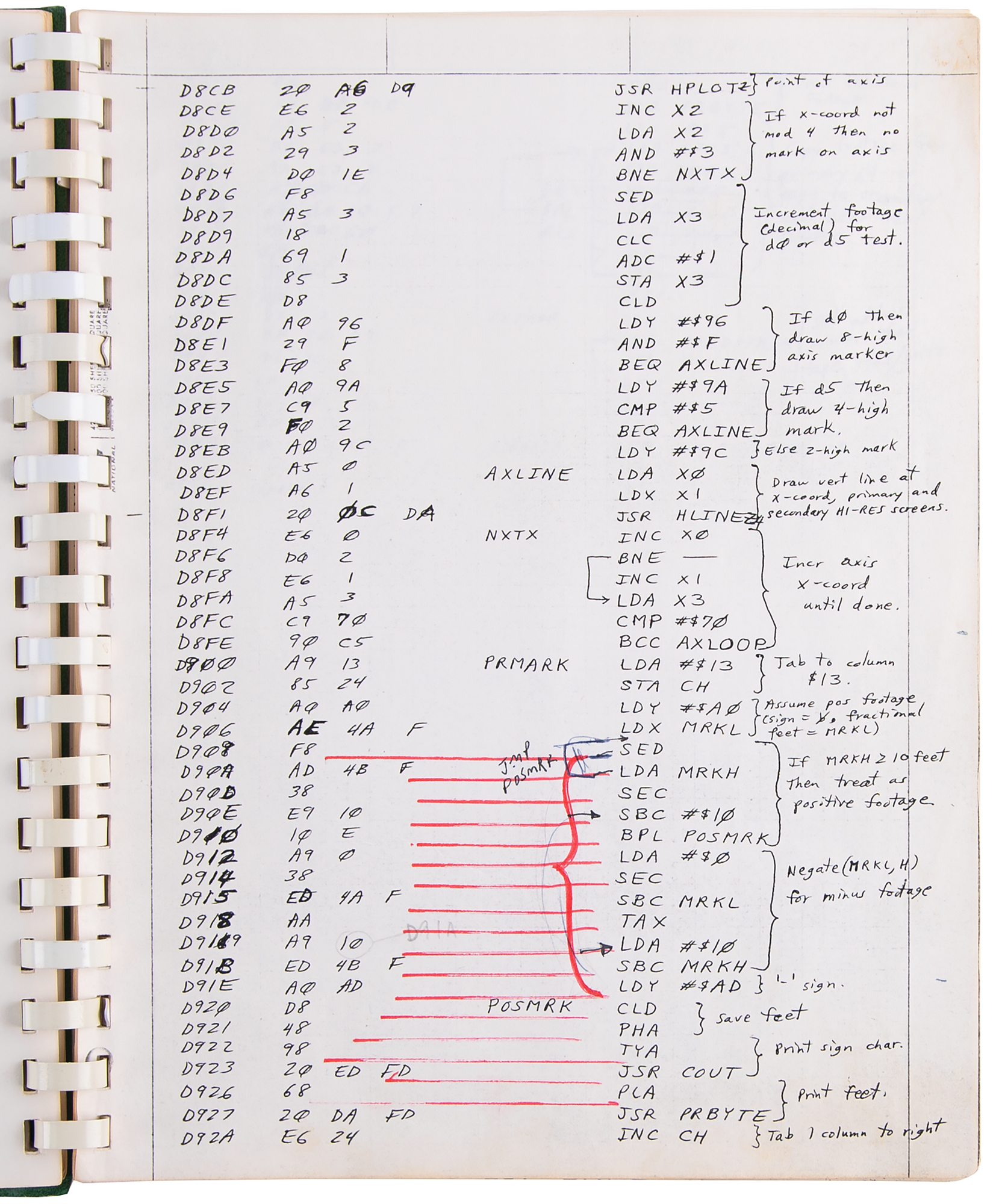
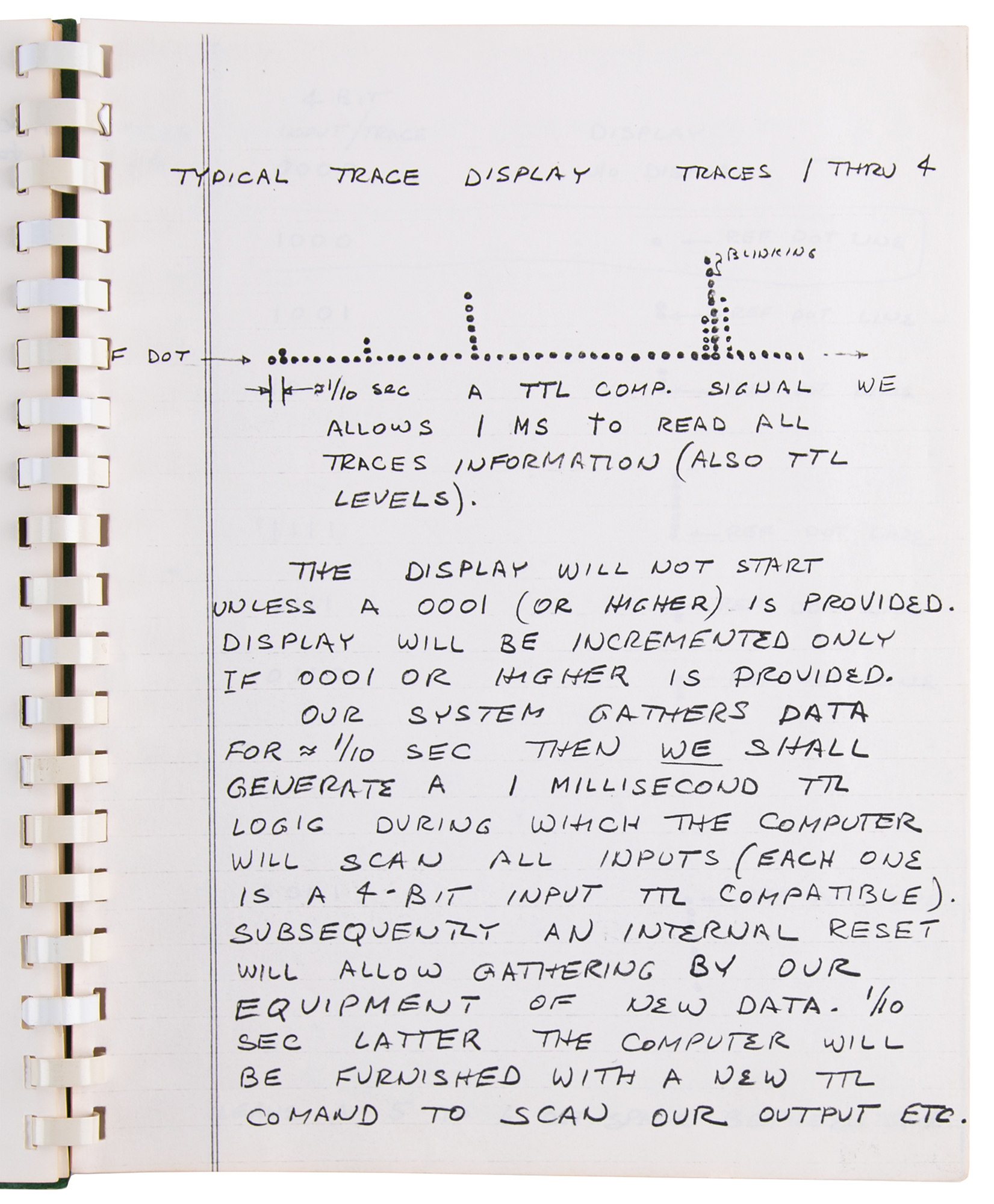
The accompanying 29-page engineering binder preserves the system's creation and implementation in exceptional detail. Containing source listings, flowcharts, memory maps, display schematics, and operational notes, the paperwork documents the software and hardware architecture used to transform the Apple II into a real-time industrial data-display instrument. Contents include:
1. System overview and functional-display diagrams illustrating six-channel trace visualization.
2. Input-trace display specifications and timing diagrams.
3. Marker-display architecture and reference-dot display routines.
4. Cassette recording, loading, dumping, and data-storage methodology.
5. Memory-allocation tables, address maps, and variable assignments.
6. Apple II high-resolution graphics plotting routines.
7. 6502 machine-language and assembly-language source listings with handwritten annotations.
8. Data-acquisition and signal-display software for six independent input traces.
9. Marker-generation, trace-rendering, and display-control routines.
10. Cassette read/write subroutines and data-recovery procedures.
11. Software patches, revisions, debugging notes, and implementation corrections.
12. Flowcharts documenting program structure and execution paths.
13. Example display outputs and operator-reference illustrations.
14. System operating instructions covering startup, reset, load, and dump functions.
According to the original owner, the project originated after a meeting with Steve Jobs and Steve Wozniak at the June 1977 Personal Computer Festival in Dallas, where he proposed replacing traditional galvanometer-based recording systems with a computer-driven graphical display. Wozniak subsequently developed both the hardware and software necessary to accomplish the task, working directly with the client during visits to Cupertino in August and September 1977 before delivering the completed system. The resulting hardware and software were reportedly duplicated and employed operationally for years in an industrial environment, replacing conventional analog chart-recording equipment.
An extraordinary surviving artifact from the earliest years of Apple Computer, uniting custom-built hardware, a contemporaneous Steve Wozniak ALS, and a substantial engineering archive documenting development of the project. Together, these materials document Wozniak’s creation of a specialized real-world Apple II application at a moment when personal computers were only beginning to move beyond hobbyist use and into industrial environments. Few surviving artifacts provide such direct evidence of Wozniak’s engineering process, preserving not only the finished system but also the source code, diagrams, display logic, and design documentation behind its creation.
The Wozniak transcription (September 24, 1977)
“Hi Hillel,
Here is your card and accessories. Sorry it took so long but every time I thought it was ready something else popped up. Always use the card in slot #1.
You may wish to add an override switch to the cassette start/stop, enabling you to rewind it even while the system is off (without unplugging the start/stop jack).
There are still a couple of small bugs. The first screen may start with one erroneous data entry. I will burn an EROM with this fixed and send it to you later.” This paragraph is bracketed with a date notation, “Fixed 9 - 24 - 77.” Woz continues: “The bill comes to $765.00 as agreed. I feel like charging less because I was so late, but have a tremendous number of hours in it. Next time let's agree on penalties if late (this will also make my wife more agreeable to spending evenings on it).
The tape record timings may cause problems, particularly near the leader tape. Phone me if you have any difficulties.”

This item is Pre-Certified by PSA/DNA
Buy a third-party letter of authenticity for
(inquire for price)
*This item has been pre-certified by a trusted third-party authentication service, and by placing a bid on this item, you agree to accept the opinion of this authentication service. If you wish to have an opinion rendered by a different authenticator of your choosing, you must do so prior to your placing of any bid. RR Auction is not responsible for differing opinions submitted 30 days after the date of the sale.
Third-party authentication service applies only to signatures and handwriting, and does not cover the addition of sketches, artwork, musical quotations, etc.

