The 30 Minute Rule begins May 21 at 7:00 PM EDT. An Initial Bid Must Be Placed By May 21 at 6:00 PM EDT To Participate After 6:00 PM EDT
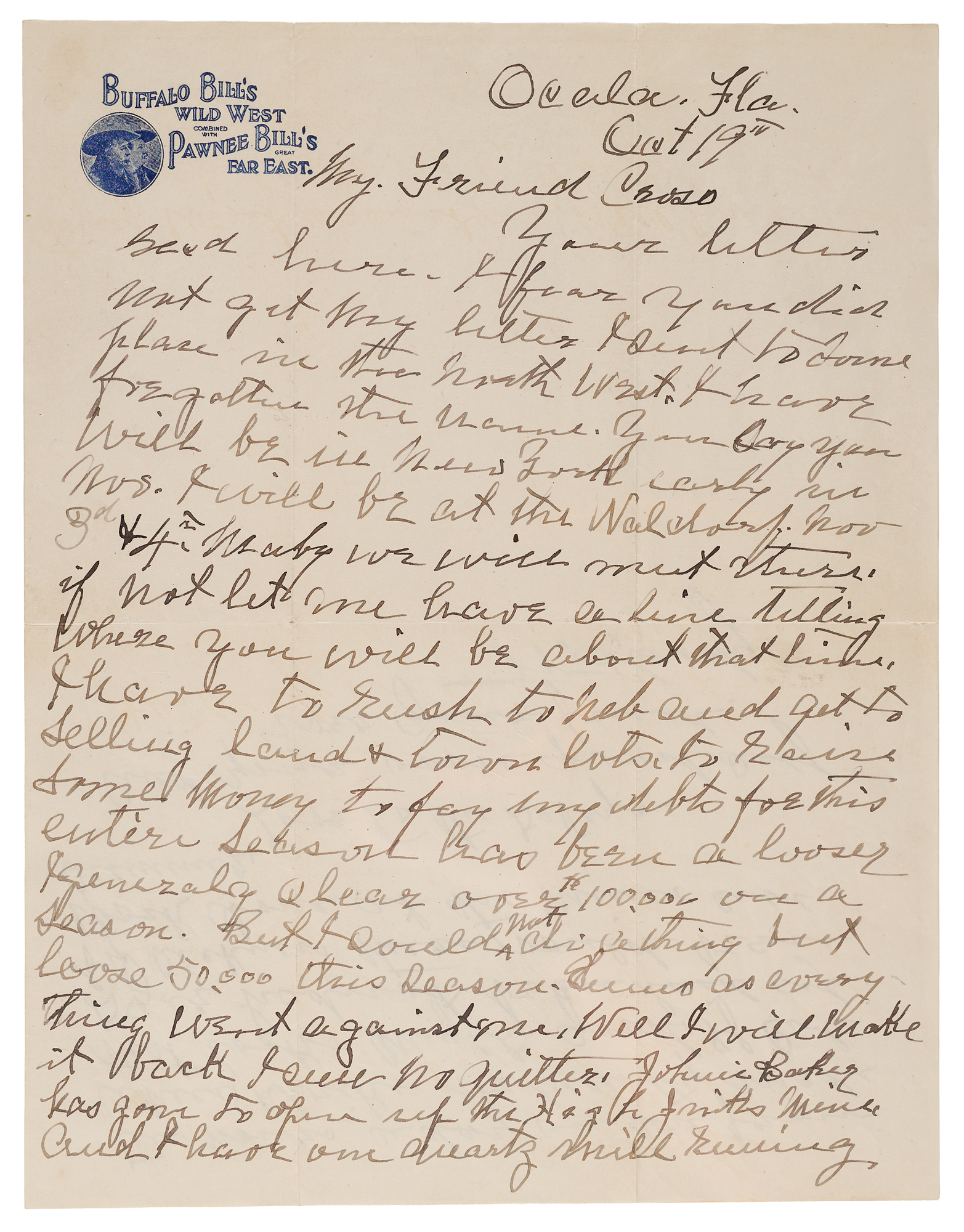
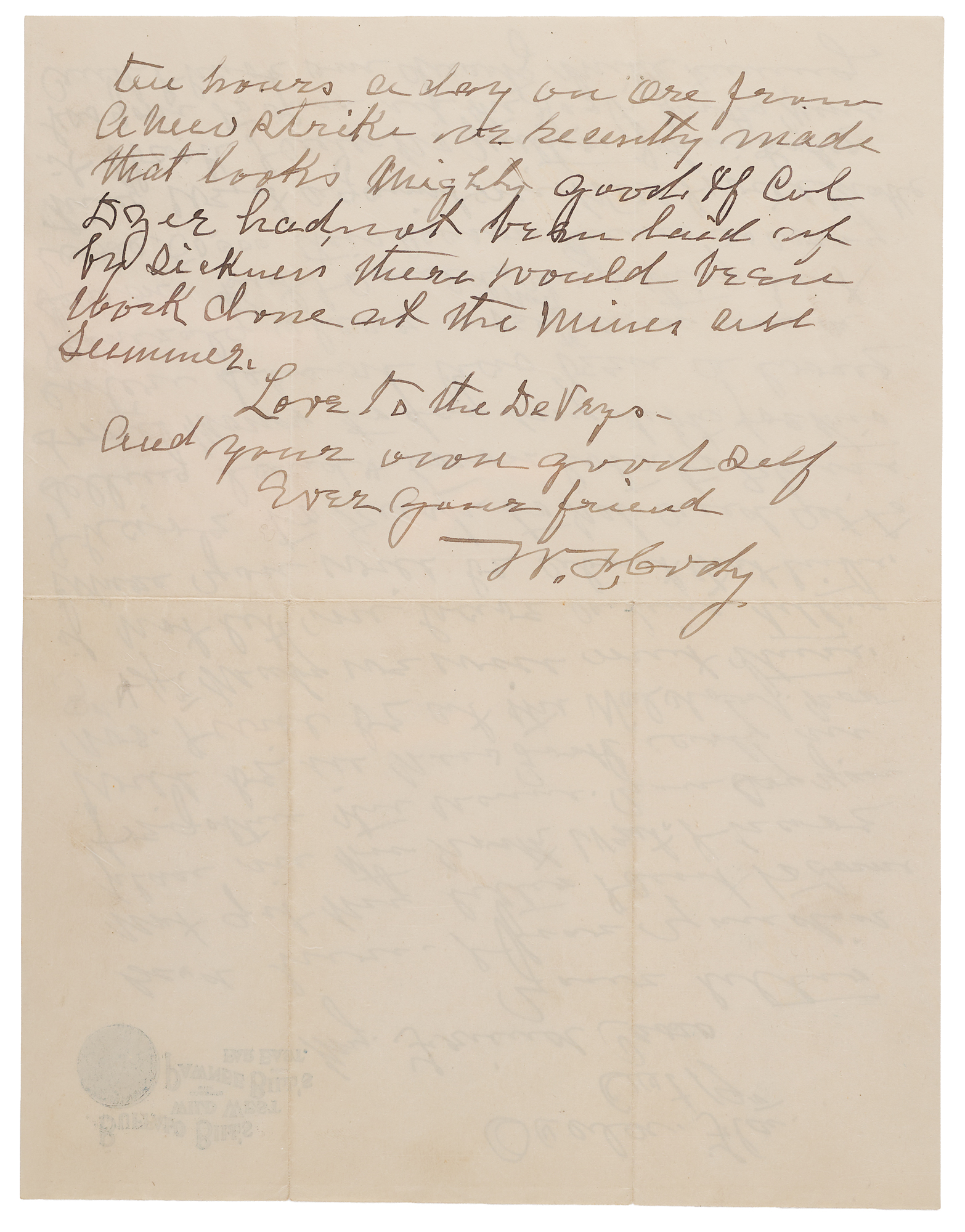
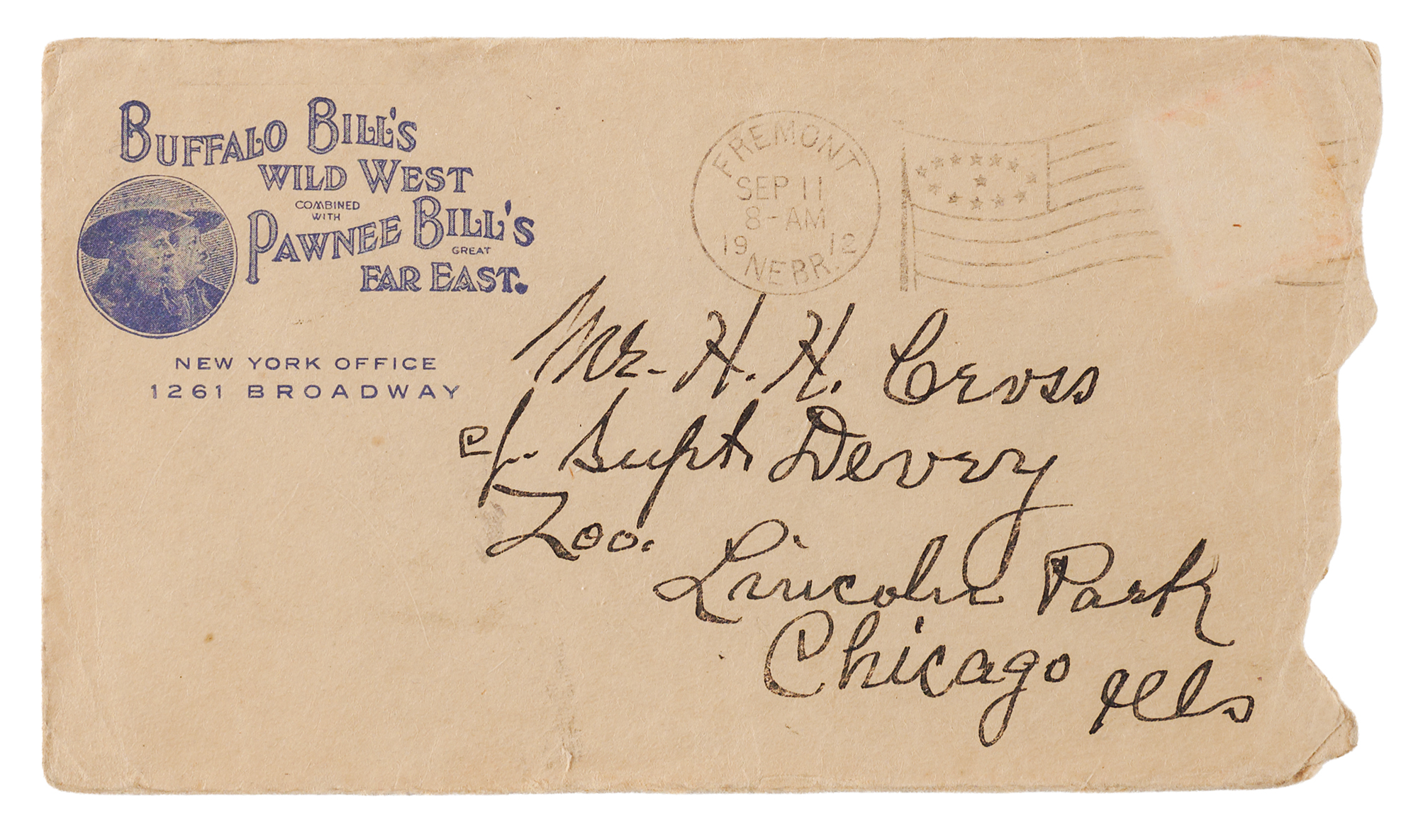
ALS signed “W. F. Cody,” one page both sides, 8.5 x 11, Buffalo Bill's Wild West Combined with Pawnee Bill's Great Far East letterhead, October 19, 1912. Addressed from Ocala, Florida, a handwritten letter to his friend, the painter and frontiersman, Henry H. Cross, in full: “Your letter rec’d here. I fear you did not get my letter I sent to some place in the North West, I have forgotten the name. You say you will be in New York early in Nov. I will be at the Waldorf Nov. 3rd + 4th. Maybe we will meet there. If not let me have a line telling where you will be about that time. I have to rush to Neb. and get to selling land & town lots to raise some money to pay for my debts for this entire season has been a looser. I generally clear over $100,000 on a season. But I could not do a thing but loose 50,000 this season. Seems as everything went against me. Well I will make it back I am not quitter. Johnnie Baker has gone to open up the High Jinks mine and I have one quartz mill running ten hours a day on ore from a new strike we recently made that looks mighty good. If Col. Dyer had not been laid out by sickness there would been work done at the mines all summer. Love to the DeVrys and your own good self.” In fine condition. Accompanied by the original hand-addressed mailing envelope.
The 1912 season marked a difficult turning point for Buffalo Bill and his Wild West show. Under growing financial strain, Cody borrowed $20,000 from Denver Post owners Harry Tammen and Frederick Bonfils in an effort to sustain the production. Despite this, the season fell short; attendance was inconsistent, performances uneven, and the show struggled to recapture its earlier success.
At the same time, Cody was actively seeking other sources of income. As this letter reveals, Cody looked to ventures beyond the show, including the sale of land and town lots in Nebraska, as well as interests in a quartz mill and the High Jinks gold mine. In managing these far-reaching enterprises, Cody increasingly relied on his longtime associate, Lewis H. ‘Johnny’ Baker. Often called the ‘Cowboy Kid,’ Baker had joined the Wild West show as a teenager in 1885, rising from a skilled marksman – mentored by Annie Oakley – to one of its featured performers. Over time, he took on growing responsibility behind the scenes, eventually serving as a trusted troubleshooter and business manager for Cody’s operations, including oversight of ventures such as the High Jinks.
Even so, the show’s financial difficulties proved too great. Cody was unable to repay the loan, and control of the enterprise gradually passed to his creditors, who sold off assets and reorganized operations. By 1914, his position had become largely symbolic; his name still prominent, but the show no longer his to manage. He remained on the road for a few more seasons before stepping away. While he continued to work in other productions, the setbacks of these years had lasting consequences, and by the time of his death in 1917, much of the fortune he had once built was gone.
The Western Americana auction of Jochen Zeitz.
This item is Pre-Certified by PSA/DNA
Buy a third-party letter of authenticity for
$100.00
*This item has been pre-certified by a trusted third-party authentication service, and by placing a bid on this item, you agree to accept the opinion of this authentication service. If you wish to have an opinion rendered by a different authenticator of your choosing, you must do so prior to your placing of any bid. RR Auction is not responsible for differing opinions submitted 30 days after the date of the sale.

