Sold For $156,658
*Includes Buyers Premium
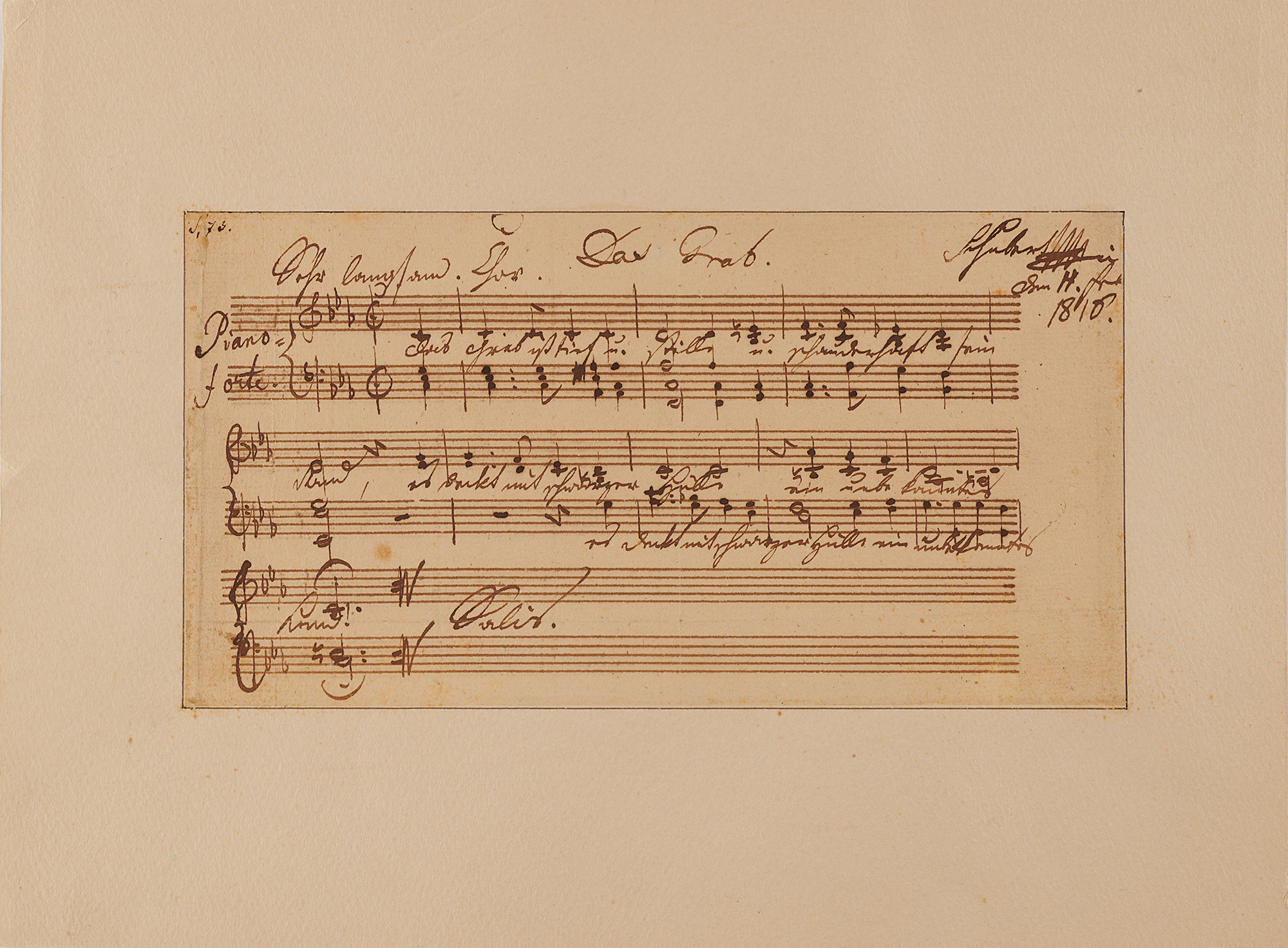
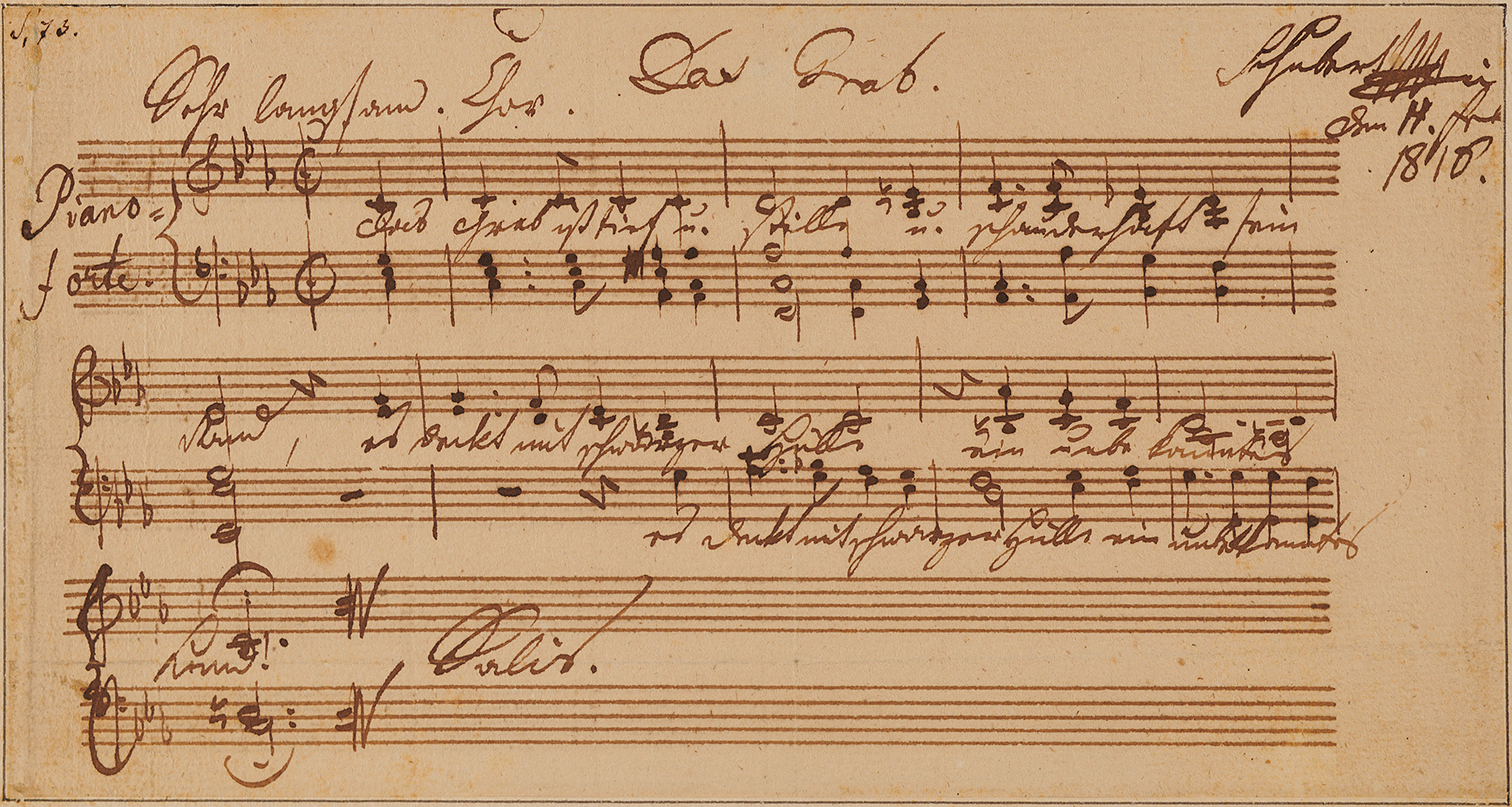
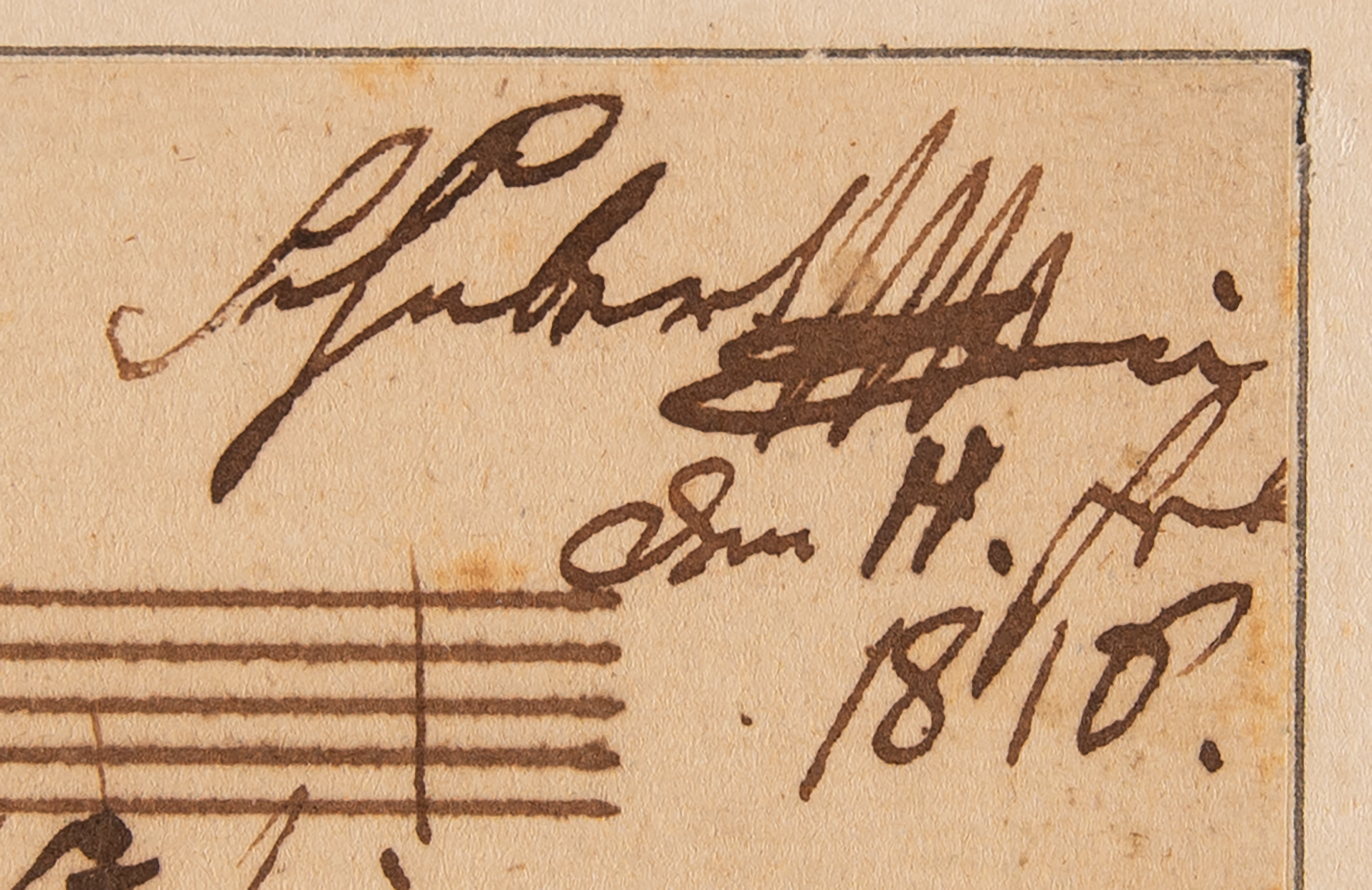
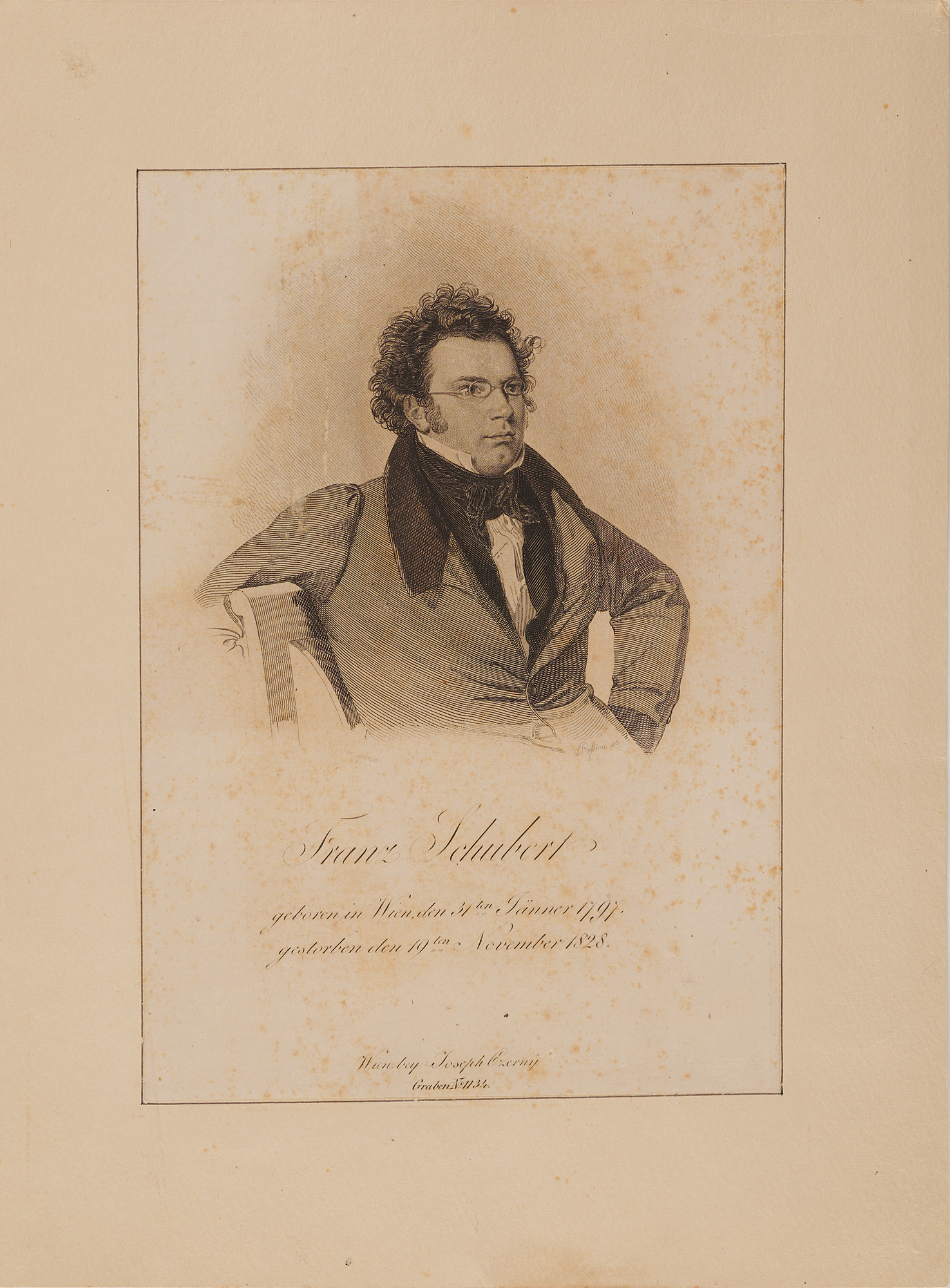
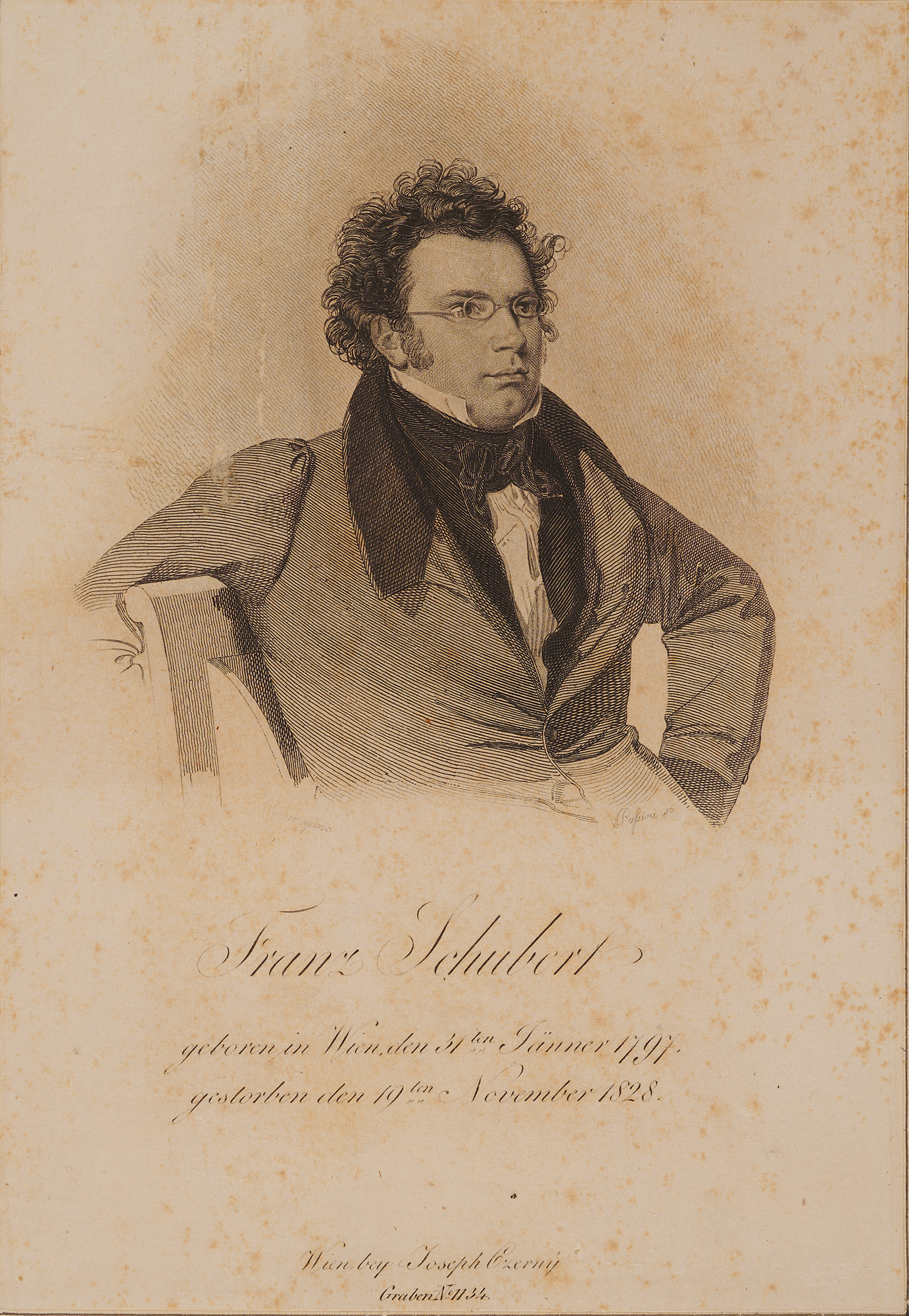
Prodigious Austrian composer (1797–1828) whose vast oeuvre comprised over 600 secular vocal works (mainly lieder), seven complete symphonies, sacred music, operas, incidental music, and a large body of piano and chamber music. Known only to a relatively small circle of admirers in Vienna during his lifetime, Schubert's international renown grew immensely in the decades after his death at the age of 31. Rare autograph musical manuscript, signed "Schubert," one page, 9 x 4.75. Vienna, February 11, 1816. Schubert pens "Das Grab," D.377, a setting for male choir (TTBB) and piano of the text by Johann Gaudenz von Salis-Seewis (1762-1834), notated on three systems of two staves, the text of the first stanza between and below the staves. Schubert writes the title at the top, along with the indication "Sehr langsam. Chor." He also notes the author's name at the conclusion, "Salis." Affixed to a larger sheet and in fine condition. Accompanied by an engraved portrait of Schubert.
Provenance: Walter R. Benjamin Autographs, New York, Catalogue 753, February-March 1959; Lot 74, Christie's, November 21, 2012.
Between 1815 and 1819, Schubert returned repeatedly to Salis-Seewis’s somber meditation on the grave and the “unknown land” that lies beyond, producing no fewer than five settings—one of them left unfinished. This sustained engagement coincided with a remarkably intense period in Schubert’s early career, when he was composing at an extraordinary pace and frequently gravitating toward texts that reflected the growing Romantic fascination with mortality, transcendence, and the mysteries of the afterlife.
The poem’s elegiac tone appears to have struck a particularly deep chord in the young composer, whose own writings and musical output from these years reveal a persistent preoccupation with melancholy and with the fragility of human existence. Notably, all of Schubert’s treatments of this text are scored for choir rather than solo voice, a choice that amplifies the poem’s communal, almost liturgical atmosphere. Of these versions, this—the third setting—is often regarded as the most profoundly desolate, its harmonic language and choral writing conveying an especially intimate sense of longing. According to the Thematisches Verzeichnis (ed. Deutsch, 1978, pp. 225–26), both a draft and a fair copy of the work survive in the Wiener Stadtbibliothek (MH.407/c), supplementing the present manuscript—which that catalogue lists as 'lost.'

This item is Pre-Certified by PSA/DNA
Buy a third-party letter of authenticity for
$150.00
*This item has been pre-certified by a trusted third-party authentication service, and by placing a bid on this item, you agree to accept the opinion of this authentication service. If you wish to have an opinion rendered by a different authenticator of your choosing, you must do so prior to your placing of any bid. RR Auction is not responsible for differing opinions submitted 30 days after the date of the sale.
Third-party authentication service applies only to signatures and handwriting, and does not cover the addition of sketches, artwork, musical quotations, etc.

