Sold For $18,125
*Includes Buyers Premium
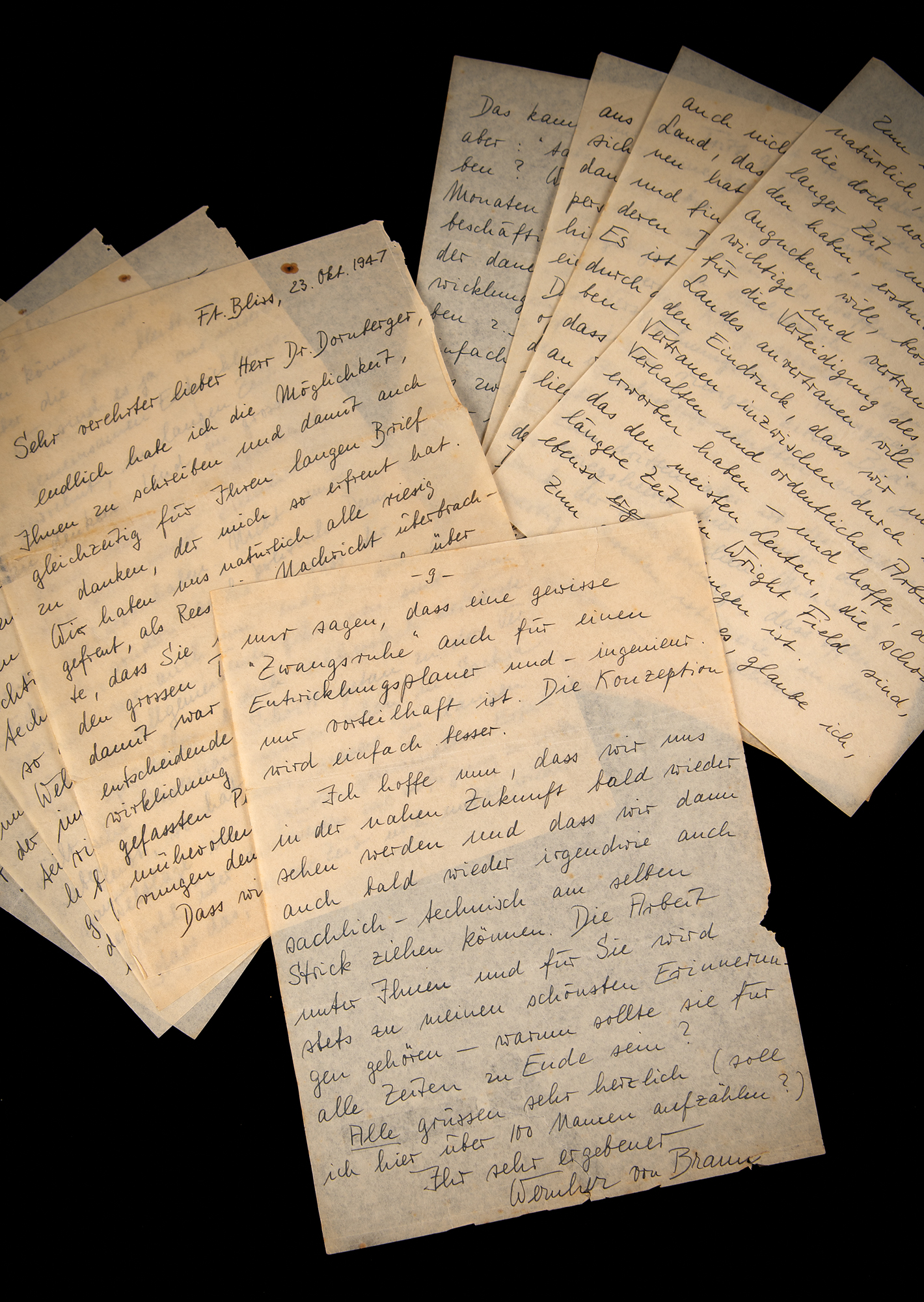
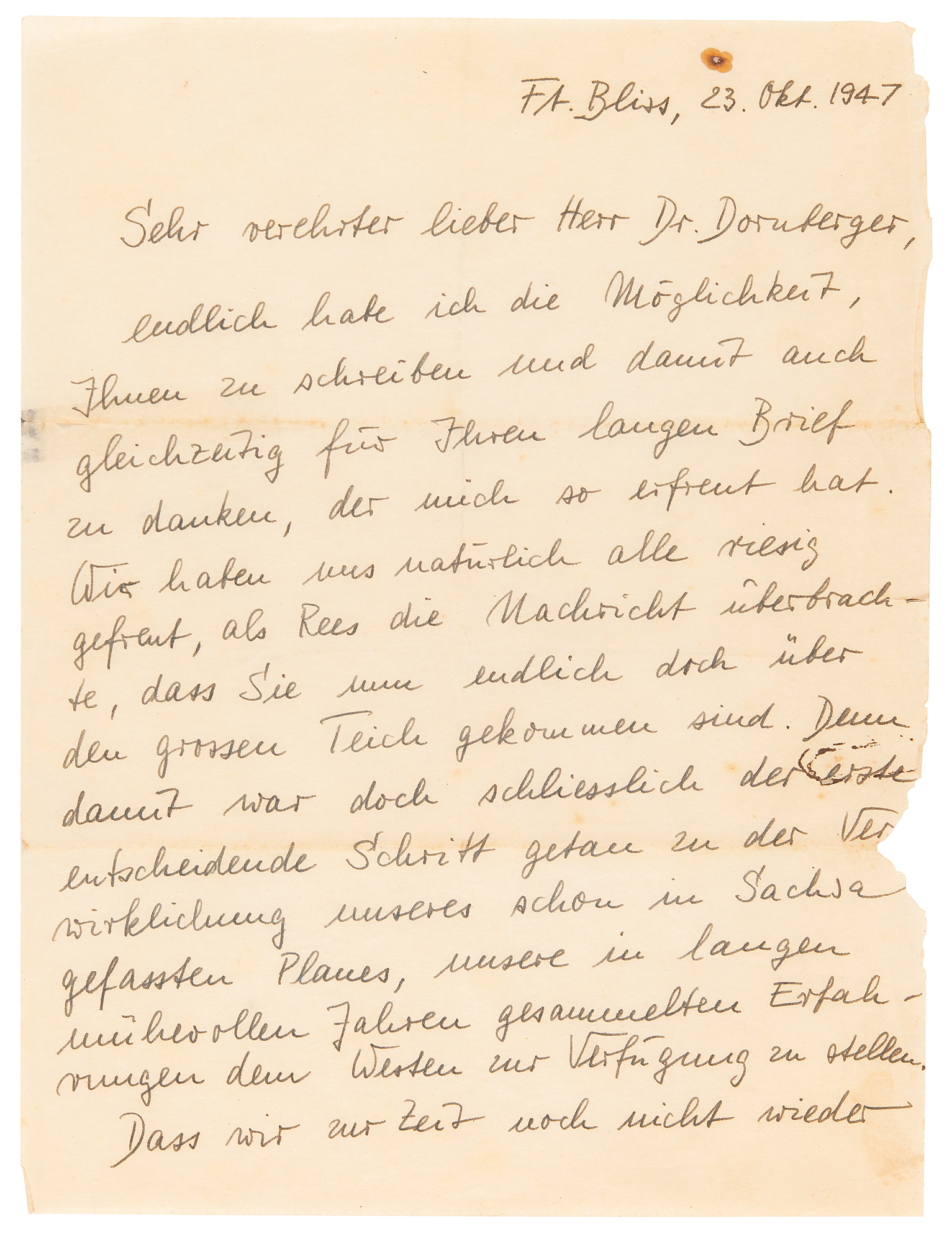
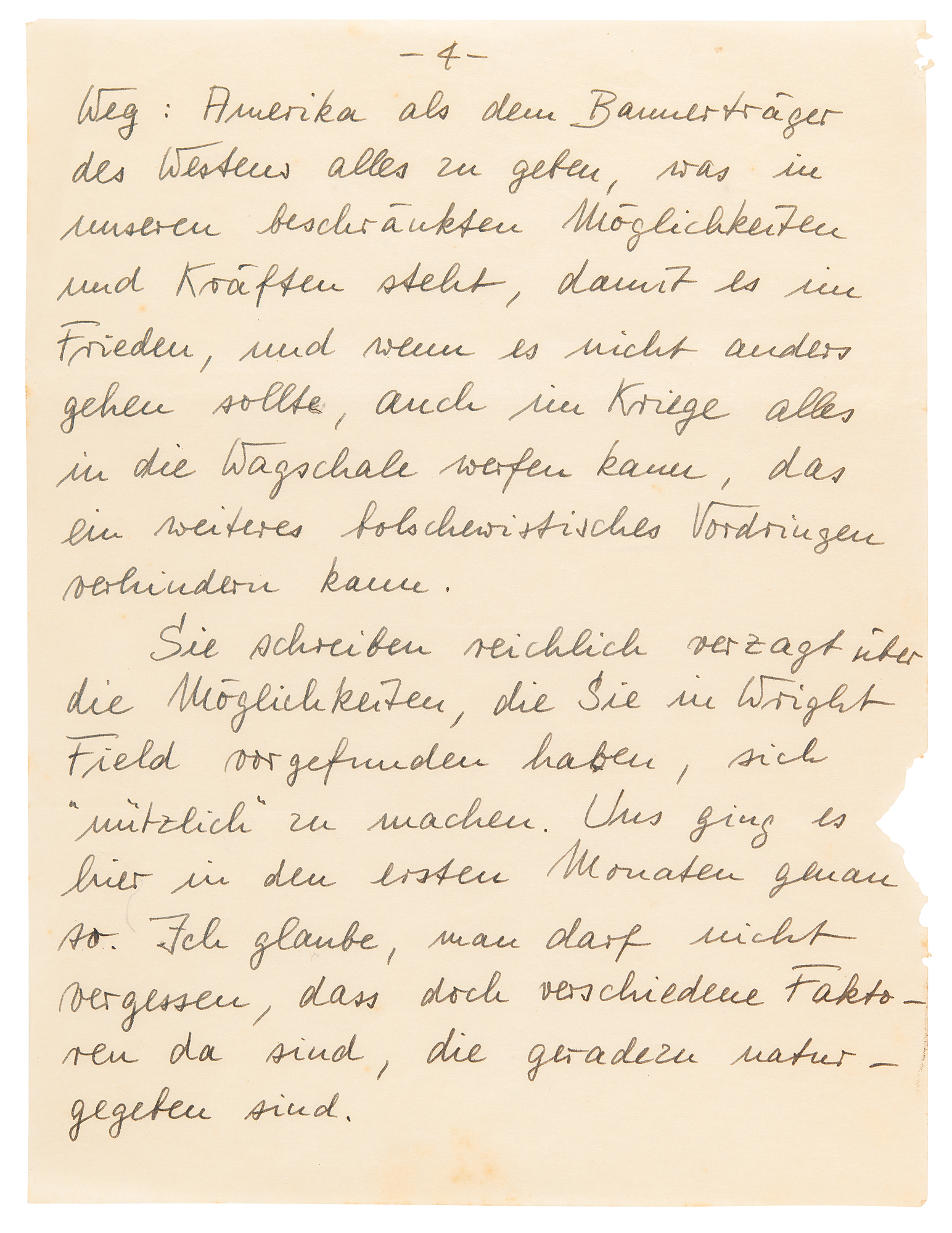
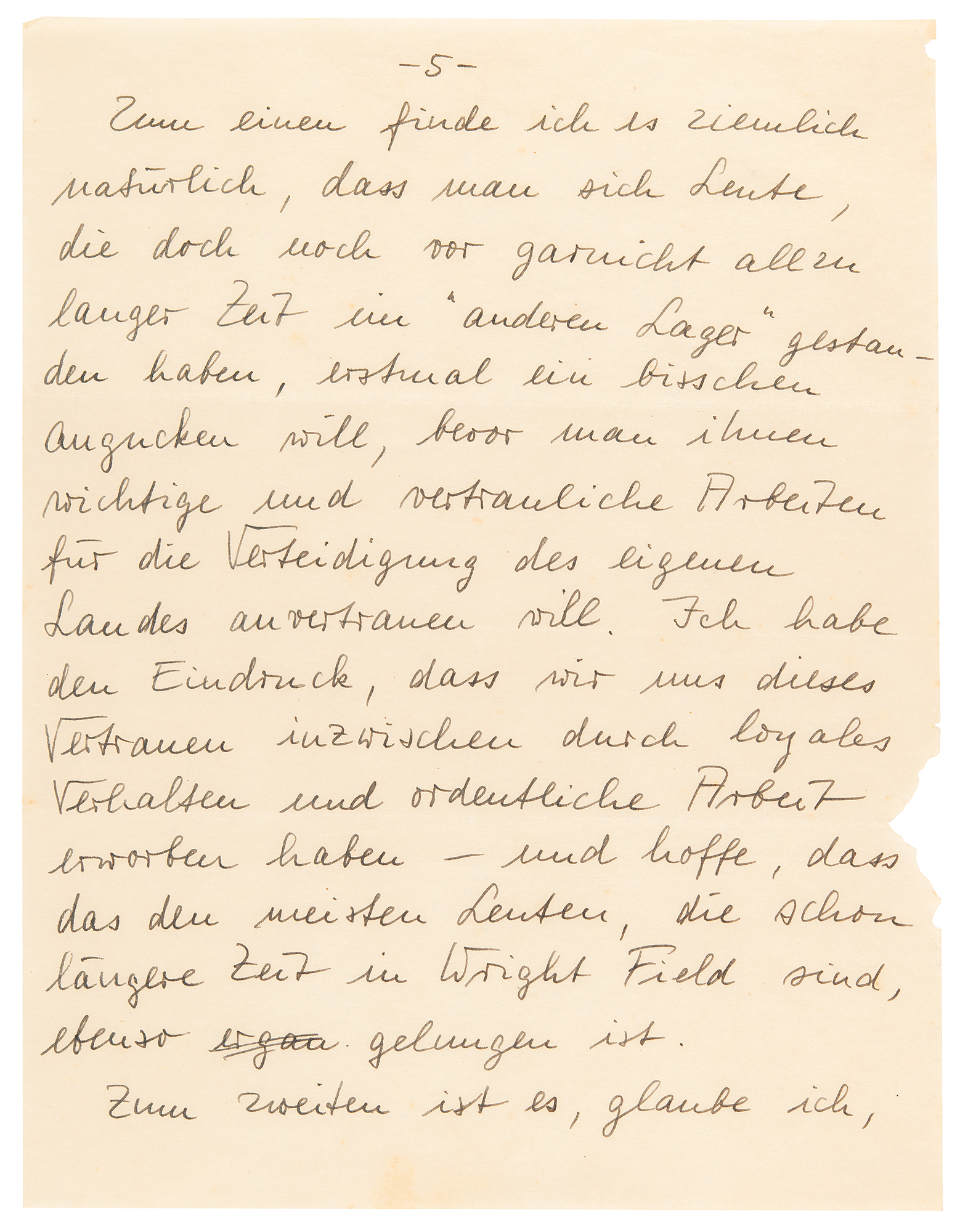
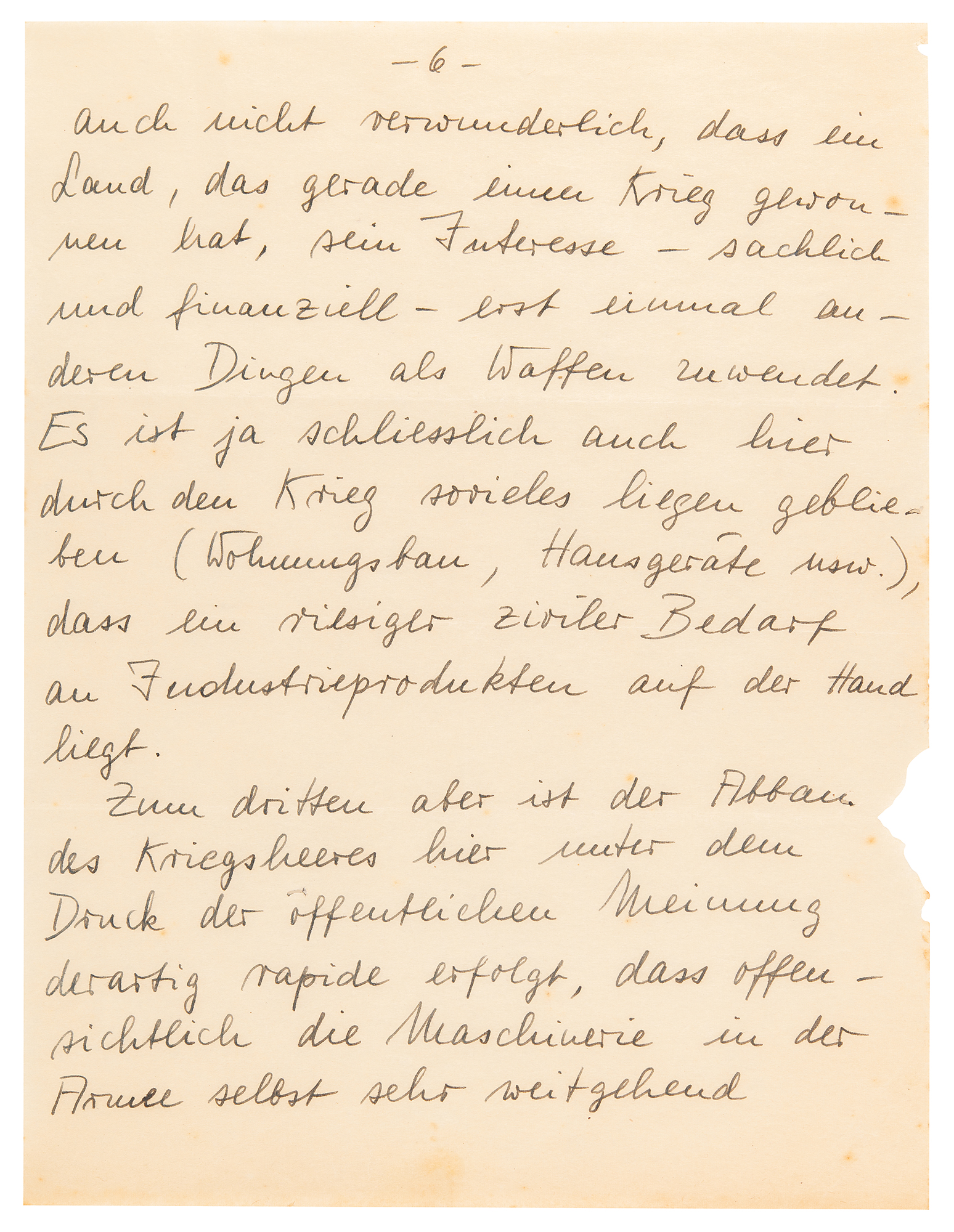
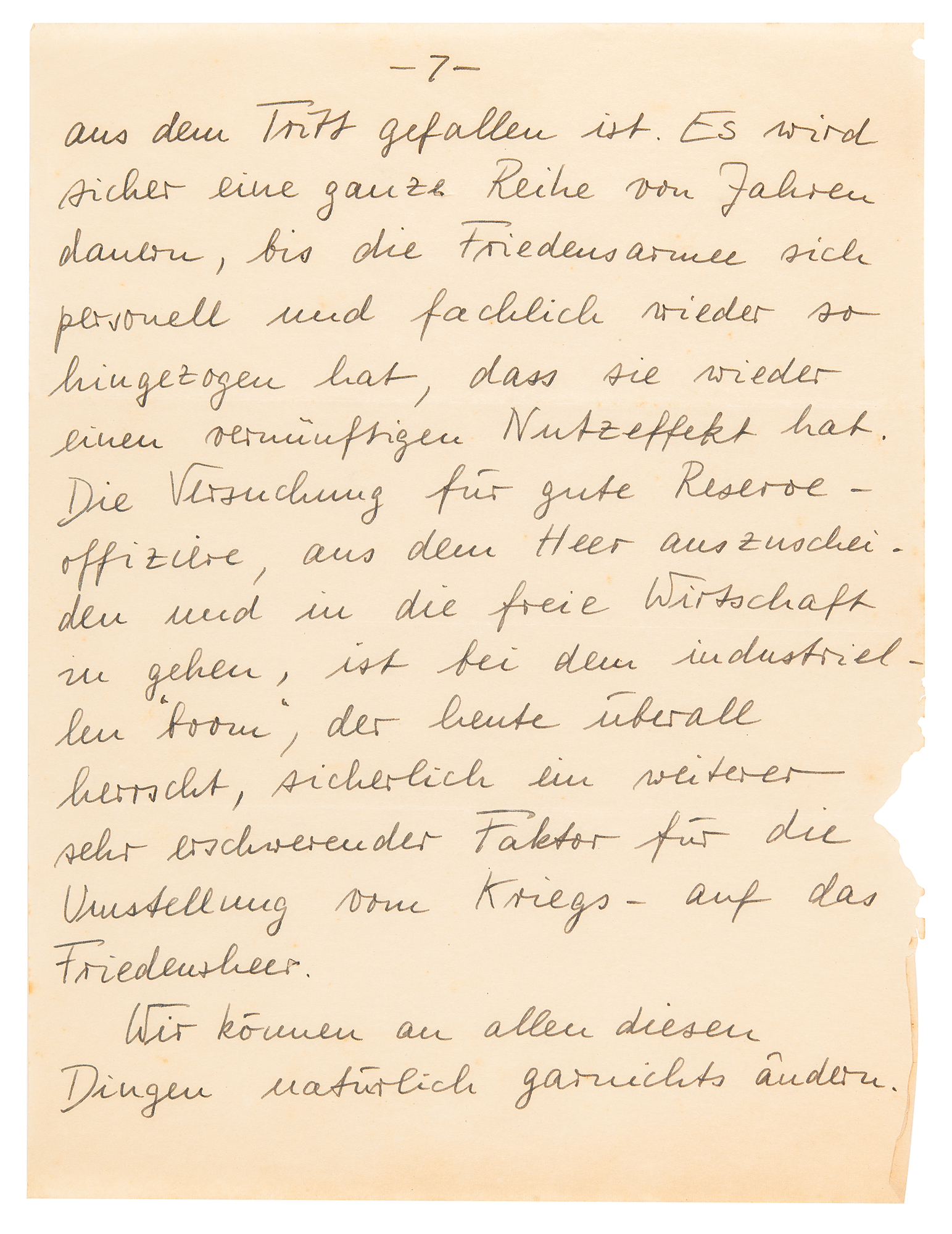
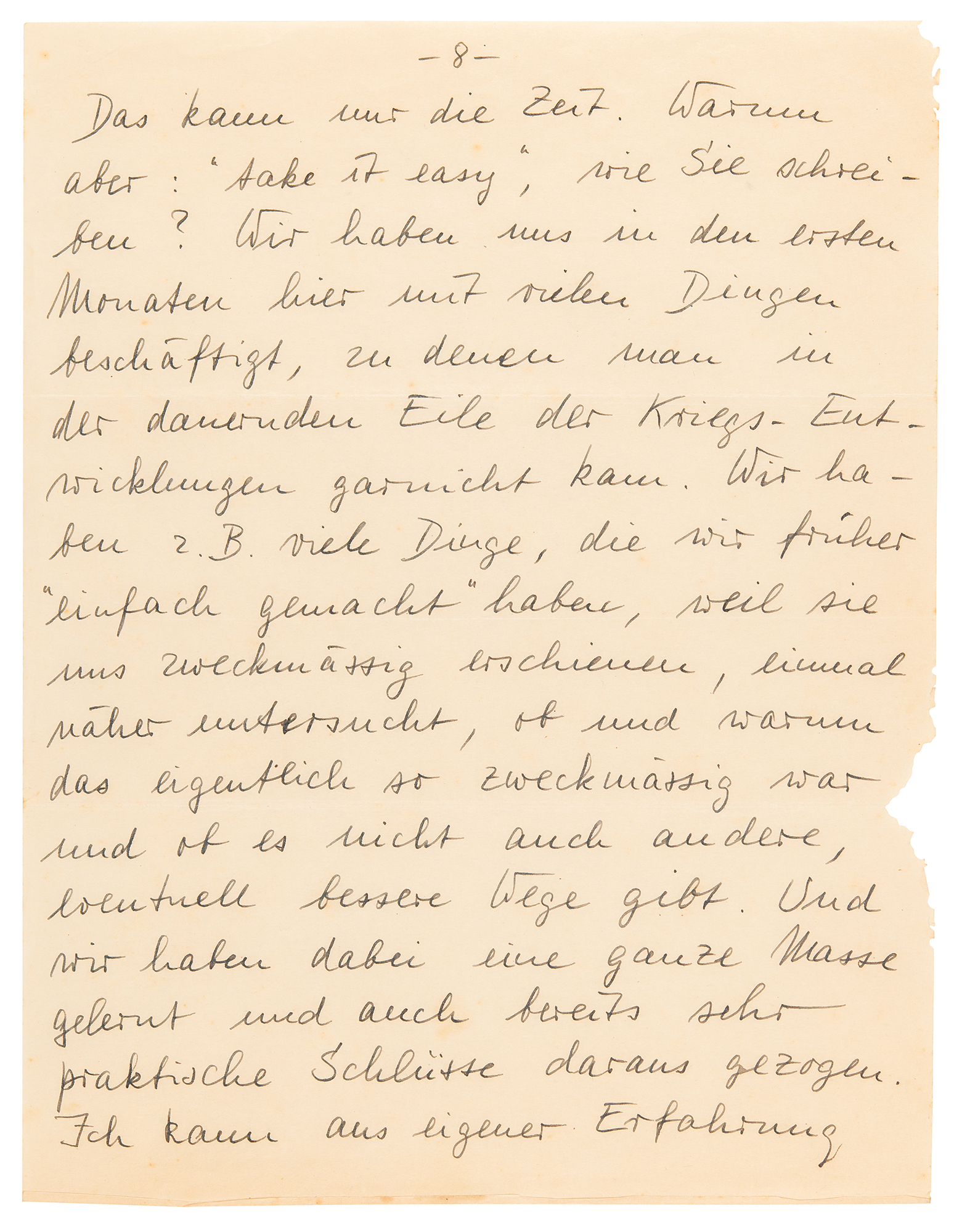
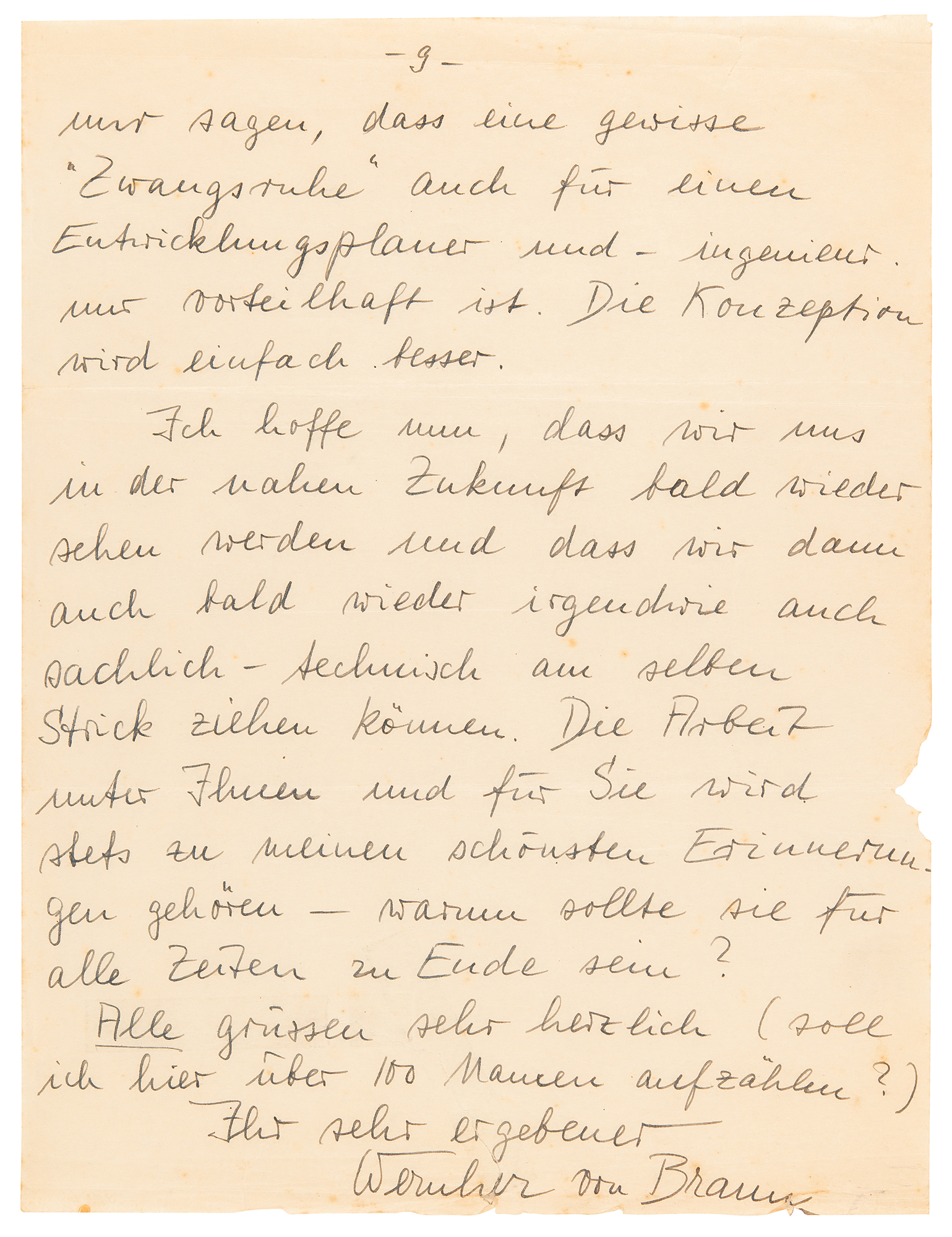
ALS in German, signed “Wernher von Braun,” nine pages, 8 x 10, October 23, 1947. Handwritten letter to "Herr Dr. Dornberger," Walter Dornberger—formerly the head of the V-2 rocket program in Nazi Germany, who also emigrated to the United States under Operation Paperclip—sent from Fort Bliss. Two years earlier, in September 1945, von Braun and other members of the Peenemünde team signed a work contract with the United States Army Ordnance Corps and were transferred from Germany to the United States in 'Operation Paperclip.' Von Braun and much of his team were stationed at Fort Bliss in Texas, training personnel on rockets and missiles while studying potential future rocket applications. Dornberger was attached to the USAF at Wright-Patterson Air Force Base in Ohio, working on the development of guided missiles.
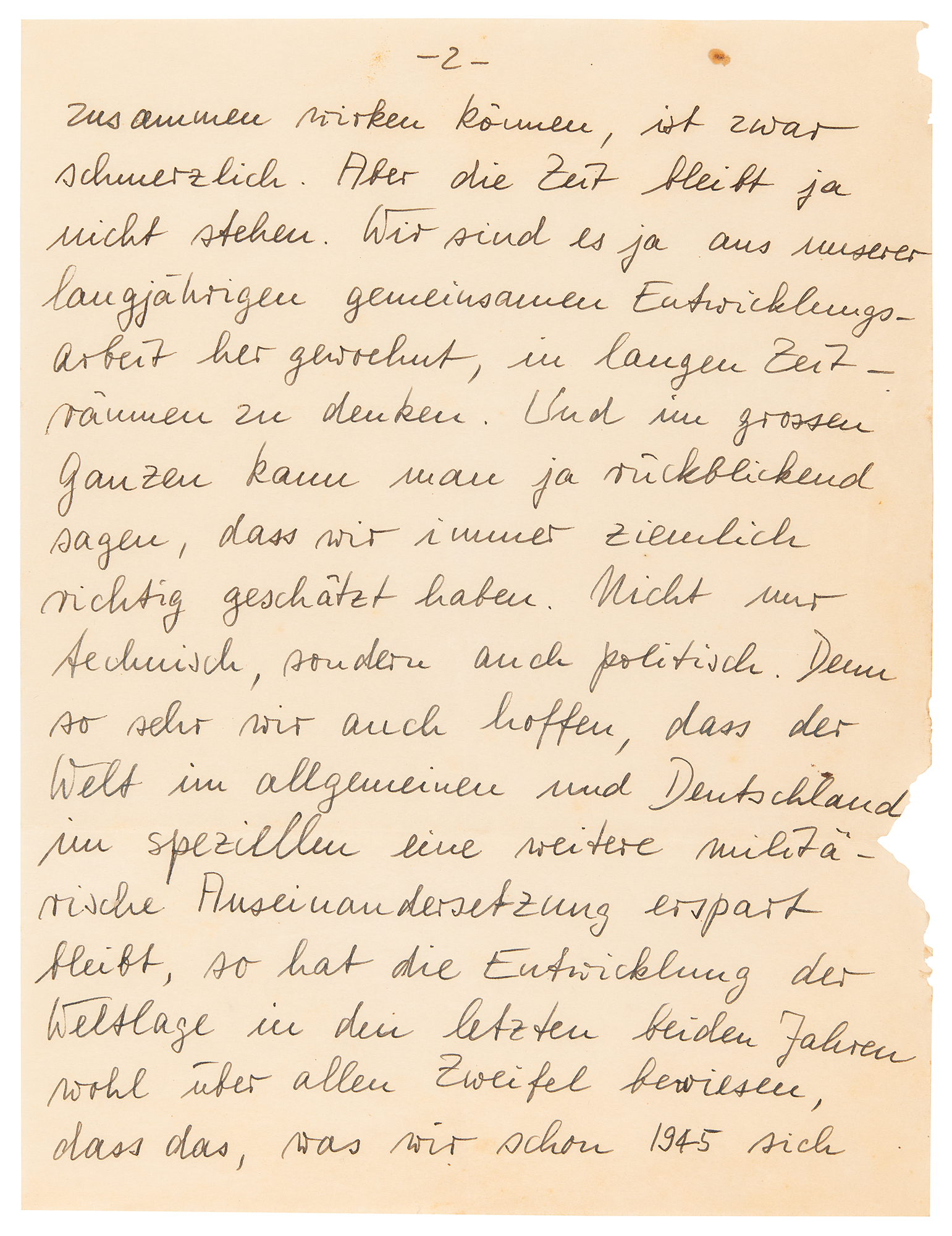
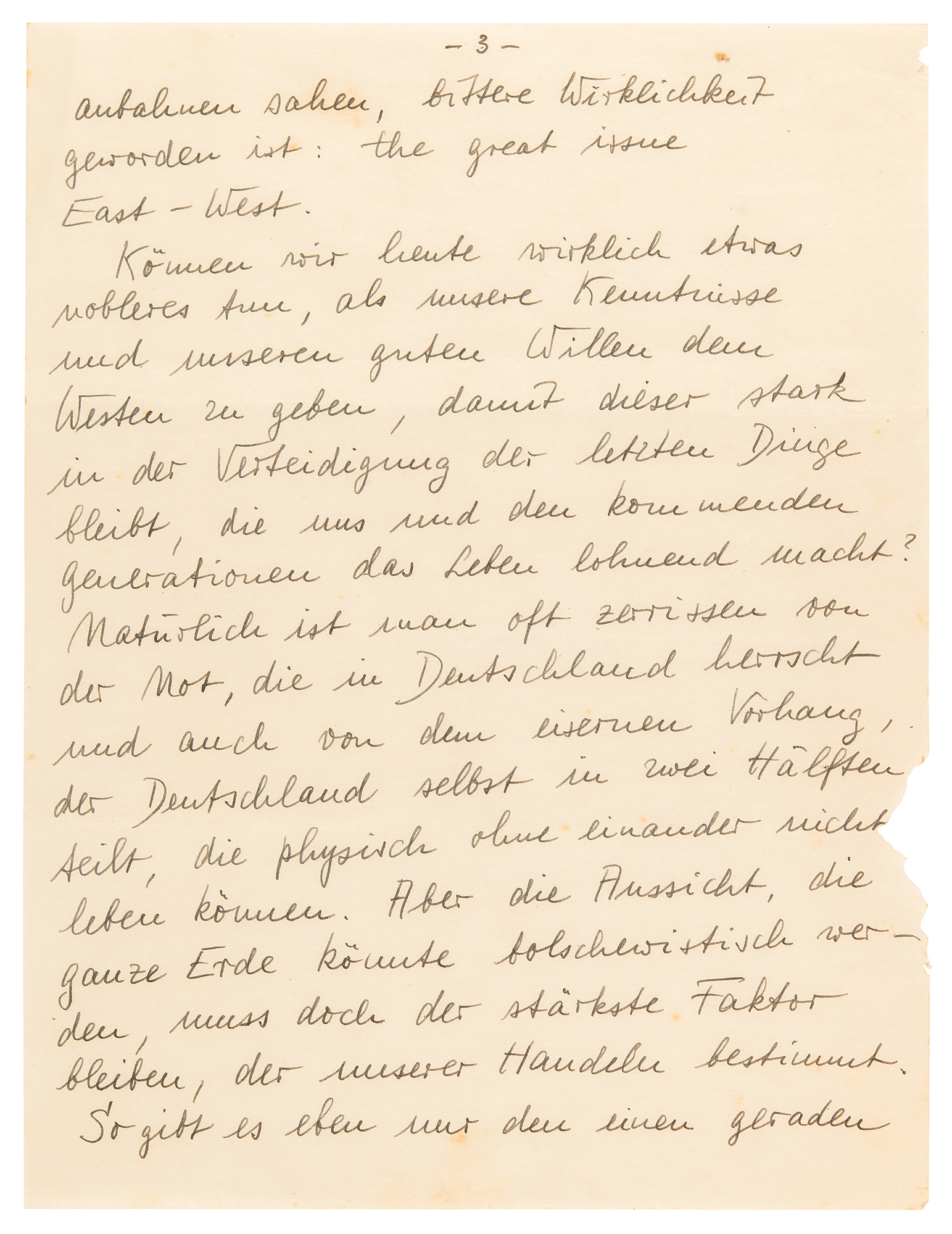
In part (translated): "Finally I have the chance to write you and, at the same time, to thank you for your long letter, which gave me much pleasure to read. Naturally, we were all very pleased to hear when R. brought word that you finally crossed the big pond. That was the first decisive step in realizing our plan made in S. to make available to the West our experience gathered over long, painstaking years. It pains me that we cannot work together at this time, but time does not stand still. We are used to thinking in long time frames owing to our many years of joint development work. By and large we can say in looking back that we always have estimated things quite correctly—not only technically but also politically. For as much as we hope that the world in general, and Germany in particular, will be saved from another military conflict, developments in the world in the last two years prove beyond all doubt [several words missing] has become bitter reality: the great East-West issue.
Can we really do anything more noble than give the West our knowledge and good will so that it will remain strong in the defense of the Last Things that will make life worth living for us and the coming generations. Naturally one is often torn by the misery in Germany today as well as by the Iron Curtain that is dividing Germany into two halves that cannot physically live one without the other. But the prospect that the whole world could become Bolshevist must remain the strongest factor determining our actions. So there remains only the one straightforward path: that of giving everything to America, the standard bearer of the West, all that lies within our limited capabilities and energies so that in peace and, if need be, war it can put everything in the balance to prevent another Bolshevist advance.
You write very despondingly about the options you found at Wright Field to make yourself 'useful.' We had the very same experience in the first months here. I think one should not forget there are various factors at work here.
First, I find it fairly natural that people want to first take a hard look at others who not very long ago were in a 'completely different camp' before they entrust them with important and confidential work for the defense of the homeland. I have the impression that we have gained this confidence over time through loyal behavior and respectable work. And I hope that has worked out for most of the people who have been at Wright Field for a lengthy period.
Second, I think it is not surprising that a country that has just won a war turns its interests—material and financial—toward things other than weapons. Because of the war, after all, a lot of things have been put aside—(housing, household equipment, etc.) so that a great civilian demand for industrial products is becoming clear.
Third, the downsizing of the military here, under pressure from public opinion, is proceeding so rapidly that it has largely fallen off stride. Certainly it will take many years until the peacetime army builds up its personnel and technical capabilities so that it can once again be reasonably effective. The temptation for good reserve officers to leave the army and enter the free enterprise system, owing to the industrial 'boom,' which is now everywhere pervasive, is certainly another aggravating factor in the transition from a wartime to a peacetime army.
Of course, we can change nothing in all this. Only time can do that. Why, however, do you say, 'Take it easy'? We have busied ourselves with many things in the first few months here which one could not do during the continuous rush of wartime developments. For example, we have looked more closely at many things that earlier we just did because they seemed expedient—whether and why they were so expedient and whether there are also other, conceivably better ways to do things. In doing so we have learned a whole lot and already come to some practical conclusion…that a kind of 'inactivity' is advantageous for a master planner and design engineer. The approach is simply better.
I hope we will see one another in the near future and that we somehow will be able to have a meeting of the minds. My work under you and for you will always be among my most pleasant memories. why should they be at an end for all time?
Everyone sends his heartfelt greetings (should I enumerate over a hundred names here?)" In very good to fine condition, with a small area of paper loss to the right edge of each page, and discreet old tape repairs to tears on the first and last pages.
This lengthy letter by von Braun, written to his former superior, offers a revealing glimpse into the postwar realities of Operation Paperclip—the secret U.S. program that brought former German scientists to America to advance military and aerospace technology. Both men had been leading figures at the Peenemünde Army Research Center, developing the V-2 rocket for Nazi Germany before being recruited by the United States in the wake of World War II.
In this candid correspondence, von Braun reflects on their shared goal of transferring their technical expertise to “the West” to counter the perceived Soviet threat in the emerging Cold War. He acknowledges the mistrust and bureaucratic inertia faced by former enemy scientists, as well as America’s shifting focus from wartime production to civilian needs. At the same time, he underscores a sense of ideological alignment with the United States, casting their work as part of a larger mission to strengthen the West against communism. The letter is not only personal and nostalgic but also historically significant, encapsulating the intersection of wartime legacies, Cold War strategy, and the controversial integration of German scientists into America’s defense and space programs.

This item is Pre-Certified by STEVE ZARELLI
Buy a third-party letter of authenticity for
$50.00
*This item has been pre-certified by a trusted third-party authentication service, and by placing a bid on this item, you agree to accept the opinion of this authentication service. If you wish to have an opinion rendered by a different authenticator of your choosing, you must do so prior to your placing of any bid. RR Auction is not responsible for differing opinions submitted 30 days after the date of the sale.
Third-party authentication service applies only to signatures and handwriting, and does not cover the addition of sketches, artwork, musical quotations, etc.

