Sold For $14,949
*Includes Buyers Premium
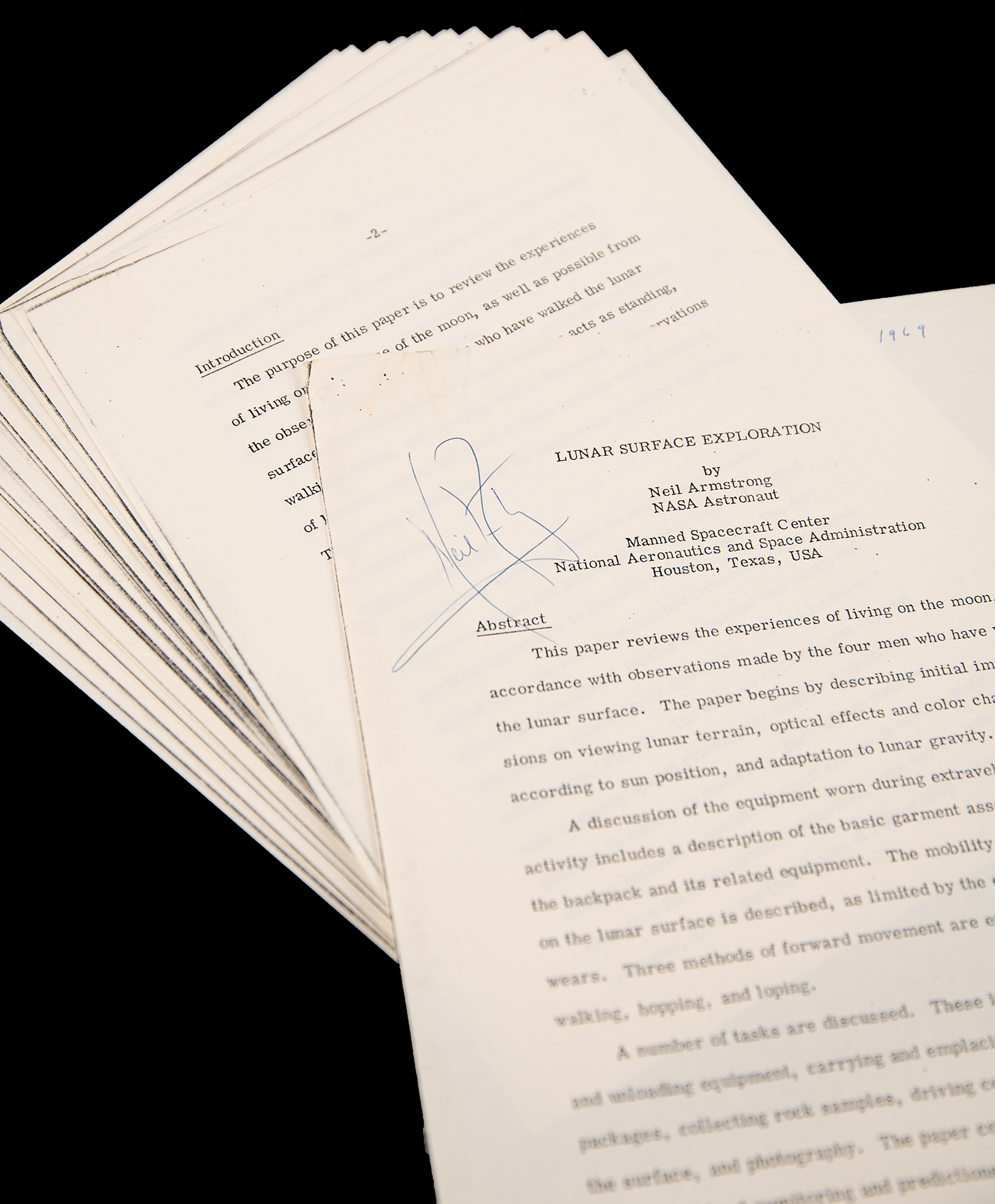
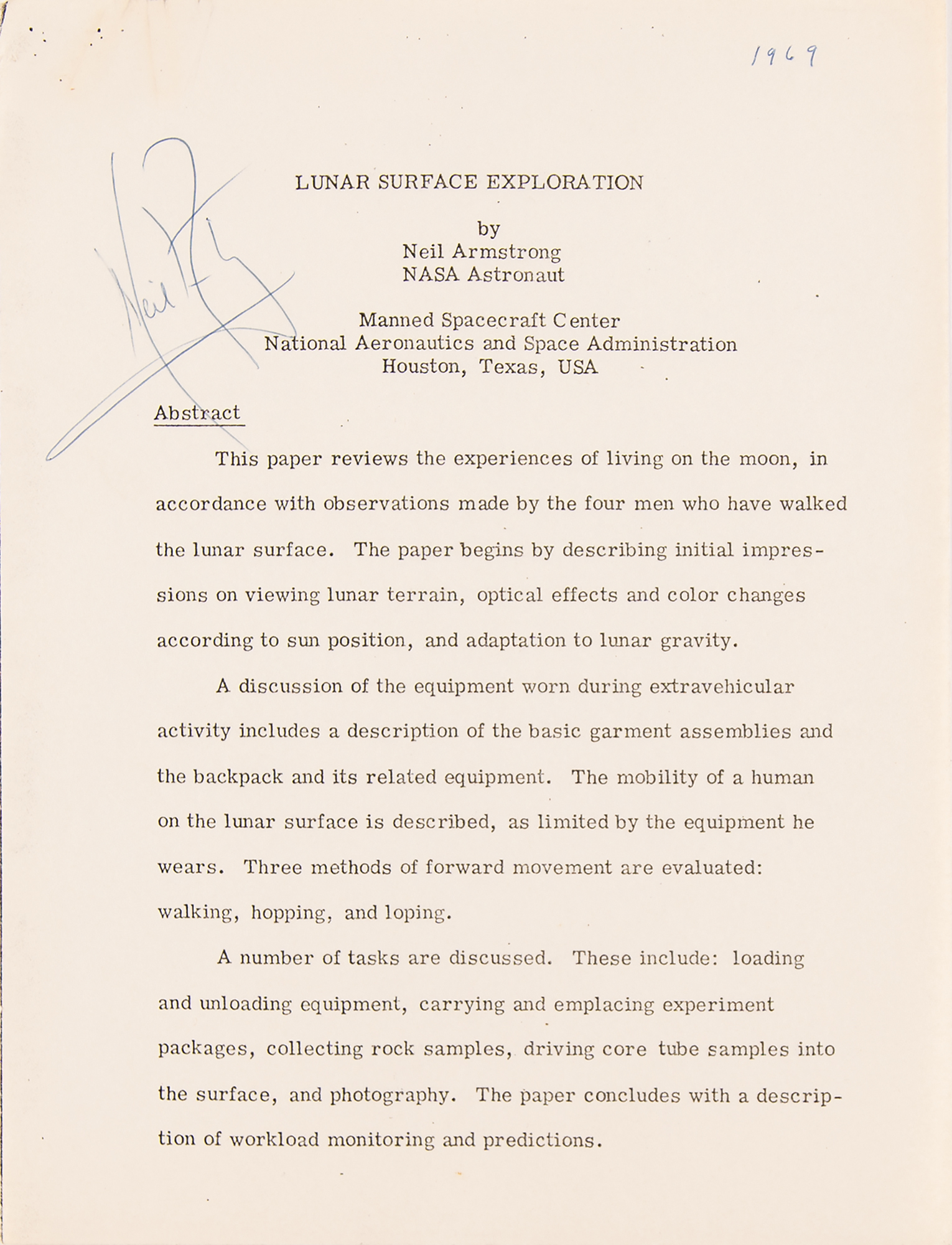
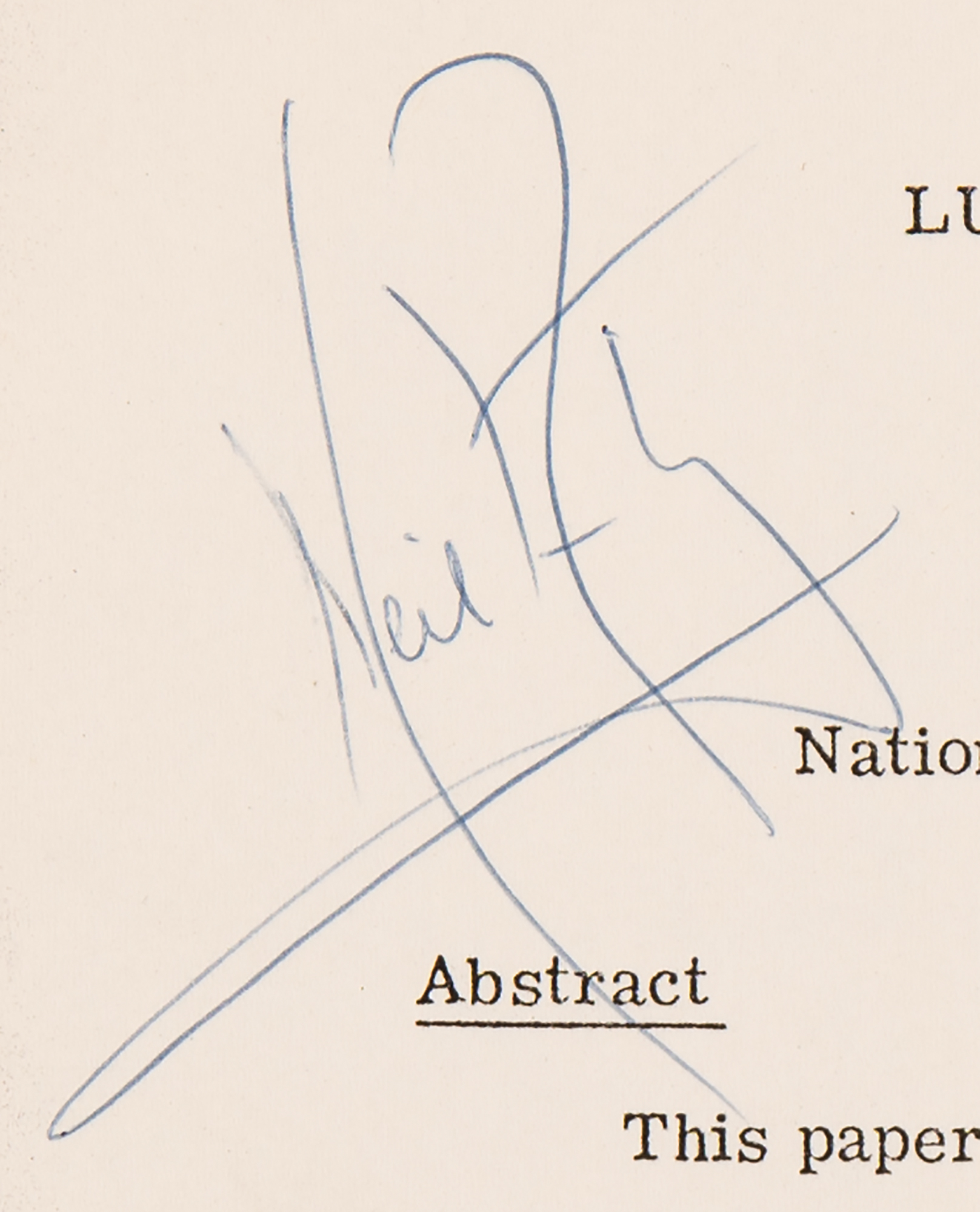
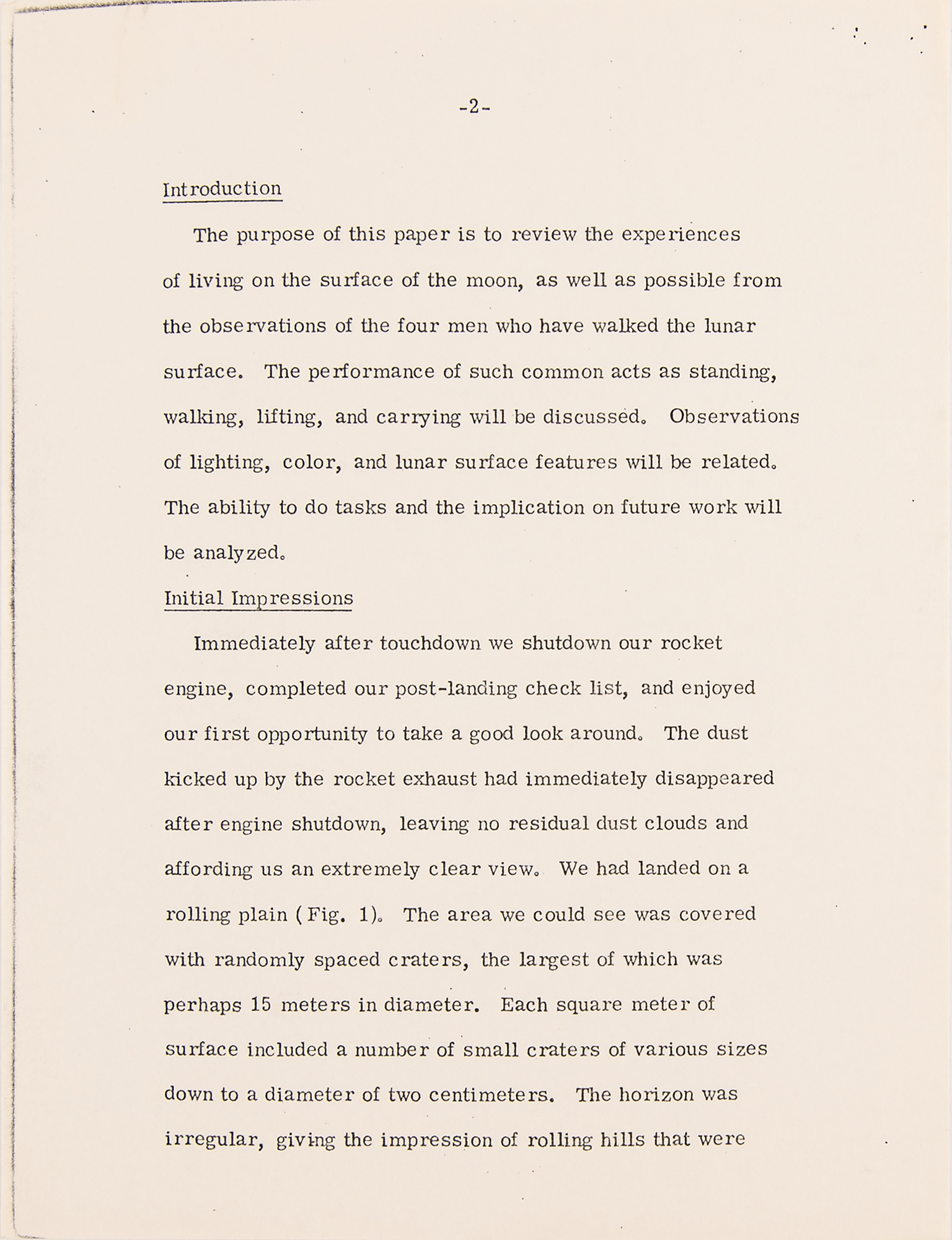
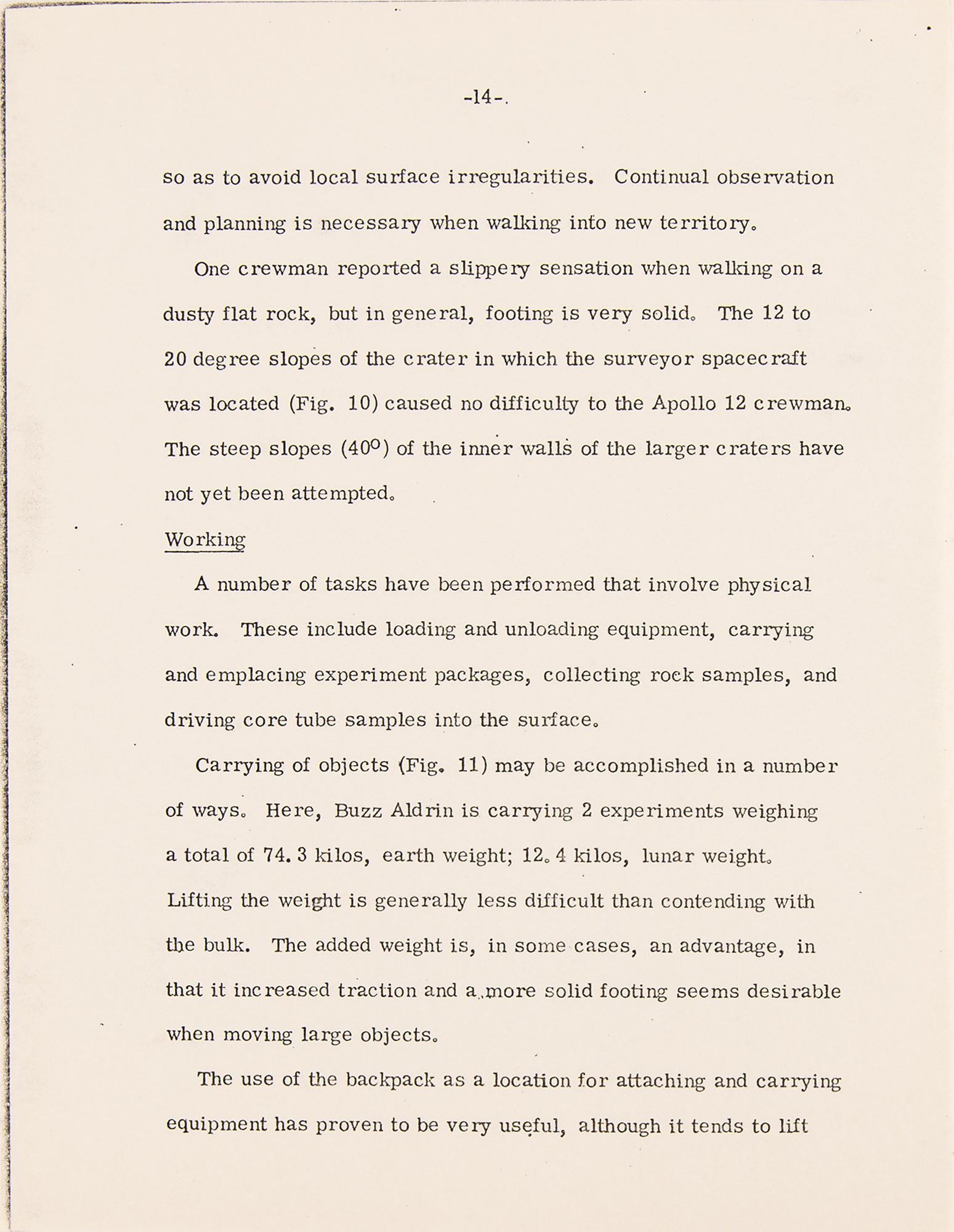
Scarce and fascinating unbound copy of Neil Armstrong’s scientific article "Lunar Surface Exploration,” 35 pages, 8 x 10.5, signed in ballpoint by Neil Armstrong on the title page, the upper right corner of which is dated "1969." The introduction reads: “The purpose of this paper is to review the experiences of living on the surface of the moon, as well as possible from the observations of the four men who have walked the lunar surface. The performance of such common acts as standing, walking, lifting, and carrying will be discussed. Observations of lighting, color, and lunar surface features will be related. The ability to do tasks and the implication on future work will be analyzed.”
Initial Impressions: “Immediately after touchdown we shutdown our rocket engine, completed our post-landing check list, and enjoyed our first opportunity to take a good look around. The dust kicked up by the rocket exhaust had immediately disappeared after engine shutdown, leaving no residual dust clouds and affording us an extremely clear view. We had landed on a rolling plain. The area we could see was covered with randomly spaced craters, the largest of which was perhaps 15 meters in diameter…
The area appeared to be generally sandy with a wide variety of rocks of every size up to 2 meters in view…The surface was brightly illuminated, giving the appearance of a desert on a summer day. Since the sky is black, the impression is somewhat like being on a sandy athletic field at night that is very well illuminated with flood lights. No stars or planets could be seen with the exception of the earth.
While performing the initial post-landing activities, we had the opportunity to notice our reaction to the lunar gravity. Inasmuch as the Lunar Module is operated while standing, our initial observations were confined to that position. There was no difficulty noted in stability or balance. Recovery from incipient falling was easily performed…In general, the gravity condition was very pleasant and preferable to both weightlessness and earth gravity.”
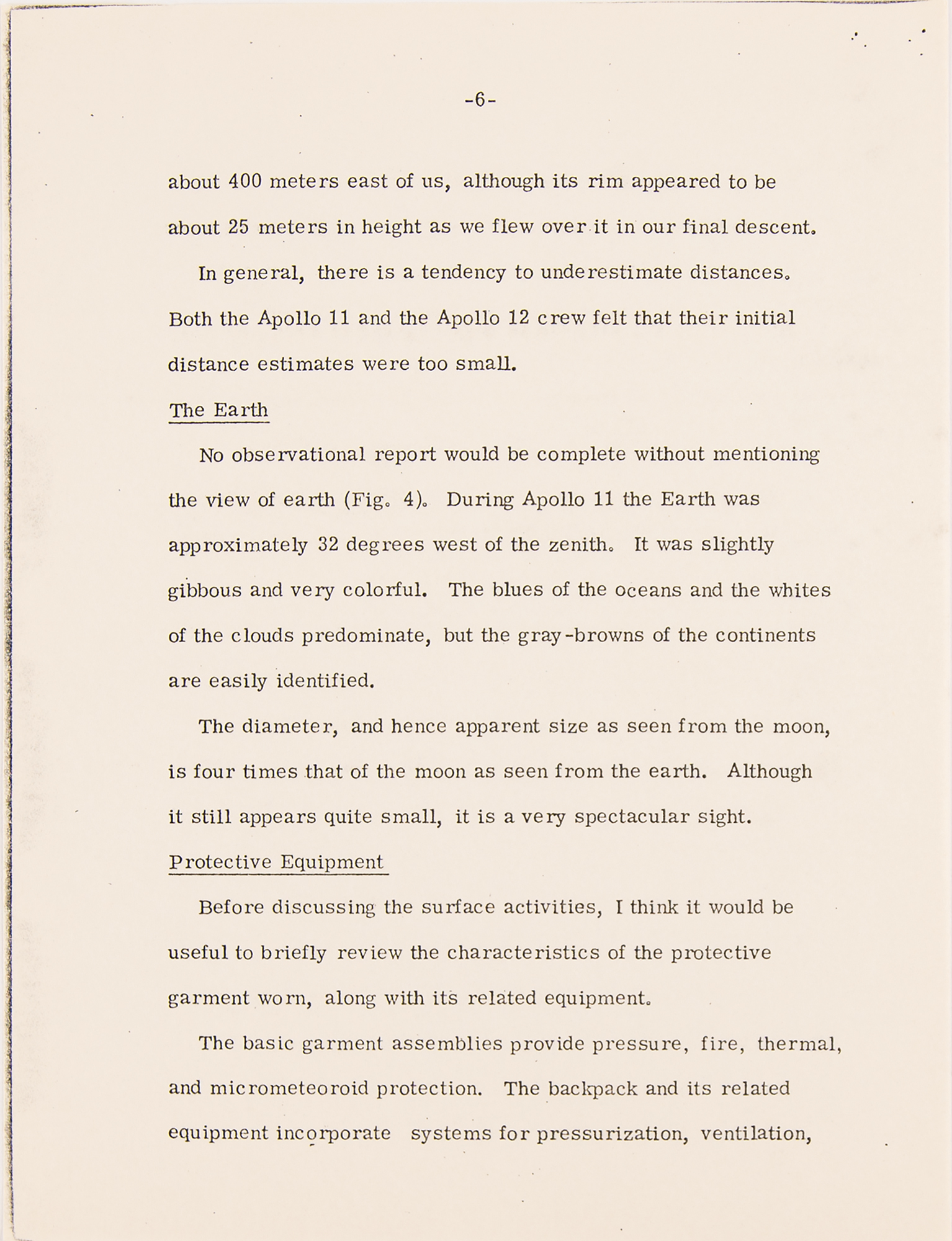
The Earth: “No observational report would be complete without mentioning the view of earth…During Apollo 11 the Earth was approximately 32 degrees west of the zenith. It was slightly gibbous and very colorful. The blues of the oceans and the whites of the clouds predominate, but the gray-browns of the continents are easily identified. The diameter, and hence apparent size as seen from the moon, is four times that of the moon as seen from the earth. Although it still appears quite small, it is a very spectacular sight.”
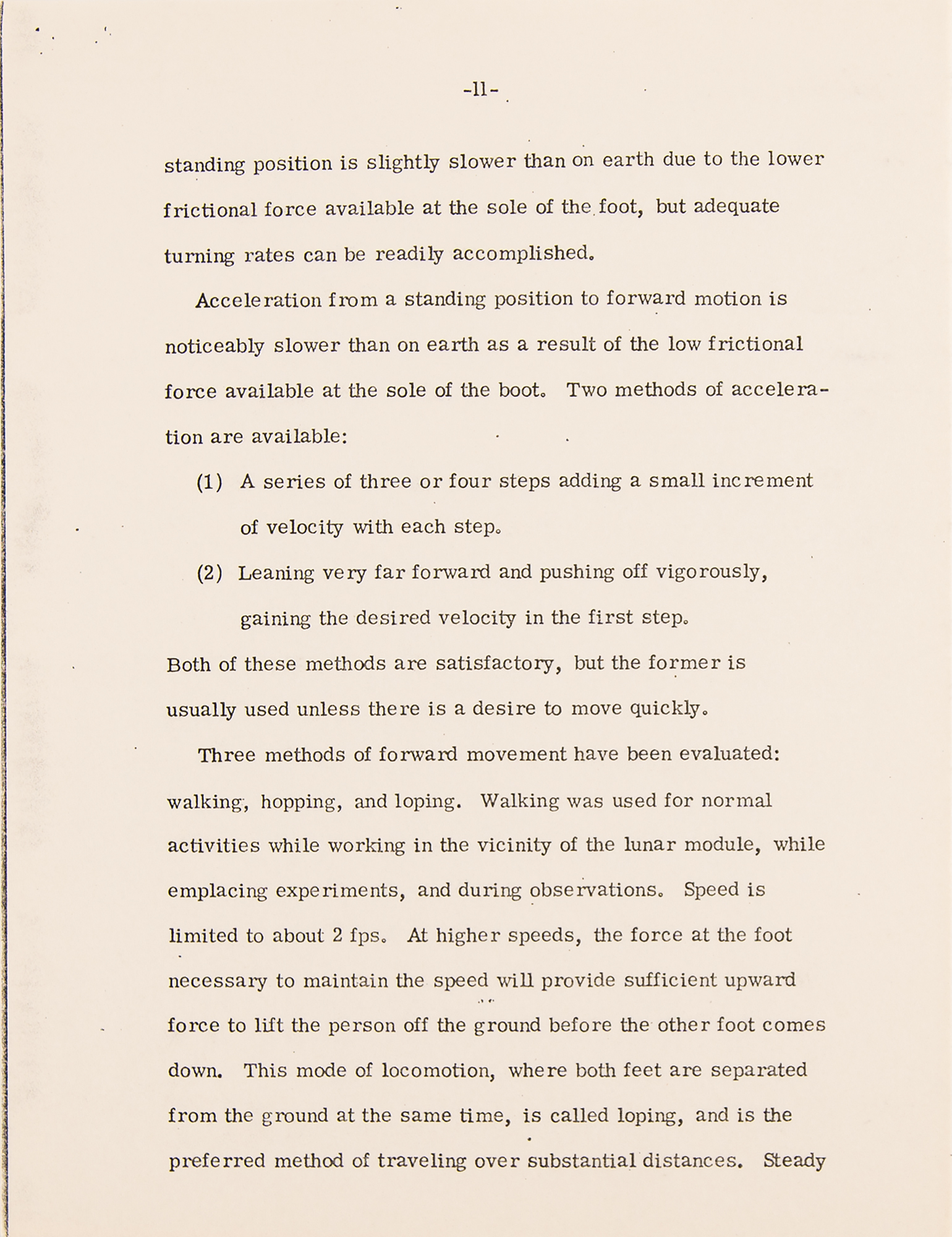
Mobility: "Acceleration from a standing position to forward motion is noticeably slower than on earth as a result of the low frictional force available at the sole of the boot. Two methods of acceleration are available: (1) A series of three or four steps adding a small increment of velocity with each step. (2) Leaning very far forward and pushing off vigorously, gaining the desired velocity in the first step. Both of these methods are satisfactory, but the former is usually used unless there is a desire to move quickly...Stopping from a walk can be achieved in one or two steps, but stopping from the loping mode requires three or four. Side-stepping could be performed, but was somewhat difficult due to poor visibility and poor lateral articulation of the suit leg. In general, movement on the lunar surface requires somewhat more planning and attention than movement here on earth."
Conclusions: “Two lunar landings and their associated initial surface explorations have provided a good understanding of working in the lunar environment. The hostile vacuum and extreme temperatures are tolerable with the protective equipment that has been developed. The lunar gravity is found to be a particularly favorable condition for the human to operate within. No physical or psychological difficulties have been encountered which might discourage further exploratory planning.
Further improvement in mobility of the pressure garments will improve the effectiveness of persons conducting observations and experiments on the moon. Substantially more ambitious undertakings can be planned during this next decade which will greatly increase our knowledge and understanding of our natural satellite.” The last 15 pages consist of figures featuring lunar images and graphs. In fine condition, with light wear to upper left corner of title page.

This item is Pre-Certified by STEVE ZARELLI
Buy a third-party letter of authenticity for
$250.00
*This item has been pre-certified by a trusted third-party authentication service, and by placing a bid on this item, you agree to accept the opinion of this authentication service. If you wish to have an opinion rendered by a different authenticator of your choosing, you must do so prior to your placing of any bid. RR Auction is not responsible for differing opinions submitted 30 days after the date of the sale.
Third-party authentication service applies only to signatures and handwriting, and does not cover the addition of sketches, artwork, musical quotations, etc.

