Sold For $6,816
*Includes Buyers Premium
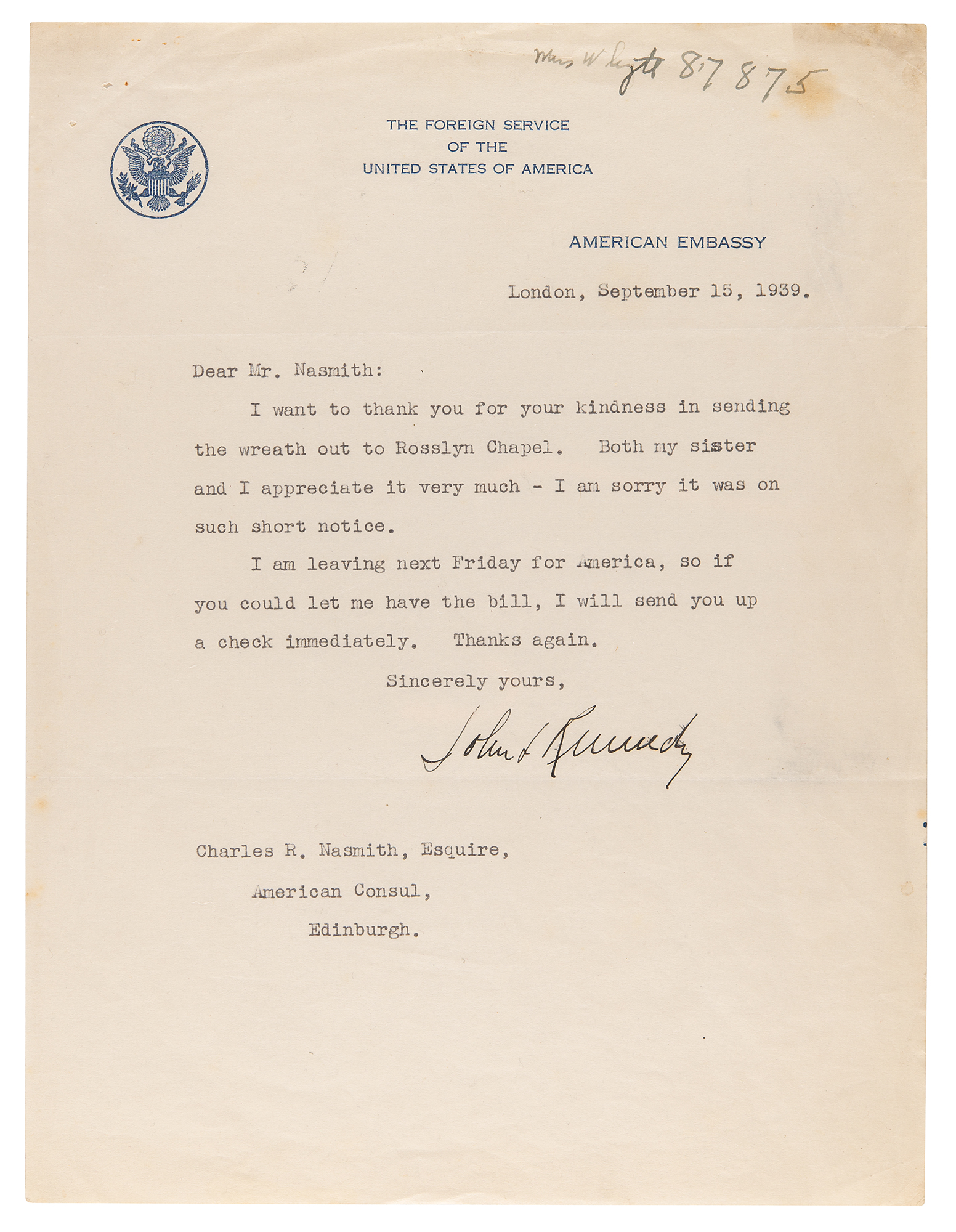
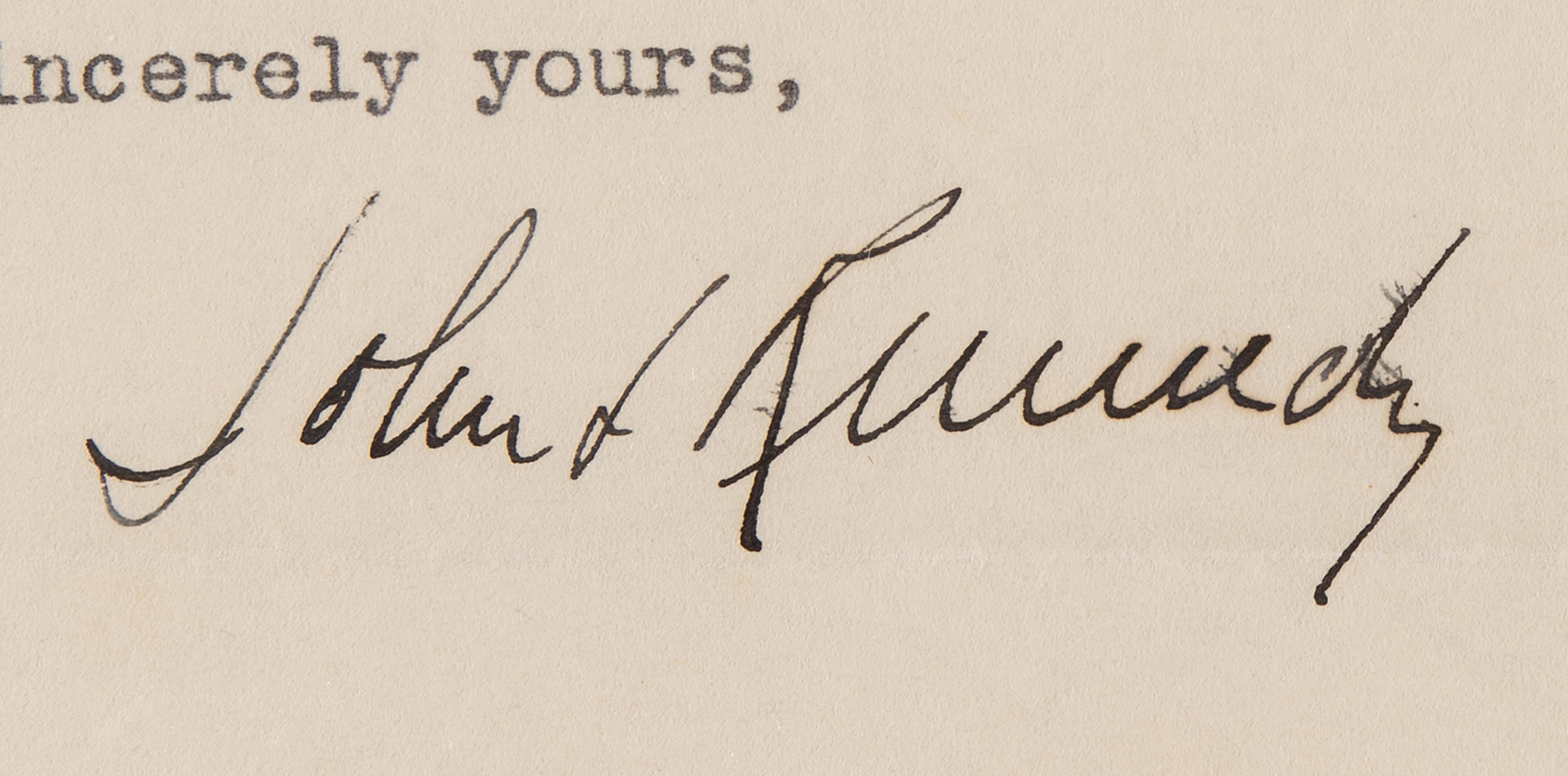
TLS, signed "John F. Kennedy," one page, 8 x 10.5, Foreign Service of the United States of America, American Embassy letterhead, September 15, 1939. Letter to Charles R. Nasmith, American Consul at Edinburgh, pertaining to a wreath sent for the memorial of Peter George Alexander St. Clair-Erskine, who had been killed while in active service with the Royal Air Force on September 8, 1939, one week after German forces invaded Poland, an event that triggered the start of World War II. The letterhead Kennedy uses was almost certainly obtained from the office of his father, Joseph P. Kennedy, Sr., who was then into his second year as the United States Ambassador to the United Kingdom.
In full: "I want to thank you for your kindness in sending the wrath out to Rosslyn Chapel. Both my sister and I appreciate it very much - I am sorry it was on such short notice. I am leaving next Friday for America, so if you could let me have the bill, I will send you up a check immediately. Thanks again." In very good to fine condition, with creasing and staining in the margins.
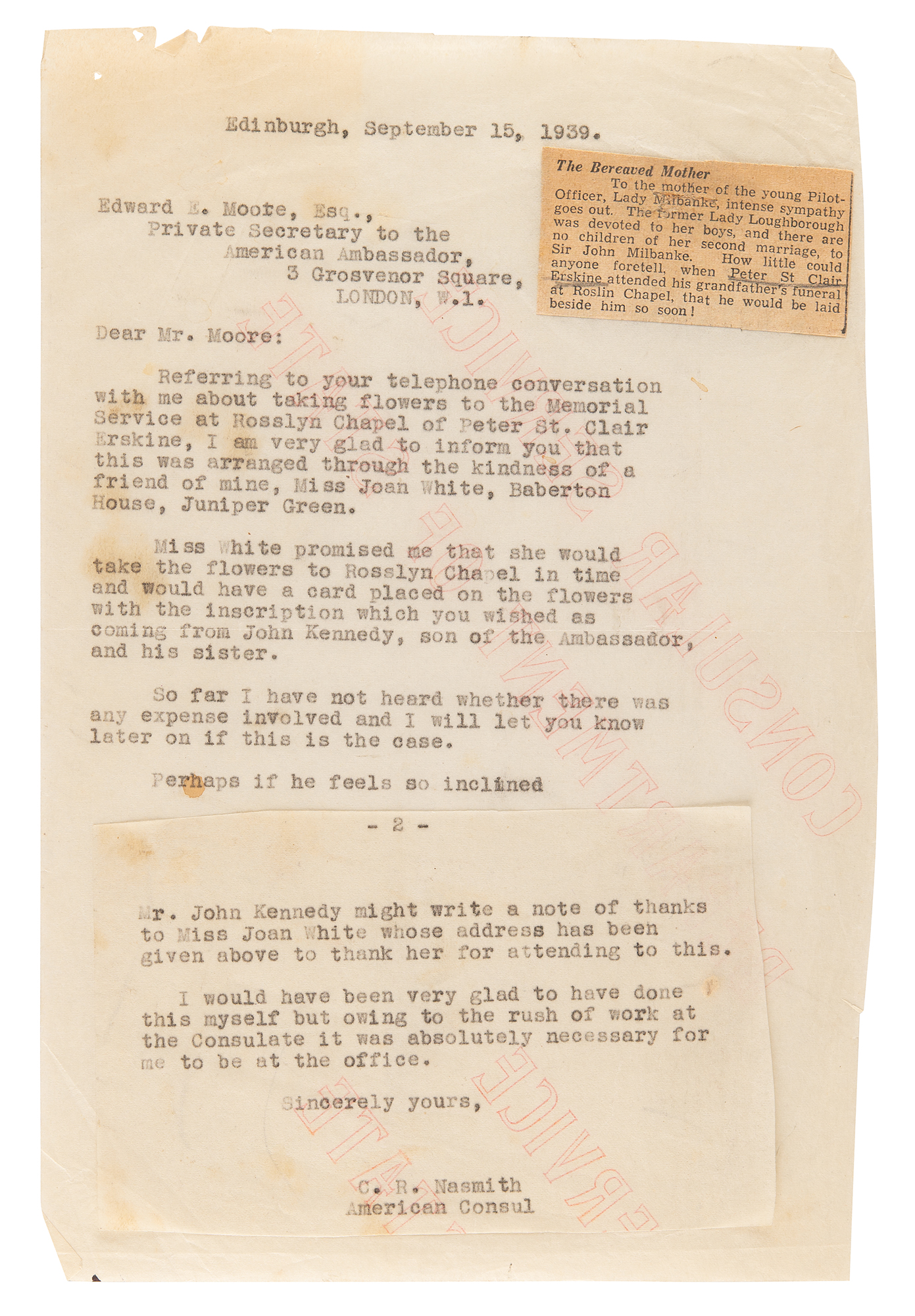
Accompanied by a carbon copy of a letter from Nasmith to Edward E. Moore, private secretary to JFK's father, regarding the arrangements for bringing the flowers to Rosslyn Chapel.
Two weeks before writing these letters, on September 3, 1939, the same day that Britain and France declared war on Germany following its invasion of Poland, the passenger liner SS Athenia became the first UK ship to be sunk by German forces in World War II. Among the Athenia’s 1,103 passengers, 311 were U.S. citizens, and those that were rescued were safely transported to Glasgow. Unable to leave London, Ambassador Kennedy sent his 22-year-old son and personal secretary John F. Kennedy to visit the American survivors on his behalf.
The event was a pivotal one for Kennedy, who by October had returned to Harvard after his six-month European sabbatical with a reshaped political mindset. He had, initially, like his father, considered the prospect of war remote, but the sinking of the Athenia and the concurrent war declaration pressed upon Kennedy greatly. After the fall of Poland, JFK wrote an editorial for the Harvard University newspaper entitled Peace in Our Time, and then began work on his honors thesis, which discussed the British appeasement that led to war; the final product would be published as a book in 1940, under the title Why England Slept. Unique, early, and poignant correspondence from a young JFK.
This item is Pre-Certified by PSA/DNA
Buy a third-party letter of authenticity for
$200.00
*This item has been pre-certified by a trusted third-party authentication service, and by placing a bid on this item, you agree to accept the opinion of this authentication service. If you wish to have an opinion rendered by a different authenticator of your choosing, you must do so prior to your placing of any bid. RR Auction is not responsible for differing opinions submitted 30 days after the date of the sale.
Third-party authentication service applies only to signatures and handwriting, and does not cover the addition of sketches, artwork, musical quotations, etc.

