Sold For $33,750
*Includes Buyers Premium
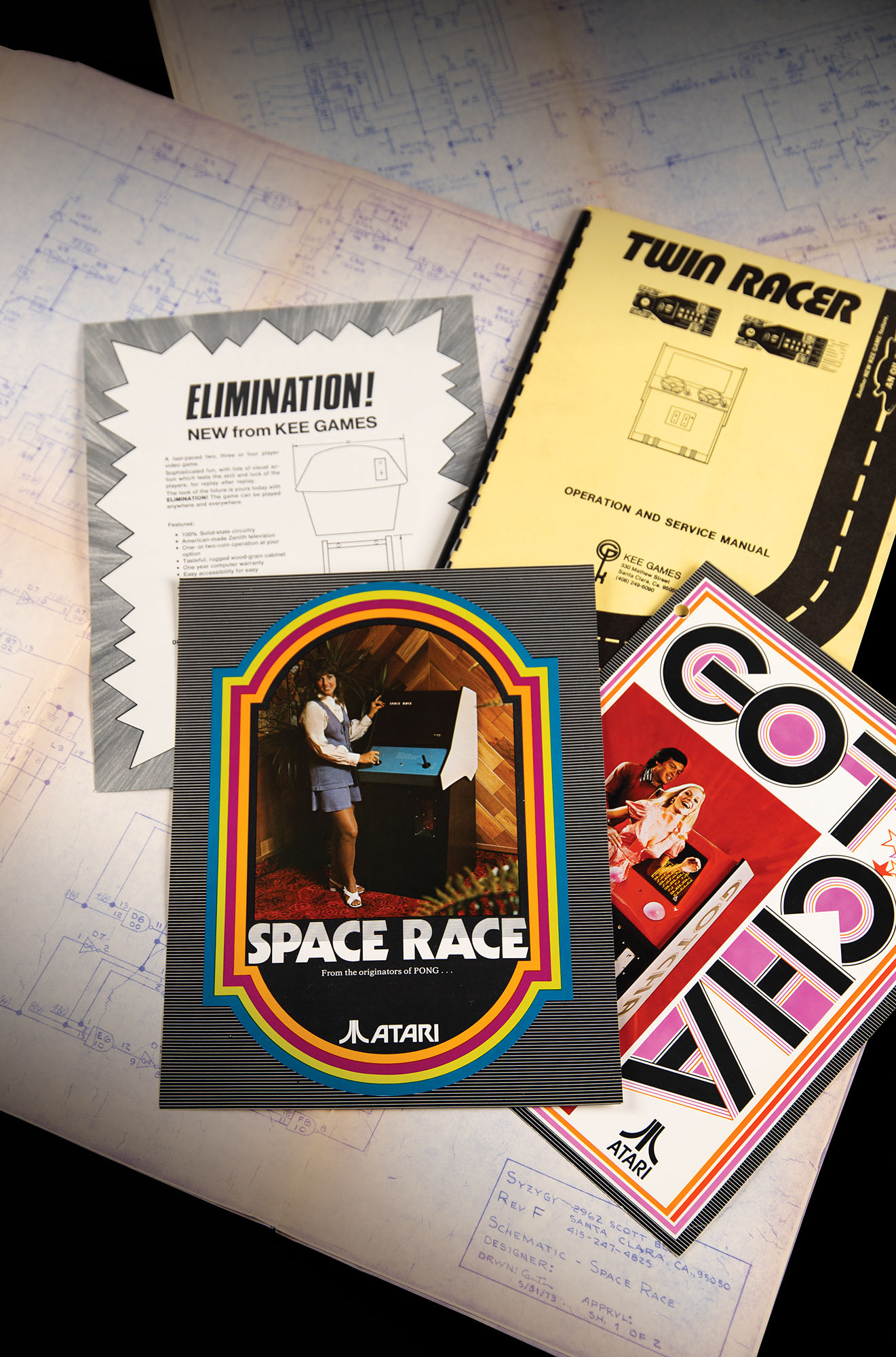
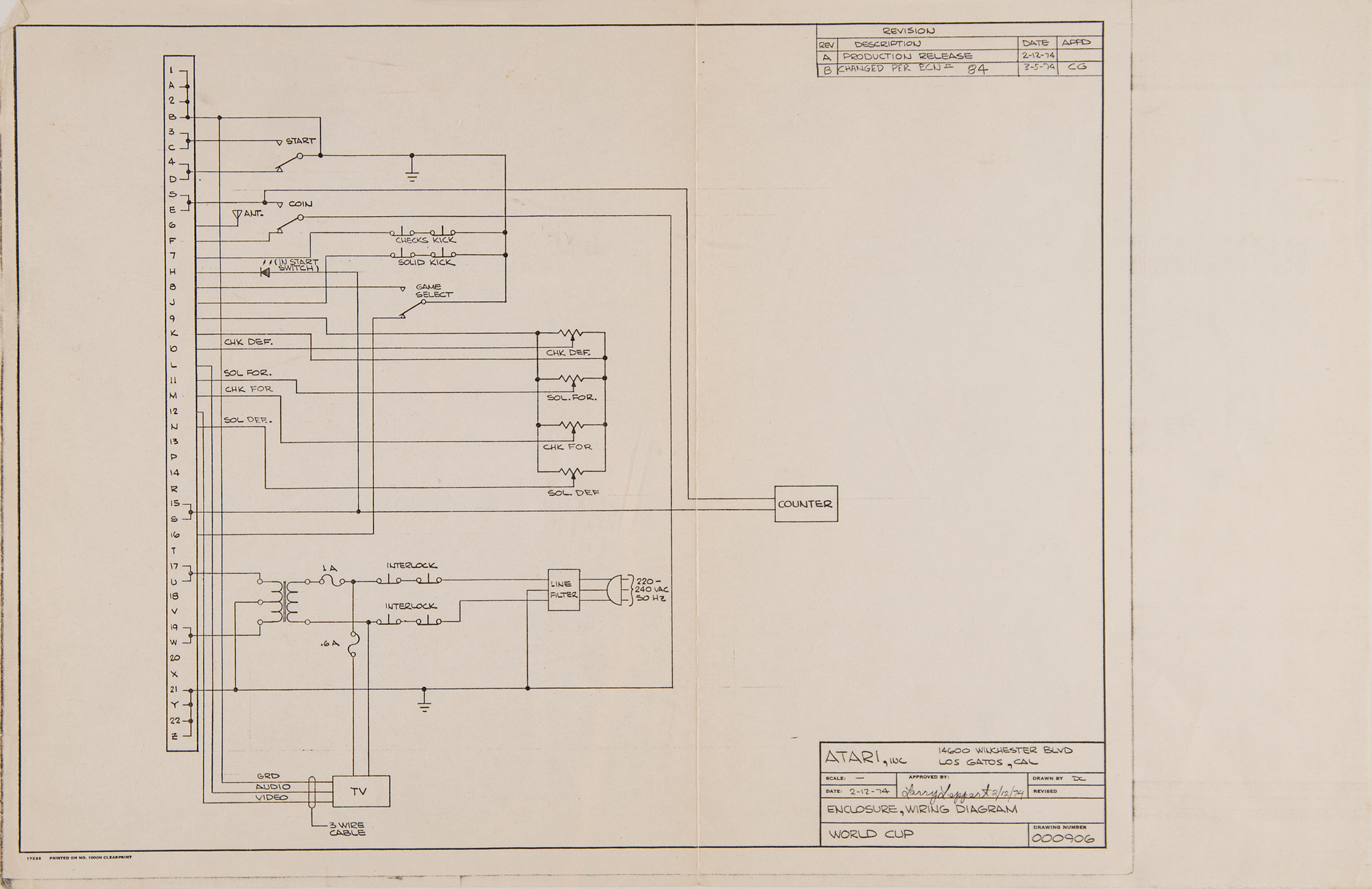
Outstanding archive of early Atari engineering schematics and marketing materials from the dawn of the video arcade gaming industry, containing 10 oversized ‘blue line’ schematics and 29 in-house printed schematics for eight games designed and released by Syzygy Engineering, Atari, Inc., and Kee Games in the early 1970s. The games include some of Atari’s earliest titles, such as Space Race, Gotcha, Elimination, Twin Racer, Super Pong, Quadrapong, World Cup, and Volleyball.
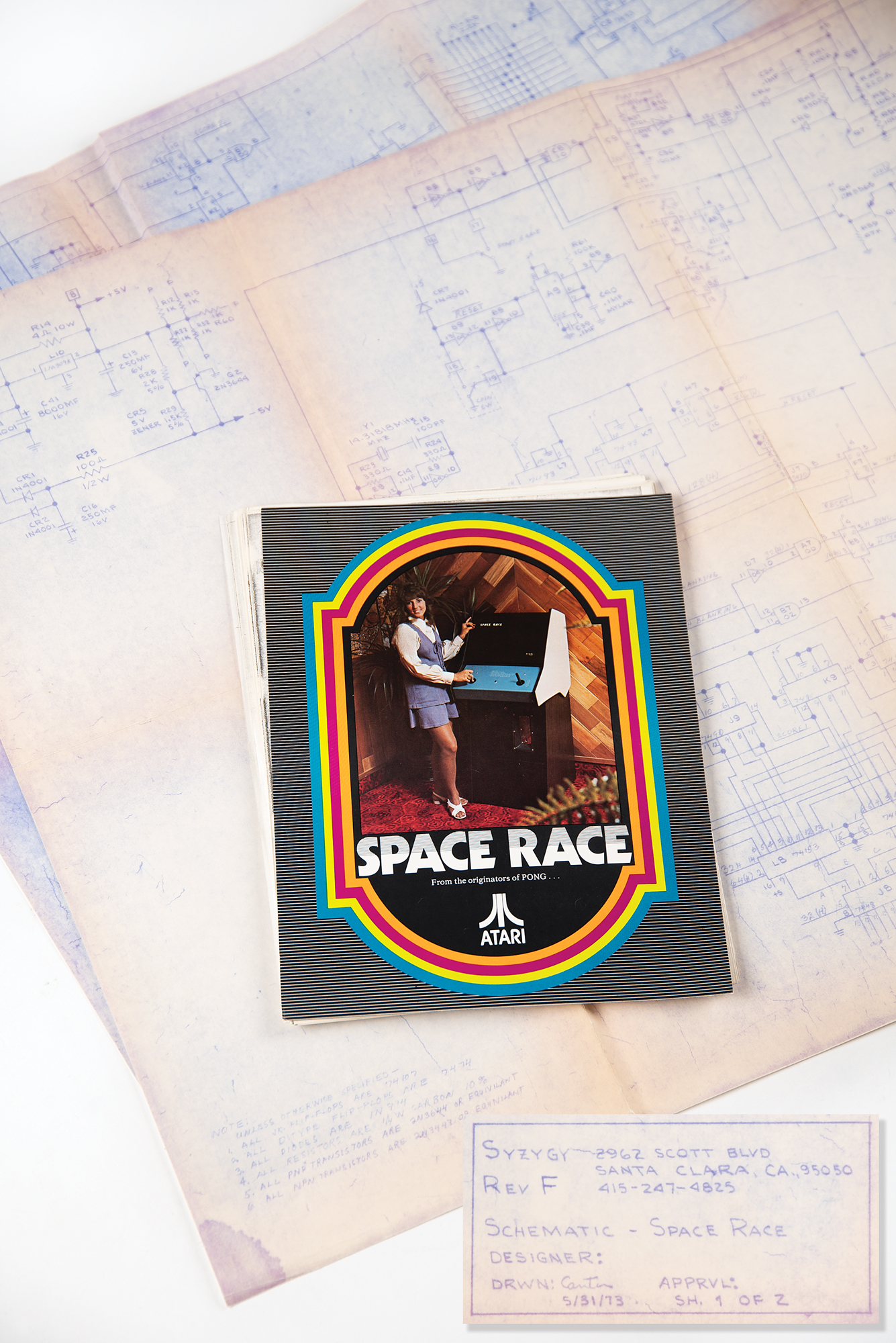
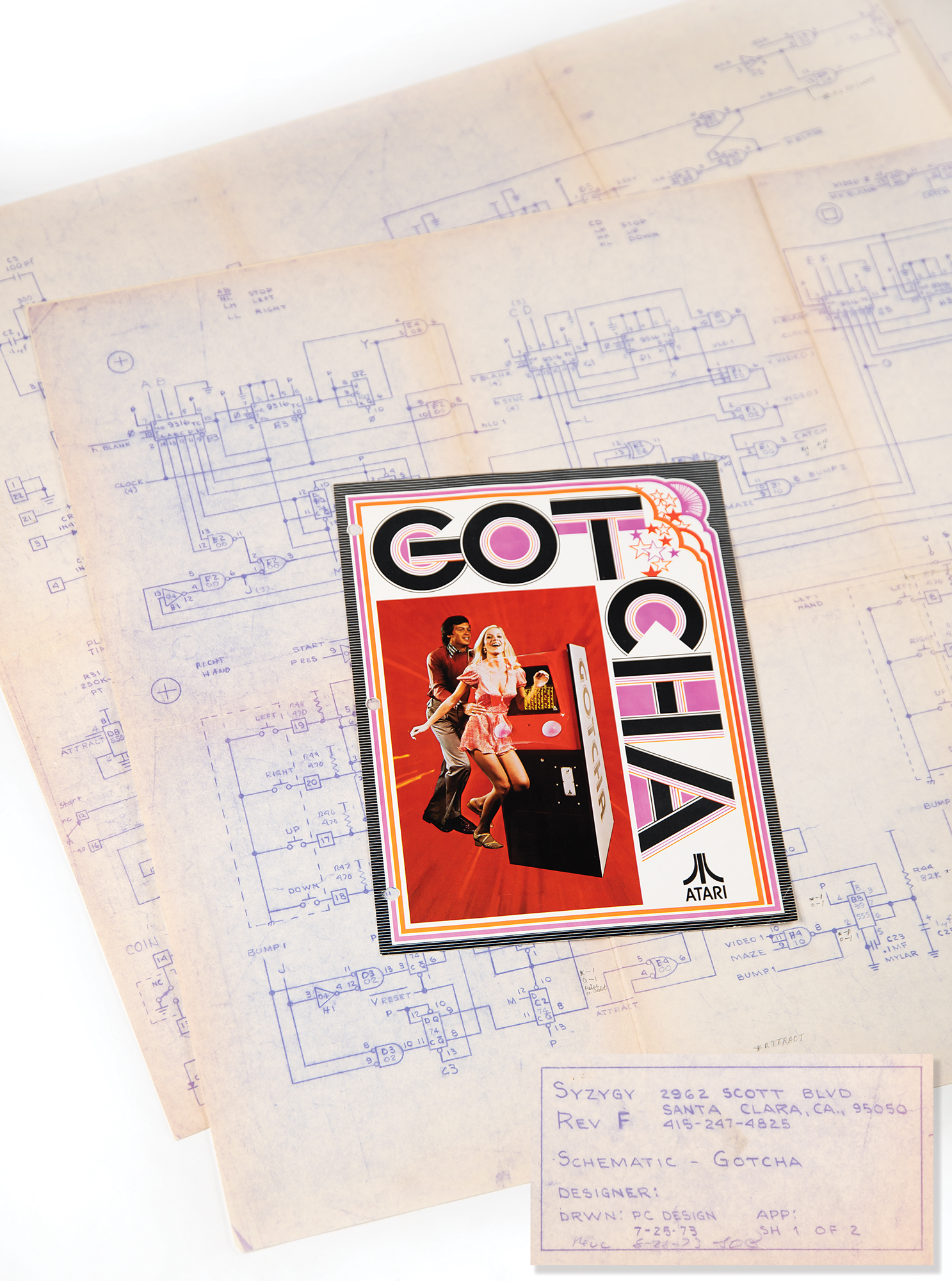
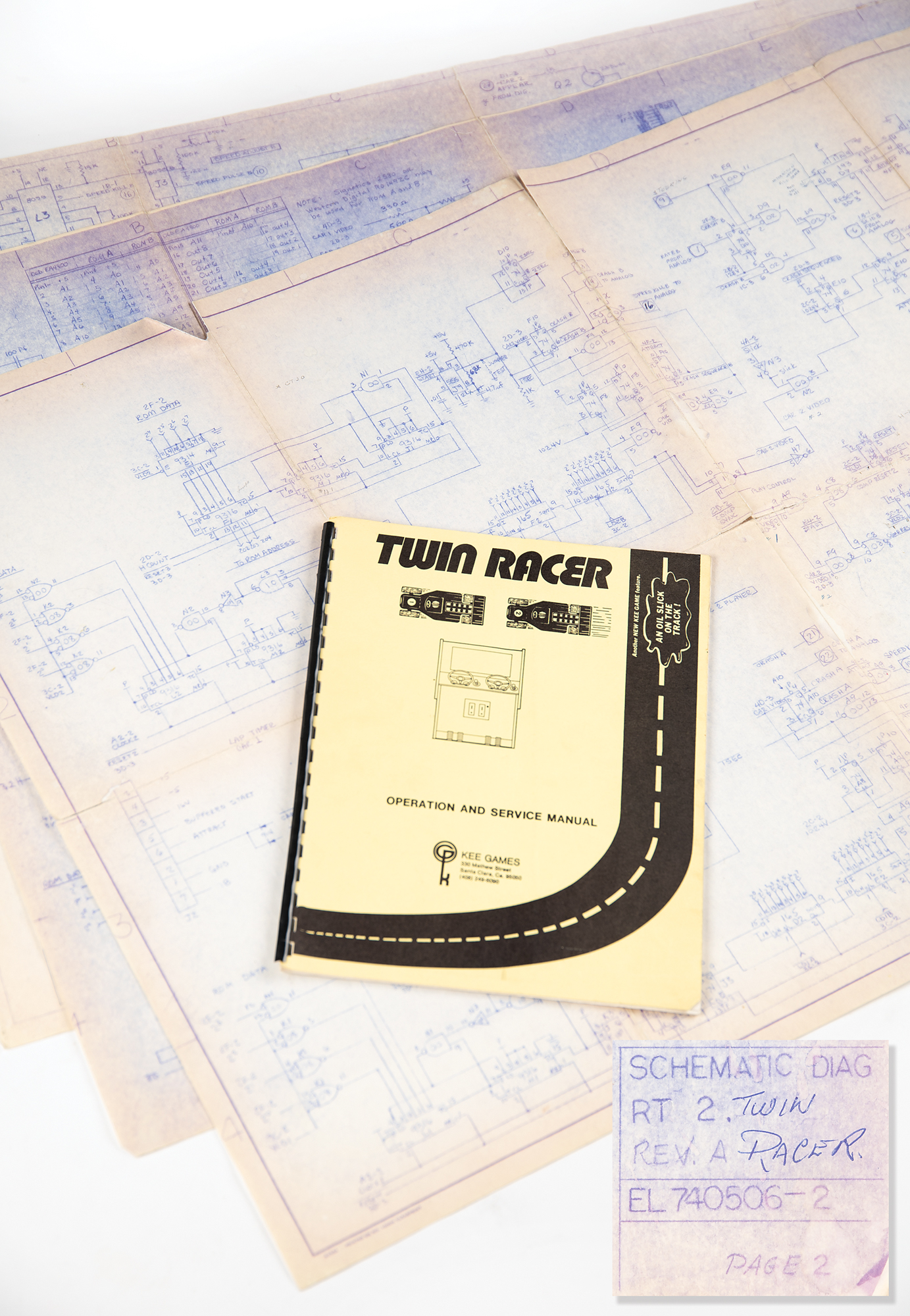
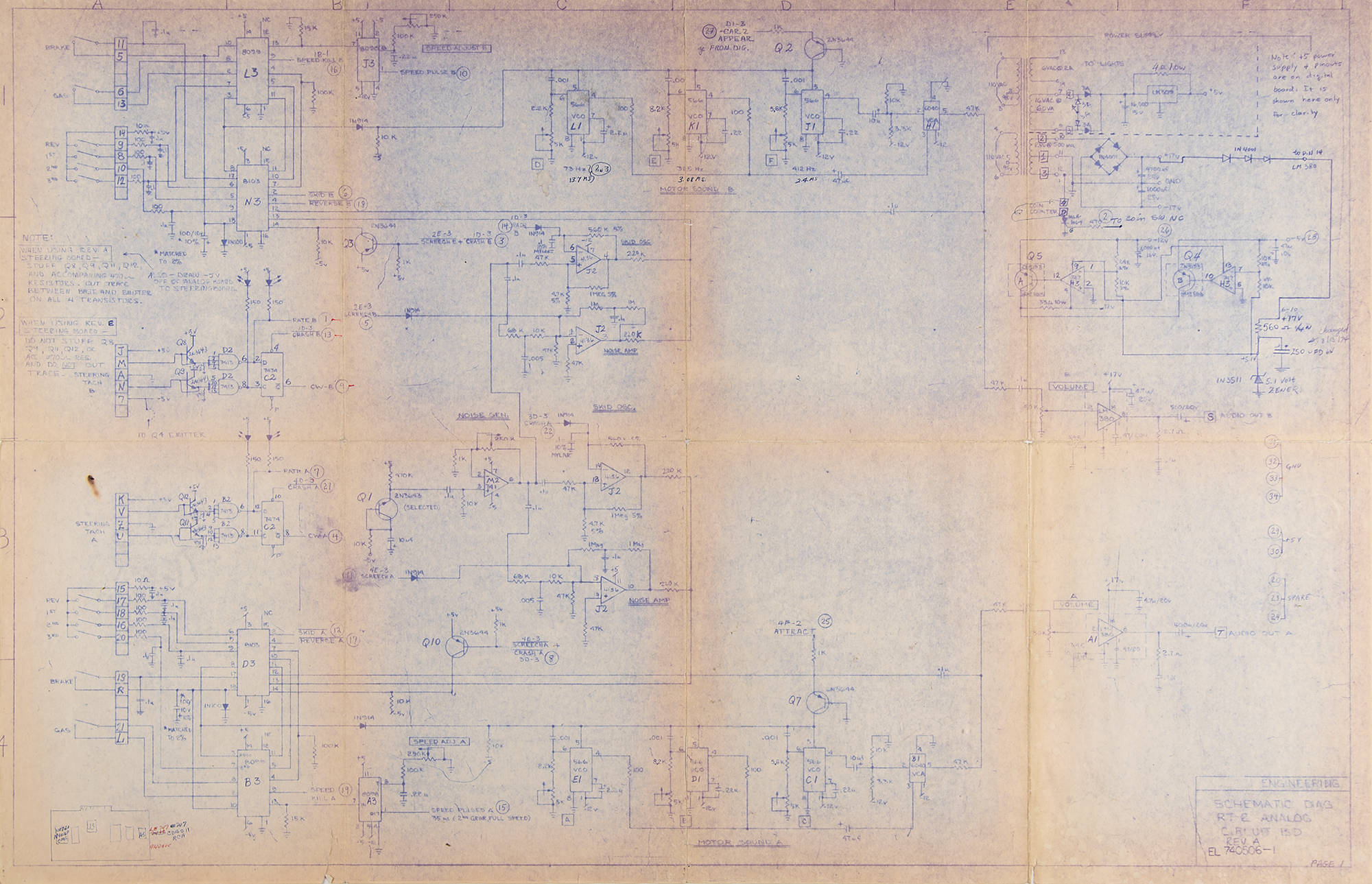
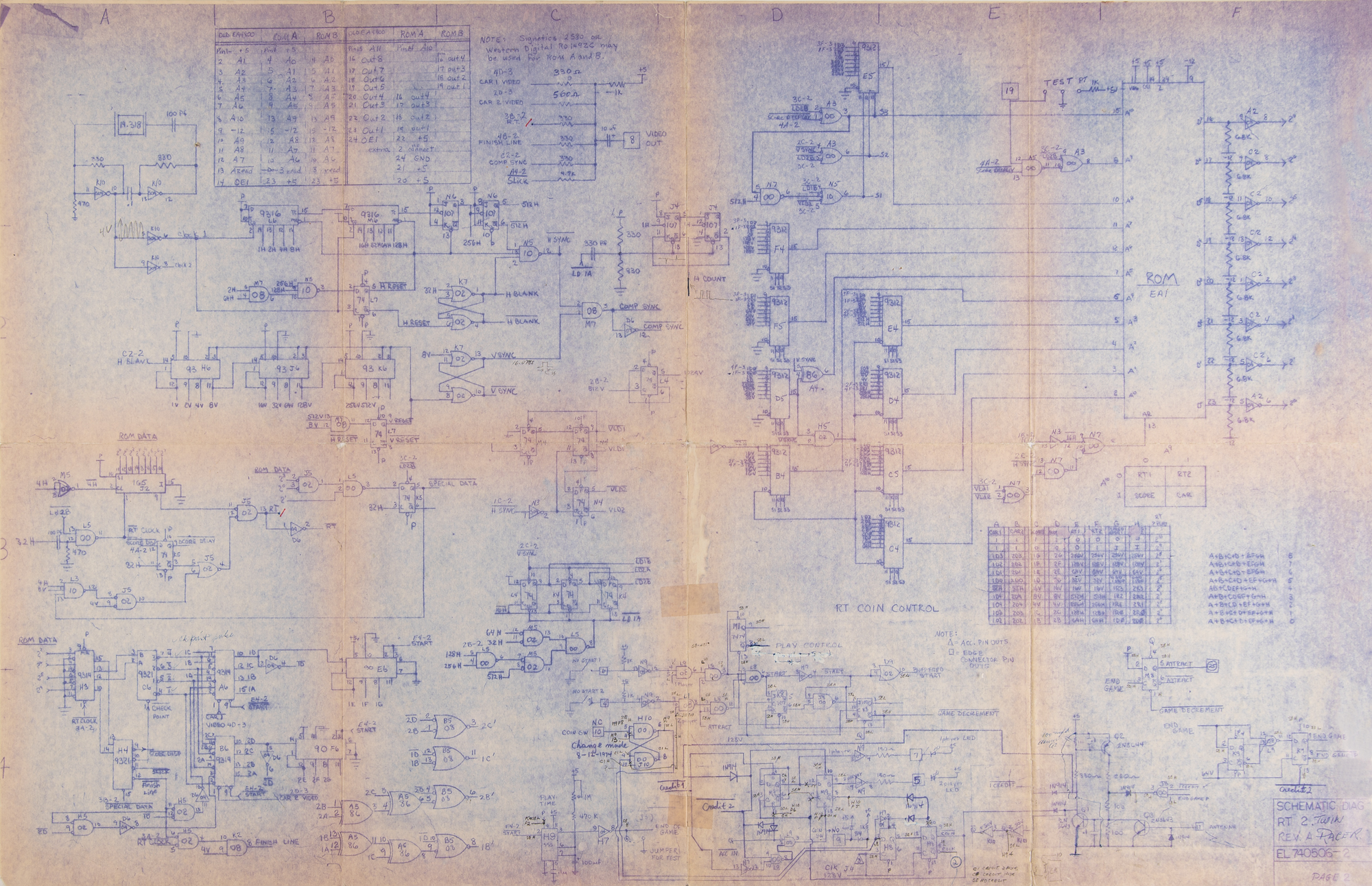
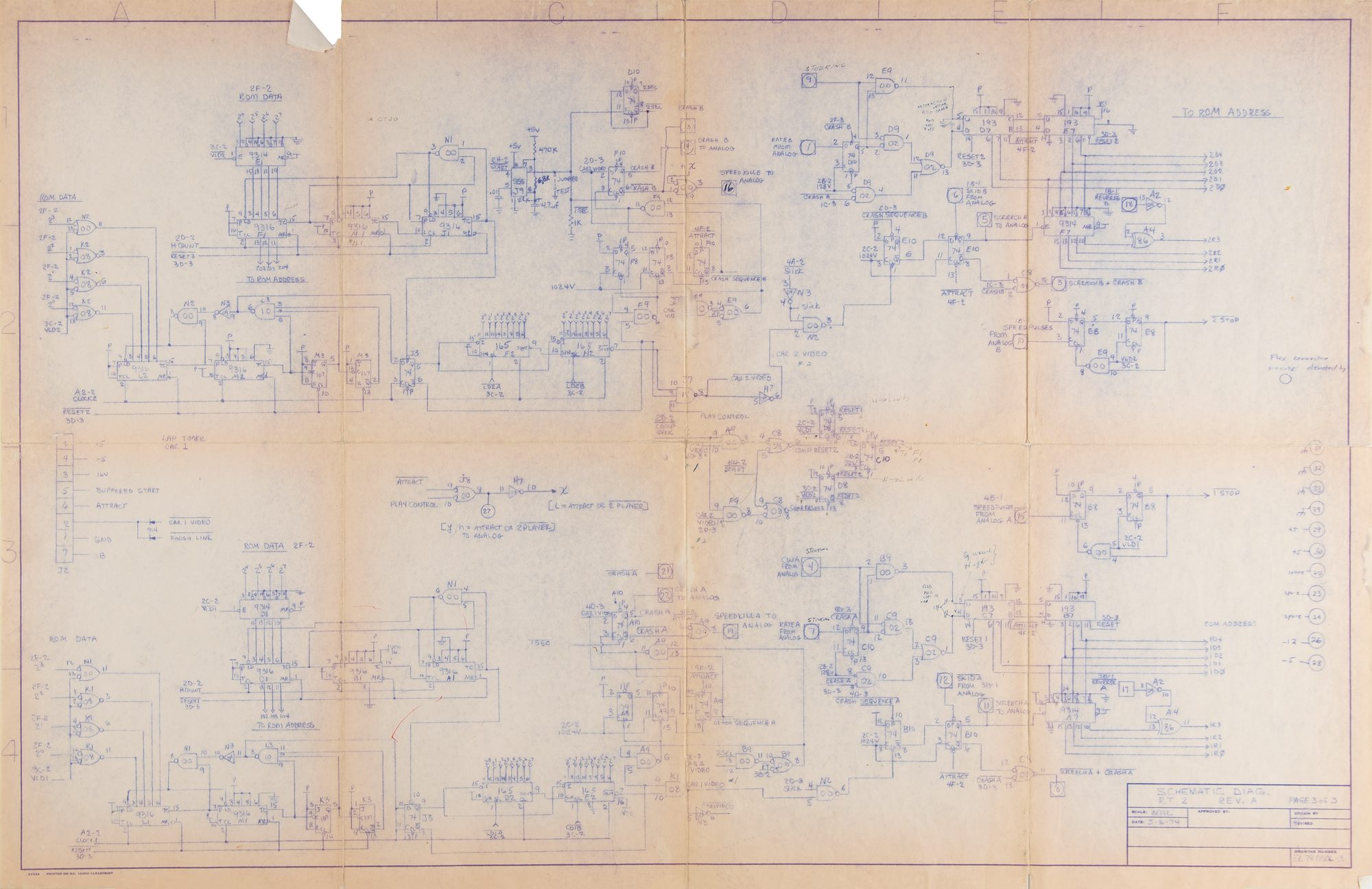
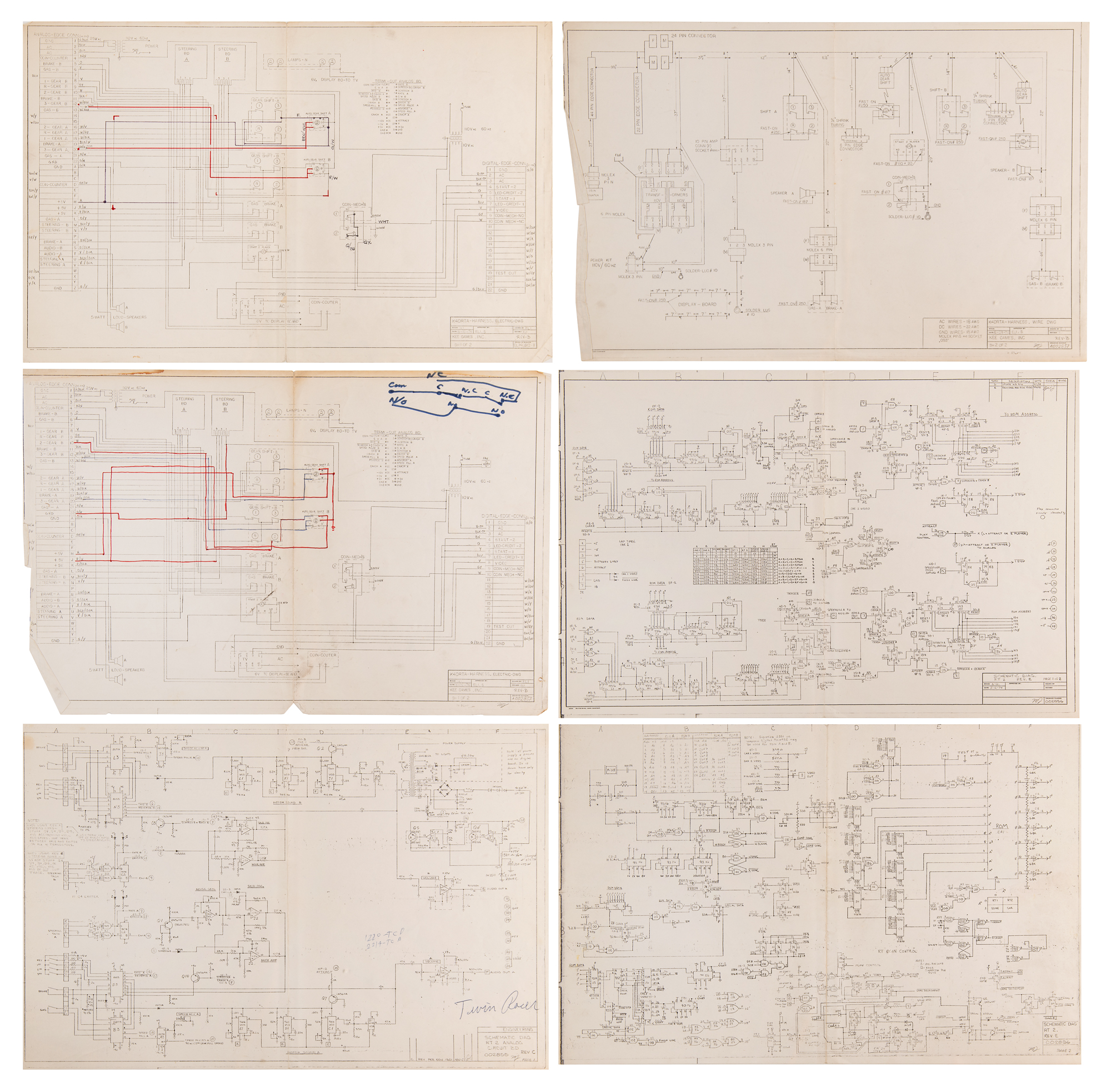
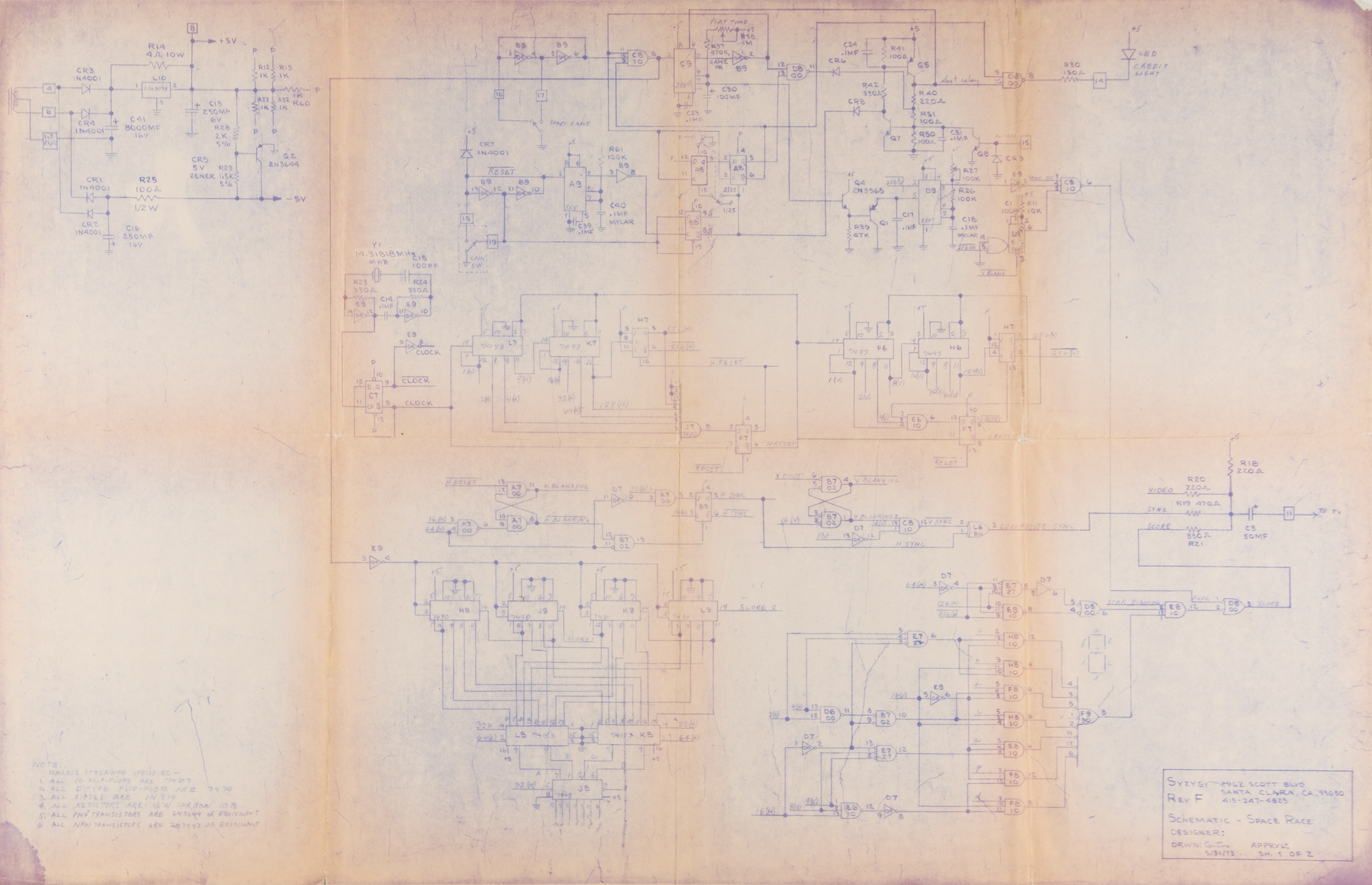
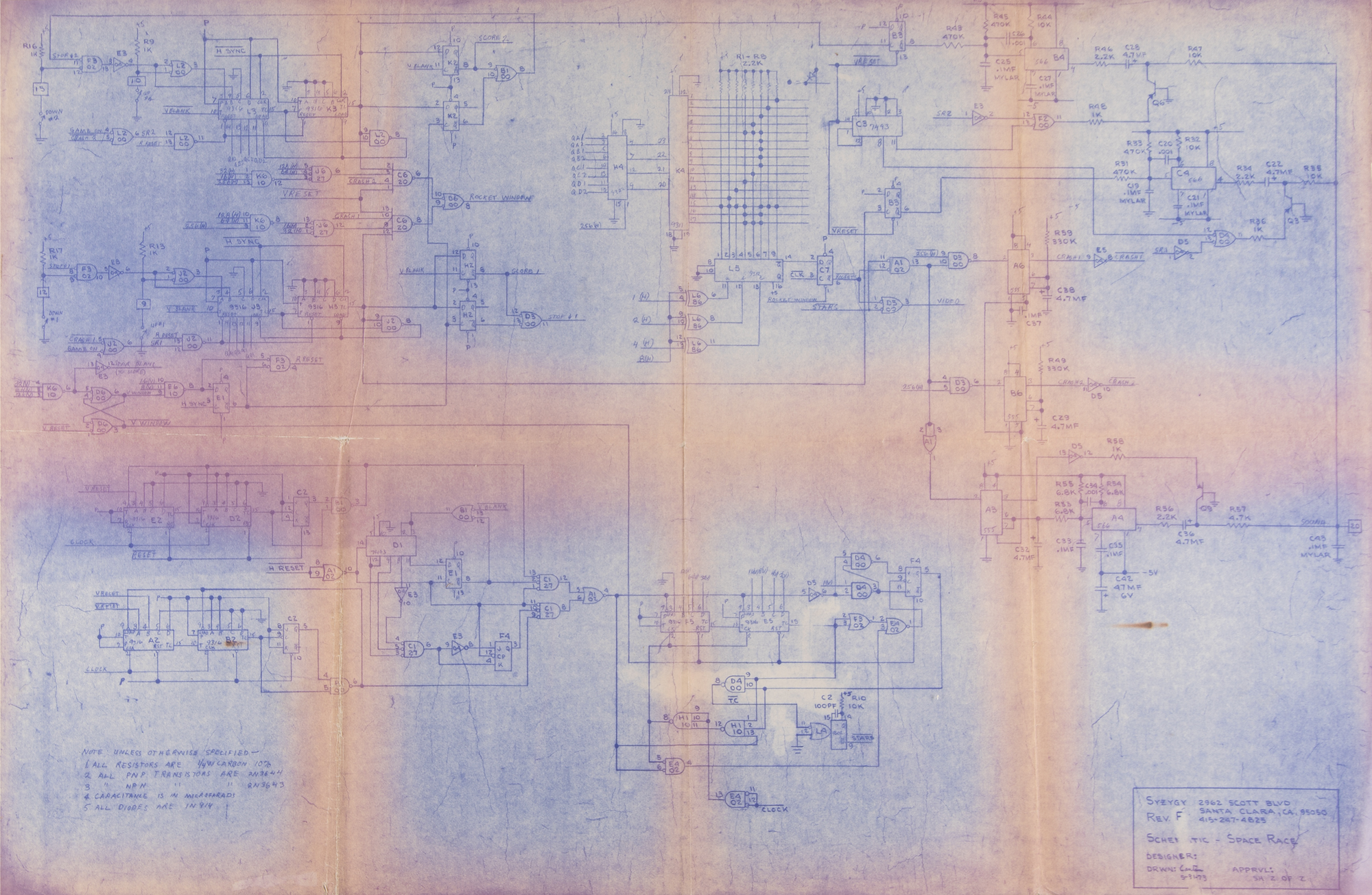
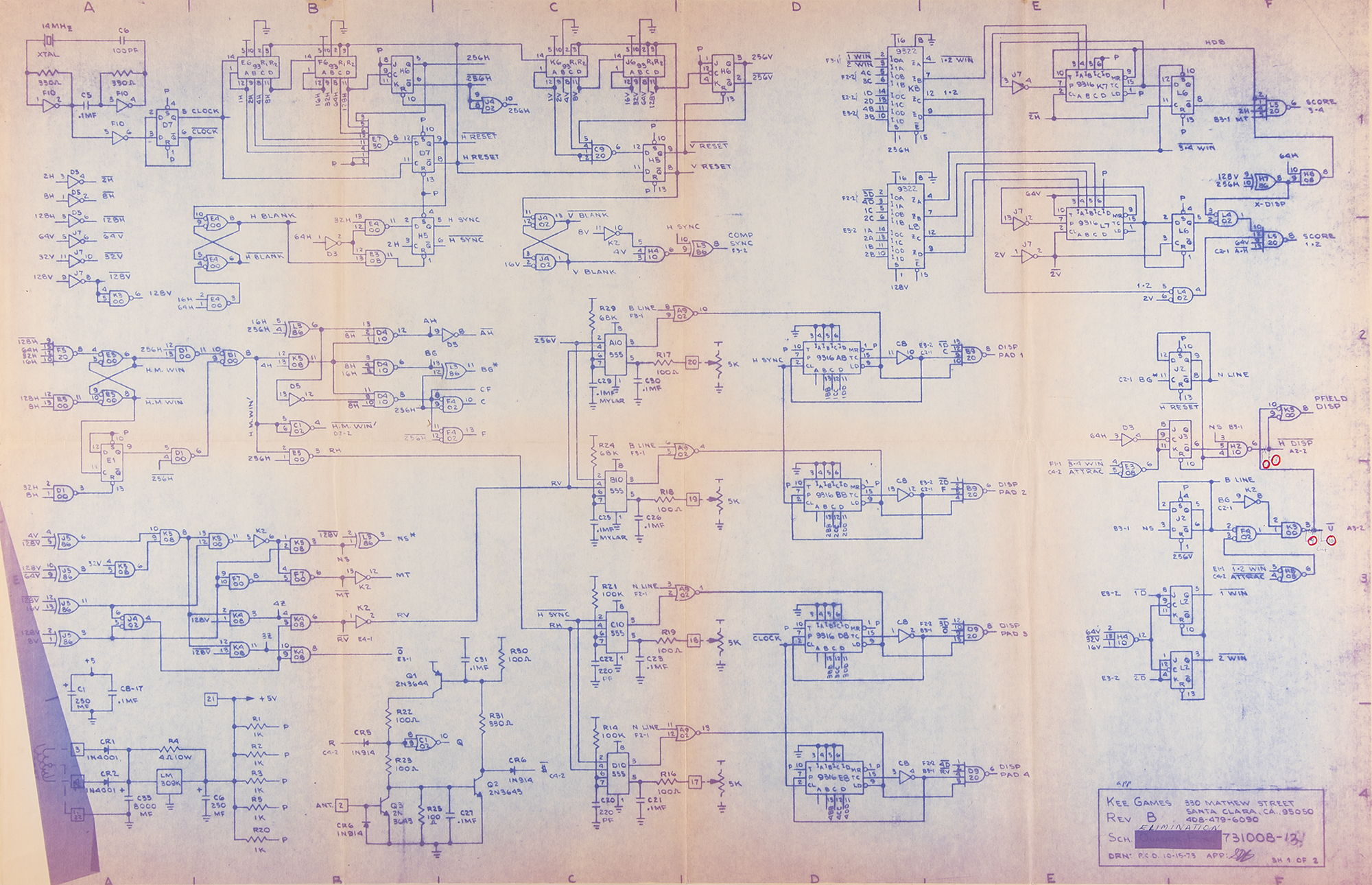
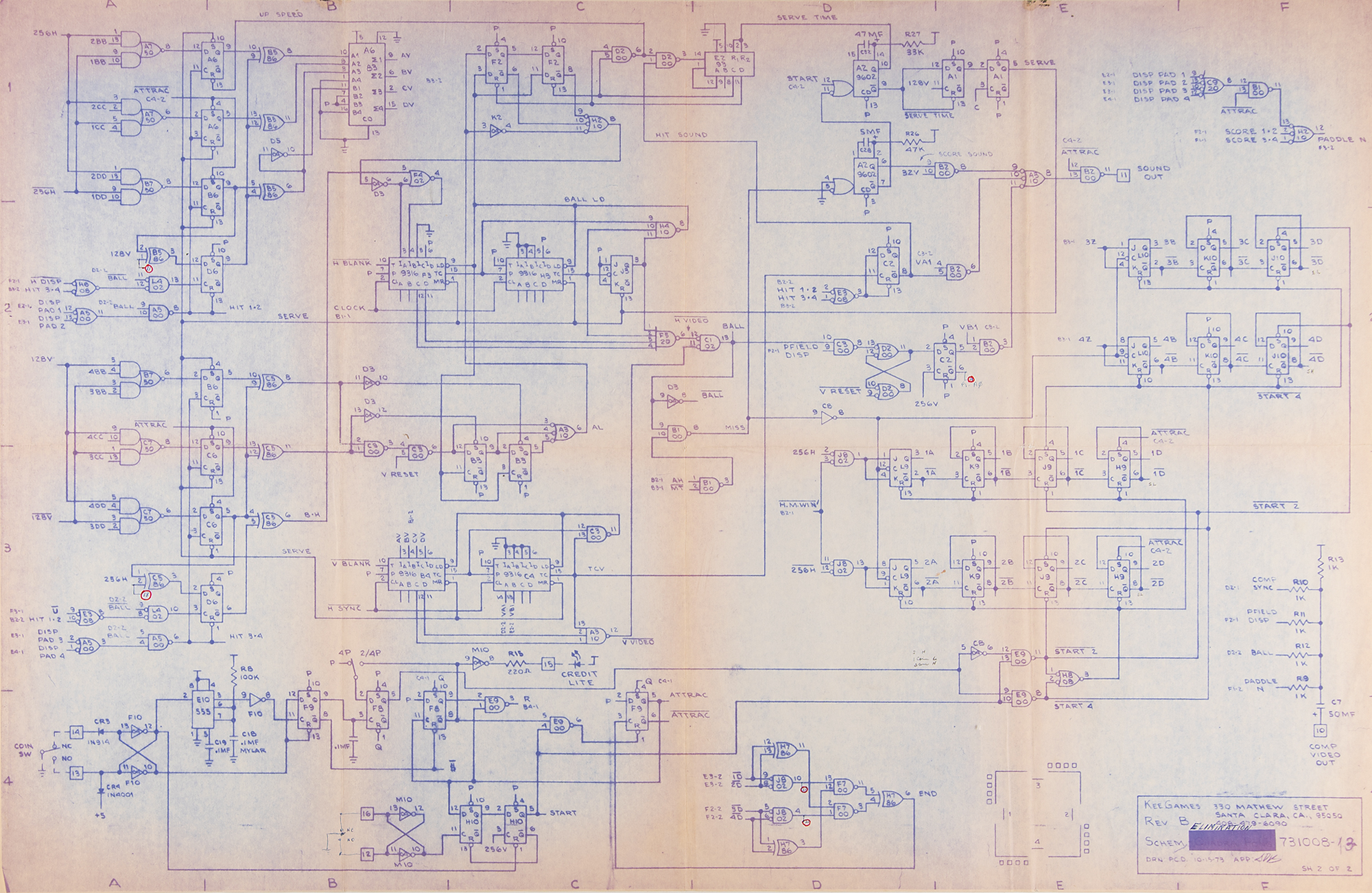
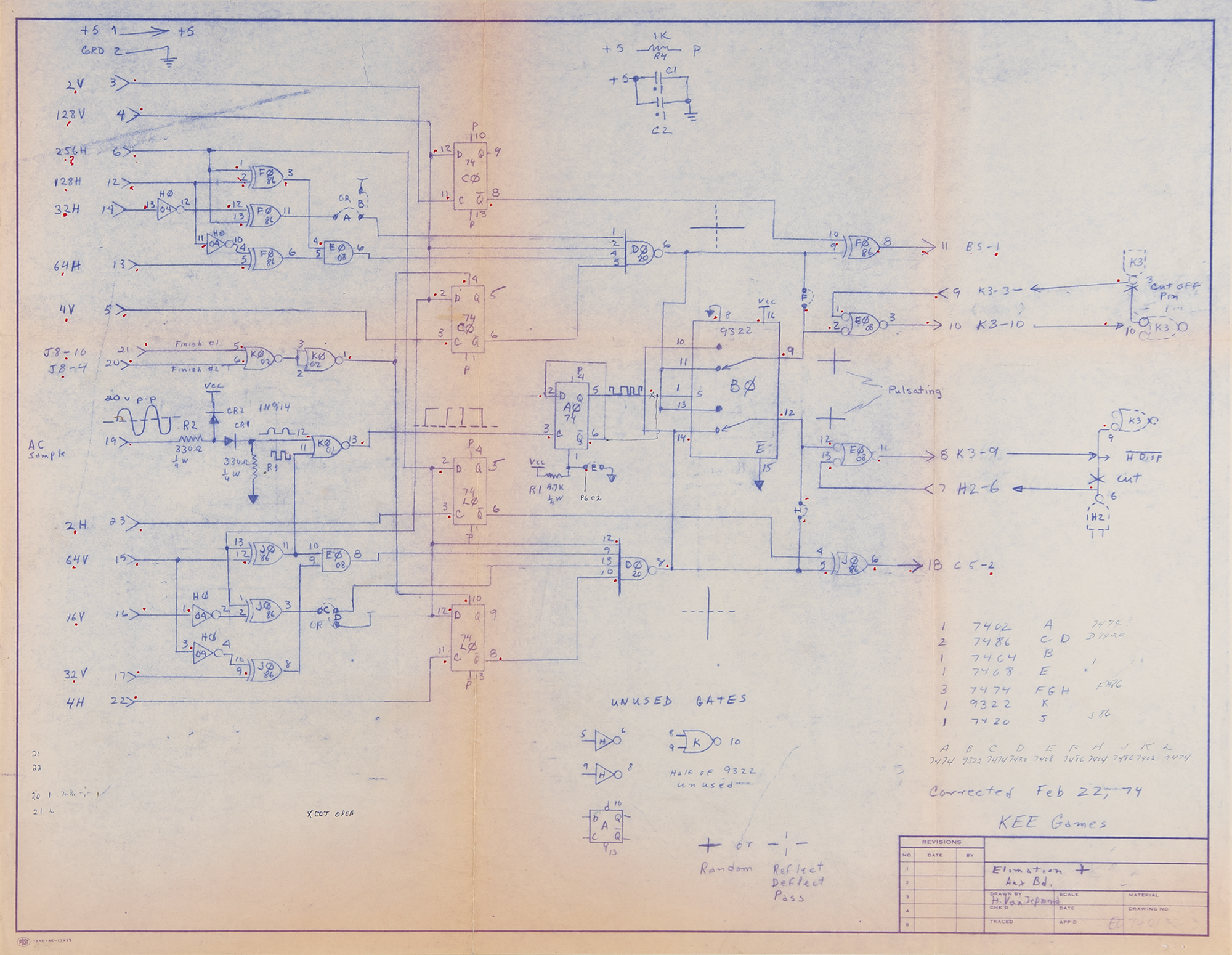
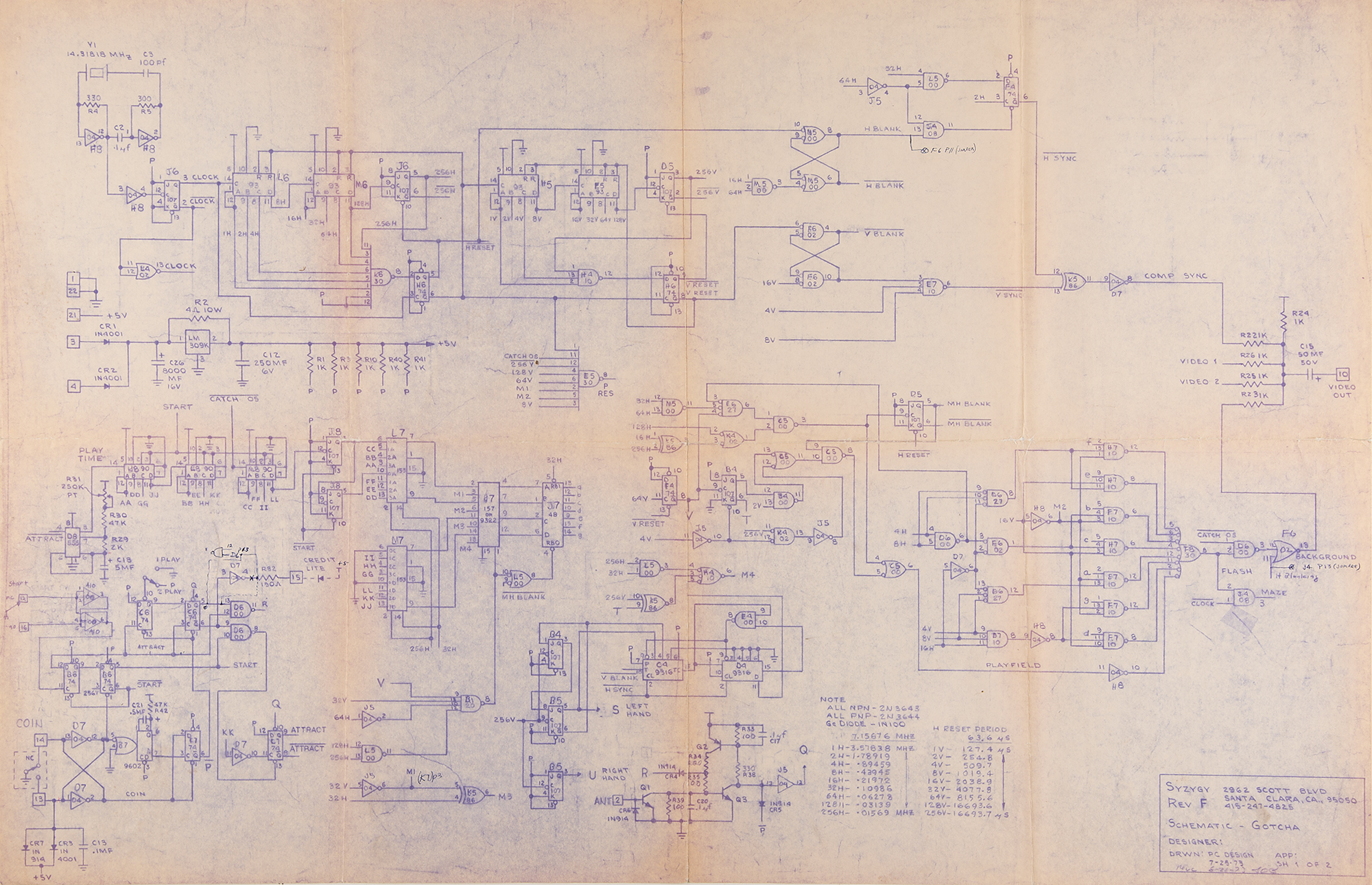
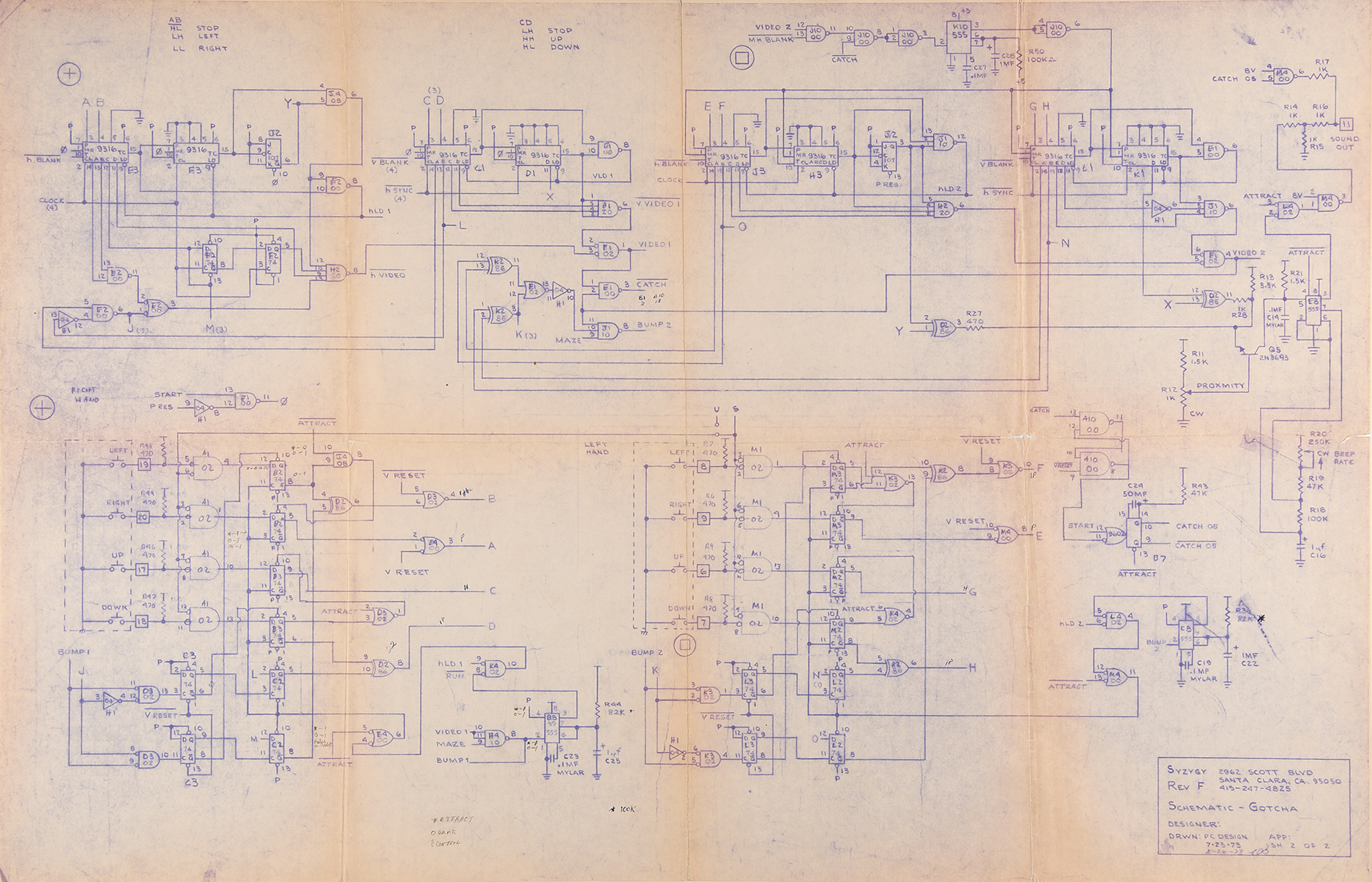
The first four games listed all include original ‘blue line’ schematics, ranging in size from 22 x 17 to 34 x 22, all of which are dated between May 1973 (Space Race) and May 1974 (Twin Racer). Of the titles, two identify the developer as Kee Games (Elimination and Twin Racer), and two as Syzygy (Space Race and Gotcha), a fascinating detail given how Nolan Bushnell and Ted Dabney had, by this time period, already changed their company’s name from Syzygy to Atari, a name that was officially incorporated in California by late June 1972.
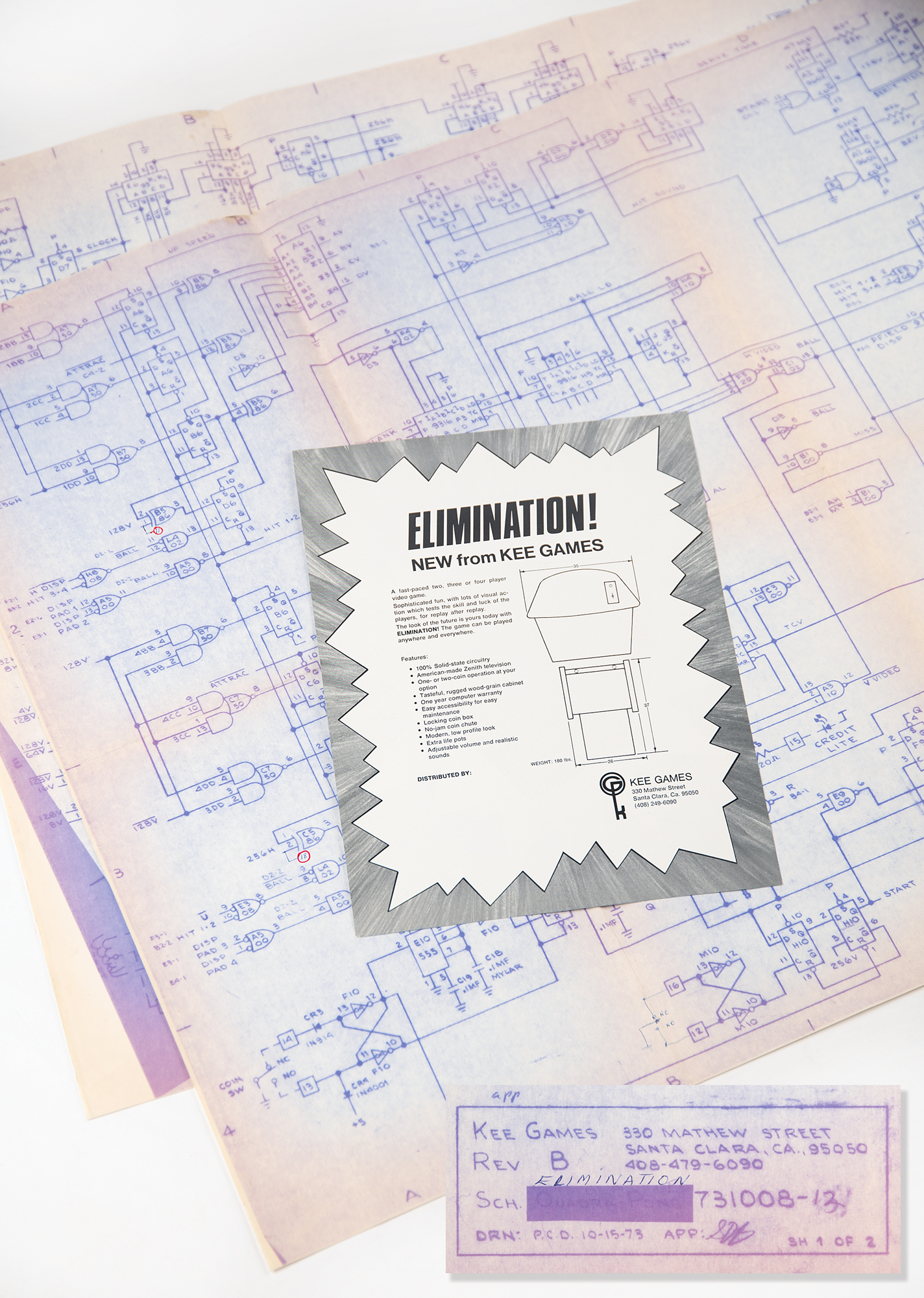
Both Space Race and Gotcha contain two schematics each, which are similarly marked in the lower right corners, “Syzygy, 2962 Scott Blvd., Santa Clara, Ca., 95050…Rev F,” with title and date, “Schematic - Space Race…5/31/73” and “Schematic - Gotcha…7-25-73.” Elimination and Twin Racer are represented with three schematics each, with the Elimination sheets marked “Kee Games, 330 Mathew Street, Santa Clara, Ca., 95050, Rev B., Schem. Elimination 731008-13, DRW PCD 10-15-73” and “Corrected Feb 22, 74, Kee Games, Elimation [sic],” and and the Twin Racer sheets are dated to May 6, 1974, and June 19, 1974, and identified with PCB codes “RT 2” and “K4DRTA.”
Also of note is that the Gotcha and Elimination schematics bear the approval initials of popular Atari engineer Steve Bristow, who Bushnell moved to Kee Games to serve as the head engineer. Impressively, just 20 days after Kee Games was established, the company released its debut game, Elimination, which Bristow had been developing at Atari under the title QuadraPong. This transition is marked on the schematics, with the name QuadraPong blotted out and Elimination handwritten over. To our knowledge, these Elimination/QuadraPong schematics have never been sold on the market before.
Accompaniments for these four titles include: Space Race (six in-house schematics, two original color Atari flyers, five ‘Parts List Specifications’ sheets, and five service bulletin sheets from Syzygy Co.); Gotcha (an original color Atari flyer, an in-house ‘Circuit Schematic Diagram,’ and six ‘Parts List Specifications’ sheets, four of which bear printed signatures of engineer Allan Alcorn); Elimination (an original color Kee Games flyer, and a 9-page operator packet from Kee Games); and Twin Racer (six in-house schematics, with scarce ring-bound Kee Games ‘Operation and Service Manual,’ and two ‘Customer Service Bulletin’ letters from September 1974).
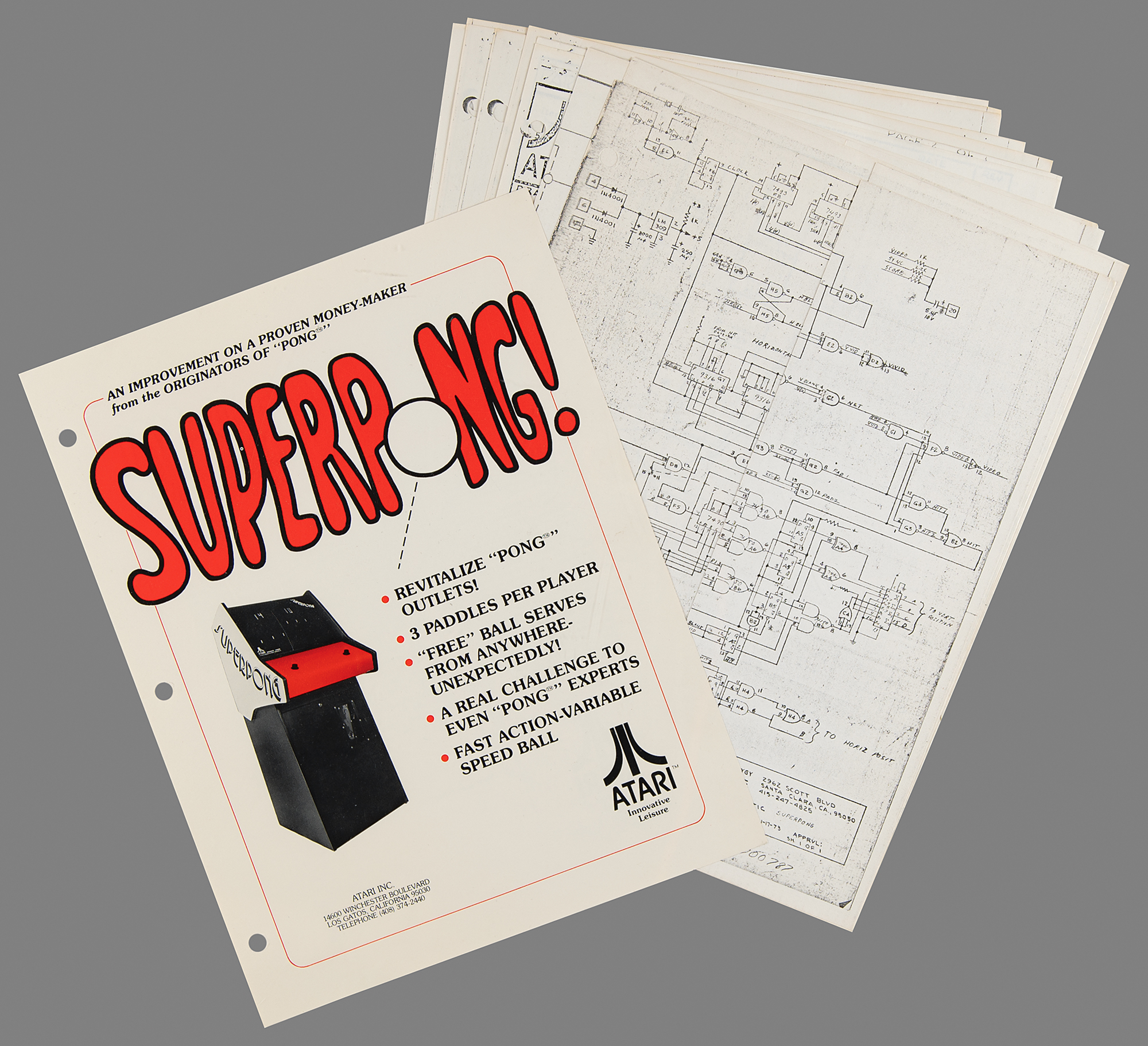
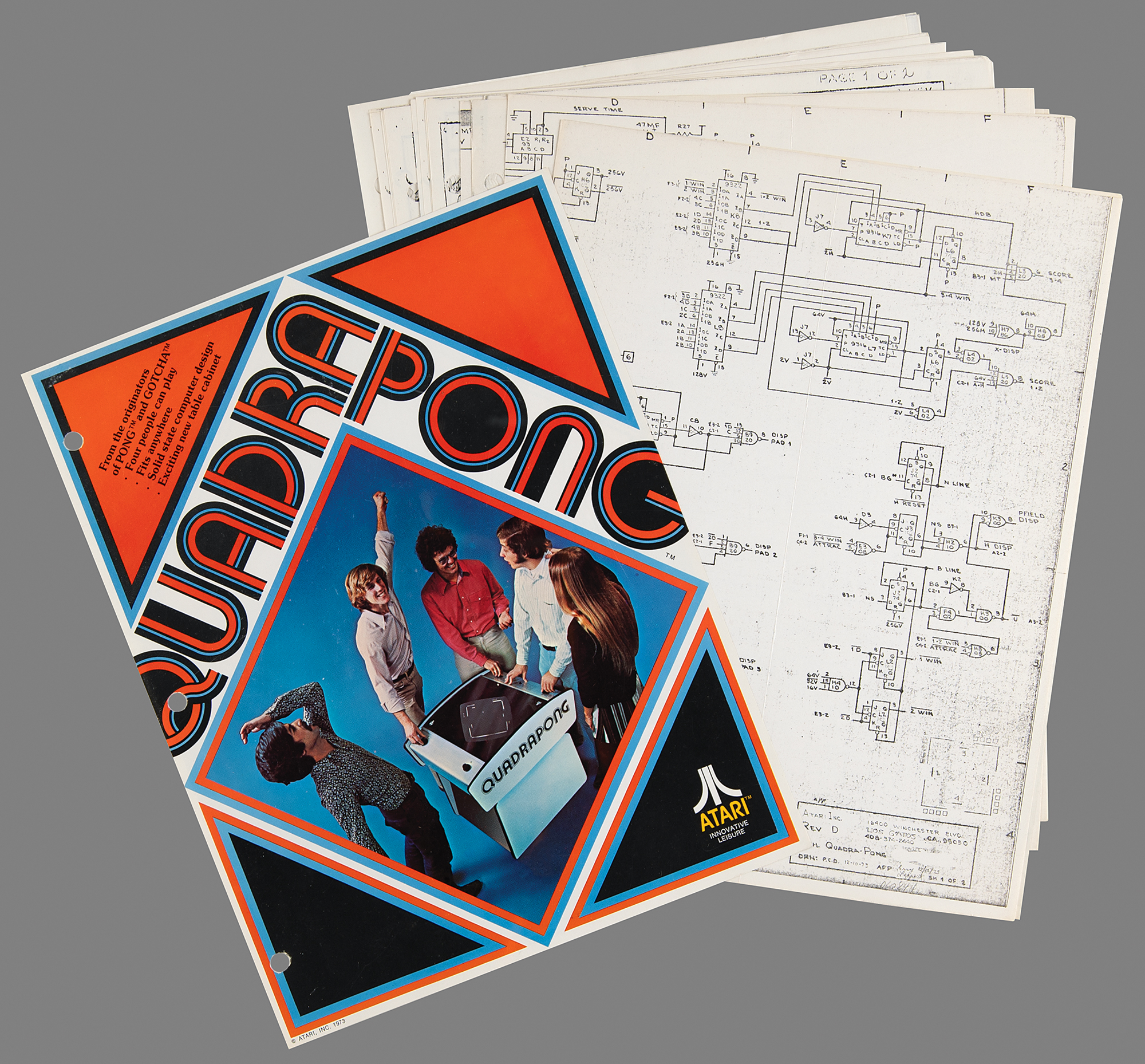
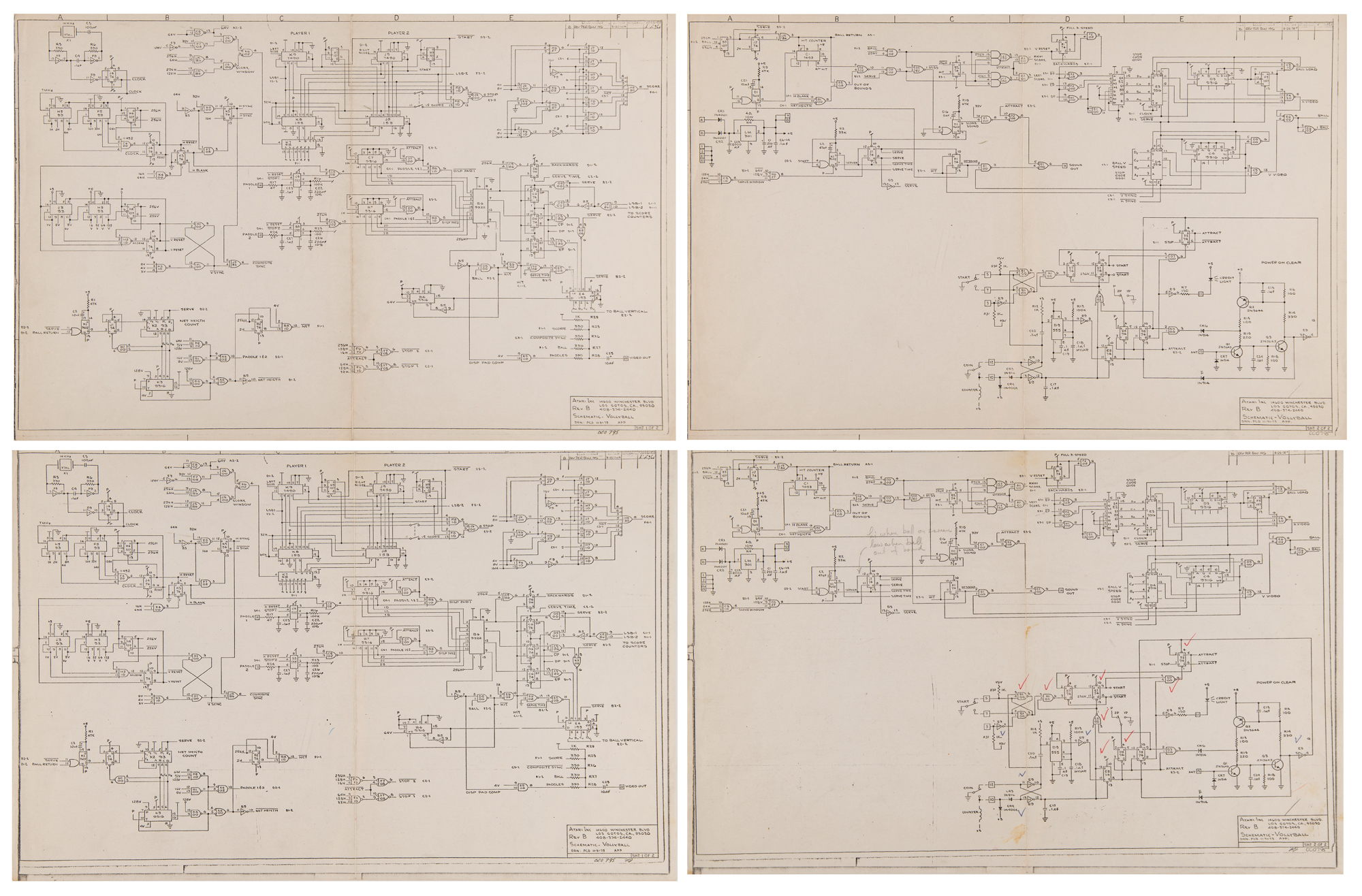
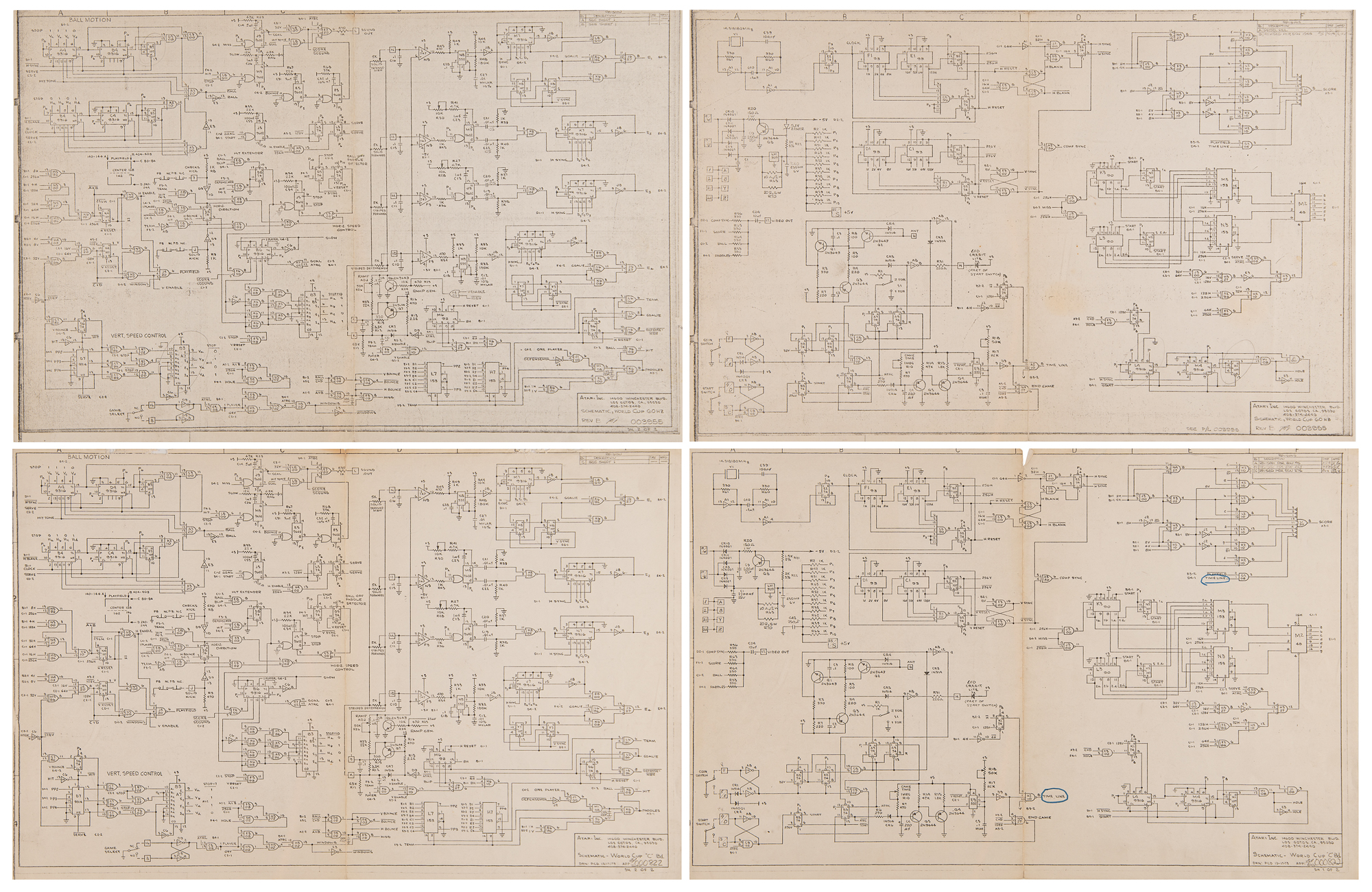
The archive is complemented by additional in-house schematics and marketing/operator materials for early games like Super Pong (three in-house Syzygy/Atari schematics, with original color Atari flyer, a 3-page ‘Parts List Specifications’ packet, a ‘Customer Service Bulletin’ from February 1974, and four sheets related to game set-up procedures and television adjustments), Quadrapong (five in-house Atari schematics, with original color Atari flyer, nine ‘Parts List Specifications’ sheets, and an Atari troubleshooting packet), World Cup (five in-house Atari schematics, February 1974), and Volleyball (four in-house Atari schematics, November 1973). In overall fine condition, with light scattered wear.
An unprecedented engineering archive from the formative years of Atari, made all the more significant for not only its breadth of titles but by the presence of several early ‘Syzygy’ developer marks, Atari’s original incorporated name, which date to the fledgling company’s earliest engineering efforts. Of further historical interest is the appearance of Kee Games, a covert operation created by Atari in 1973 to evade limiting exclusivity deals from demanding pinball and arcade distributors.
Run by Joe Keenan (a close friend and neighbor of Atari co-founder Nolan Bushnell), Kee functioned as a shell competitor, initially releasing clones of Atari games and later developing original titles like Tank and Pursuit. Kee formally merged into Atari in September 1974, with Keenan named as Atari president, and Kee Games kept as a separate division. When Bushnell left Atari in December 1978, Keenan joined him a few months later to help manage his Chuck E. Cheese's Pizza Time Theatre restaurant/arcade franchise. An impressive curation of early Atari schematics that offers a unique glimpse into the company’s generational growth and its development of several arcade machines that pioneered the coin-op gaming industry.

