Sold For $475,000
*Includes Buyers Premium
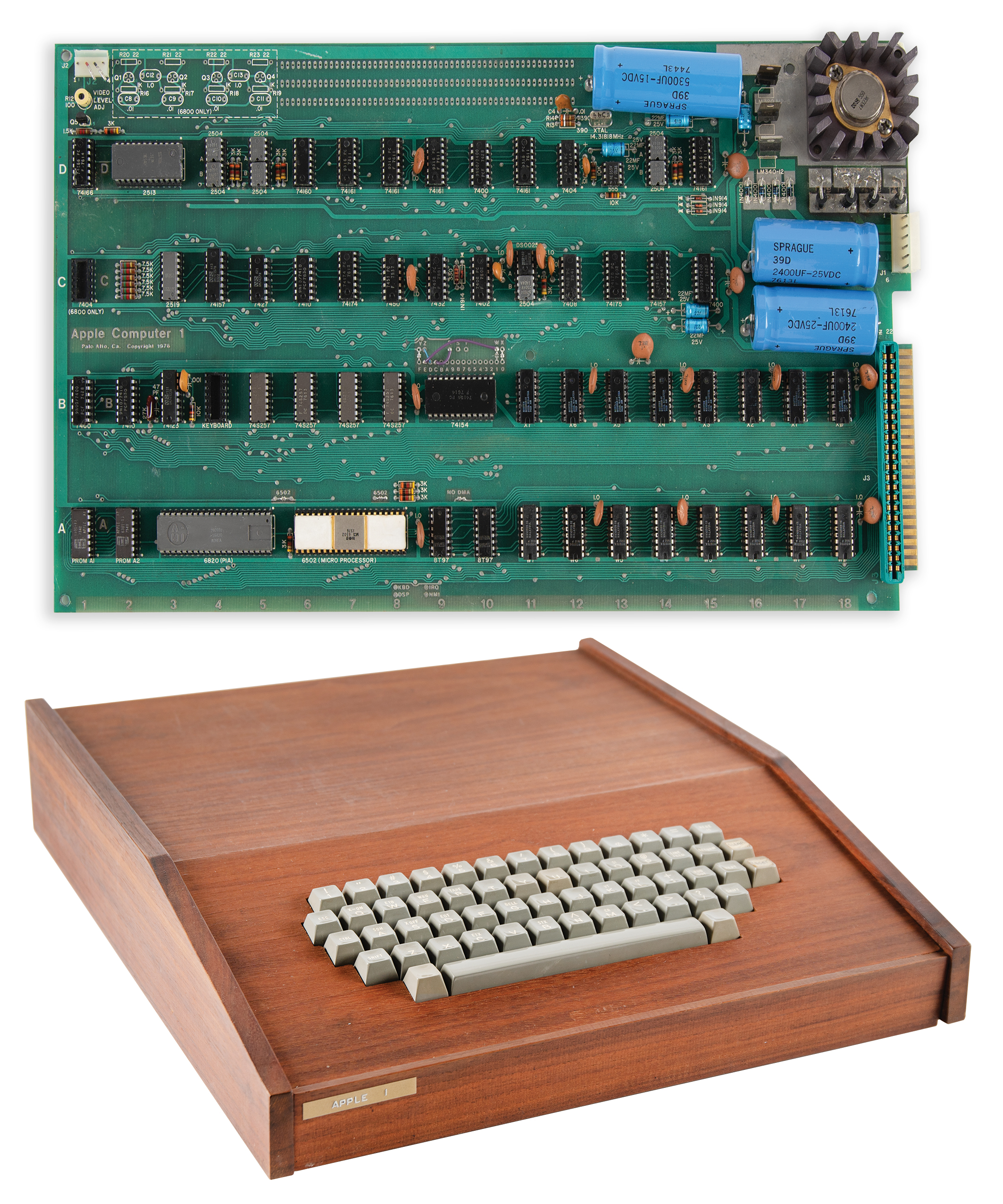
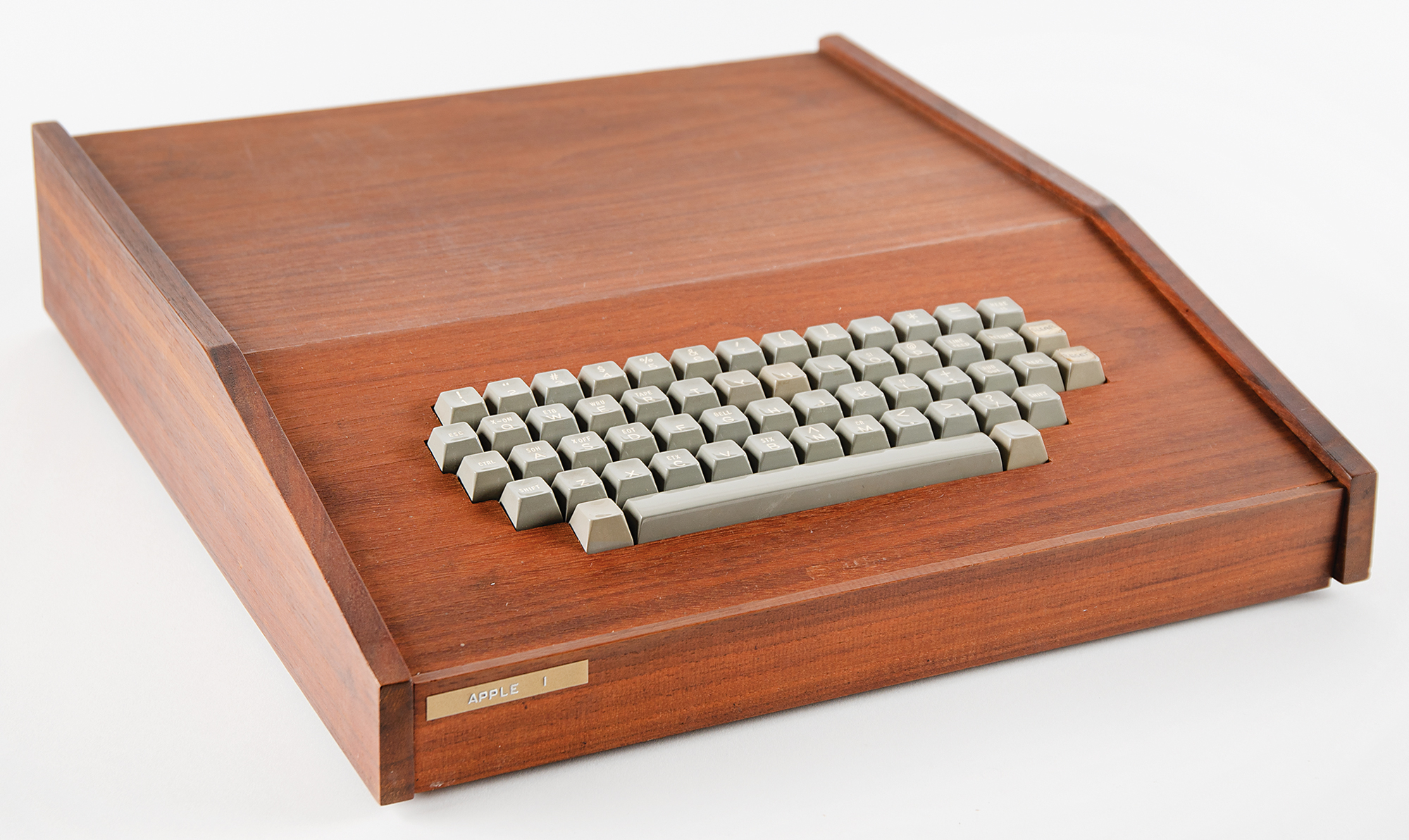
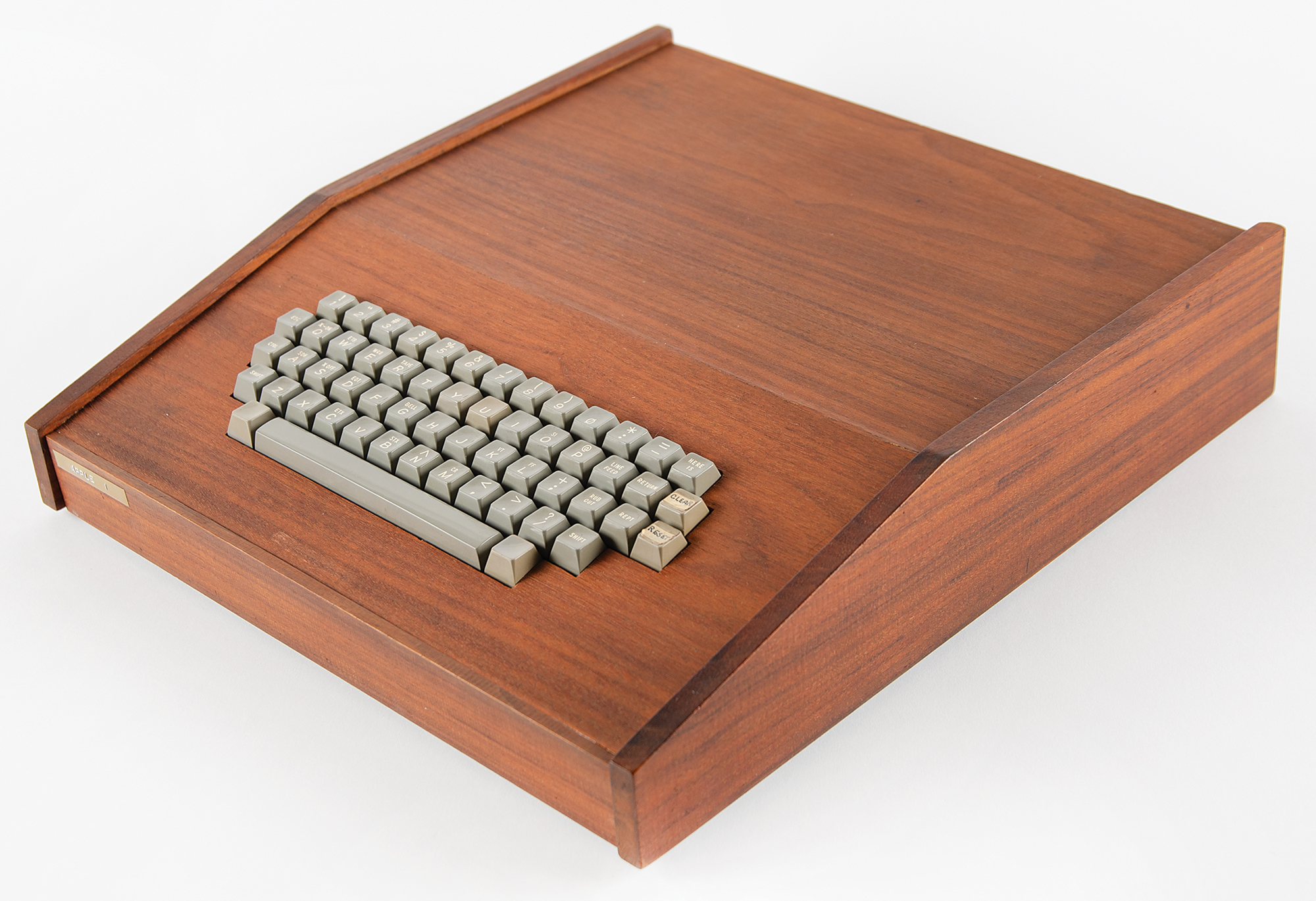
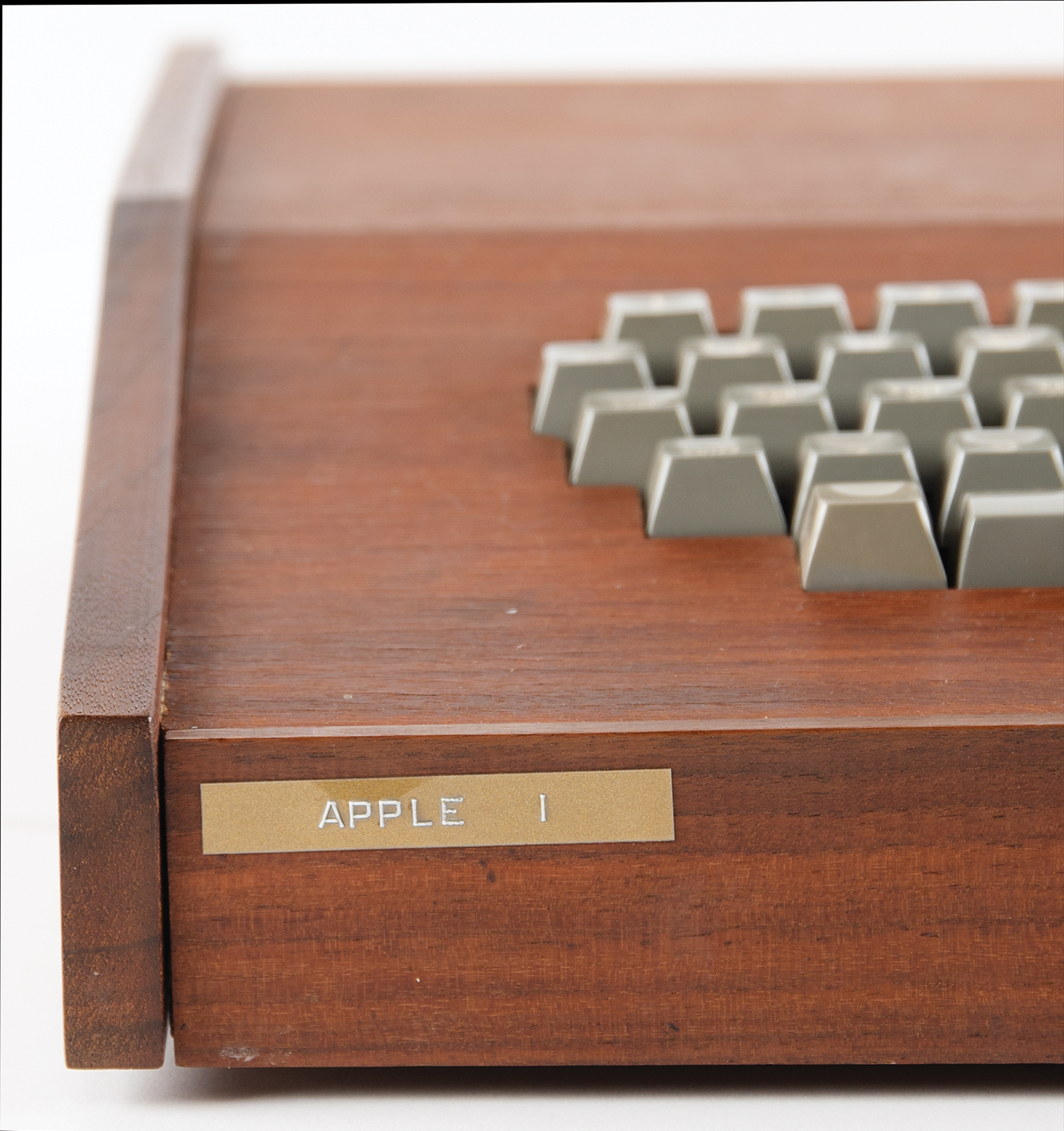
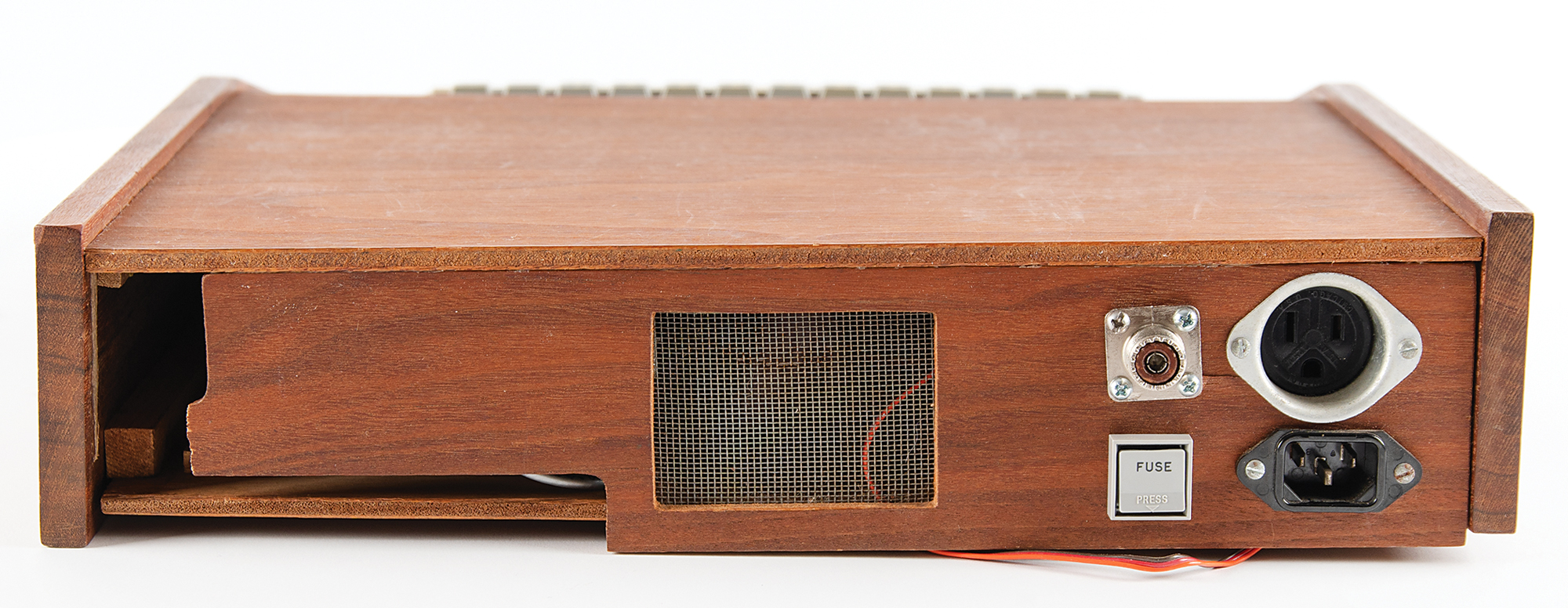
Exceptional, fully functional 'Byte Shop'?style Apple-1 computer (also commonly known as the Apple I, or Apple Computer 1), complete with its rare, iconic wooden Byte Shop case, plus all components and accessories required for operation. The computer is logged as #15 on the Apple-1 Registry, known as the 'Moore' Apple-1, with provenance recorded: "The unit was bought at the estate sale of a woman who was the first female graduate of Stanford Law School, June Blodgett Moore." It is one of the few known Apple-1s to survive with its Byte Shop wooden case?just nine such examples are documented in the registry, and it is the first that RR Auction has ever offered.
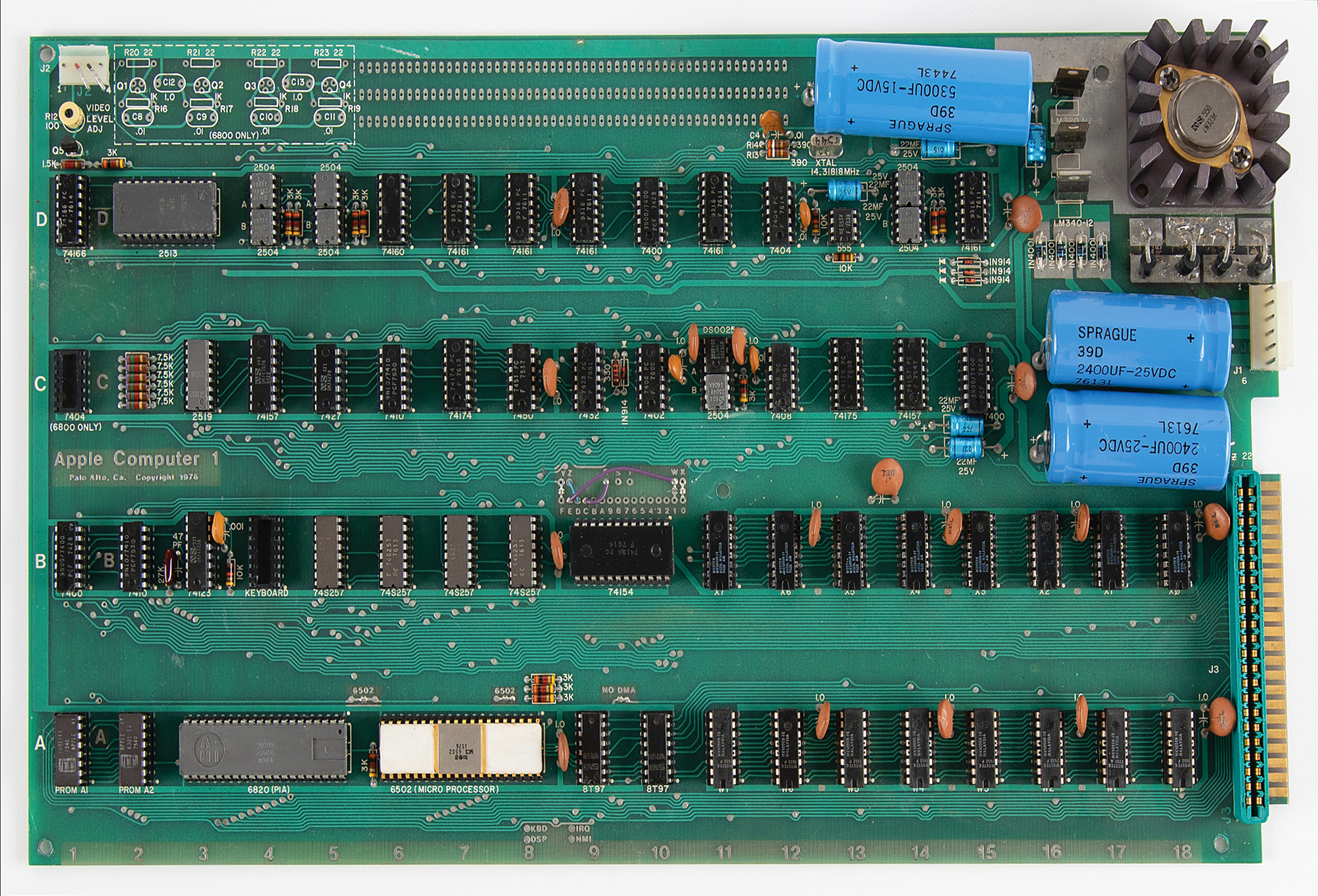
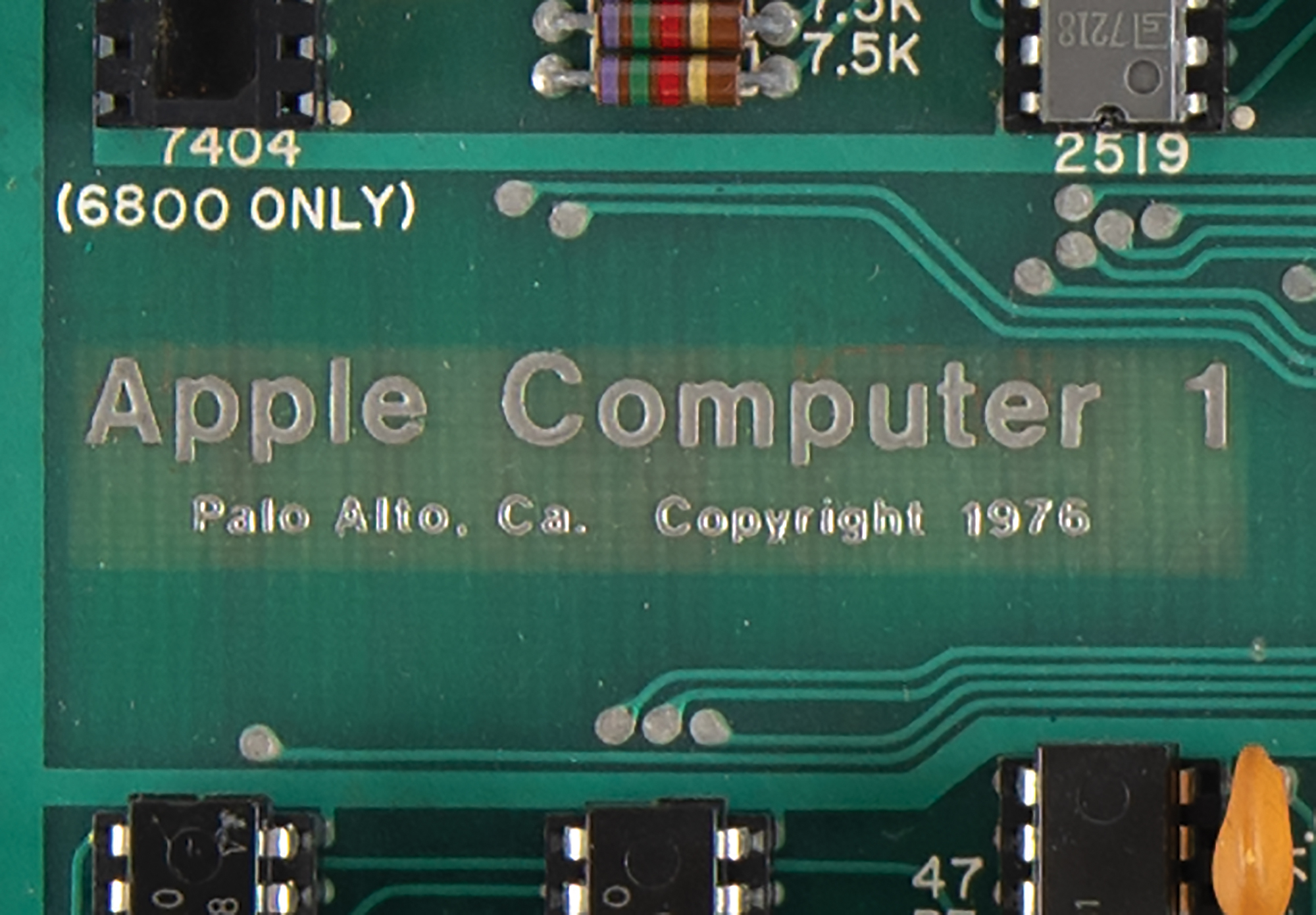
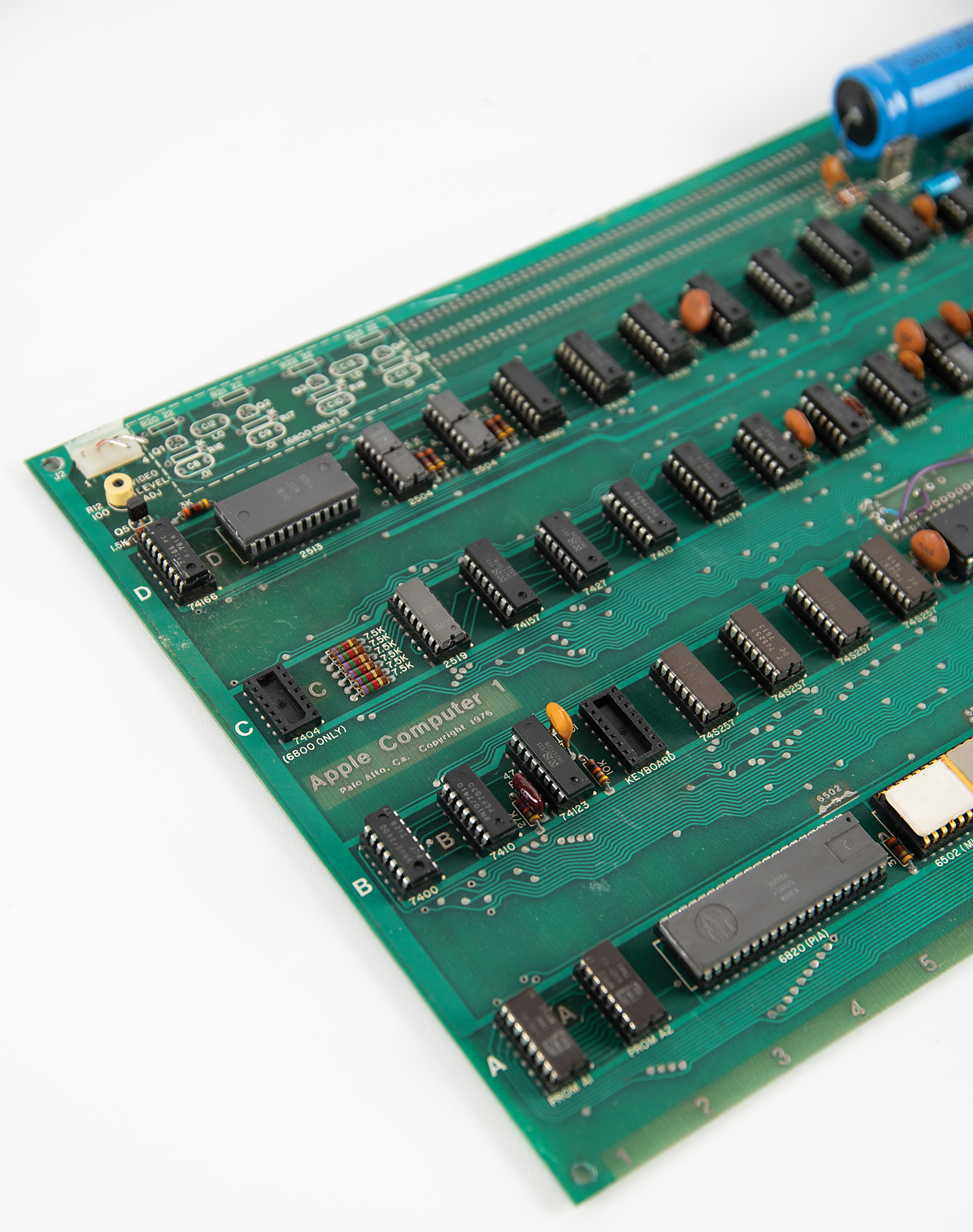
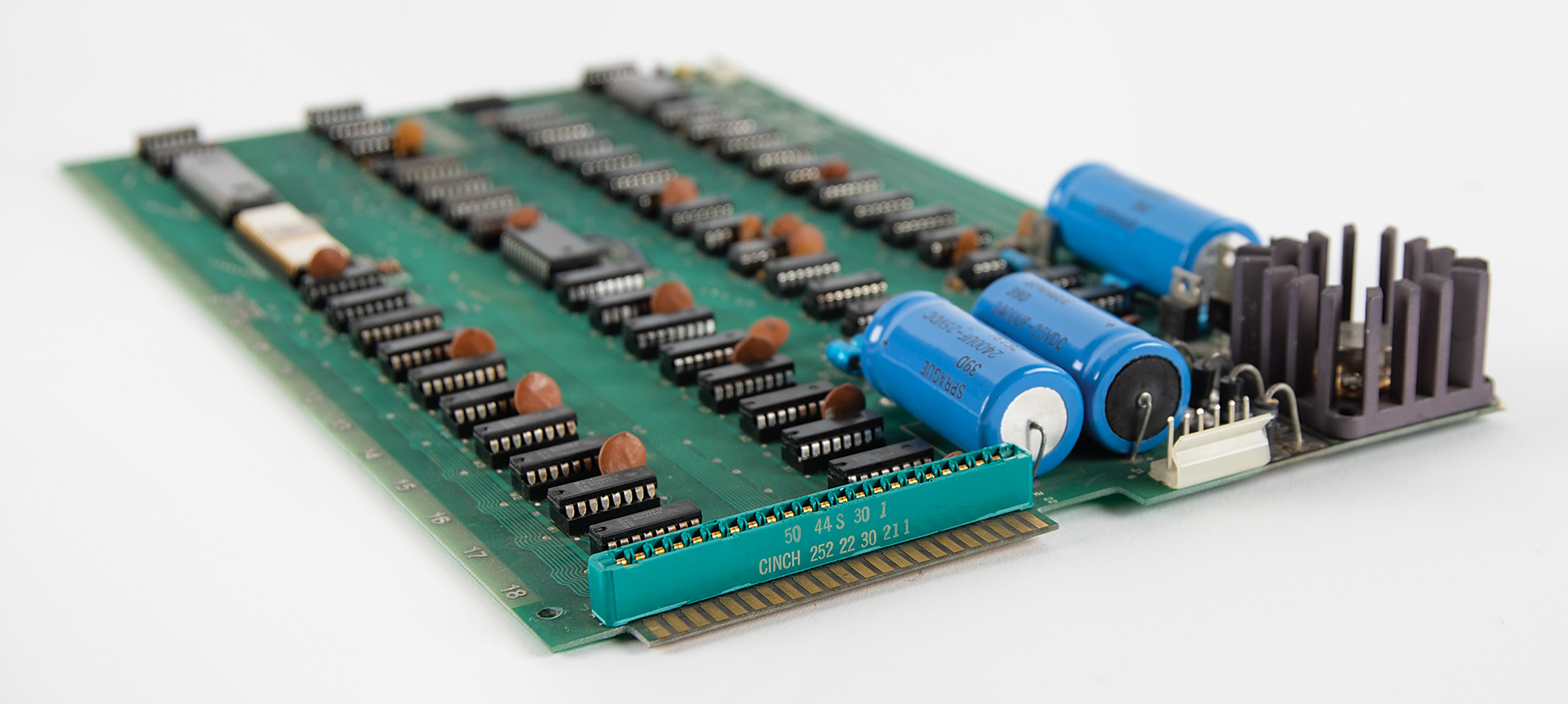
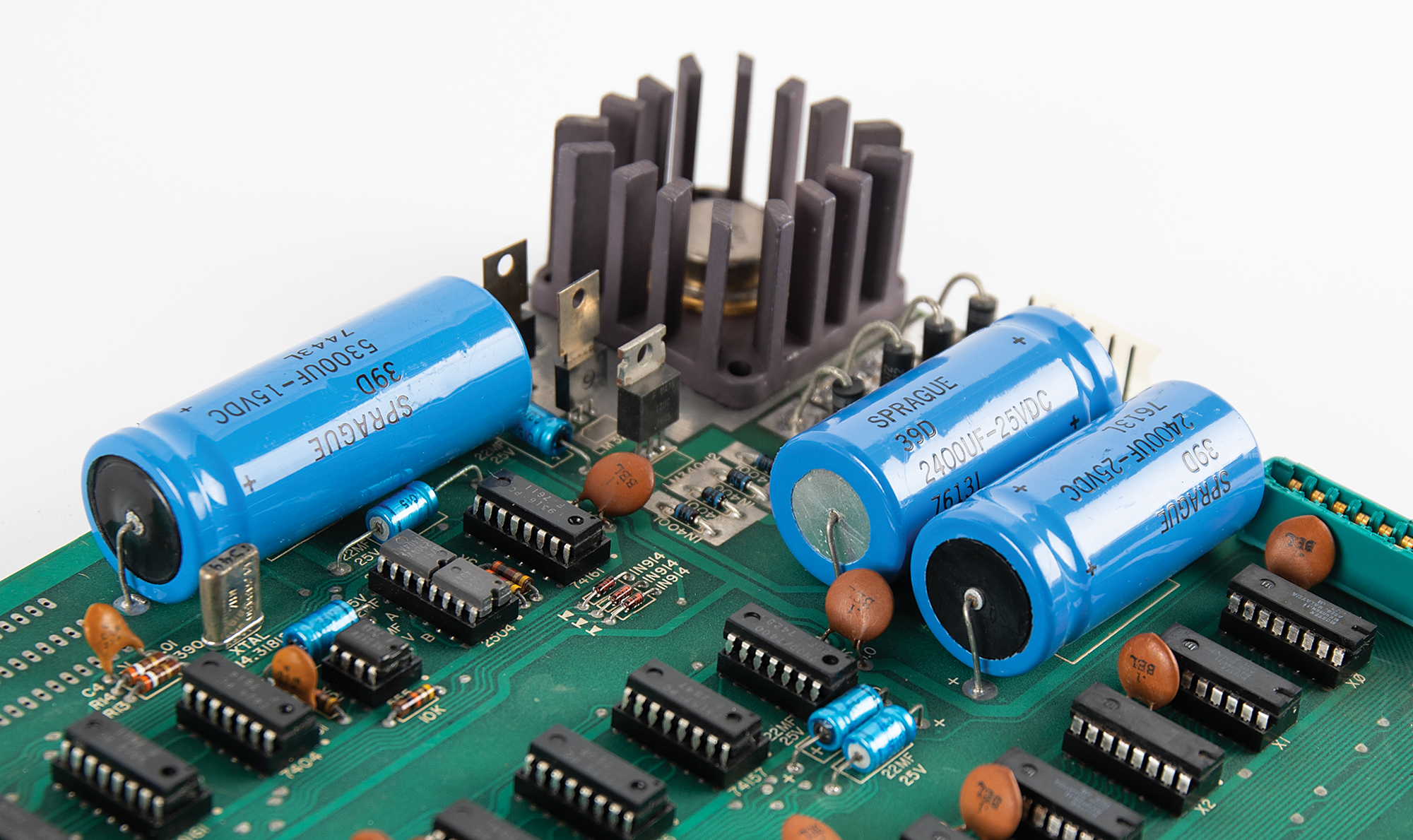
On the left side, the board is marked: ?Apple Computer 1, Palo Alto, Ca. Copyright 1976.? The board retains its white ceramic MOS 6502 processor, all three original Sprague 'Big Blue' capacitors, and is wired to support executing Apple BASIC on an 8K memory system. The 'breadboard' prototyping area is untouched and the green coat exhibits some minor scuffs but minimal peeling, unlike many Apple-1 boards. Four of the power supply diodes are period-correct replacements, and all power regulators are date-correct and original.
The set includes:
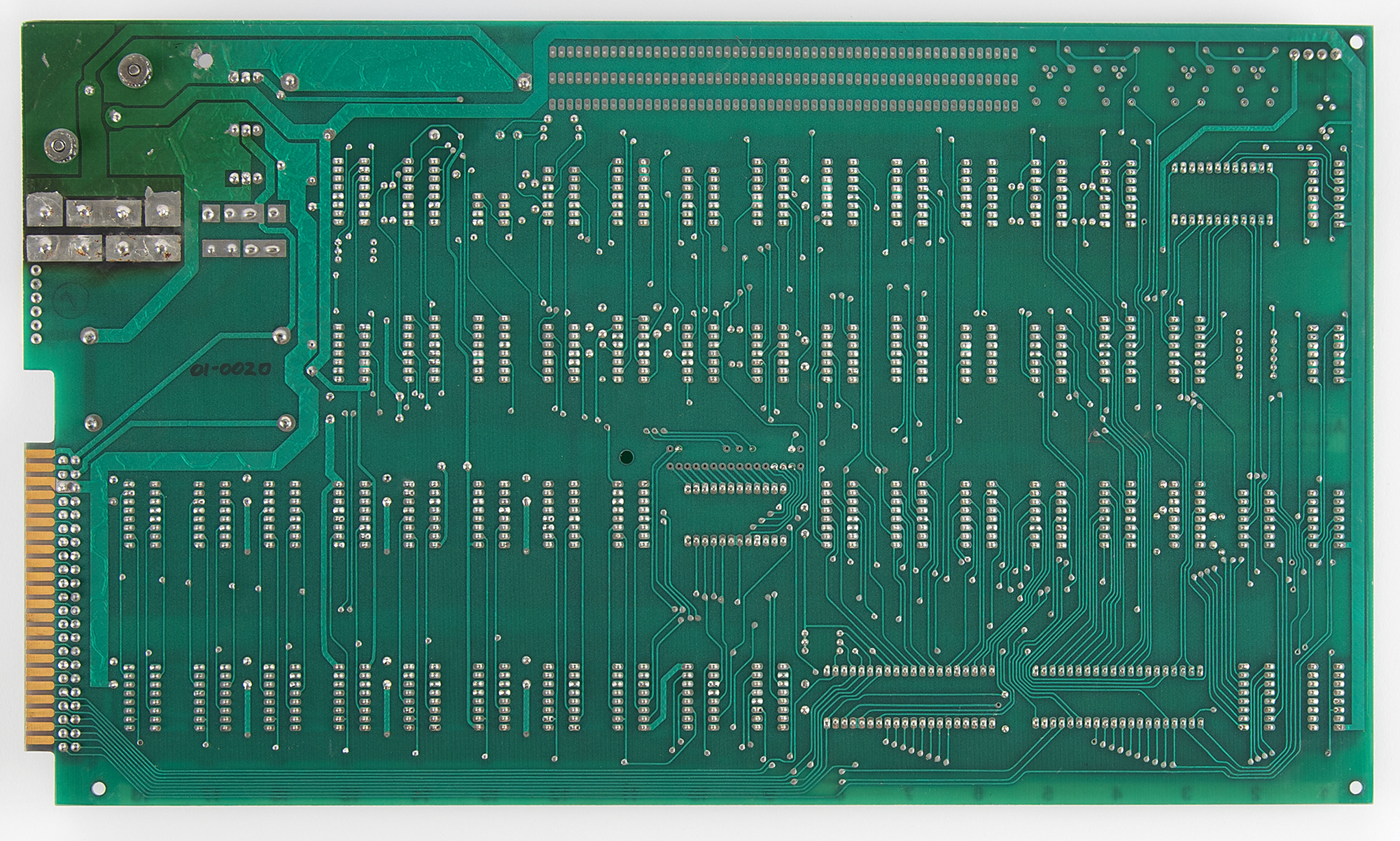
? original Apple-1 board, marked on the reverse with "01-0020"
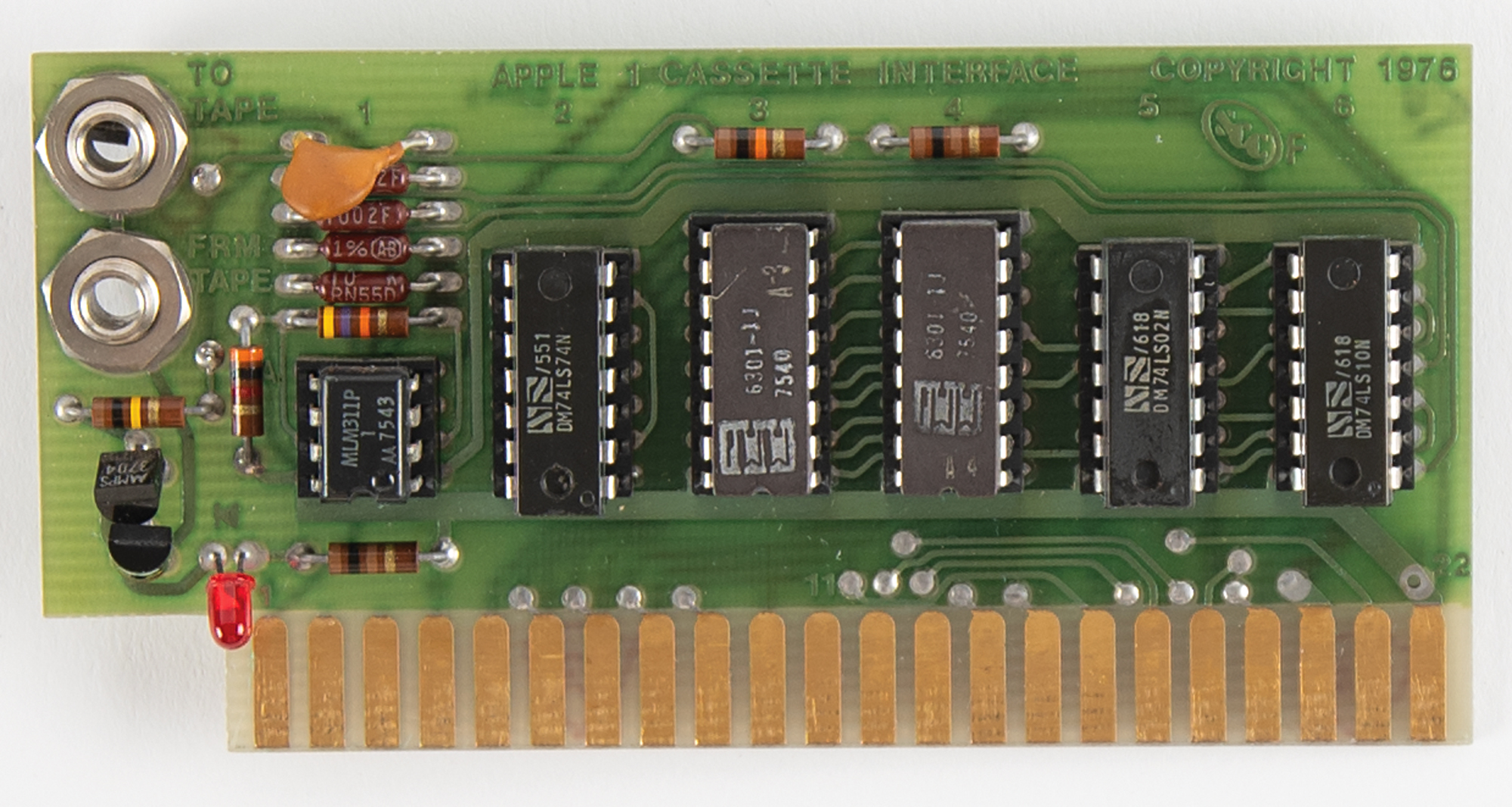
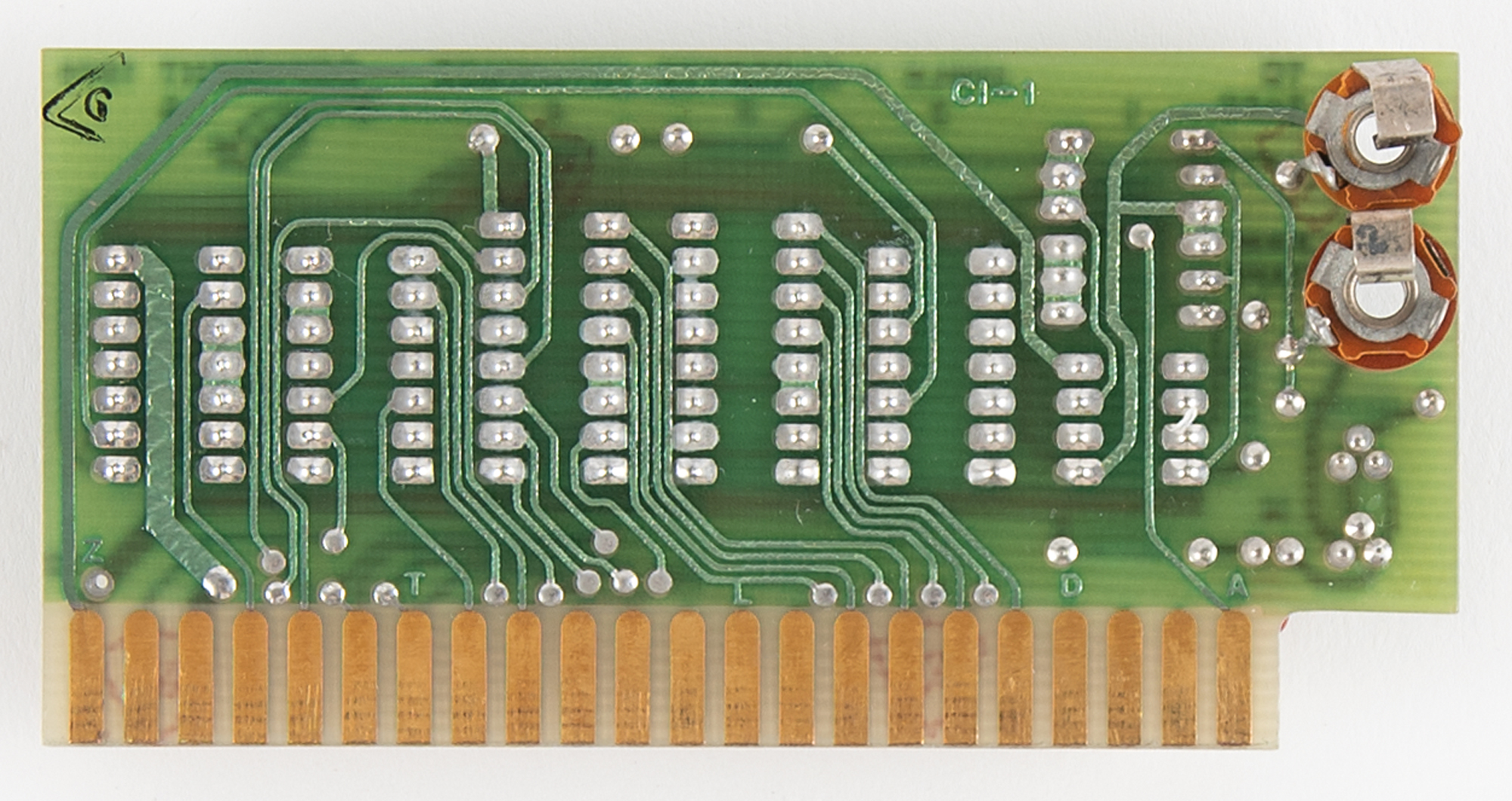
? original Apple Cassette Interface (ACI) board
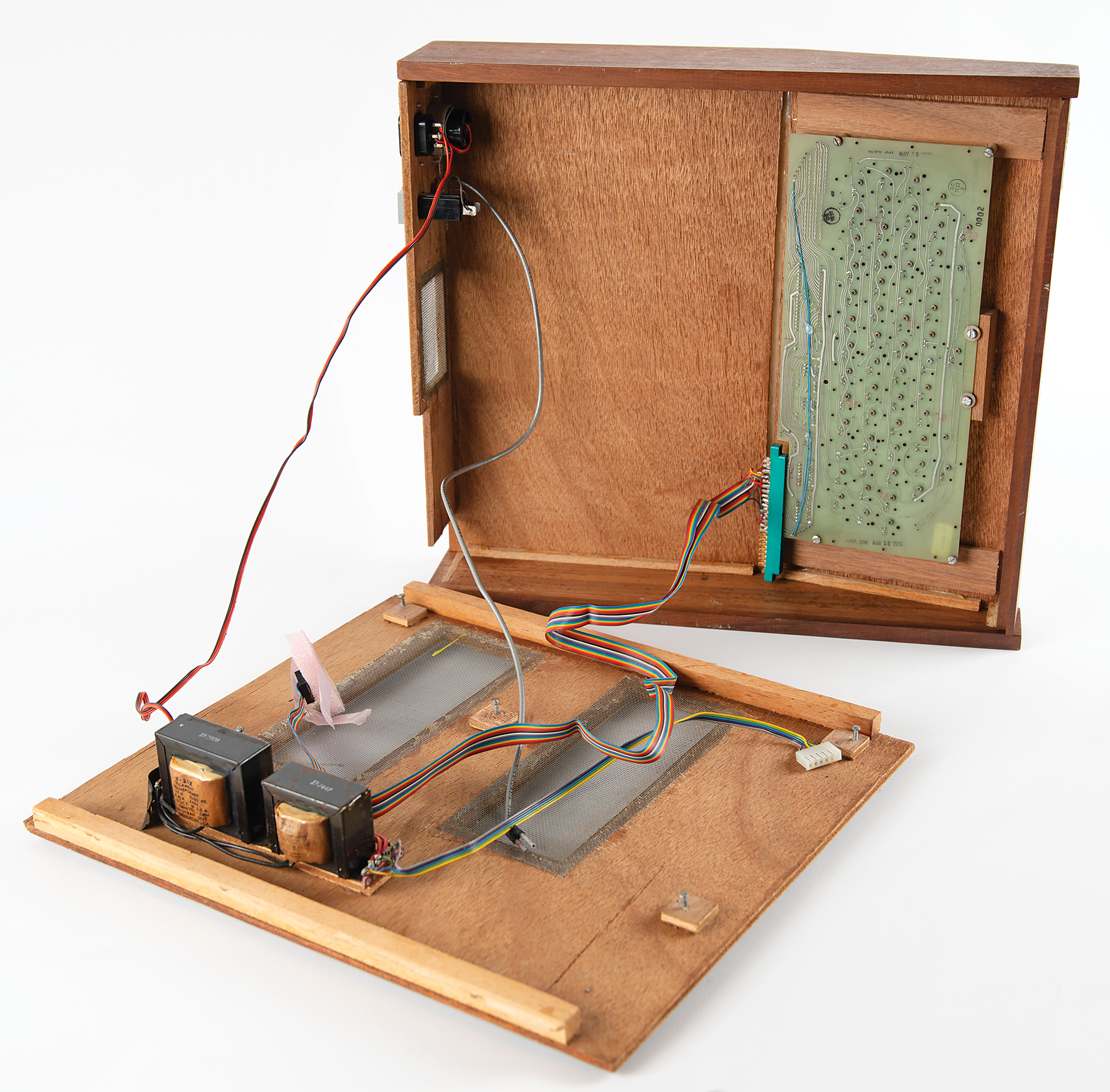
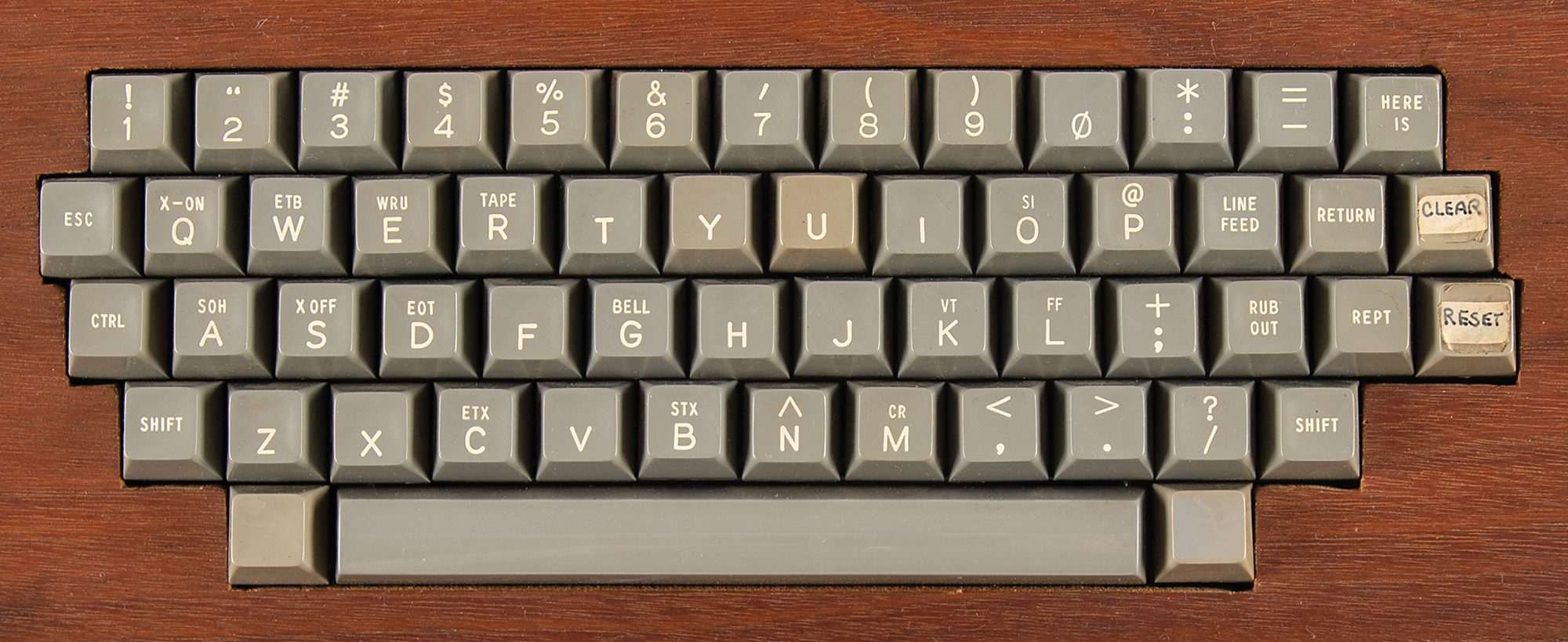
? original Byte Shop wooden case with built-in Datanetics keyboard and Triad power supply
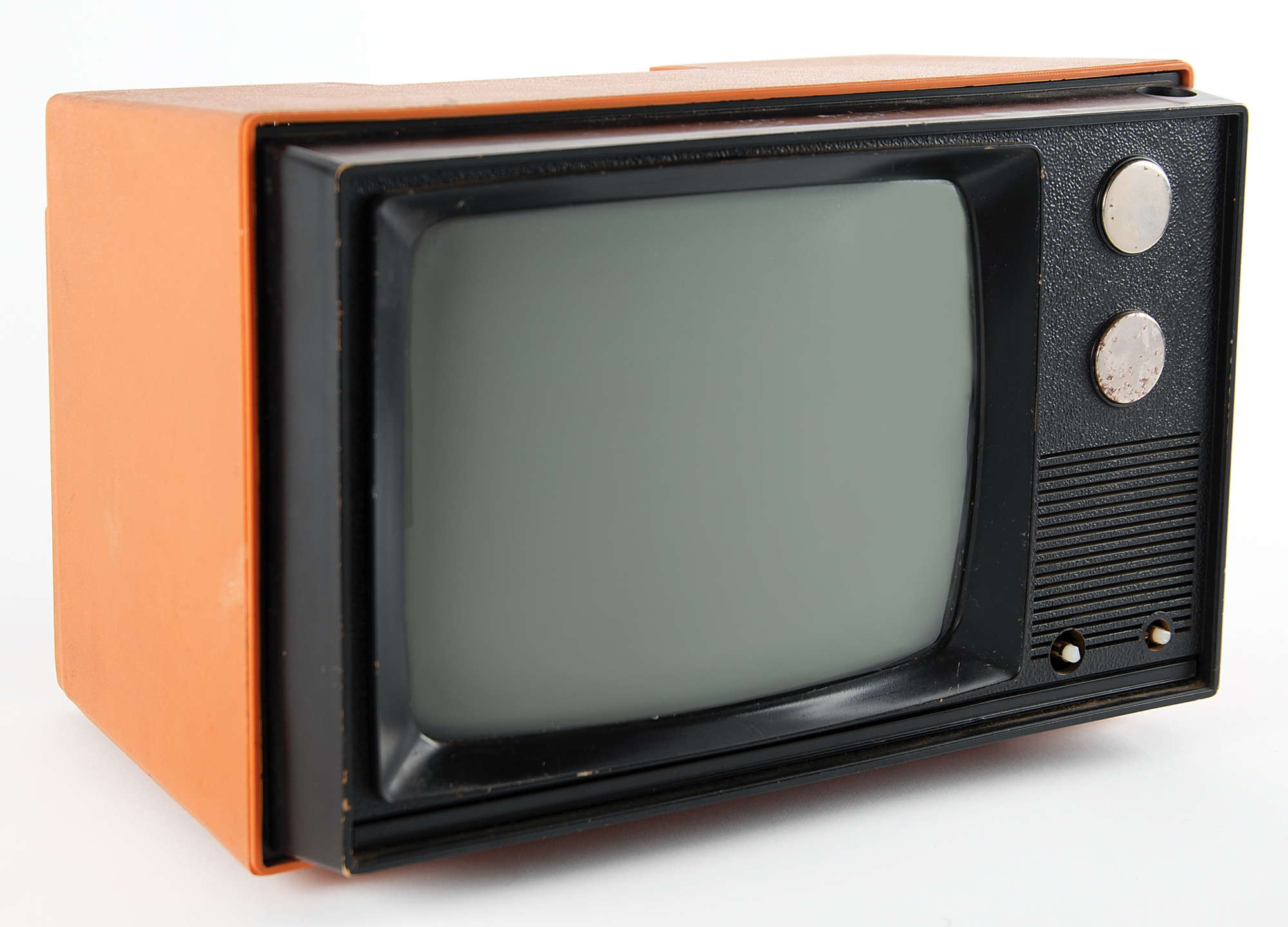
? period-correct video monitor and associated cables
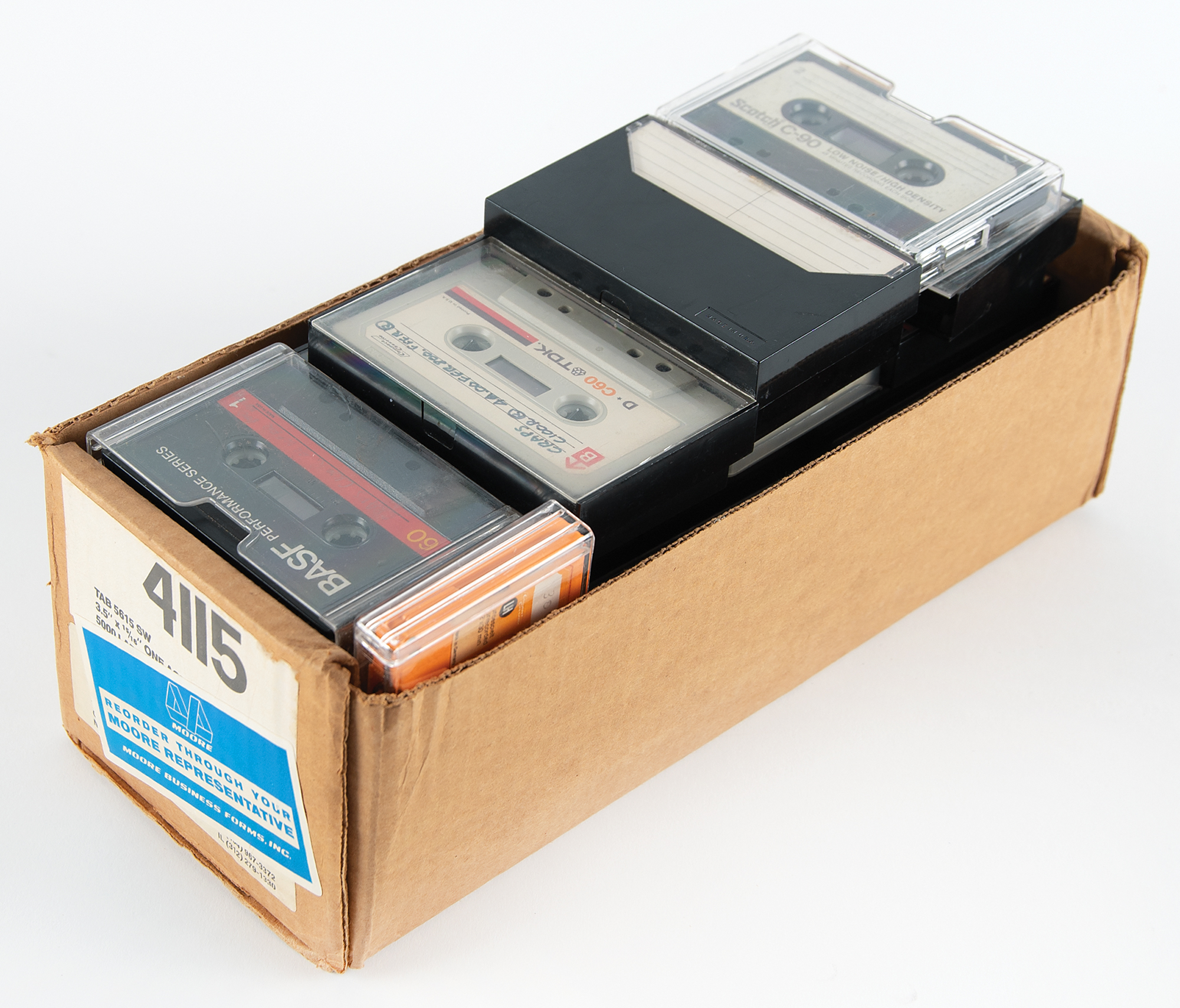
? period-correct copies of software on cassette tapes, with contemporary handwritten notes and instructions
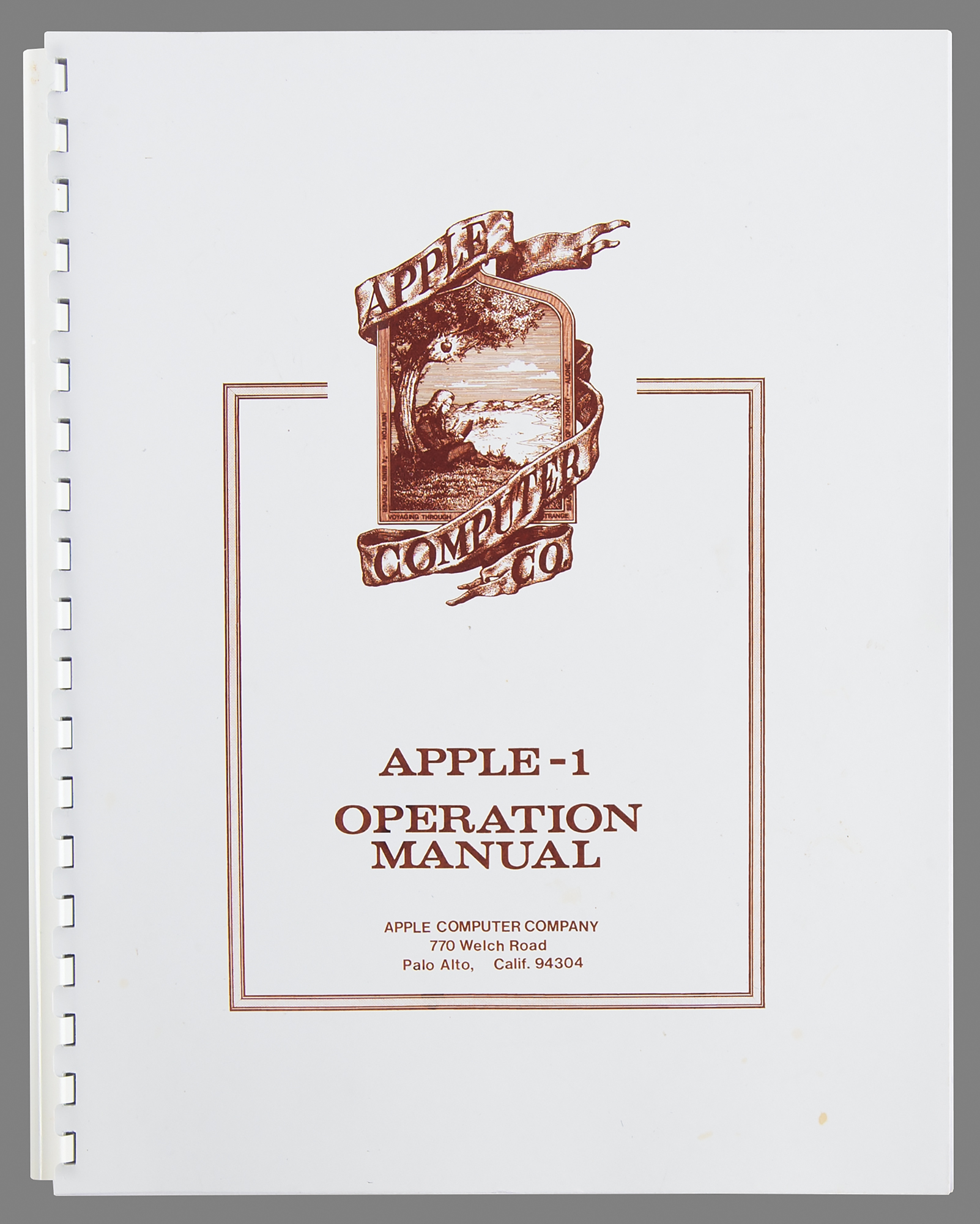
? modern copy of the Apple-1 Operation Manual
This Apple-1 computer was examined and restored to operational state in June?July 2025 by Apple-1 expert Corey Cohen. A comprehensive, technical condition report and proof-of-life video prepared by Cohen is available to qualified bidders; he evaluates the current condition of the unit as 8.0/10. The case exhibits a hairline crack across the bend of the case top, and a section of the rear panel has been removed to allow the case to be opened without removing attached cassette interface cables; a small part of the laminate between the power extender and video connector has also separated.
The Apple-1 was originally conceived by Steve Jobs and Steve ?Woz? Wozniak as a bare circuit board to be sold as a kit and completed by electronics hobbyists, their initial market being Palo Alto?s Homebrew Computer Club. Seeking a larger audience, Jobs approached Paul Terrell, owner of The Byte Shop in Mountain View, California, one of the first personal computer stores in the world. Aiming to elevate the computer beyond the realm of the hobbyist tinkerer, Terrell offered to buy 50 of the computers?at a wholesale price of $500 a piece, to retail at $666.66?but only if they came fully assembled. The Byte Shop cases gave the machines a polished, finished appearance, really setting them apart from typical hobbyist kits of the era; the Apple-1 thus became one of the first ?personal? computers which did not require assembly by the end user. All together, over a span of about ten months, Jobs and Wozniak produced about 200 Apple-1 computers and sold 175 of them. Steve Wozniak later placed Terrell's purchase order in perspective: 'That was the biggest single episode in all of the company's history. Nothing in subsequent years was so great and so unexpected.'
A masterpiece of innovation, the standard Apple-1 included 4K of inexpensive dynamic random access memory (DRAM), which could be expanded to 8K on board or 64K externally. Most computers in the Apple-1?s price range used more expensive static memory (SRAM), which limited them to 1K of memory for a similar cost. We still use DRAM technology today in computers, mobile phones, and electronics.
Another central characteristic of the Apple-1 is its built-in video terminal, which allows output to a television screen or video monitor. This was a dramatic advance from the traditional computer input/output mechanism of the day, the ASR-33 teletype, which printed a computer?s output onto a spool of paper. With this video port, the Apple-1 allowed a user to view commands on a screen in real time?something taken for granted in today?s computing world.
This Apple-1 additionally includes an original Apple-1 Cassette Interface (ACI), also introduced in 1976, which provides the ability to save memory contents onto a standard audio tape, and later load the contents back into the computer?s memory. Revolutionary for the time, Steve Wozniak designed the ACI to use only 6 integrated circuits, compared to other solutions which used 50 to 100 integrated circuits. This allowed Apple to sell their solution for less than their competitors; the Apple ACI also operated at four times the speed of its contemporary competitors.
The early success of the Apple-1 in 1976 paved the way for the introduction of the Apple II in the spring of 1977. In Apple?s 1980 IPO prospectus, the company described its progress: ?In April 1977 the Company introduced the Apple II computer mainframe which was similar to the Apple I but incorporated additional circuitry and a keyboard, and was packaged in a plastic housing.? In other words, the Apple II built upon the Apple-1 to become an even more capable, more consumer-ready machine. Between 1977 and 1980, on the sales of the Apple II and its peripherals, accessories, and software, Apple Computer?s yearly revenue grew from $774,000 to $118 million, making it one of the great growth stories of Silicon Valley. The Apple-1 is not only a marvel of early computing ingenuity, but the product that launched what is today one of the most valuable and successful companies in the world.

