Sold For $50,000
*Includes Buyers Premium
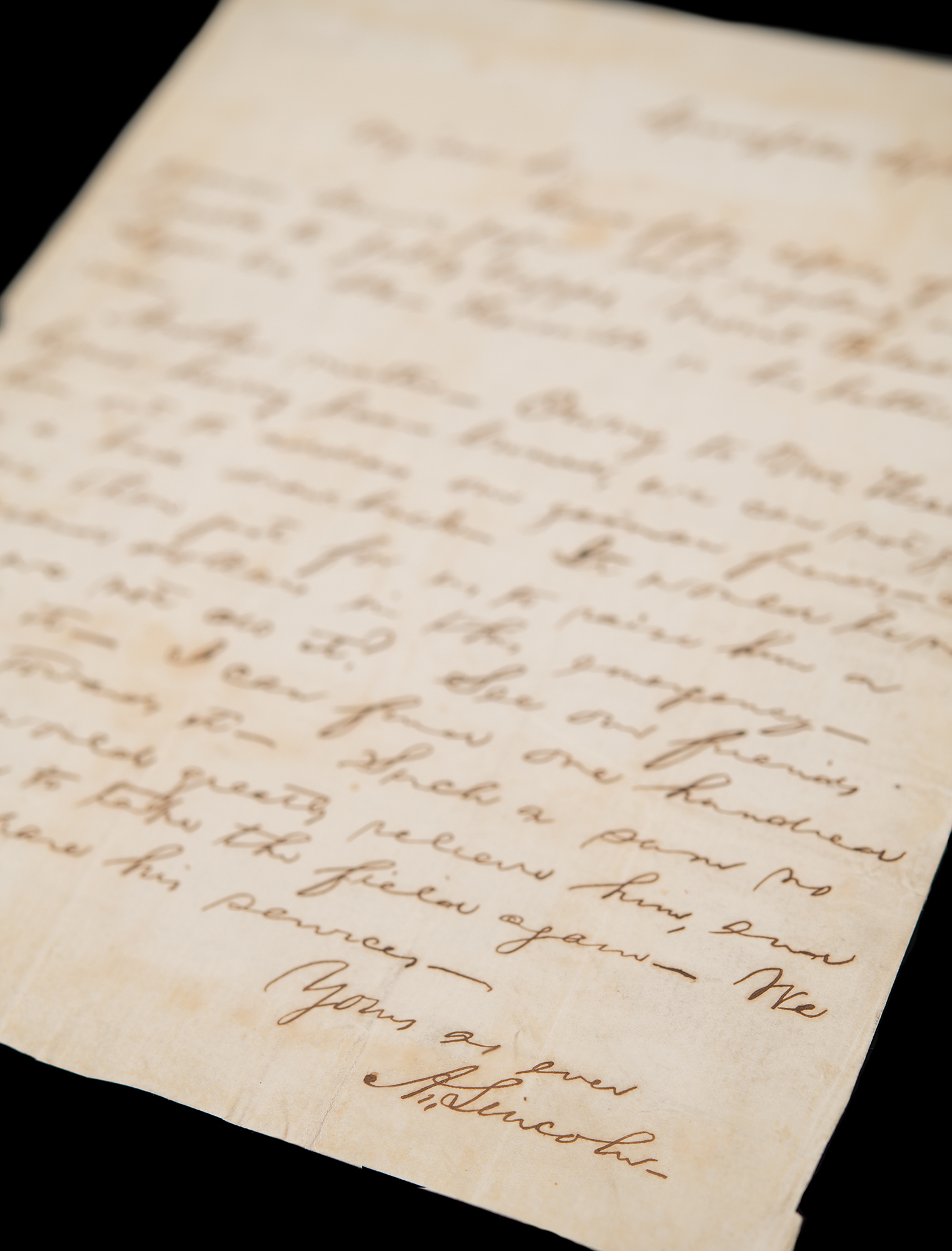
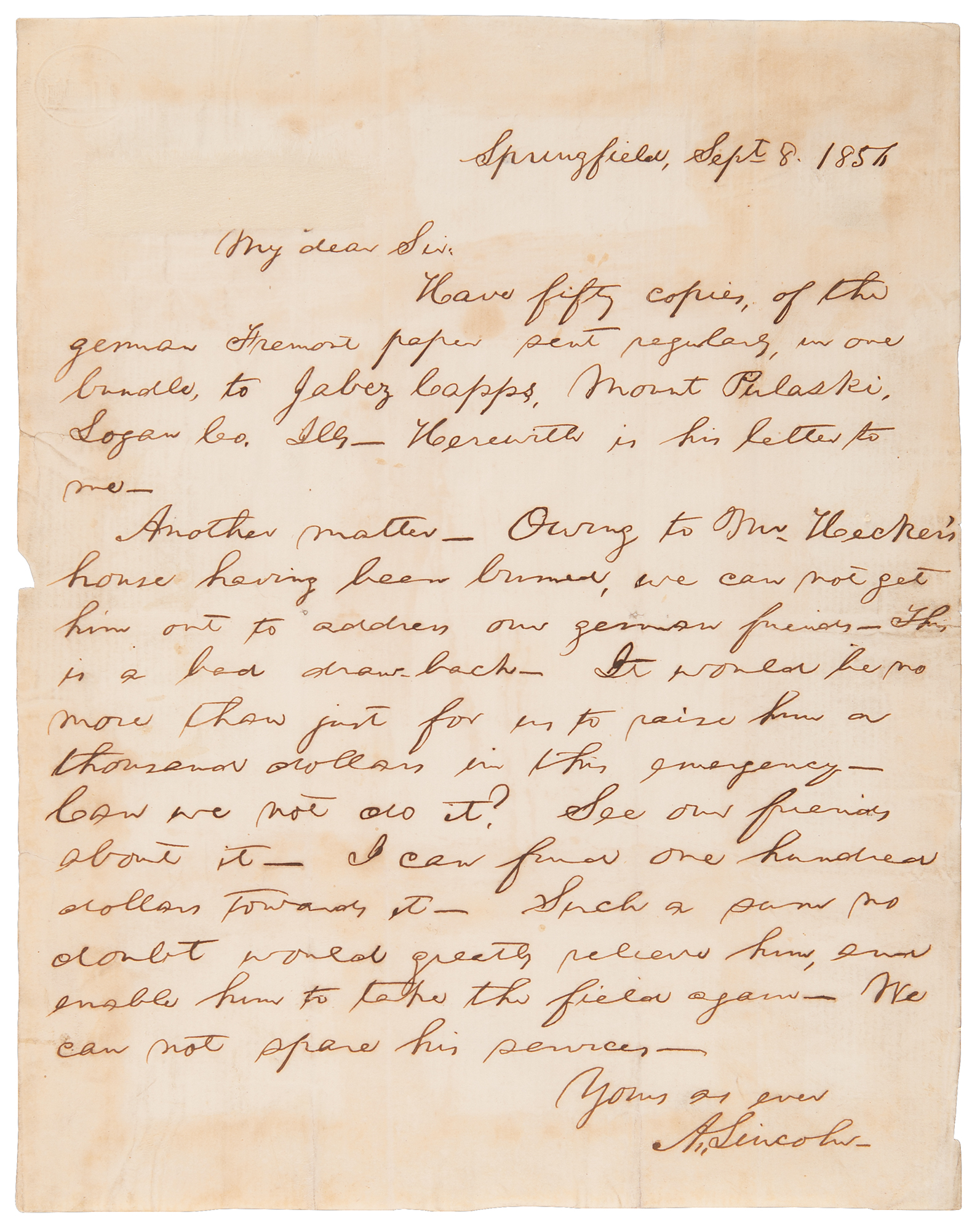
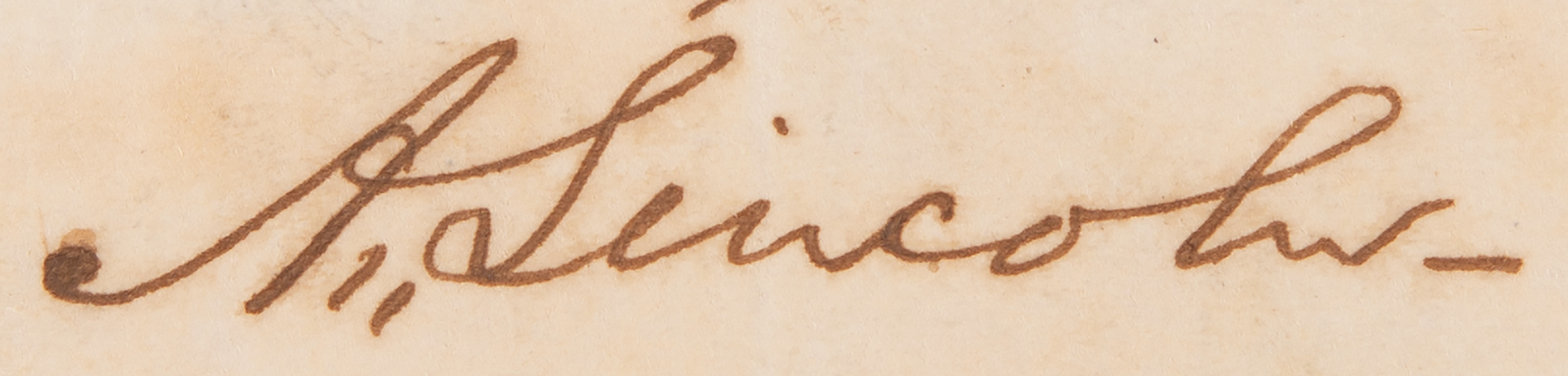
ALS signed “A. Lincoln,” one page, 7.75 x 9.75, September 8, 1856. Handwritten letter to Charles H. Ray, editor of The Chicago Tribune. Lincoln writes regarding John C. Frémont's 1856 campaign, aiming to rally German-American support for the newly formed Republican Party's first presidential candidate. In part: "Have fifty copies, of the german Fremont paper sent regularly, in one bundle, to Jabez Capps, Mount Pulaski, Logan Co. Ill….Another matter—Owing to Mr. Hecker's house having been burned, we can not get him out to address our german friends—This is a bad draw-back—It would be no more than just for us to raise him a thousand dollars in this emergency—Can we not do it? See our friends about it—I can fund one hundred dollars towards it—Such a sum would no doubt greatly relieve him, and enable him to take the field again. We cannot spare his services." In very good condition, with lightly trimmed edges, scattered light staining and irregular toning, and the recipient's name neatly cut out and patched.
In the fall of 1856, Abraham Lincoln—four years away from his own presidential run—tirelessly campaigned for John C. Frémont, the first Republican presidential candidate. Recognizing the political importance of the large German-American community in Illinois, Lincoln focused significant effort on securing their support. In this letter, he urges newspaper publisher Charles Ray to send bundles of pro-Frémont, German-language newspapers—likely Chicago’s Staats Zeitung—to Republican allies such as Jabez Capps, a longtime friend of Lincoln and a founder of Mount Pulaski, Illinois.
Lincoln’s endeavors extended beyond the distribution of printed propaganda. Here, he also advocates for financial aid to Friedrich Hecker, a prominent German-American leader and exile of the 1848 Revolution. Hecker’s home had recently burned down—possibly an act of arson in retaliation for his political activism—preventing him from addressing voters. Lincoln proposes raising $1,000 to help Hecker rejoin the campaign, personally pledging $100 of his own.
Although these efforts fell short in 1856—Frémont lost both Illinois and the national election—Lincoln's cultivation of German-American support for the fledgling Republican Party aided in his victorious 1860 presidential campaign, and had an even greater effect on the Civil War. German-Americans would become the largest ethnic contingent to fight for the North, with some 200,000-plus joining the Union ranks.
In 1861, when President Lincoln called for 75,000 volunteers after the Battle of Fort Sumter, his old friend Friedrich Hecker leapt into action. Hecker raised his own regiment, the 24th Illinois Infantry, which became the first unit mobilized from Chicago. He would later command the 82nd Illinois Infantry Regiment, which saw action at Chancellorsville (where Hecker was badly wounded), Gettysburg, and Chattanooga.
This item is Pre-Certified by PSA/DNA
Buy a third-party letter of authenticity for
$500.00
*This item has been pre-certified by a trusted third-party authentication service, and by placing a bid on this item, you agree to accept the opinion of this authentication service. If you wish to have an opinion rendered by a different authenticator of your choosing, you must do so prior to your placing of any bid. RR Auction is not responsible for differing opinions submitted 30 days after the date of the sale.
Third-party authentication service applies only to signatures and handwriting, and does not cover the addition of sketches, artwork, musical quotations, etc.

