Sold For $75,000
*Includes Buyers Premium
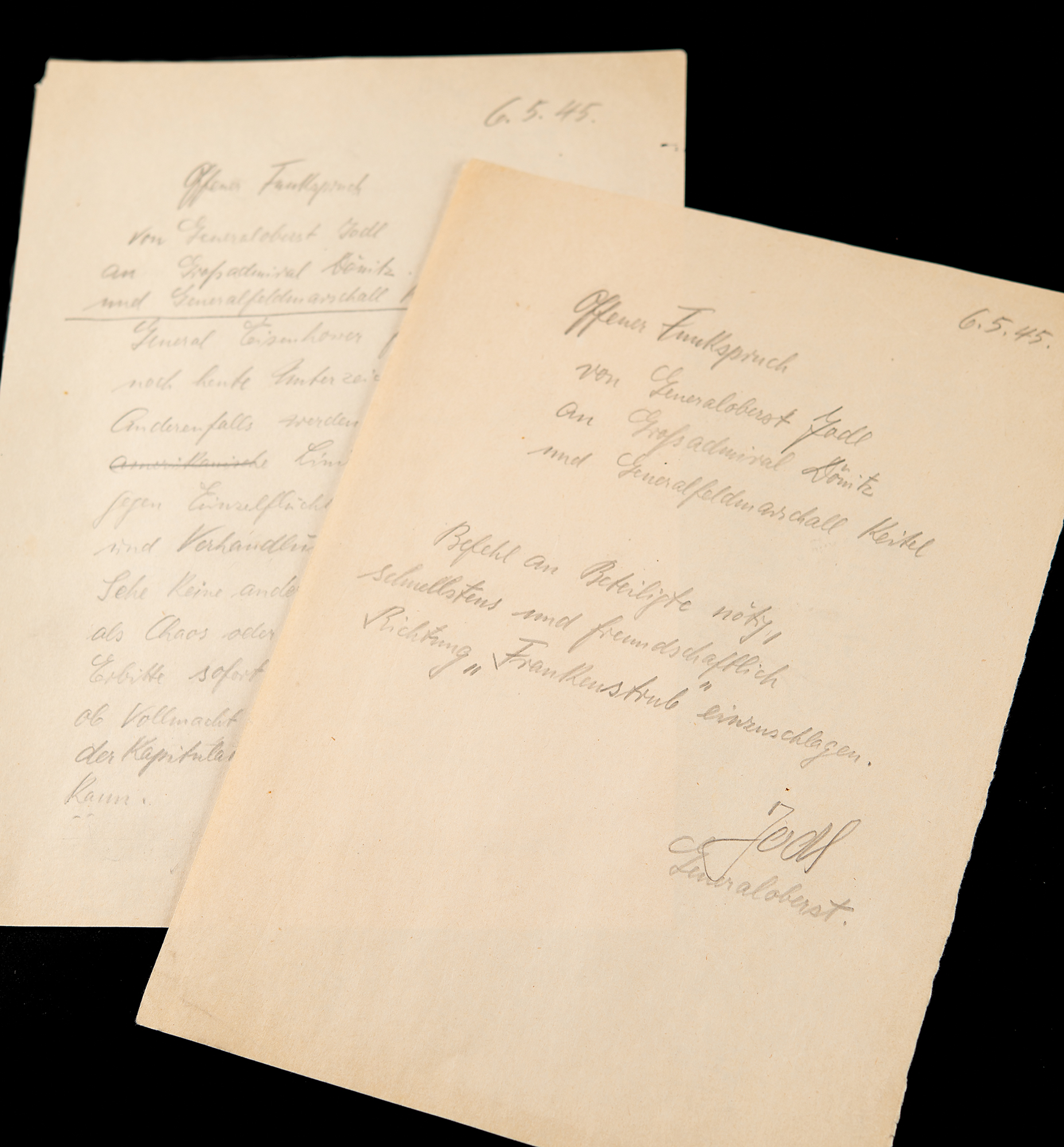
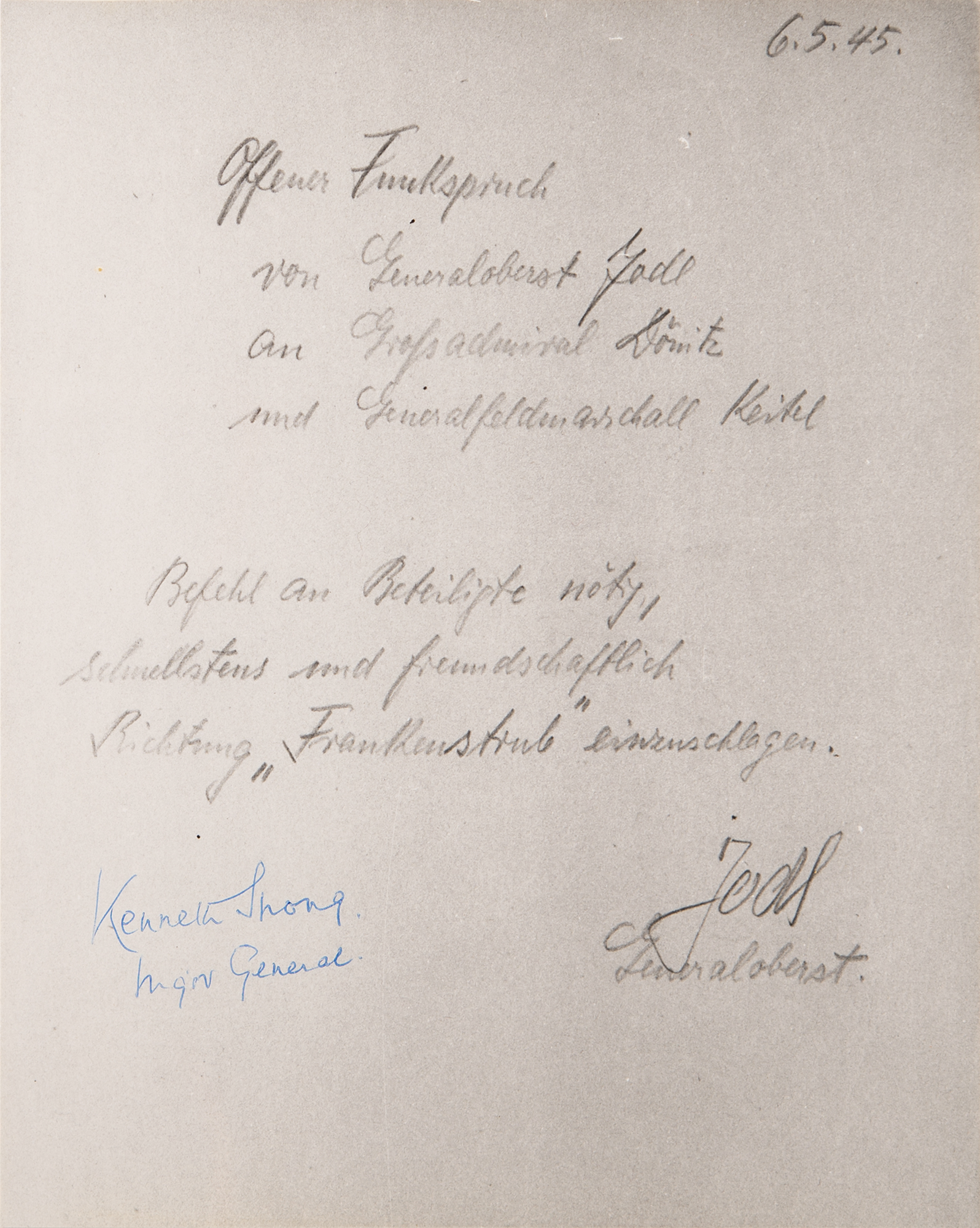
Amazing, historic pairing of two manuscript radiotelegram transmission drafts in pencil, each signed by Col. Gen. Alfred Jodl, "Jodl," transmitted to Reich President Karl Dönitz during armistice negotiations with General Dwight D. Eisenhower at Reims, France, on May 6, 1945.
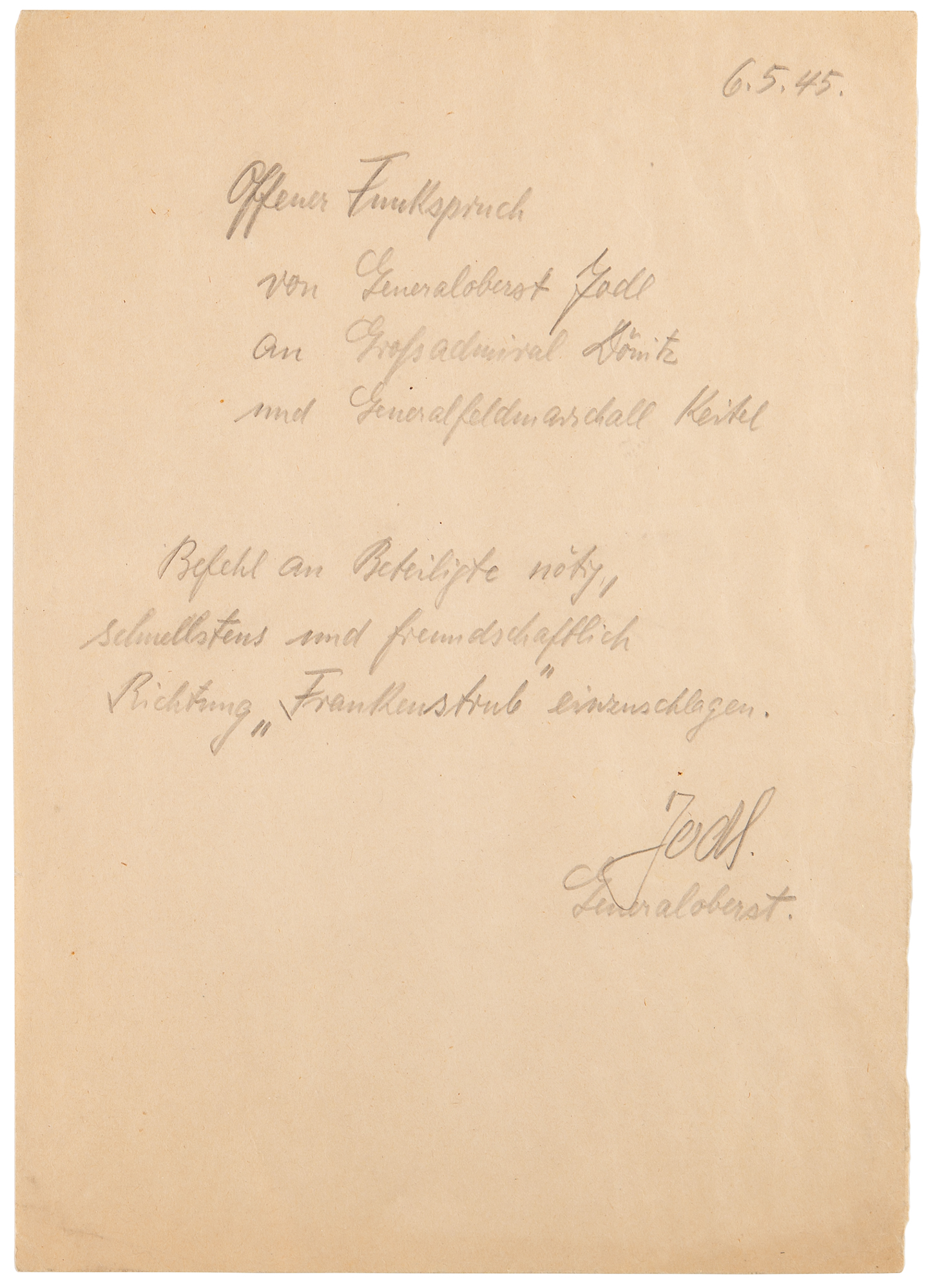
The first, one page, 8.25 x 11.75, was dispatched at 8:41 PM. Headed (translated), "Open Telegram by Generaloberst Jodl to Grossadmiral Donitz and Generalfeldmaschall Keitel," the manuscript reads: "Orders required to all concerned to move in direction 'Frankenstrub' as quickly and in as peaceful a manner as possible." Jodl had arrived at Reims with instructions to negotiate a separate peace with the Americans and British in an effort to continue the fight on the Eastern Front and avoid the Soviet occupation of Germany. If a separate peace was impossible, Jodl was to ask for a delay 'as long as possible' between the signing of a surrender document and the fixing in place of German forces, buying time for 2,000,000 Germans in the east to flee to 'salvation in the west,' as Dönitz described it. With this transmission, Jodl signaled to Dönitz that the flight must begin: 'Frankenstrub' was the codename for Berchtesgaden, on the border of western Austria, and represented an undercover invitation to withdraw to the west as quickly as expedient.
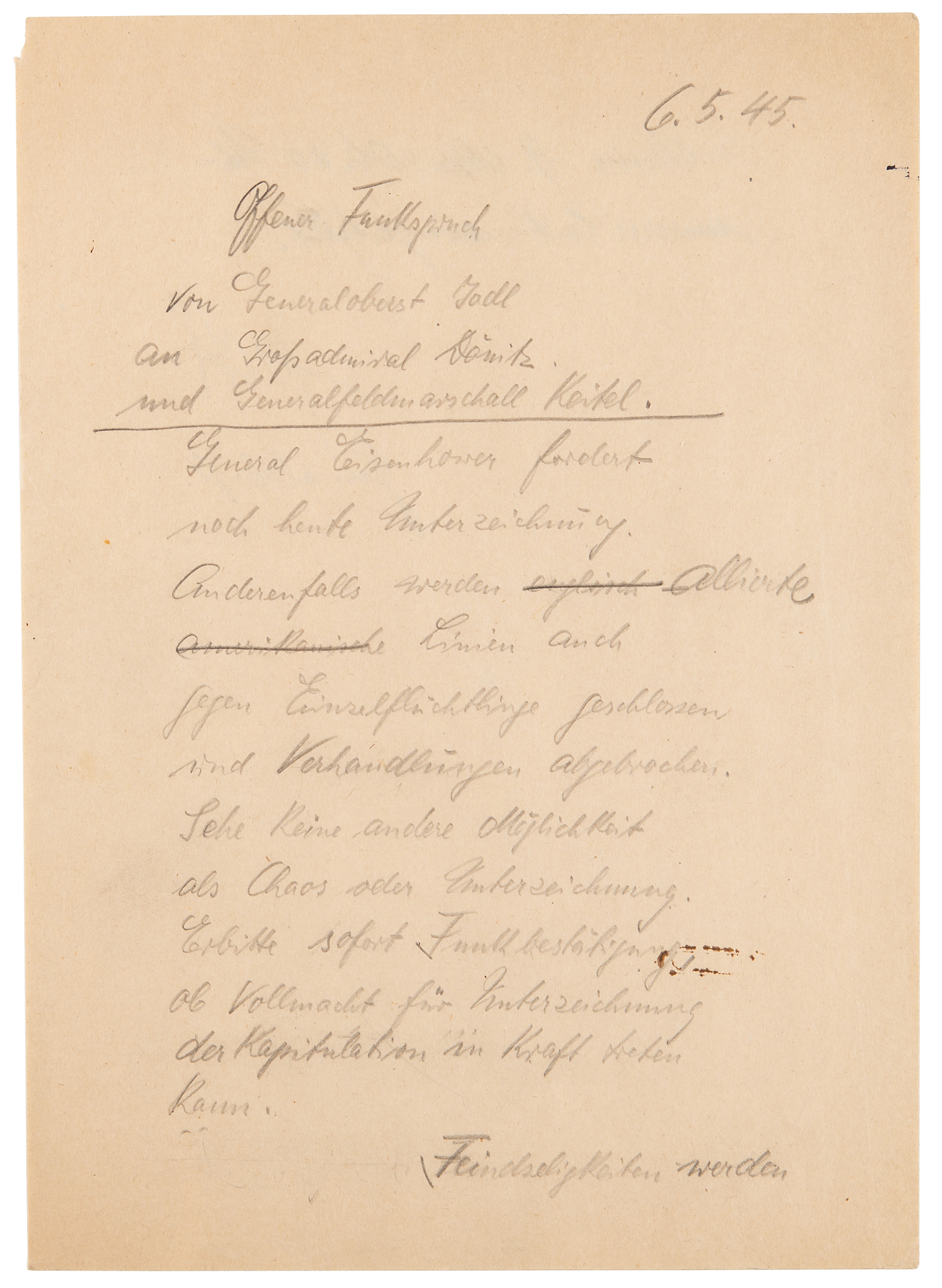
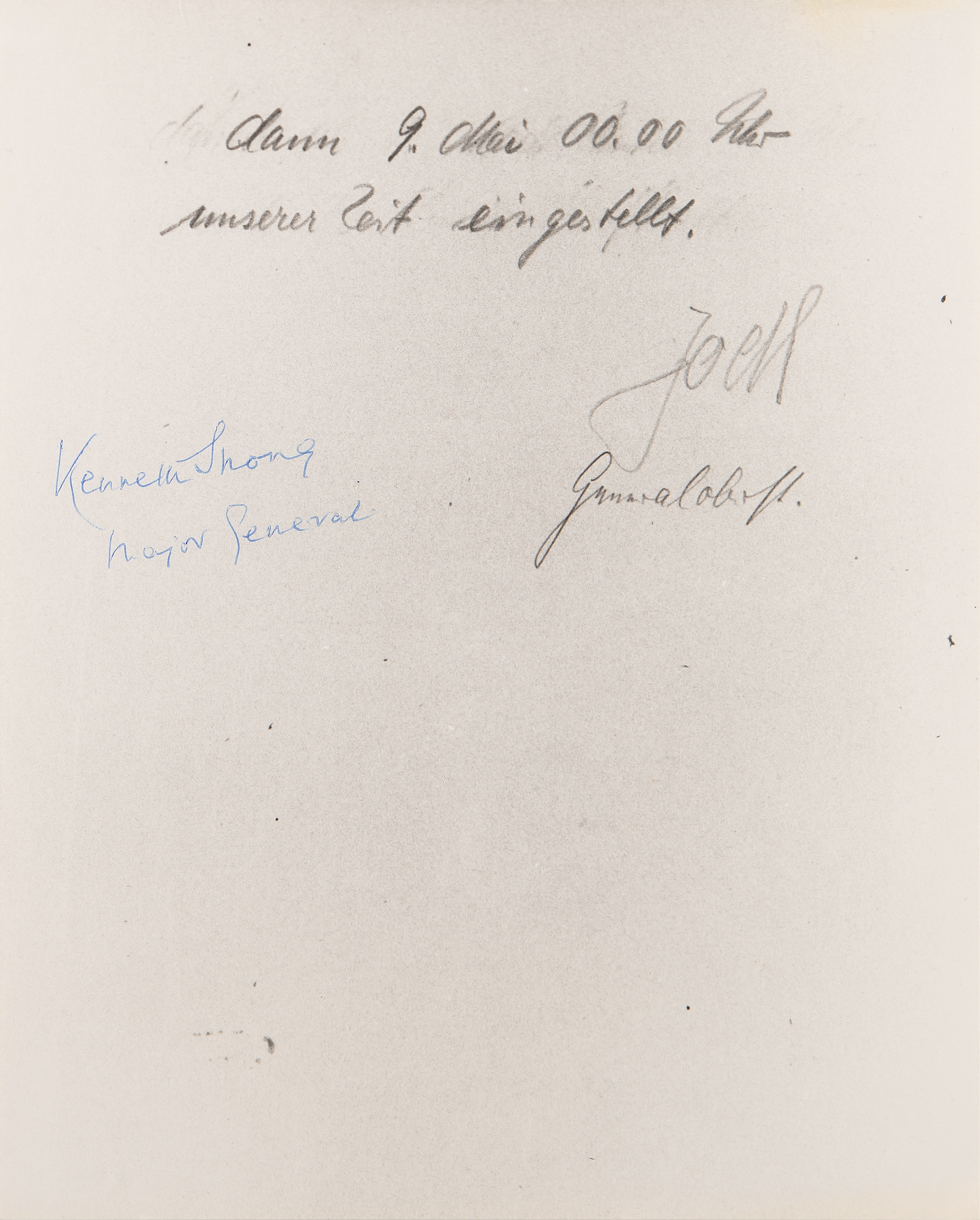
The second manuscript, one page both sides, 8.25 x 11.75, bears the same heading and was urgently sent at 9:45 PM, after another hour of negotiations. It reads, in full (translated): "General Eisenhower insists we sign today. Otherwise Allied lines will be closed even to persons attempting to surrender individually and negotiations broken off. I see no alternative—chaos or signature. Request immediate radio confirmation whether authorization for signing the capitulation will be put into effect. Hostilities will then cease on 9 May 0000 hours our time."
Unable to negotiate a separate peace and seeing 'no alternative but chaos,' Jodl was forced to acquiesce to Eisenhower's demand of unconditional surrender. He was, however, able to negotiate a further 48-hour delay to allow Germans to flee from the Soviets on the Eastern Front. The time spent negotiating, transmitting terms back-and-forth with Dönitz, as represented by these drafts—plus the delay of two days—became crucial hours that allowed even more soldiers and refugees to flee across the lines into the west, saving an estimated 1.5 million lives.
In Flensburg, Dönitz thought that the terms of the armistice were 'sheer extortion' but he had no other choice, realizing that millions of lives were at stake. He authorized Keitel to wire his acceptance. At around 1:30 AM on May 7th, Keitel radioed Jodl: 'Grossadmiral Dönitz has given authorization to sign the capitulation under the terms given.'
At 2:41 AM, Jodl signed the instrument of unconditional surrender. World War II in Europe was over.
Professionally deacidified and in overall fine condition, with a couple trivial chips to corners.
Provenance: Collection of Major-General Sir Kenneth William Dobson Strong (1900-1982), a senior officer of the British Army who served as Eisenhower's chief of intelligence at SHAEF. Strong played a leading part in the negotiations of the unconditional German surrender, acting as a translator. Includes photographic copies of each manuscript, signed in blue ballpoint, "Kenneth Strong, Major General."

