Sold For $216
*Includes Buyers Premium
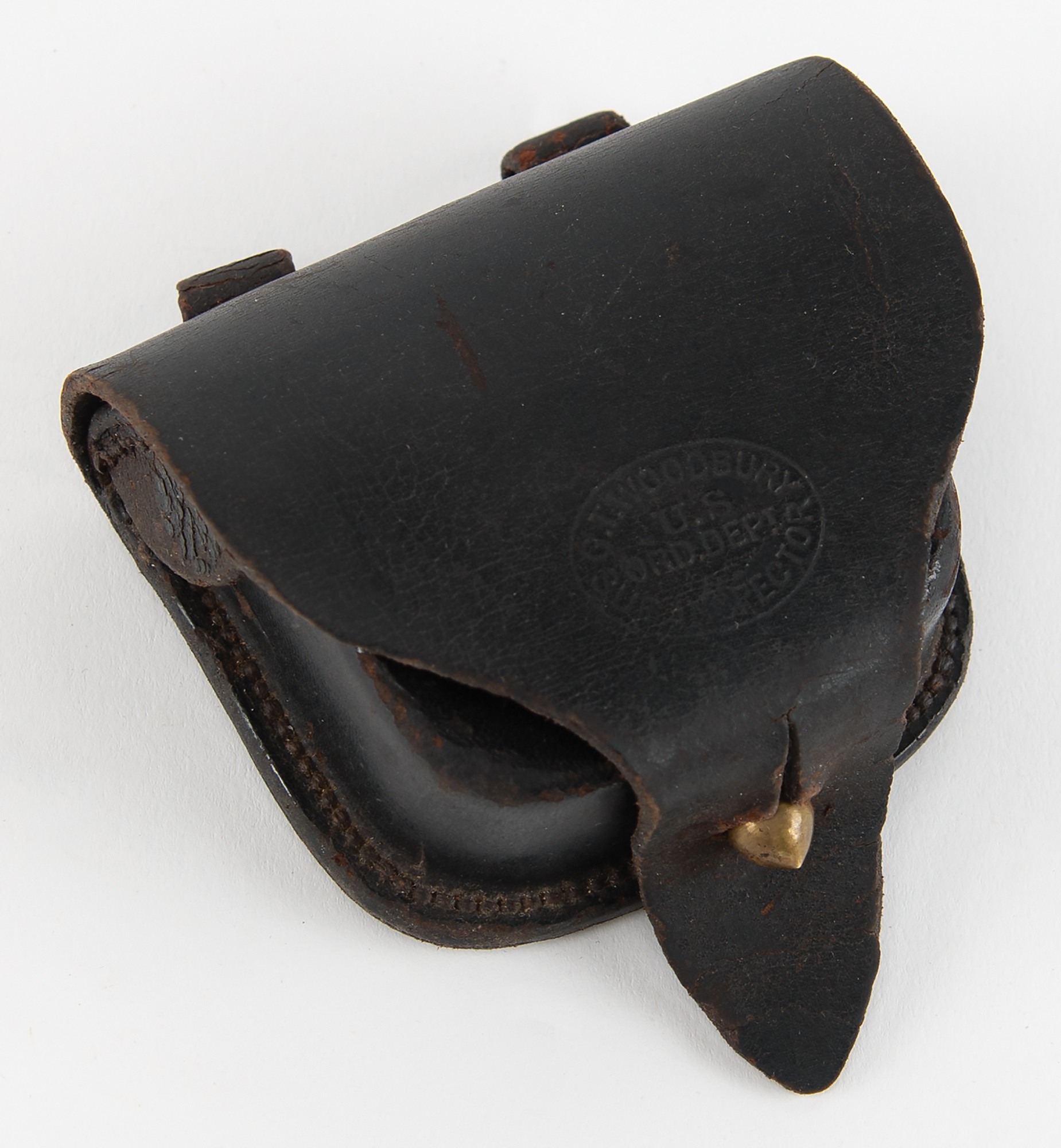
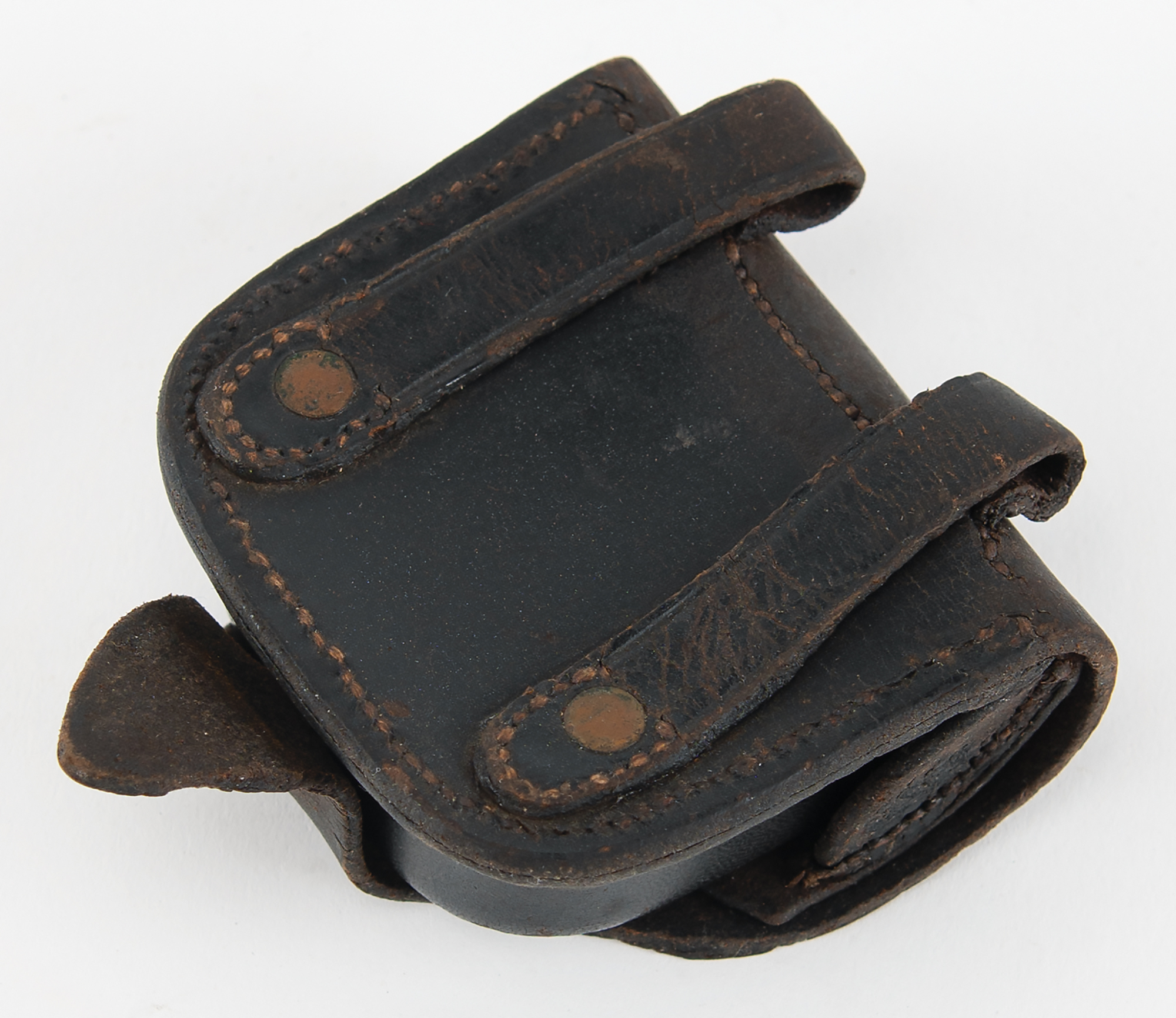
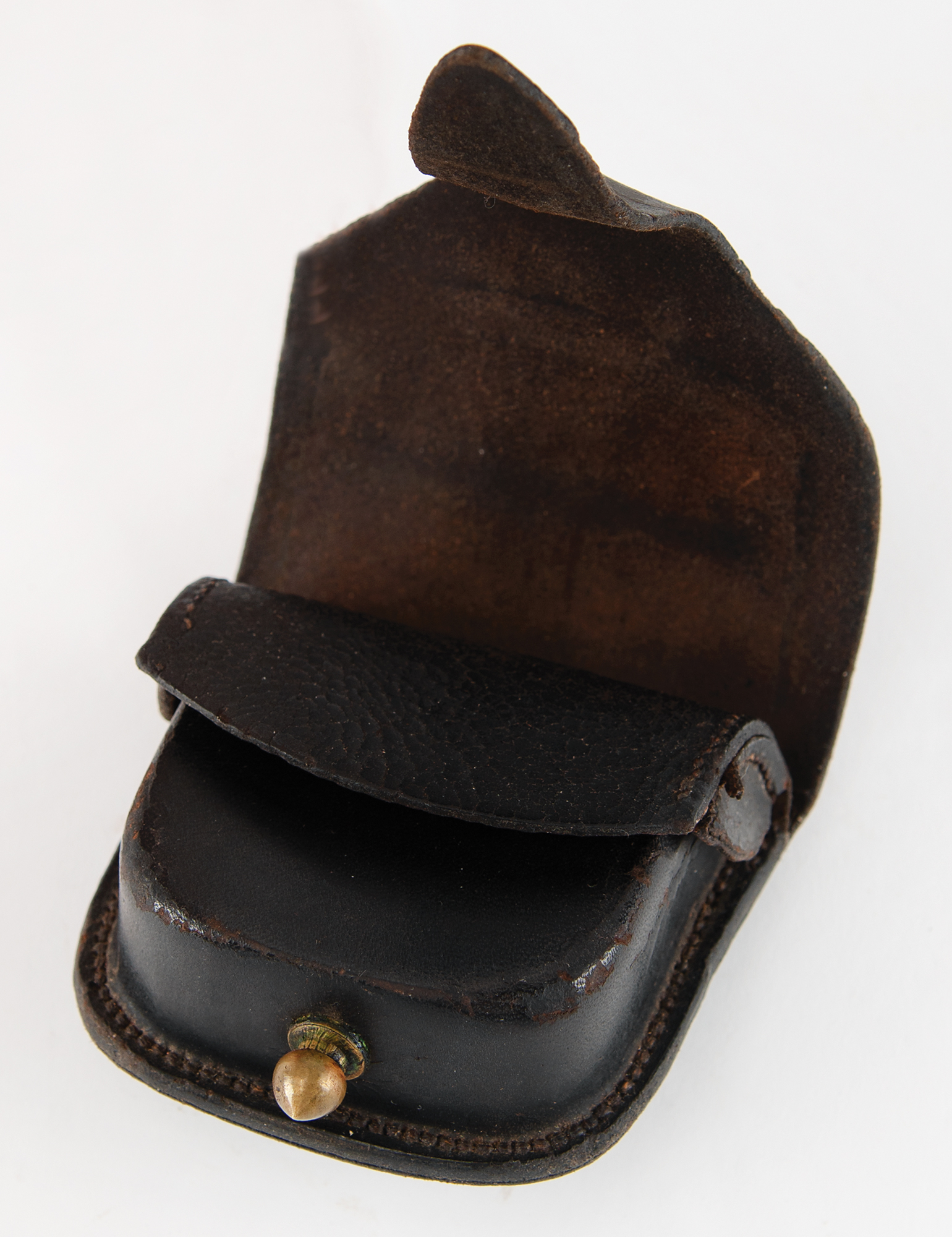
Civil War-era federal leather cap box, 3.75˝ x 3.75˝ x 1.75˝, the outer flap marked with an inspector stamp, “U.S. ORD. DEPT. / G. T. WOODBURY, SUB INSPECTOR.” The cap box, which bears riveted belt loops and a brass flap catch, has no visible maker's mark, but is likely made by W. H. Wilkinson; G. T. Woodbury is documented as a war-time sub-inspector for contractor W. H. Wilkinson of Springfield, Massachusetts. The stamp is in the format specified by the Ordnance Department in 1864. In very good condition, with surface cracking to interior rain flap, minor tear to right weather flap, and a missing pick and interior wool fleece.
One of the significant innovations during the Civil War was the extensive use of cap boxes, which were designed to carry percussion caps essential for the operation of various firearms. The invention of the percussion system in the 1820s revolutionized firearm technology by introducing a dependable priming mechanism. By the 1840s, the U.S. Army had adopted this system, and the Springfield Model 1842 percussion musket became the standard issue.
As the percussion system gained popularity, it became necessary for soldiers to have an efficient means of carrying the small, yet crucial, percussion caps. Initially, pockets sewn into jackets were utilized, but these proved inadequate. By 1845, the first cap boxes were issued to U.S. troops, providing a practical solution for carrying the caps. These boxes became an essential component of a soldier's equipment, and during the Civil War, innumerable cap boxes were produced for both Union and Confederate troops.

