Sold For $4,375
*Includes Buyers Premium
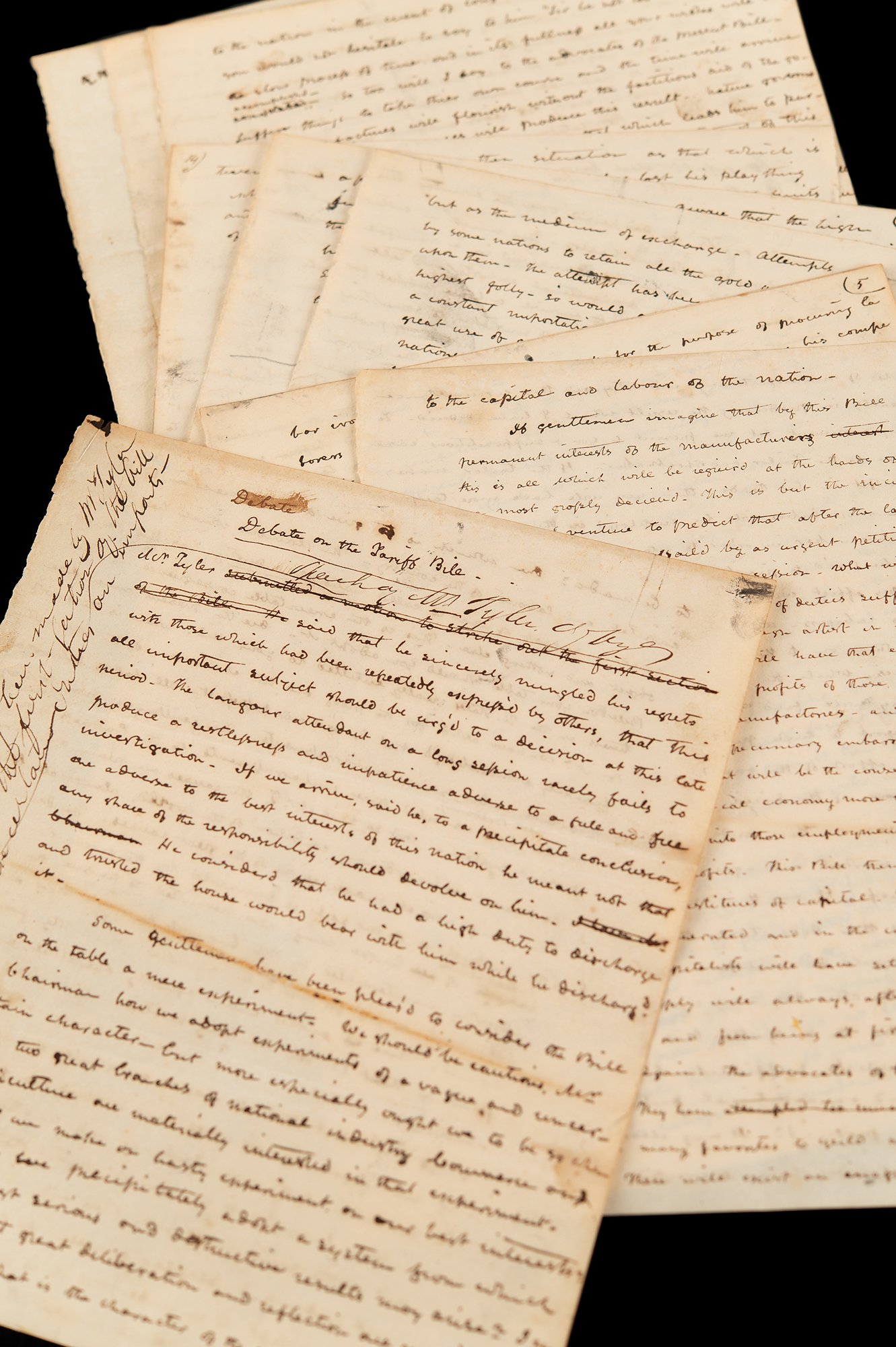
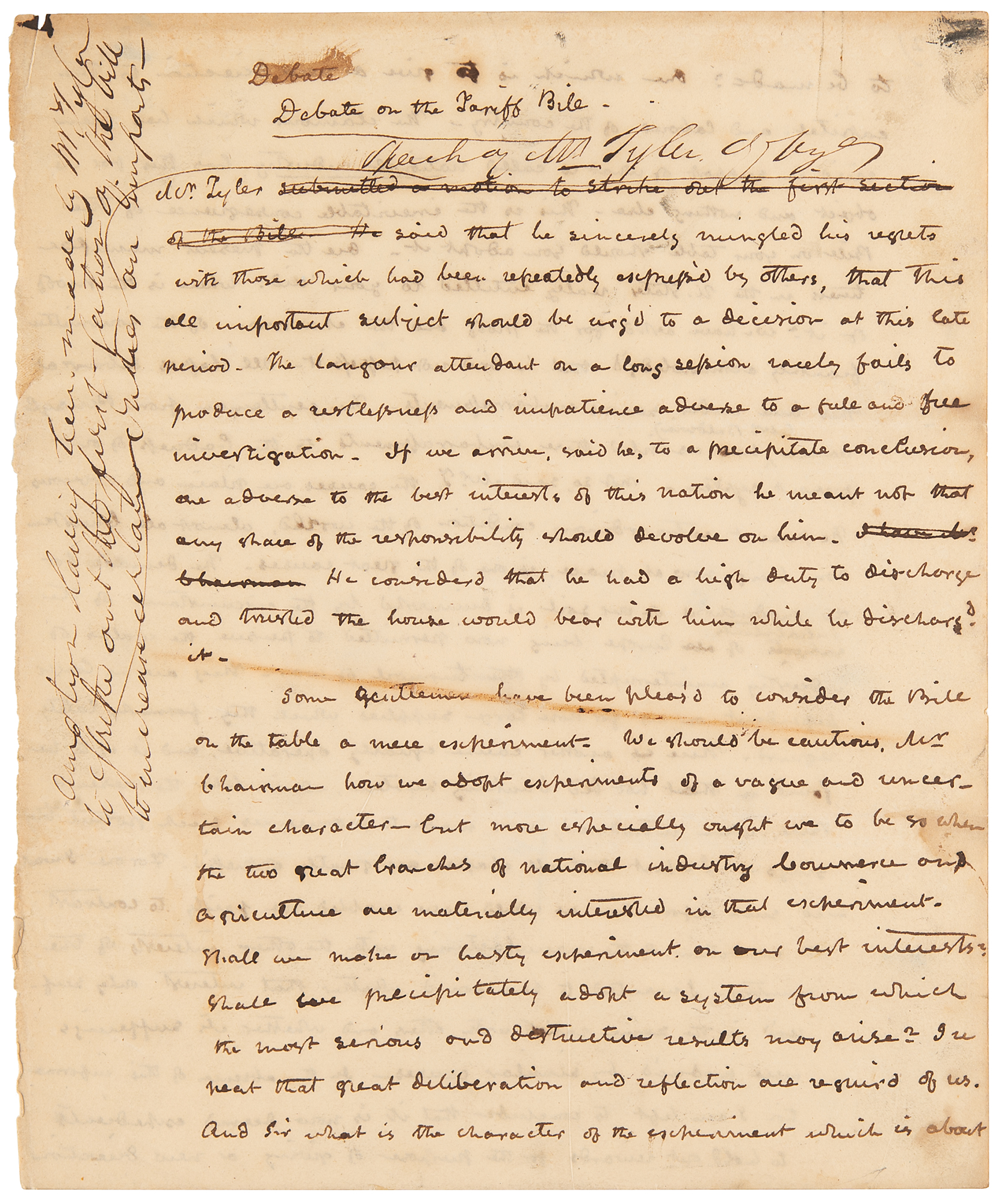
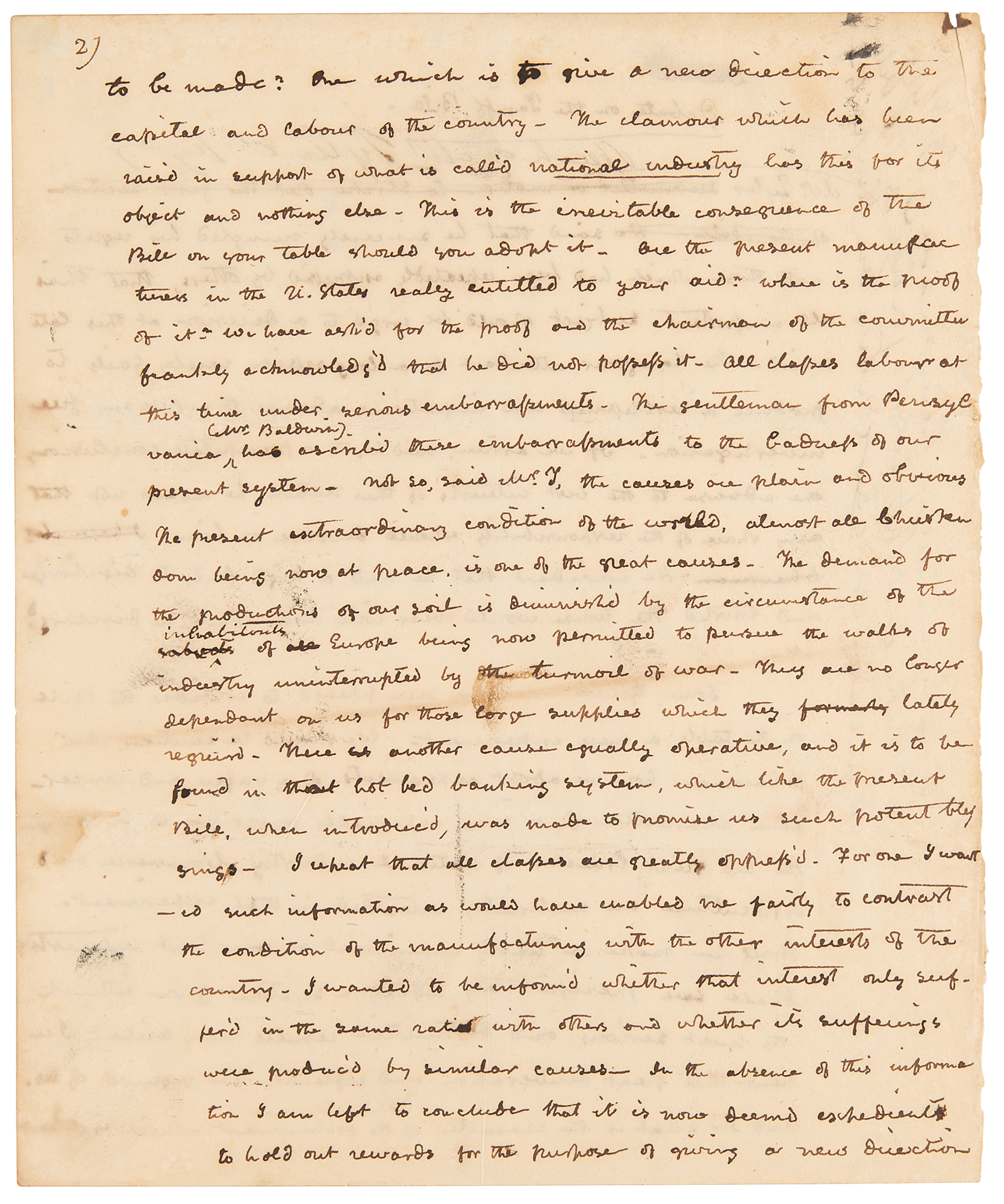
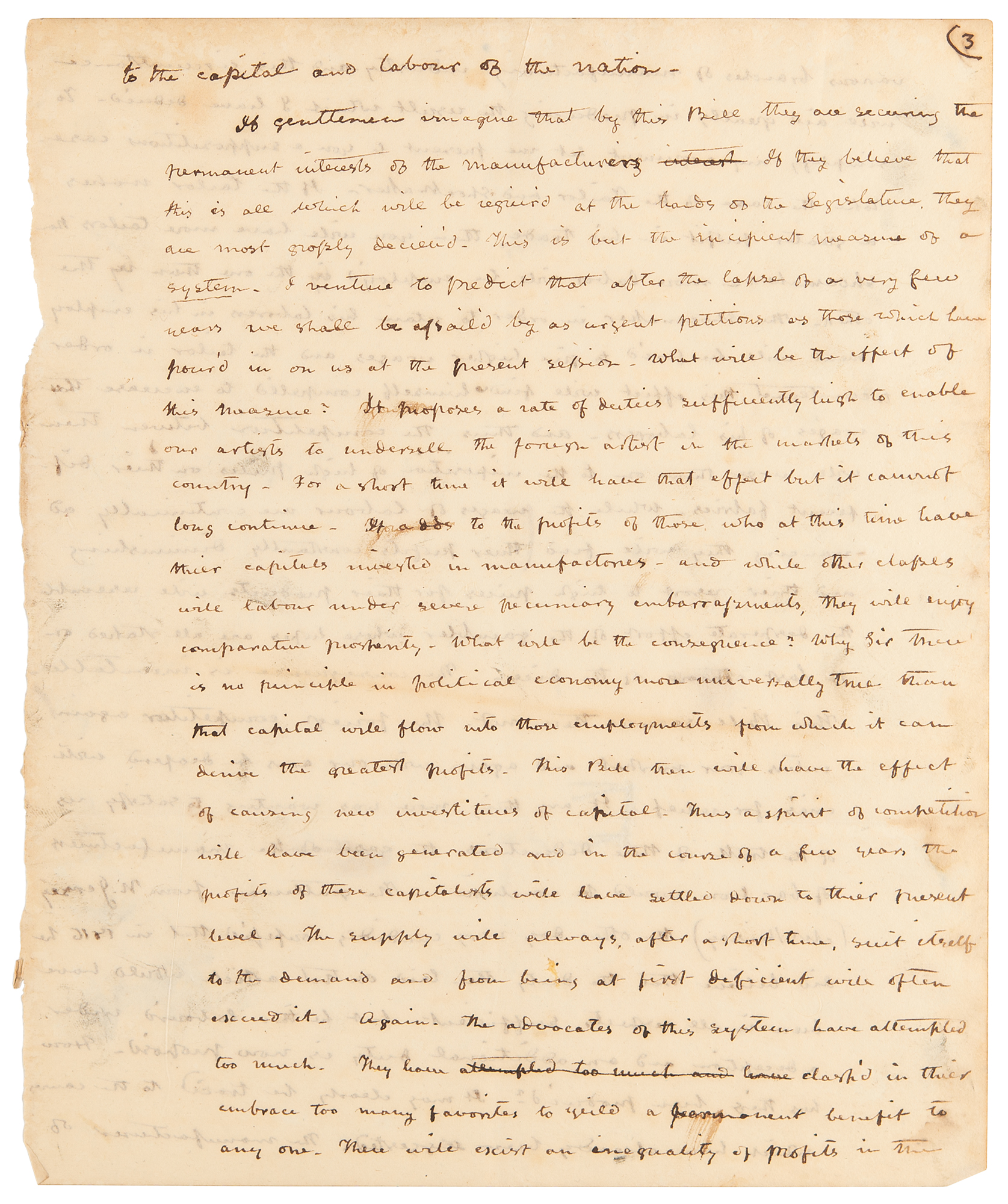
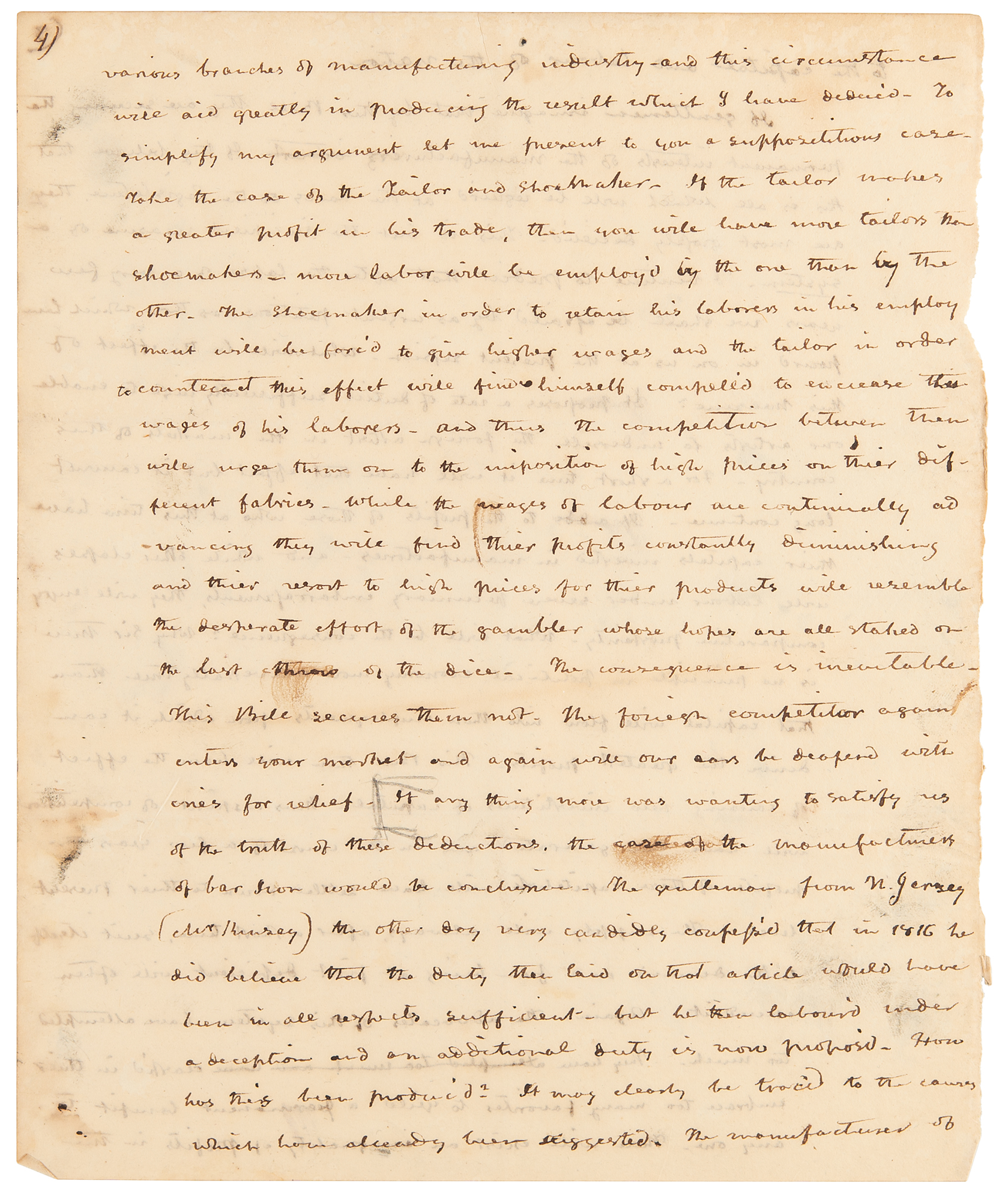
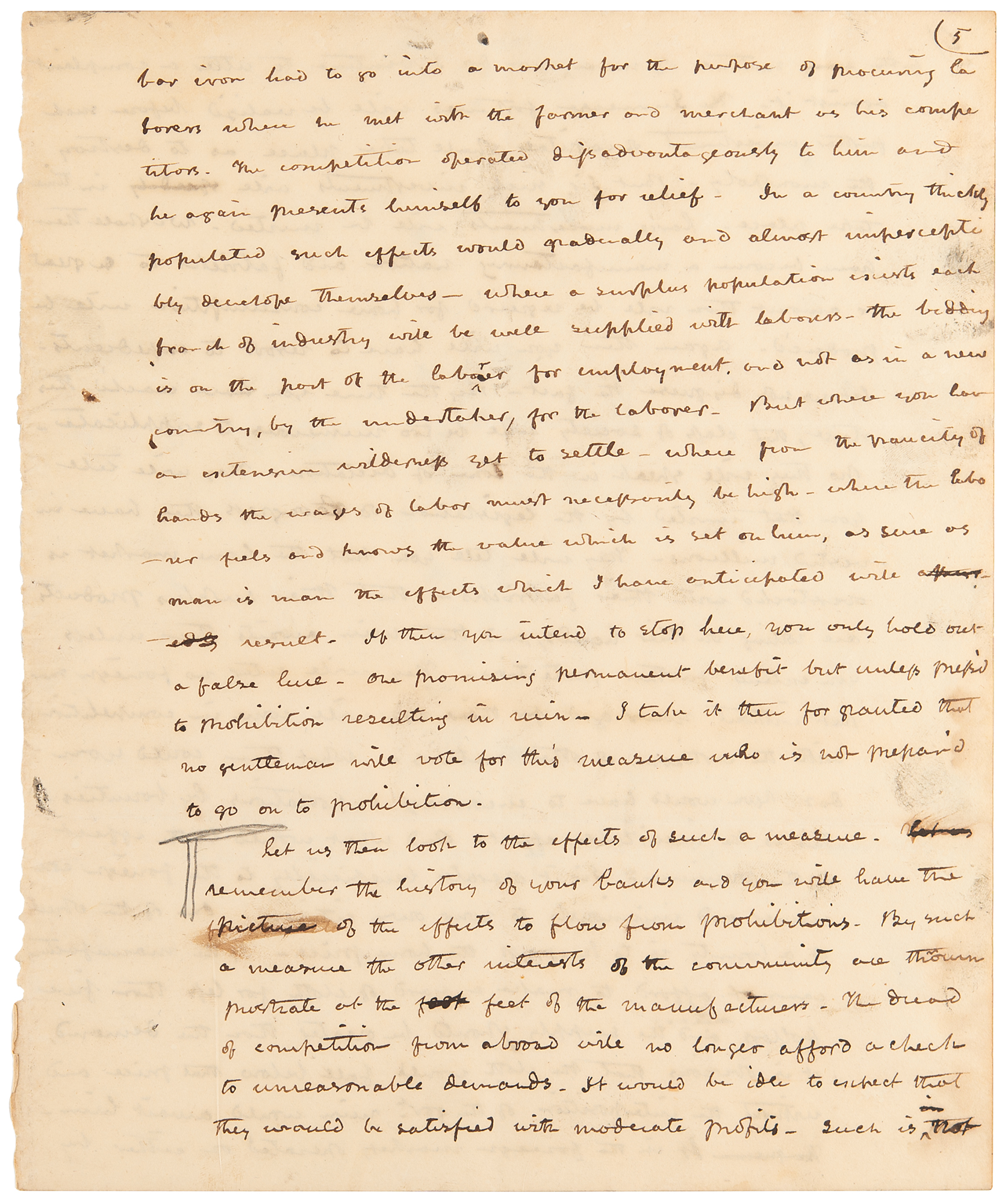
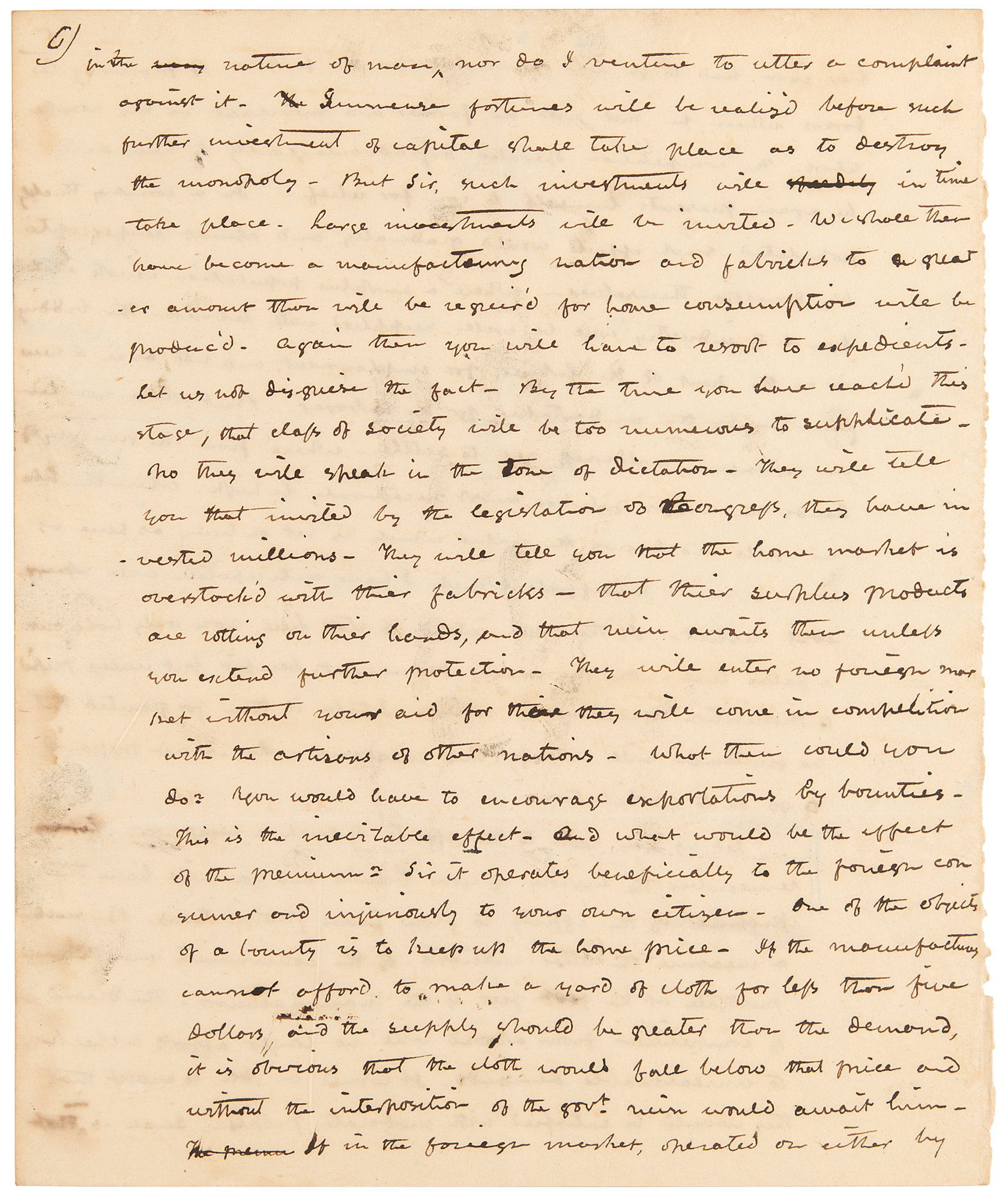
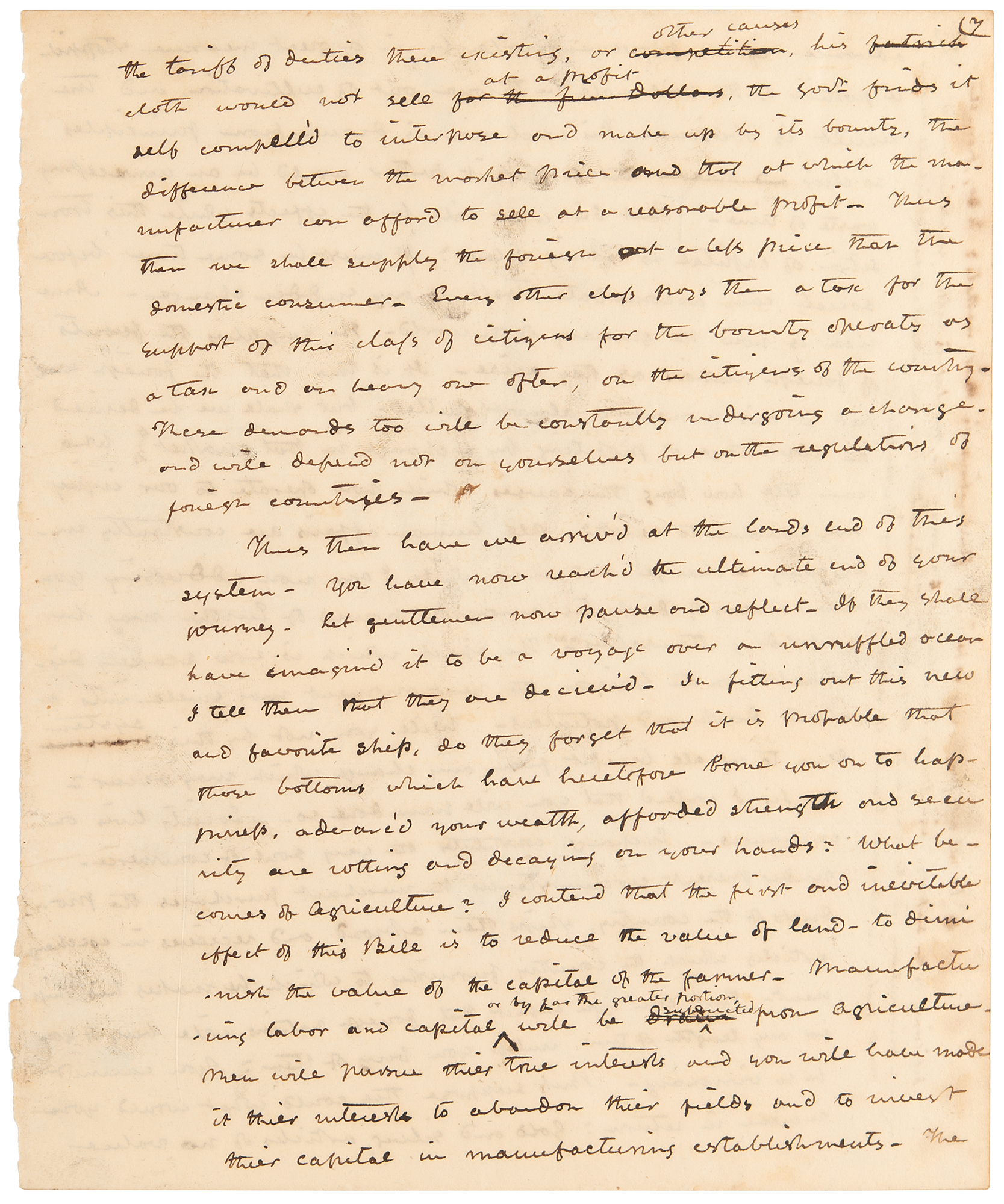
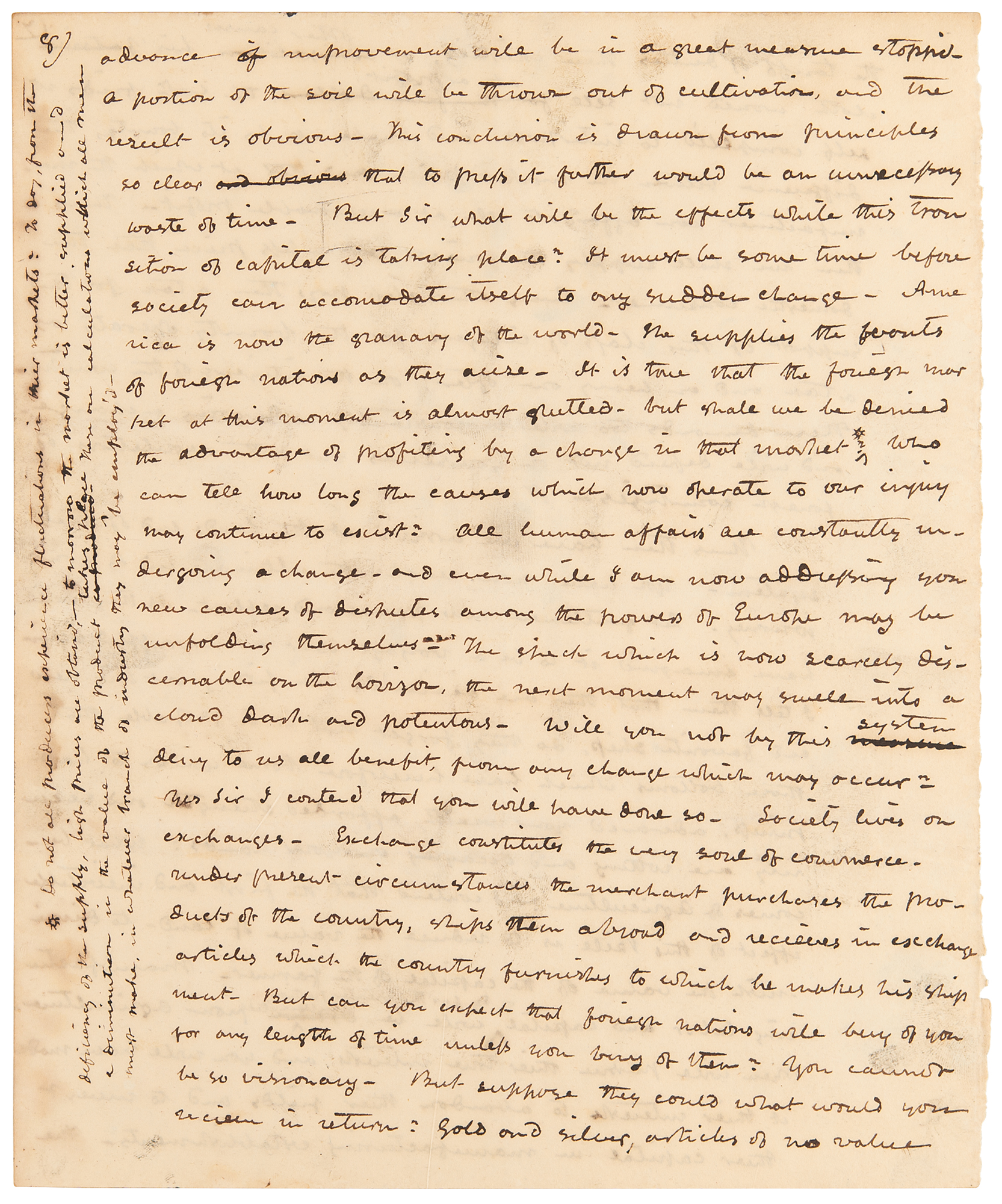
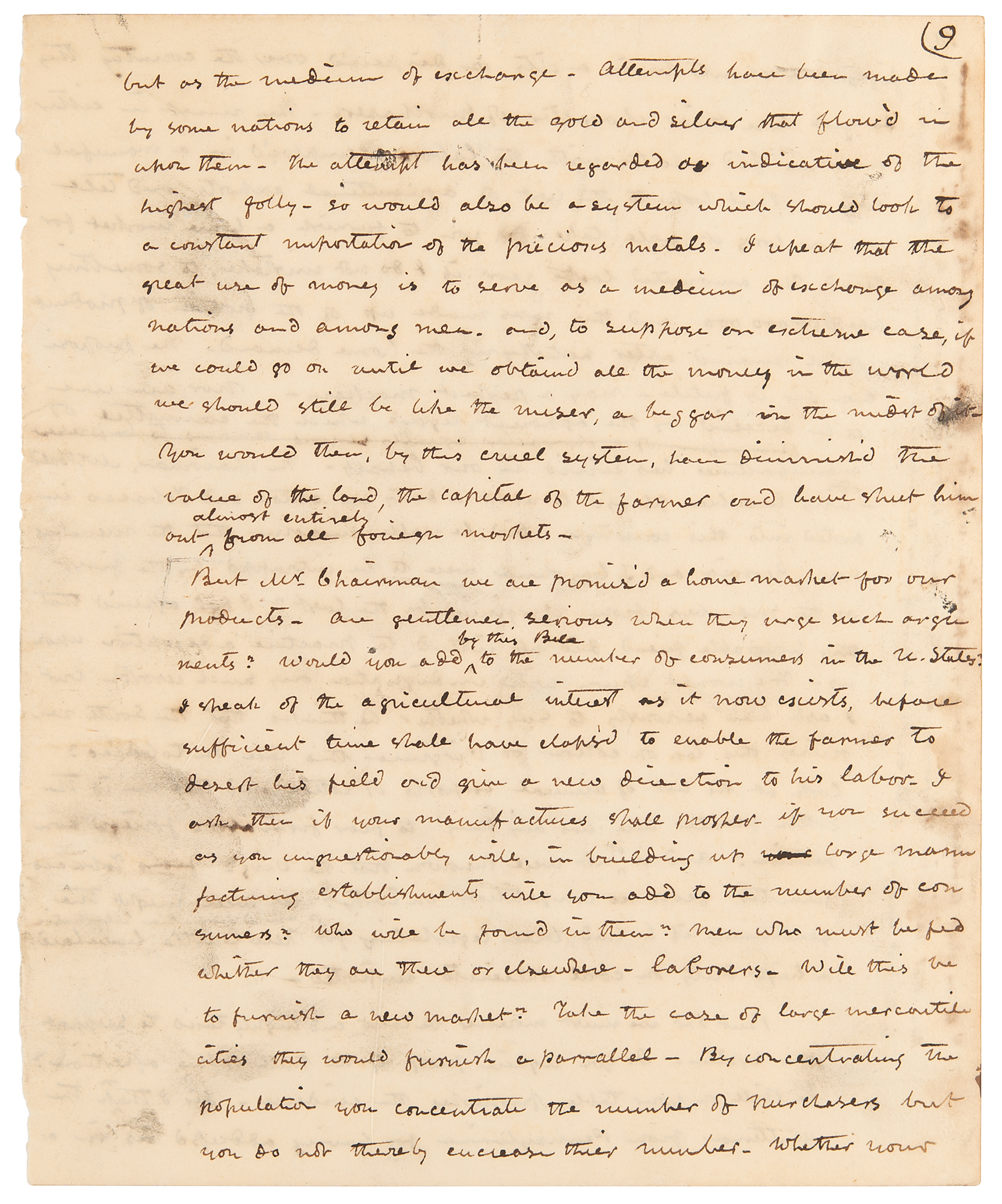
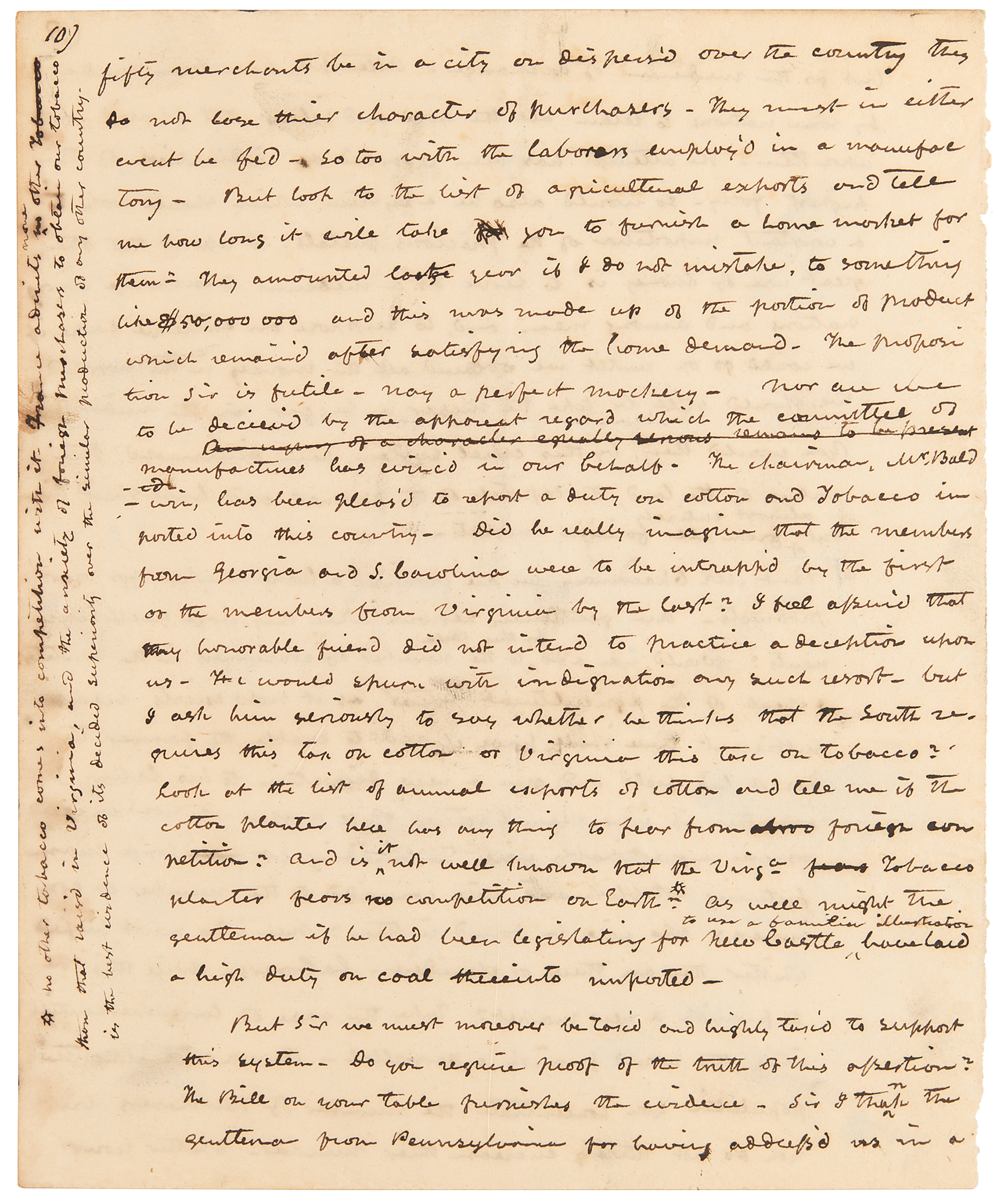
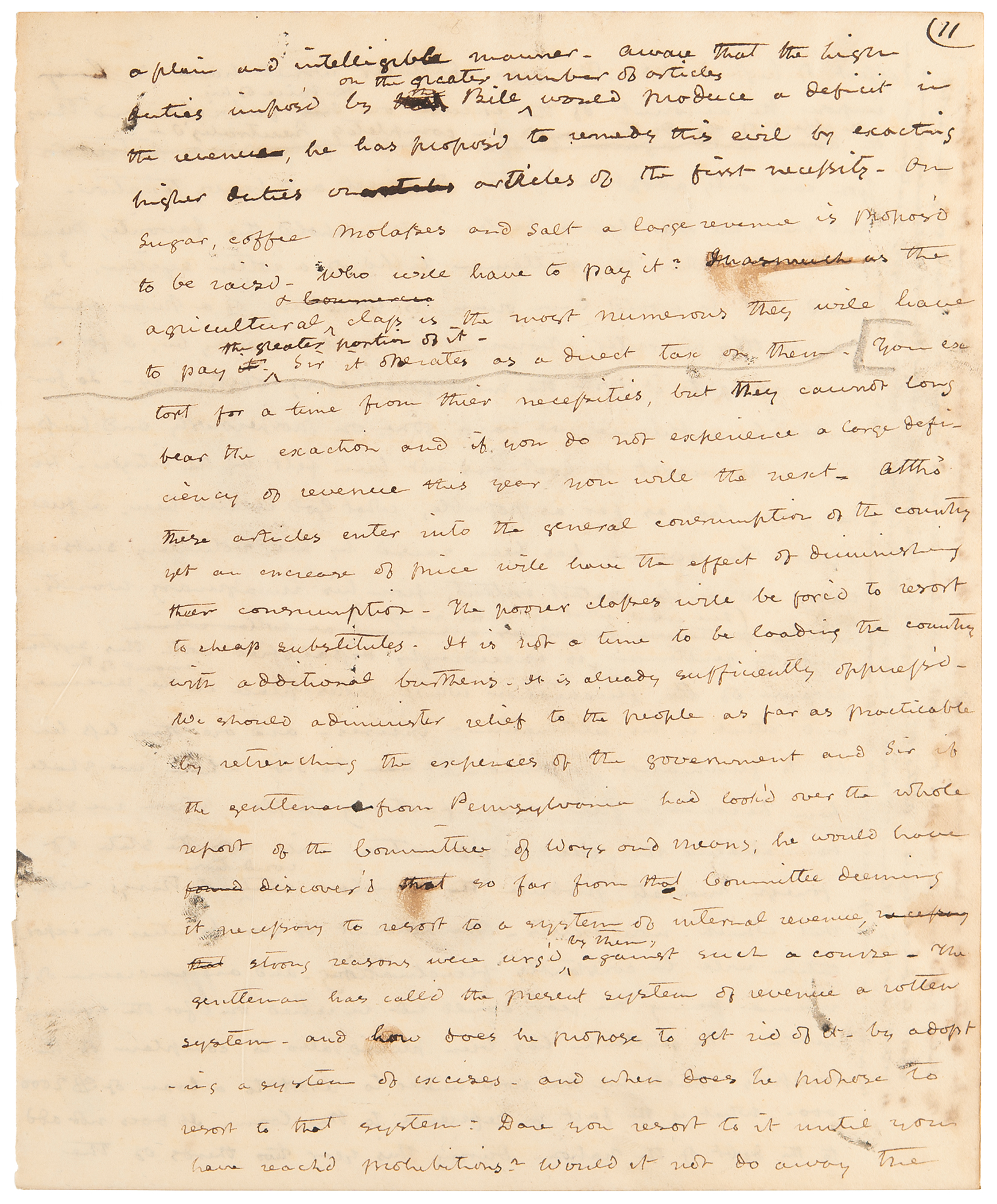
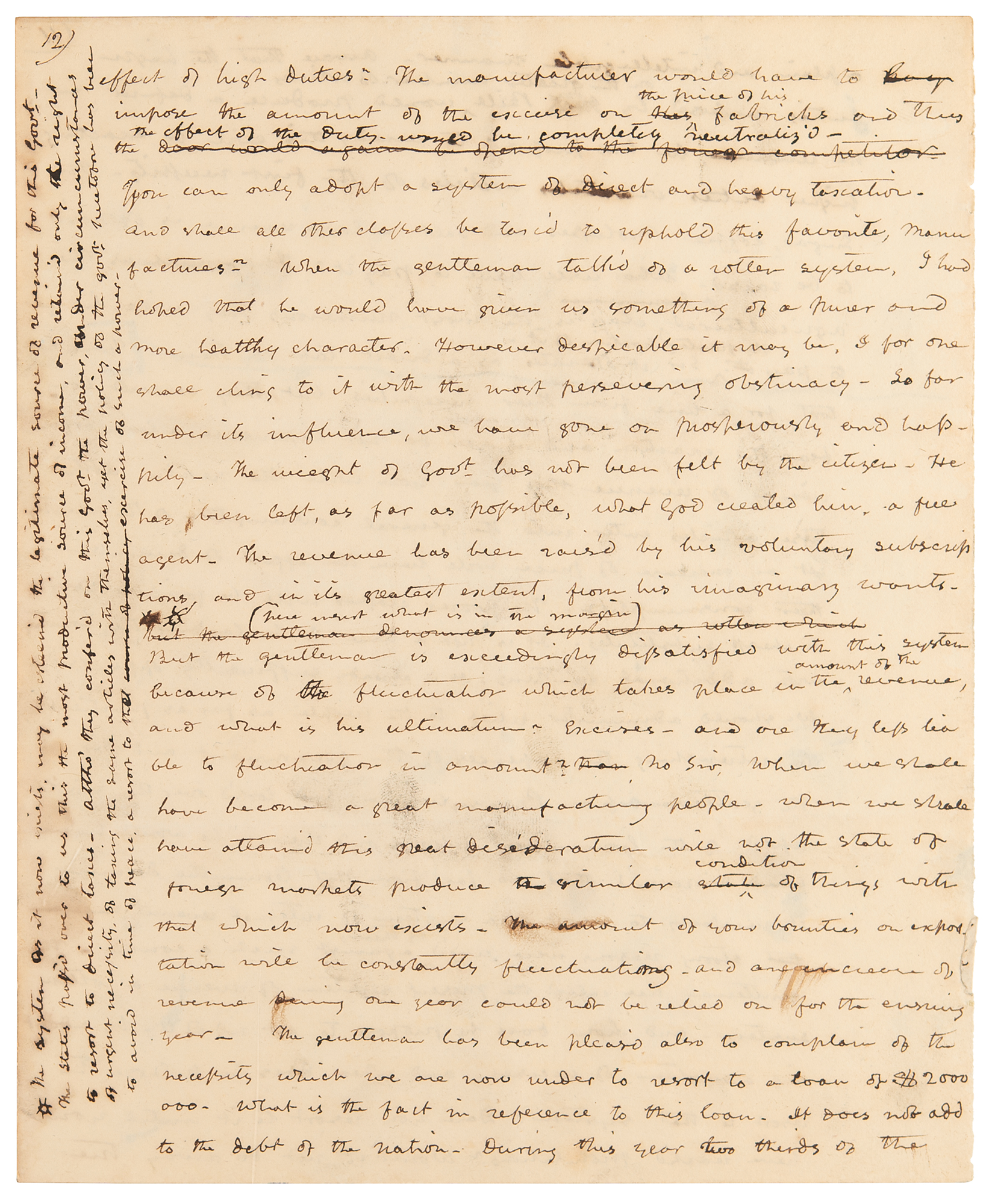
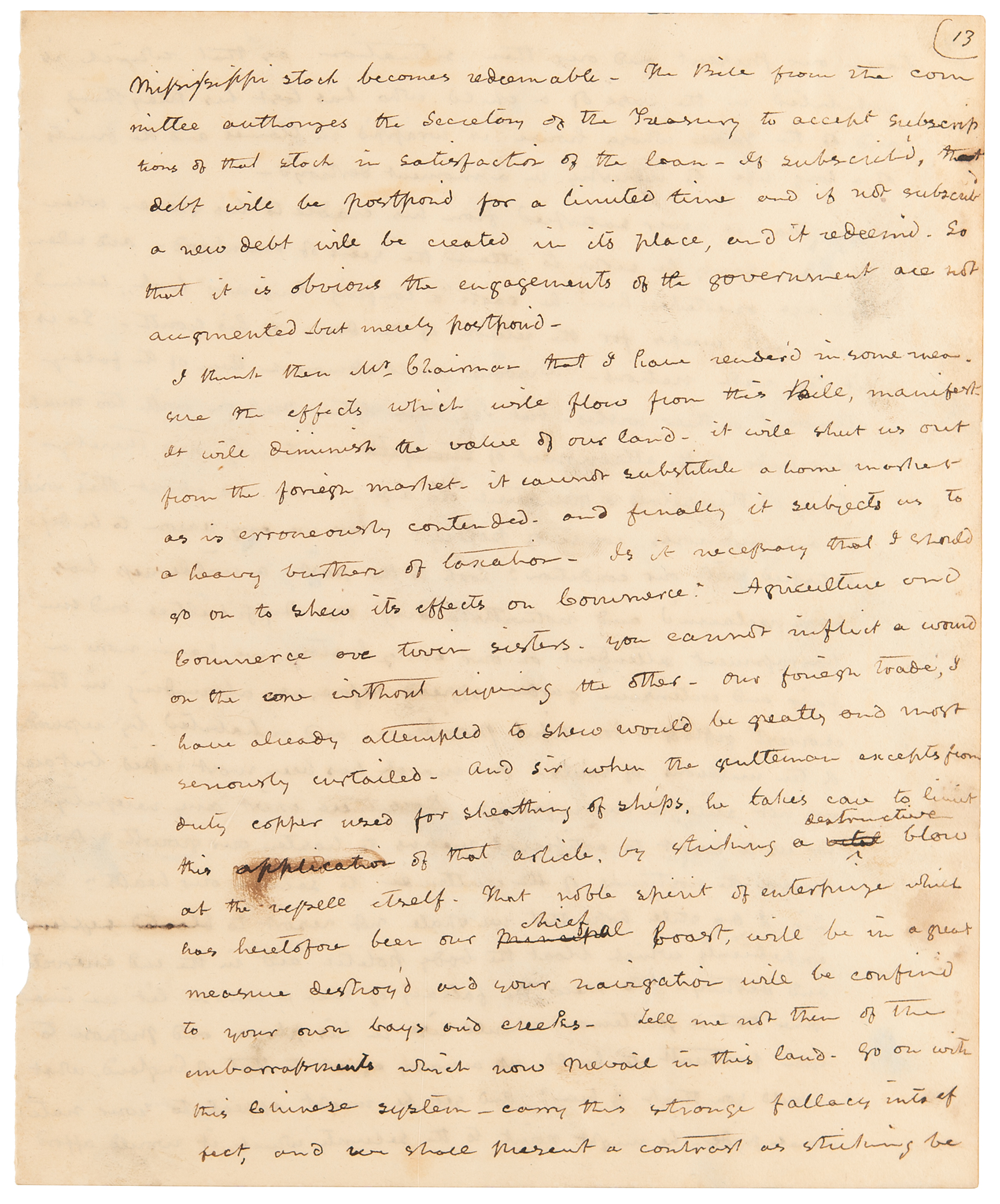
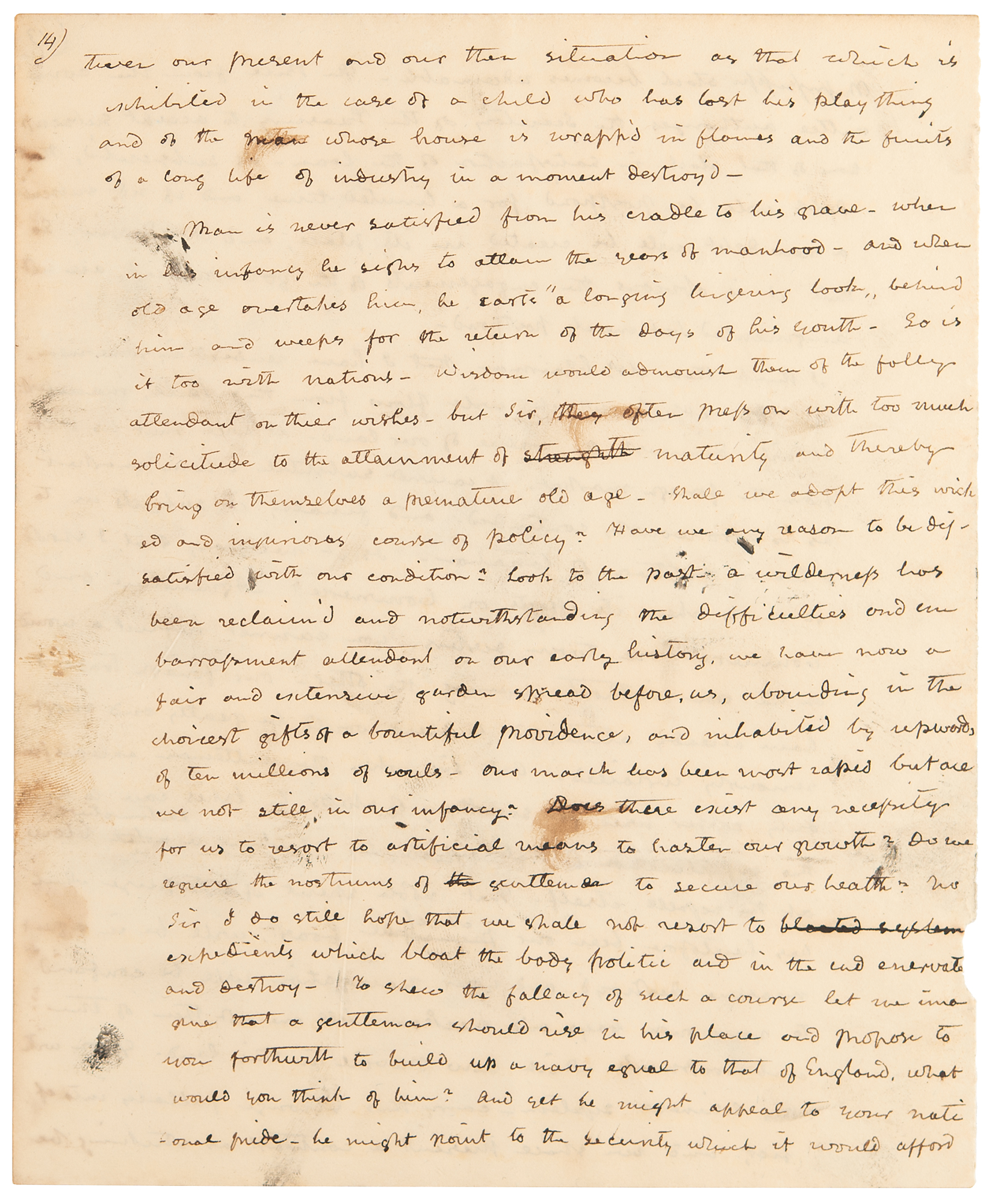
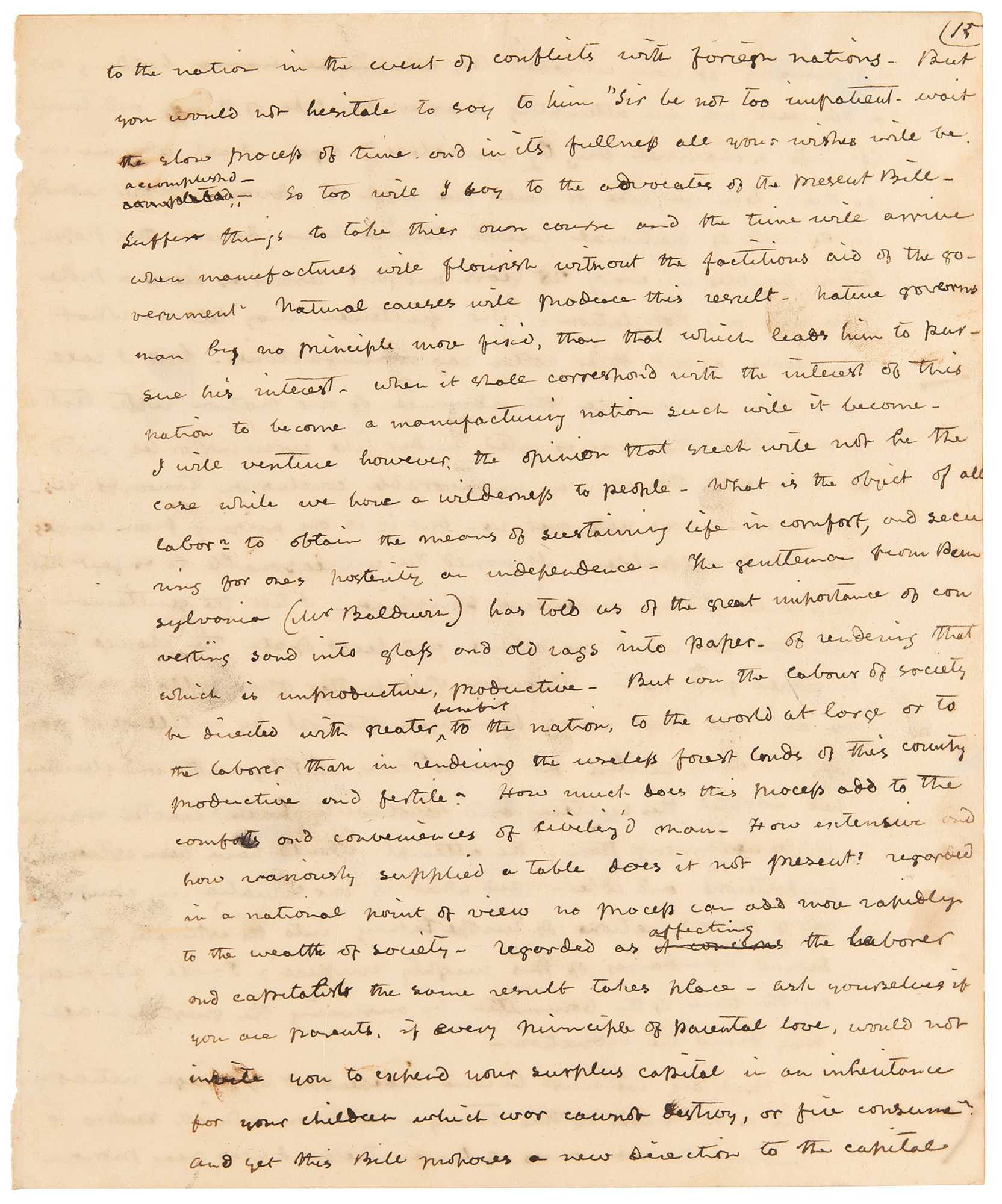
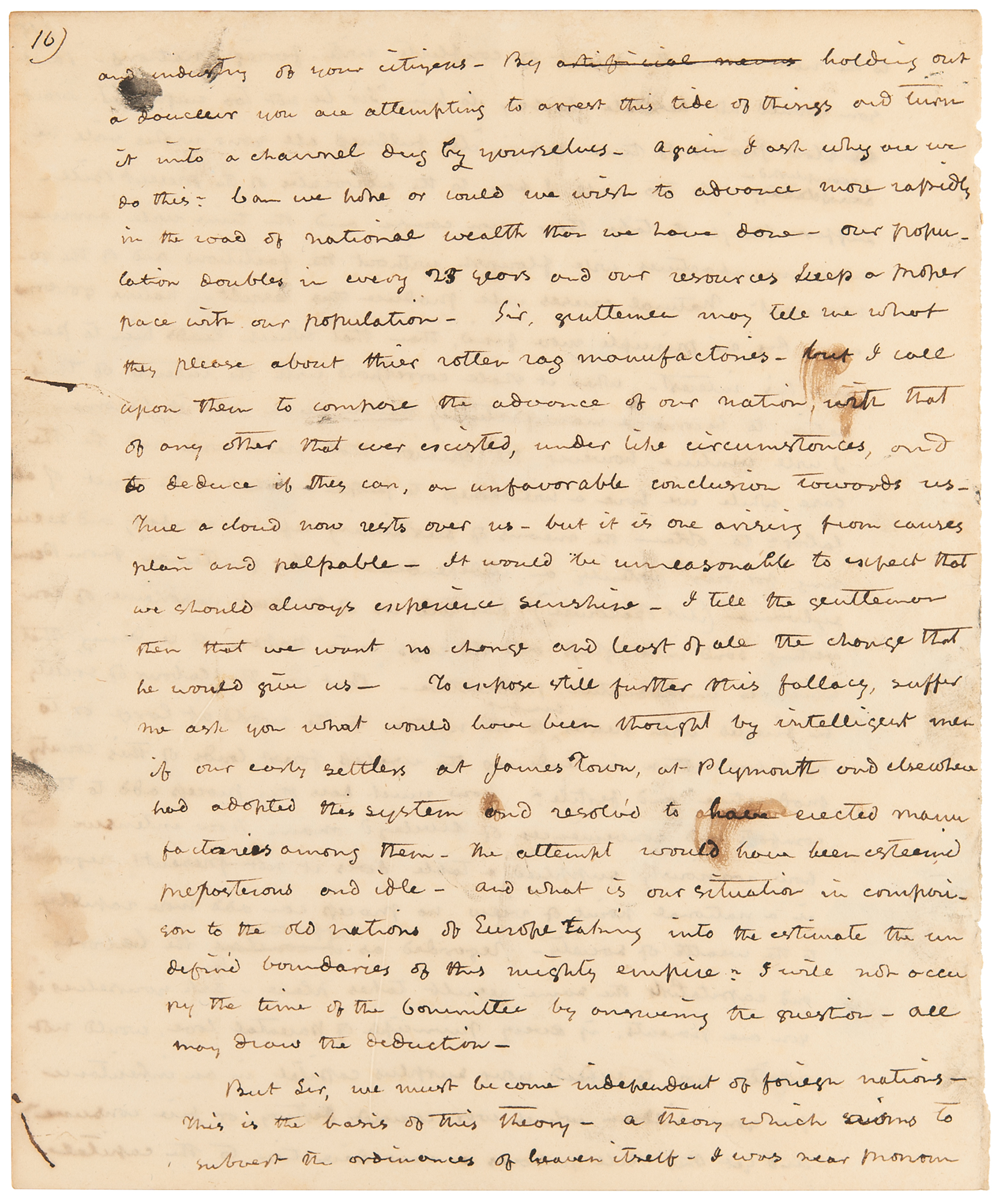
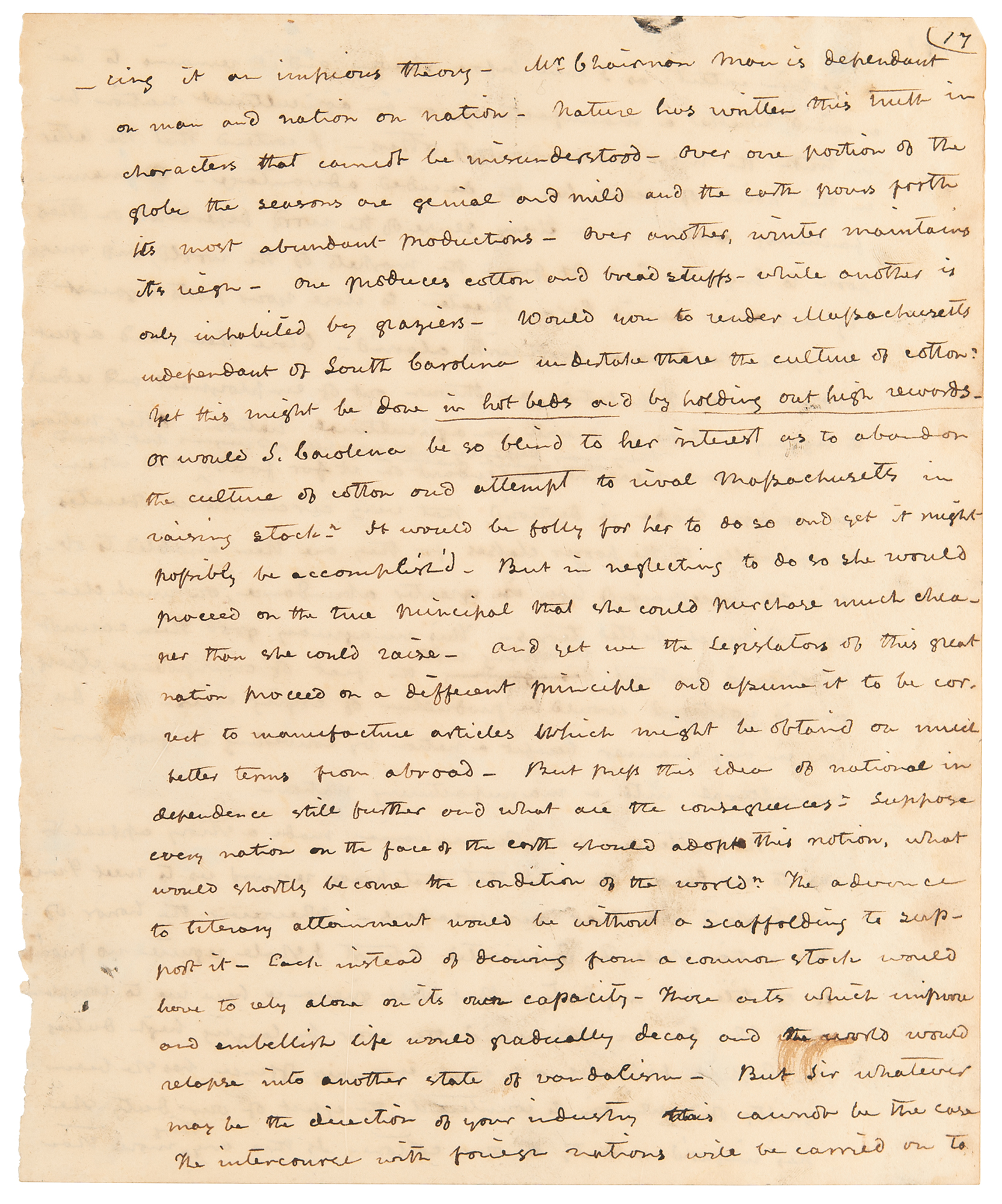
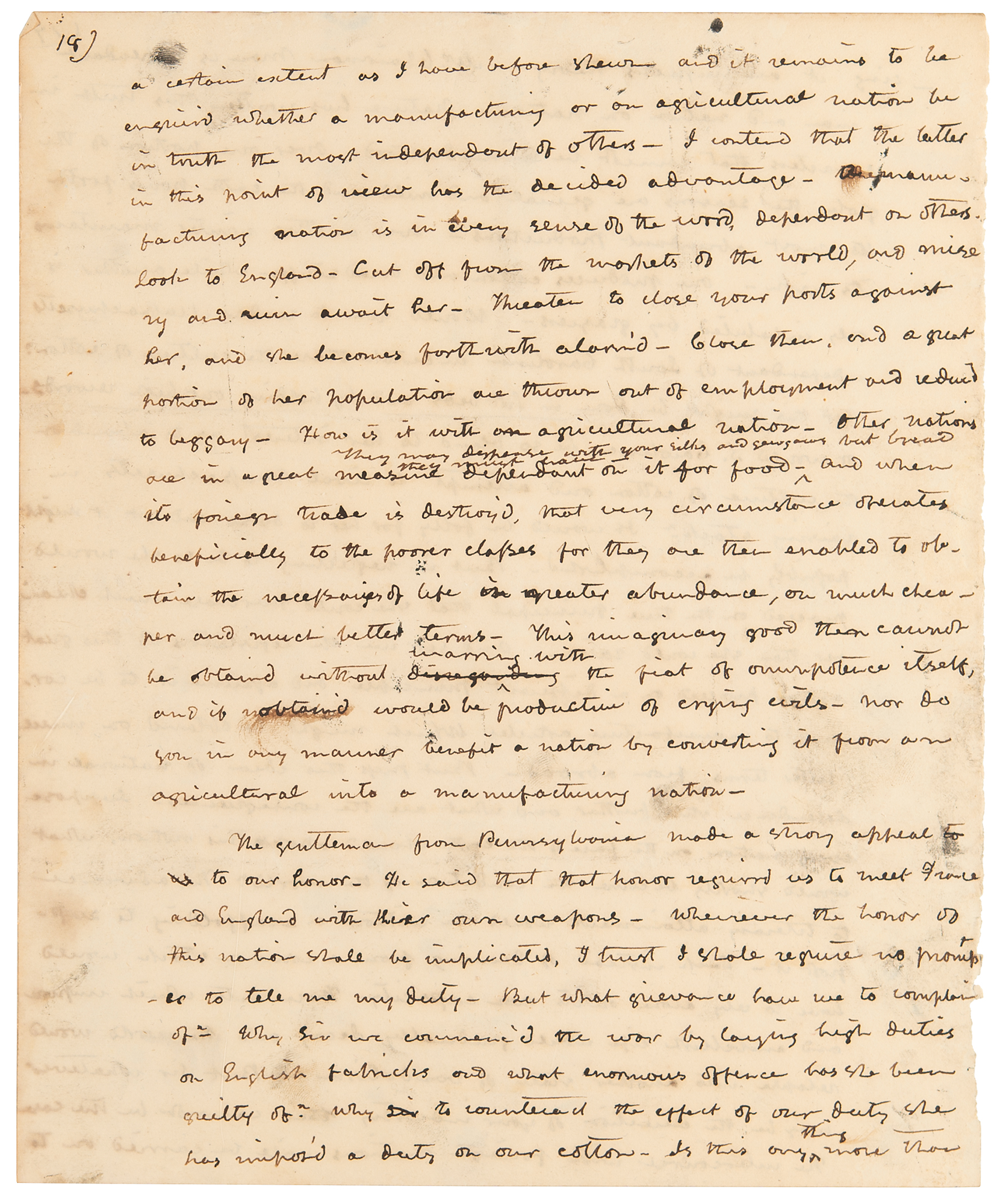
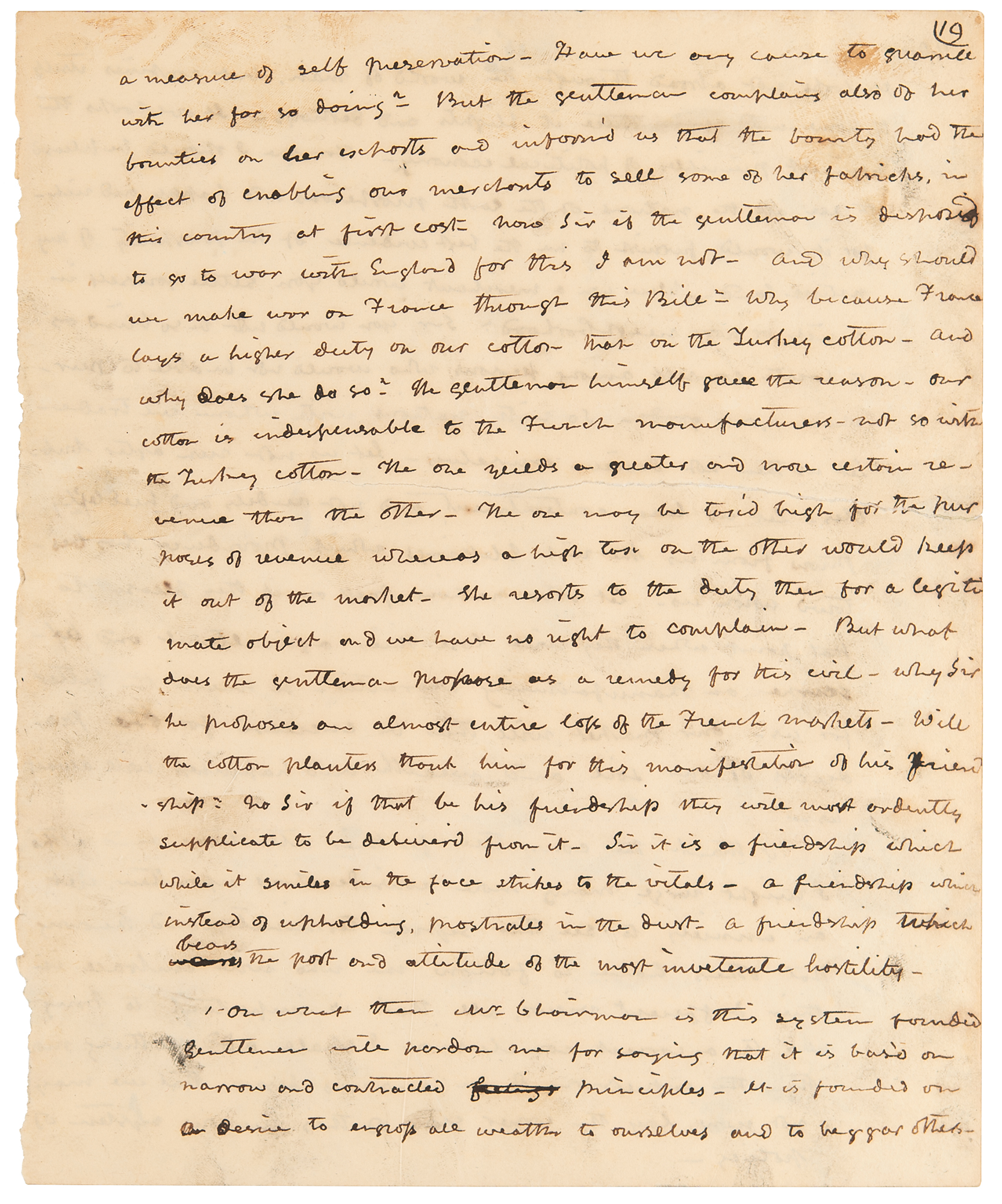
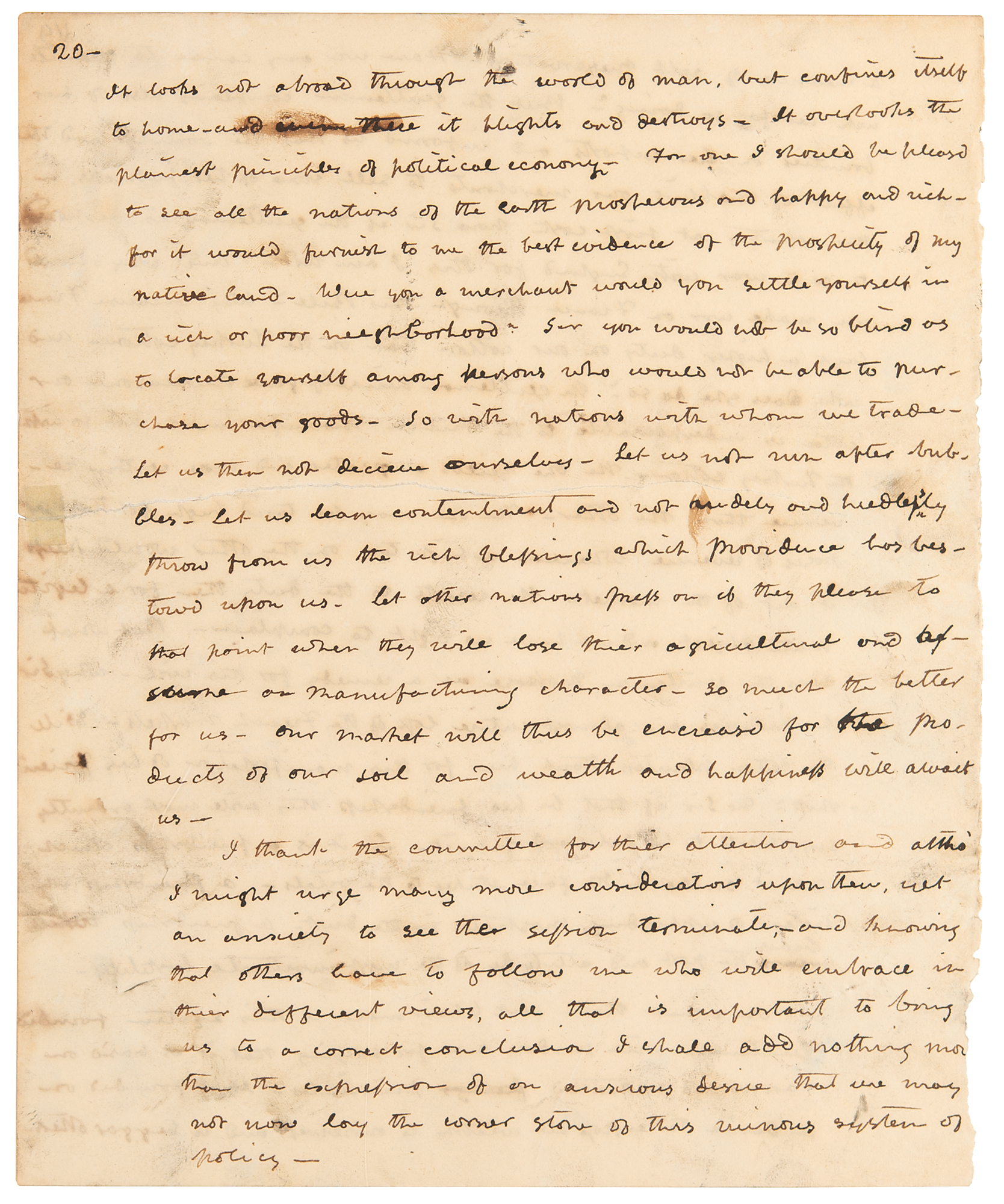
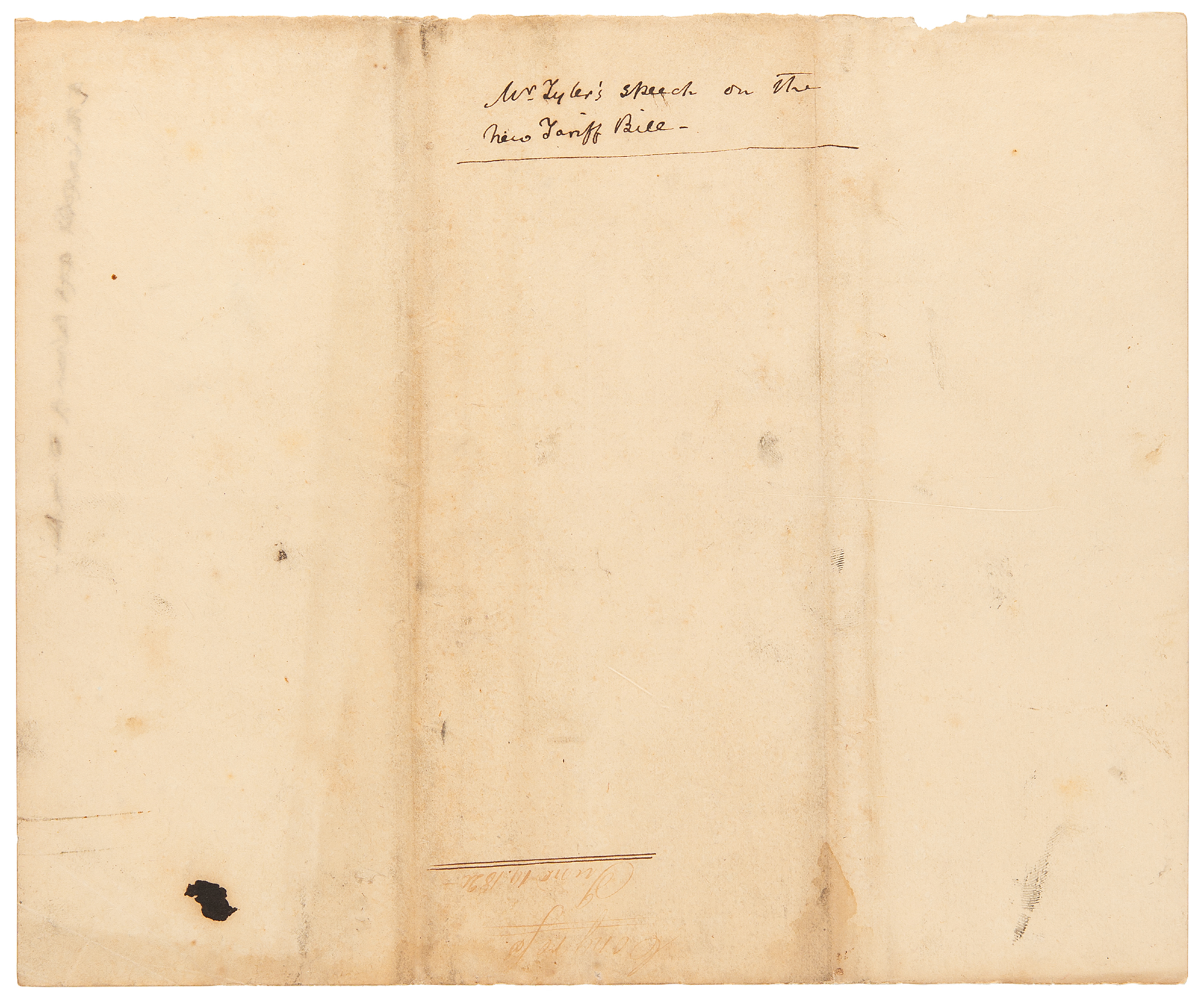
Autograph manuscript speech, signed in the third person, "Mr. Tyler," totaling 20 pages on 10 leaves, 8 x 9.75, docketed on the reverse in another hand, "Congress, June 10, 1820." Tyler drafts a speech, headed "Debate on the Tariff Bill," arguing against the adoption of a protective tariff. In the lengthy and eloquent speech, Tyler aims to protect farmers and poorer classes from the harms of the proposed tariff—rightly arguing that it operates as a "direct tax" on the American people. Largely opposed by Southern planters—Tyler's key constituency—the bill did not pass, failing in the Senate by a single vote.
The draft begins with an apology: "Mr. Tyler said that he sincerely mingled his regrets with those which had been repeatedly expressed by others, that this all important subject should be urg'd to a decision at this late period. The langour attendant on a long session rarely fails to produce a restlessness and impatience adverse to a full and free investigation. If we arrive, said he, to a precipitate conclusion, one adverse to the best interests of this nation he meant not that any share of the responsibility should devolve on him. He considered that he had a high duty to discharge and trusted the house would bear with him while he discharg'd it."
He goes on to caution against taking rash measures, citing potentially destructive consequences for the nation: "Some gentlemen have been pleas'd to consider the Bill on the table as a mere experiment. We should be cautious, Mr. Chairman how we adopt experiments of a vague and uncertain character—but more especially ought we to be so when the two great branches of national industry commerce and agriculture are materially interested in that experiment. Shall we make an hasty experiment on our best interests? Shall we precipitately adopt a system from which the most serious and destructive results may arise? I repeat that great deliberation and reflection are required of us. And Sir what is the character of the experiment which is about to be made? One which is to give a new direction to the capital and labour of the country. The clamour which has been rais'd in support of what is call'd national industry has this for its object and nothing else. This is the inevitable consequence of the Bill on your table should you adopt it."
He then outlines some predicted effects of the proposed tariff: "By such a measure the other interests of the community are thrown prostrate at the feet of the manufacturers. The dread of competition from abroad will no longer afford a check to unreasonable demands. It would be idle to expect that they would be satisfied with moderate profits—such is not in the nature of man…Immense fortunes will be realized before such further investment of capital shall take place as to destroy the monopoly. But sir, such investments will in time take place…We shall then have become a manufacturing nation and fabricks to a greater amount than will be requir'd for home consumption will be produc'd. Again then you will have to resort to expedients—let us not disguise the fact—By the time you have reach'd this stage, that class of society will be too numerous to supplicate…They will tell you that the home market is overstocked with their fabricks—that their surplus products are rotting on their lands, and that ruin awaits unless you extend further protection. They will enter no foreign markets without your aid for they will come in competition with the artisans of other nations. What then could you do?"
He continues, pointing out that the tariff is effectively a tax on the poorer class: "On sugar, coffee, molasses and salt a large revenue is propos'd to be rais'd. Who will have to pay it? Inasmuch as the agricultural class is the most numerous they will have to pay the greater portion of it. Sir, it operates as a direct tax on them…Altho' these articles enter into the general consumption of the country yet an increase of price will have the effect of diminishing their consumption. The poorer classes will be forc'd to resort to cheap substitutes. It is not a time to be loading the country with additional burthens…I have render'd in some measure the effects which will flow from this Bill, manifest. It will diminish the value of our land, it will shut us out from the foreign market, it cannot substitute a home market as it erroneously contended, and finally it subjects us to a heavy burthen of taxation."
Concluding, Tyler elevates his oratory: "Man is never satisfied from his cradle to his grave. When in his infancy he sighs to attain the years of manhood—and when old age overtakes him, he takes 'a long, lingering look behind him and weeps for the return of the days of his youth.' So is it too with nations—wisdom would admonish them of the folly attendant on their wishes…Let us learn contentment and not rudely and heedlessly throw from us the rich blessing which providence has bestowed upon is. Let other nations press on if they please to that point when they will lose their agricultural and assume a manufacturing character—so much the better for us. Our market will thus be increased for the products of our soil and wealth and happiness will await us." In very good to fine condition, with scattered stains and smudges, and a large tear to the last page.

This item is Pre-Certified by PSA/DNA
Buy a third-party letter of authenticity for
$75.00
*This item has been pre-certified by a trusted third-party authentication service, and by placing a bid on this item, you agree to accept the opinion of this authentication service. If you wish to have an opinion rendered by a different authenticator of your choosing, you must do so prior to your placing of any bid. RR Auction is not responsible for differing opinions submitted 30 days after the date of the sale.
Third-party authentication service applies only to signatures and handwriting, and does not cover the addition of sketches, artwork, musical quotations, etc.

