The 30 Minute Rule begins November 19 at 7:00 PM EST. An Initial Bid Must Be Placed By November 19 at 6:00 PM EST To Participate After 6:00 PM EST
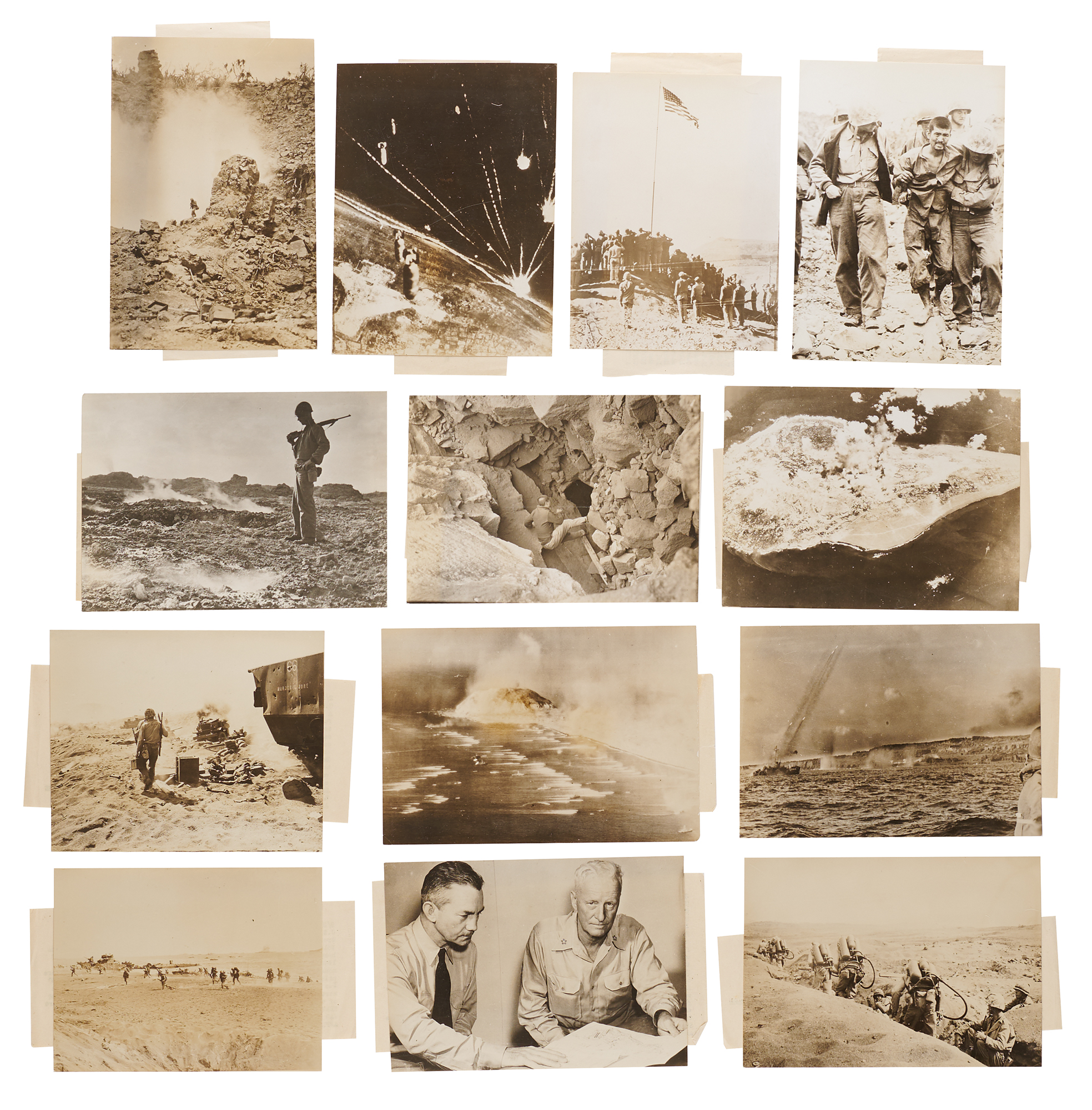
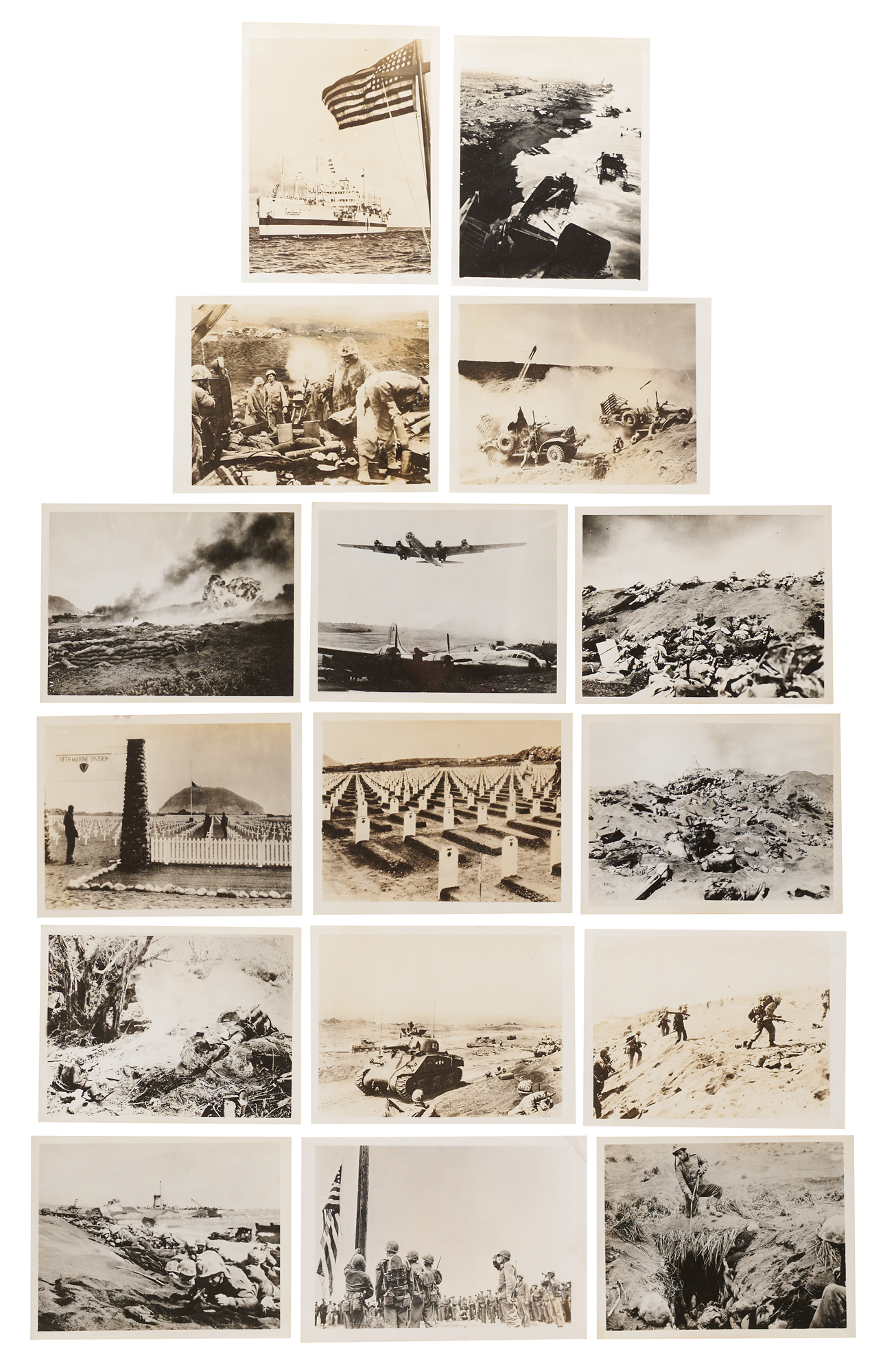
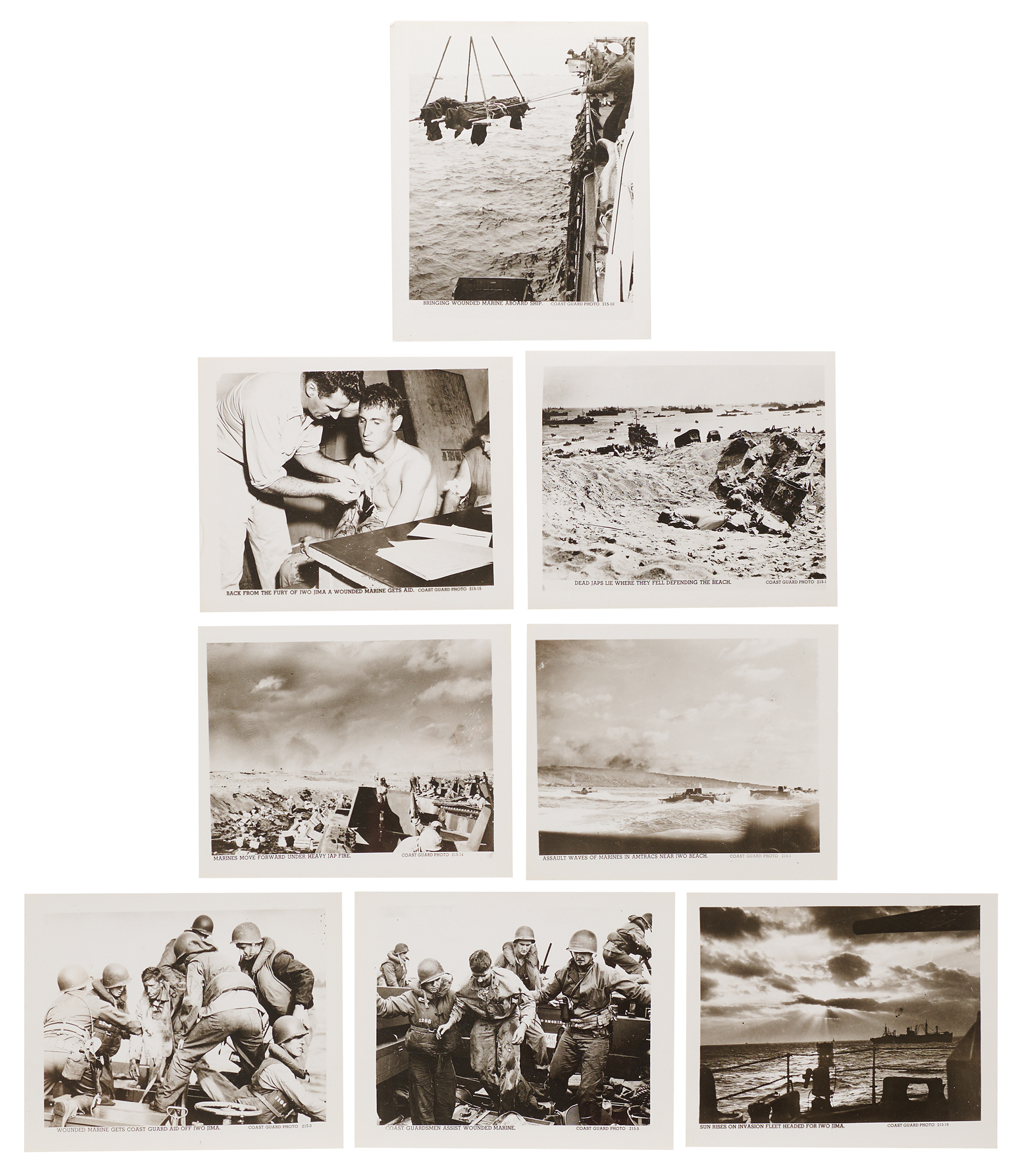
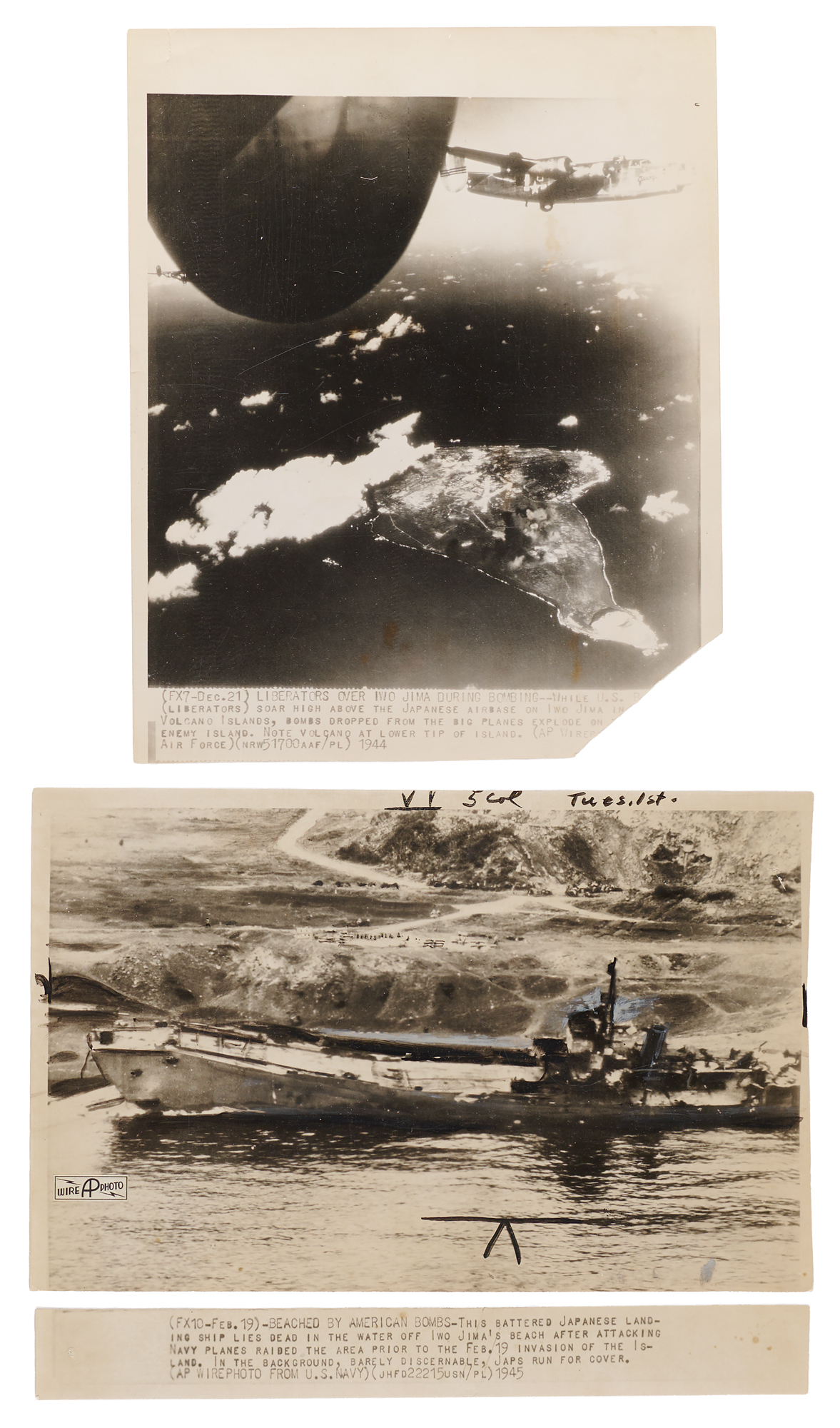
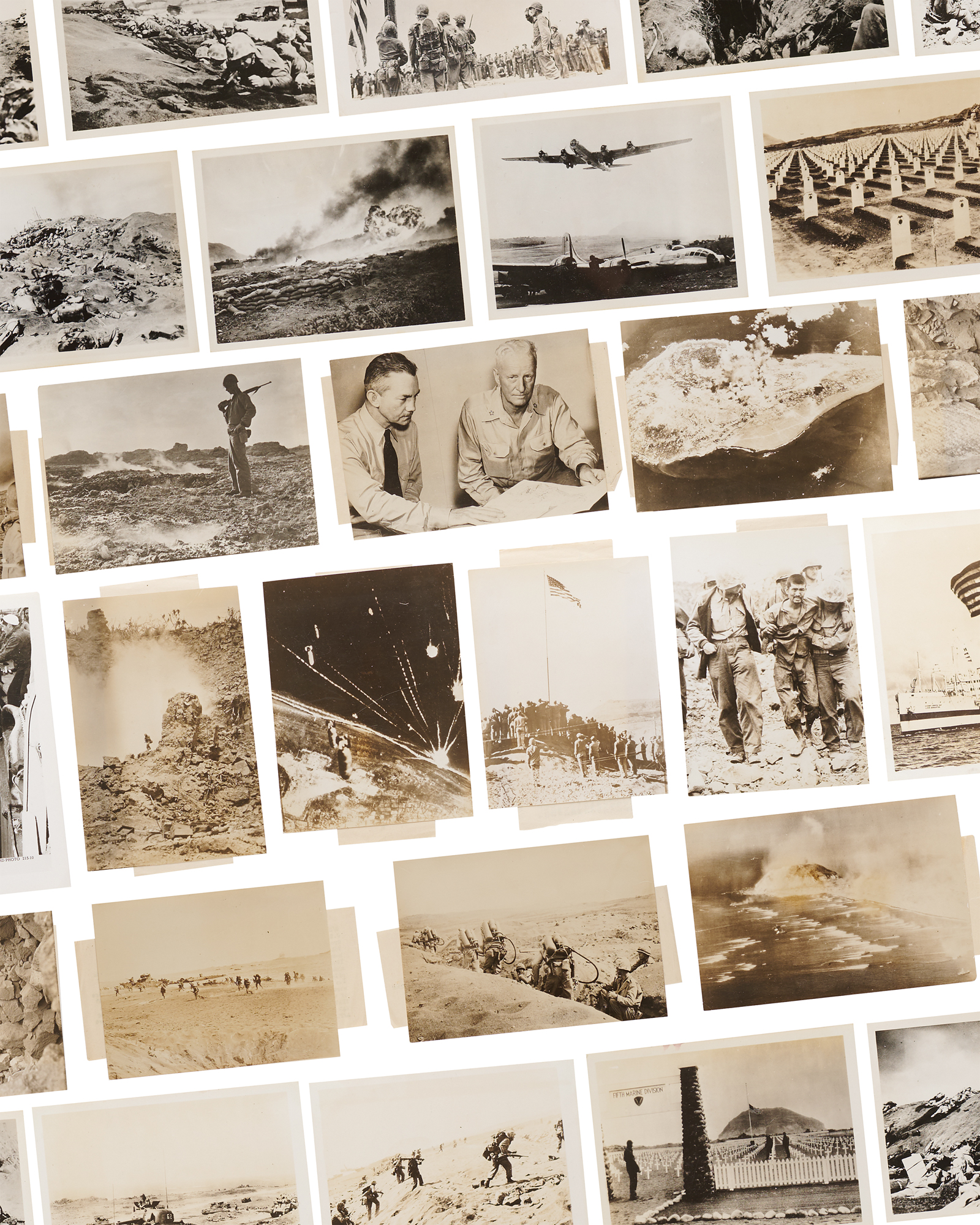
Over 100 original glossy photographs relating to the Battle of Iwo Jima, ranging in size from approximately 3.5 x 4.5 to 8 x 10, with more than half measuring near the smaller size. The smaller photographs depict troops advancing across exposed sand and shattered terrain, sheltering in foxholes and sandbagged positions, and moving among ruined Japanese fortifications. Other views show tanks supporting infantry, amphibious vehicles moving through the surf, vehicle-mounted rocket launchers firing salvos, and military dogs accompanying their handlers. Scenes of casualty evacuation and battlefield aftermath include stretcher-bearers carrying wounded men, medical personnel administering aid, rows of occupied stretchers aboard ship, dead soldiers amid rubble, and wrecked vehicles and landing craft along the shoreline. Additional subjects include a makeshift dugout post office marked “Iwo Jima,” rows of military graves, and the entrance to the 5th Marine Division cemetery, with Mount Suribachi beyond an American flag flying at half-staff. A group of slightly larger prints bears captions and “Coast Guard Photo” credits incorporated into the images, documenting the approaching invasion fleet, amphibious tractors nearing the beach, Marines advancing under fire, and wounded men being transferred from landing craft to ships.
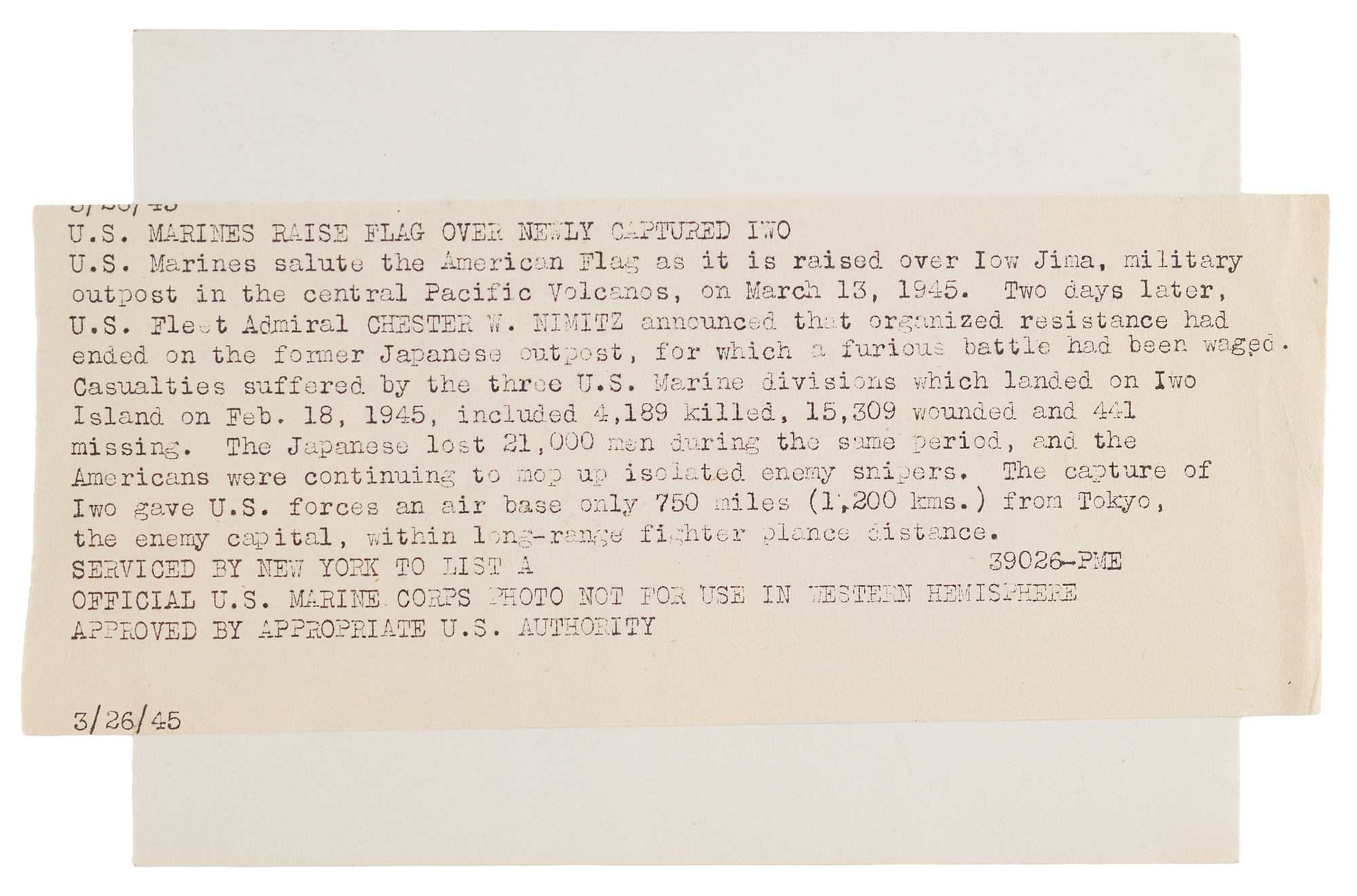
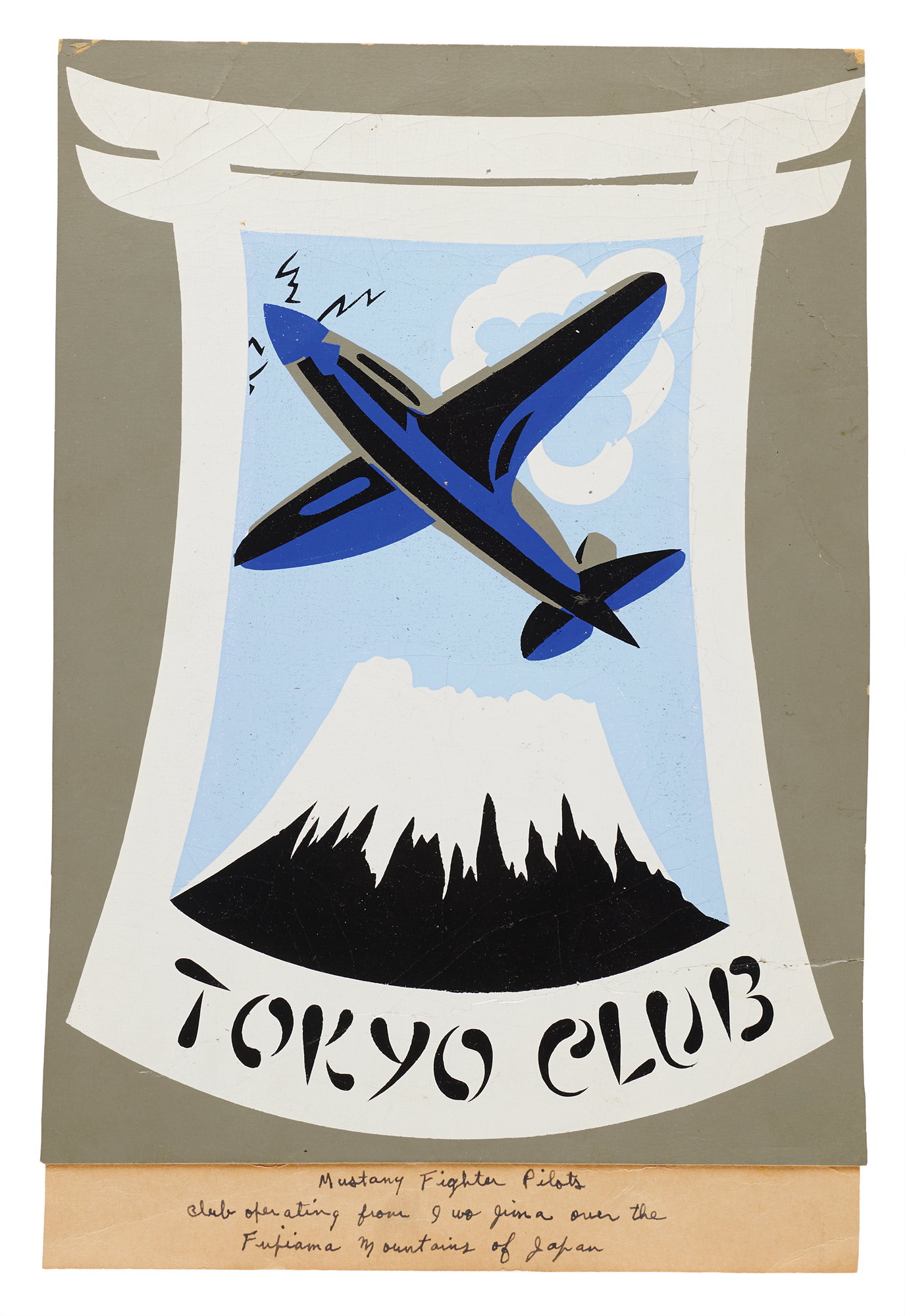
Approximately 40 photographs measure 6.5 x 4.75 and bear captions affixed to the reverse, with examples carrying 1945 dates, military photographic credits, and press-distribution instructions. These views document aerial bombing and naval bombardment, rocket fire supporting the landings, Marines dug in around a captured Japanese pillbox, flamethrower-equipped troops advancing toward defensive positions, and American servicemen confronting Japanese holdouts in caves. Two photographs show wounded Japanese prisoners receiving assistance and a captured soldier calling into a cave to persuade his comrades to surrender. Command photographs depict Chester W. Nimitz and Secretary of the Navy James V. Forrestal consulting a map, officers studying a relief model of the island, and Richmond Kelly Turner, Harry Schmidt, and Holland M. Smith meeting at a command post. Further scenes include a formal American flag-raising ceremony, aircraft operating from an Iwo Jima airfield with an emergency-landed B-29 undergoing repairs, and Navy Seabees diving from a landing craft to connect an underwater aviation-fuel pipeline. In overall fine condition. Accompanied by a hand-painted 8 x 11 USAAF “Tokyo Club” sign, depicting a Mustang fighter above Mount Fuji within a stylized torii gate, with a handwritten notation in the lower margin: “Mustang Fighter Pilots Club operating from Iwo Jima over the Fujiyama Mountains of Japan.” Surviving photographs from Iwo Jima are especially compelling given the demands of combat, which left Marines little time to take pictures or obtain cameras.

