The 30 Minute Rule begins November 19 at 7:00 PM EST. An Initial Bid Must Be Placed By November 19 at 6:00 PM EST To Participate After 6:00 PM EST
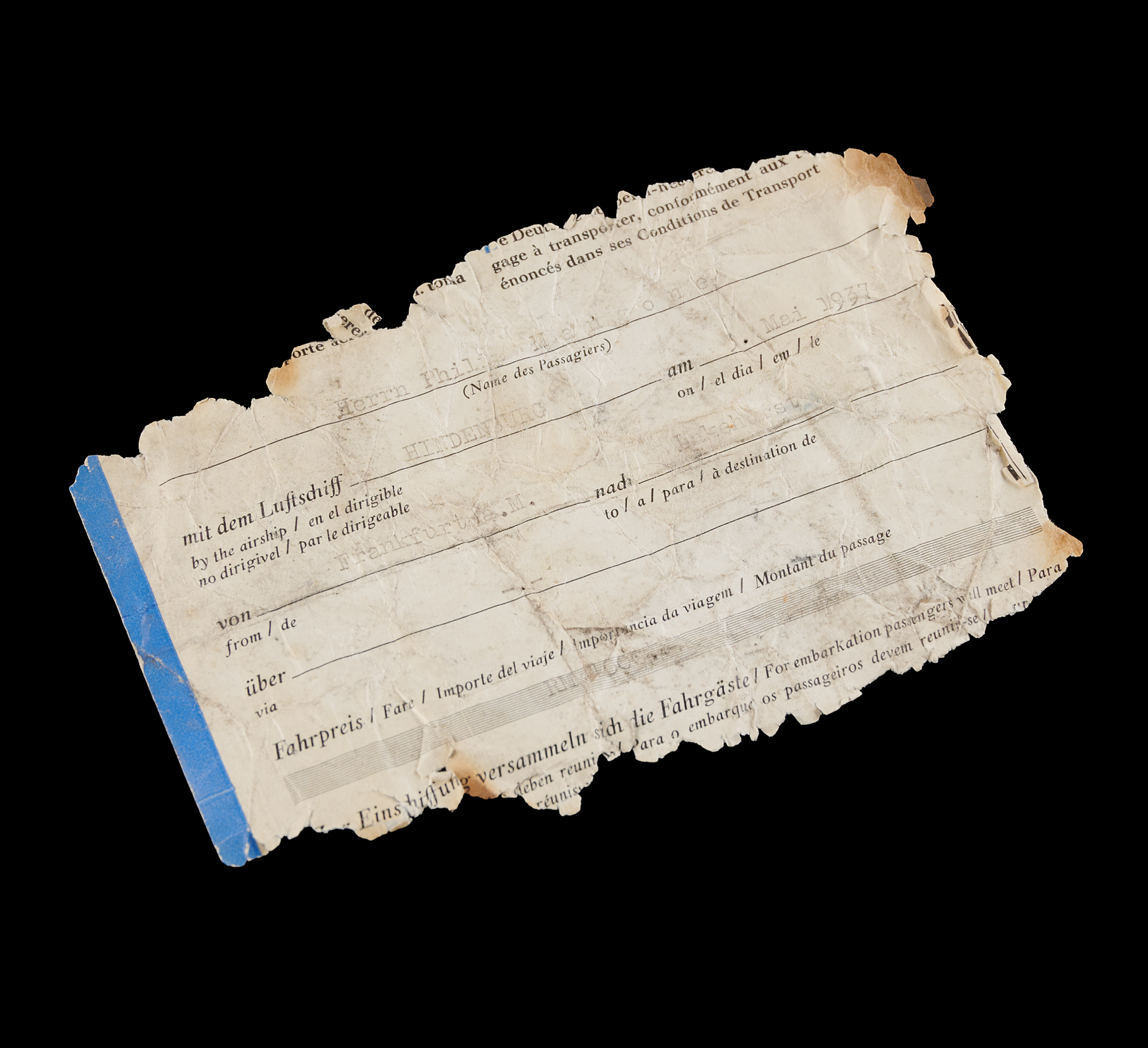
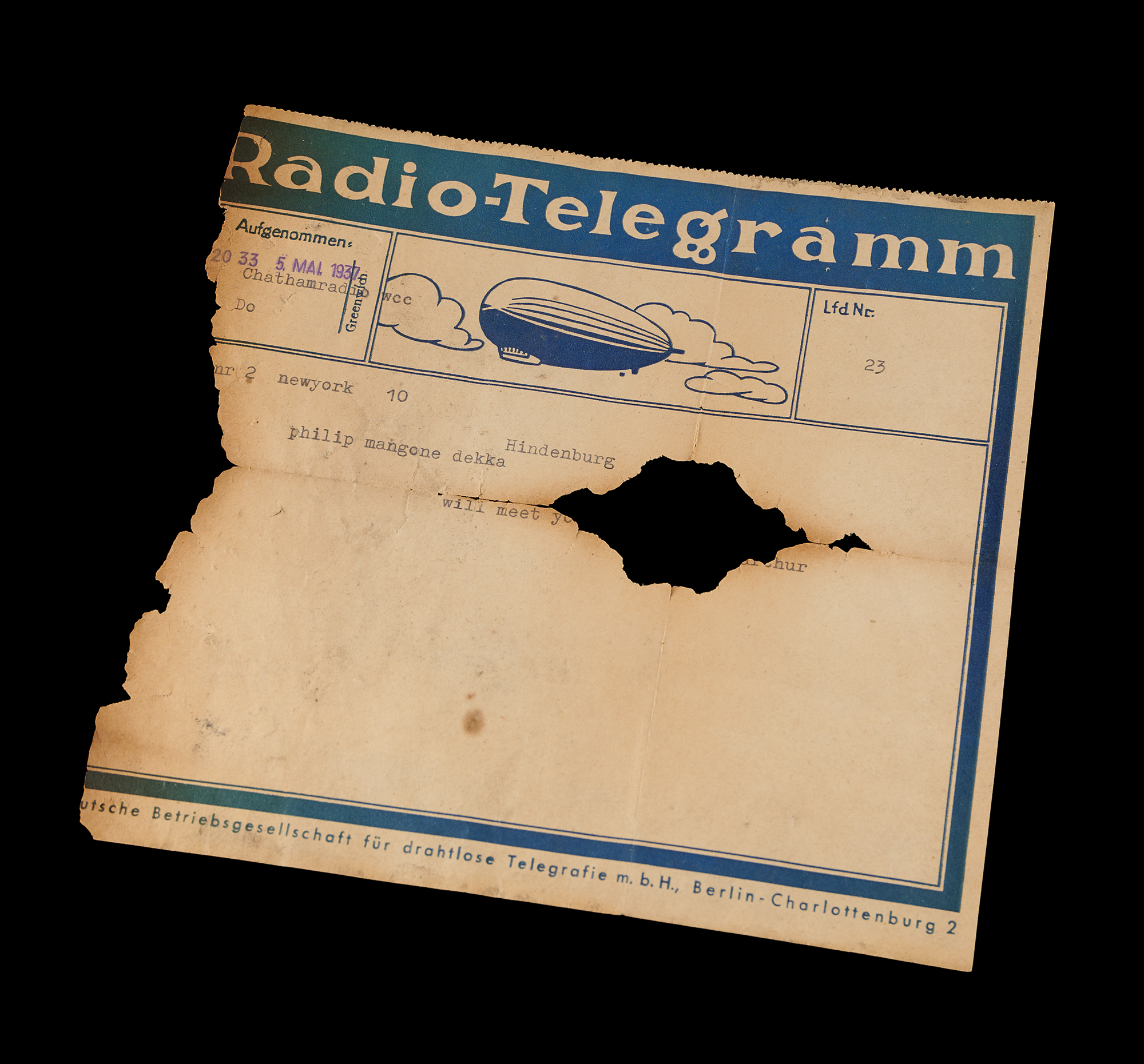
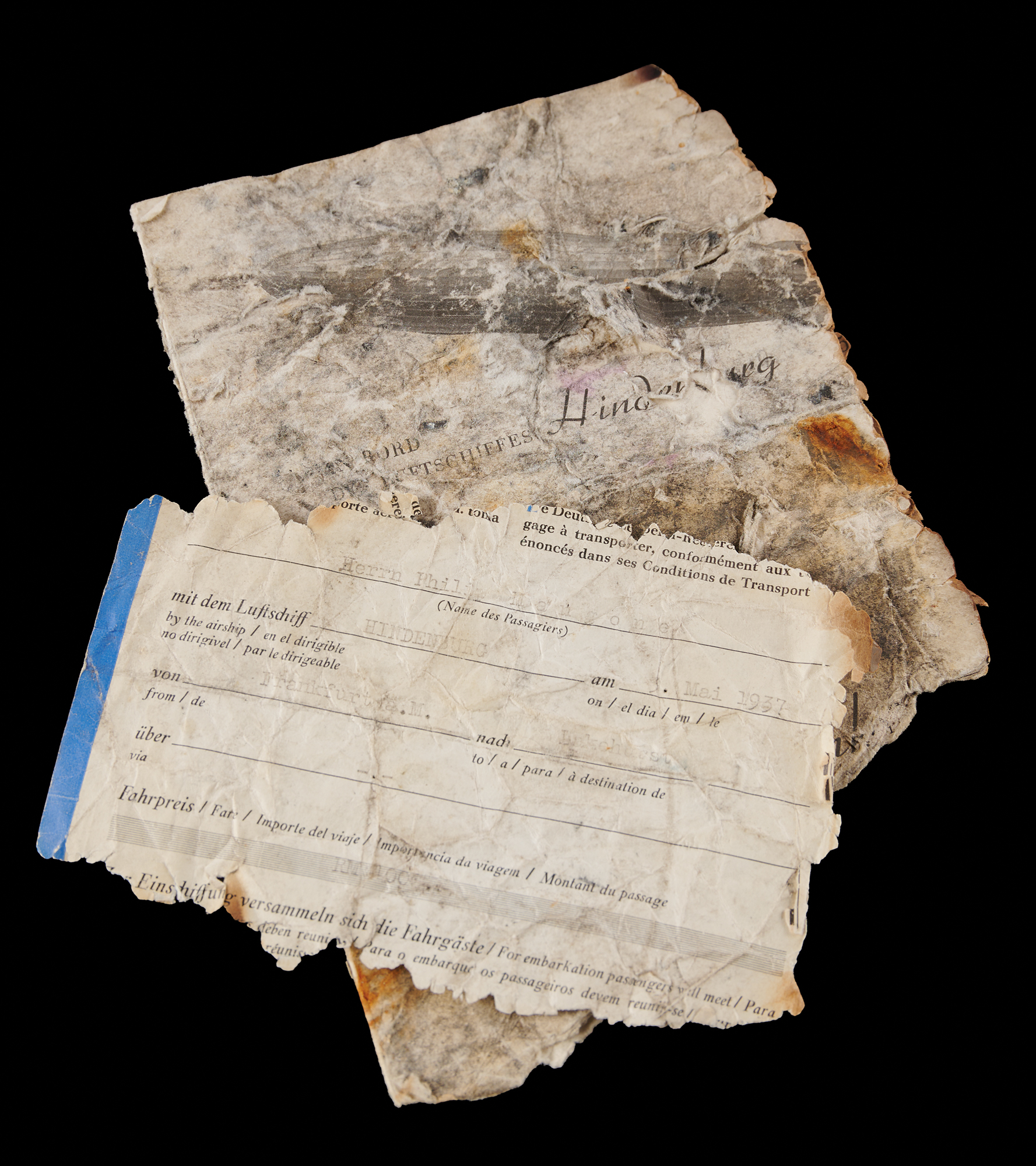
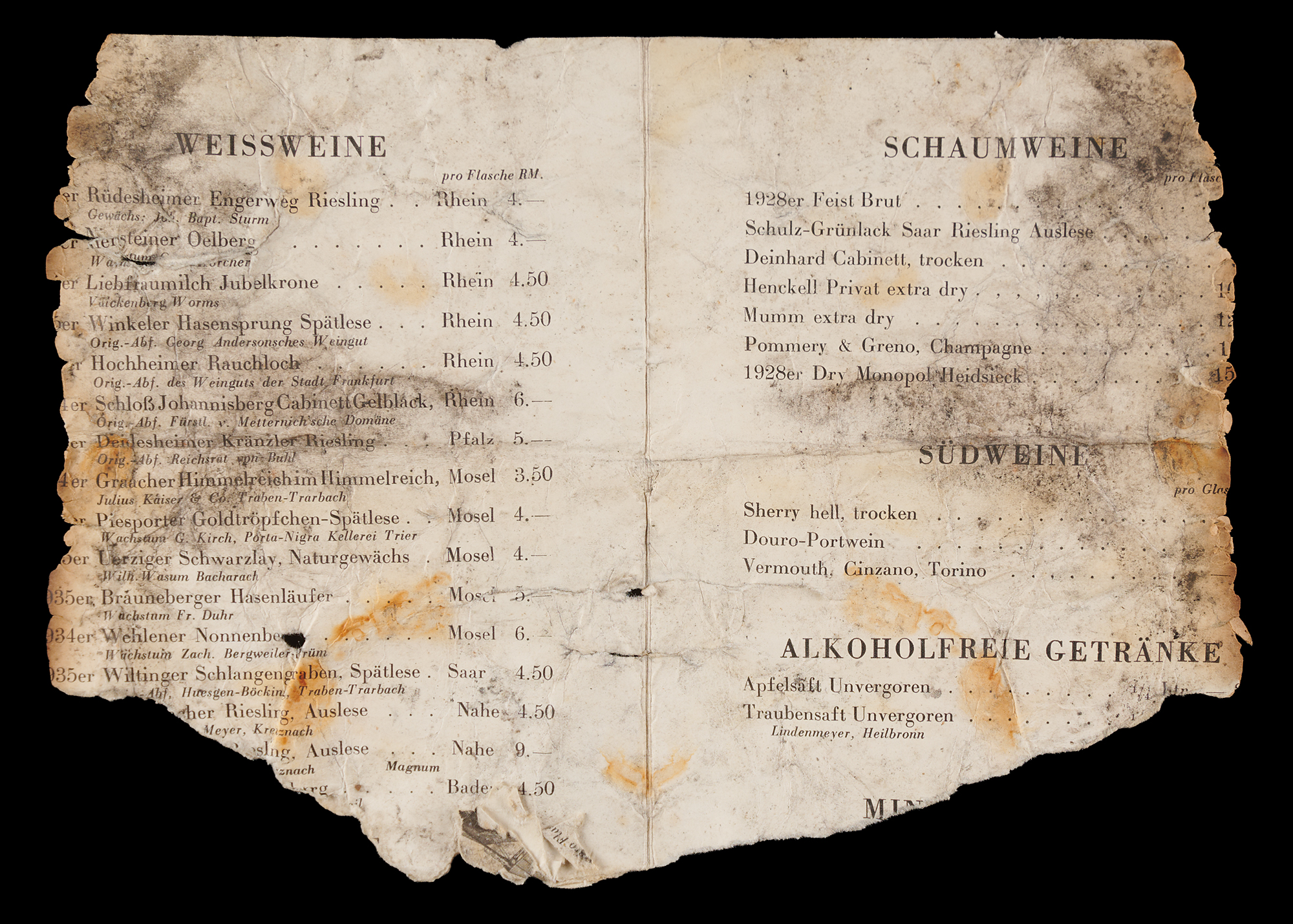
Remarkable group of four items recovered from the wreckage of the LZ 129 Hindenburg following its destruction at Lakehurst, New Jersey, on May 6, 1937, anchored by the passenger ticket and in-flight radiogram of Philip Mangone, the New York clothing designer whose survival was announced by Herb Morrison in the most famous eyewitness broadcast of the disaster. Together, the ticket and radiogram document Mangone’s journey from his boarding at Frankfurt to the eve of the landing at Lakehurst. Of additional note, Mangone’s passenger ticket is one of only two known to survive from the Hindenburg’s final flight, and the onboard wine menu is the only known example recovered from the disaster. The group includes:
- Mangone’s Deutsche Zeppelin-Reederei passenger ticket, 5.25 x 3.5, partly printed in five languages and typed with his name, “Herrn Philip Mangone,” the airship “Hindenburg,” the date “3. Mai 1937,” the route from “Frankfurt a.M.” to “Lakehurst,” and the fare, “RM 1000”; the reverse bears the terms of carriage.
- Radio-Telegramm form, 7.75 x 7.25, received aboard the airship via “Chathamradio wcc,” RCA’s ship-to-shore station on Cape Cod, at 20:33 Greenwich time on May 5, 1937, the day before the disaster, typed to “philip mangone dekka,” using the Hindenburg’s radio call sign, aboard the “Hindenburg,” and reading in part, “will meet yo[u].”
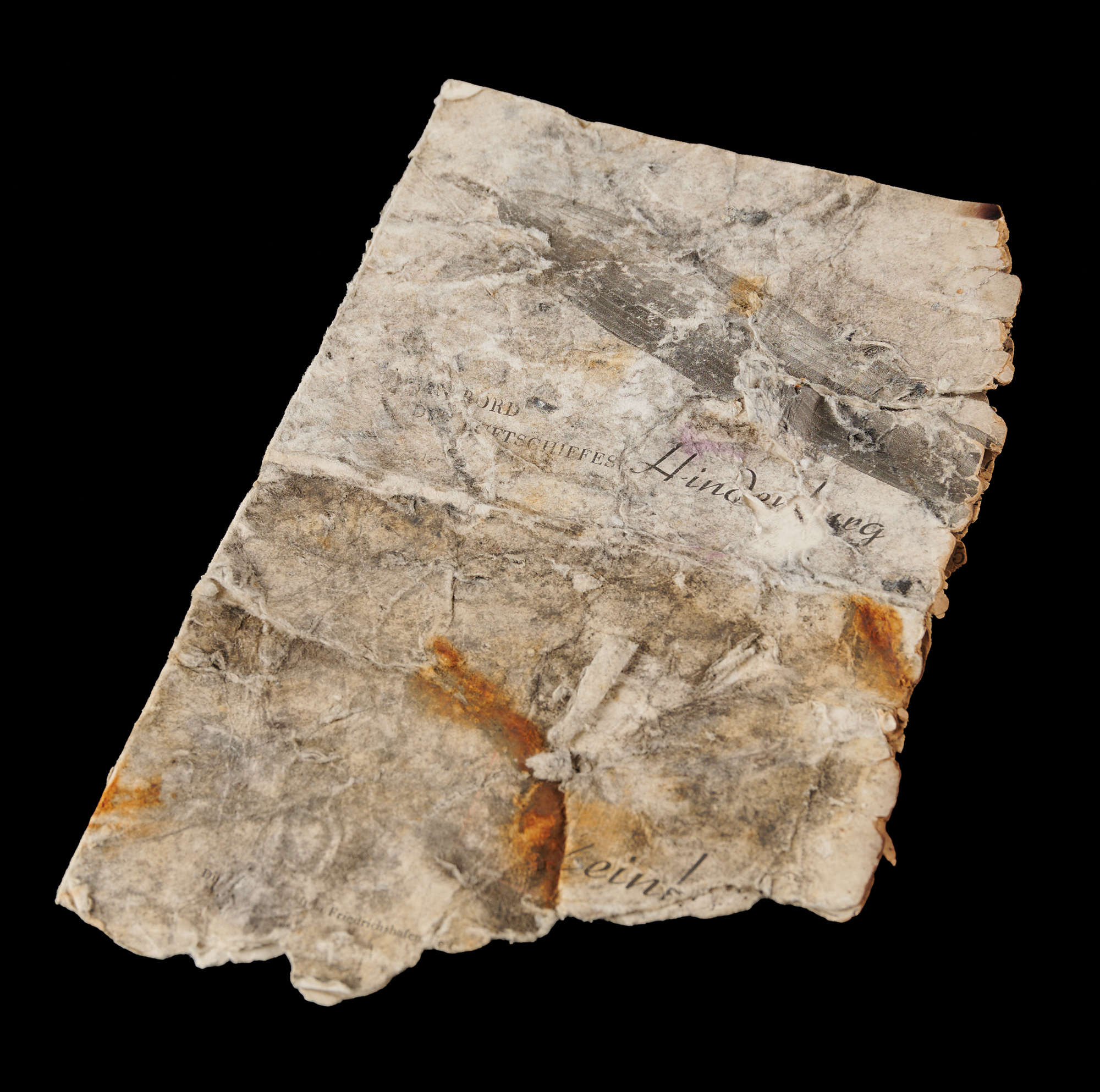
- Onboard Hindenburg wine menu, measuring 9.5 x 7 open, with the cover printed “An Bord des Luftschiffes ‘Hindenburg’” and the interior listing white wines, sparkling wines, dessert wines, and non-alcoholic beverages priced in Reichsmarks. Highlights include a “Schloß Johannisberg Cabinett Gelblack” and a “34er Wehlener Nonnenberg” at “6.—” per bottle, a Nahe Riesling Auslese by the “Magnum” at “9.—,” and Champagnes from “Pommery & Greno” and “1928er Dry Monopol Heidsieck.”
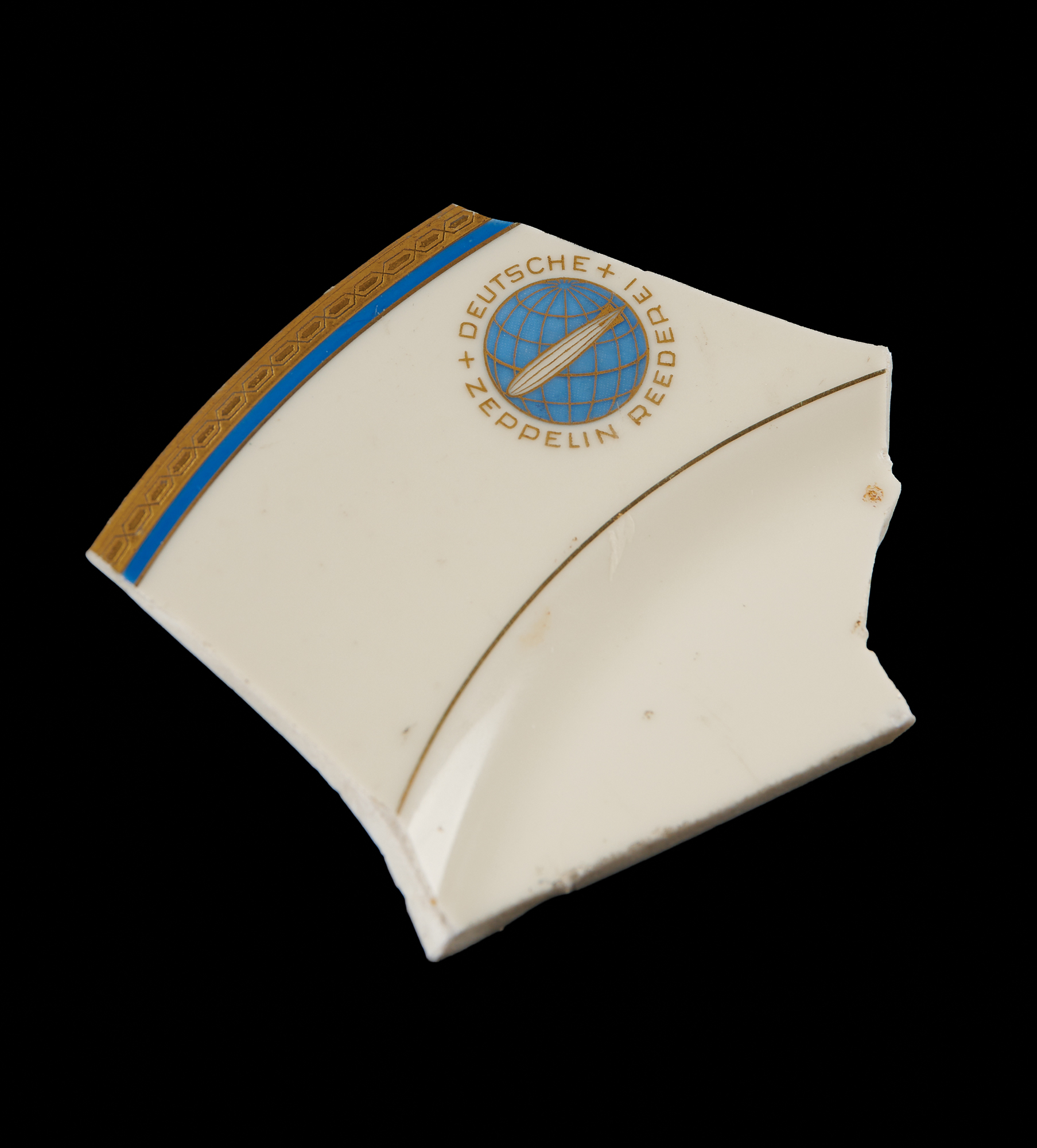
- Fragment of a Deutsche Zeppelin-Reederei porcelain plate, 3.75 x 3.25, bearing the company’s globe-and-airship emblem within a gilt and blue border.
In overall very good condition, with expected crash-related wear and damage, including heavy soiling, staining, and edge losses to the wine list. According to the consignor, all four items were recovered from the wreckage at Lakehurst. Accompanied by a period clipping of “Crash Covers,” a short piece concerning mail recovered from the Hindenburg disaster, published in The New Yorker on May 29, 1937.
Born in southern Italy to a family of tailors, Philip Mangone (1884–1957) emigrated to New York as a child and founded Mangone Models in 1916, building a women’s suit and coat business whose designs were sold in more than 200 stores across the country. A frequent transatlantic traveler, he had booked passage on the Lusitania’s final voyage in 1915 but canceled at the last minute. Returning from a European business trip in May 1937, he boarded the Hindenburg at Frankfurt on the evening of May 3. Two days into the crossing, on the evening of May 5, a radiogram reached him by way of Chatham Radio on Cape Cod, the busiest ship-to-shore station in the country, with the brief promise, “will meet yo[u].”
As the airship approached its mooring mast at Lakehurst on May 6, Mangone was watching the landing from the passenger deck windows when the stern erupted in flames. He smashed a window with a chair and jumped as the ship sank toward the ground, only to be pinned beneath the burning framework. Badly burned, he clawed a hole in the dirt and burrowed his way out from under the wreckage.
On the field, Mangone’s daughter Catherine had climbed the fence to search for her father when she was stopped by Herb Morrison, the WLS Chicago announcer who had been recording the landing. Morrison asked for her father’s name and promised that, if he were found alive, he would broadcast it so the family would know he was safe. Minutes later, Morrison came upon Mangone himself, dazed and staggering away from the fire, and guided him to his daughter and an ambulance. He then returned to his microphone and kept his promise: ‘I grabbed ahold of him: it’s Philip Mangone. Philip Mangone, M-A-N-G-O-N-E, of New York… he’s burned terribly in the hands, and he’s burned terribly in the face… but he’s walking and talking, plainly and distinctly, and he told me he jumped!’
Mangone spent six months in the hospital and underwent skin grafts on his hands, but he recovered and resumed his career, later designing the uniform and coat of the Women’s Army Corps during World War II. Morrison’s recording, with its anguished cry of ‘Oh, the humanity!,’ remains the most famous eyewitness account of the disaster, and Mangone’s name is preserved within it as one of the first survivors announced to the world.

