The 30 Minute Rule begins November 19 at 7:00 PM EST. An Initial Bid Must Be Placed By November 19 at 6:00 PM EST To Participate After 6:00 PM EST
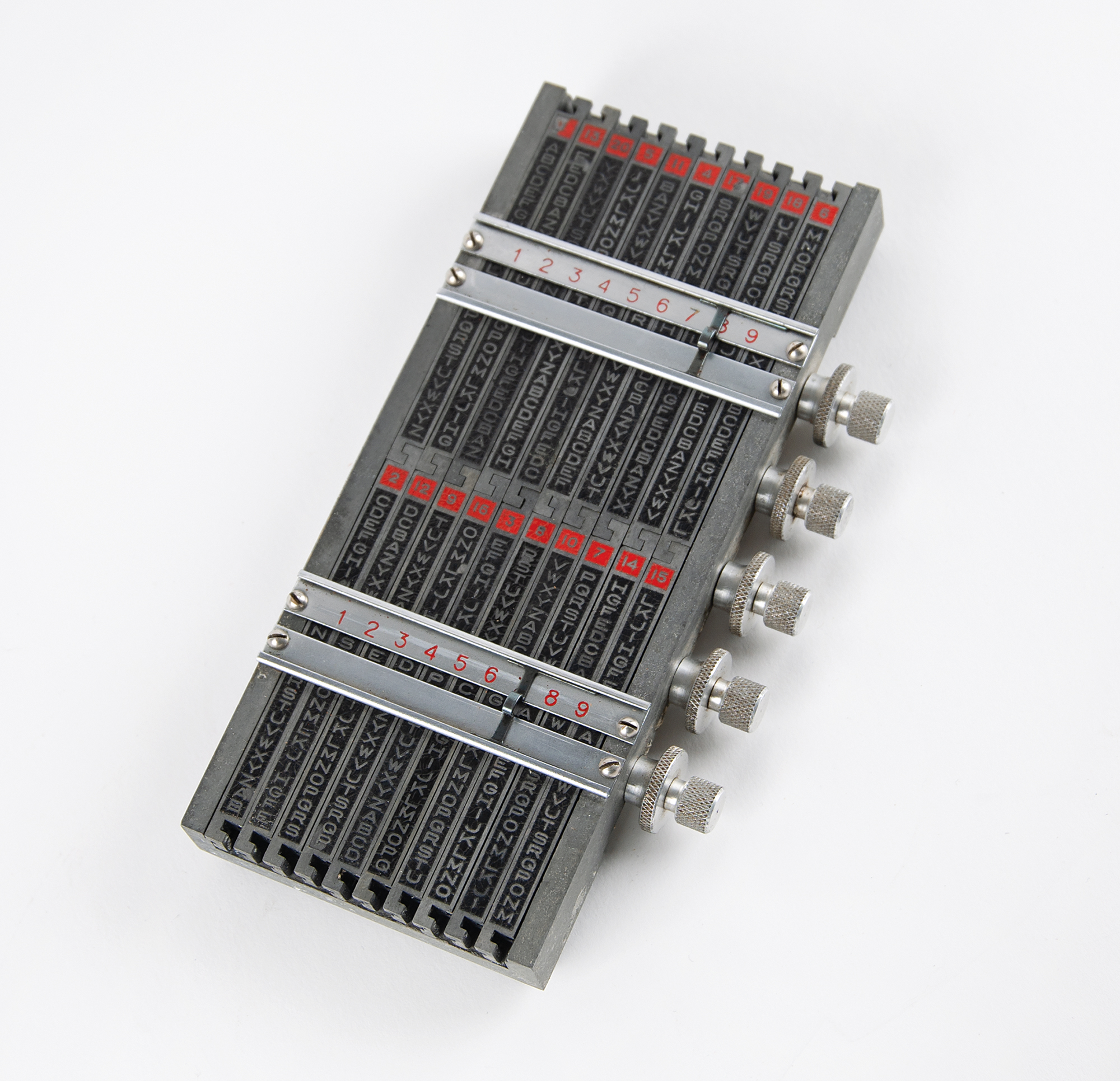
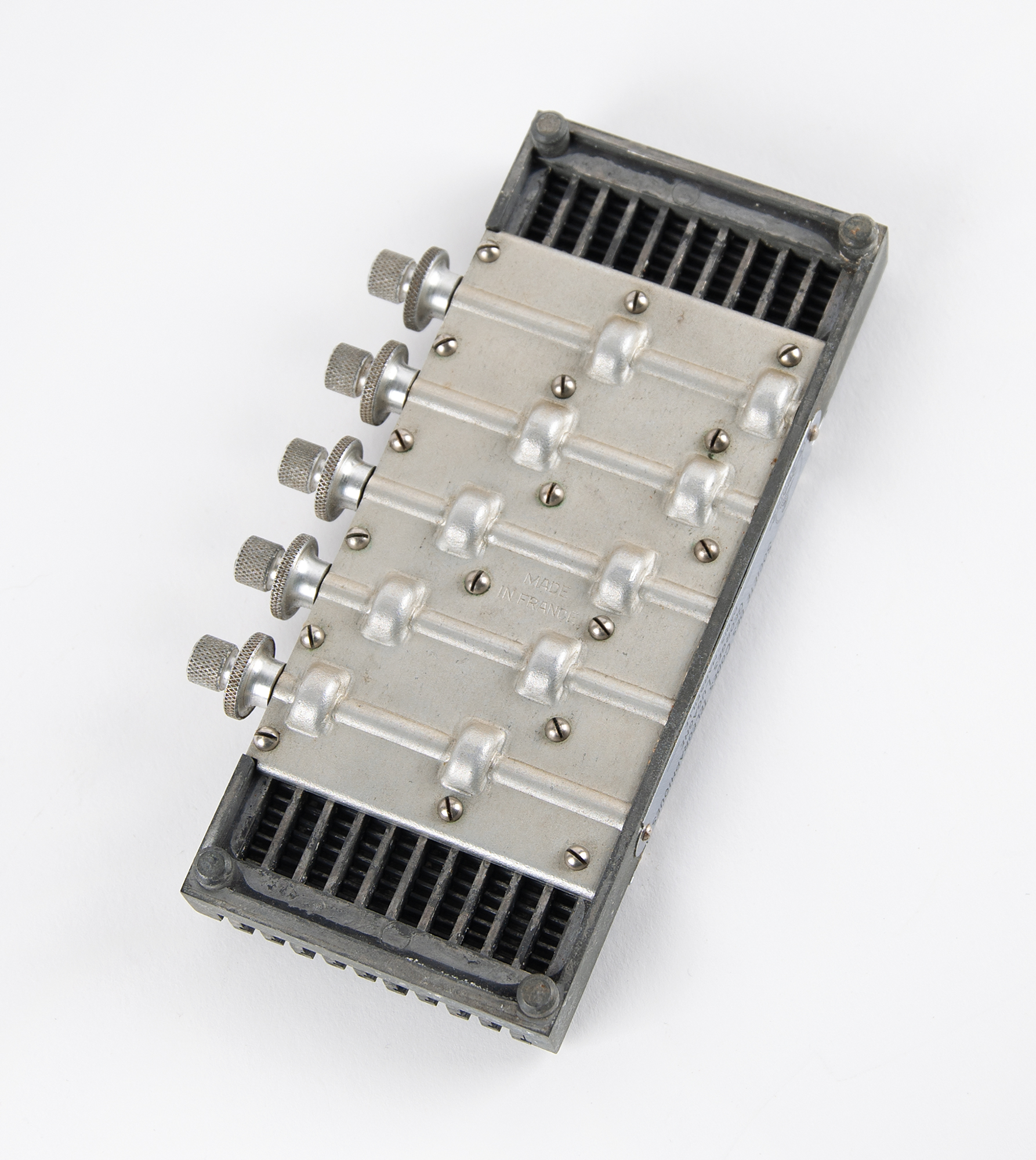
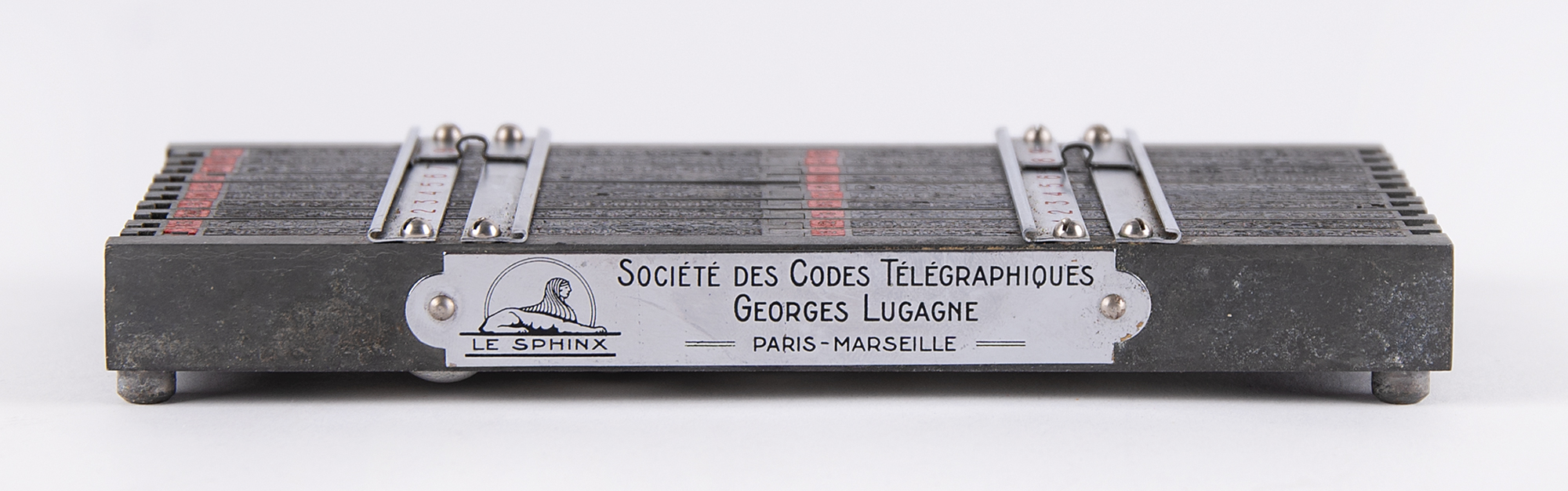
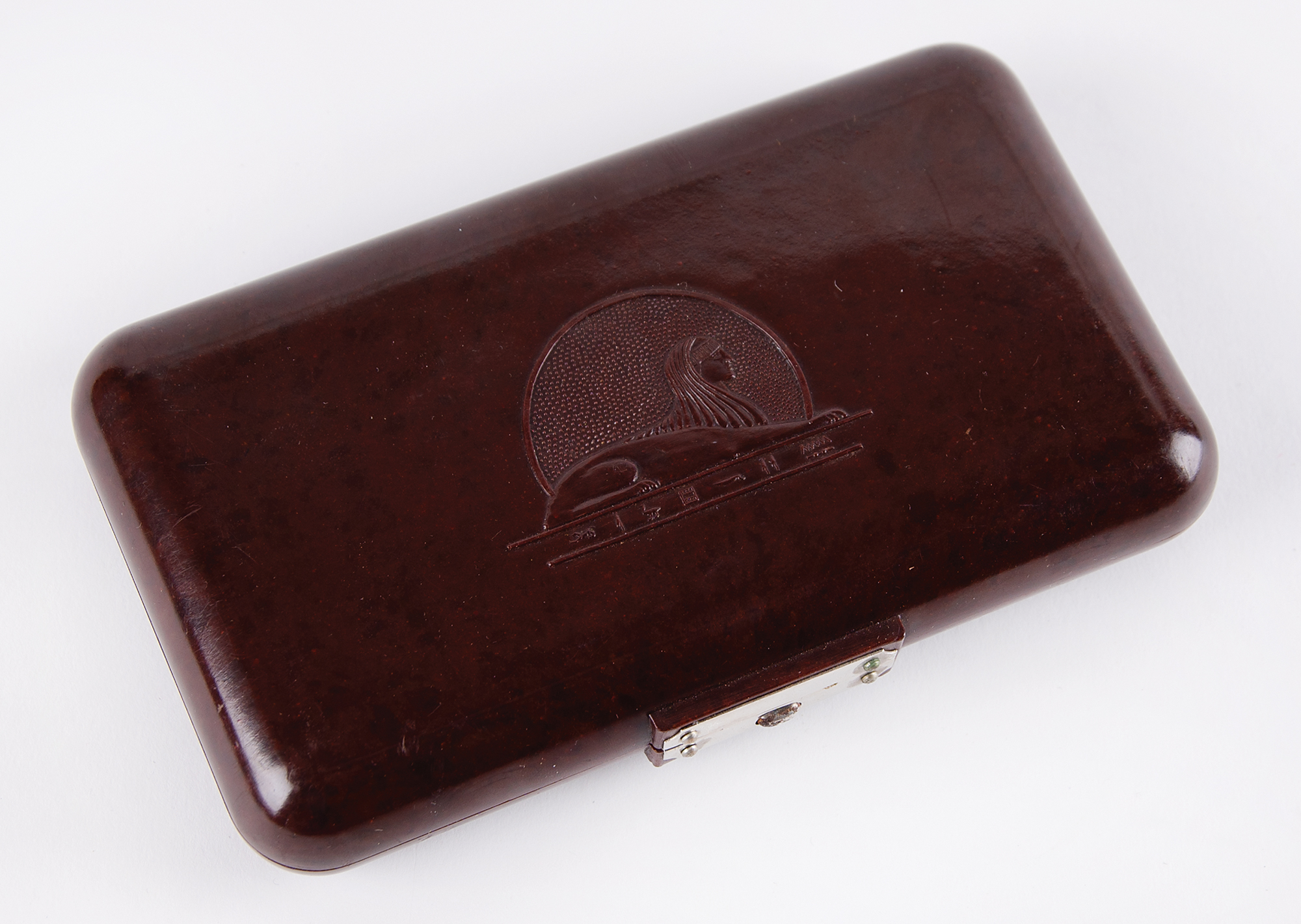
Scarce circa 1930s French "Le Sphinx" pocket cryptographic device, serial no. "B 515," developed by the Société des Codes Télégraphiques Georges Lugagne of Paris and Marseille for the encryption and decoding of confidential telegrams and other short messages. Measuring approximately 6.25˝ x 3.25˝ x .75˝, the compact mechanical cipher consists of a die-cast metal frame containing ten cogwheel-driven lanes, each accommodating a pair of movable alphabet bars. The twenty interchangeable alphabets are individually numbered in red and arranged so that plaintext entered through the upper viewing window could be converted into ciphertext appearing in the lower window. Ten knurled control knobs along the side operate the internal gearing, allowing messages to be processed in groups of ten characters. Complete with its original hinged Bakelite case with raised sphinx motif and in fine condition.
The Sphinx evolved from a mechanical transposition cipher patented by French inventor Georges Lugagne in 1913. The design was significantly improved in 1931 by Lugagne employee Paul Godillon, who introduced the geared mechanism and distinctive interlocking alphabet bars, permitting the twenty alphabets to be freely paired and rearranged. This produced an enormous theoretical number of possible alphabet configurations—20!, or more than 2.4 quintillion arrangements—although its fixed substitution system remained vulnerable to frequency analysis when used for longer messages. Contemporary advertising promoted the portable instrument as a practical means of 'secret writing' for radio and telegraphic communications.
A compact and ingenious example of interwar French cryptography, Le Sphinx offered users a portable alternative to cipher tables and code books for short telegraphic messages. Surviving examples are uncommon: the Crypto Museum presently records only a small number of known serial-numbered specimens in institutional and private collections.

