The 30 Minute Rule begins November 19 at 7:00 PM EST. An Initial Bid Must Be Placed By November 19 at 6:00 PM EST To Participate After 6:00 PM EST
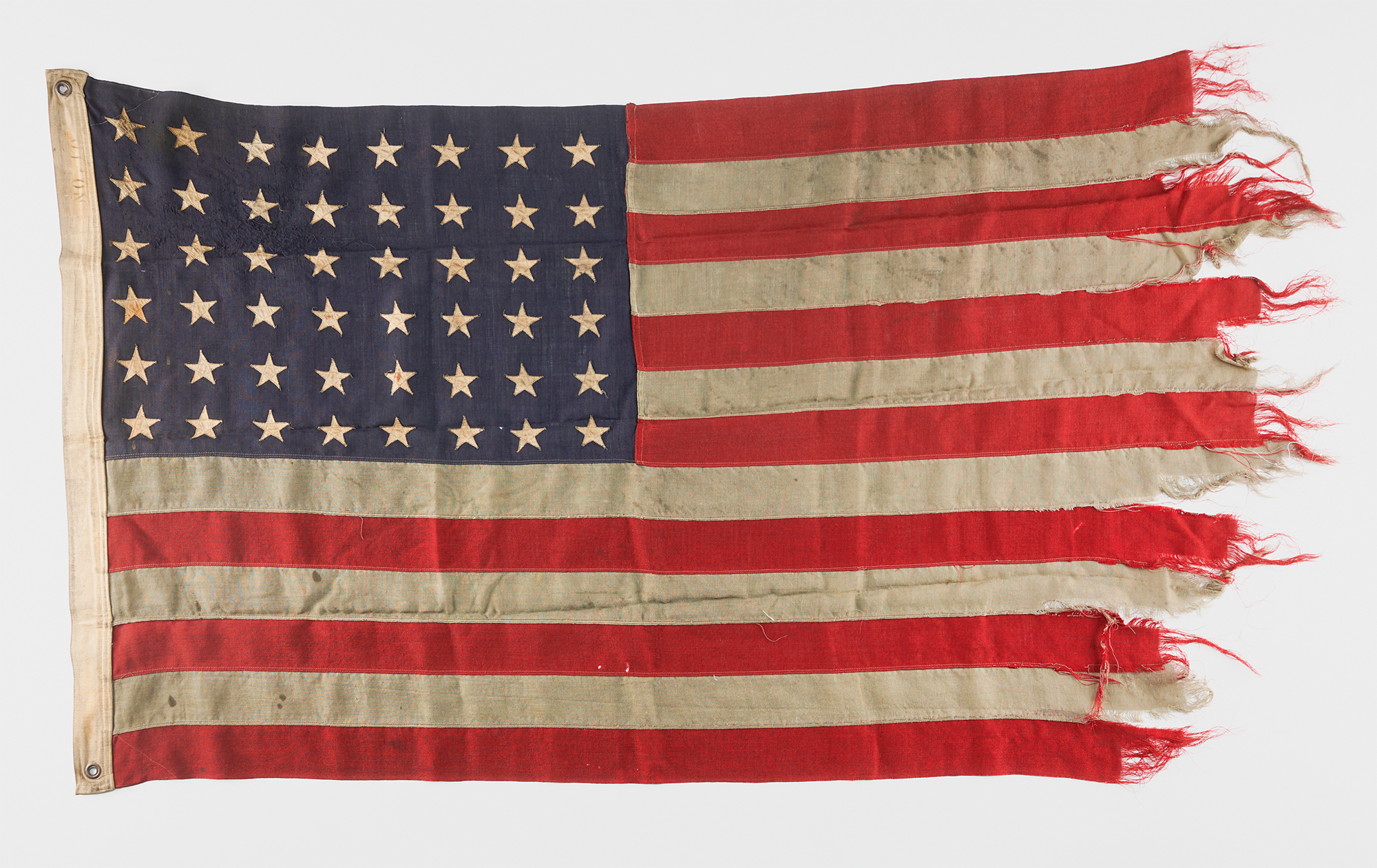
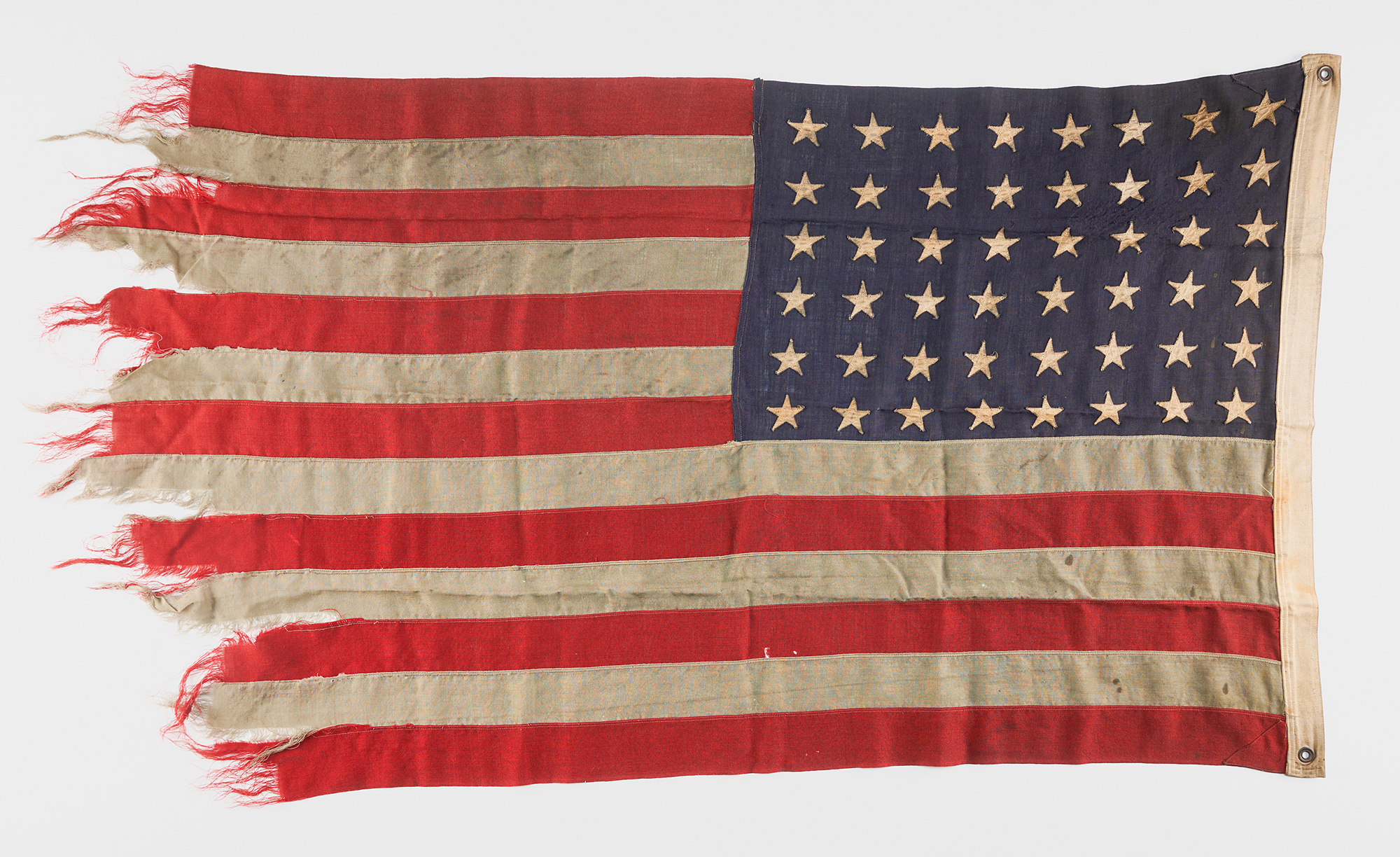
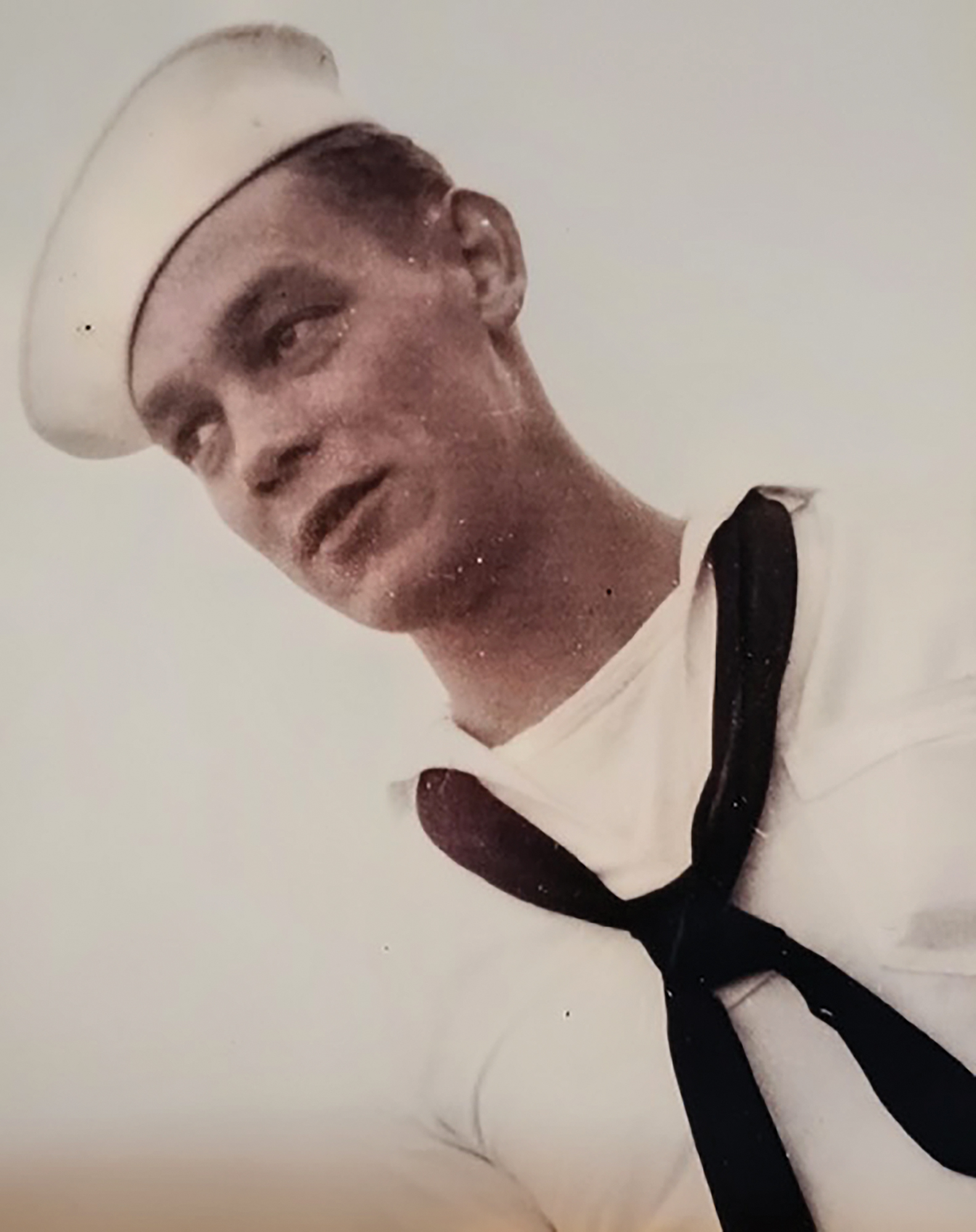
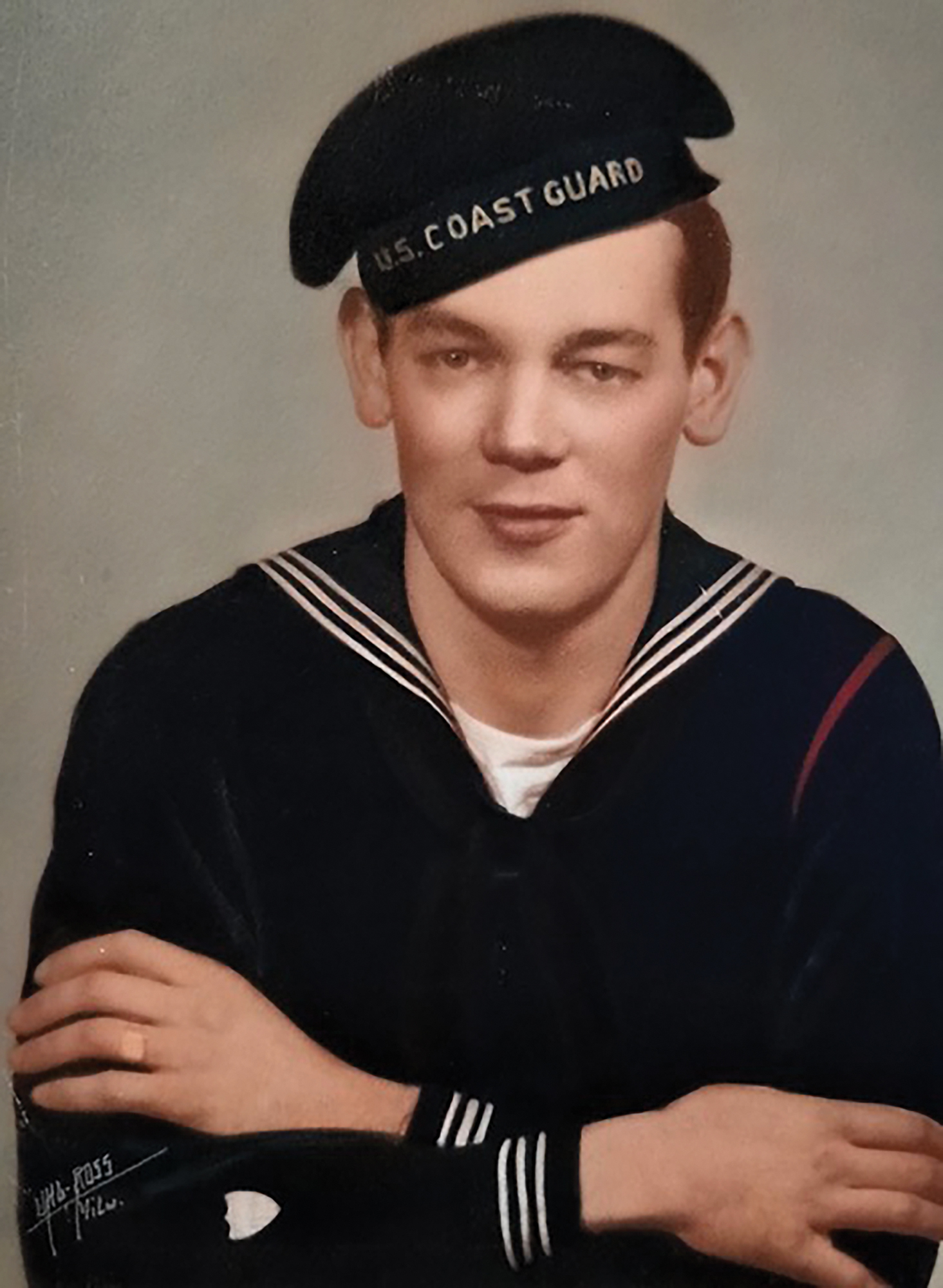
Important World War II-dated 48-star U.S. flag from the LST-176, a tank-landing ship built for the United States Navy and assigned to the European Theater, where it participated in D-Day and the invasion of Normandy. Originating from the family of WWII veteran Charles ‘Carl’ Marx, Motor Machinist’s Mate Second Class, U.S. Coast Guard, aboard LST-176, the flag, 63˝ x 35˝, features 48 individually appliquéd stars, sewn stripes, reinforced header corners, and metal grommets on the canvas header, which bears a faint stamp, “No. 10.” In very good to fine condition, with overall soiling, scattered small holes, and fraying and losses to the fly end. Accompanying the flag are several of Marx’s wartime artifacts from his service aboard LST-176, highlighted by his handwritten journal containing a firsthand account of D-Day, along with two pairs of his service gaiters and a United States Coast Guard ensign obtained from the ship. According to Marx’s daughter, this was the only American flag flown aboard the USS LST-176. Marx enlisted in the Coast Guard on February 5, 1942, and served aboard LST-176 during its operations in the European Theater, including the invasion of Normandy, before being honorably discharged in November 1945.
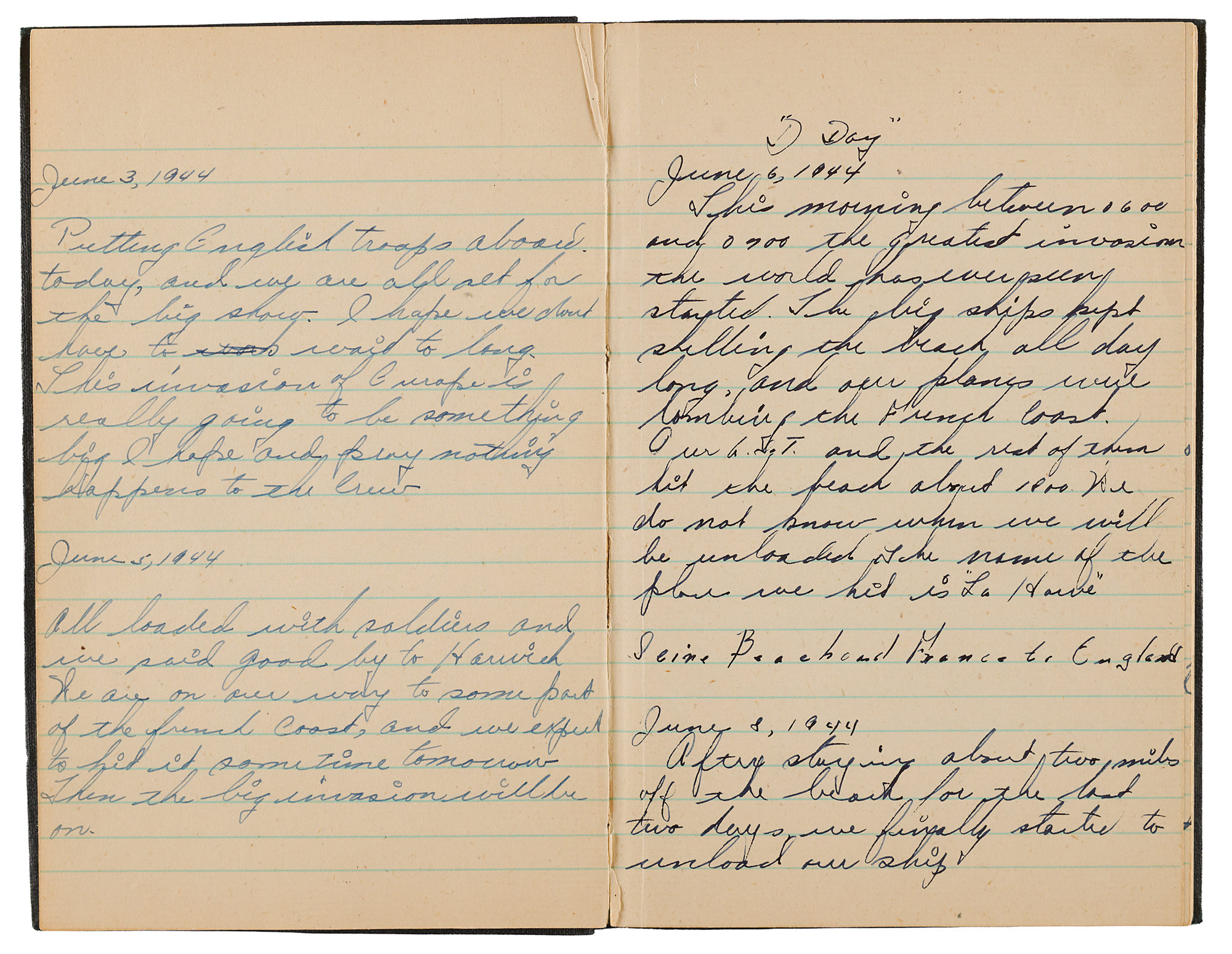
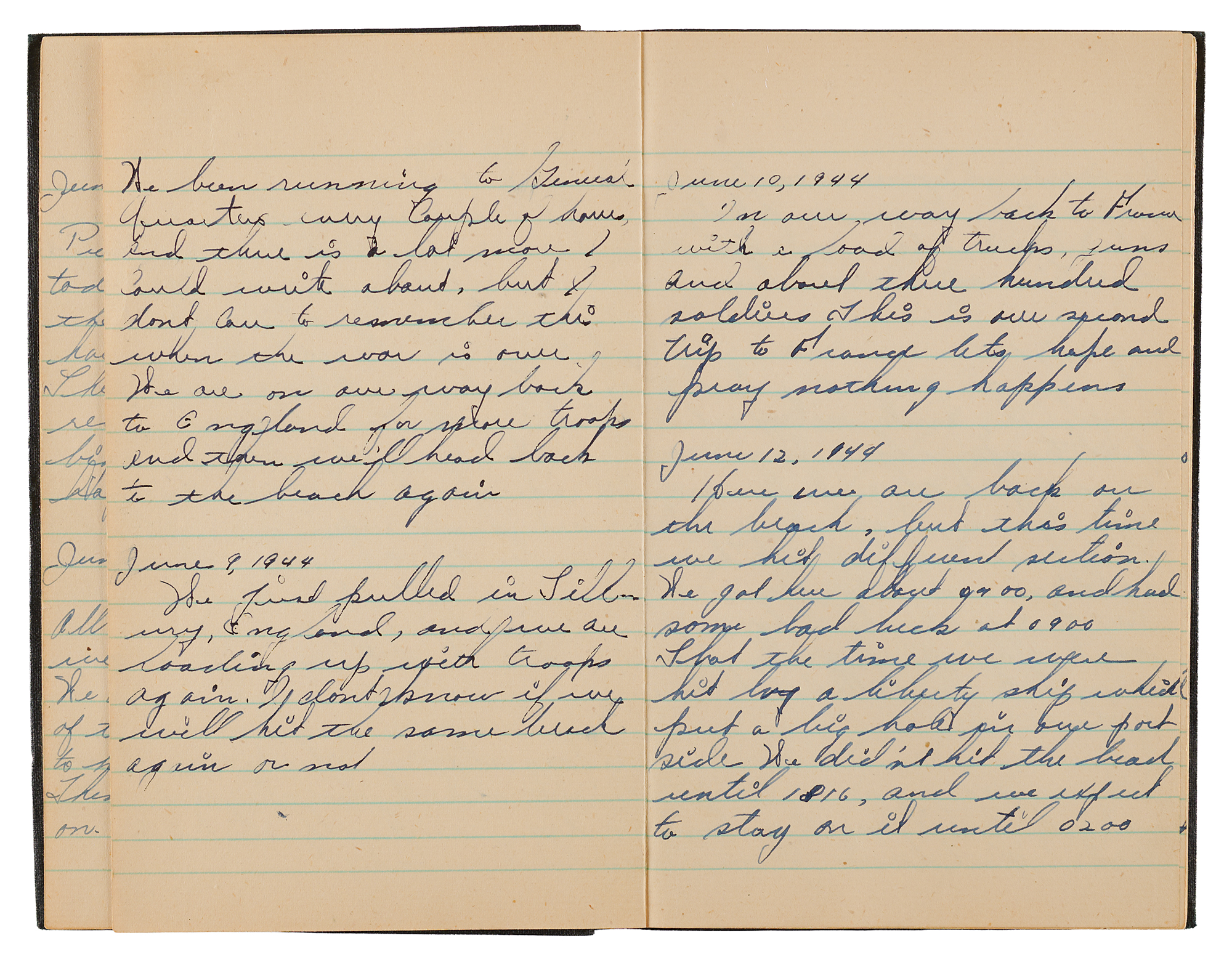
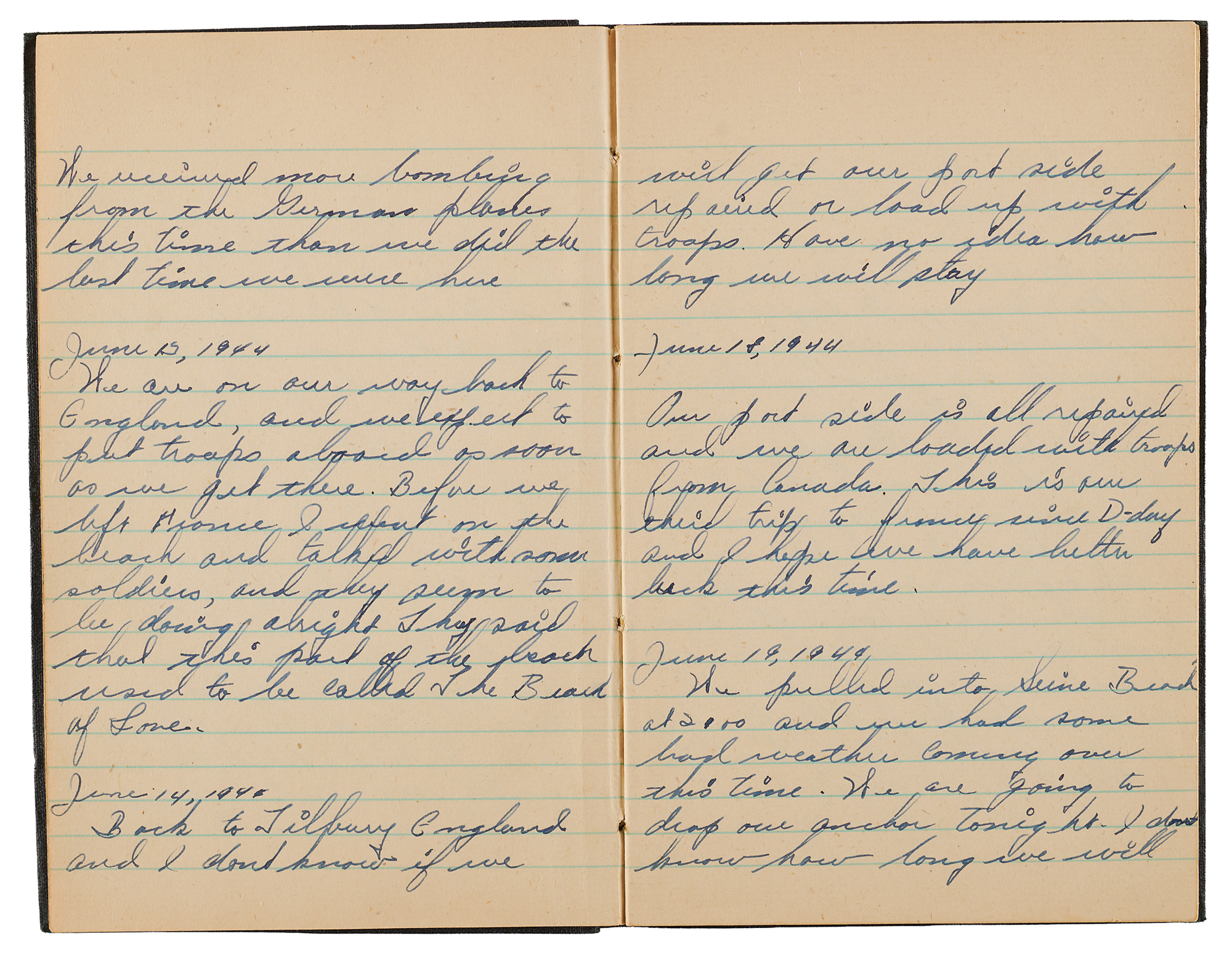
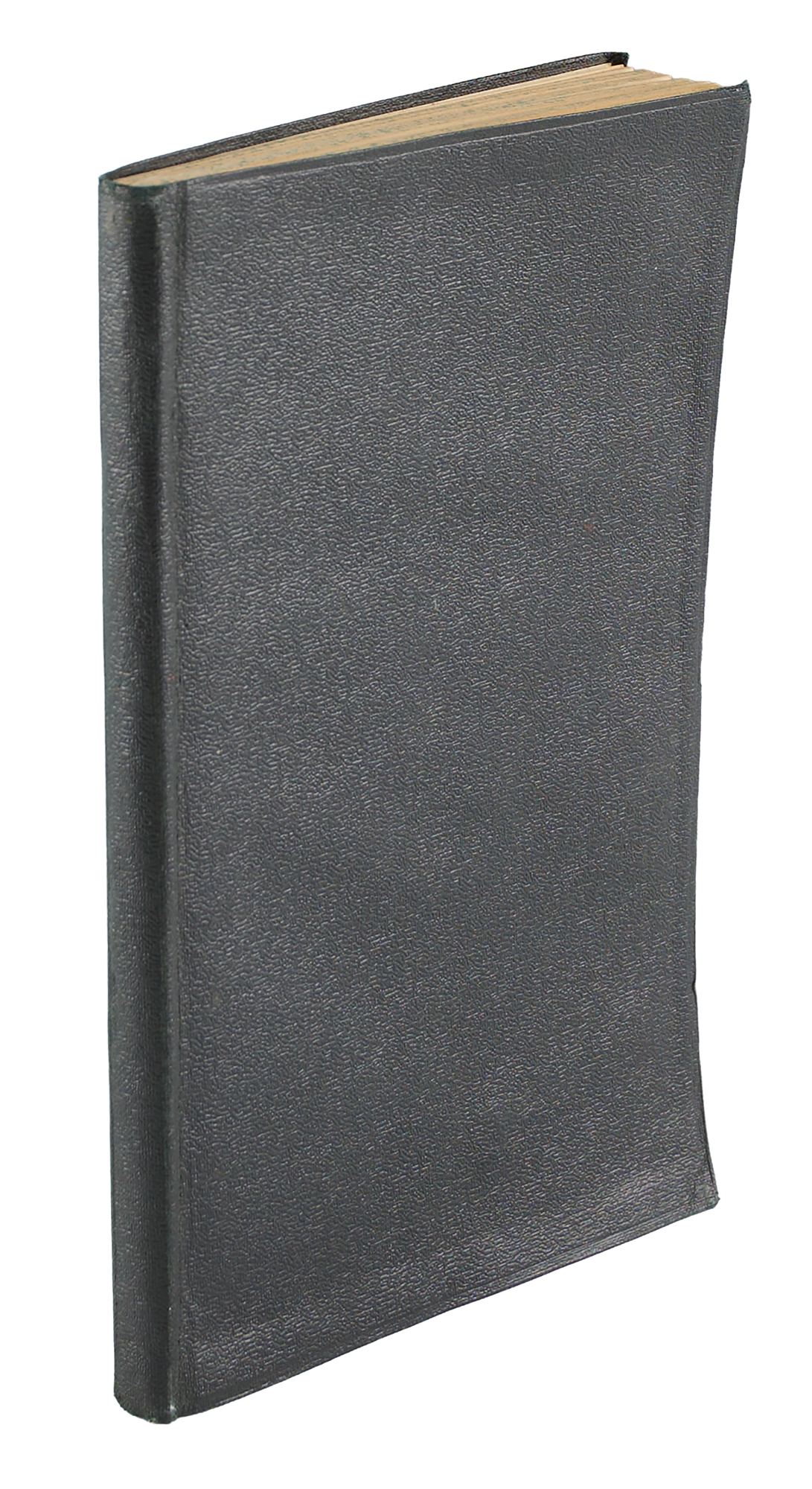
Marx’s remarkable handwritten wartime journal, 4.5˝ x 7˝, covers the period from July 27, 1943, to October 24, 1944, and chronicles his service aboard LST-176 through some of the defining events of the war in Europe. A rare firsthand record, the journal is highlighted by entries written on D-Day and the preceding and following days, capturing Marx’s experiences during the Normandy invasion as they unfolded aboard the tank-landing ship. His entry for June 6, 1944, headed “‘D Day,’” reads in full:
“This morning between 0600 and 0700 the greatest invasion the world has ever seen started. The big ships kept shelling the beach all day long, and our planes were bombing the French Coast. Our L.S.T. and the rest of them hit the beach about 1800. We do not know when we will be unloaded. The name of the place we hit is ‘La Havre.’ Seine Beach and France to England.”
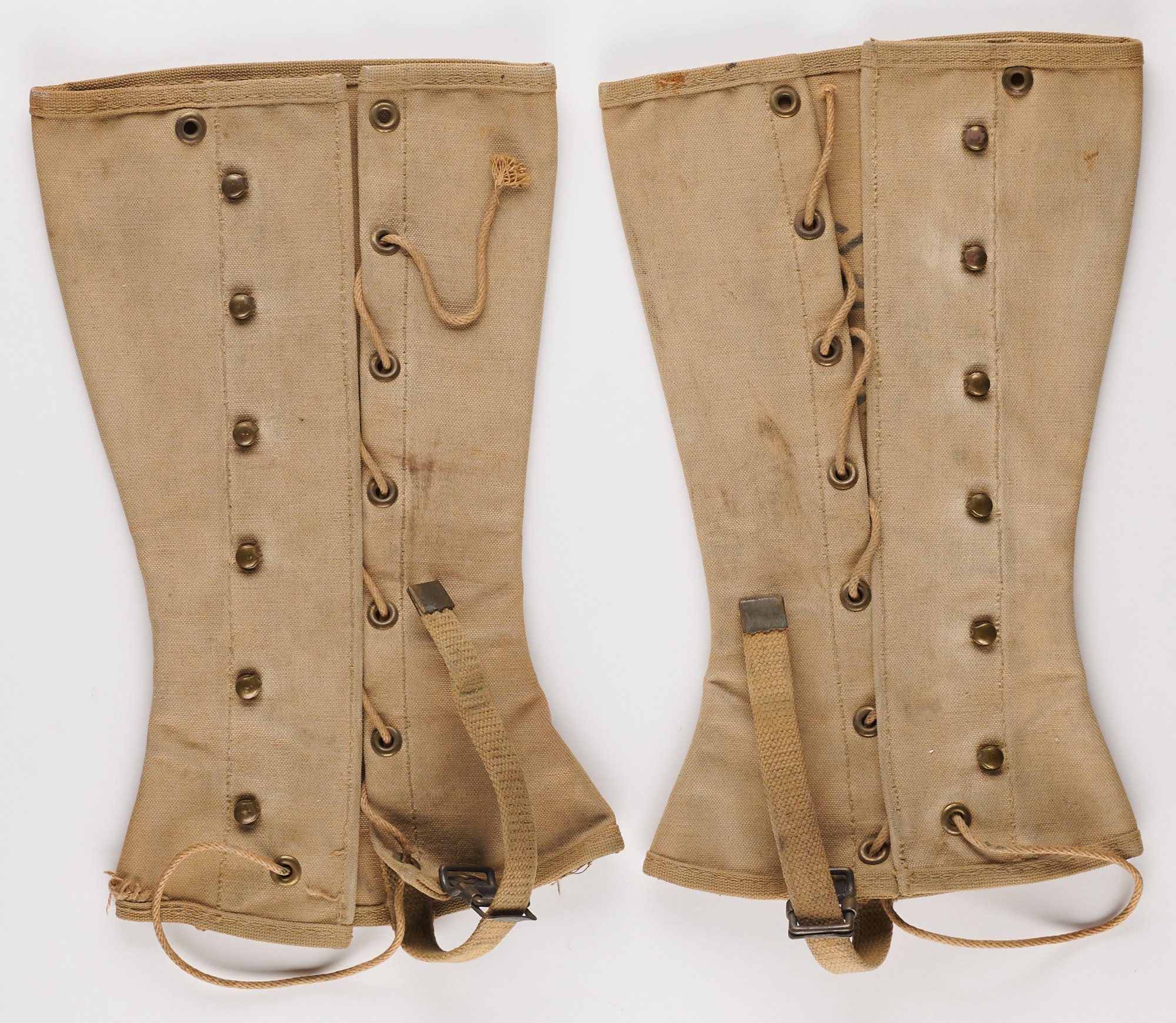
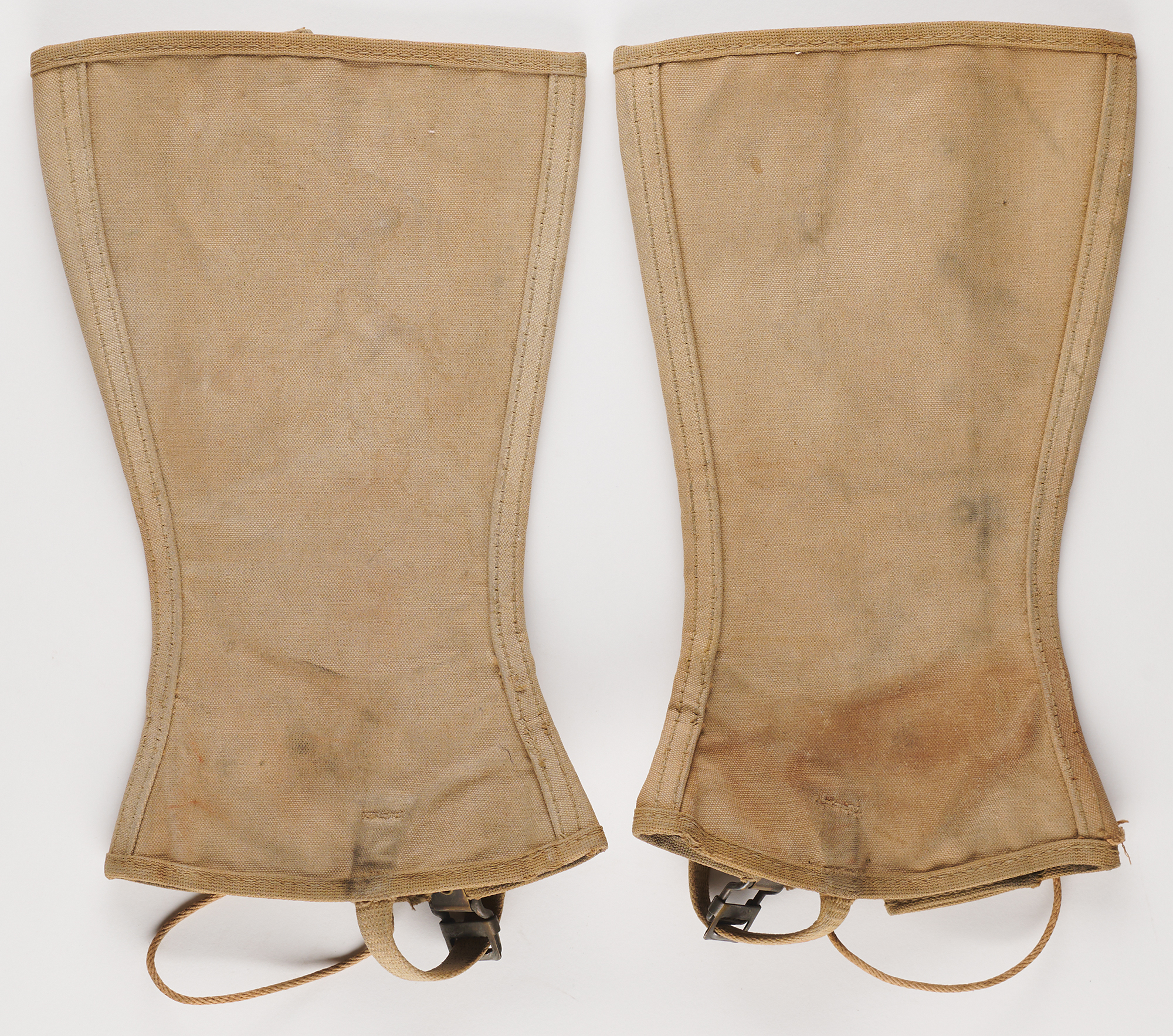
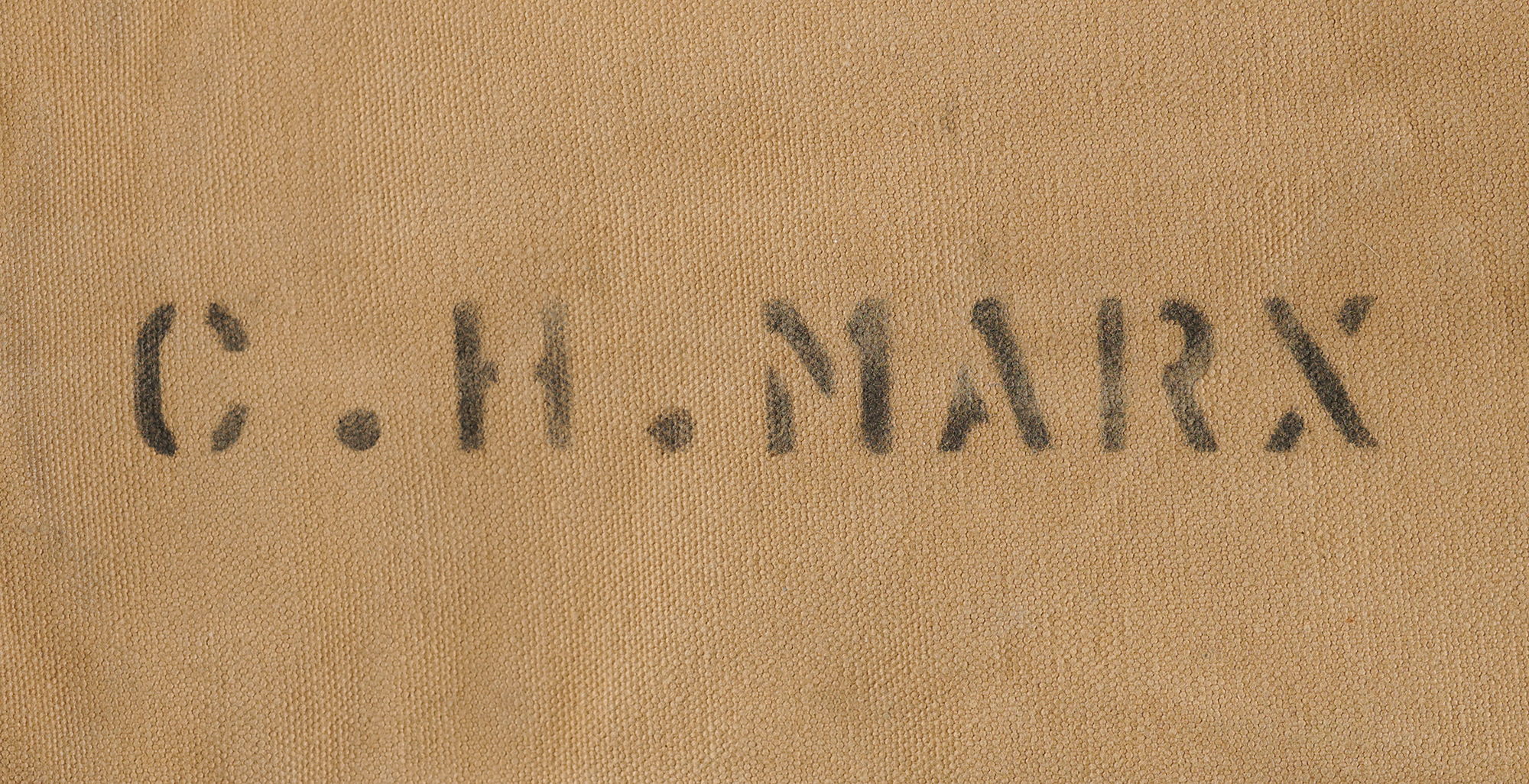
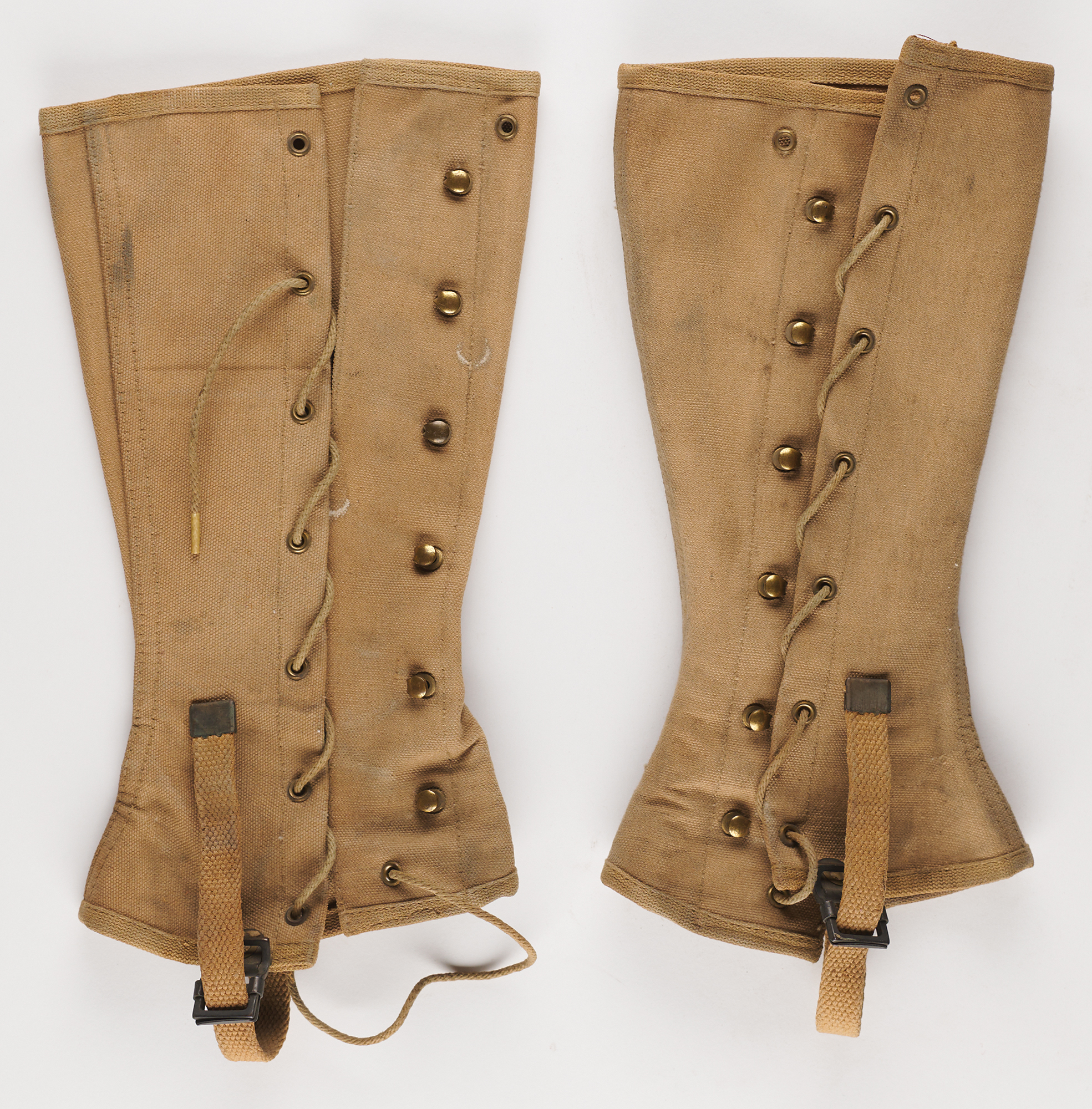
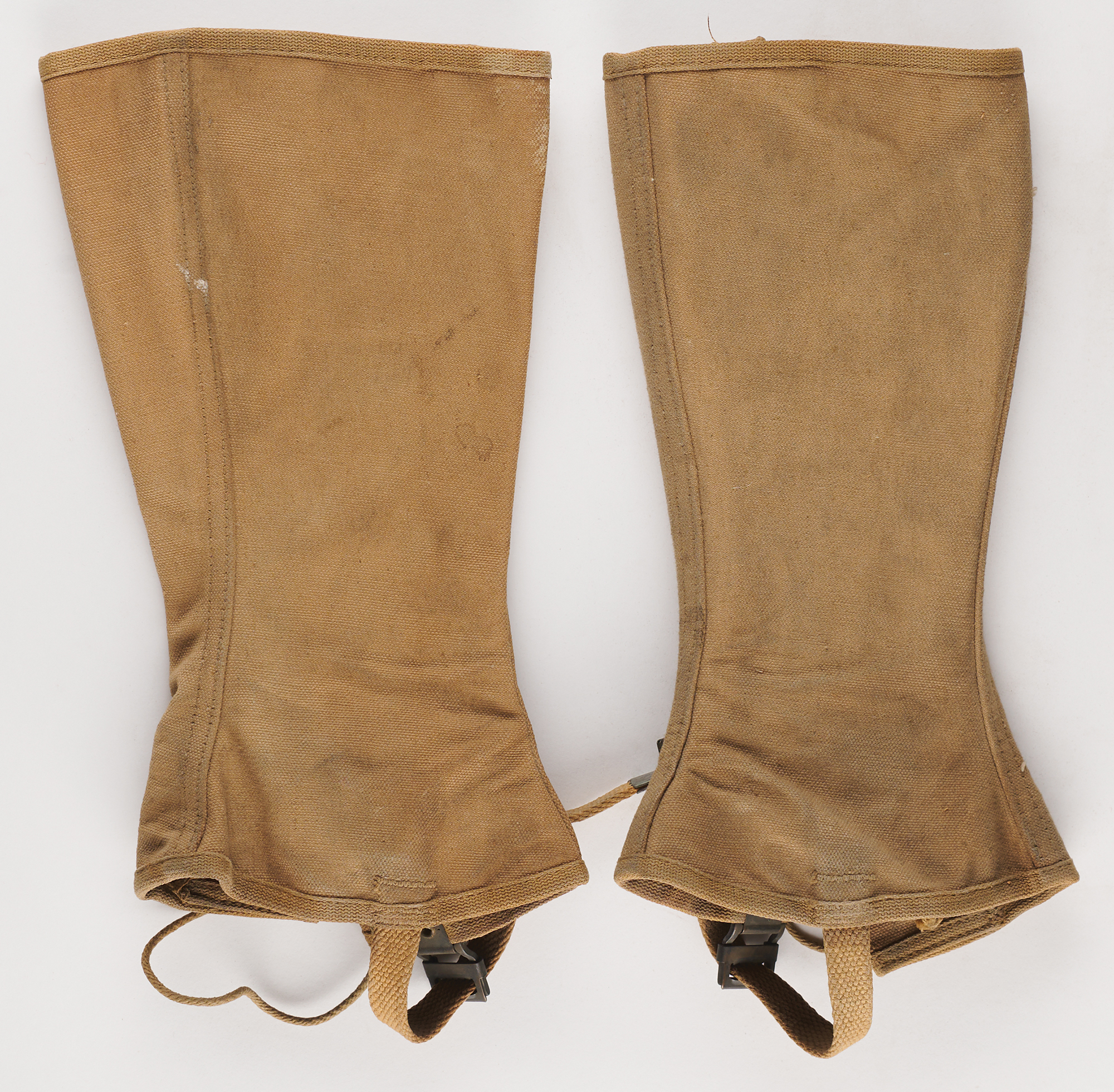
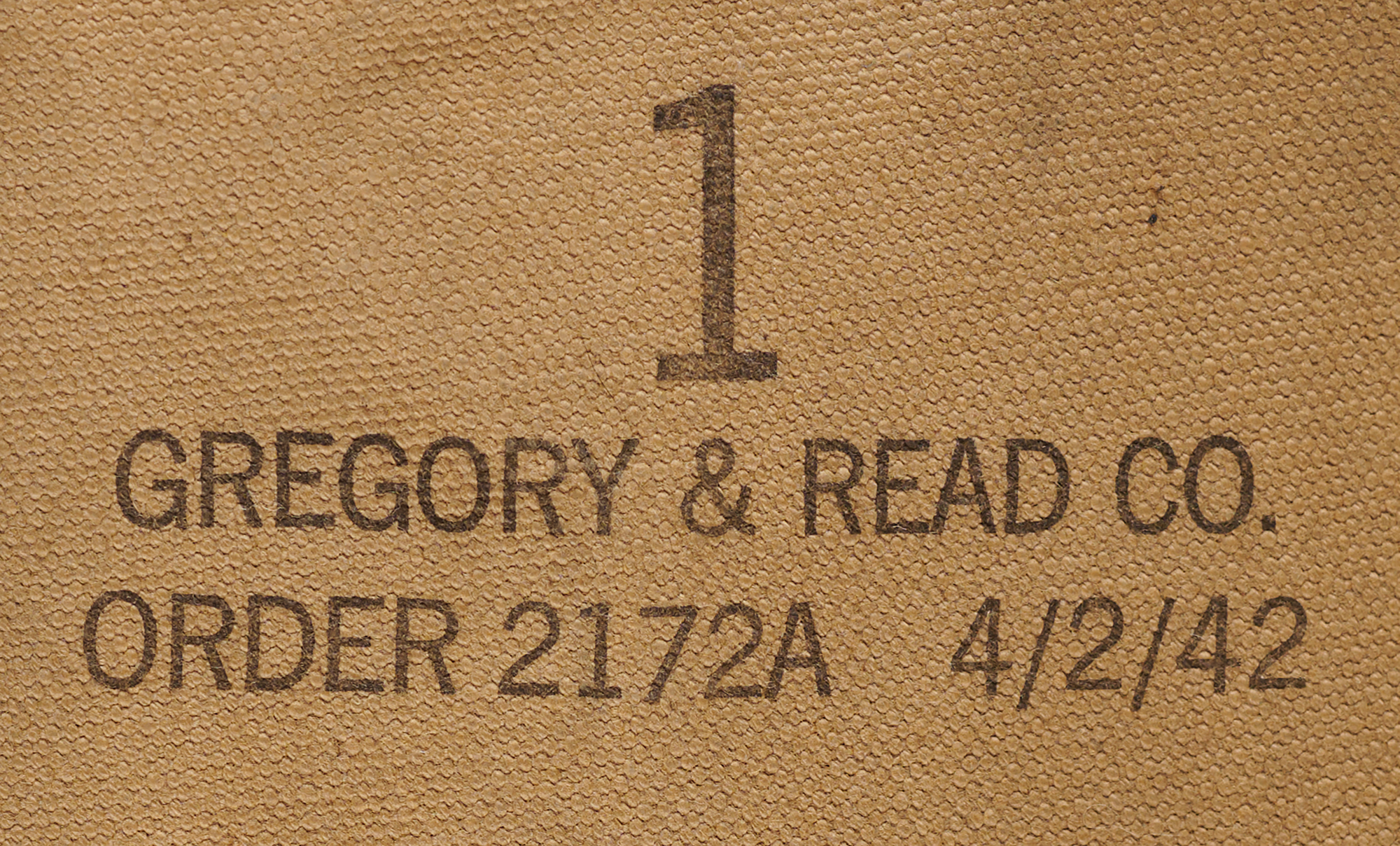
Also included are two pairs of Marx’s khaki canvas service gaiters, both with metal eyelets, cord lacing, and web underfoot straps with metal buckles. One pair is boldly stenciled on the interior, “C. H. MARX,” while the other bears a manufacturer’s stamp, “1 / GREGORY & READ CO. / ORDER 2172A 4/2/42.”
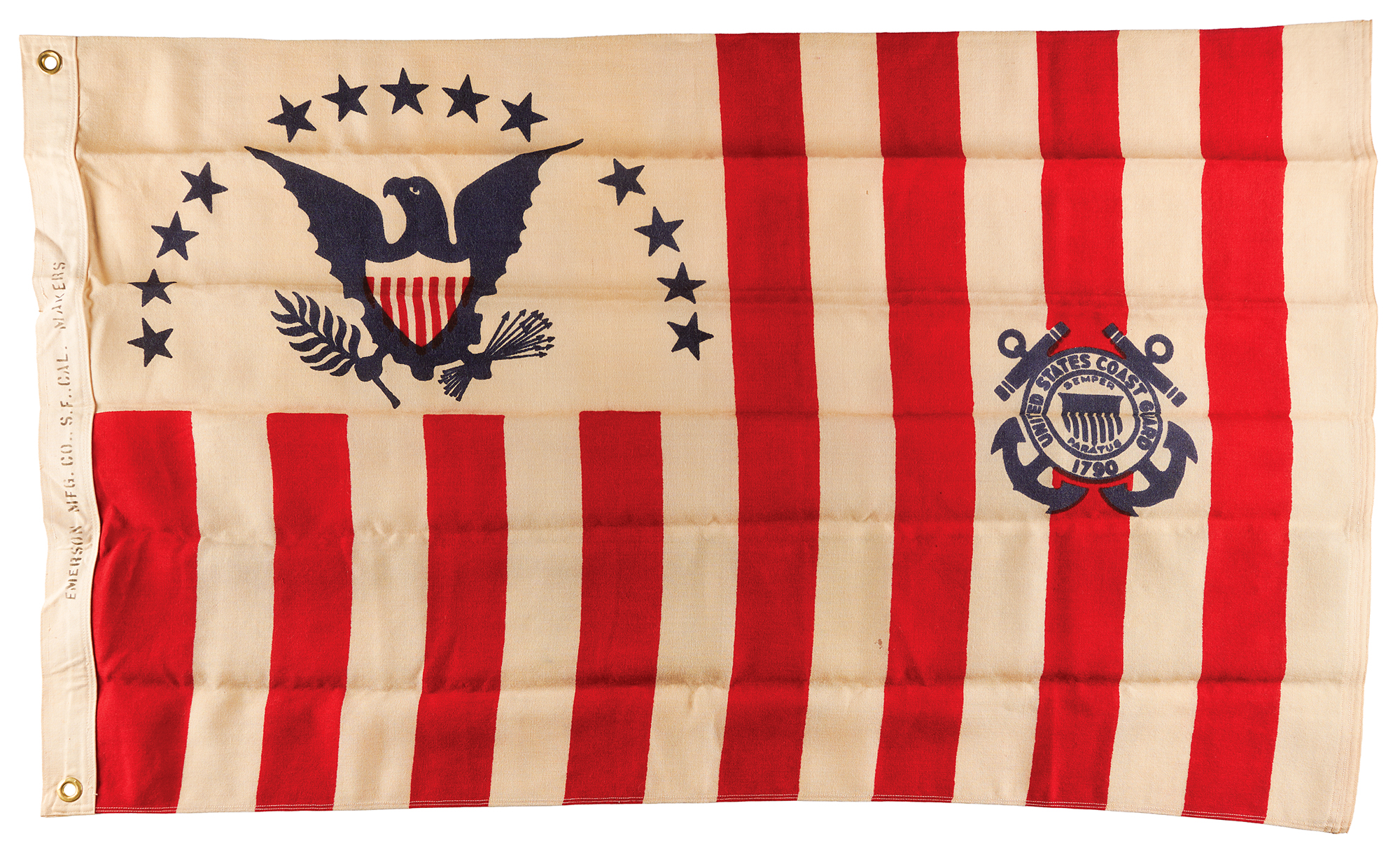
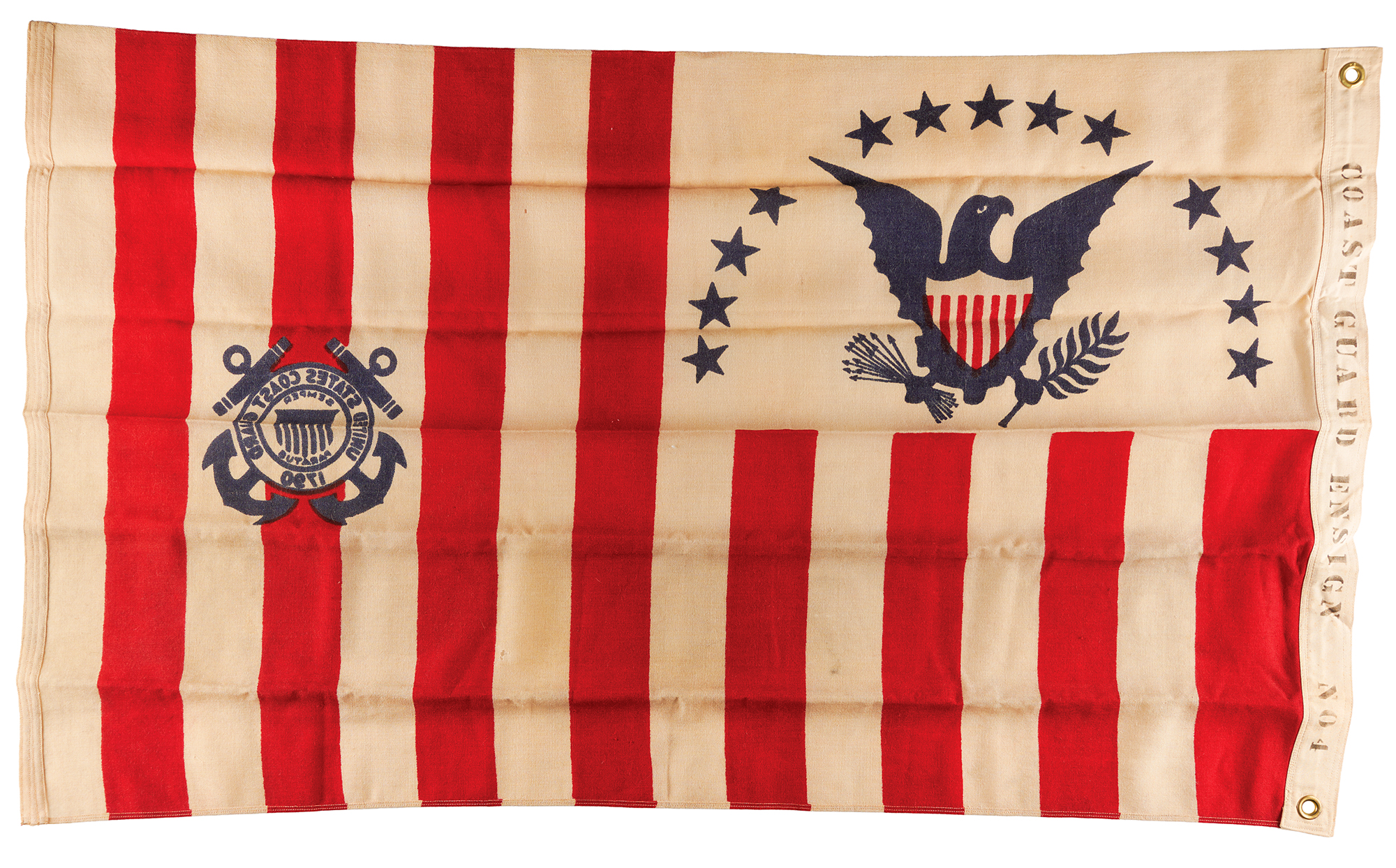
Last is a United States Coast Guard ensign, 49.25˝ x 29.5˝, featuring alternating red and white stripes, the Coast Guard emblem, and an eagle surrounded by thirteen stars. The hoist is stenciled, “EMERSON MFG. CO. S.F. CAL. MAKERS” and “COAST GUARD ENSIGN NO 4,” and is fitted with metal grommets. The flag was obtained by Marx from LST-176 during his service aboard the ship; it is not represented as having been flown from the vessel.
Selected entries from Marx’s journal are as follows:
July 27, 1943: “After sixteen month in the C.G.’s it looks like I’m going to get in the war after all. At 05:00 today it was anchors aweigh and we sailed for North Africa. We also had 200 Sea Bees aboard.”
June 3, 1944: “Putting English troops aboard today, and we are all set for the big show. I hope we dont have to wait too long. This invasion of Europe is really going to be something big I hope and pray nothing happens to the crew.”
June 5, 1944: “All loaded with soldiers and we said good by to Harwich. We are on our way to some part of the french Coast, and we expect to get it some time tomorrow. Then the big invasion will be on.”
June 6, 1944: “‘D Day,’ This morning between 0600 and 0700 the greatest invasion the world has ever seen started. The big ships kept shelling the beach all day long, and our planes were bombing the French Coast. Our L.S.T. and the rest of them hit the beach about 1800. We do not know when we will be unloaded. The name of the place we hit is ‘La Havre.’ Seine Beach and France to England.”
June 8, 1944: “After staying about two miles off the beach for the last two days we finally started to unload our ship. We been running to General Quarters every couple of hours and there is a lot more I could write down, but I dont care to remember this when the war is over. We are on our way back to England for more troops and then we’ll head back to the beach again.”
June 9, 1944: “We first pulled in Tilbury, England, and we are loading up with troops again. I dont know if we will hit the same beach again or not.”
June 10, 1944: “On our way back to France with a load of troops, guns and about three hundred soldiers. This is our second trip to France lets hope and pray nothing happens.”
June 12, 1944: “Here we are back on the beach, but this time we hit different section. We got here about 0400, and had some bad luck at 0900. That the time we were hit by a liberty ship which put a big hole in our port side. We didn’t hit the beach until 1816, and we expect to stay on it until 0200. We received more bombing from the German planes this time than we did the last time we were here.”
June 13, 1944: “We are on our way back to England, and we expect to put troops aboard as soon as we get there. Before we left France, I went on the beach and talked with some soldiers, and they seem to be doing alright. They said that the part of the beach used to be called The Beach of Love.”

