The 30 Minute Rule begins October 14 at 7:00 PM EDT. An Initial Bid Must Be Placed By October 14 at 6:00 PM EDT To Participate After 6:00 PM EDT
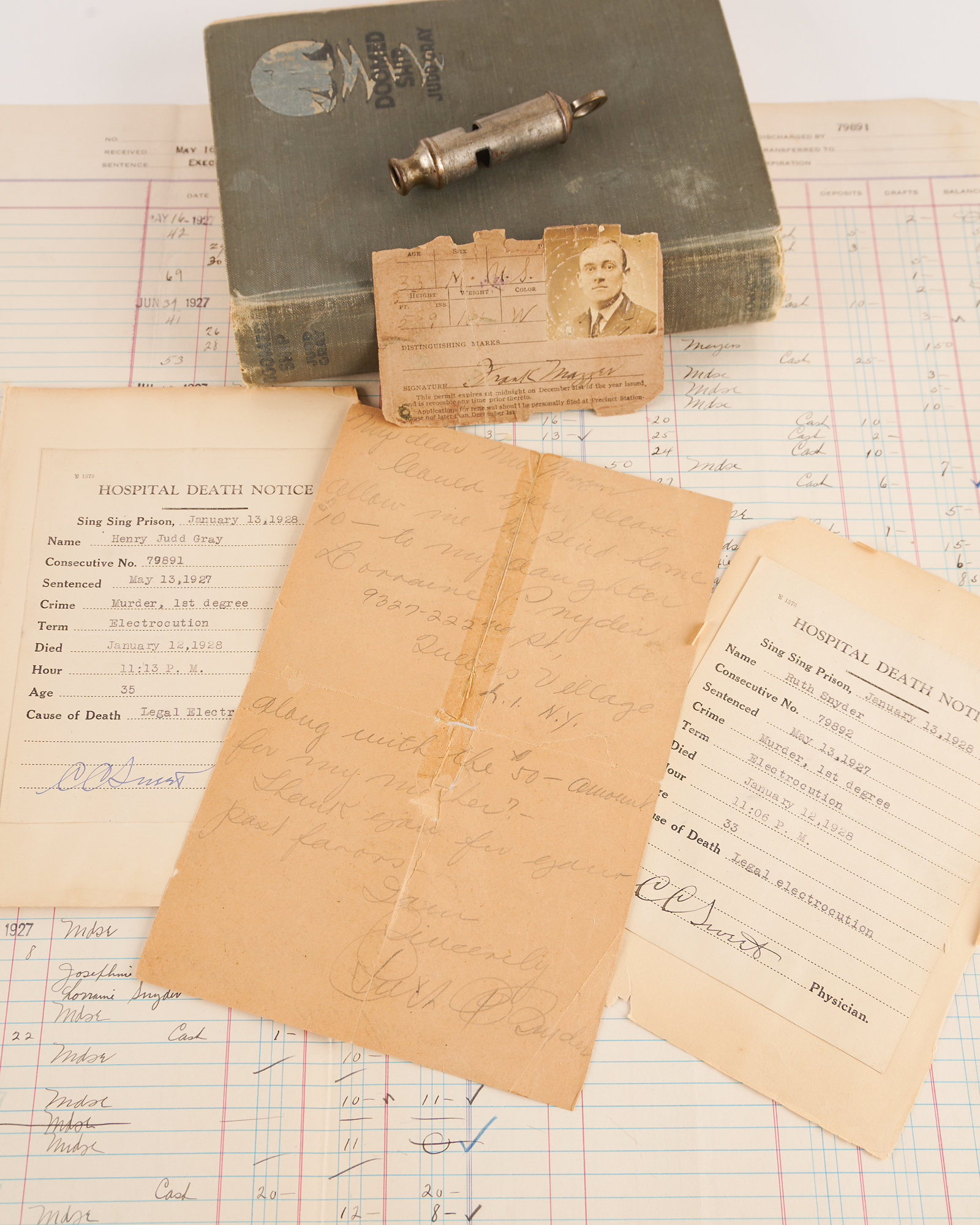
Notorious New York City housewife (1895–1928) convicted with her lover, Henry Judd Gray, of the 1927 murder of her husband, Albert Snyder, and executed in Sing Sing’s electric chair; the case inspired the classic crime novel and film noir Double Indemnity. Remarkable archive from the personal papers of Sing Sing Prison assistant comptroller clerk Frank Mazzur, including an ALS by Ruth Snyder, prison deposit sheet ledgers for Snyder and Gray, official Sing Sing death notices for Snyder and Gray, Mazzur's New York Police Department 'License to Carry' card, and his police whistle.
Includes:
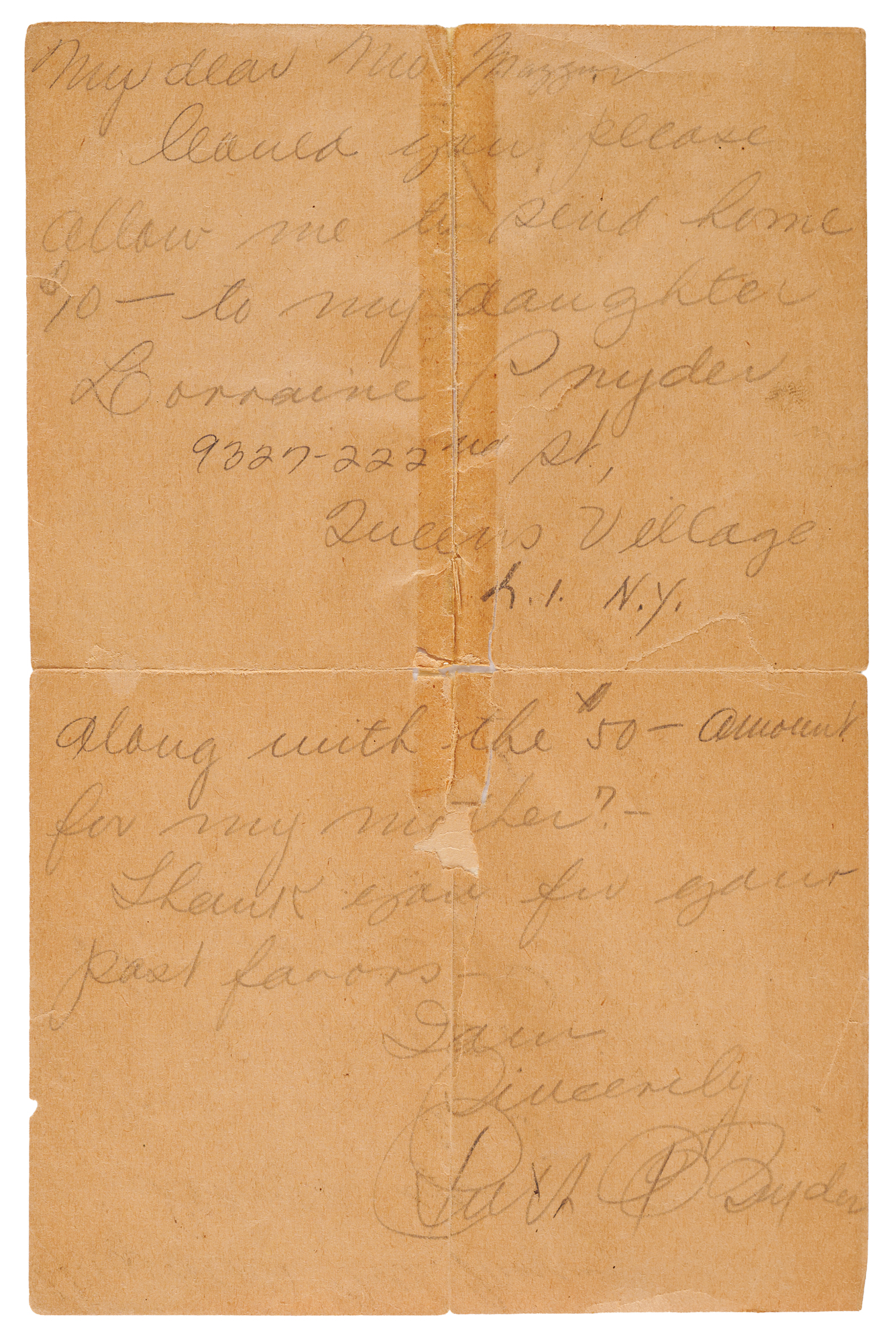
- ALS in pencil, signed "Ruth B. Snyder," one page, 5.5 x 8.5, no date but circa July 1927, Snyder writes to Mazzur, instructing him to provide money to her family. In full: "Could you please allow me to send home $10—to my daughter Lorraine Snyder, 9327-222nd St., Queens Village, L.I. N.Y., along with the $50—amount for my mother? Thank you for your past favors." In good to very good condition, with uniform toning and tears and separations repaired on the reverse with archival tape.
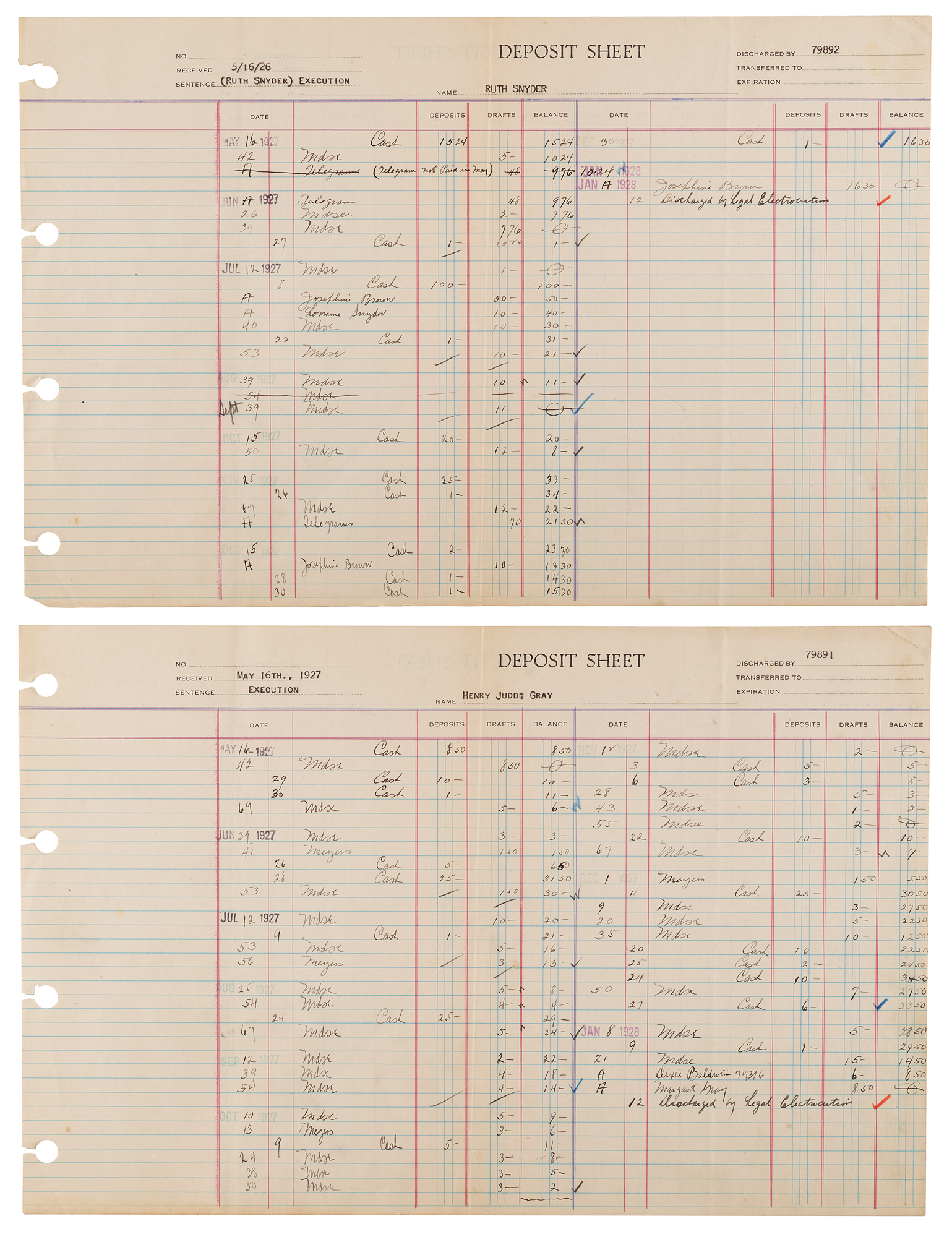
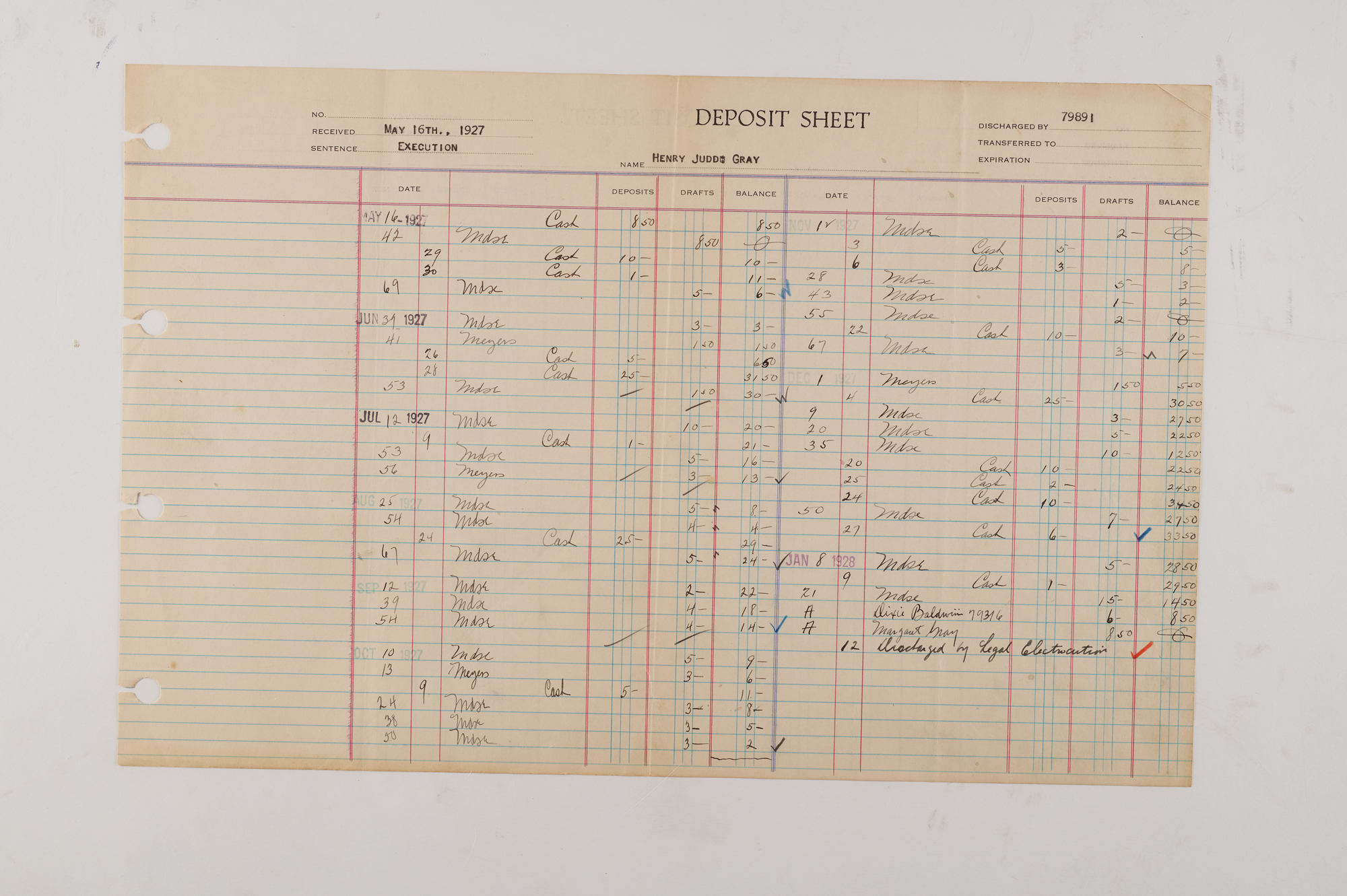
- two 16 x 10.5 "Deposit Sheet" ledger pages for Ruth Snyder and Henry Judd Gray, tracking drafts and deposits from May 1927 through January 1928. The Snyder ledger documents disbursement of the requested payments—$50 to Josephine Brown and $10 to Lorraine Snyder—on July 12, 1927. Both pages document the termination of the accounts on January 12, 1928: "Discharged by Legal Electrocution." In overall fine condition.
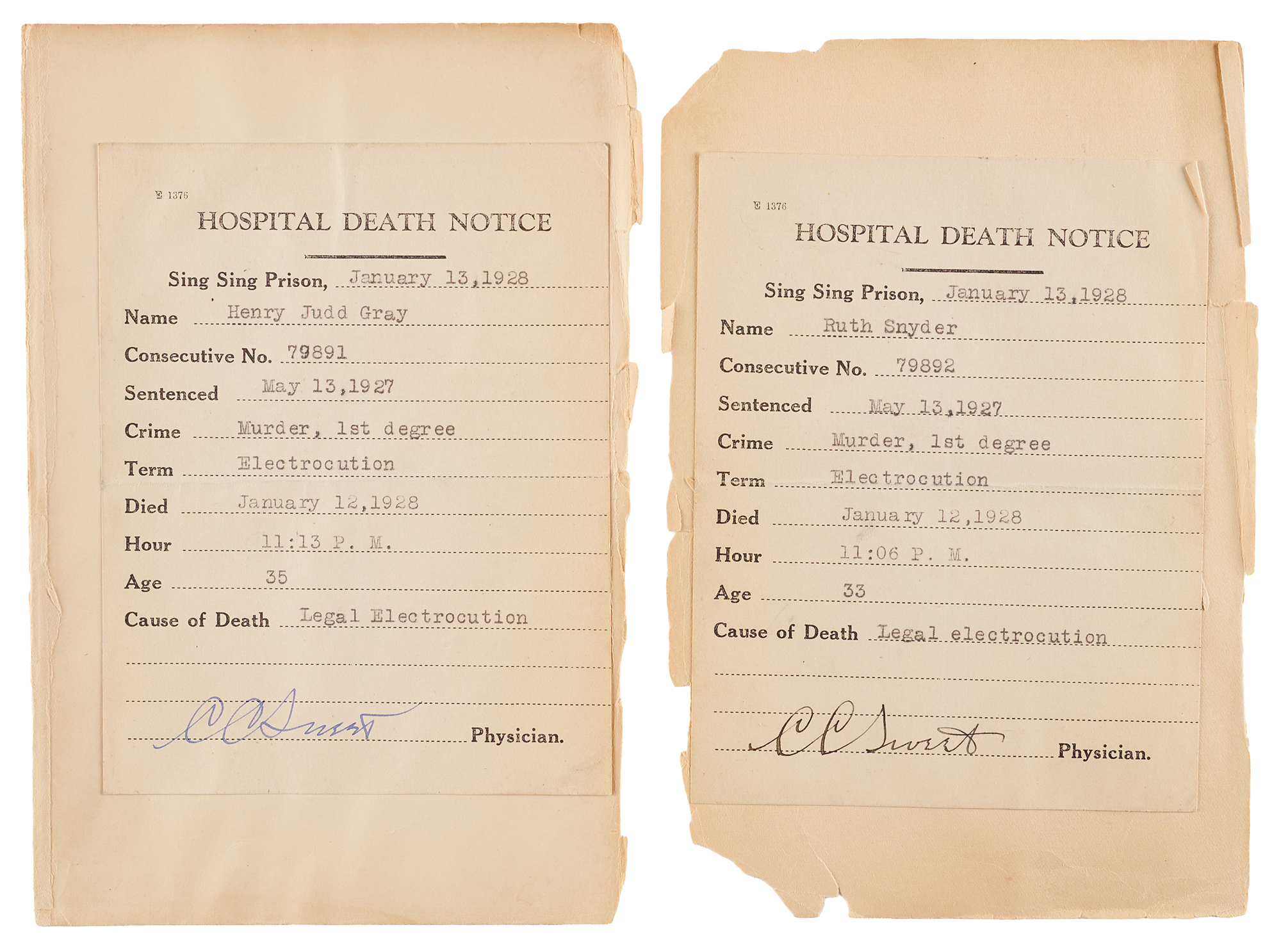
- two 4.25 x 5.25 Sing Sing Prison "Hospital Death Notice" documents signed by Dr. Charles C. Sweet, the prison's chief physician and medical director, who attended more than 300 executions at Sing Sing in order to officially examine the inmates and pronounce them dead. Snyder's notice documents her demise by "Legal electrocution" at 11:06 P.M. on January 12, 1928; Gray's death came just minutes later at 11:13 P.M. Both notices are affixed to the detached final pages of a Mazzur's copy of Doomed Ship, written by Judd Gray; the book is included, and laid in is a handwritten note: "This book is worn out because I've loaned it to so many people…Judd Gray wrote 'Doomed Ship' to reimburse his family for the expense of his trial."
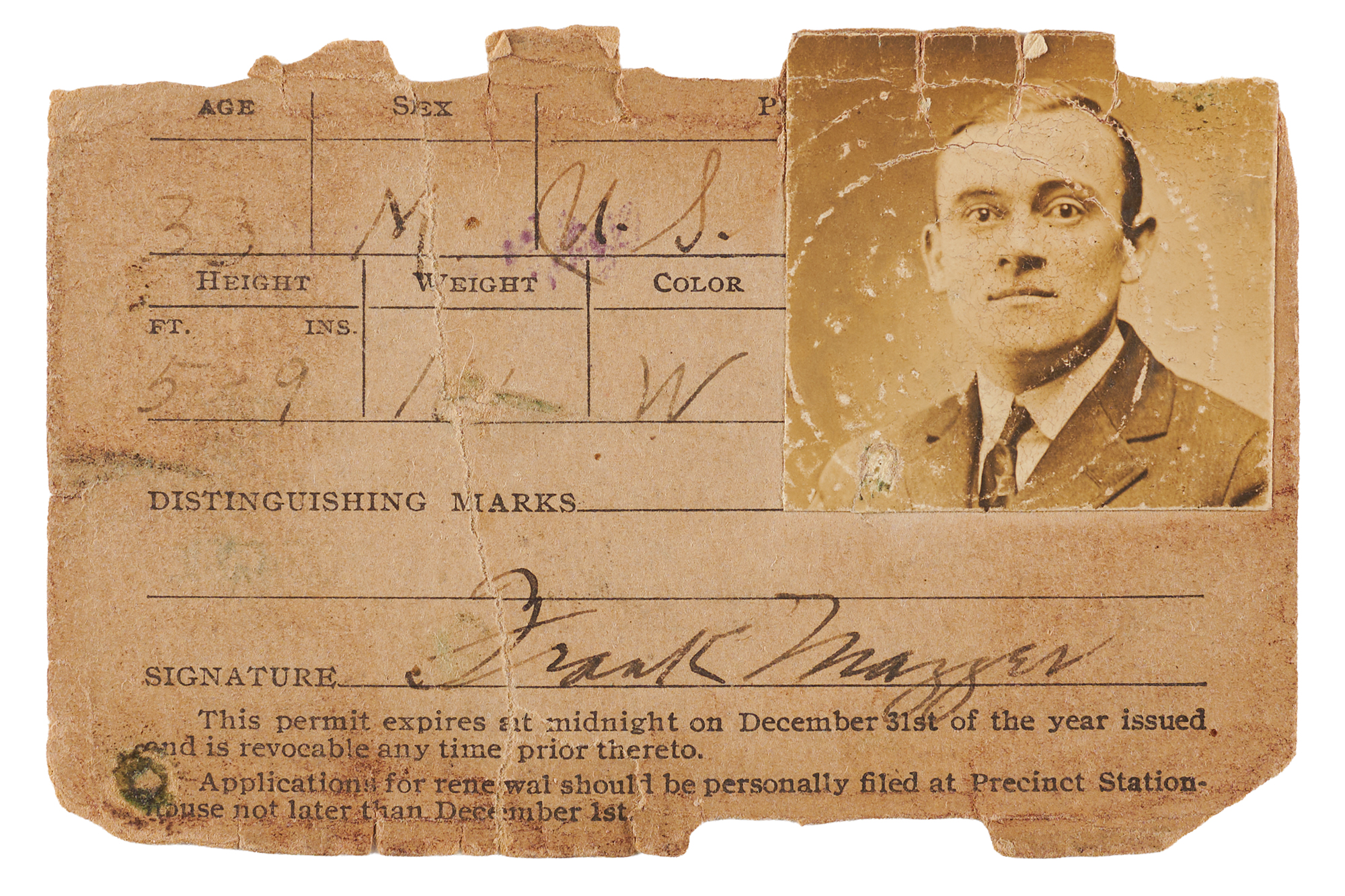
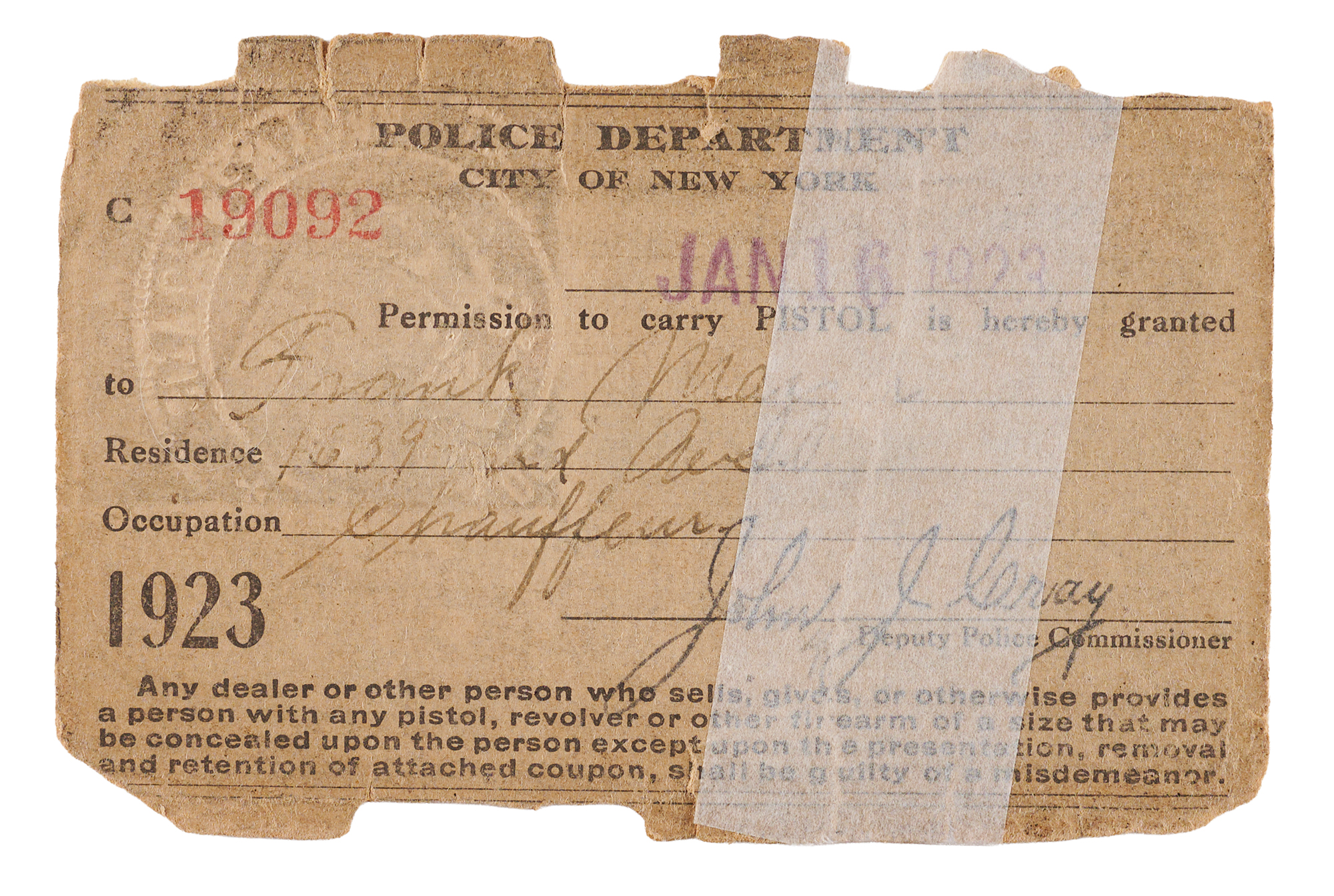
- Frank Mazzur's City of New York Police Department identification card, 4 x 2.75, stamp-dated January 16, 1923 on the reverse, identifying his occupation as "Chauffeur" and granting him permission to carry a pistol. In good condition, with losses to edges and a vertical tear repaired with archival tape on the reverse.
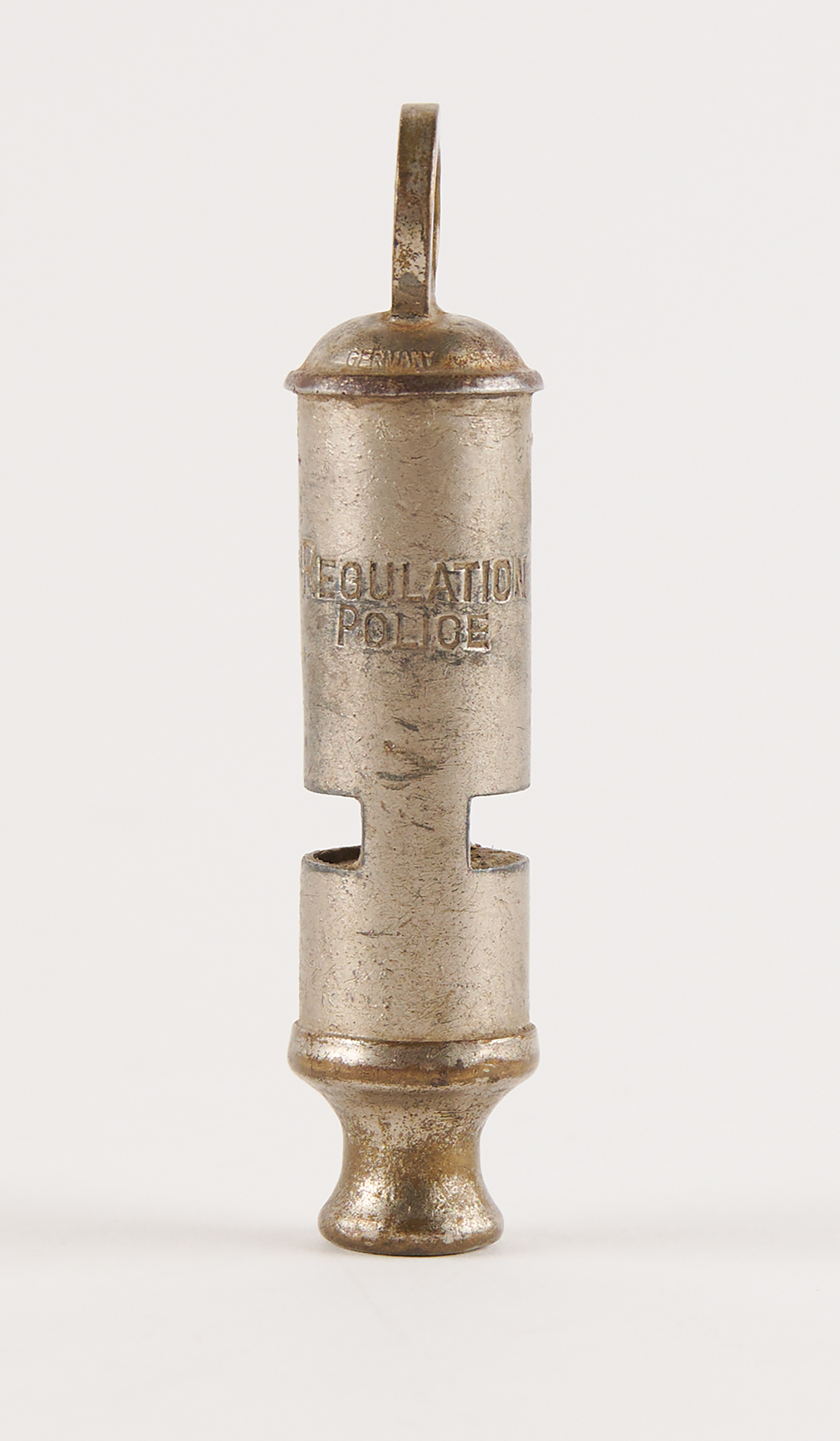
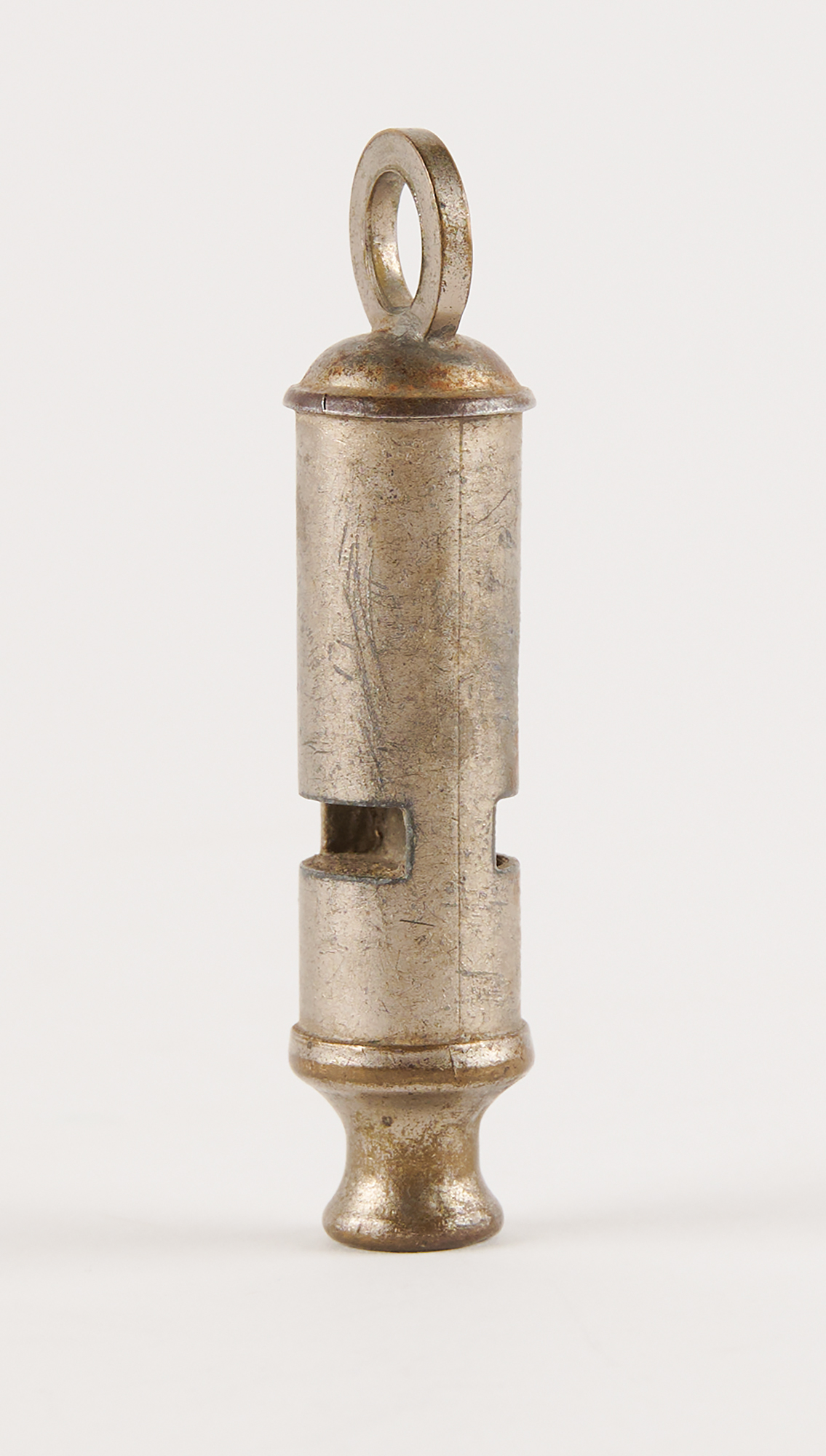
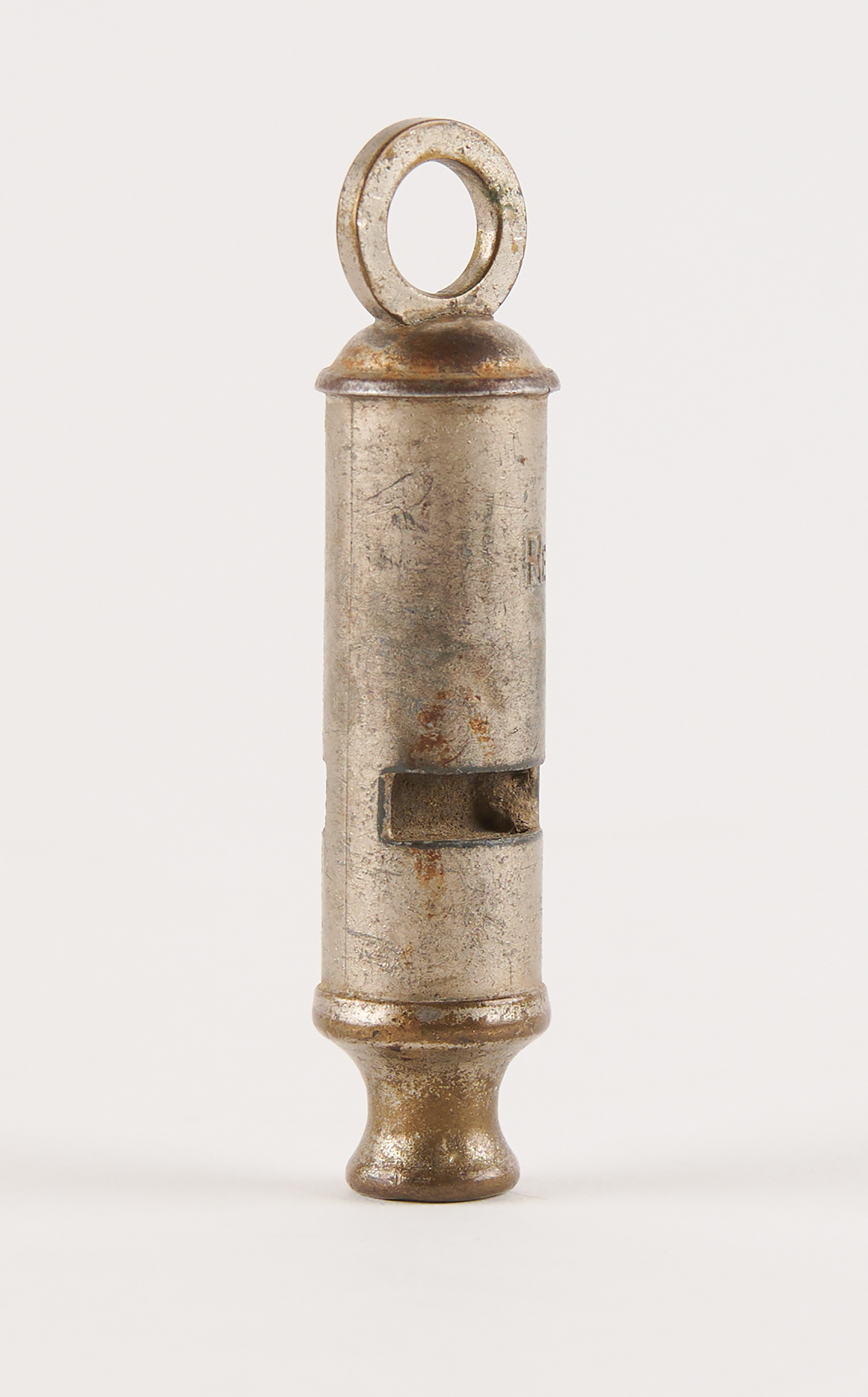
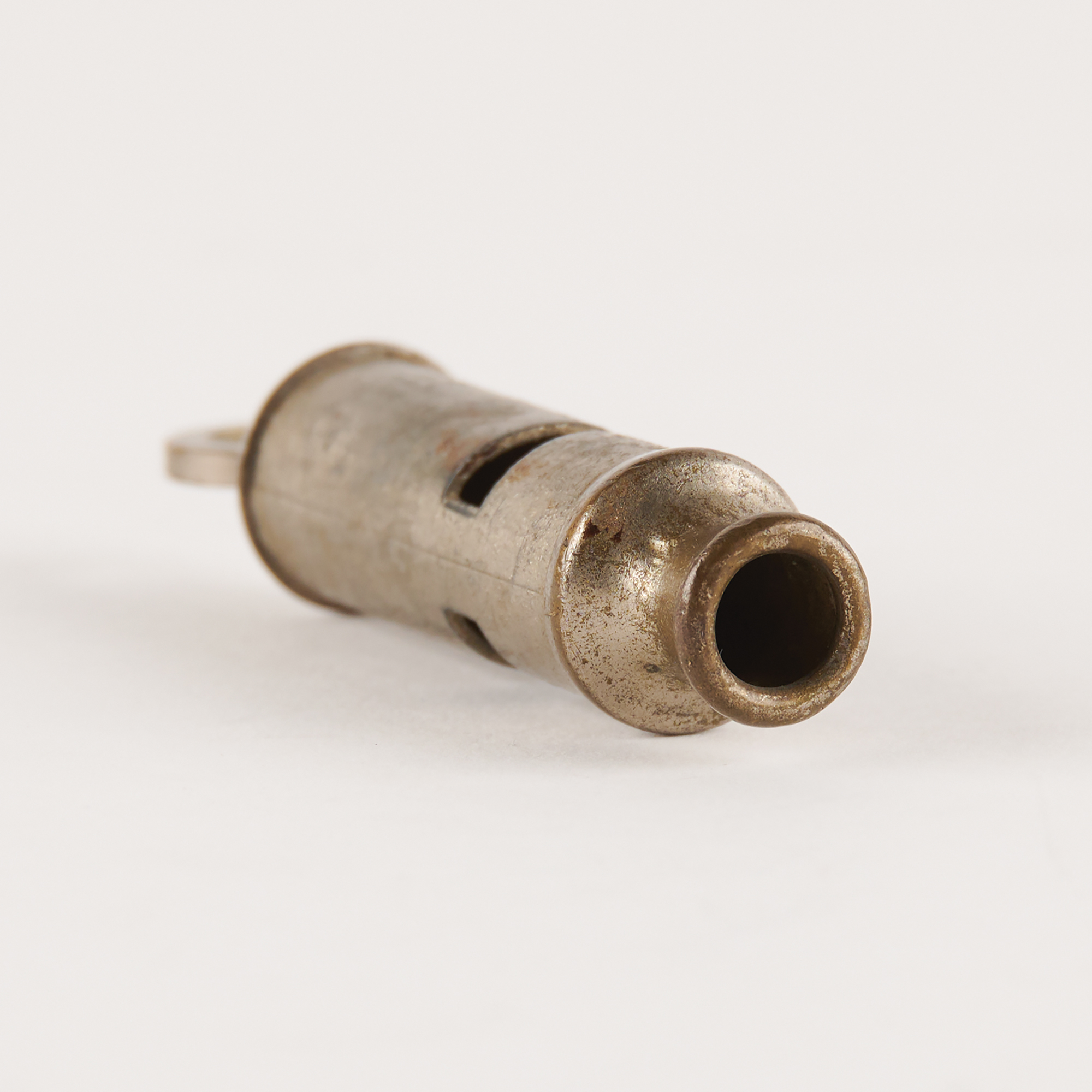
- Frank Mazzur's personally-owned 3.25˝-long police whistle.
The Snyder-Gray murder case was one of the great tabloid sensations of the 1920s, arising from the March 1927 killing of Ruth Snyder’s husband, Albert, by Snyder and her lover, corset salesman Henry Judd Gray. Their affair, clumsy attempts to disguise the murder as a burglary, dueling confessions, and sensational joint trial captivated the New York press, which transformed the pair into notorious symbols of Jazz Age crime.
Both were convicted and executed at Sing Sing on January 12, 1928; Snyder’s execution became especially infamous when a Daily News photographer secretly captured an image of her in the electric chair, which appeared the next day on the newspaper's front page. This extraordinary archive brings that celebrated case down to an unusually intimate, institutional level: from Snyder’s simple request to send money to her young daughter, to the prison ledgers recording those payments, and finally to the stark death notices and account entries documenting the executions themselves.

