The 30 Minute Rule begins November 11 at 7:00 PM EST. An Initial Bid Must Be Placed By November 11 at 6:00 PM EST To Participate After 6:00 PM EST
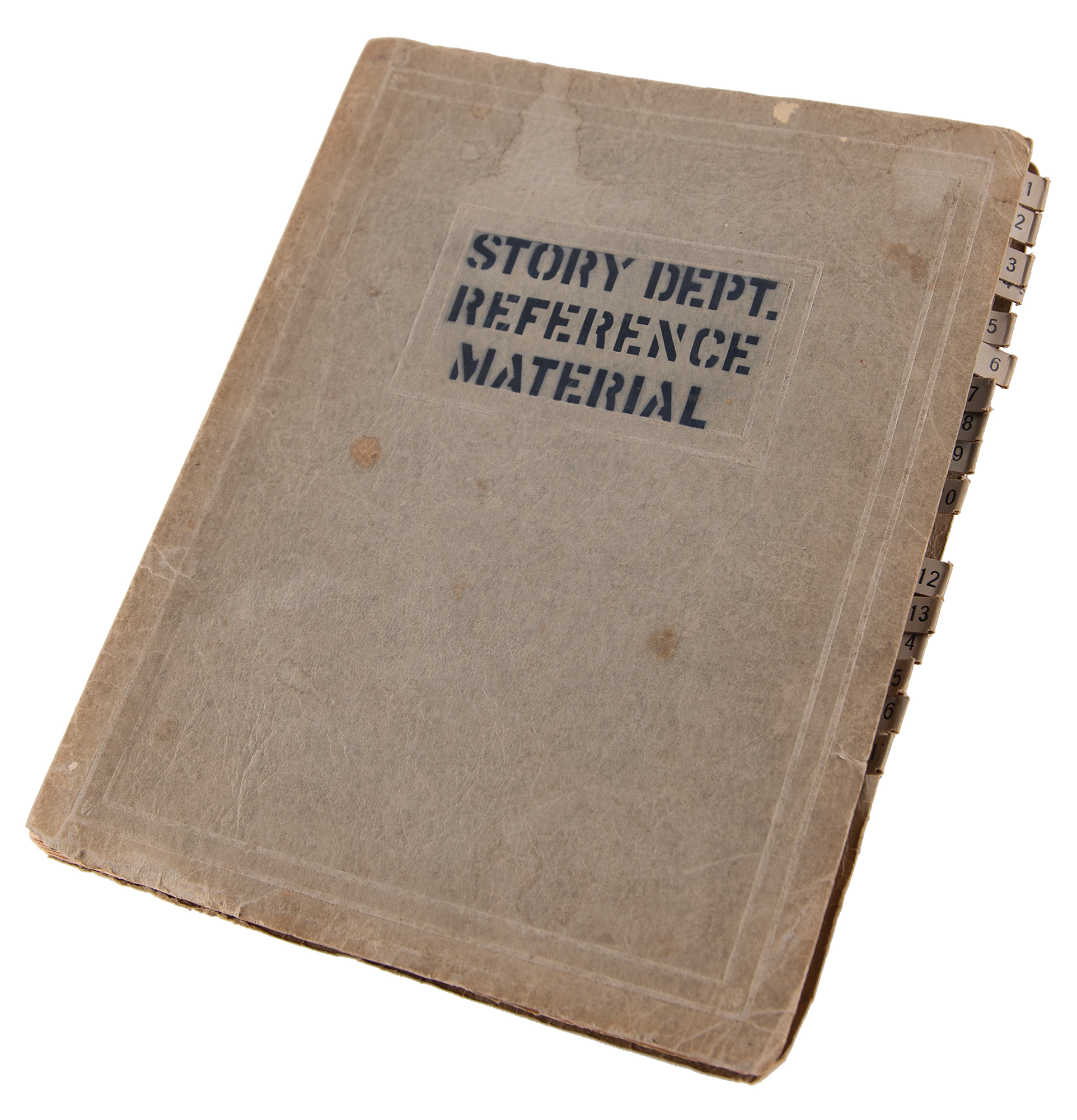
Original circa 1939 Walt Disney Studios "Story Dept. Reference Material" handbook, 9 x 11.25, marked as "No. 3" with a revision date of June 20, 1939, featuring the introductory note: "In a line of endeavor such as the production of Disney pictures, methods of work and creative standards are constantly changing. For this reason any printed material stands the chance of being outmoded as time goes on. Please consider this booklet only as a compilation of reference material which may prove helpful to members of the Story Department in their work. It is not meant to provide a source for the answering of story questions or creative problems. Any definite opinions stated in this material must be considered as being the opinions of certain individuals or groups of individuals, and are not in any way being offered as established rules for Story work."
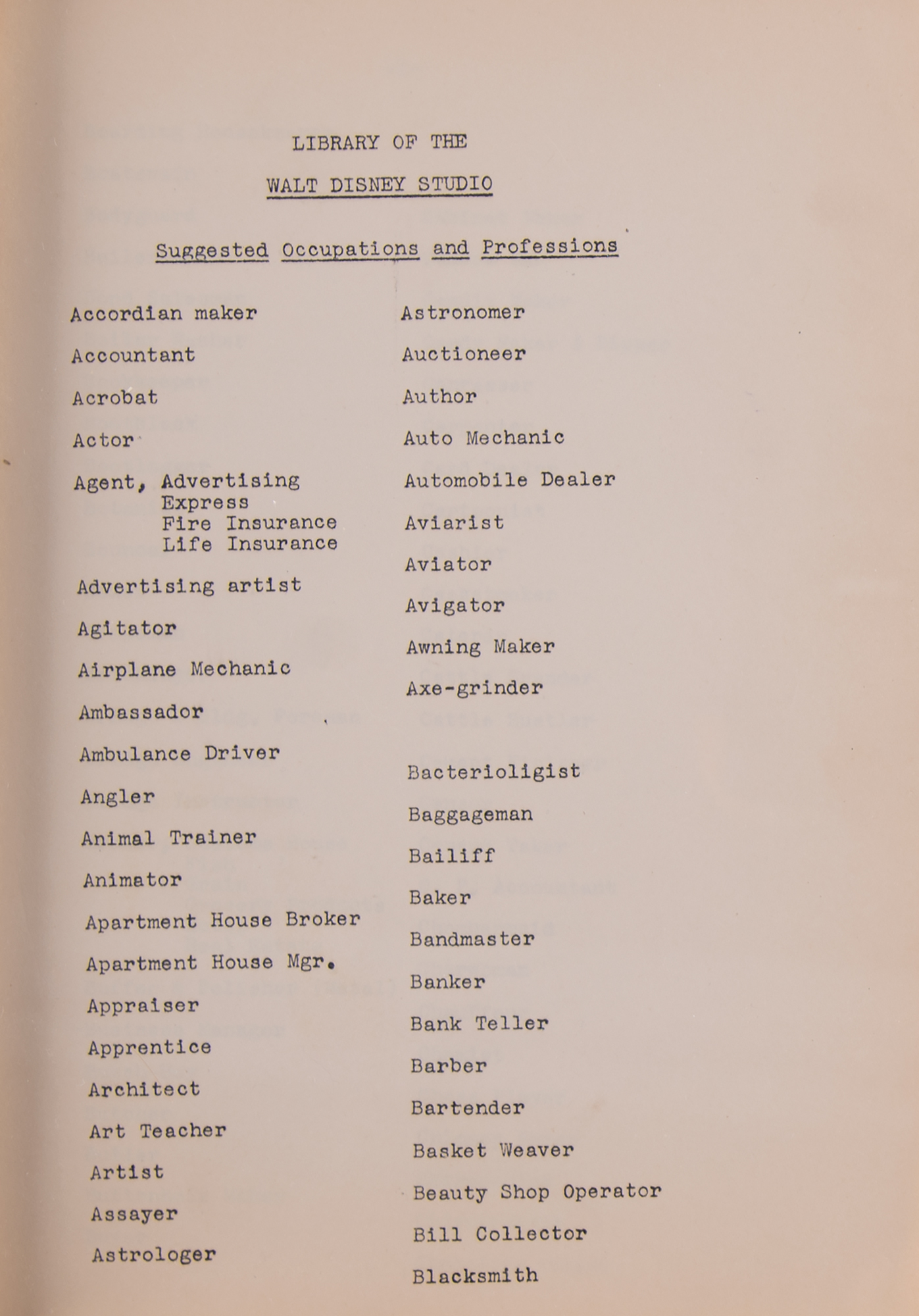
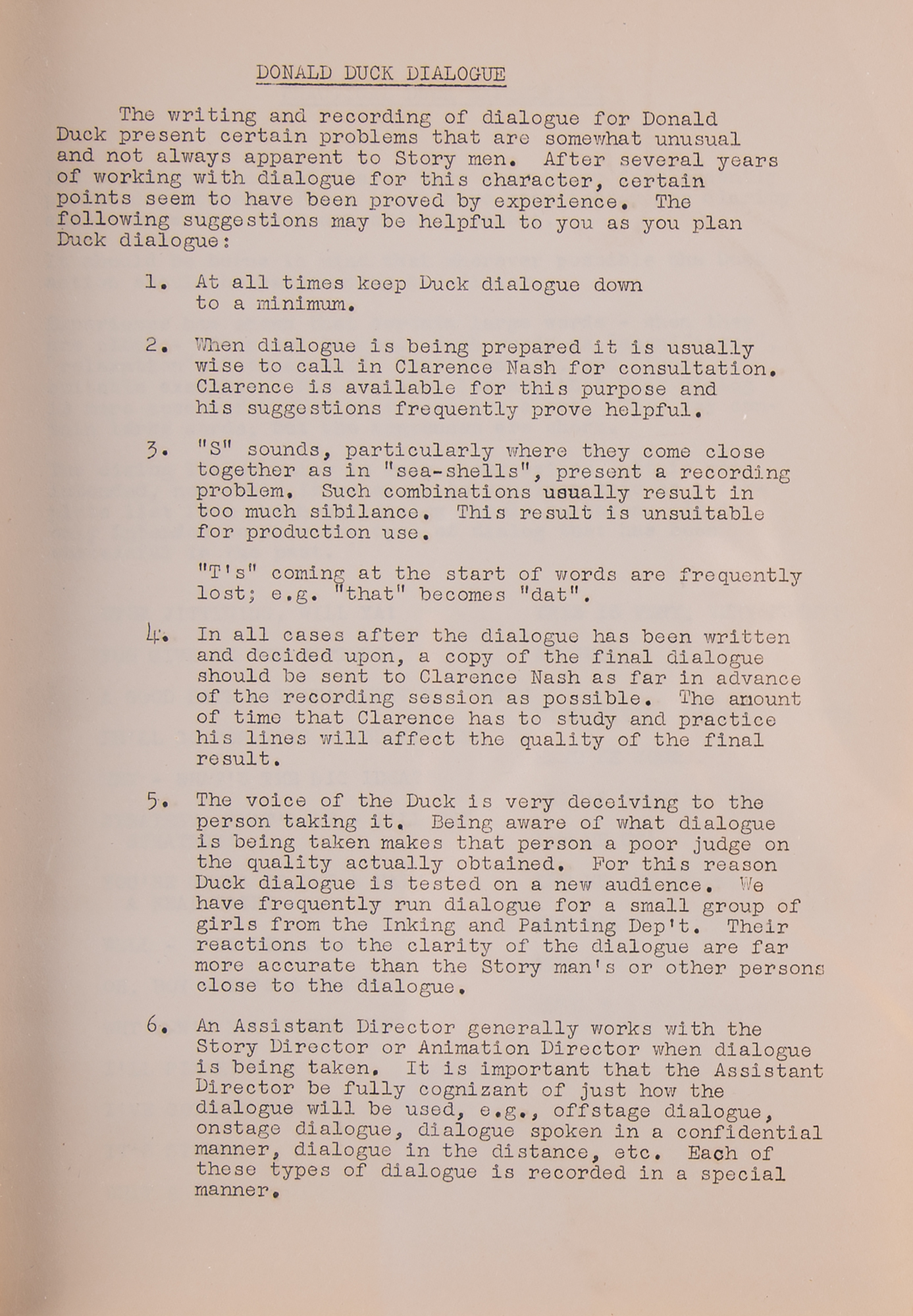
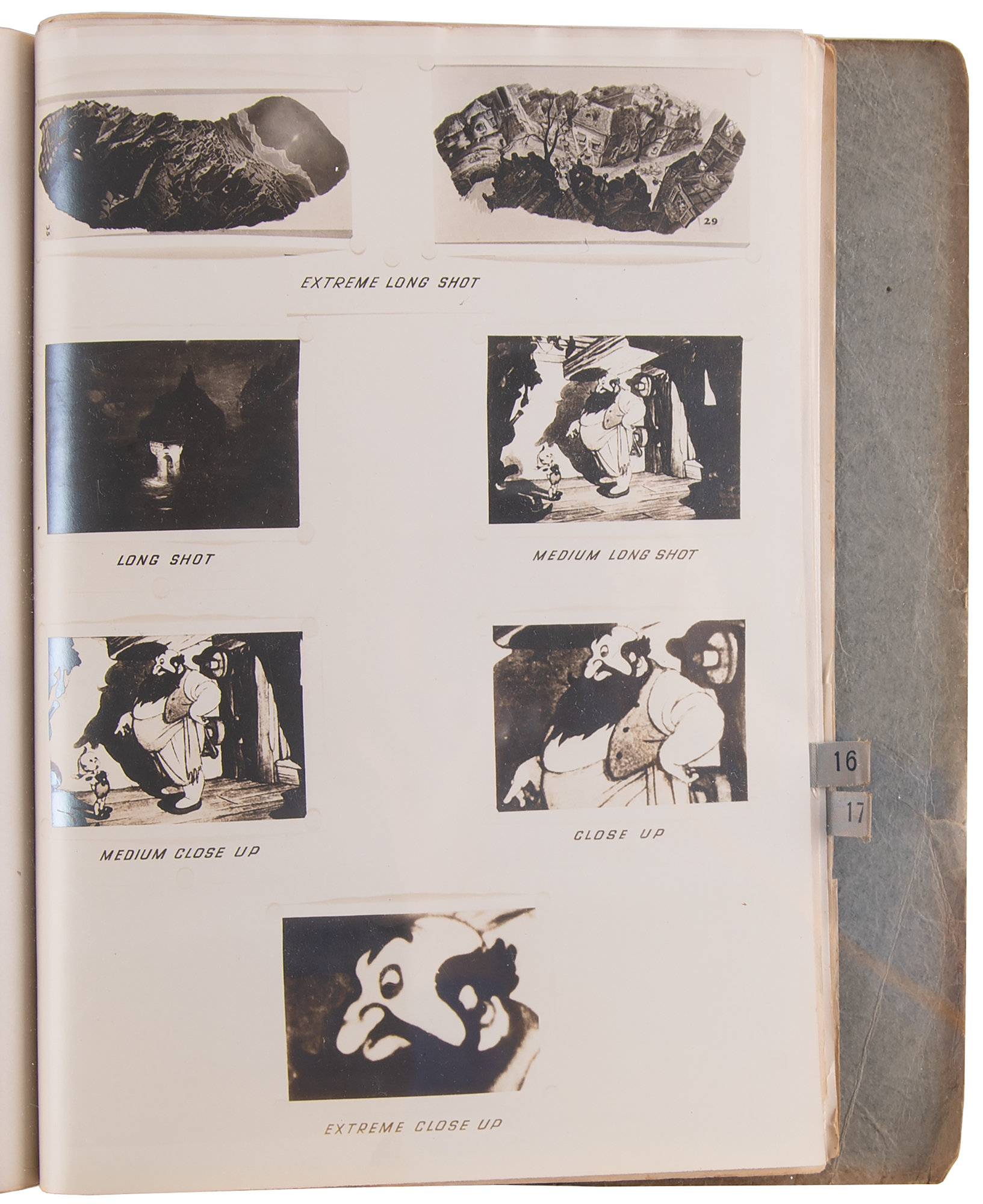
A table of contents defines the 18 tabbed sections: Sources of Reference Material, Character Analyses of Disney Characters, Basic Comedy Situations, Use of the Gage File, Picturesque Locales, Occupations and Professions, Donald Duck Dialogue, Prop List, Food List, Construction of the Leica Reel, Staging, Jack Benny, Detailed Continuity, Shooting Script, Explanation of Certain Camera Terms, Story Sketches, Suggested Reading List, and Censorable Words and Phrases.
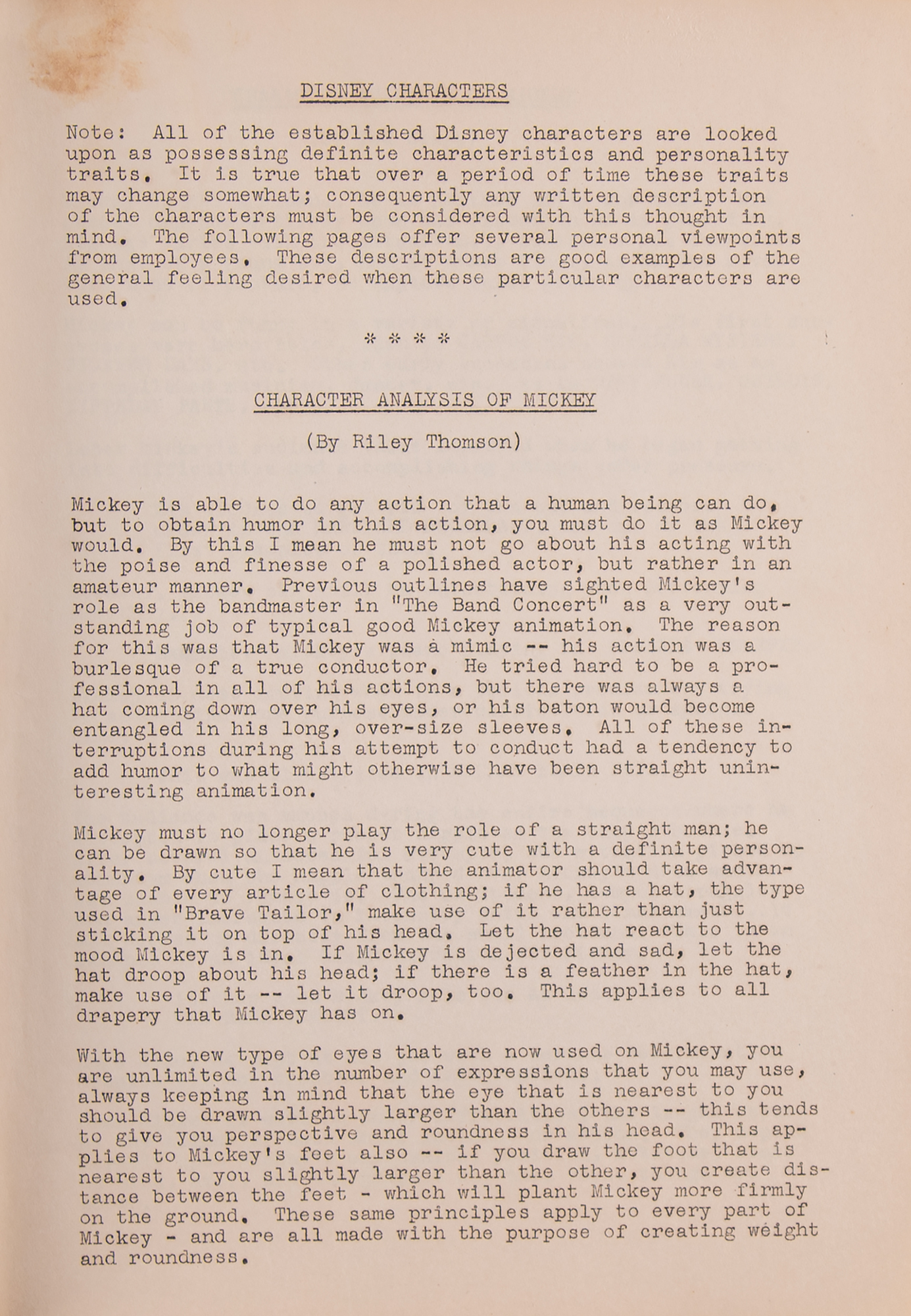
The character analysis of Mickey Mouse begins: "Mickey is able to do any action that a human being can do, but to obtain humor in this action, you must do it as Mickey would. By this I mean he must not go about his acting with the poise and finesse of a polished actor, but rather in an amateur manner. Previous outlines have sighted Mickey's role as the bandmaster in 'The Band Concert' as a very outstanding job of typical good Mickey animation. The reason for this was that Mickey was a mimic his action was a burlesque of a true conductor. He tried hard to be a professional in all of his actions, but there was always a hat coming down over his eyes, or his baton would become entangled in his long, over-size sleeves. All of these interruptions during his attempt to conduct had a tendency to add humor to what might otherwise have been straight uninteresting animation.
Mickey must no longer play the role of a straight man; he can be drawn so that he is very cute with a definite personality. By cute I mean that the animator should take advantage of every article of clothing; if he has a hat, the type used in 'Brave Tailor,' make use of it rather than just sticking it on top of his head. Let the hat react to the mood Mickey is in. If Mickey is dejected and sad, let the hat droop about his head; if there is a feather in the hat, make use of it let it droop, too. This applies to all drapery that Mickey has on.
With the new type of eyes that are now used on Mickey, you are unlimited in the number of expressions that you may use, always keeping in mind that the eye that is nearest to you should be drawn slightly larger than the others this tends to give you perspective and roundness in his head. This applies to Mickey's feet also if you draw the foot that is nearest to you slightly larger than the other, you create distance between the feet which will plant Mickey more firmly on the ground. These same principles apply to every part of Mickey and are all made with the purpose of creating weight and roundness."
In very good to fine condition, with some wear and staining to the covers.
This internal, restricted-access document distributed by the Walt Disney Studio Story Department to its animators and staff served as a foundational 'roadmap' for studio standards, creative methodology, and training during a pivotal era in animation history. A fascinating, behind-the-curtain glimpse into the internal standards and processes of the studio at that time.
From the collection of Gerda Robison, who worked as a story researcher and stenographer for Disney in the 1940s and 50s. She authored the book Dark Lady, and later served as Cecil Beaton's assistant on My Fair Lady.

