The 30 Minute Rule begins October 14 at 7:00 PM EDT. An Initial Bid Must Be Placed By October 14 at 6:00 PM EDT To Participate After 6:00 PM EDT
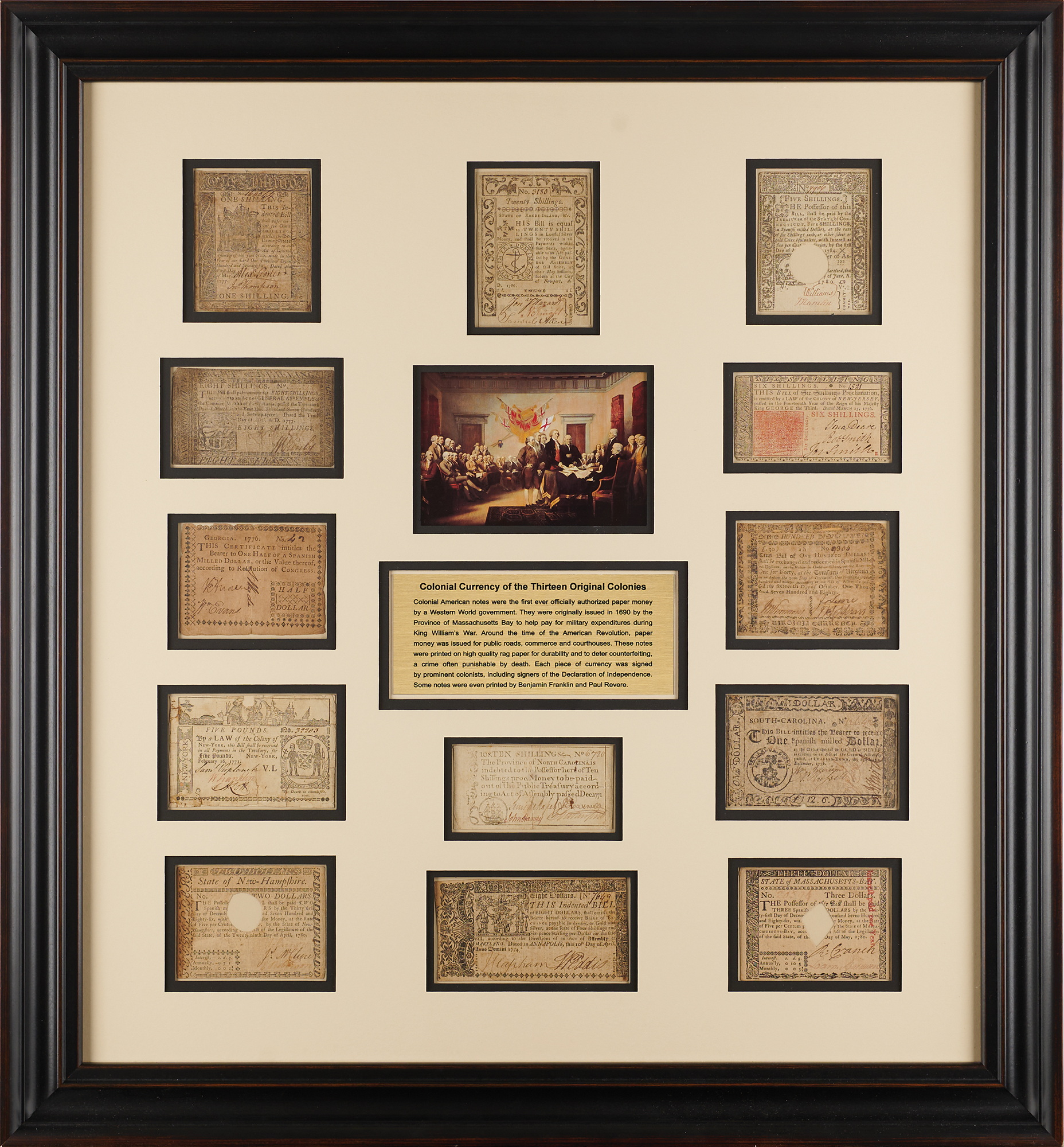
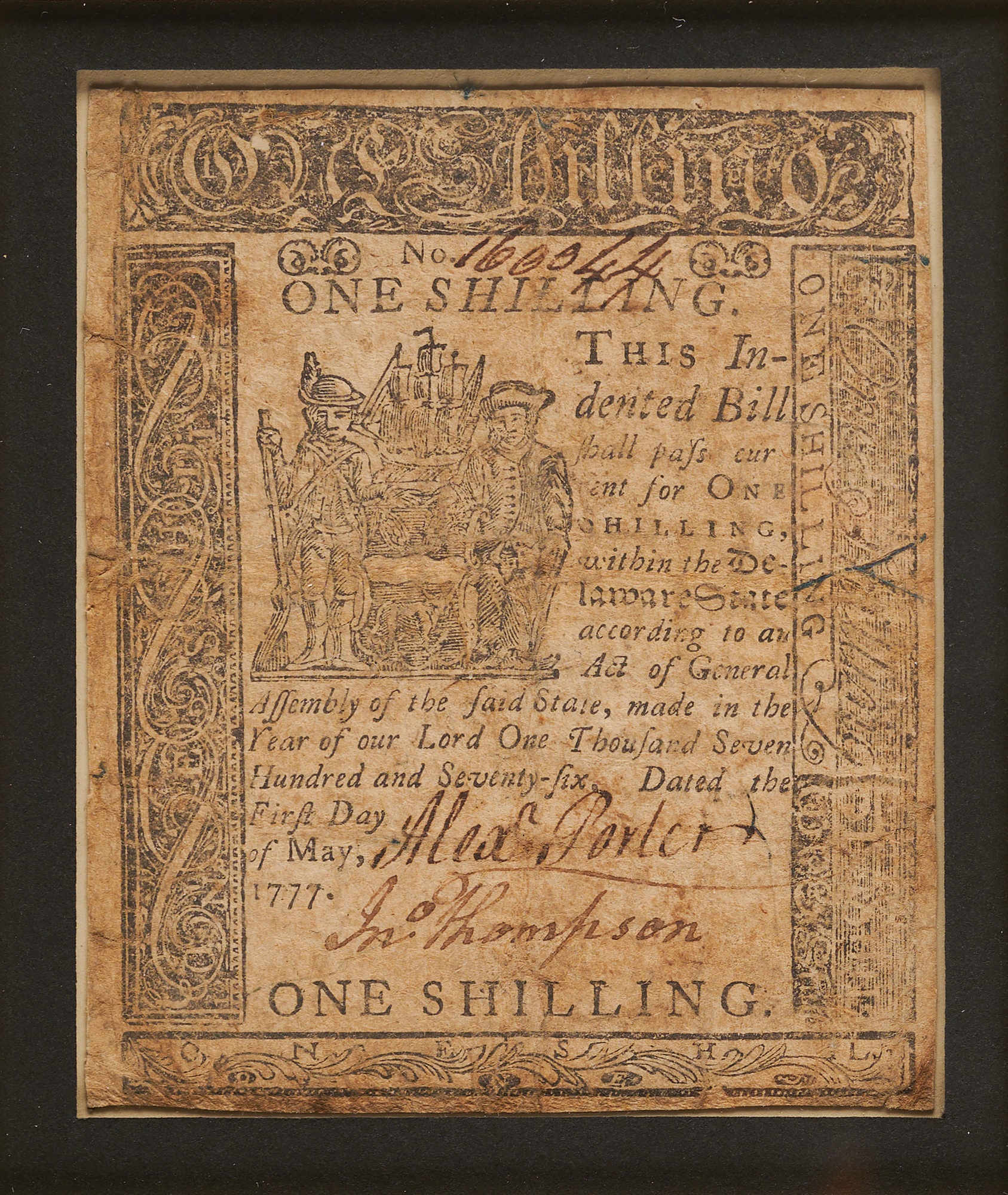
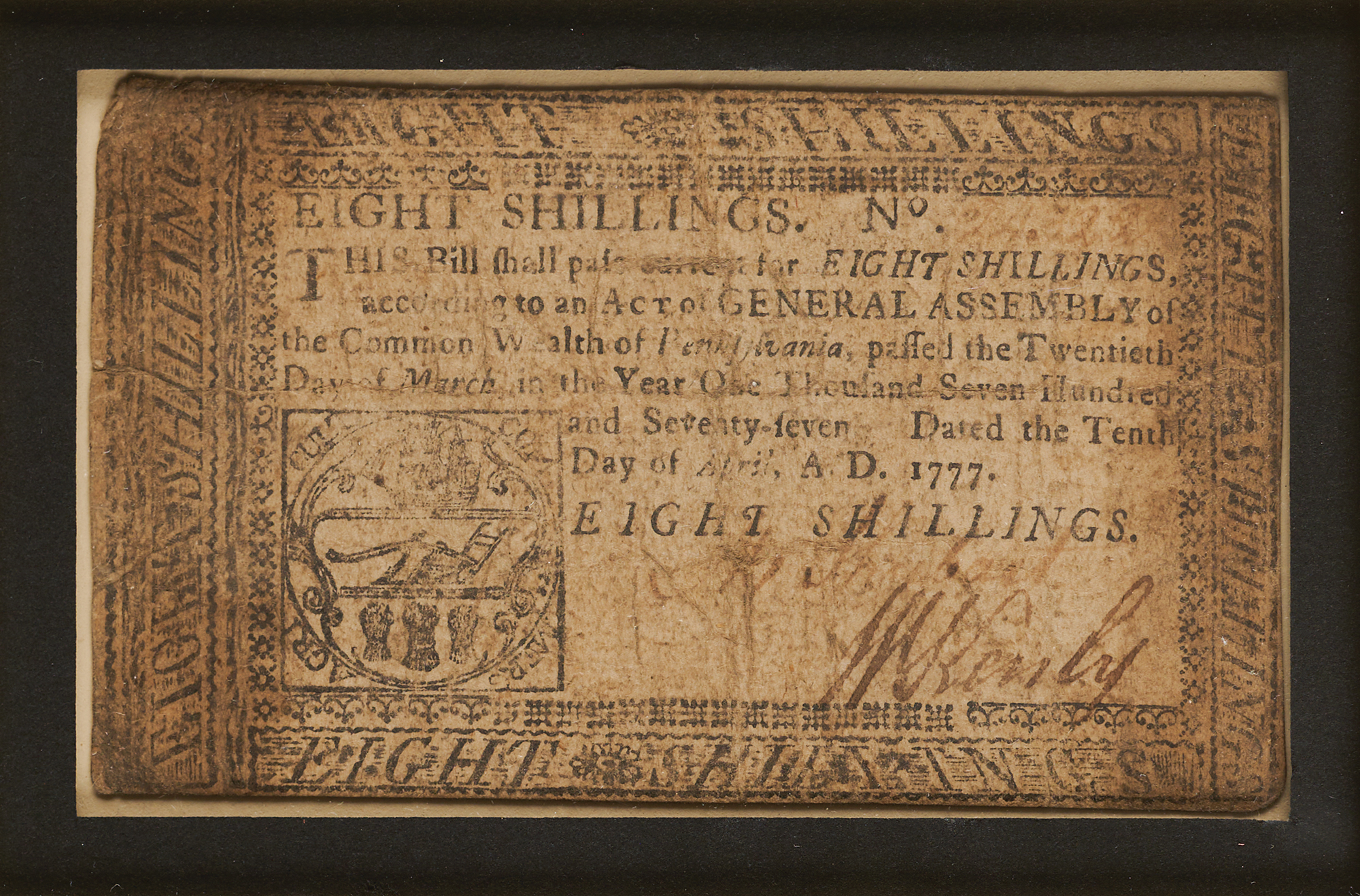
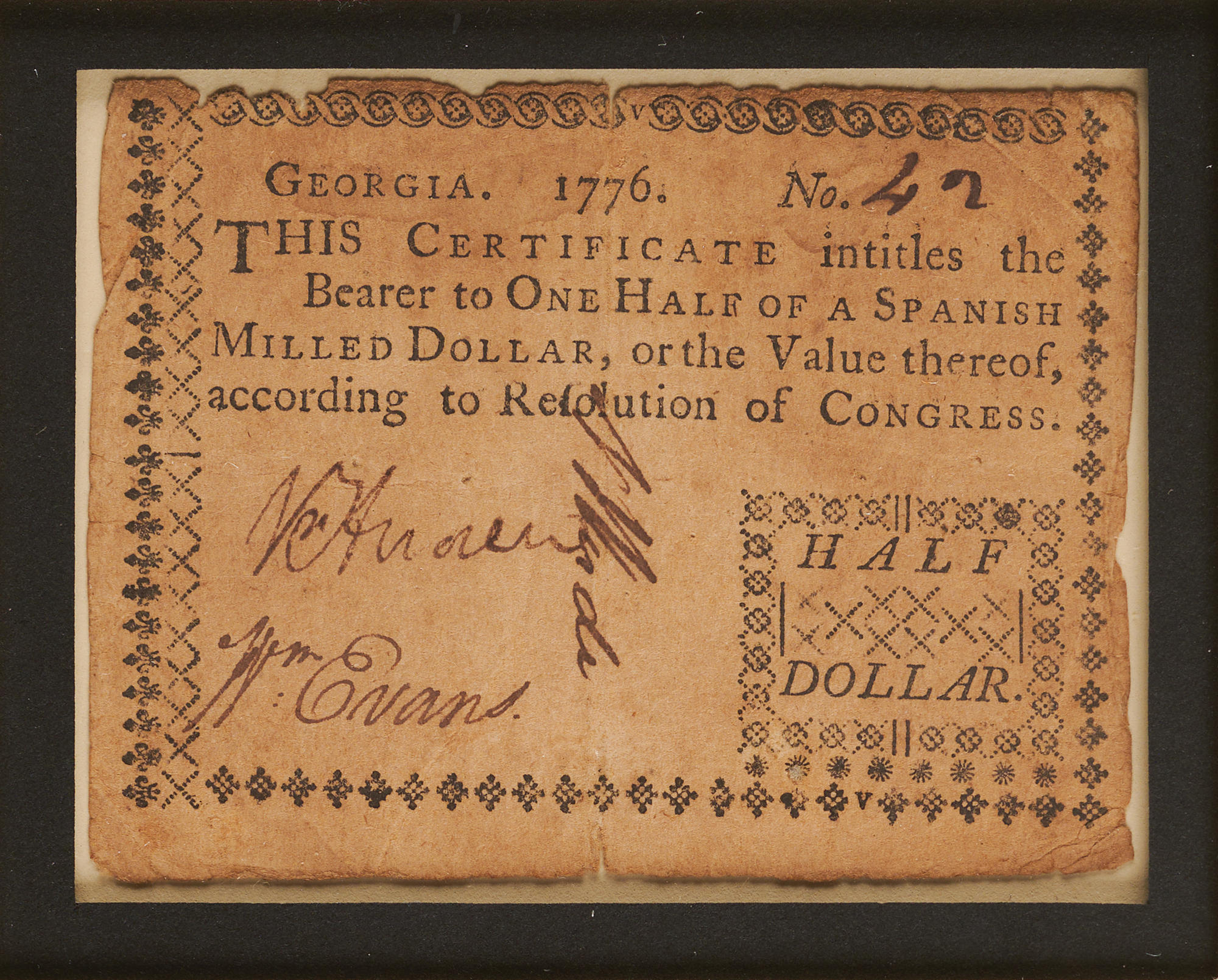
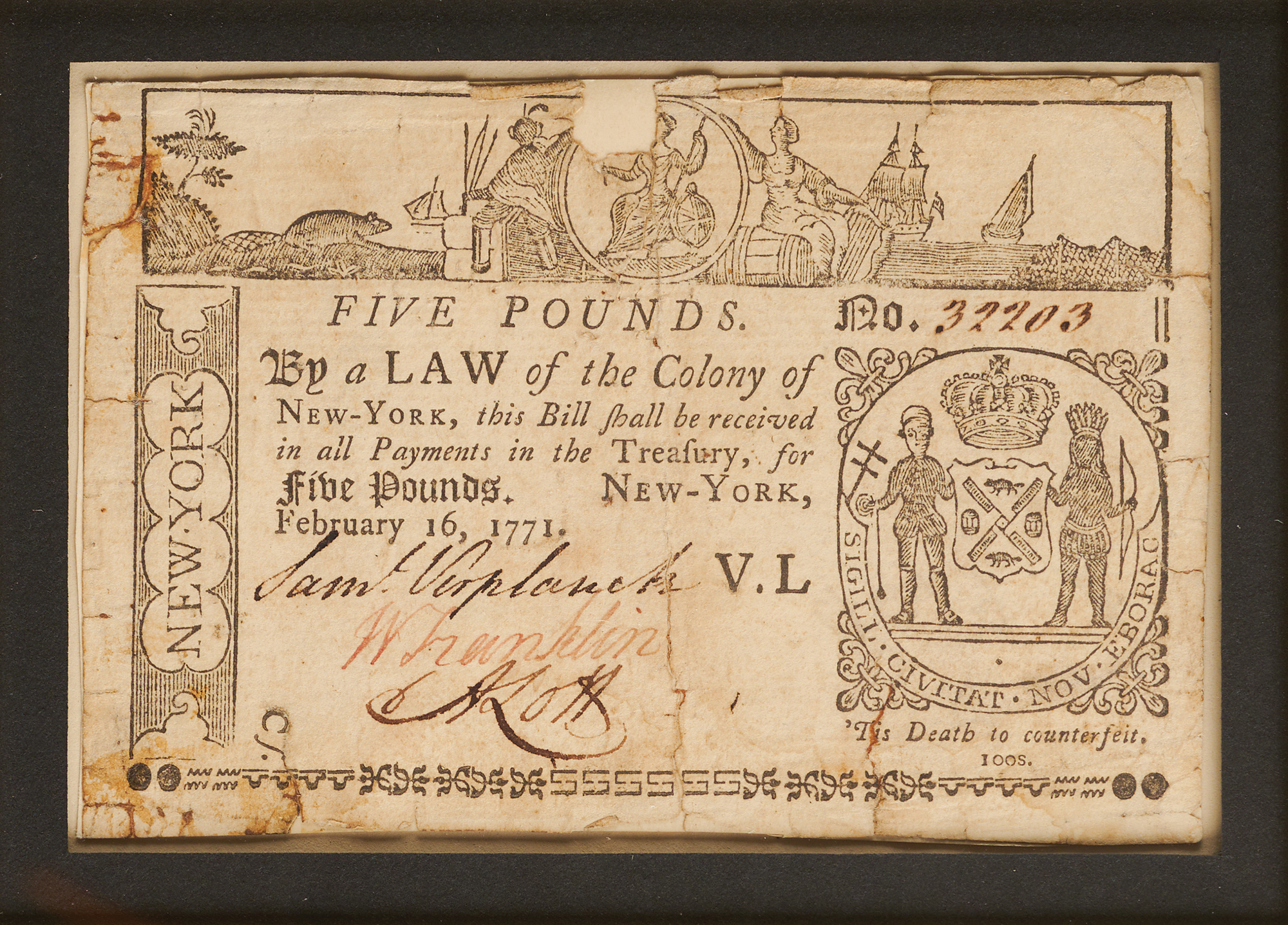
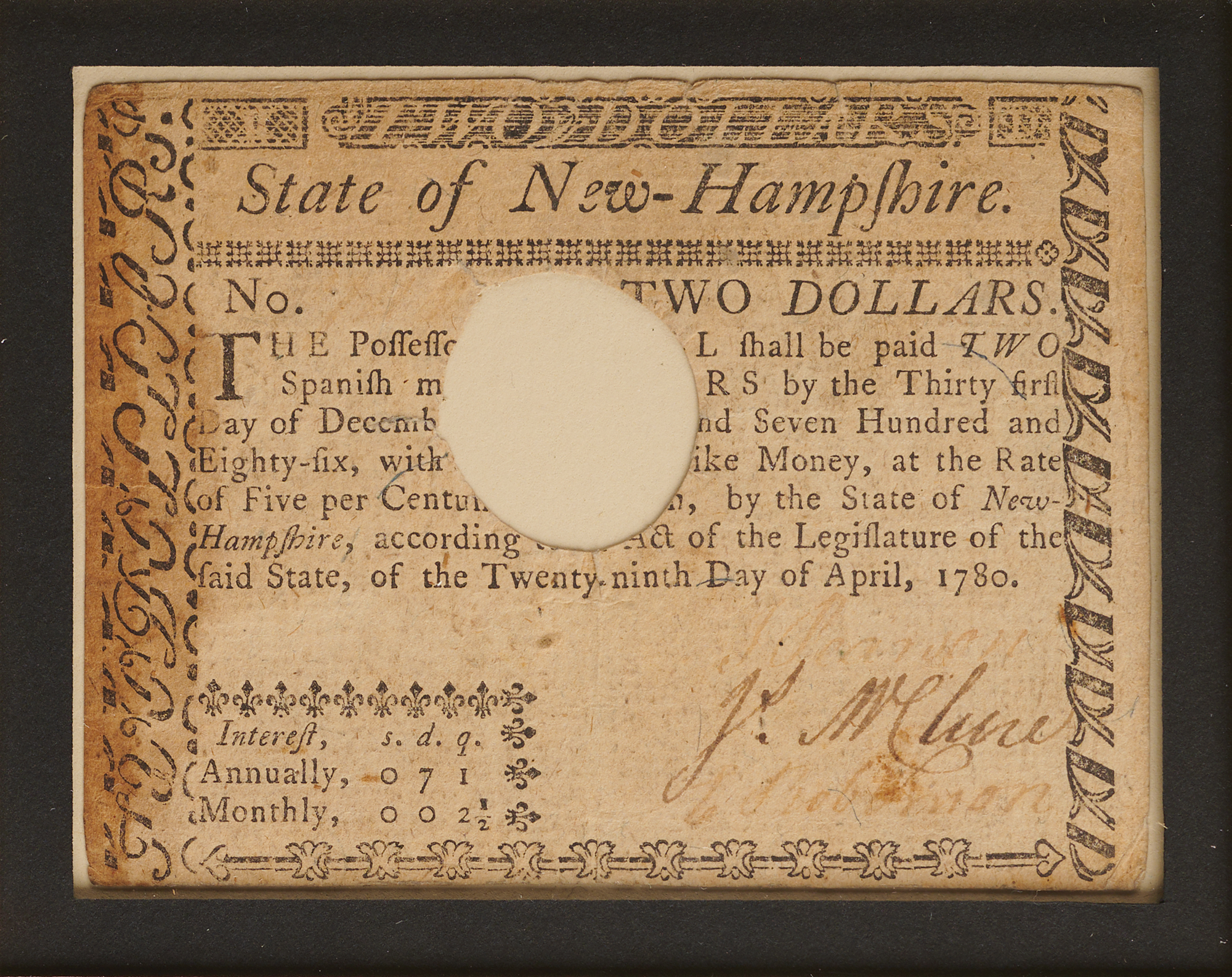
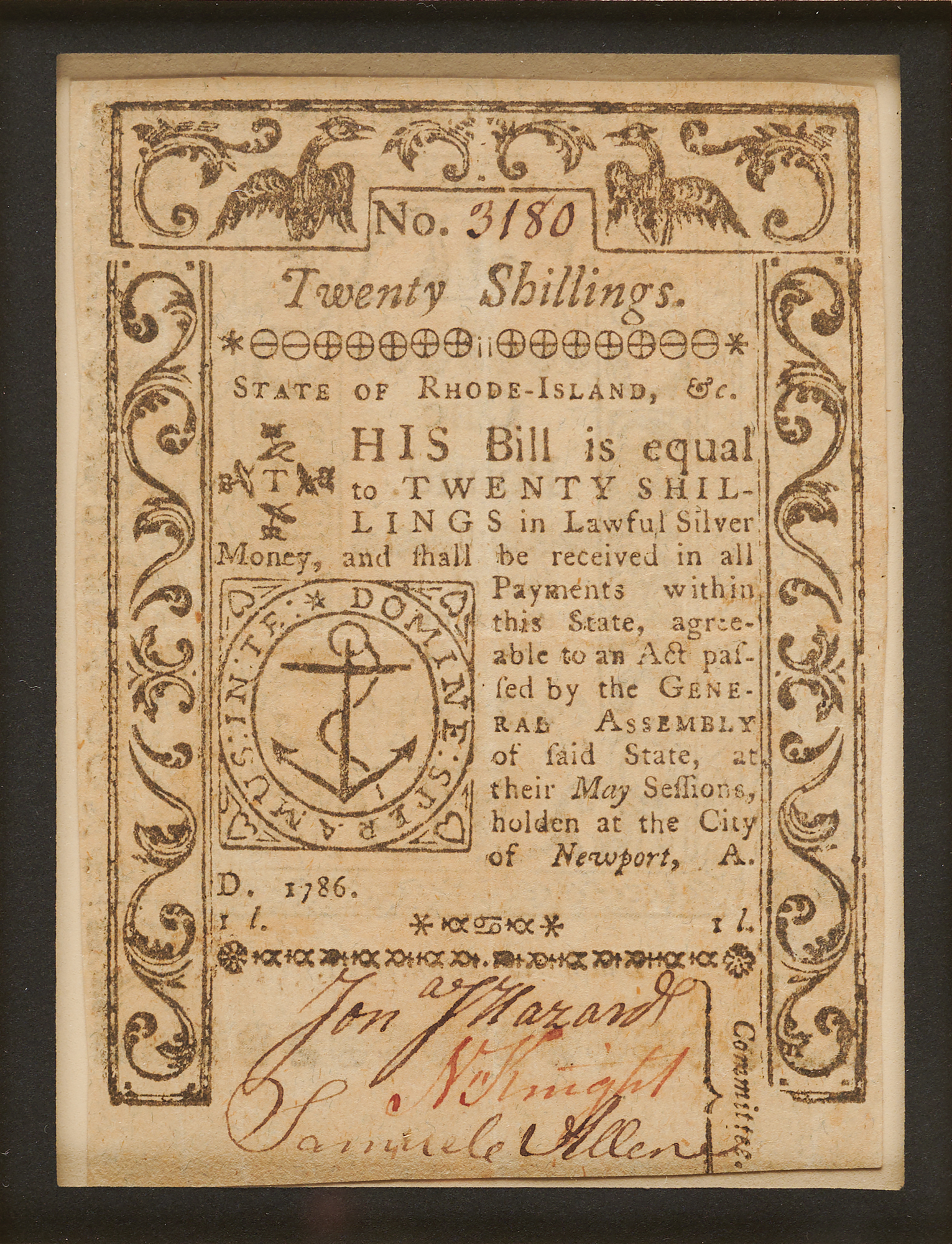
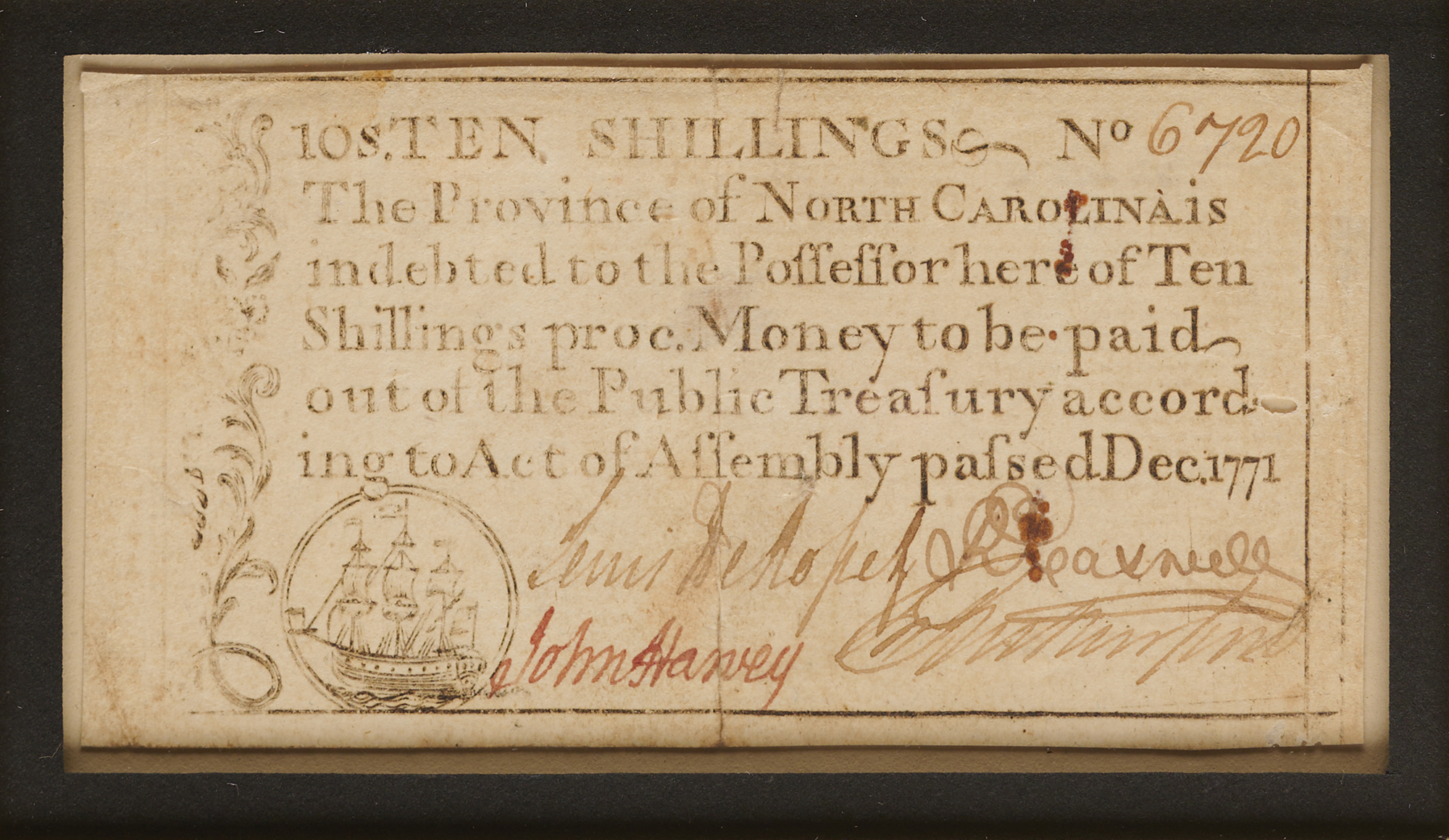
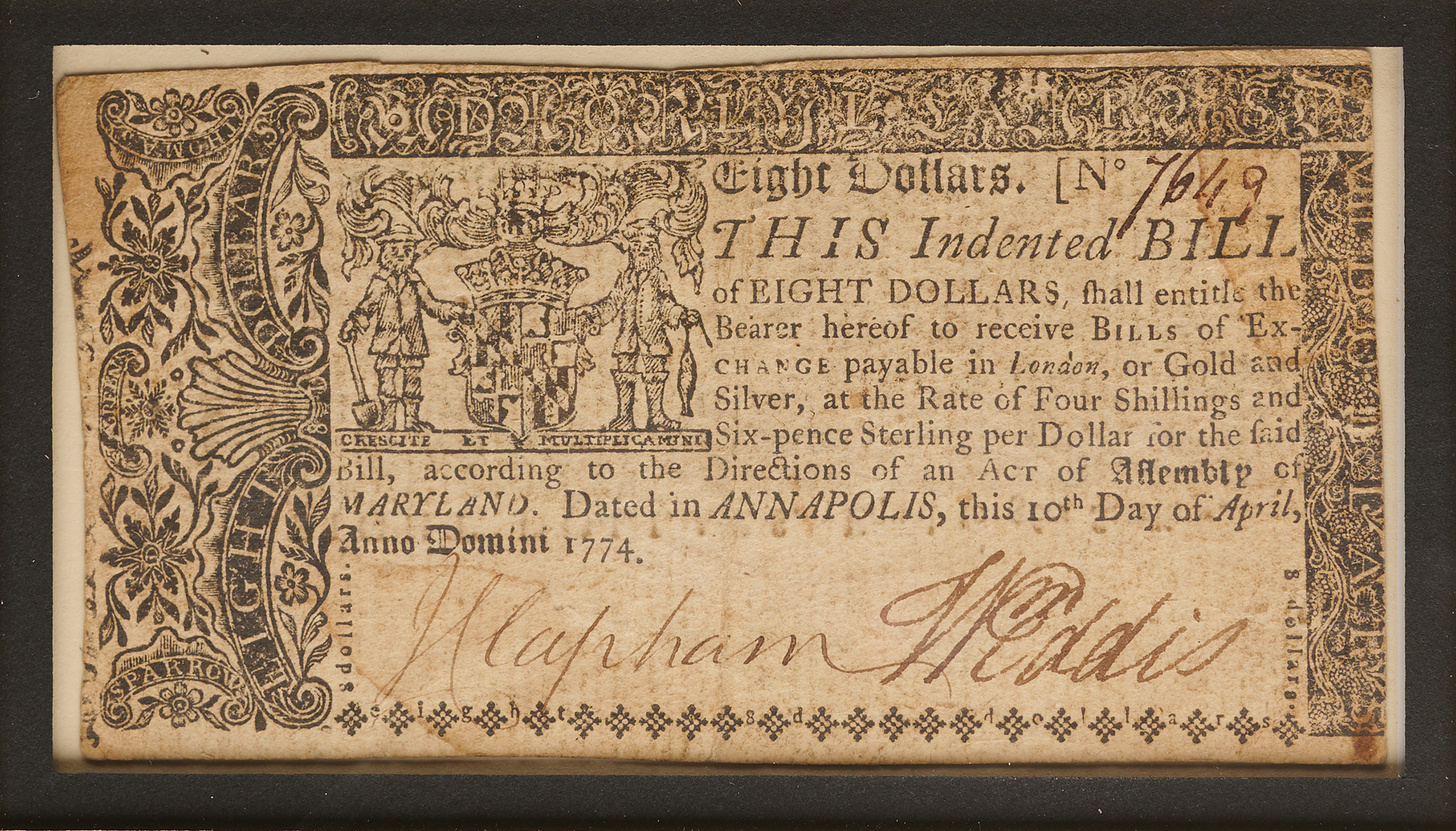
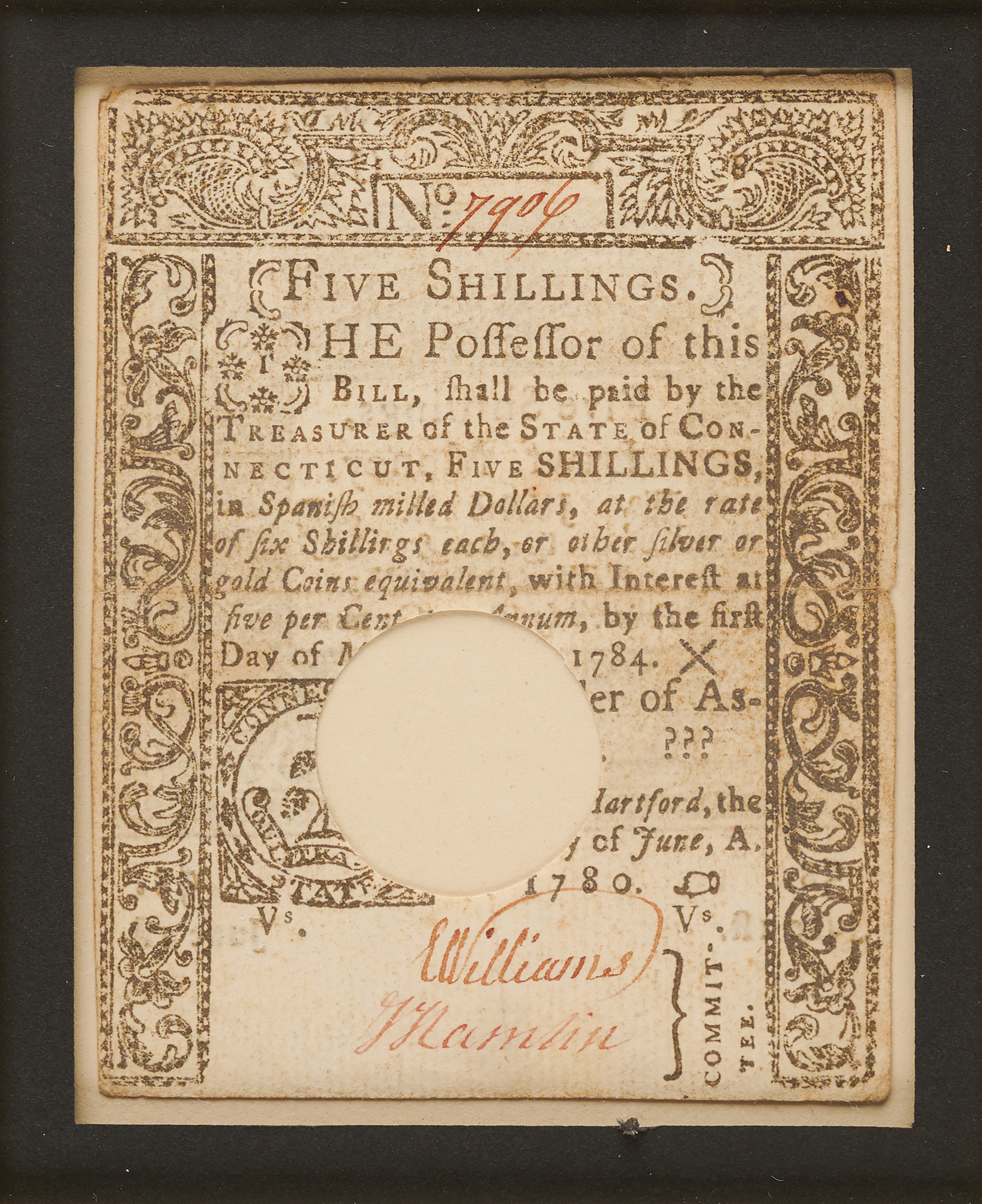
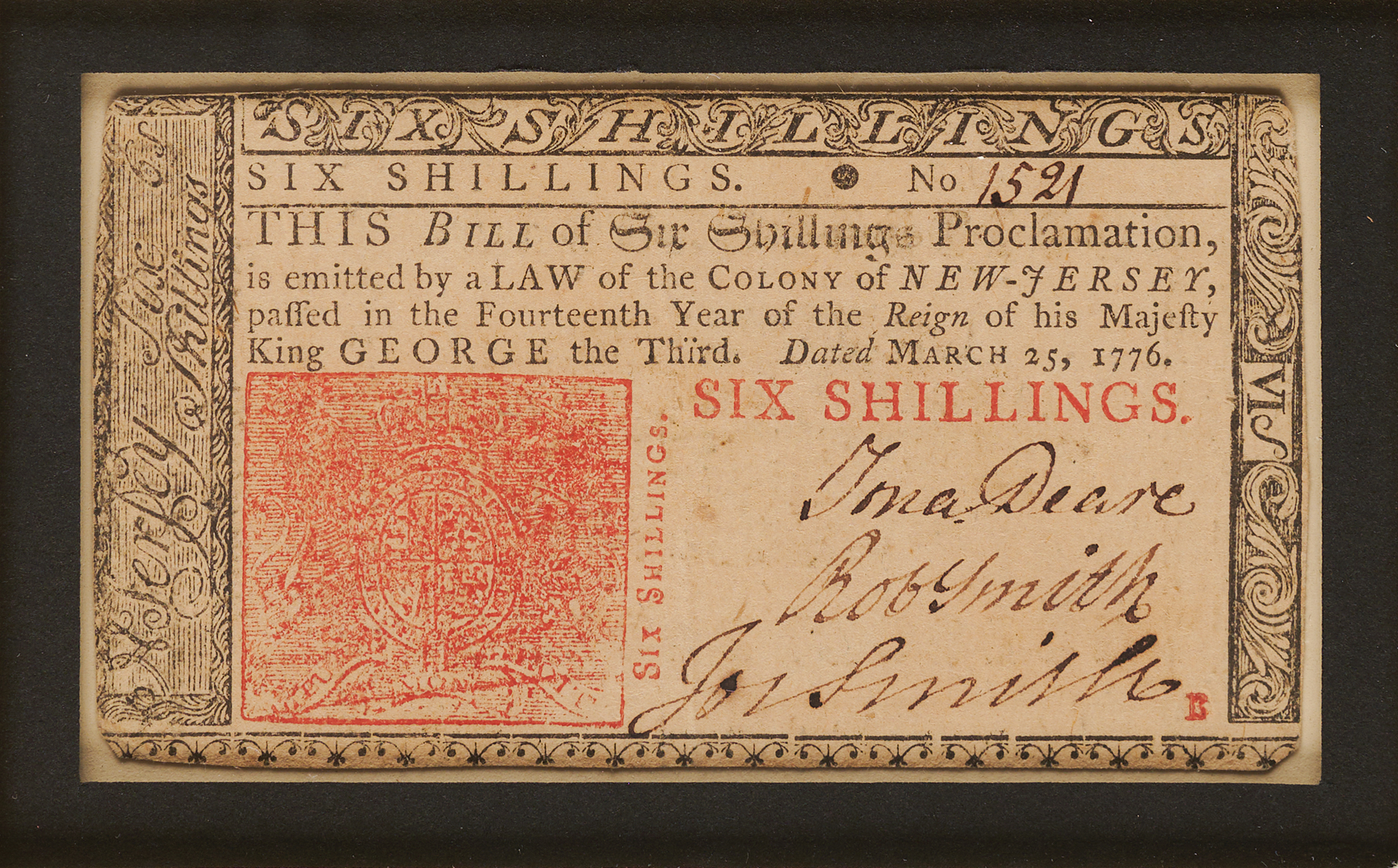
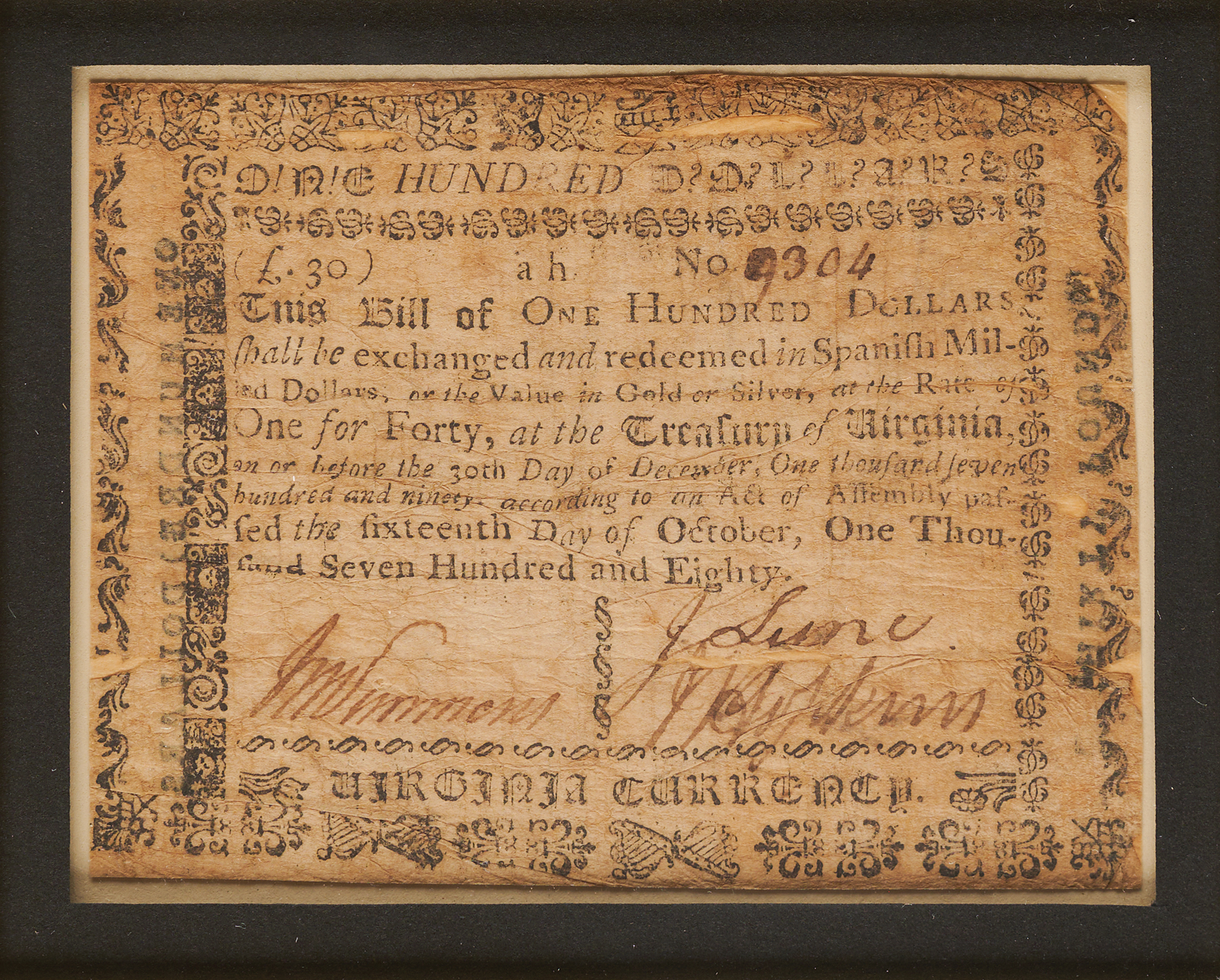
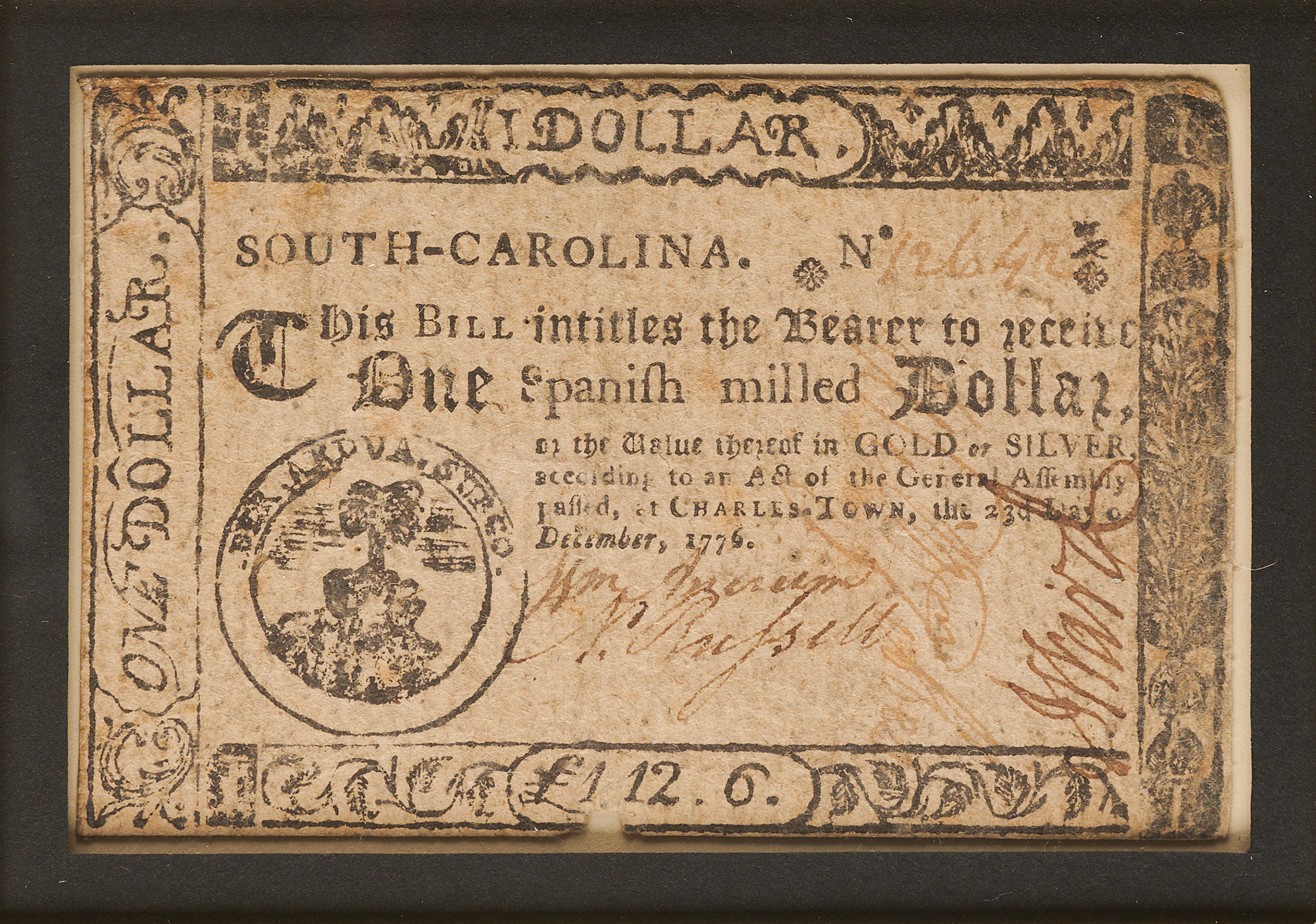
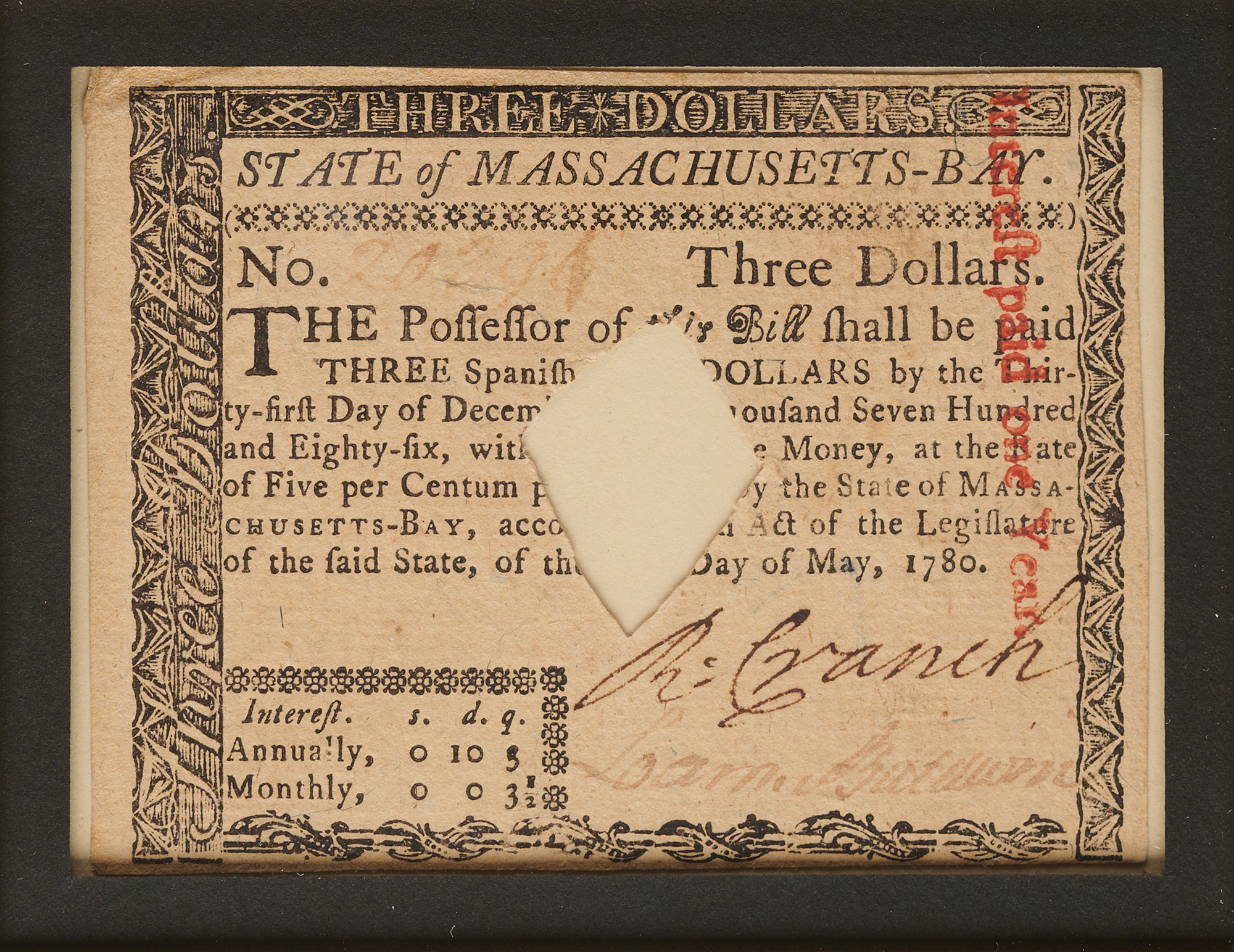
Currency notes from each of the 13 original colonies, ranging in date from 1771 through 1786, and in size from 3 x 3.5 to 4.75 x 2.5. Notes range in denomination from one shilling to twenty shillings, five pounds, and one-half Spanish milled dollar to one hundred dollars, from the colonies of New Hampshire (1780), New York (1771), Massachusetts (1780), Pennsylvania (1777), Connecticut (1780), Rhode Island (1786), Maryland (1774), New Jersey (1776), Delaware (1777), North Carolina (1771), South Carolina (1776), Virginia (1780), and Georgia (1776). Each note bears one or more authoritative signatures at the conclusion of the ornately designed slip, with several exhibiting period cancellations. Impressively museum-grade double-matted and framed together with an engraved plaque to an overall size of 26.25 x 28.25. Each note has been encapsulated in archival mylar and is fully reversible. In overall very good to fine condition.
Before the Revolutionary War, the British Parliament passed the Currency Acts of 1751, 1764, and 1773 to regulate colonial paper money and protect British merchants from depreciated colonial currency. By restricting its use as legal tender for public and private debts, these measures contributed to a shortage of usable money in the colonies, where gold and silver coinage was scarce and foreign coins such as the Spanish dollar circulated widely. When war broke out, the colonies were freed from these monetary restrictions, allowing the Continental Congress to issue paper currency to help finance the war effort. Individual states likewise issued their own currency, contributing to the rapid depreciation of both state and Continental money. The Constitution subsequently curtailed this practice: Article I, Section 10 prohibited states from coining money, emitting bills of credit, or making anything but gold and silver coin legal tender in payment of debts. Obtaining period paper currency from all 13 original colonies at an accessible price can be a considerable challenge, making this complete assemblage especially appealing to collectors of early American history.

