The 30 Minute Rule begins September 24 at 7:00 PM EDT. An Initial Bid Must Be Placed By September 24 at 6:00 PM EDT To Participate After 6:00 PM EDT
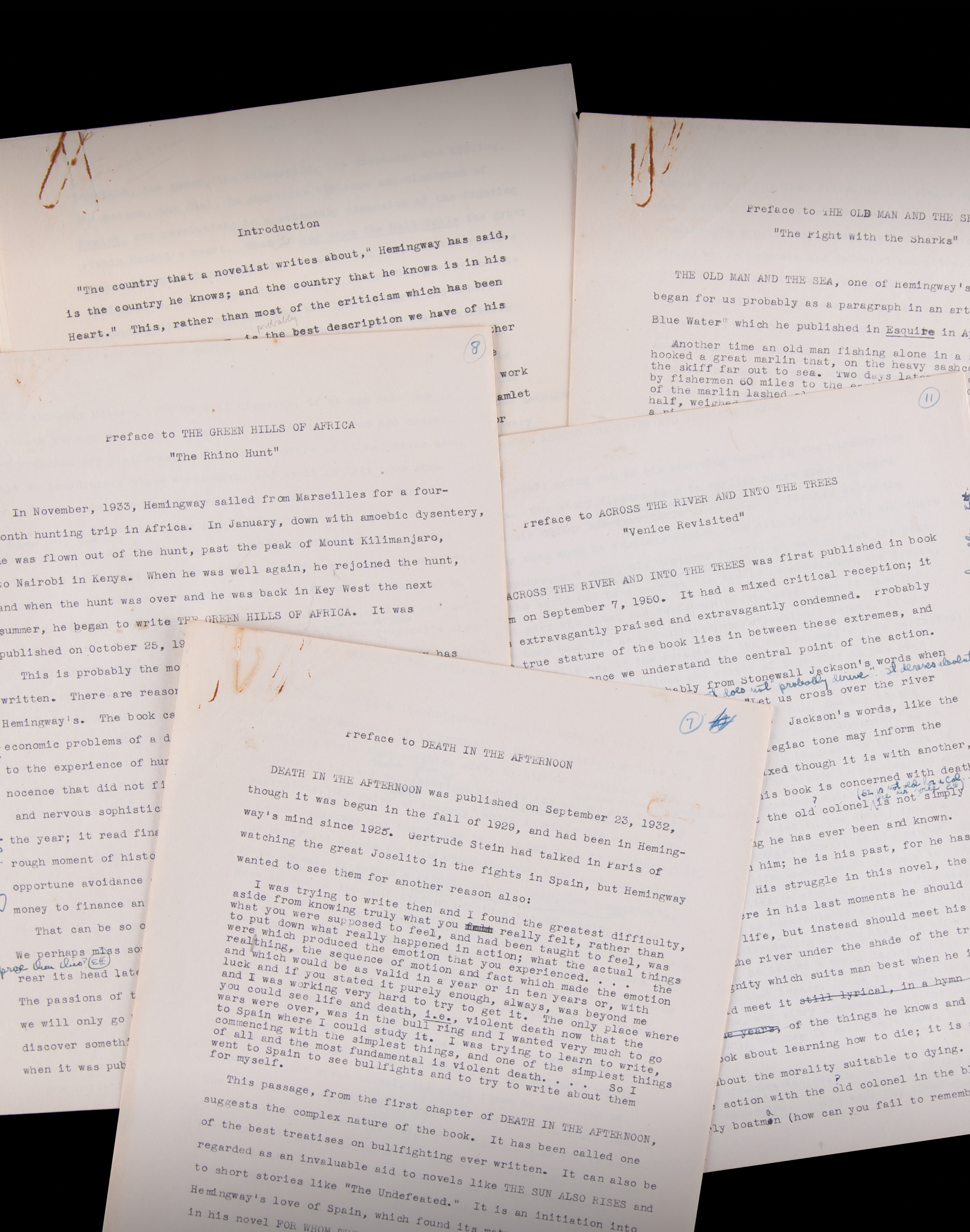
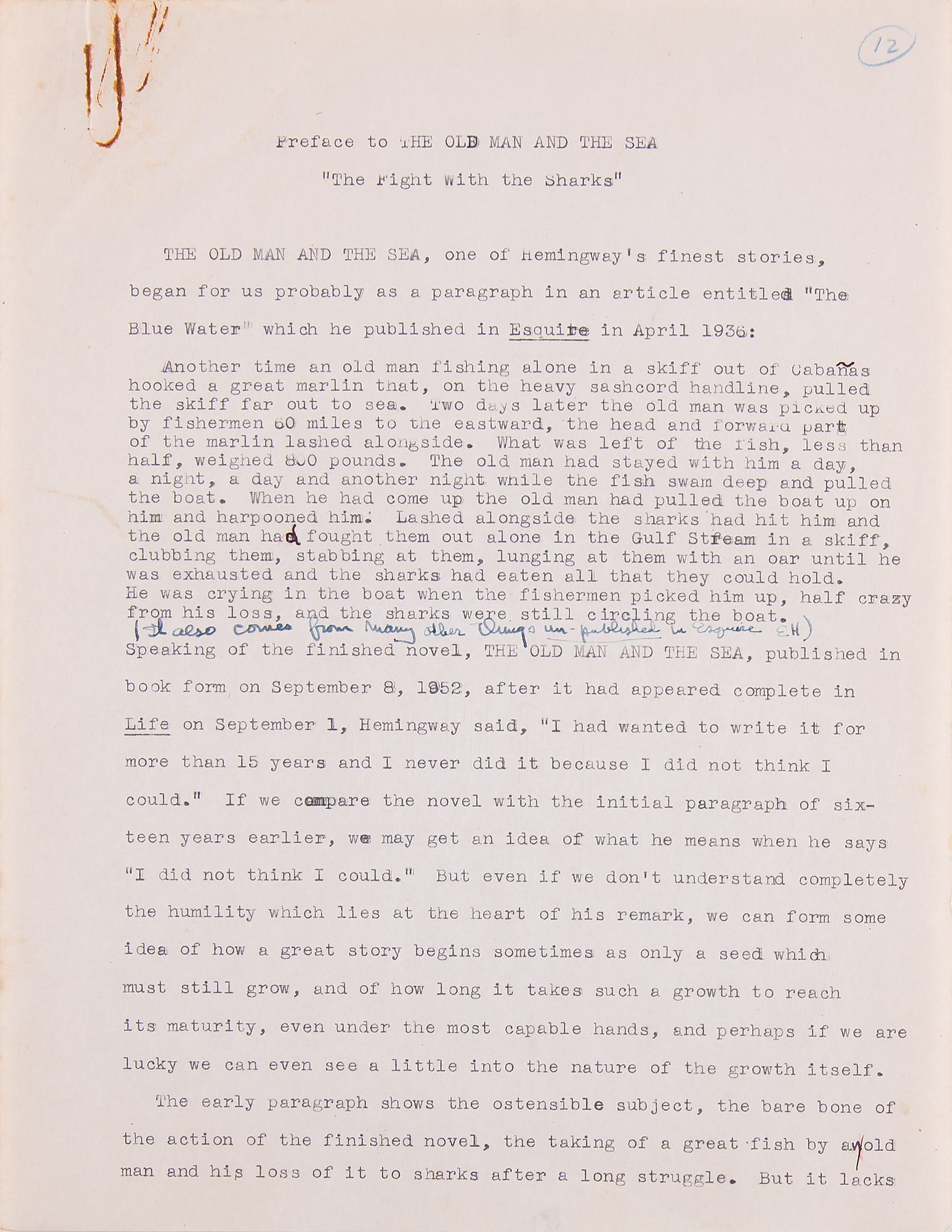
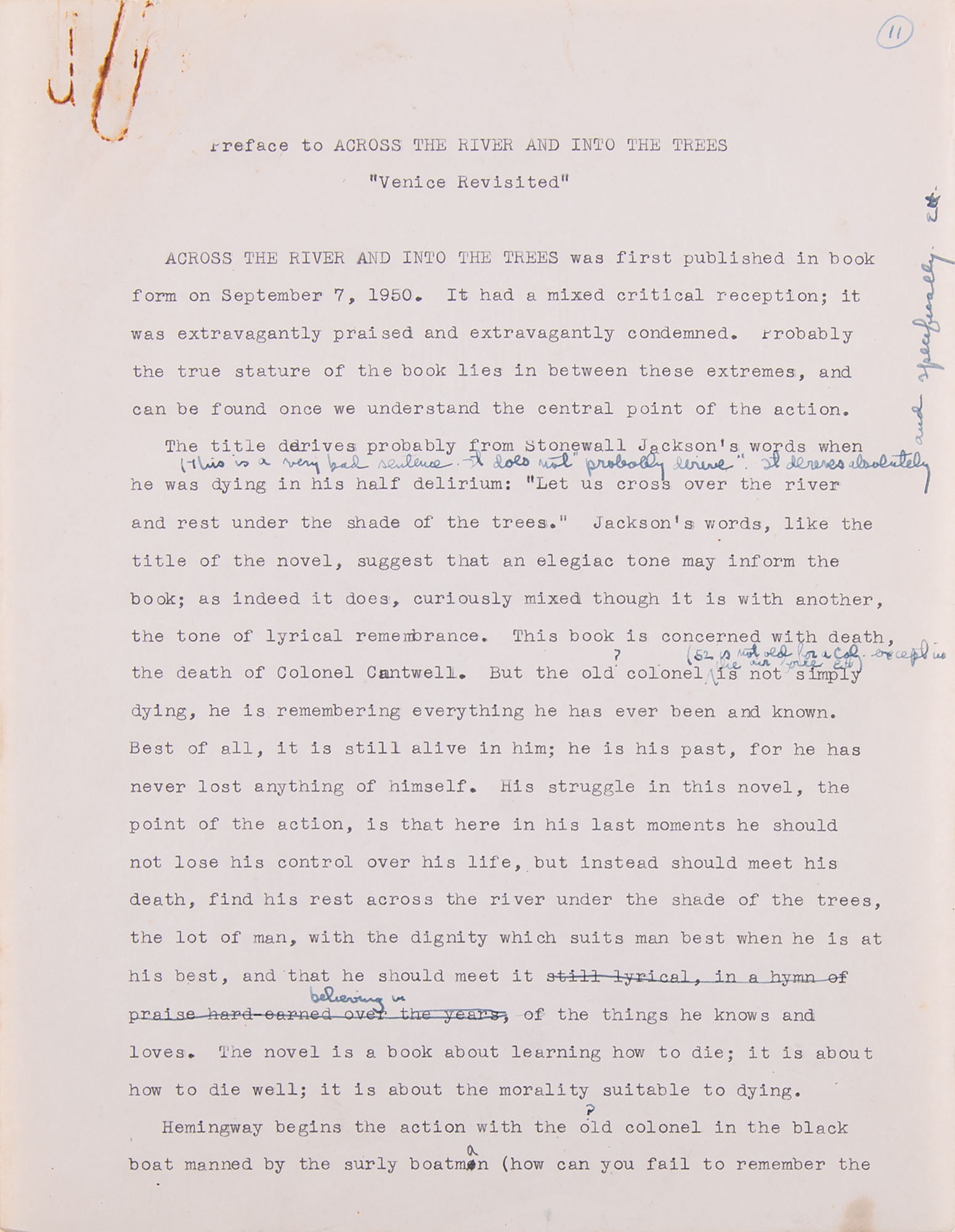
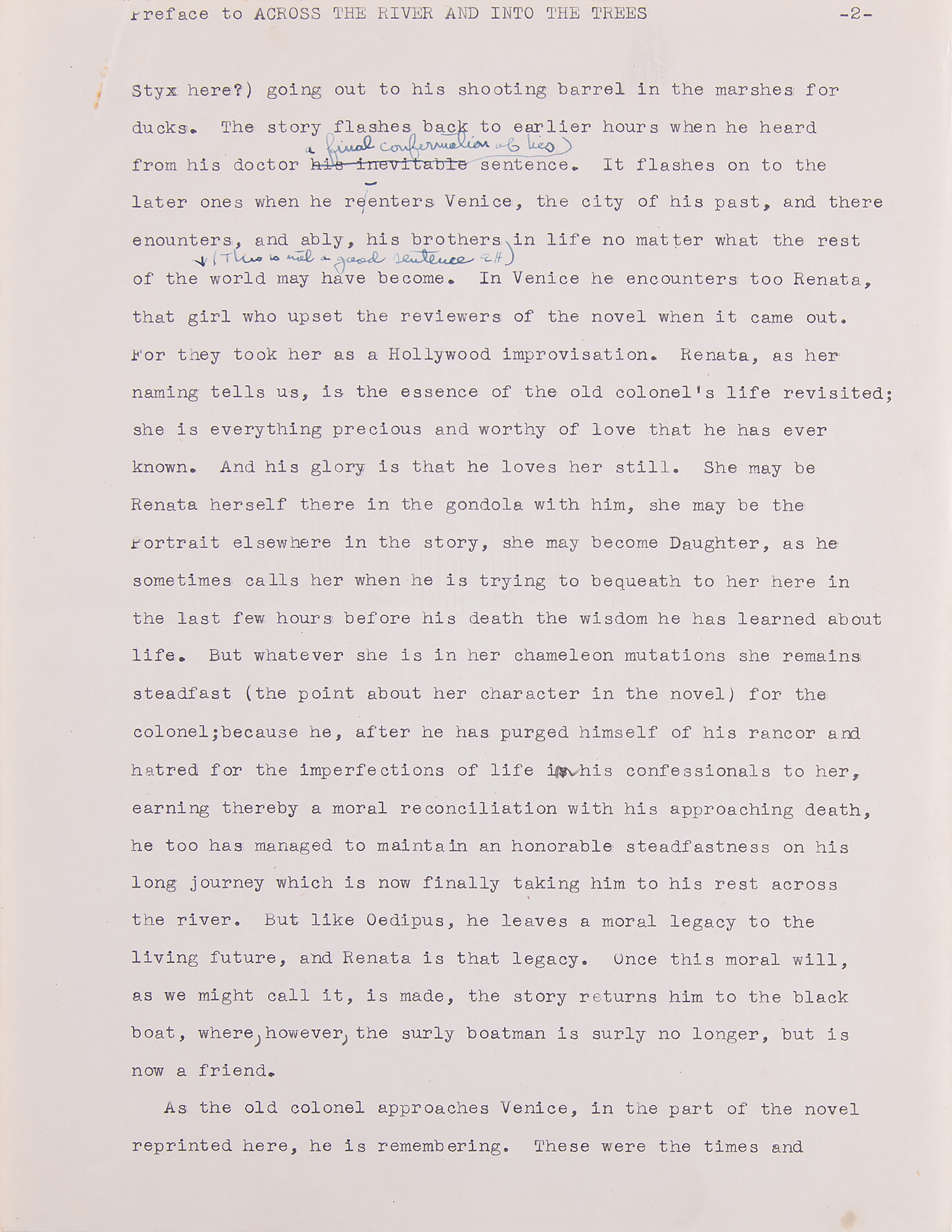
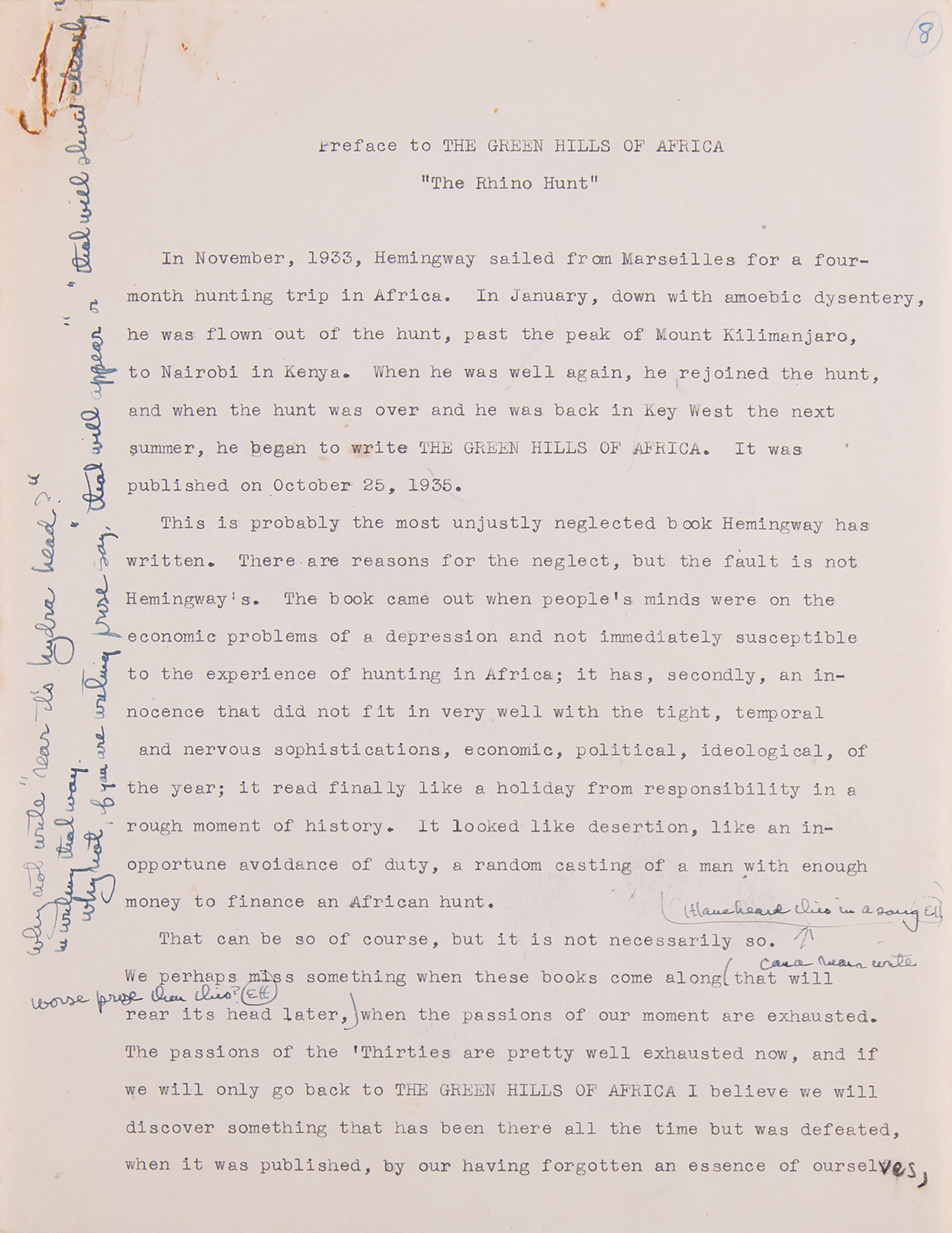
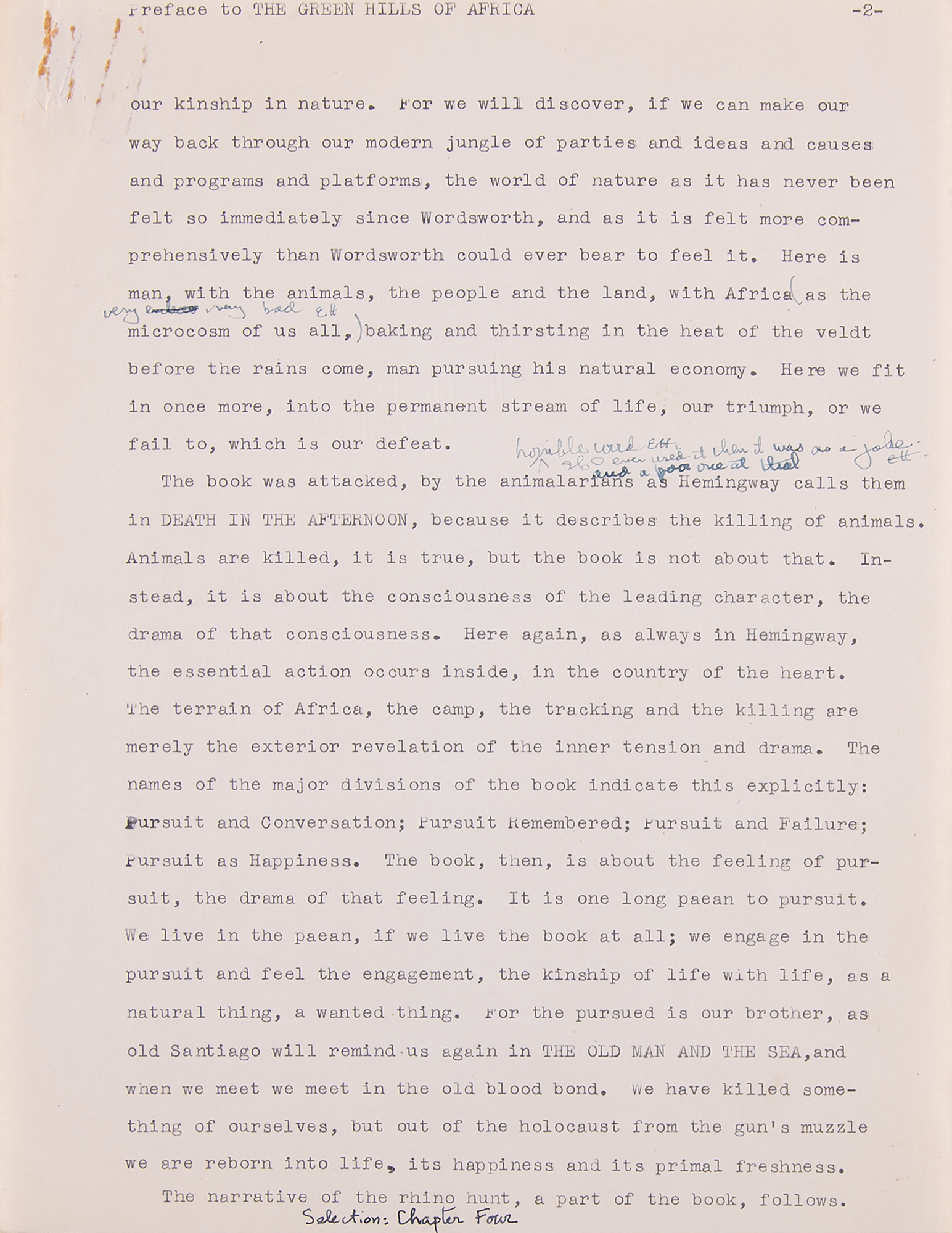
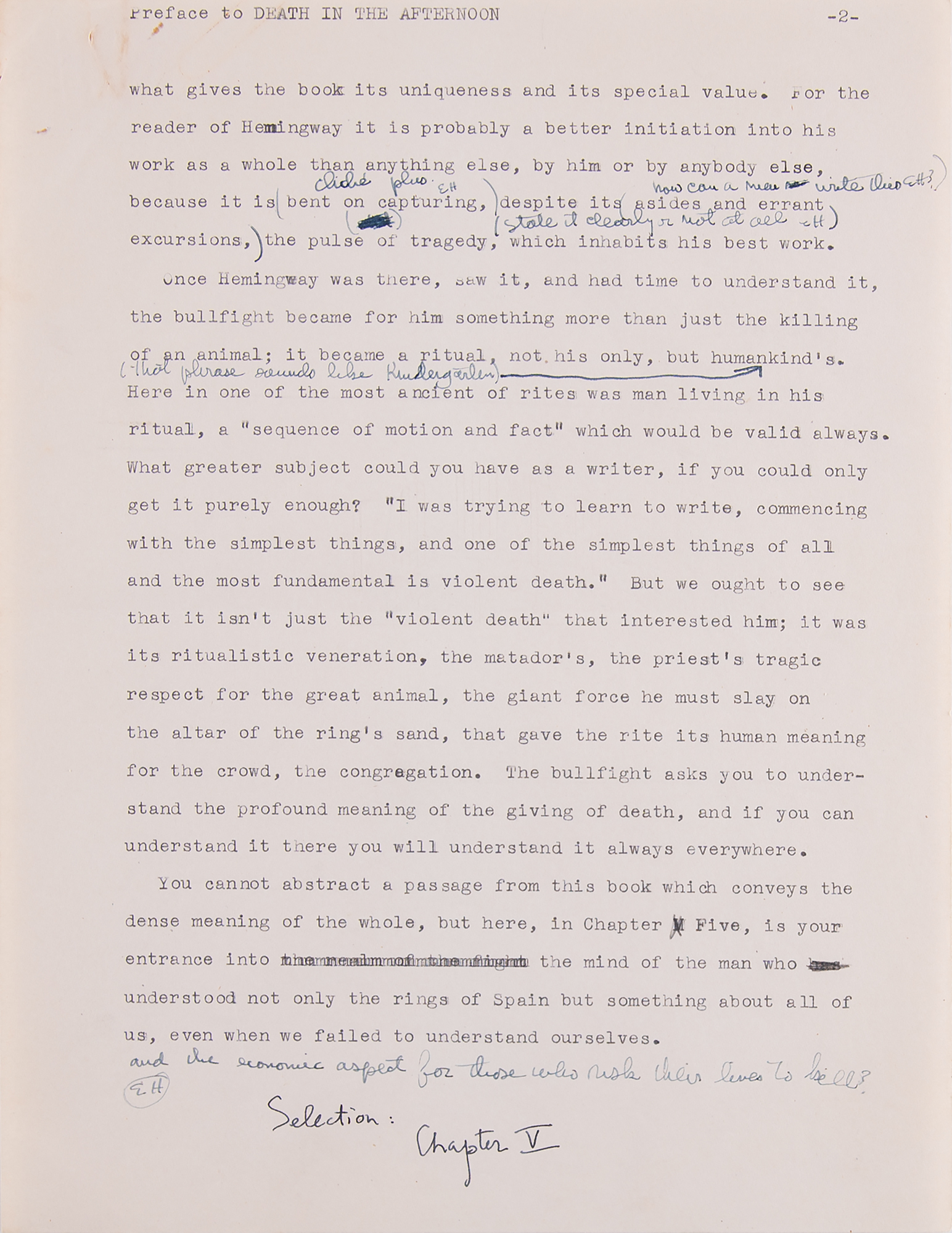
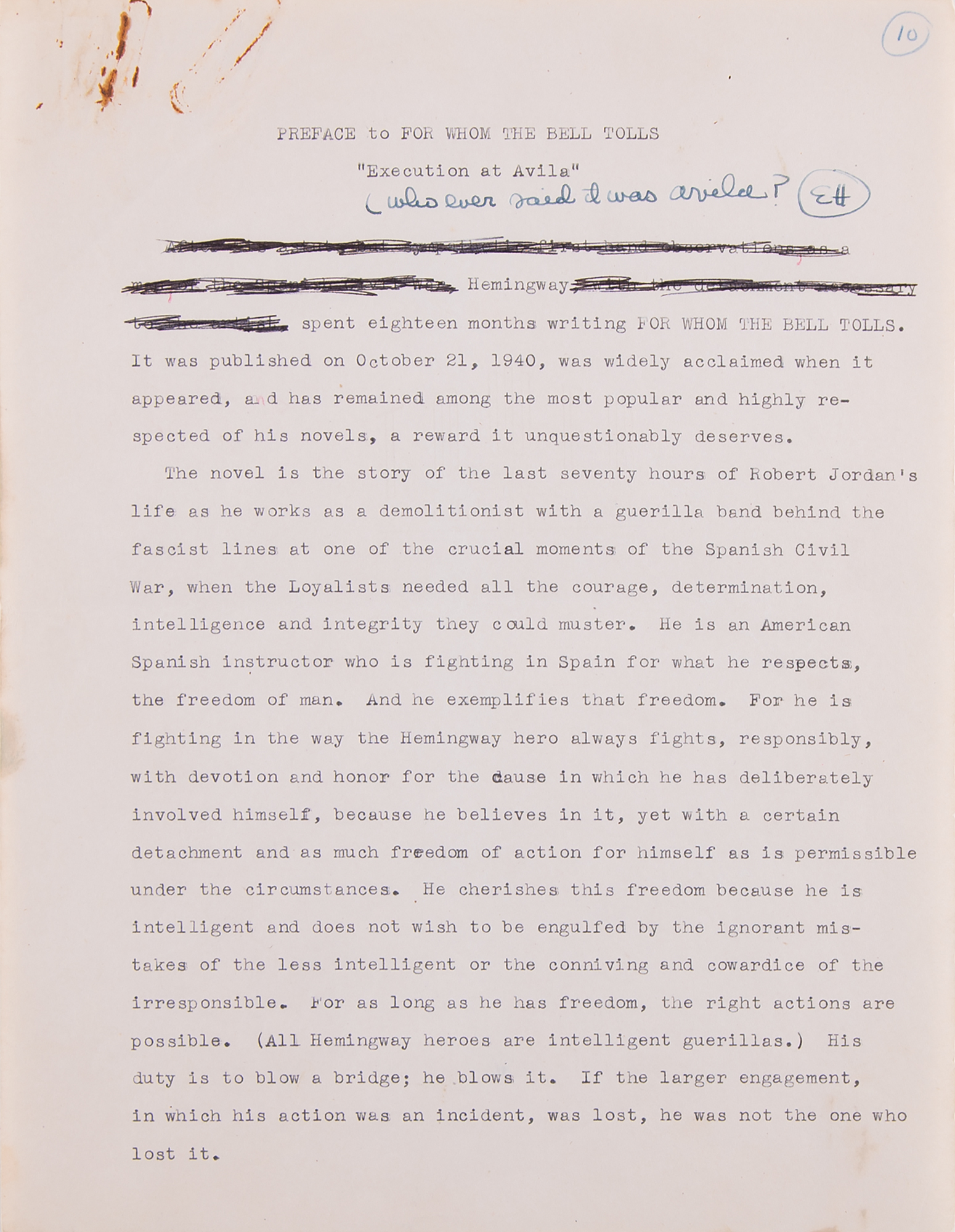
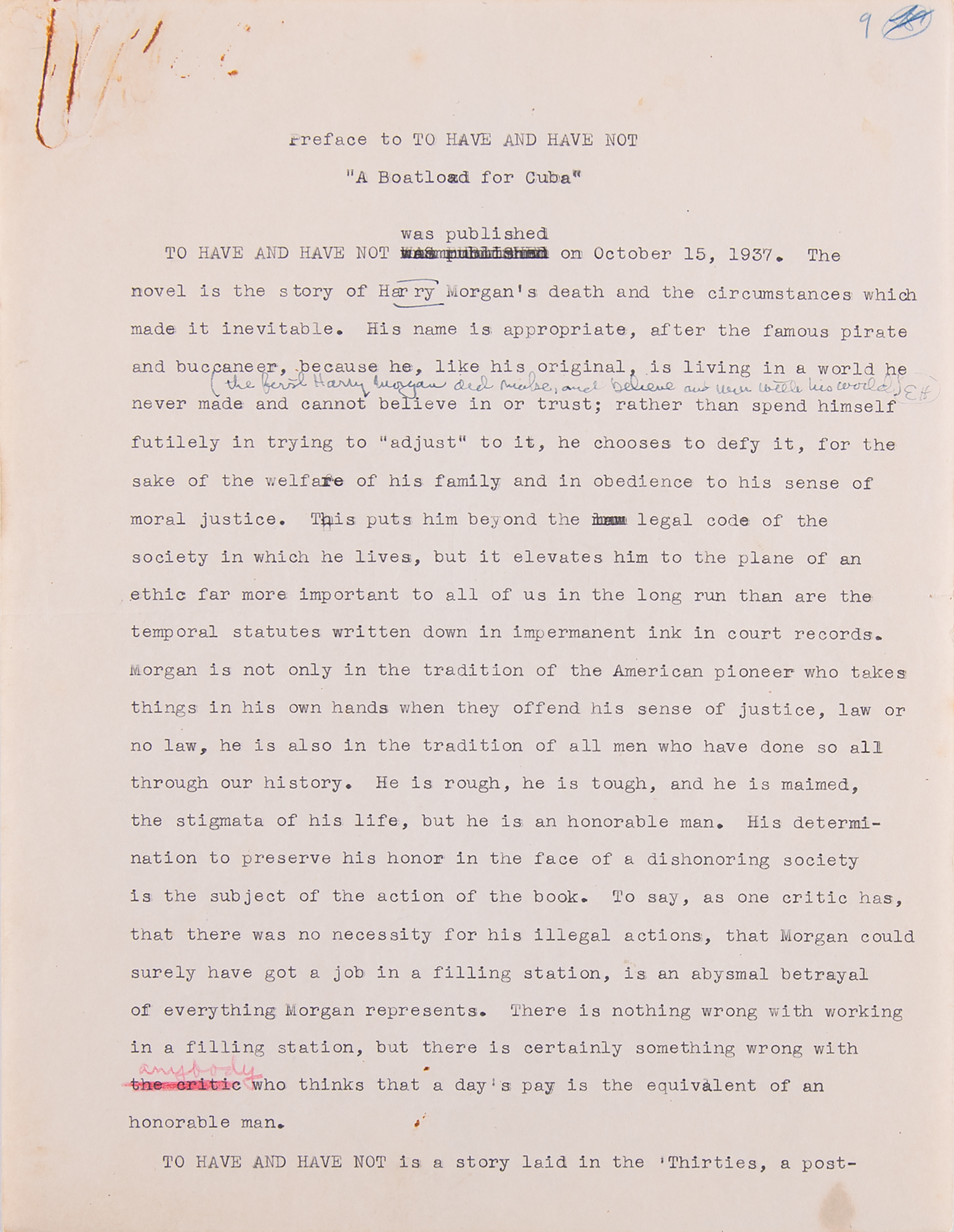
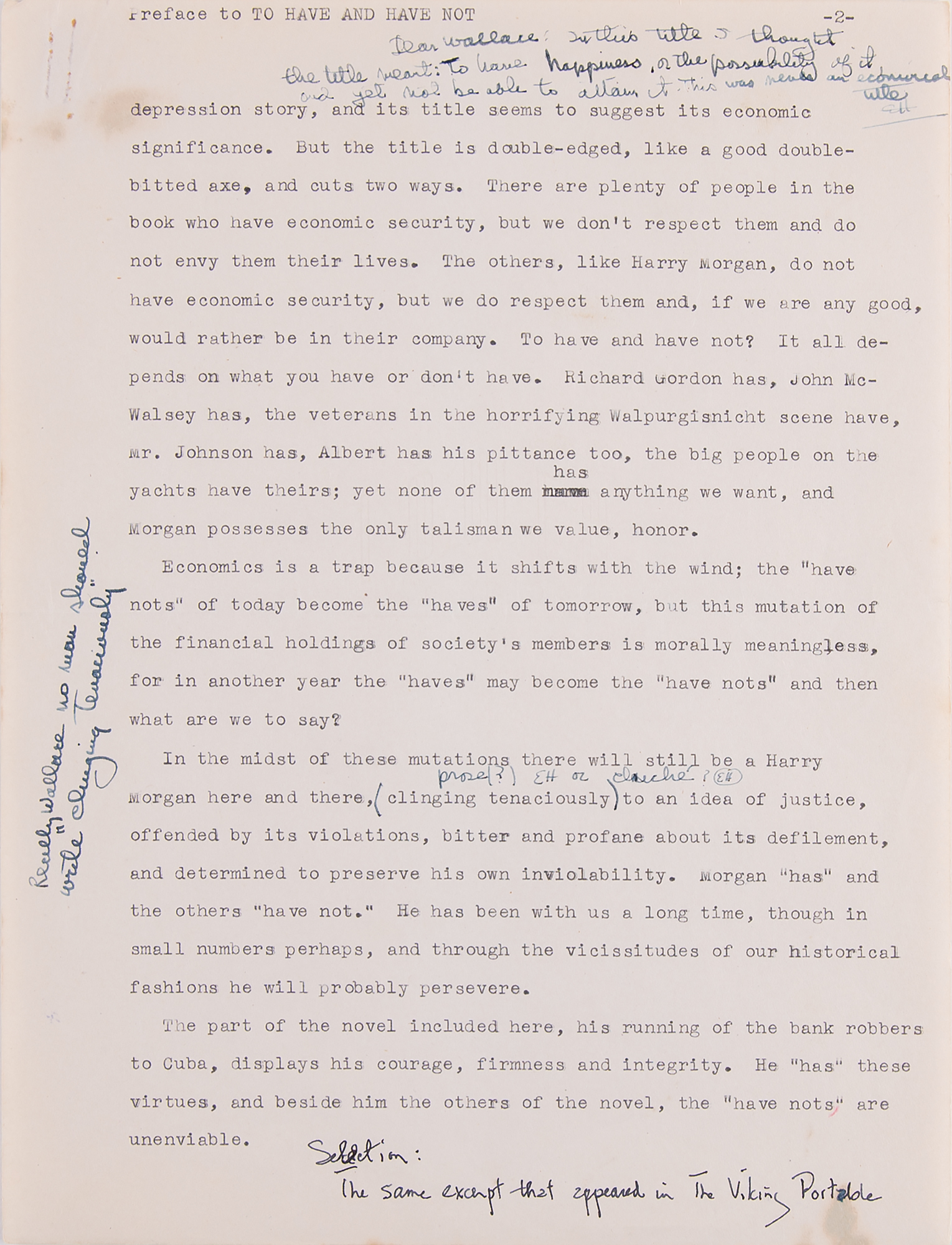
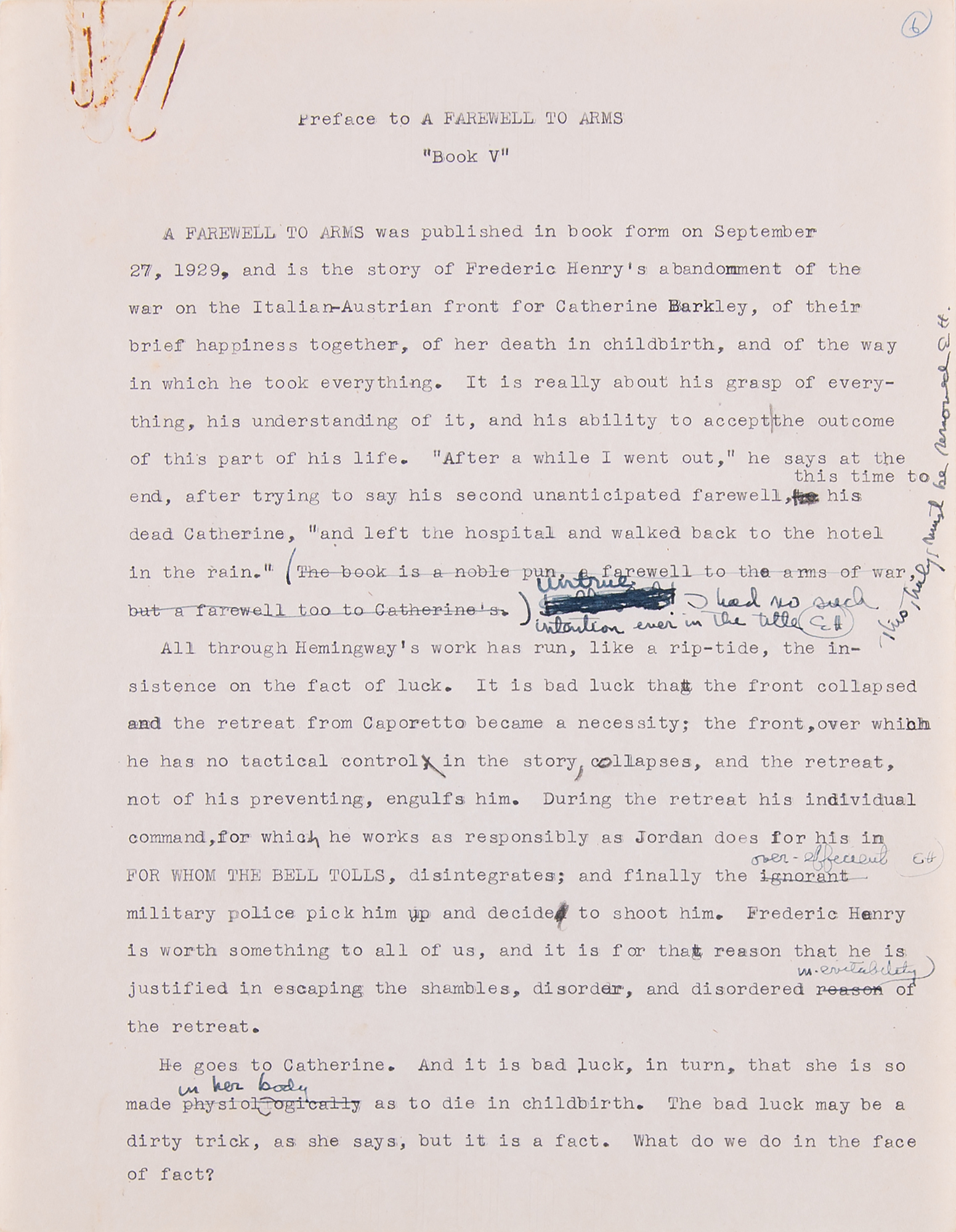
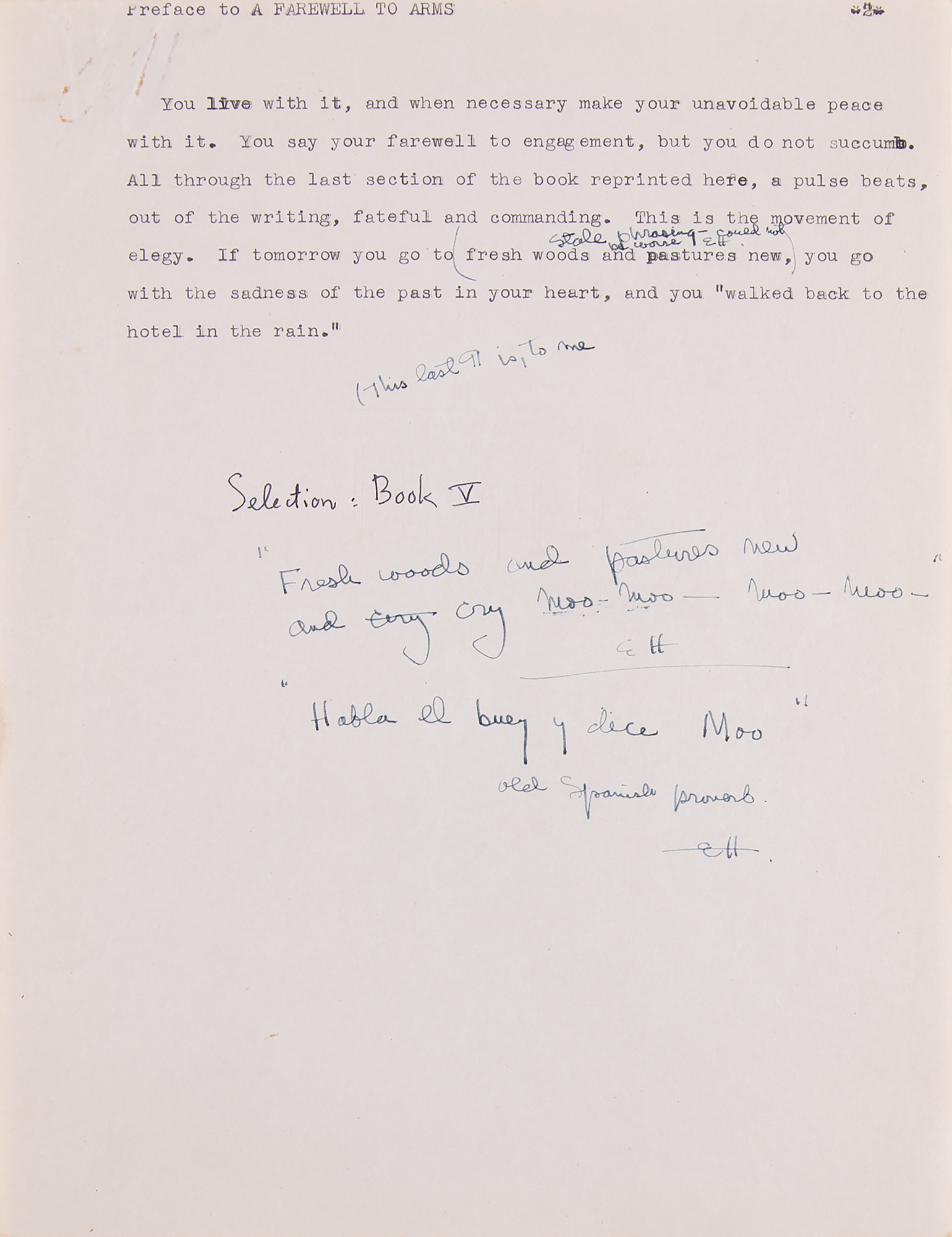
Remarkable circa 1952 typescript for a proposed collected edition of Ernest Hemingway’s writings, prepared by Syracuse University professor Leonard Brown and extensively annotated by Hemingway in his own hand, totaling 63 pages, 8.5 x 11, comprising an introduction, biographical note, and prefaces to A Farewell to Arms, Death in the Afternoon, For Whom the Bell Tolls, and The Old Man and the Sea, among other works. Hemingway adds handwritten annotations and corrections in blue ink to 17 pages, with many of his remarks initialed “E.H.”
An extraordinary unpublished working document in which Hemingway forcefully challenges an academic interpretation of his life and work, correcting Brown’s readings line by line and repeatedly reasserting his own intentions as an author.
Leonard Brown, an early academic advocate of Hemingway and a professor at Syracuse University, prepared the typescript for a proposed collected edition commissioned by Charles Scribner’s Sons. Intended to supersede Malcolm Cowley’s earlier Hemingway anthology, the project included introductory material, a biographical sketch, and interpretive prefaces to several of Hemingway’s major works.
Hemingway’s response was characteristically direct. Confronted with Brown’s suggestion that the title "A Farewell to Arms" was “a noble pun” referring both to the weapons of war and to Catherine’s embrace, Hemingway writes: “Untrue. I had no such intention ever in the title. This truly must be removed,” adding his initials twice.
Brown’s interpretation of To Have and Have Not draws another correction, this time addressed directly to Scribner editor Wallace Meyer: “Dear Wallace: In this title I thought the title meant: To have happiness, or the possibility of it and yet not be able to attain it. This was never an economical title.”
He is equally emphatic when Brown identifies the setting of a pivotal execution scene in *For Whom the Bell Tolls* as Avila: “Who ever said it was Avila?…There is no cliff beyond the plaza in Avila.”
Beyond matters of interpretation, Hemingway attacks Brown’s prose with unmistakable vigor. Among his marginal comments are: “Can a man write worse prose than this?”; “Really Wallace no man should write ‘clinging tenaciously’”; “This is a very bad sentence”; and, regarding another passage, “This last paragraph is, to me, stale phrasing—could not be worse.”
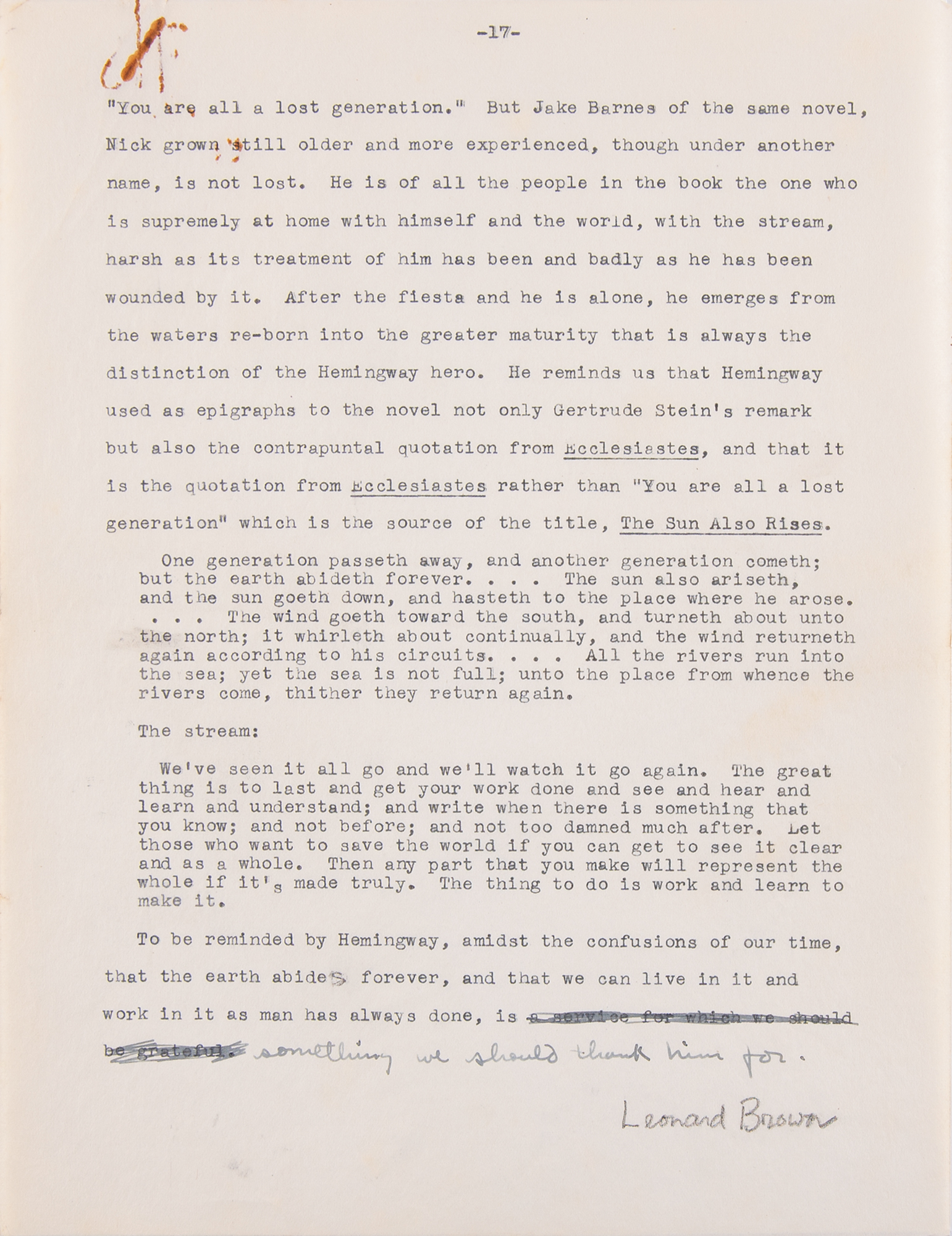
Even Brown’s concluding tribute receives Hemingway’s editorial hand. The phrase “a service for which we should be grateful” is struck through and reduced to the cleaner, more characteristically Hemingway formulation: “something we should thank him for.”
The proposed edition was never published. When The Hemingway Reader appeared in 1953, it was edited by Charles Poore rather than Leonard Brown. Hemingway’s extensive and often scathing revisions to the present manuscript offer a compelling explanation for the project’s abandonment.
In overall fine condition, with rusty paperclip marks to the upper corners.
A superb Hemingway manuscript revealing the author not merely correcting copy, but actively policing his literary reputation—rejecting imposed meanings, clarifying the intentions behind his titles and scenes, and reshaping the language used to define his career. An unusually vivid document of Hemingway’s editorial temperament and his determination to control how his work would be read.

