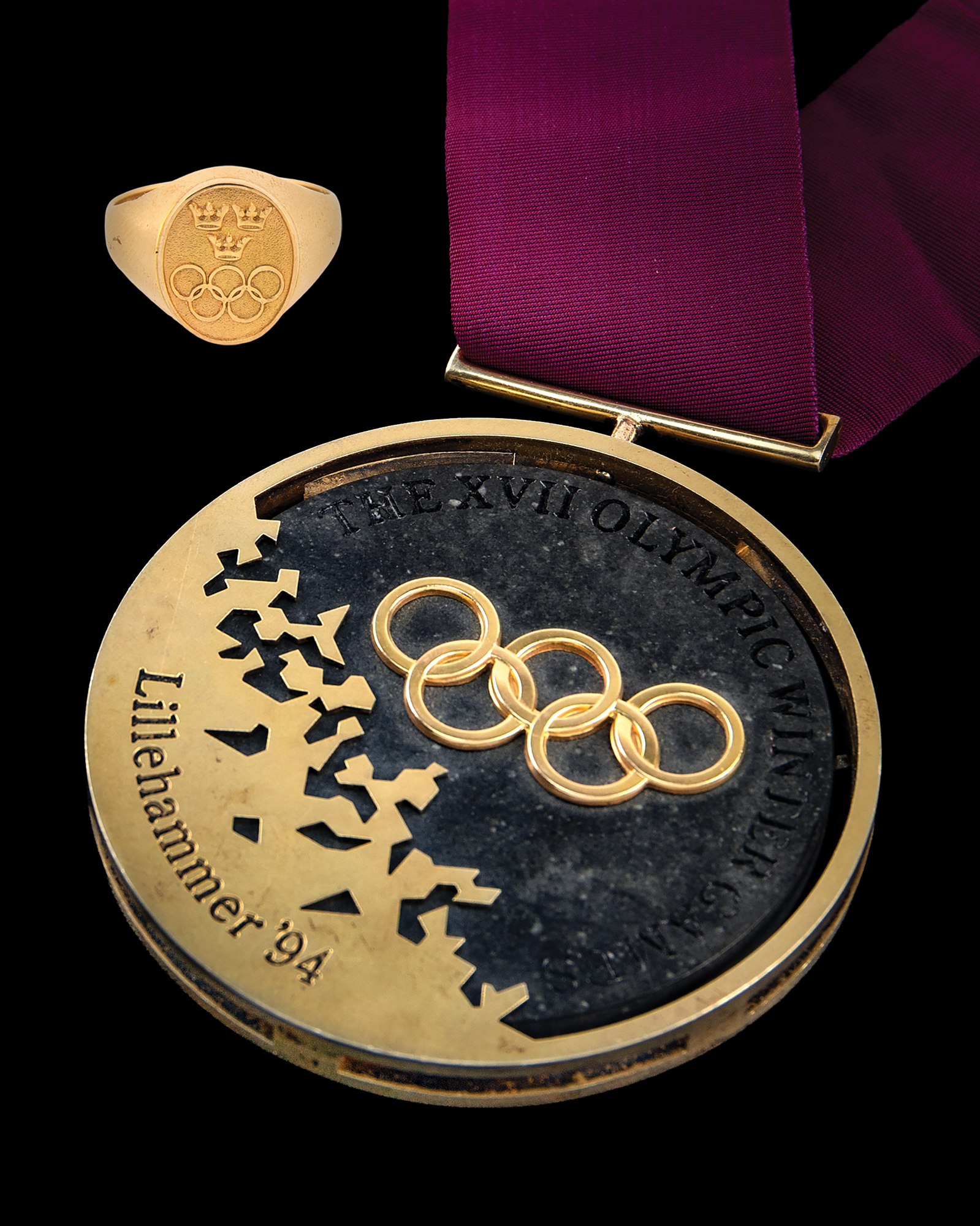
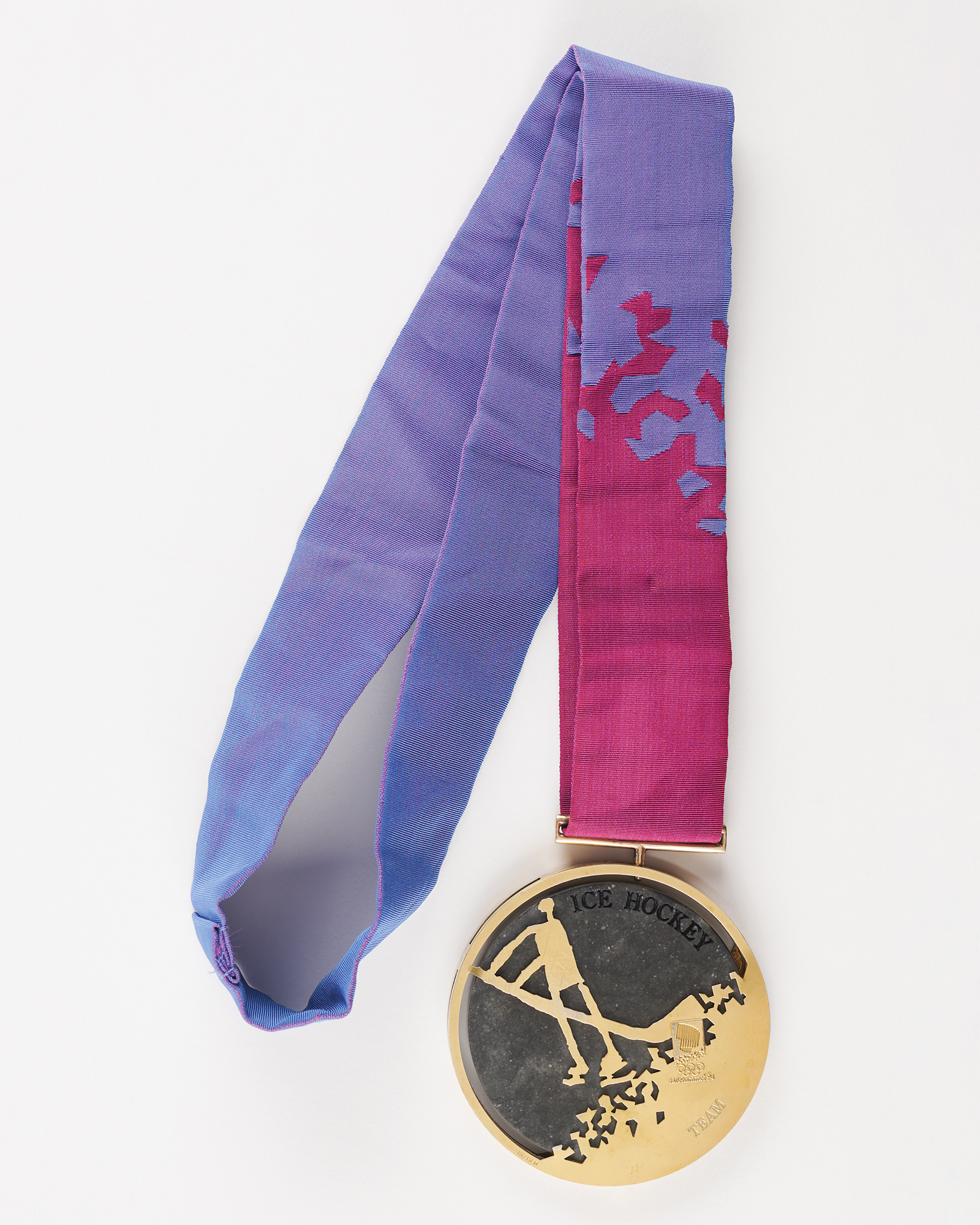
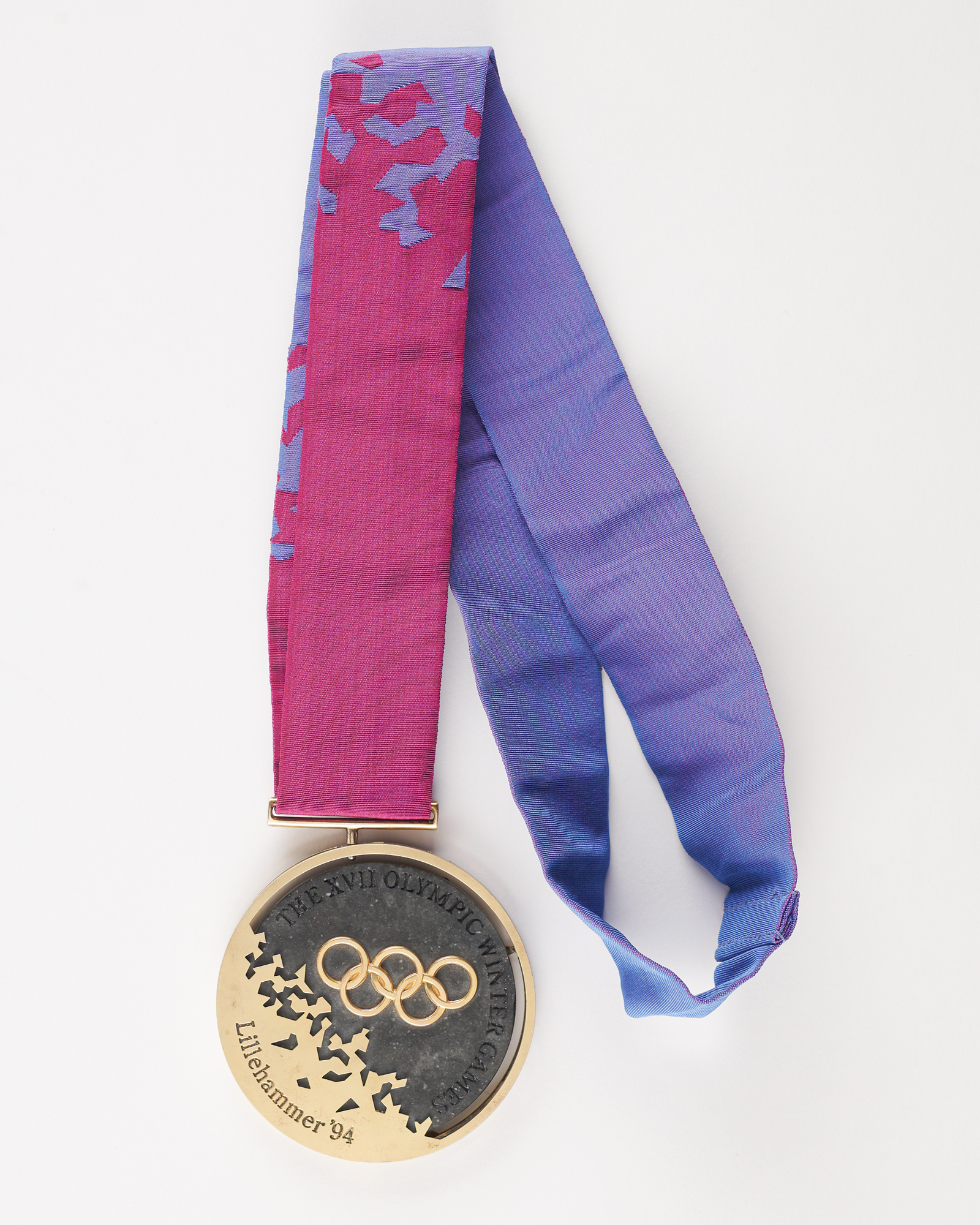
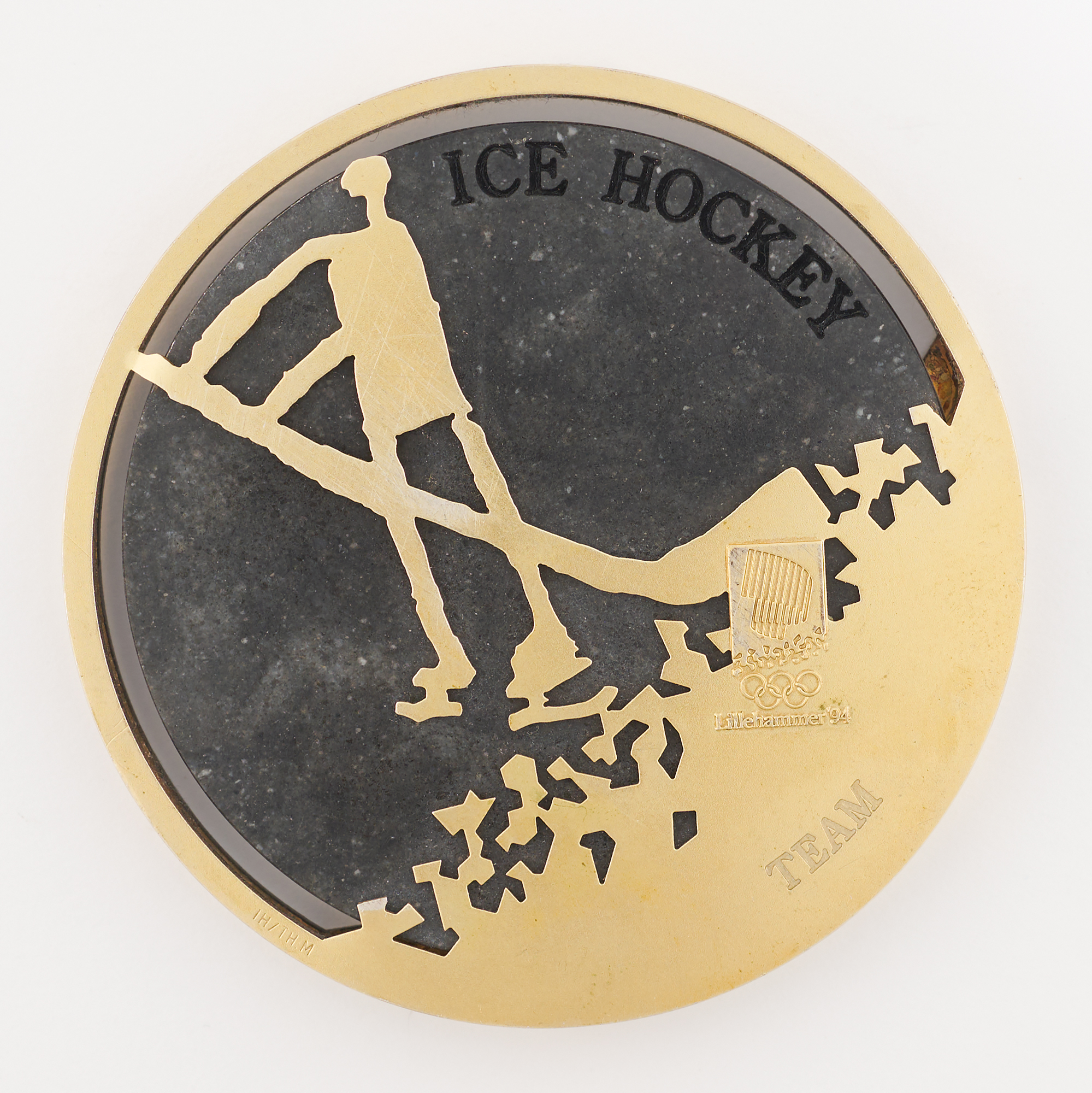
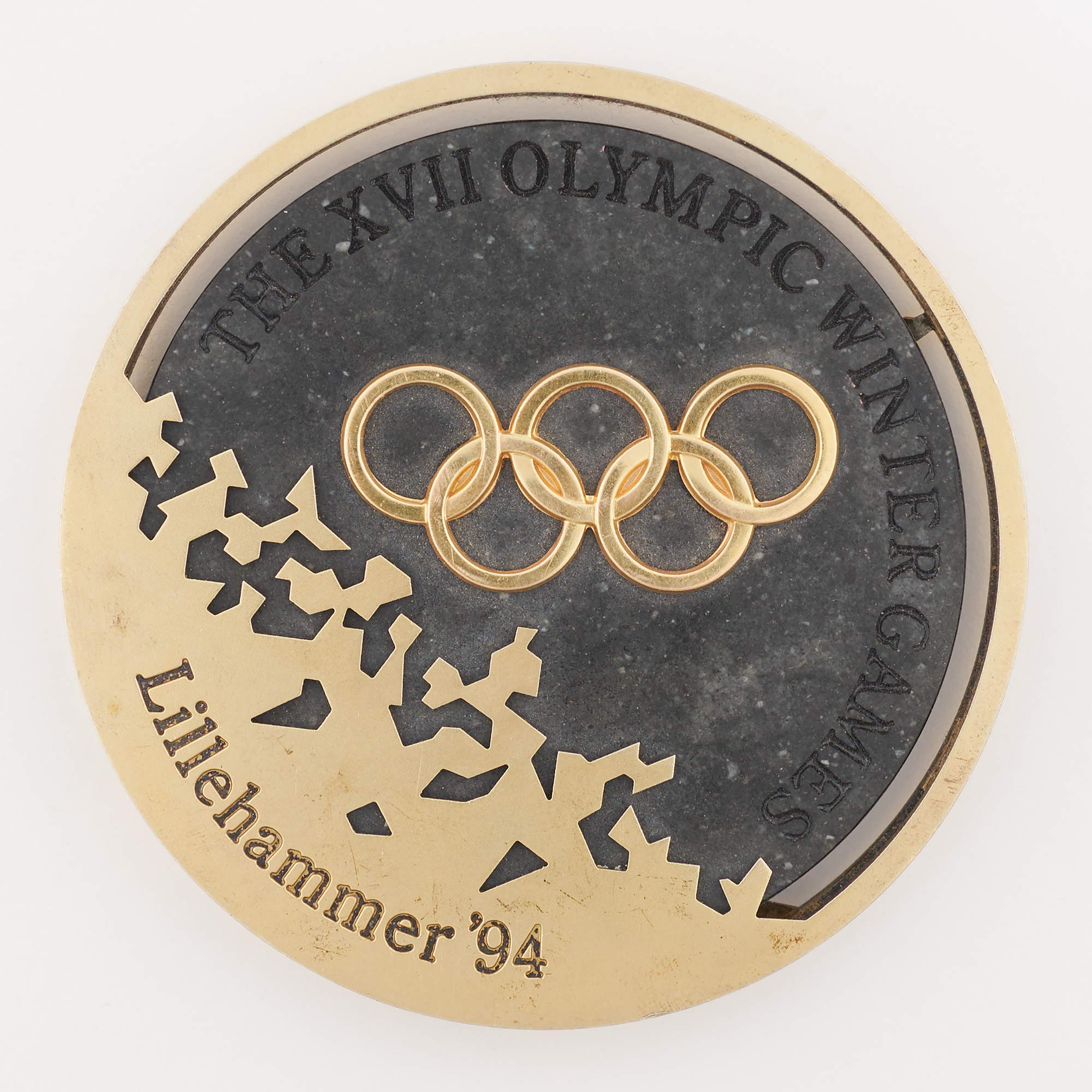
Highly desirable winner's medal issued for the Lillehammer 1994 Winter Olympics. Gilt silver, 82 mm, 133 gm, by Ingjerd Hanevold; manufactured by Th. Marthinsen of Tonsberg. The medal incorporates a polished circular piece of 600 million-year-old sparagmite, collected from Lillehammer Olympic Park during construction of the Lysgardsbakkene Ski Jumping Arena. The front features the Olympic rings in gold against the case’s ice crystal design, with the inset stone engraved, “Lillehammer ‘94” and “The XVII Olympic Winter Games.” The reverse continues the ice crystal motif and features the Lillehammer Games emblem and a large pictogram of an ice hockey player, with the stone engraved with the sport, “Ice Hockey.” The rim bears the initials of the designer and mint, and the medal bears trivial scuffing. Accompanied by its original blue and maroon grosgrain ribbon that replicates the ice crystal motif.
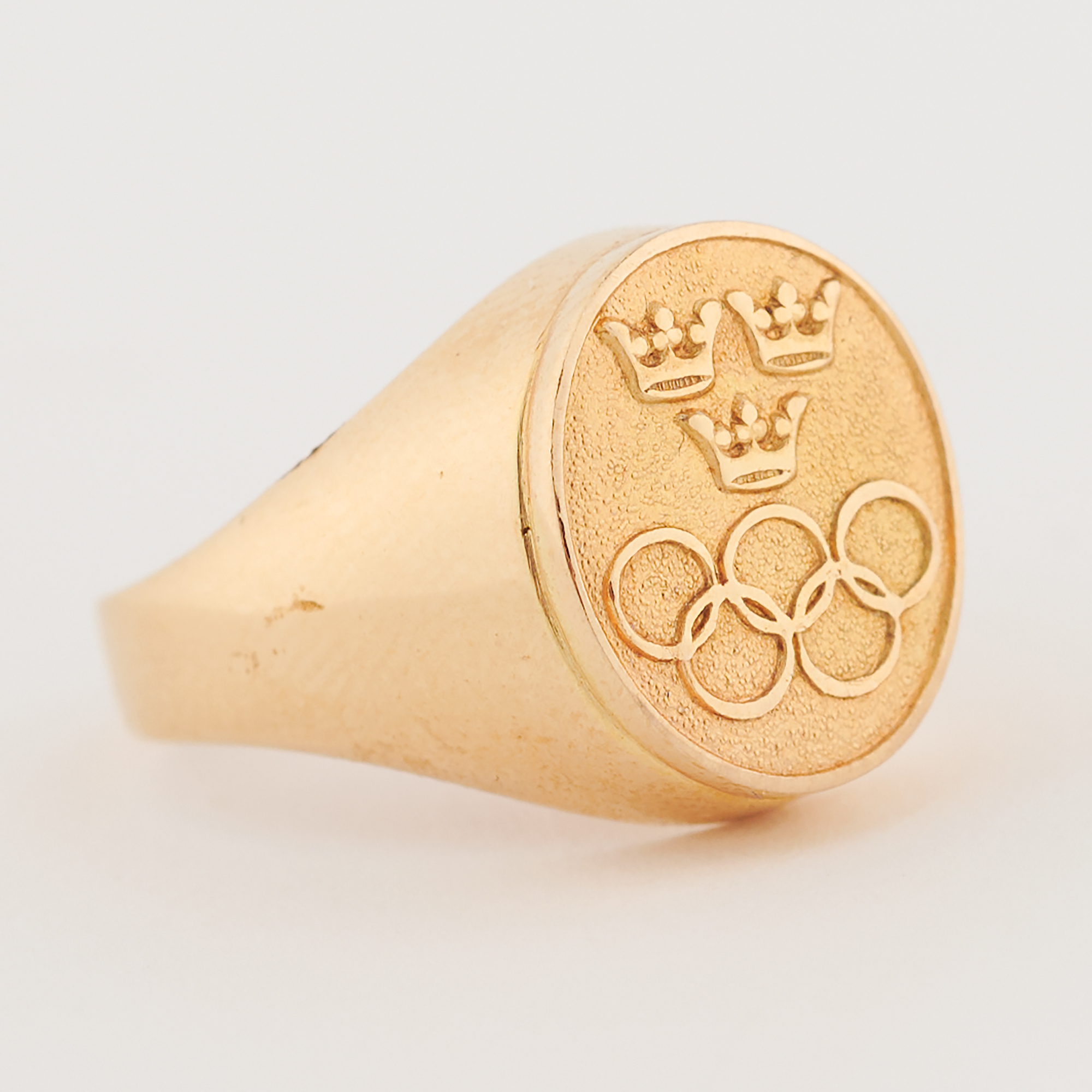
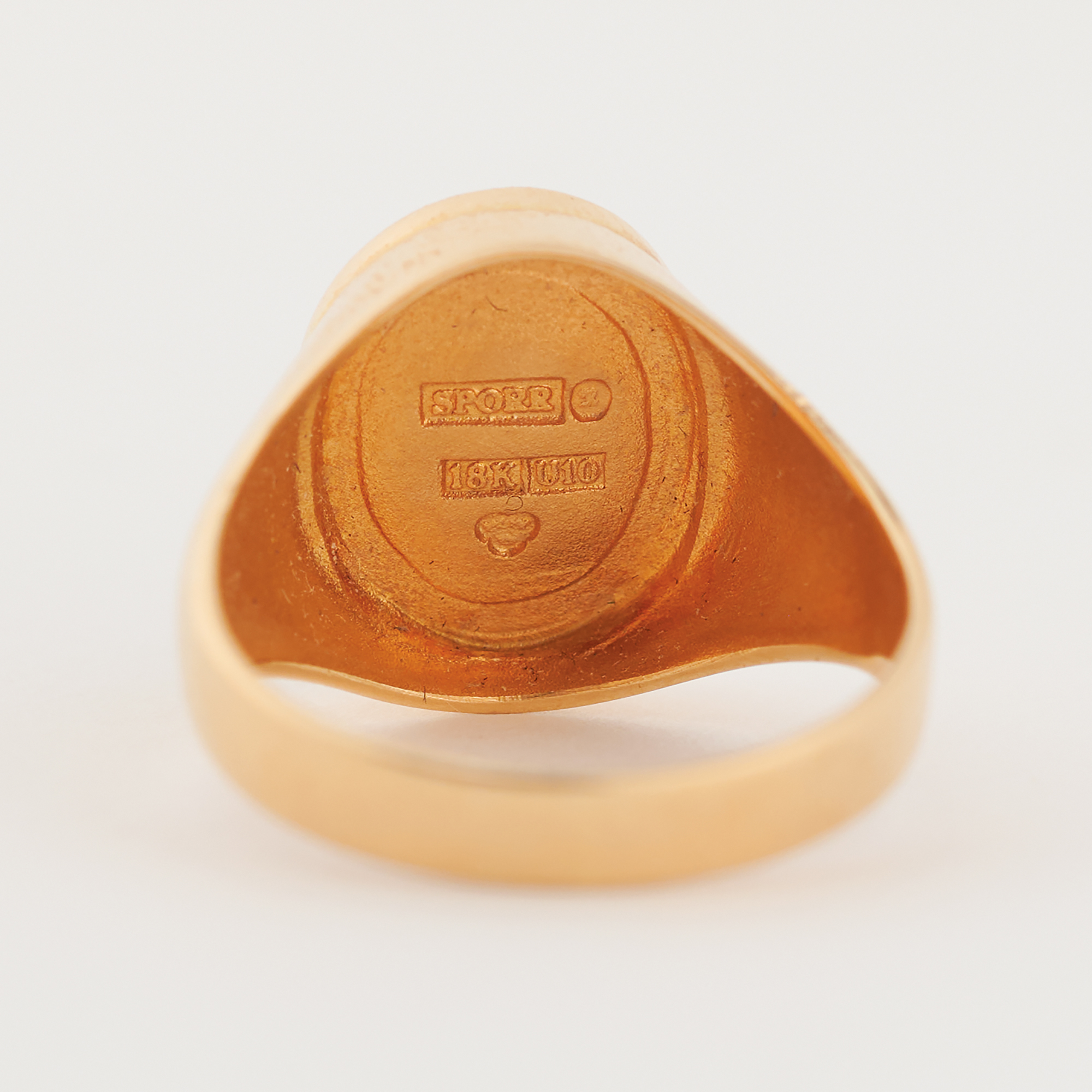
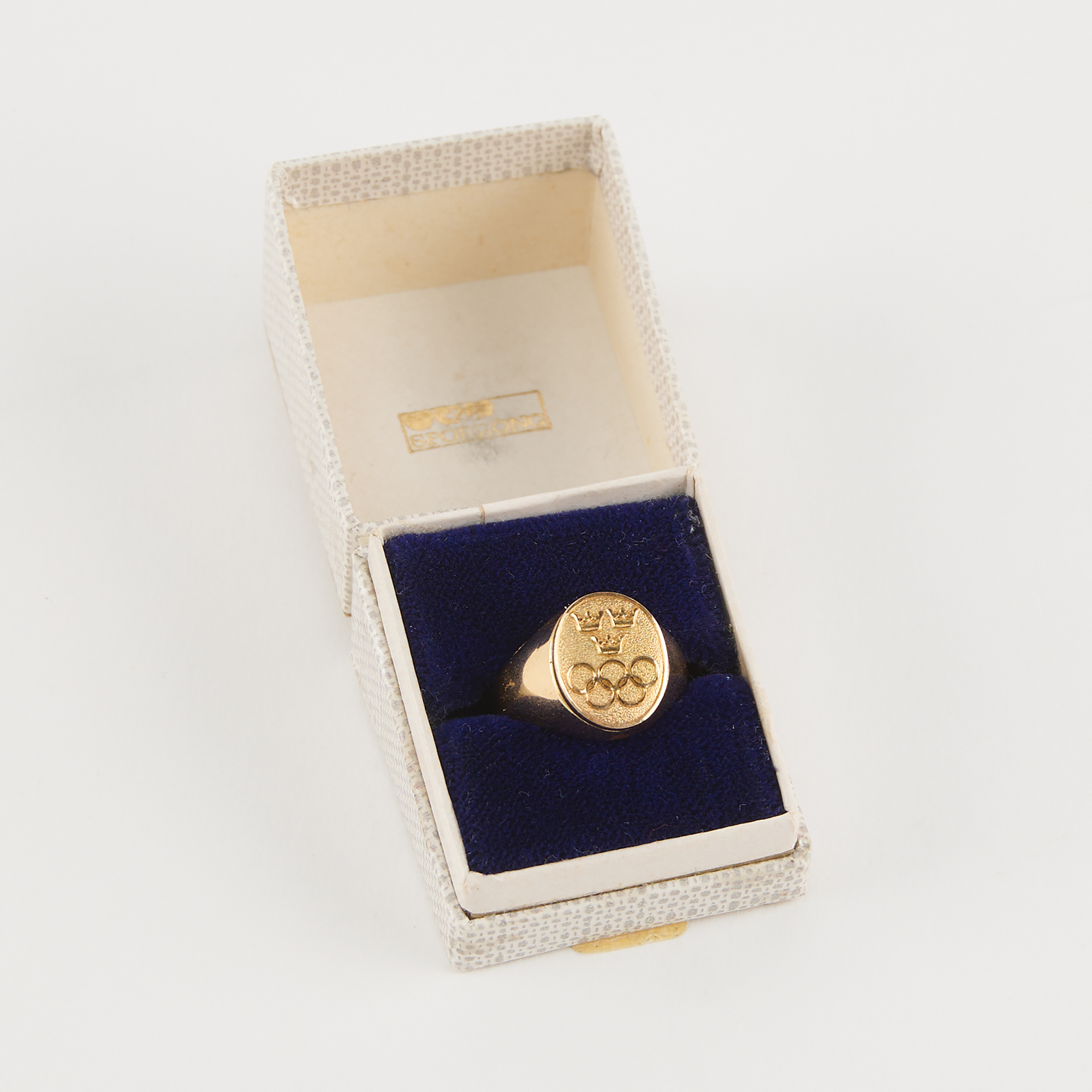
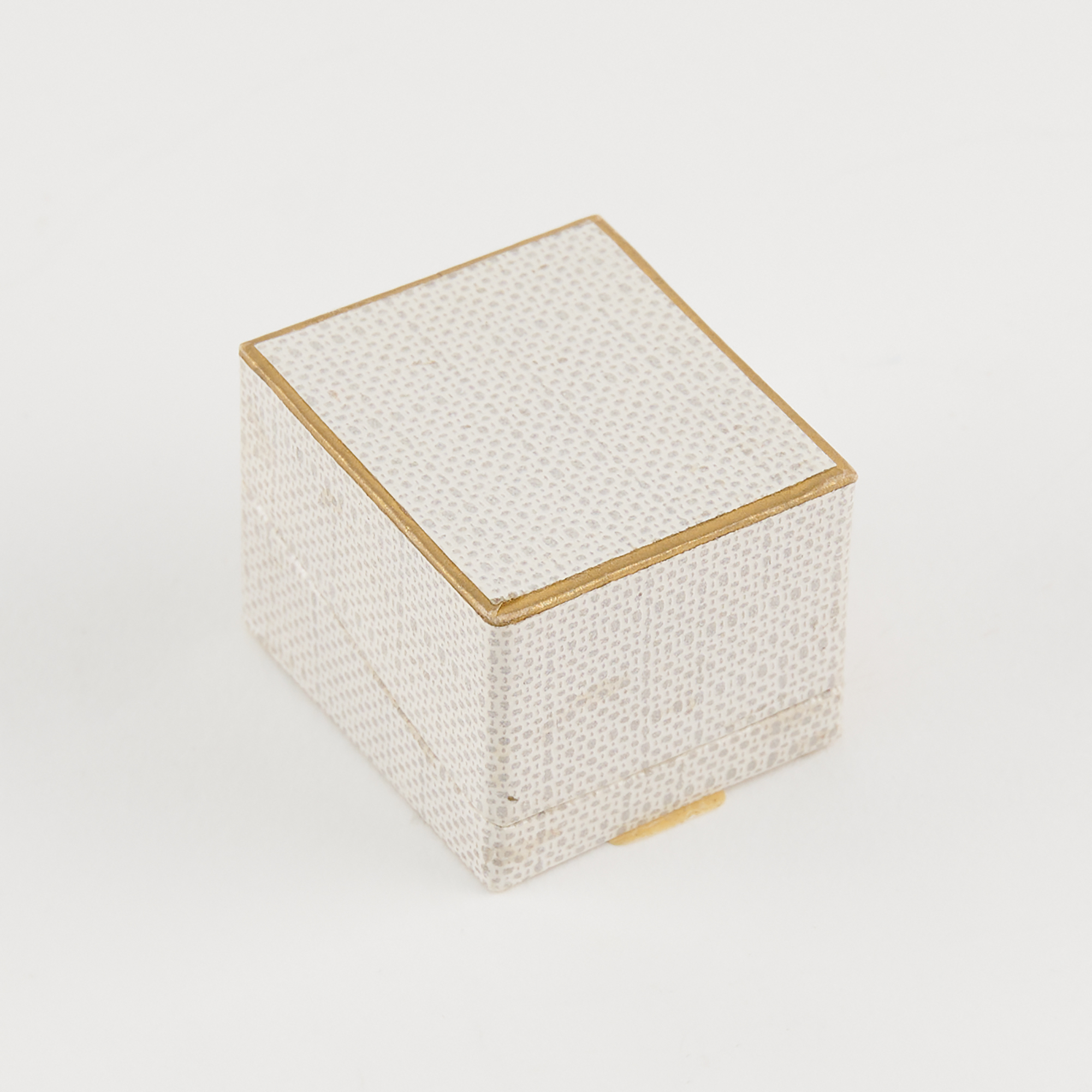
Also included is an official 18K gold medal winner’s ring, size 7.25, featuring the Swedish three crowns emblem above the Olympic rings on its circular face. The ring bears Sporrong and gold hallmarks to the interior, and is engraved with the name of the athlete, whose identity will be disclosed to the winning bidder. Complete with its original Sporrong presentation box.
According to Hanevold, she designed the medals to be ‘humorous, sober, and recognizable’ and described their design as 'Norwegian through and through.’ Her choice of sparagmite was in keeping with the guiding principles behind the Lillehammer Games as a means of presenting Norway’s genuine natural surroundings and increasing national environmental awareness. ‘The medals symbolize the very essence of Norway, the Norwegian mountain landscape. The stone also serves a symbolic function; it reminds us of how precious our earth and nature are, and how important it is that we protect them.’
Following preliminary-round play in which both Canada and Sweden finished with identical 3-1-1 records, the two teams advanced through the medal round to meet for gold, with Canada defeating Finland 5–3 and Sweden overcoming Russia 4–3 in the semifinals. The championship game remained tightly contested throughout: Sweden opened the scoring, Canada responded with two goals to take a 2–1 lead, and Sweden’s Magnus Svensson tied the game with just 1:49 remaining in regulation.
Still deadlocked at 2–2 after a scoreless overtime, the Olympic final went to a shootout, where Peter Forsberg produced one of the defining moments in Swedish hockey history, beating Canadian goaltender Corey Hirsch with an audacious one-handed move later commemorated on a Swedish postage stamp. Tommy Salo then stopped Paul Kariya to secure Sweden’s 3–2 victory and the nation’s first Olympic gold medal in ice hockey. The victory also made Swedish veterans Tomas Jonsson, Håkan Loob, and Mats Näslund the first three members of the Triple Gold Club, having each won Olympic gold, a World Championship, and the Stanley Cup. As an ice hockey winner’s medal from Sweden’s breakthrough Olympic championship, the present example is directly tied to one of the most memorable finishes in Winter Games hockey history.

