Sold For $62,491
*Includes Buyers Premium
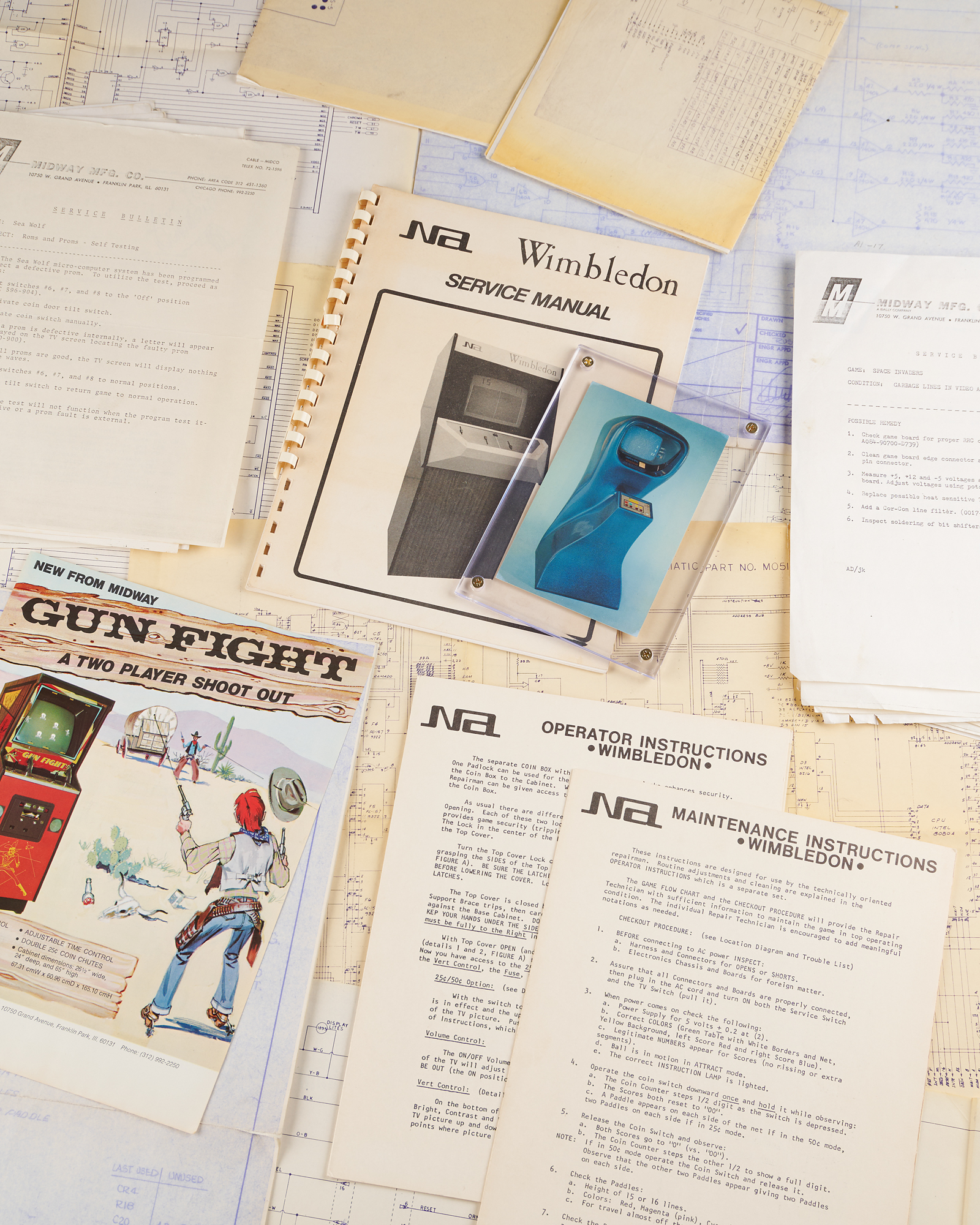
Archive of early Nutting Associates and Midway engineering documentation from the formative years of the coin-operated video game industry, containing more than 100 oversized engineering schematics, factory service manuals, operator instructions, wiring diagrams, printed circuit board layouts, service bulletins, technical reference documents, and promotional materials pertaining to some of the most influential arcade games of the 1970s and early 1980s. The archive encompasses documentation for Nutting Associates' advanced color Pong variant Wimbledon, together with Midway classics including Gun Fight, Sea Wolf, Space Invaders, Gorf, Wizard of Wor, and Omega Race, dating from approximately 1971 through 1981. The oversized engineering schematics range in size from 22 x 17 to 40 x 18.
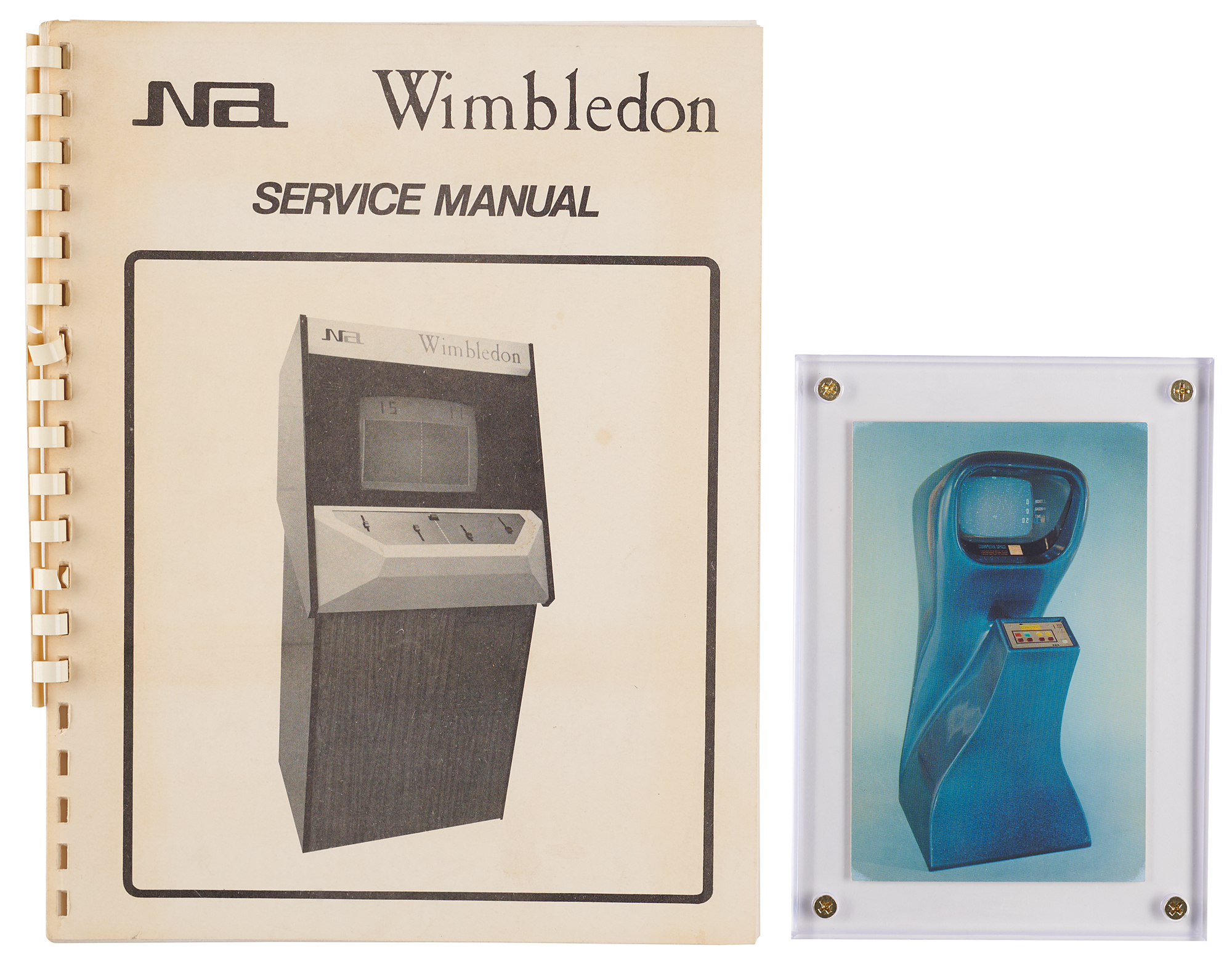
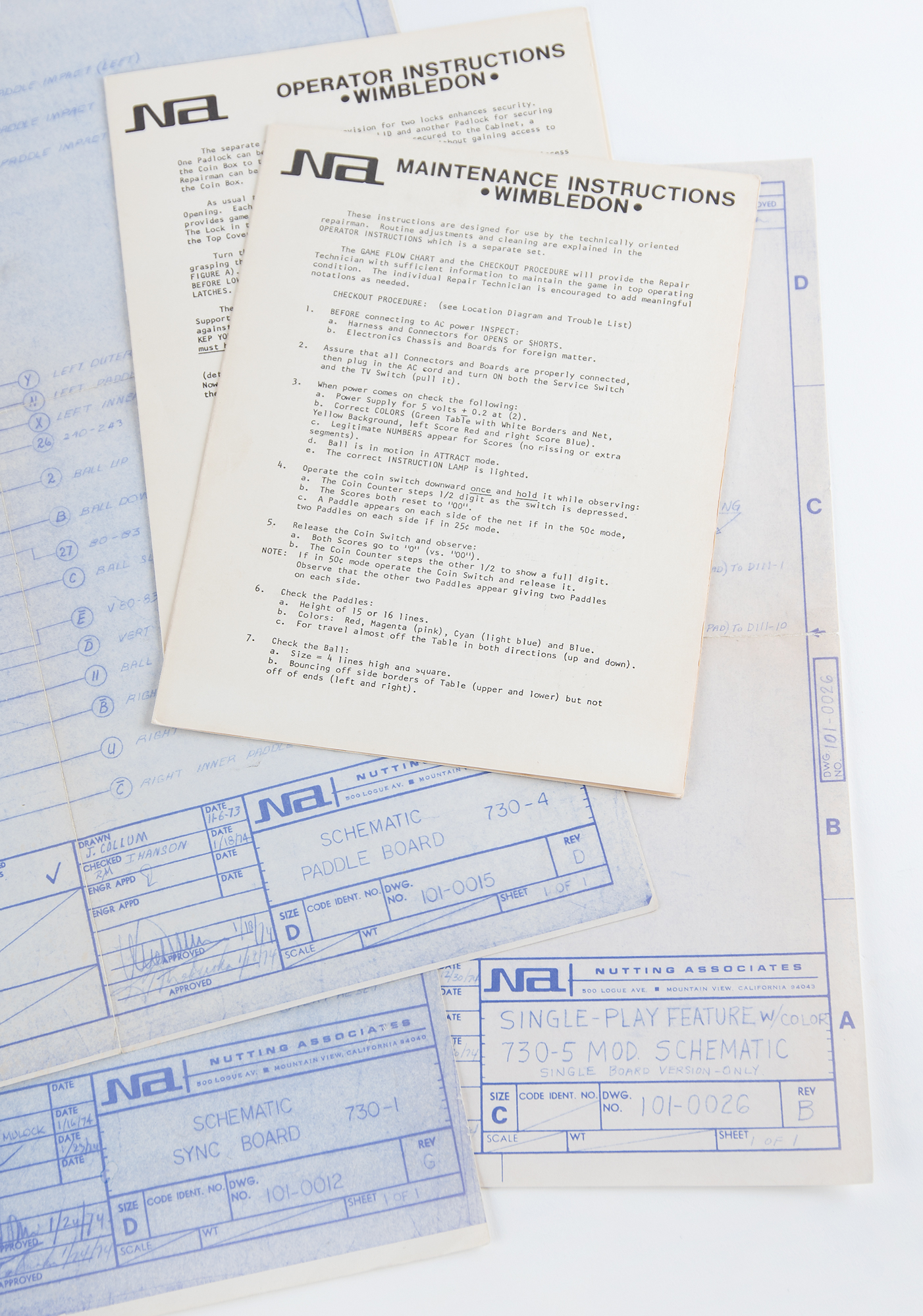
The earliest material centers on Nutting Associates, whose Computer Space (1971), designed by Nolan Bushnell and Ted Dabney, was the world's first commercially sold video arcade game. This archive includes a rare Computer Space Postcard dating to 1971, making it one of the earliest pieces of video game literature. The accompanying promotional literature is joined by an extensive group of ‘lost’ engineering documents for Nutting Associates' Wimbledon (1973), the very first Pong variant in color. Nutting Associates produced only 100 Wimbledon cabinets, making it one of the company's lowest-production games. The documentation includes an operator instruction booklet, maintenance manual, service manual, Sync Board, Paddle Board, and Single-Play/Color Modification blue-line schematics. These large Wimbledon engineering blue-line schematics are currently the only ones known to exist. The Wimbledon “Single-Play” schematic is of a single player mode for Wimbledon that never happened. The lost Nutting Wimbledon schematics in this archive will fill a lost gap in Video/Arcade game history. These schematics also include the only signatures known to exist of Miel Domis, the Nutting engineer responsible for creating the color version of Pong for Nutting. No pictures or information have been shared online of these schematics, making the owner of these schematics the only one to possess their information.
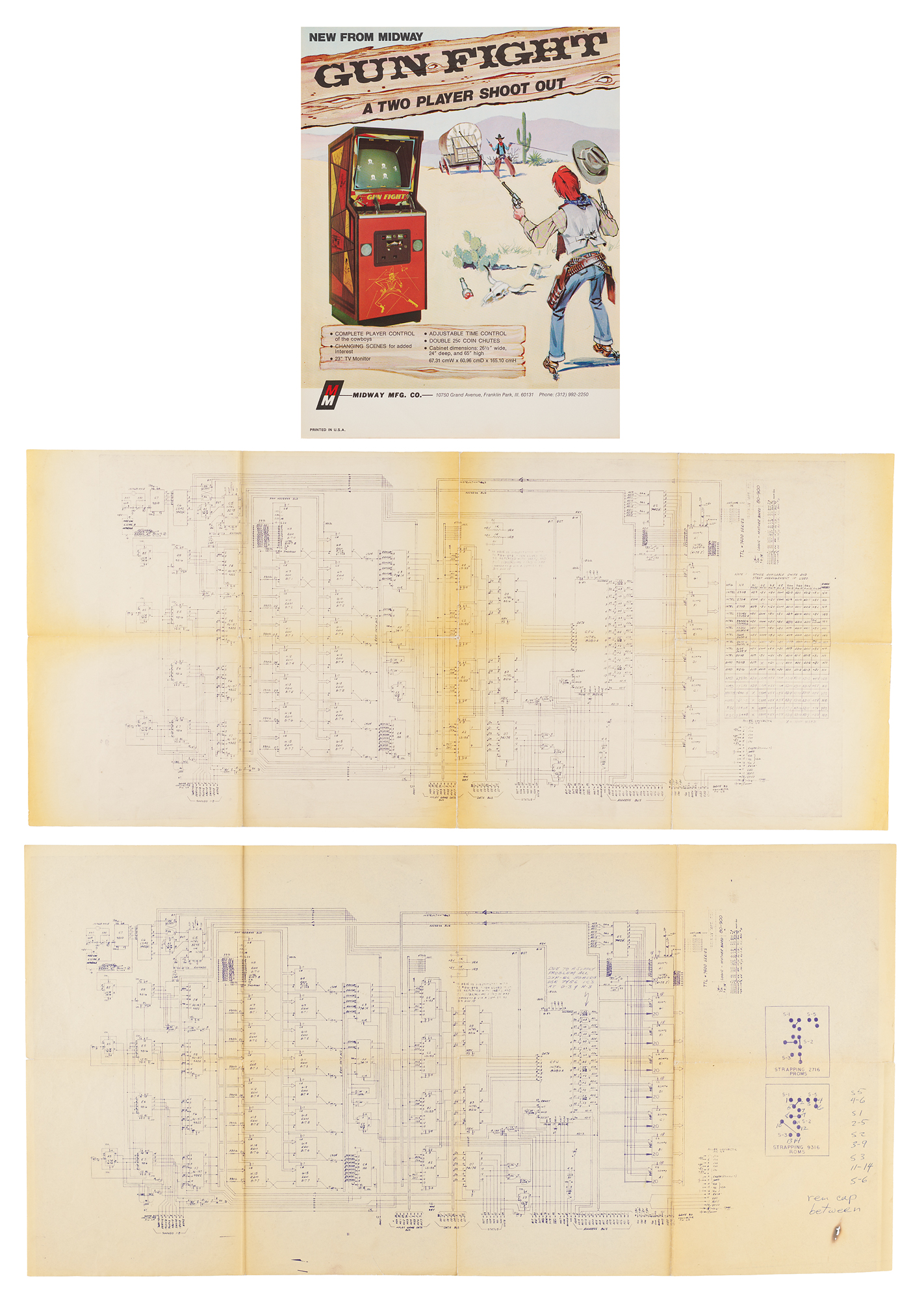
Midway's earliest represented title is Gun Fight (1975), whose archive includes original promotional material together with logic motherboard schematics documenting the circuitry behind the first commercially successful microprocessor-based arcade game in North America, a technological breakthrough that took video games from complex TTL hardware to software.
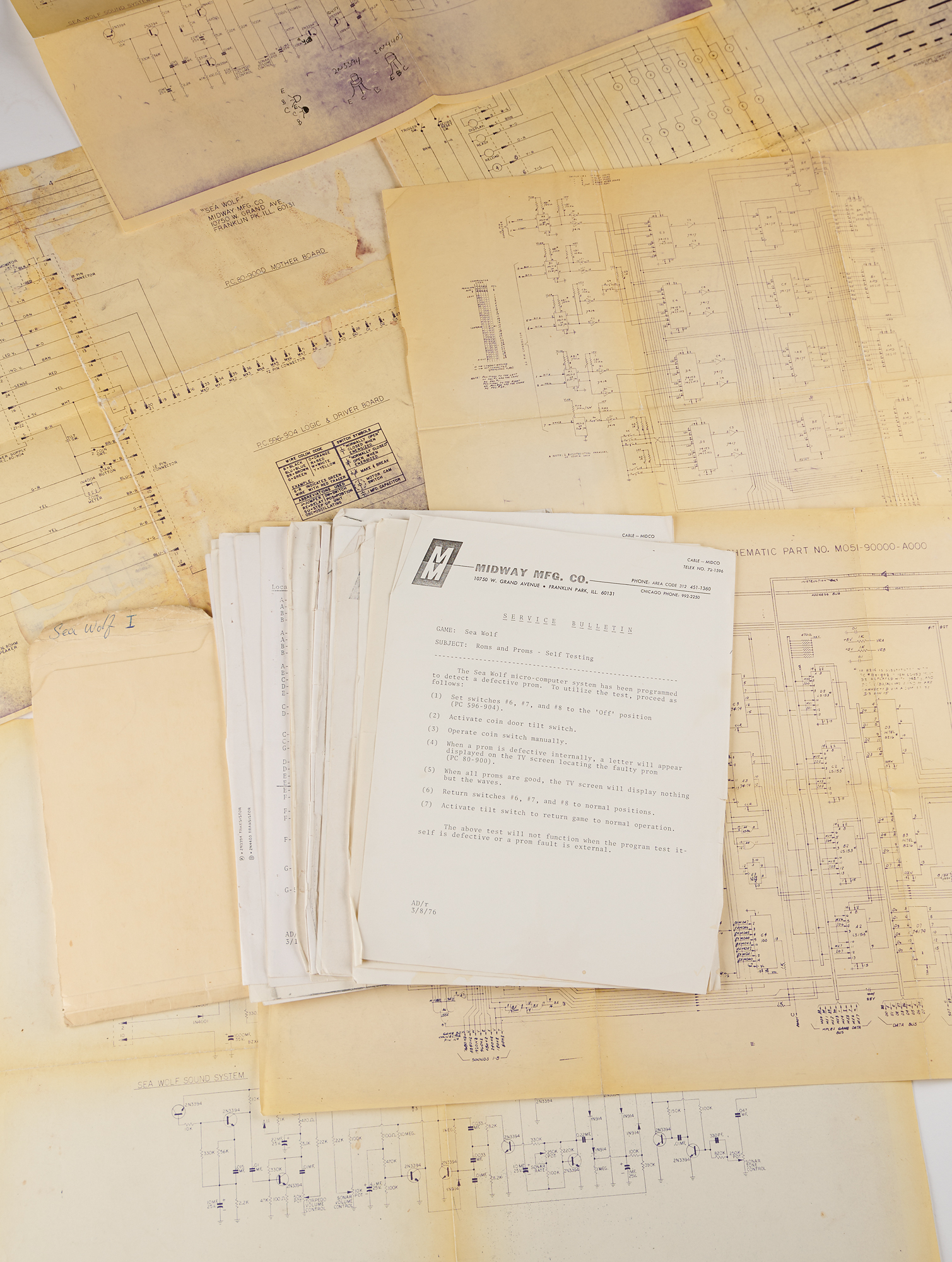
The Sea Wolf documentation is especially extensive, encompassing original Midway service bulletins, chip location charts, motherboard layouts, sound system schematics, sound generator drawings, wiring diagrams, connector references, and game board documentation, offering an unusually comprehensive record of the engineering behind one of Midway's earliest blockbuster arcade successes.
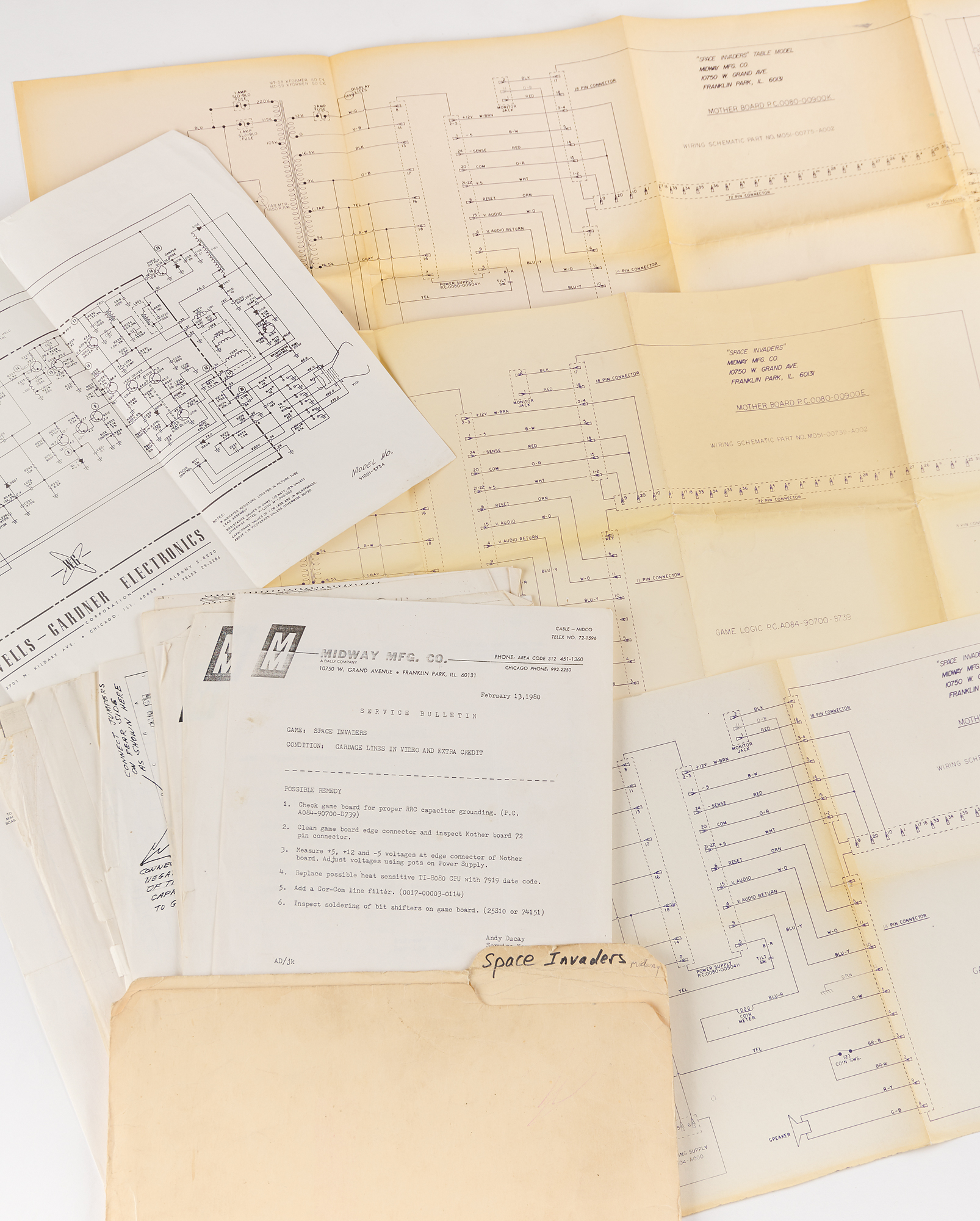
The archive continues through Midway's most influential period with substantial documentation for Space Invaders, including motherboard wiring schematics for both upright and cocktail cabinets, factory service bulletins, DIP switch configuration sheets, troubleshooting notices, and factory engineering updates issued between 1979 and 1980. Together, these documents chronicle the continual refinement of one of the most commercially successful arcade games ever produced, preserving the factory-issued technical guidance used to maintain, troubleshoot, and update machines during the height of the Space Invaders phenomenon.
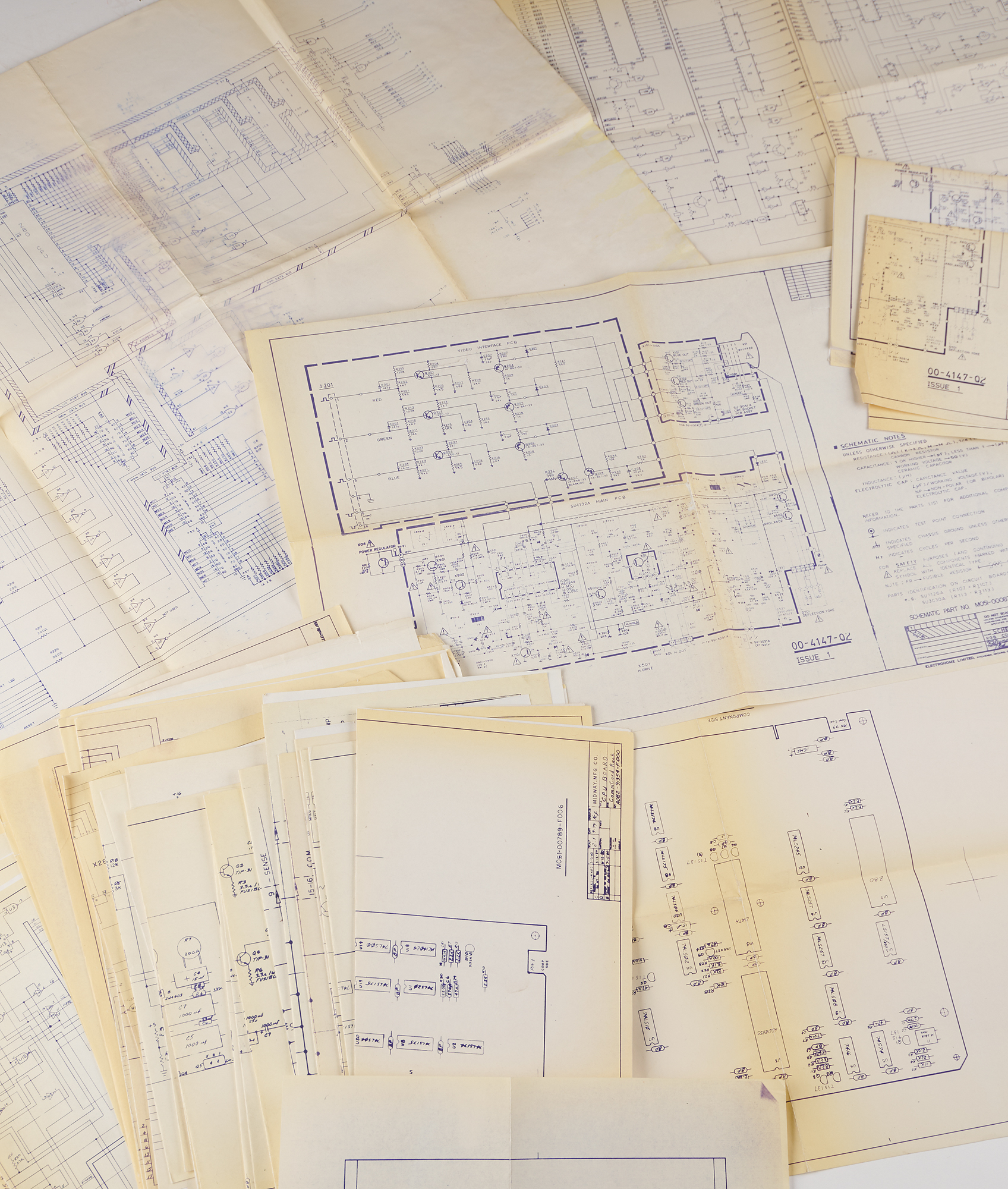
The archive is further complemented by engineering drawings and board layouts for Gorf, Wizard of Wor, and Omega Race, including motherboard, daughter board, ROM/RAM board, power supply, wiring, and commercial card rack schematics. Many retain complete Midway engineering title blocks, revision histories, production release notations, and internal engineers' markings such as "Not for Mass Reproduction," emphasizing their role as working factory engineering documents during the development and manufacture of Midway's early-1980s arcade hardware. In overall fine condition, with expected folds and scattered light wear.
Beyond its remarkable breadth, the archive preserves virtually every stage of Midway's engineering process. Rather than representing isolated service manuals or operator literature, the collection follows arcade hardware from initial circuit and printed circuit board design through production revisions, field-service modifications, troubleshooting bulletins, and operator support, documenting the continual evolution of many of the company's most historically significant games.
Beginning with Nutting Associates, the company that introduced commercial video gaming to the public through Computer Space, and continuing through Midway's rise as one of the defining manufacturers of the Golden Age of arcade gaming, the archive documents nearly a decade of rapid technological advancement. Together, these original factory engineering records provide a remarkable behind-the-scenes look at the design, manufacture, maintenance, and continual refinement of the machines that established the modern coin-operated video game industry.

