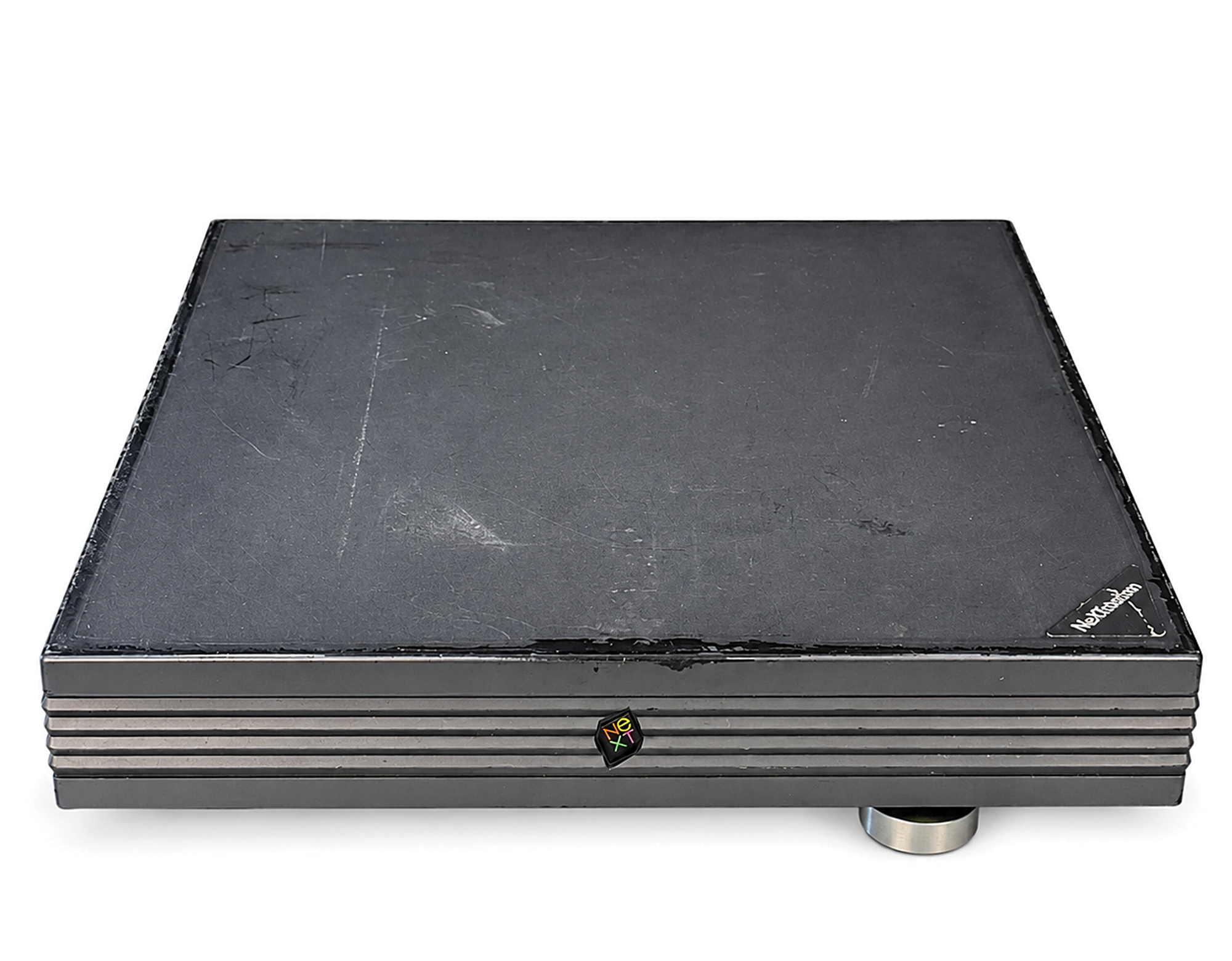
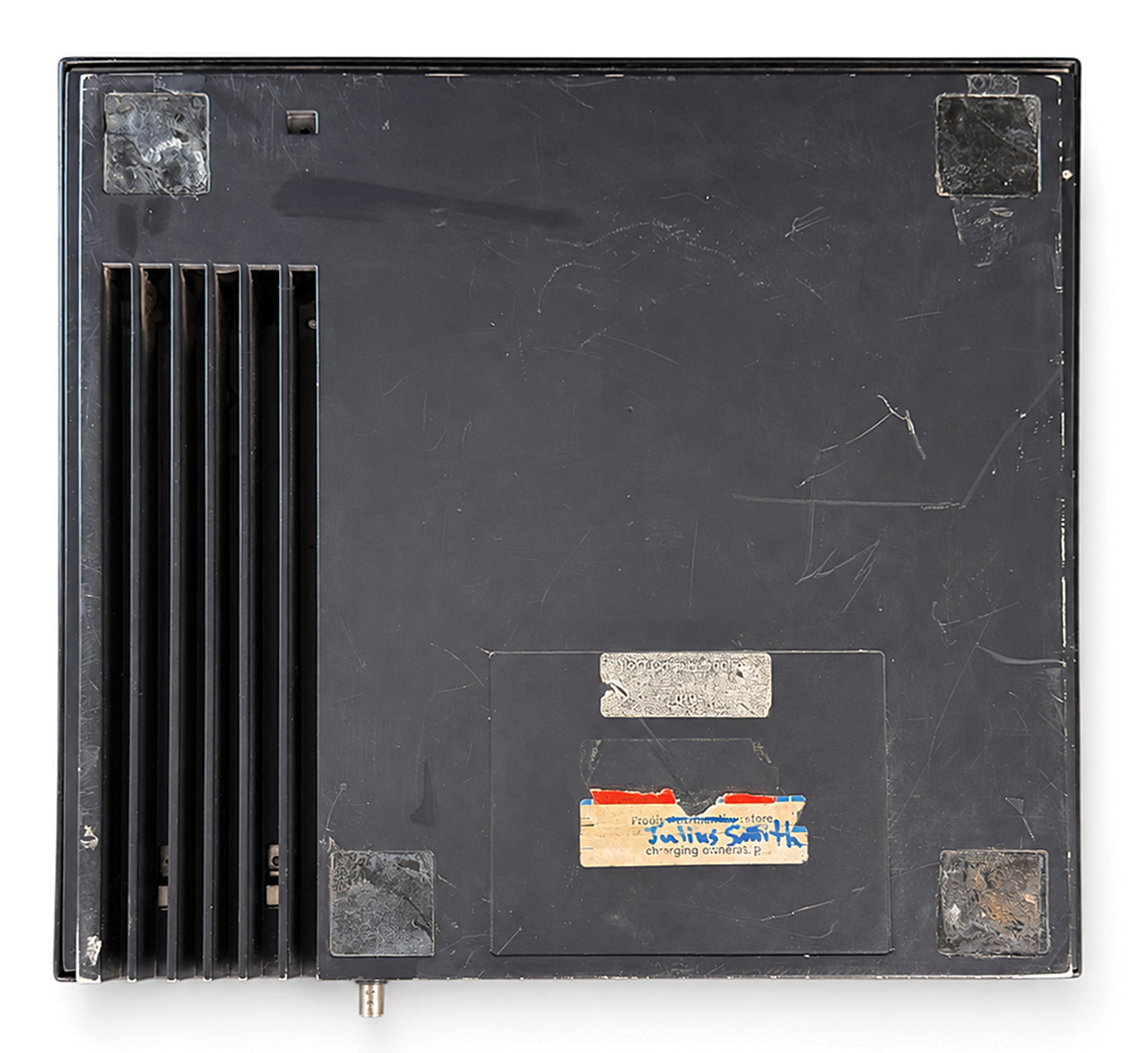
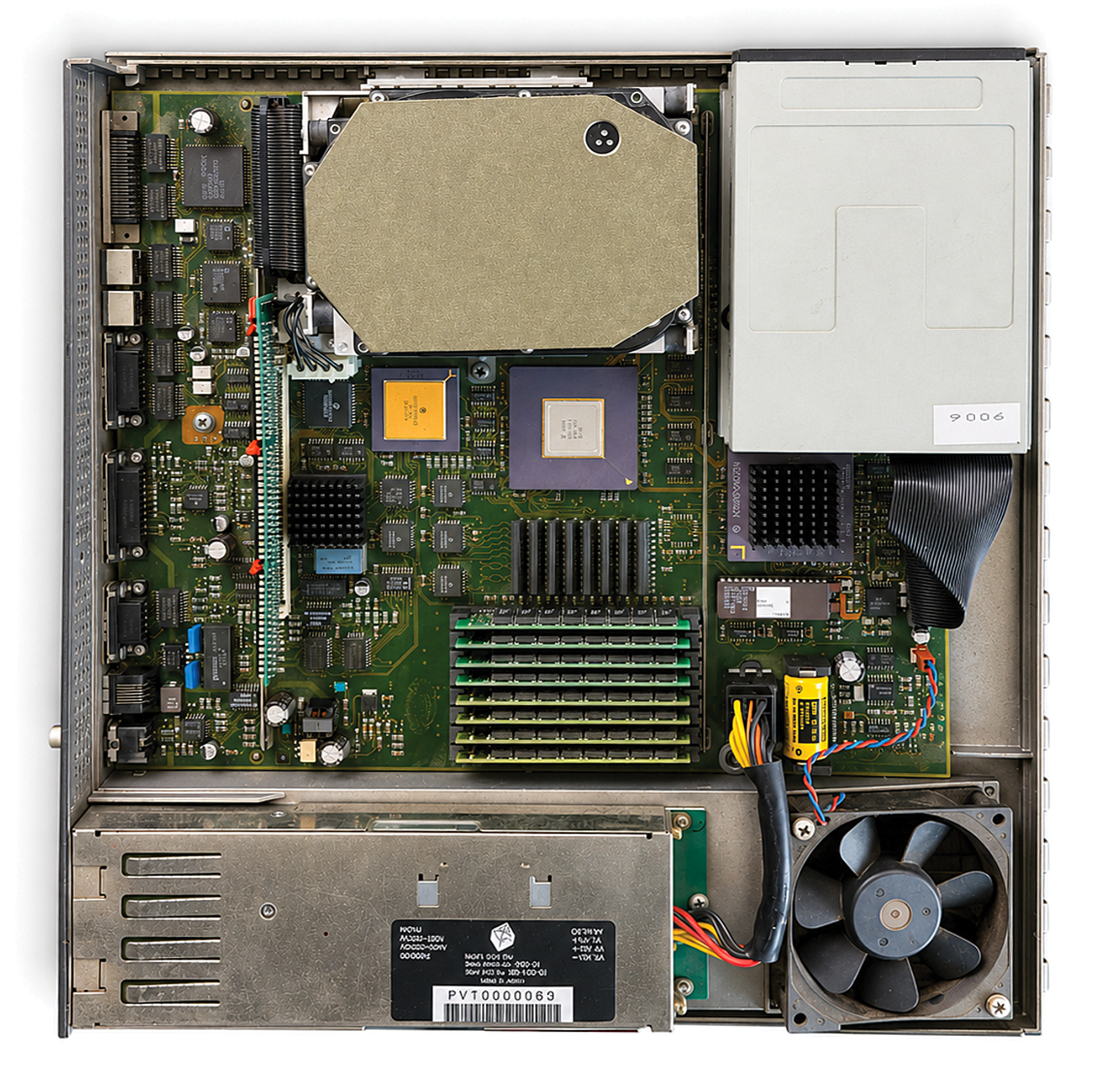
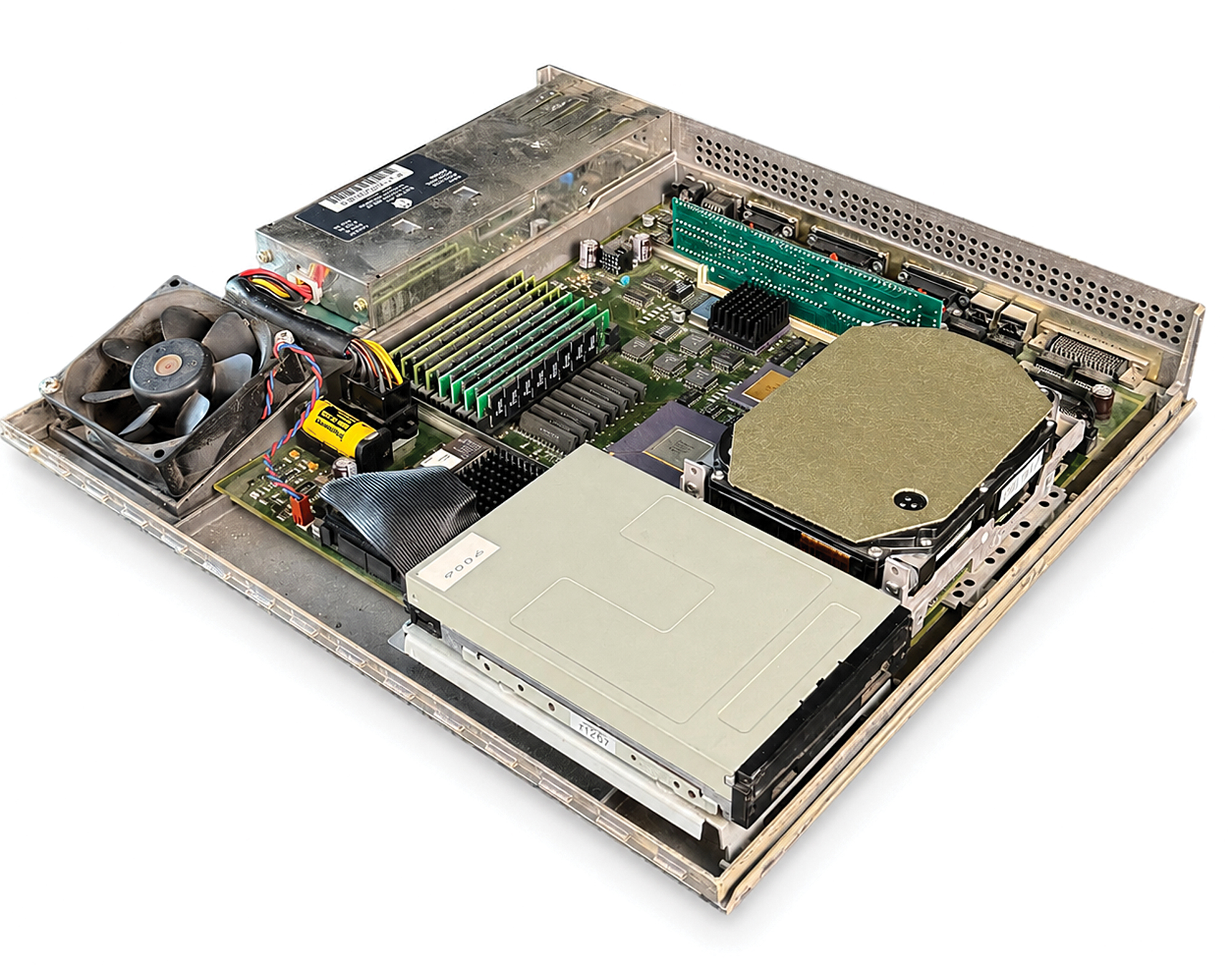
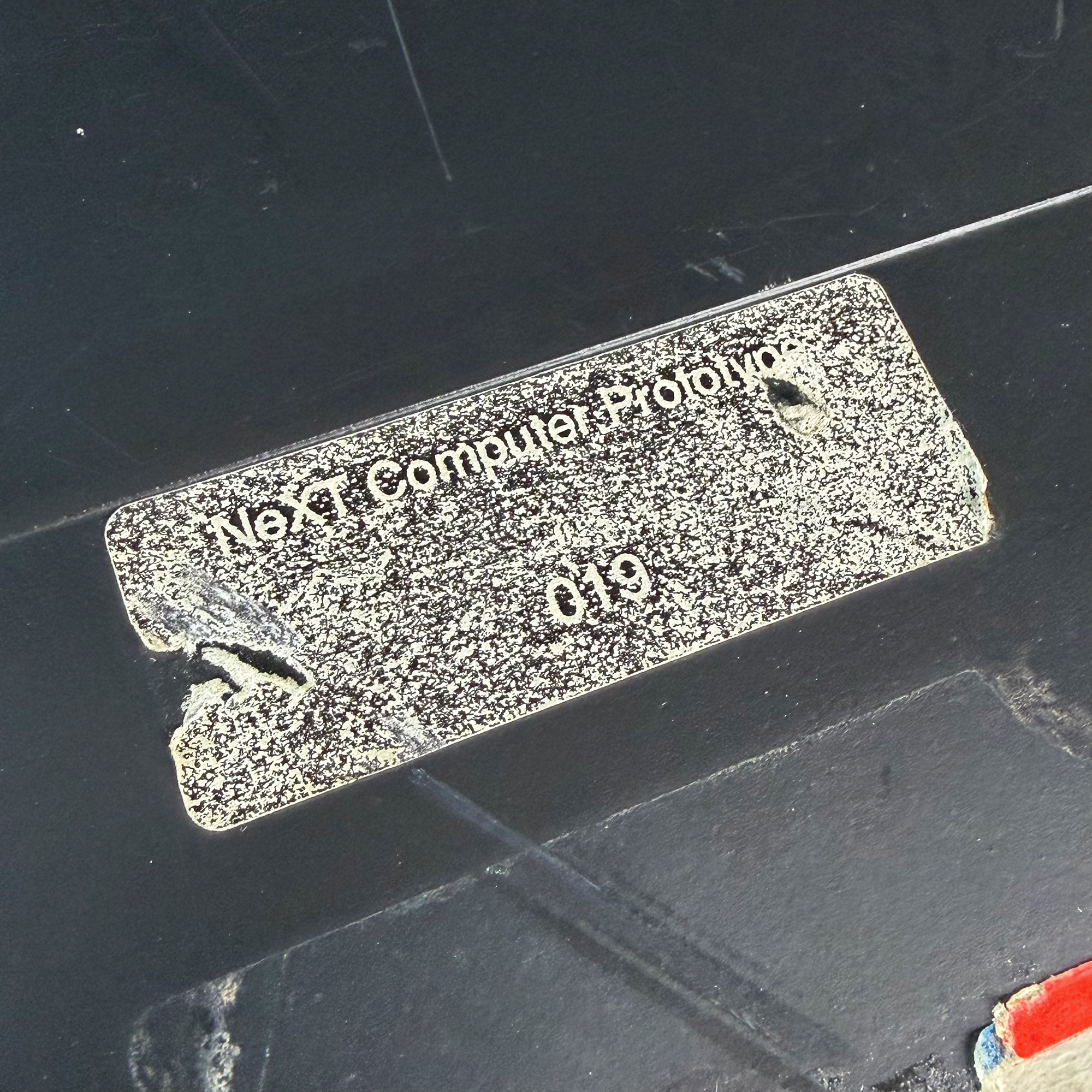
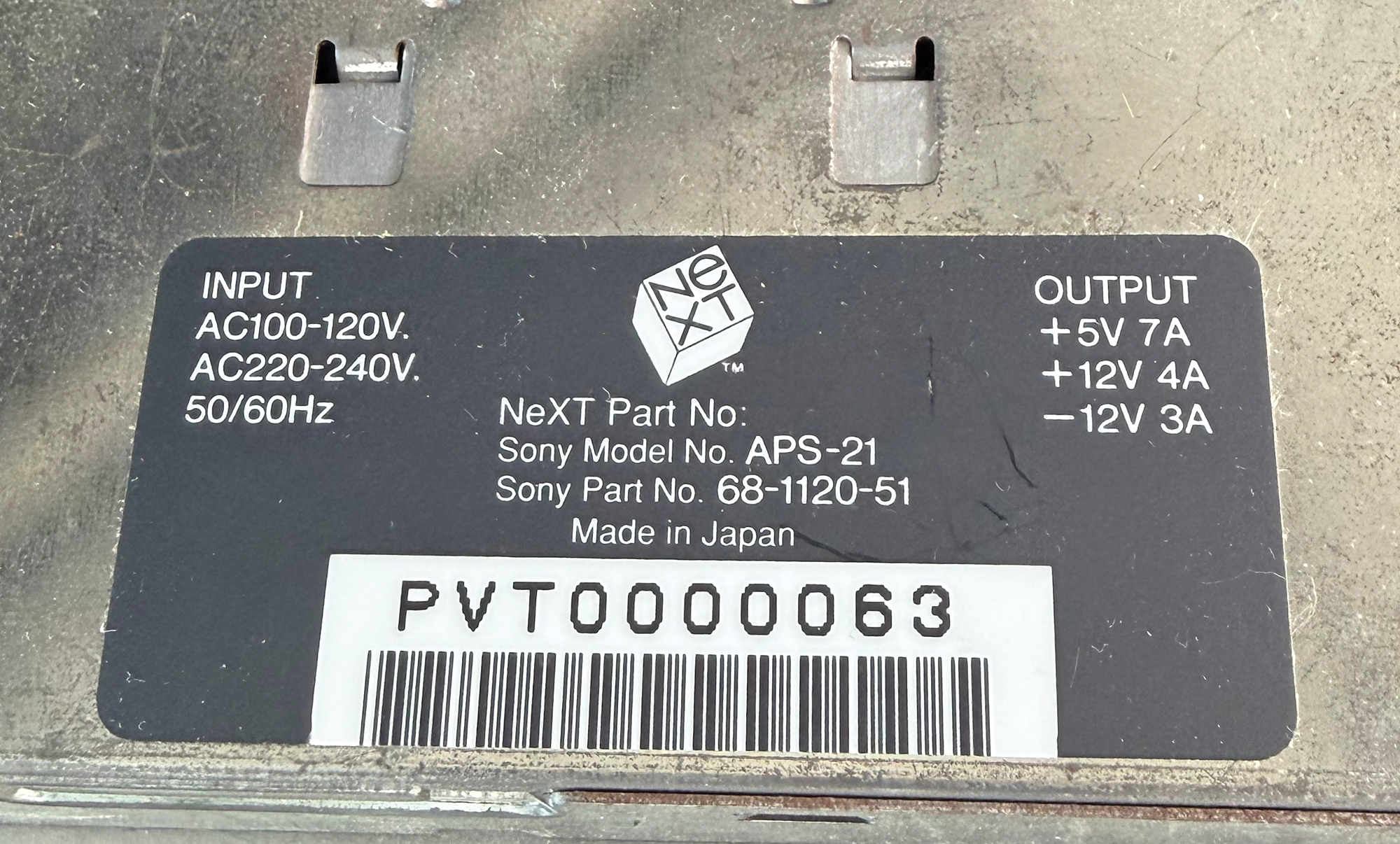
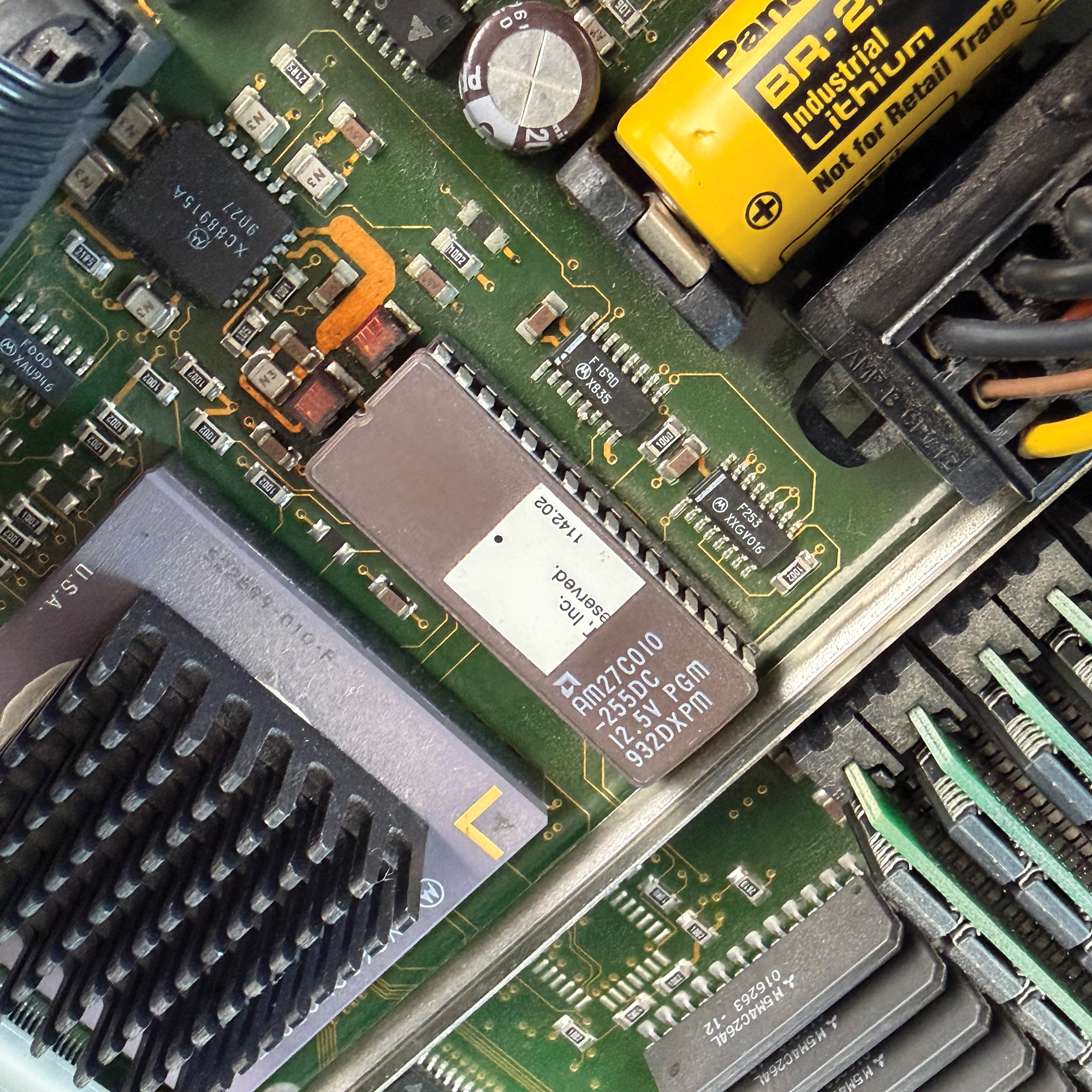
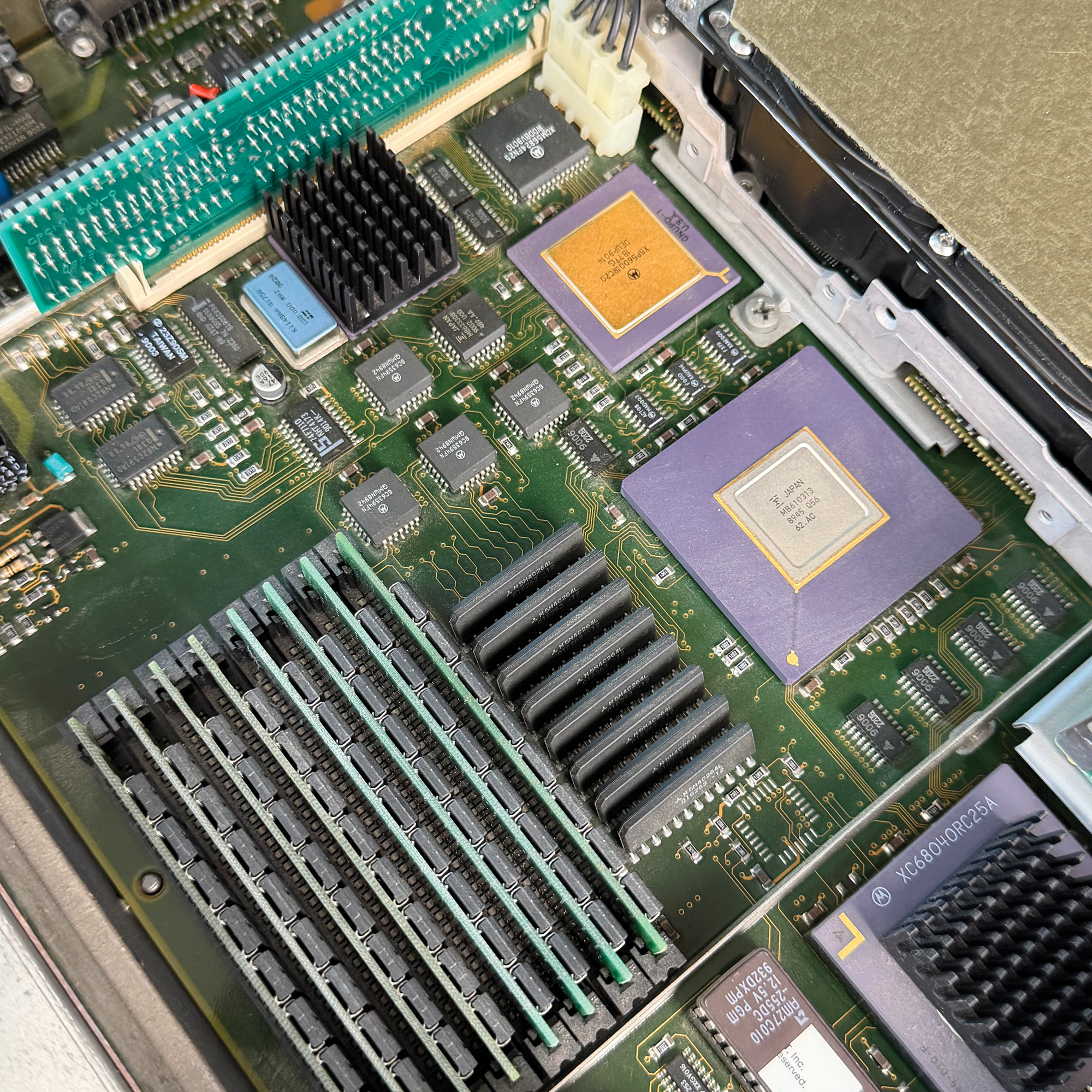
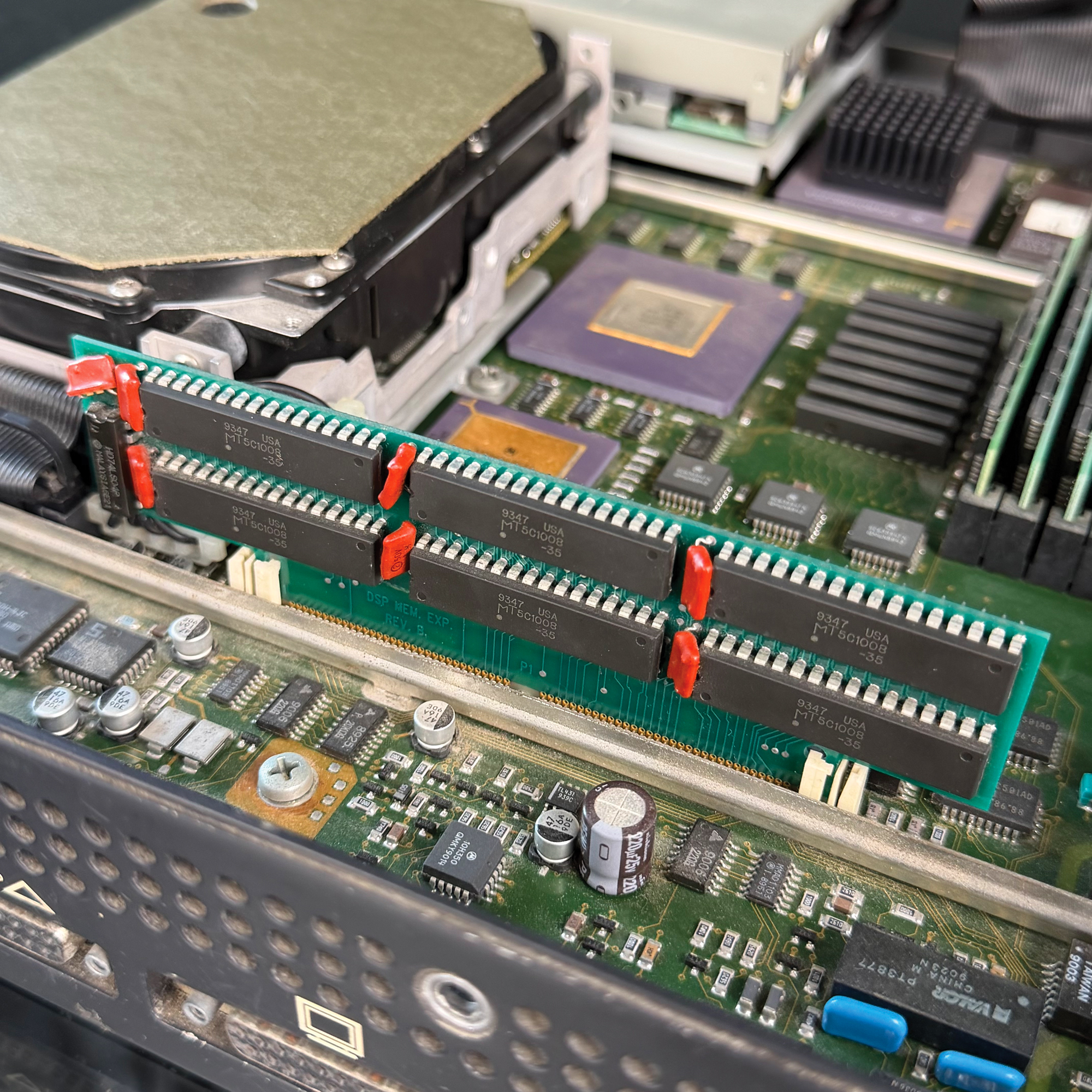
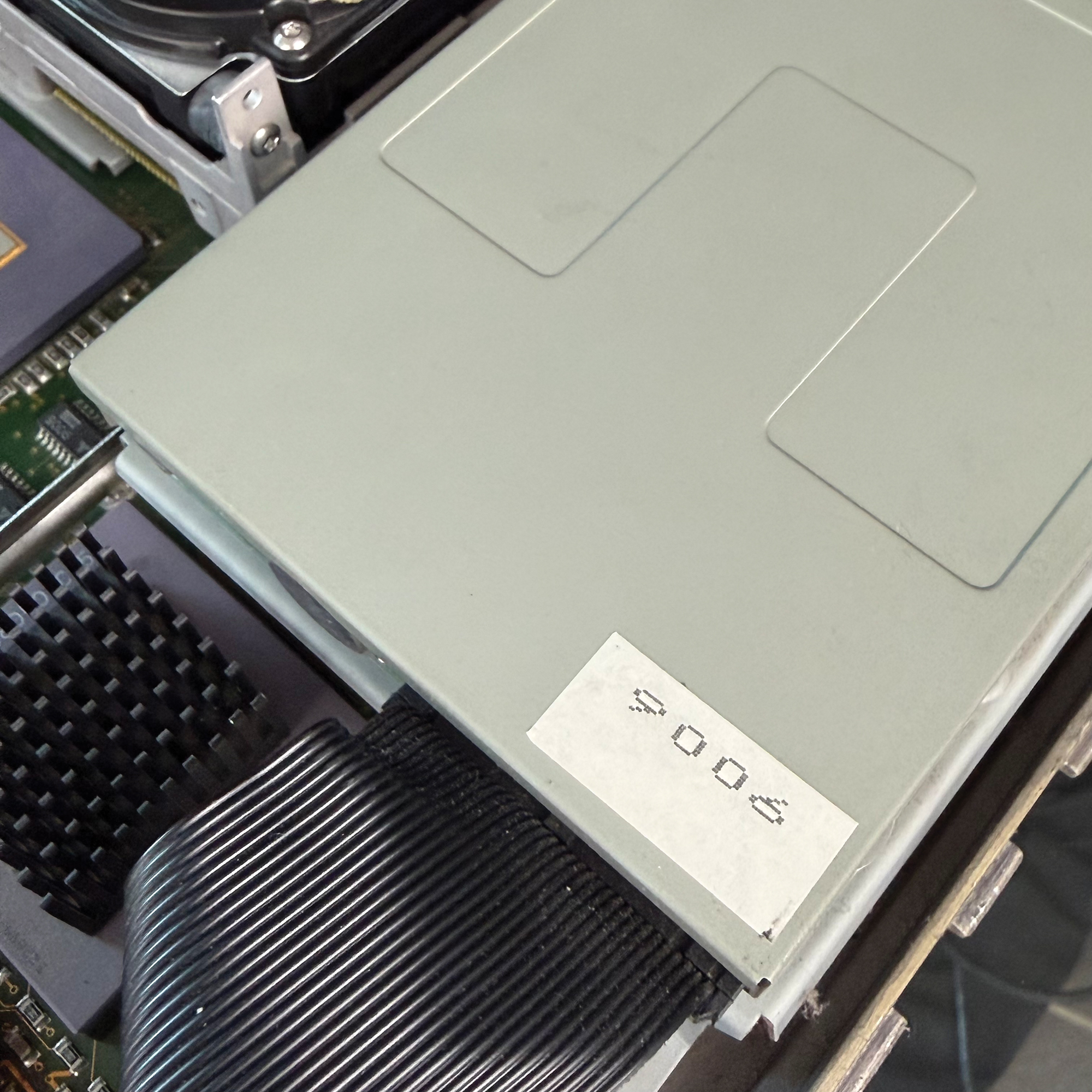
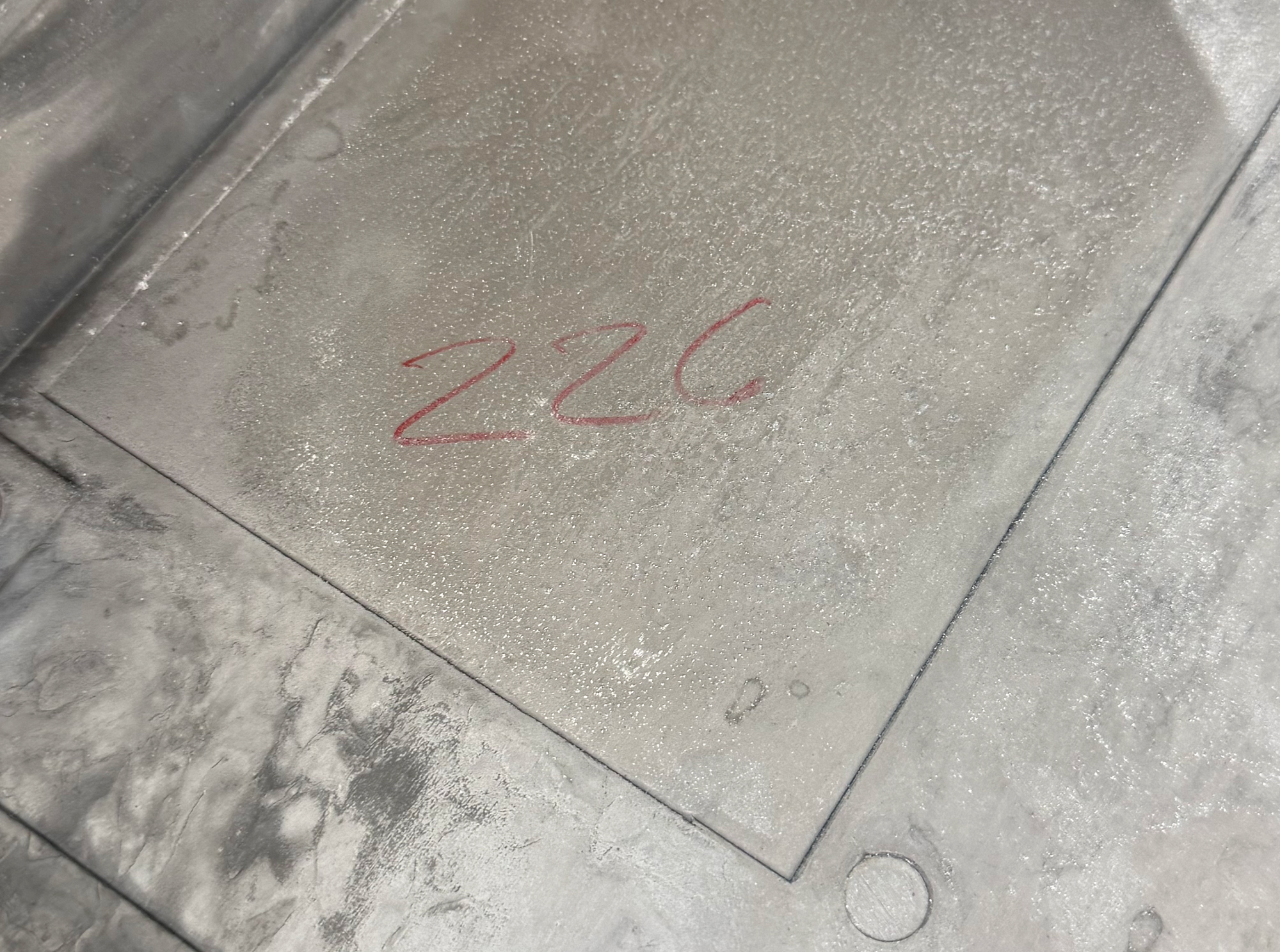
NeXT Workstation prototype computer, identified on the underside as "NeXT Computer Prototype 019," retaining its prototype motherboard, prototype Sony power supply (labeled "PVT0000063"), and rare prototype memory expansion card. The case lid is additionally hand-marked "226" with a red grease pencil prototype designation. Also bearing a period inventory label reading, in part, "Notify Julius Smith before changing ownership." In working condition, with some cosmetic wear to the computer case, such as scuffs and marks.
The workstation's association with Julius O. Smith III, documented by the surviving ownership label, adds further significance. Smith was a NeXT Computer engineer who later became widely recognized as the co-inventor of the core audio-fingerprinting technology that formed the basis of the music-identification service Shazam. Combined with its unusually low prototype designation, this workstation is further distinguished by the survival of its prototype motherboard, prototype power supply, and rare prototype memory expansion card, preserving an exceptionally early example of NeXT's hardware development and one of the most compelling artifacts from Steve Jobs's landmark post-Apple venture.
After resigning from Apple in the fall of 1985, Steve Jobs founded the innovative NeXT project, a computer and software company aimed at the markets of business and higher education. The first NeXT Computer was introduced in 1988, and the smaller NeXTstation came two years later. While these computers encountered subpar sales, the object-oriented NeXTSTEP operating system and development environment proved highly influential. The OS offered an intuitive GUI with features like an application dock, true multitasking, drag-and-drop tools, large full-color icons, real-time scrolling, and other elements that are considered ubiquitous today. Unix derivatives incorporating NeXTSTEP would eventually power all of Apple's platforms, including the iPhone. Apple purchased NeXT in 1997 for $429 million and 1.5 million shares of Apple stock, with Steve Jobs, as part of the agreement, returning to the company he had co-founded in 1976.

