Sold For $20,130
*Includes Buyers Premium
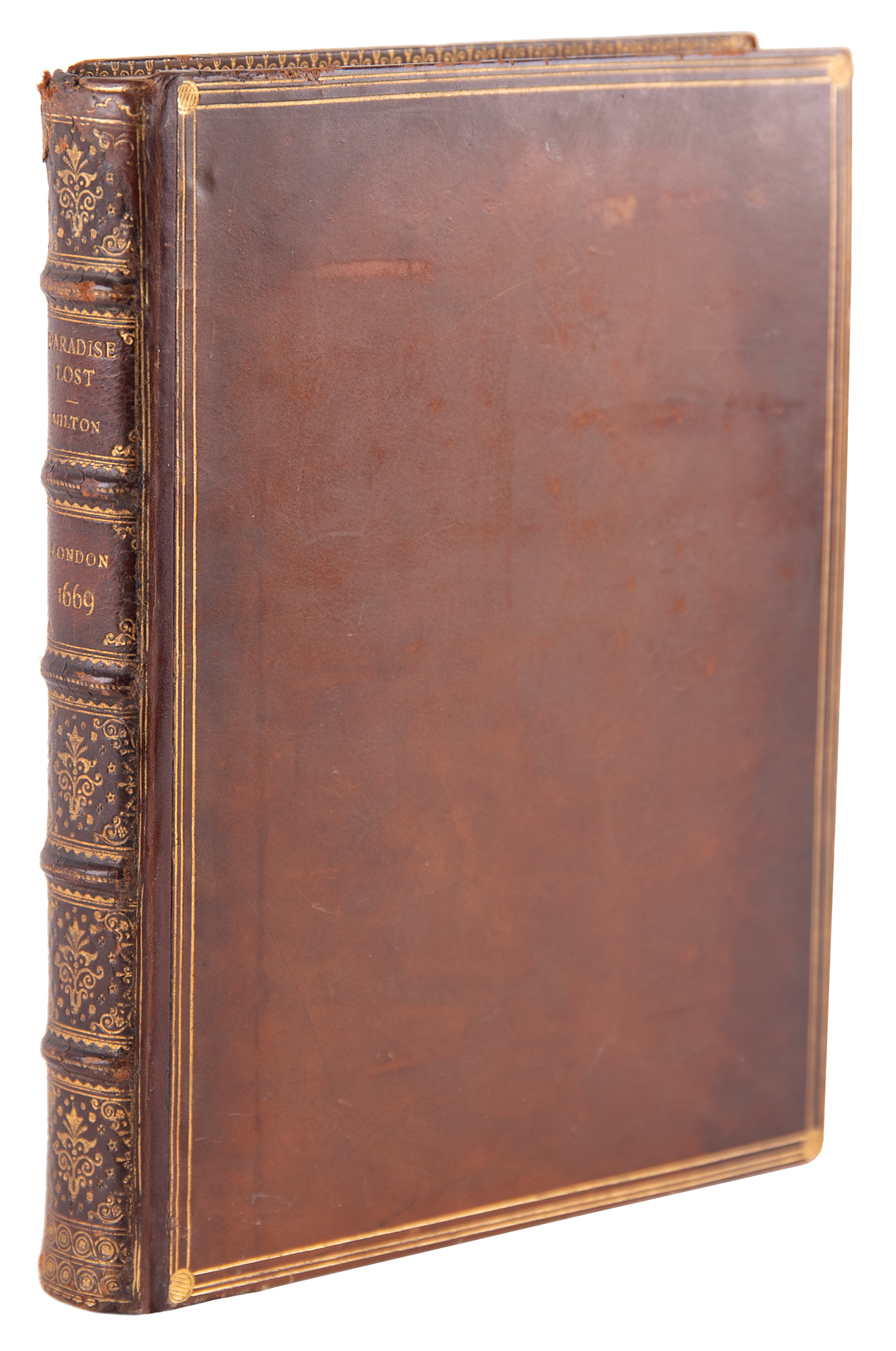
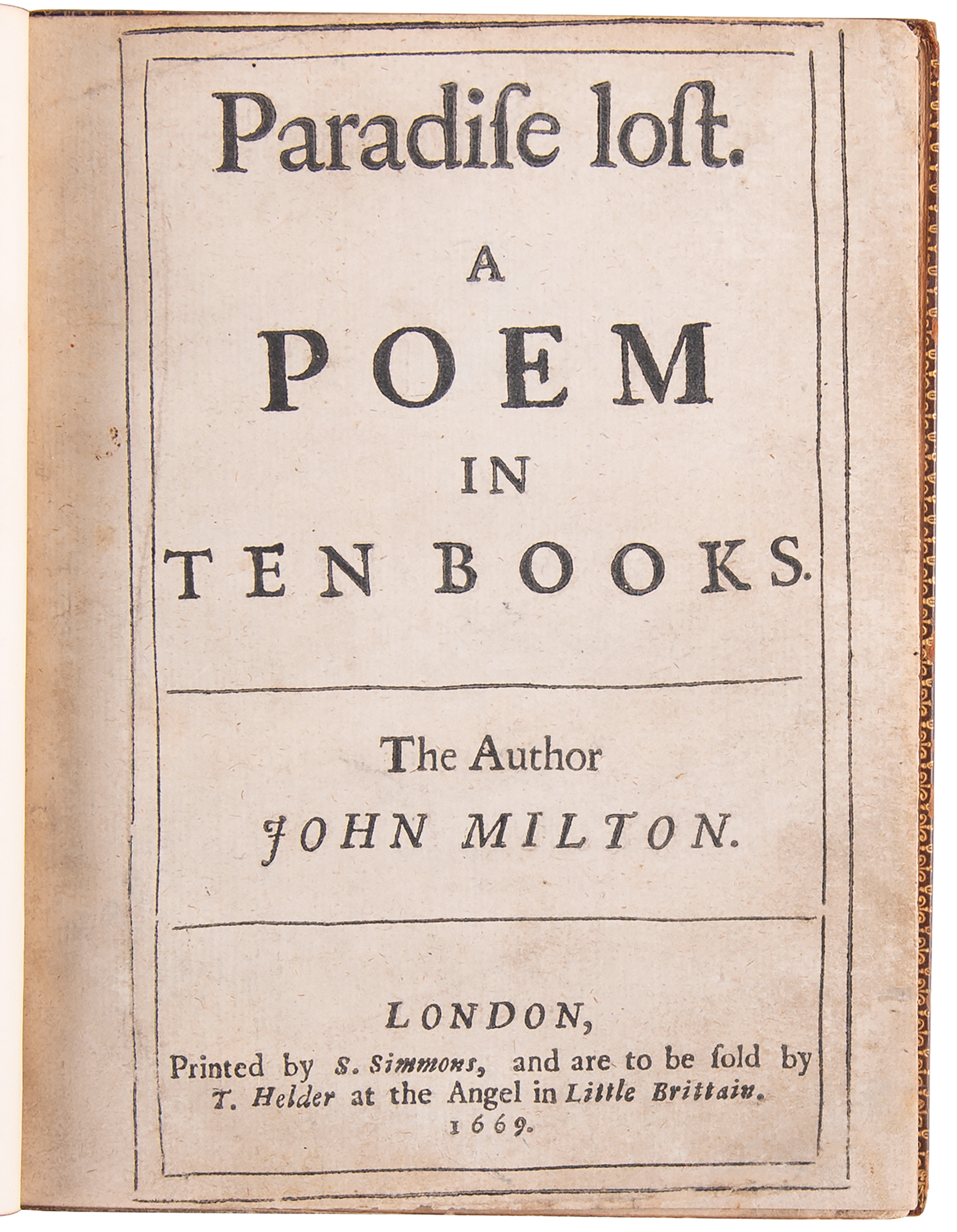
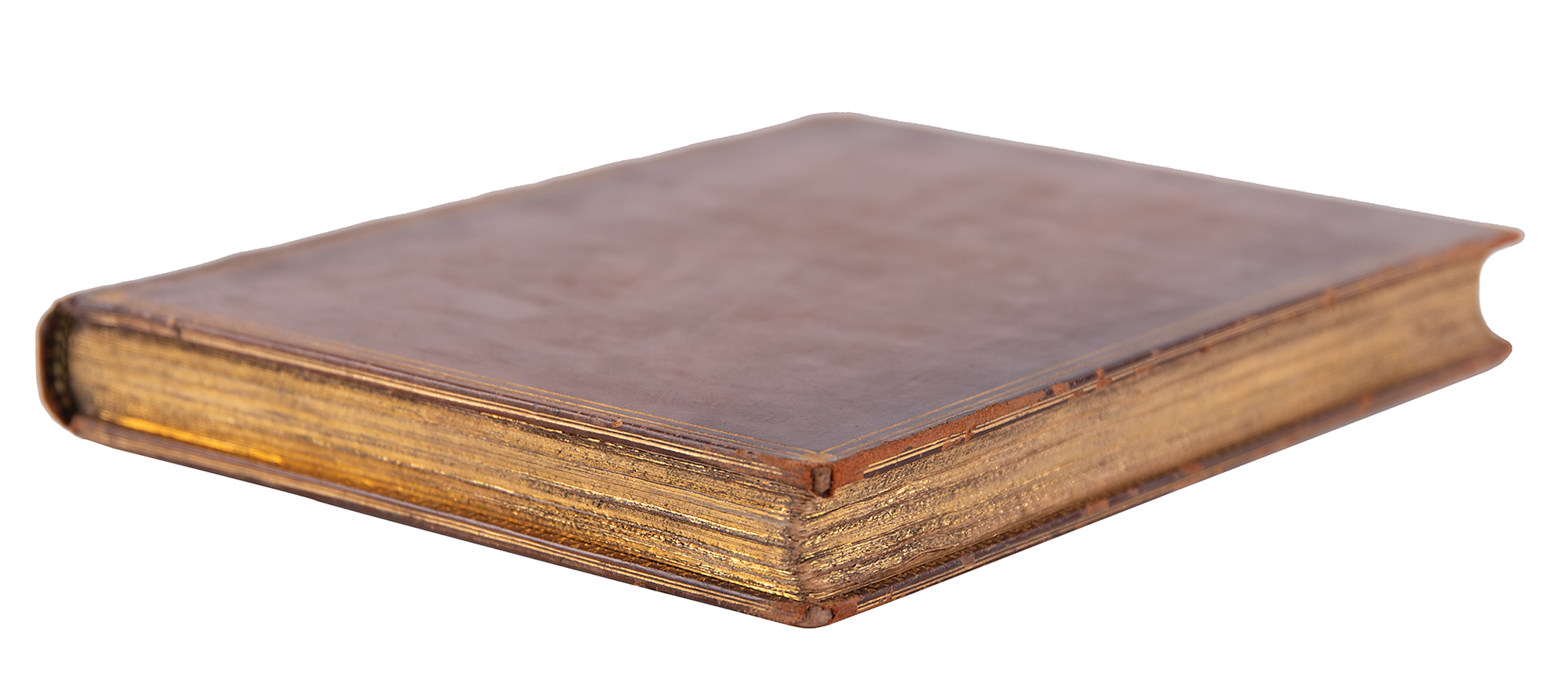
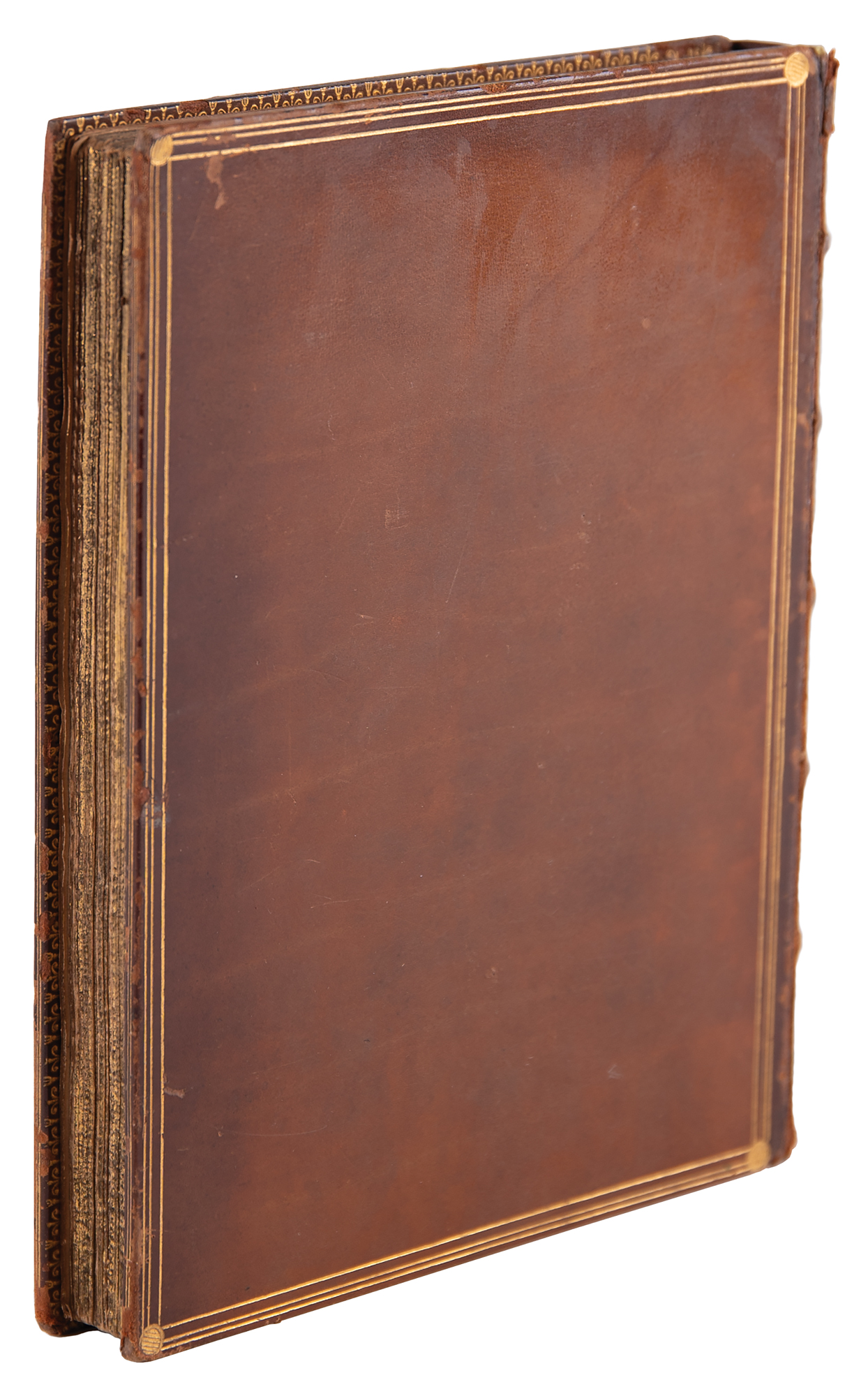
Rare antiquarian book: Paradise Lost, A Poem in Ten Books by John Milton. Amory's third issue, comprising a reissue of the second with a new title. London: Printed by S. Simmons, and are to be sold by T. Helder at the Angel in Little Brittain, 1669. Hardcover bound later in brown calf, gilt titles and decoration to the spine in six compartments, gilt ruling to the front and rear panels, gilt inner dentelles, and gilt edges, 5.5 x 7, with seven preliminary leaves containing "The Printer to the Reader," "The Argument," "The Verse," and the "Errata." Book condition: VG-/None, minor scuffing to boards, a chip at the head of the spine, light soiling to textblock, rubbing to gilt edges, and the bookplate of "Adele M. MacVeagh" affixed to the first free end page.
Literature: Hugh Amory, "Things Unattempted Yet: A bibliography of the first edition of Paradise Lost," in: The Book Collector, Spring 1983, pp. 41-66; Pforzheimer 718 (as the "fifth title (Lowndes' seventh)"; Wing M2142; Wither to Prior 603.
From the Grolier Club's "Catalogue of original and early editions of some of the poetical and prose works of English writers from Wither to Prior": "Bibliographers have recognized eight distinct issues of this first edition of 'Paradise Lost,' varying from each other in several more or less important particulars. The more important of these variations consist in changes in the title-pages…The text of the poem is identical in all cases, with the exception of a few typographical errors which were corrected as the work passed through the press. The sheets of the various issues were evidently mixed and made up indiscriminately by the binder, and therefore copies of apparently the same issue will be found to differ from each other in that some will have more of the errors corrected than others."
Widely regarded as one of the supreme achievements of English literature, Paradise Lost transformed the biblical story of the Fall into an epic meditation on freedom, obedience, ambition, and redemption. Milton’s commanding blank verse profoundly influenced generations of writers and artists, from William Blake and the Romantic poets to later novelists and thinkers, while his complex portrayal of Satan became one of the most enduring and debated characterizations in the Western canon. Its language, imagery, and philosophical scope helped establish the poem as the defining English epic.

