Sold For $2,276
*Includes Buyers Premium
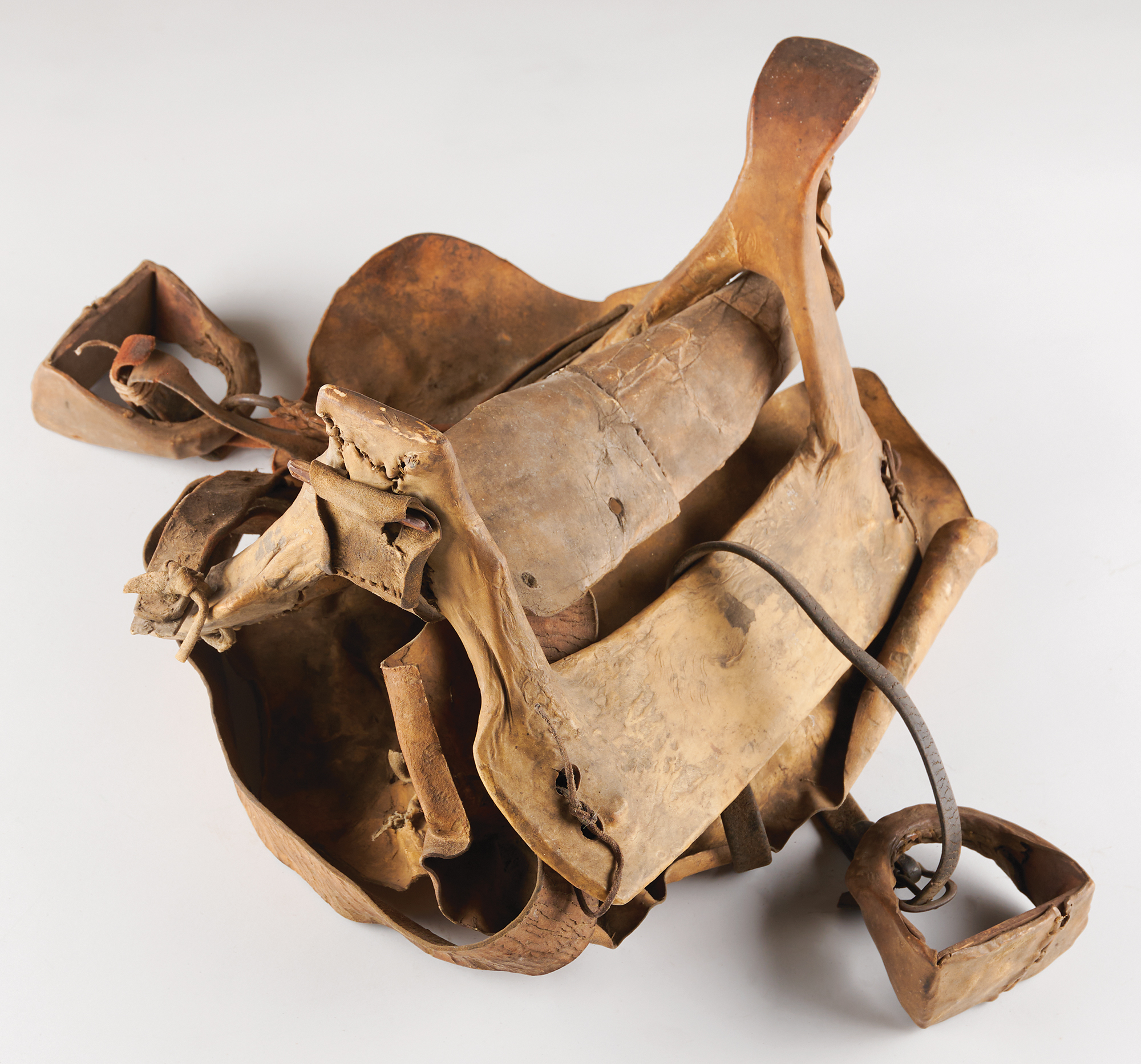
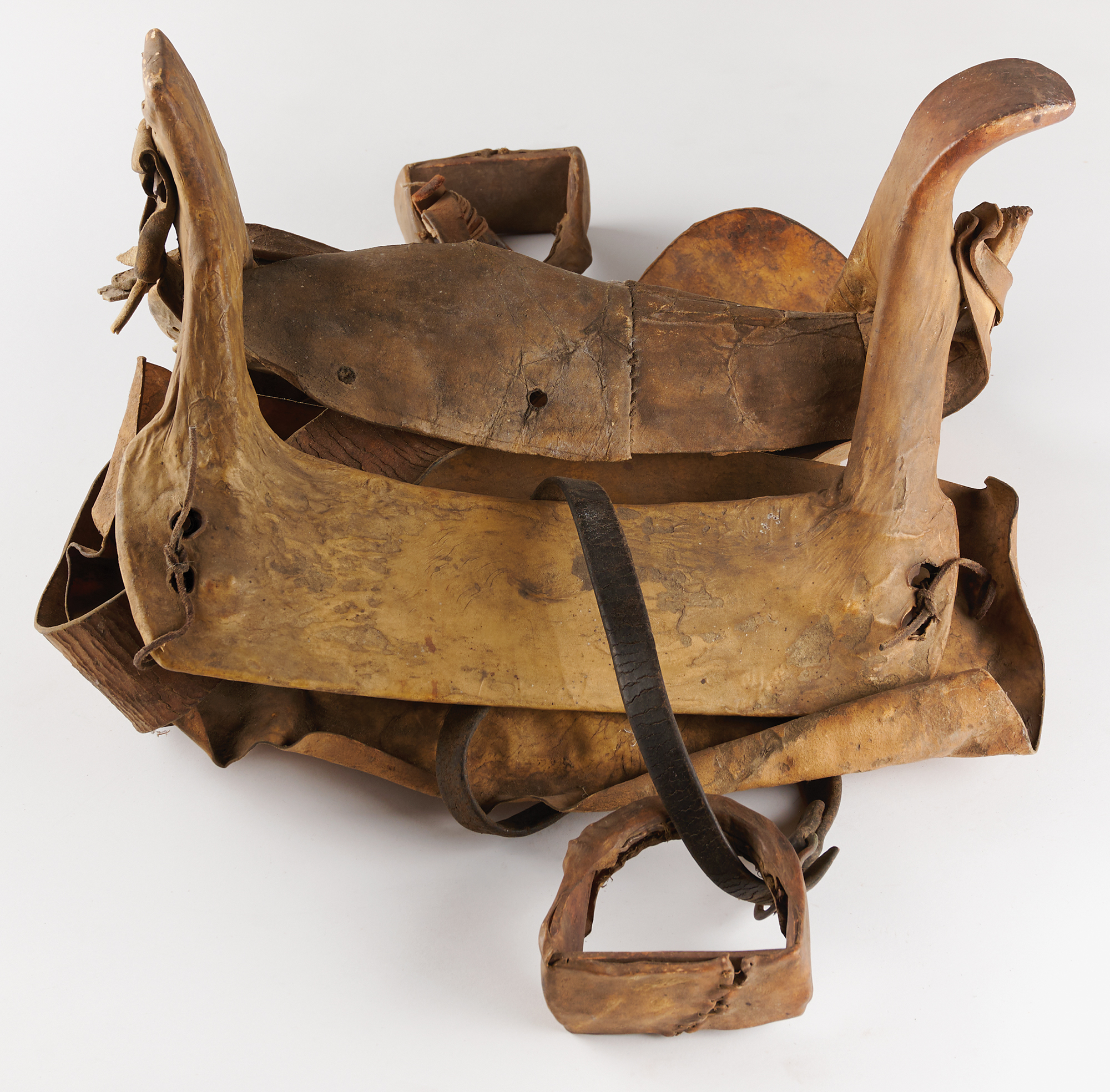
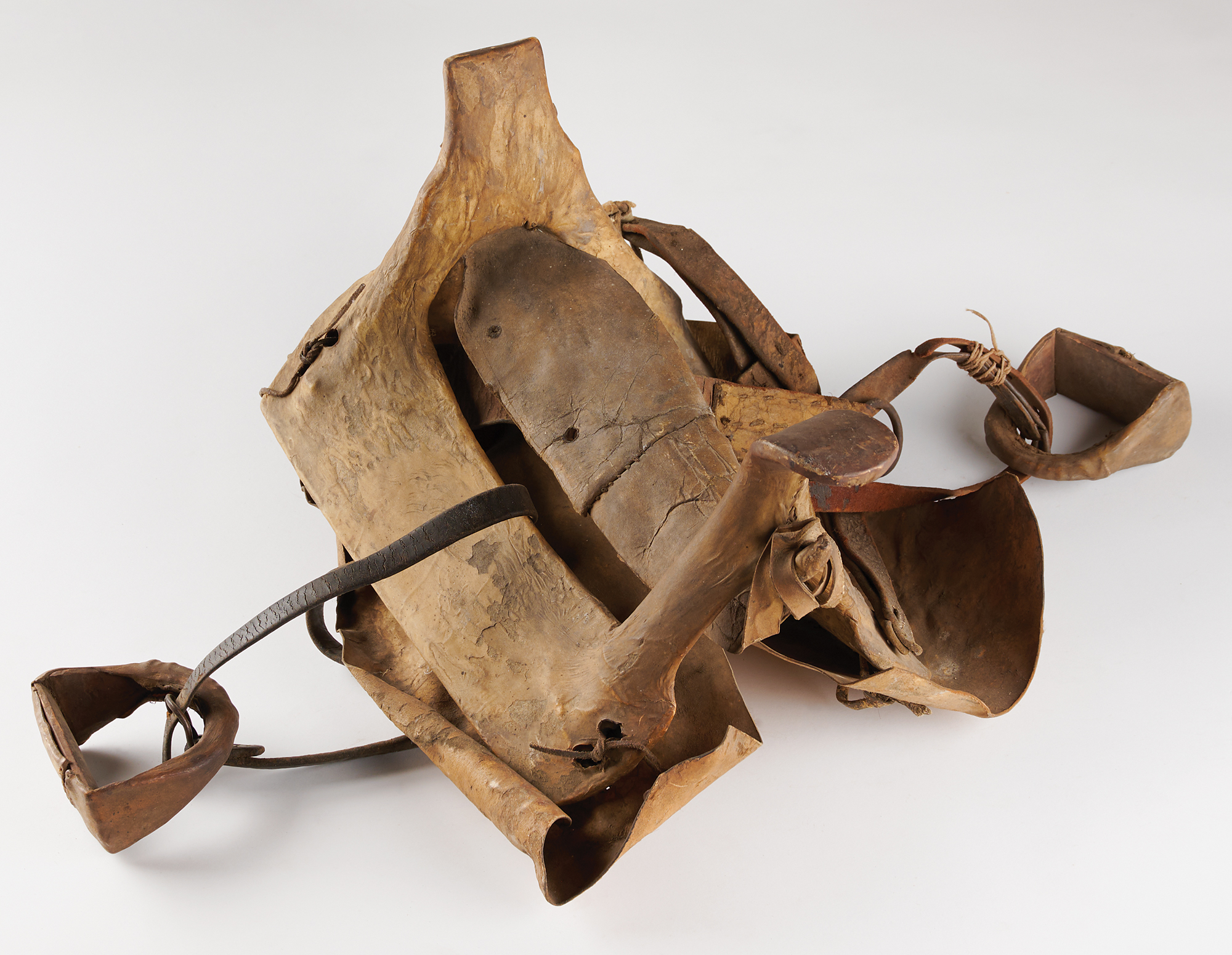
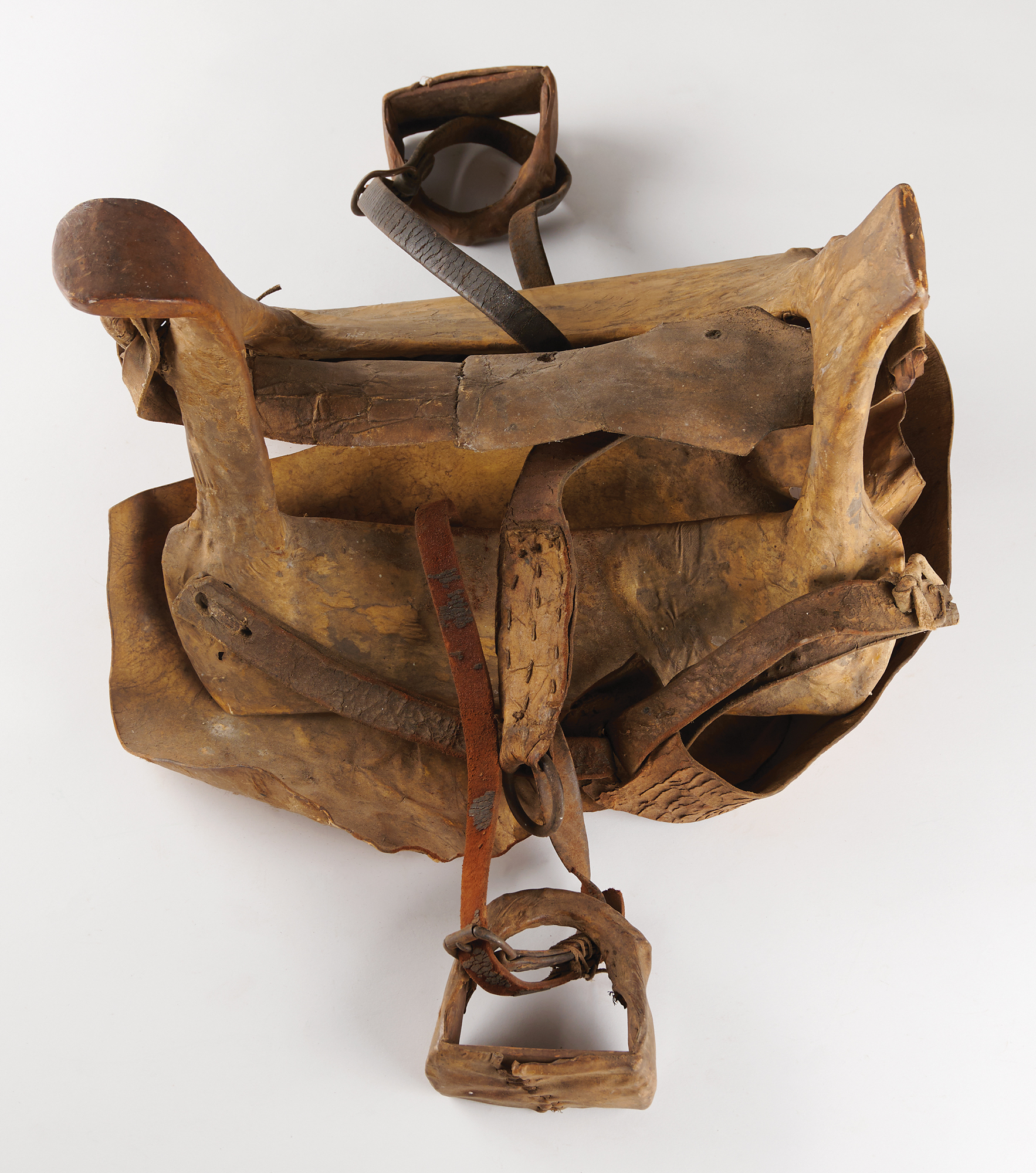
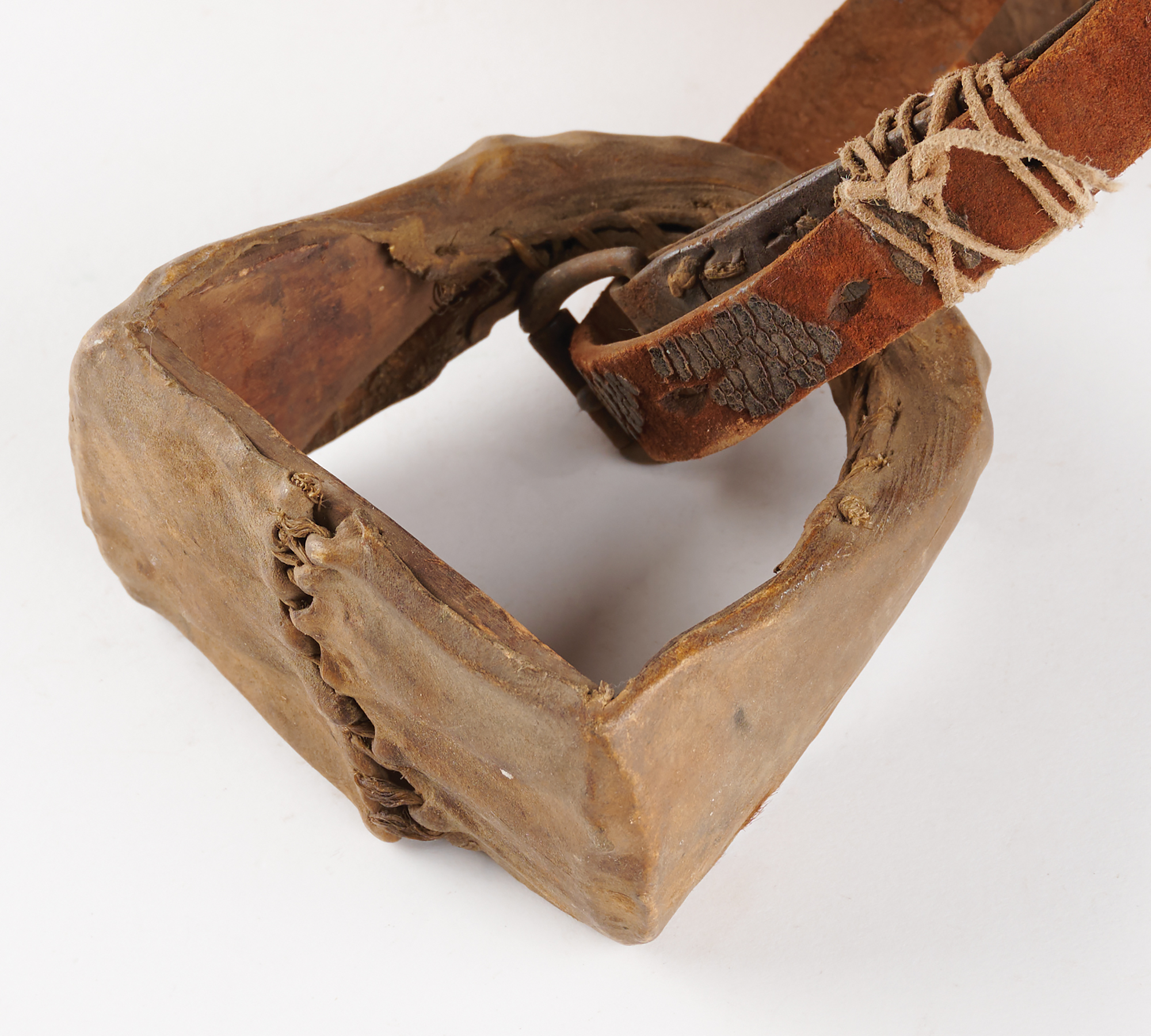
Early Plains Indian wood-frame saddle, undated, circa mid-to-late 19th century, approximately measuring 17˝ in length and 12˝ in width, the wooden tree with high pommel and cantle fully wrapped in rawhide and leather, retaining side flaps, rigging elements, and attached wooden stirrups suspended from leather straps.
This saddle follows the Plains Indian pad-and-tree tradition, developed across the Great Plains after the introduction of the horse in the late 17th century. The frame consists of forked wooden elements forming the pommel and cantle, bound in green rawhide that dried into a rigid shell around the armature. The rawhide sheathing, now aged to a mottled brown-gold tone, has split and curled in places, exposing the underlying wood. The form—high forked pommel and cantle—is consistent with mid-19th-century Plains saddle types documented in period accounts.
Plains saddle-making emerged as a distinct craft tradition as mounted cultures developed among tribes such as the Lakota, Cheyenne, and Comanche. These rawhide-wrapped wood-tree saddles were lighter than Spanish Colonial forms and well suited to the demands of hunting and travel, with construction that allowed for repair using available materials.
The saddle presents in heavily aged condition, with dried and cracked rawhide showing splitting at the cantle and along the seat edges. The pommel shows surface wear and loss. Stirrups and straps remain present, and the seat covering is cracked but intact. Undecorated, it appears to be a working example.
The Western Americana auction of Jochen Zeitz.

