The 30 Minute Rule begins June 10 at 7:00 PM EDT. An Initial Bid Must Be Placed By June 10 at 6:00 PM EDT To Participate After 6:00 PM EDT
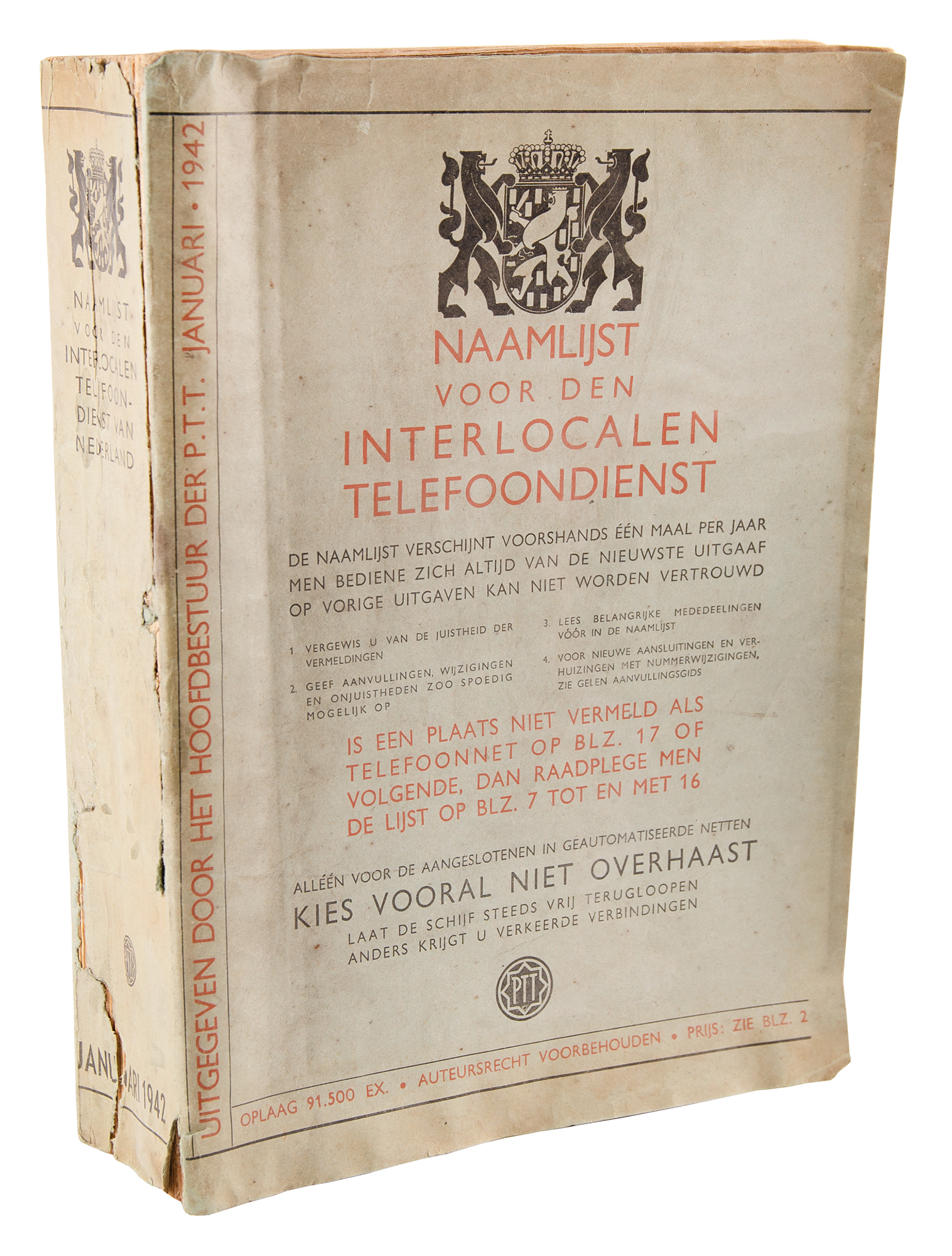
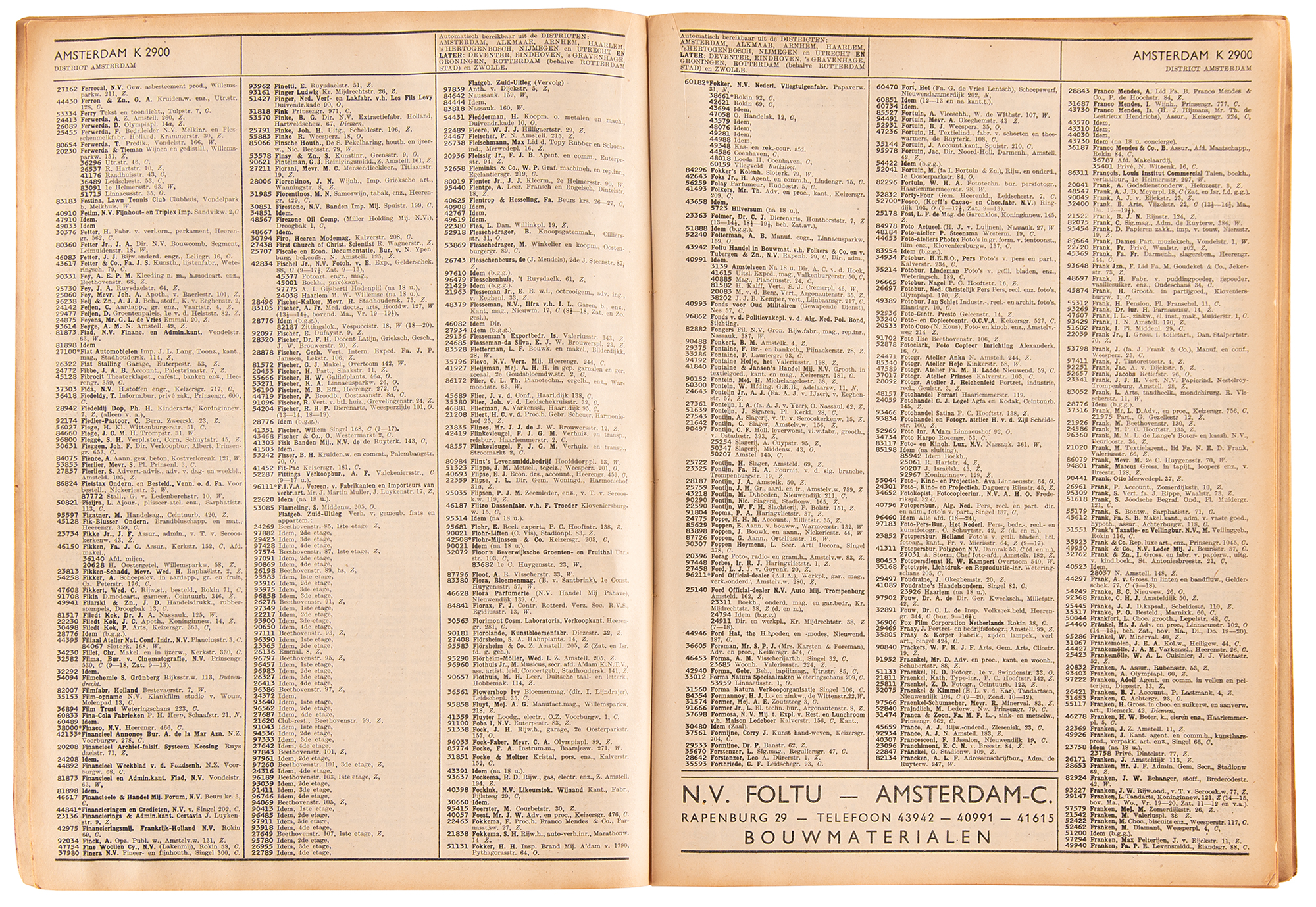
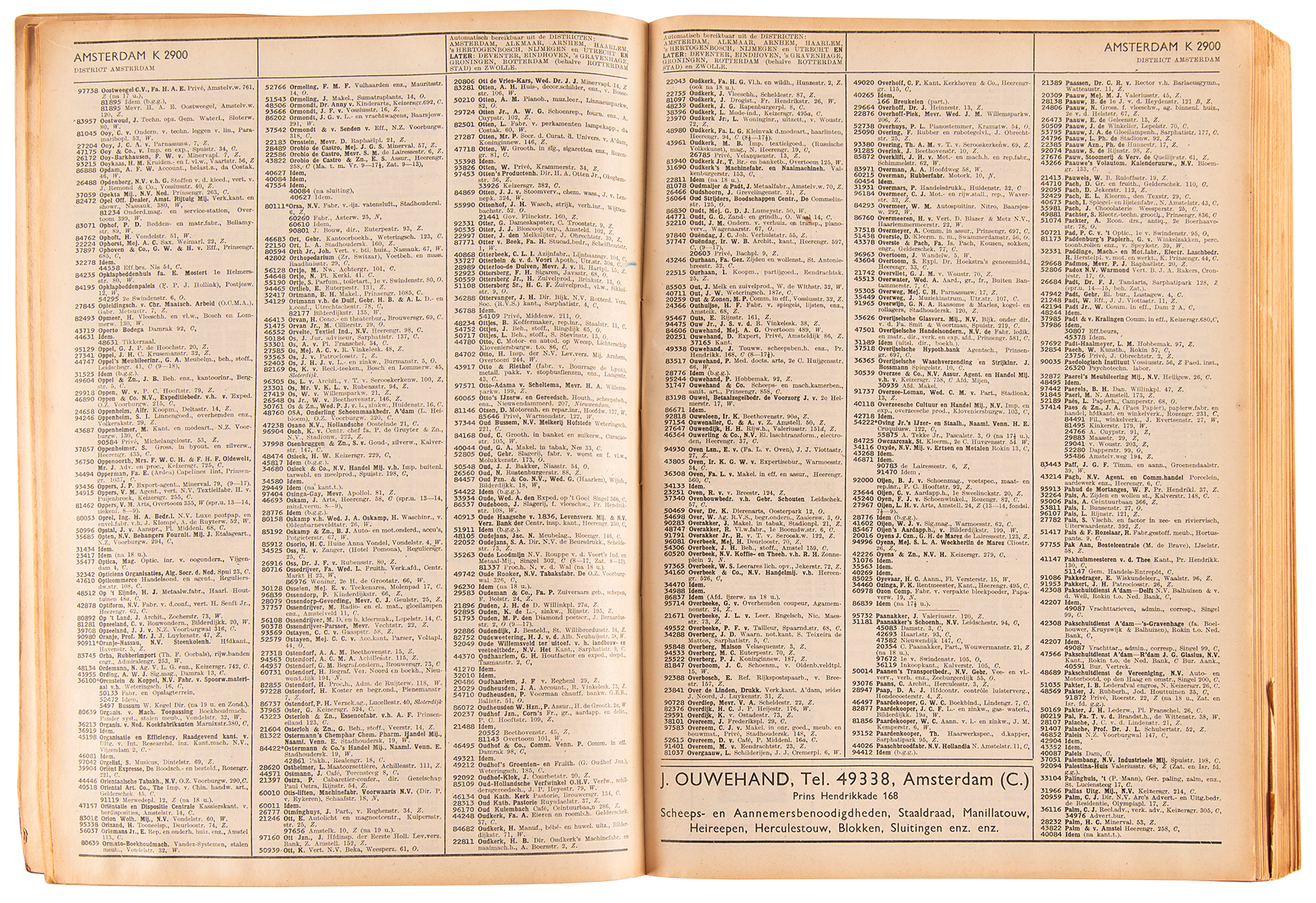
Historic Dutch telephone directory issued in January 1942, entitled "Naamlijst voor den Interlocalen Telefoondienst [Telephone Directory for the Interlocal Service]," 8 x 11.25, listing Anne Frank's father's Amsterdam address and phone number, "90441 Frank, Otto, Merwedepl. 37, Z.," as well as the address and phone number of the business premises that would soon become the Secret Annex, "37059 Opekta Mij. N.V. Ned. Prinsengr. 263, C." In very good to fine condition, with toning and soiling to the covers, and moderately heavy damage to the spine; inner pages are generally clean and completely unaffected.
This is an exceptionally rare and powerful wartime telephone directory preserving the final public record of Anne Frank and her family just months before their disappearance into the Secret Annex.
Issued under Nazi occupation at the opening of 1942, this volume captures the Frank family in a state of full civic visibility. The listing for Otto Frank records their last official residence—the home where Anne Frank lived her ordinary life before going into hiding in July 1942. Also present is the address for Opekta, the business premises that would soon become the Secret Annex, then still operating as a legitimate enterprise within the fabric of Amsterdam life.
Within months, this visibility would become perilous. On July 5, 1942, Margot Frank received a call-up notice issued through these same administrative systems, prompting the family’s immediate move into hiding. Six months after this directory was issued, the Frank family would no longer exist at either address listed here.
The directory preserves not only the Frank family, but a fully integrated and prominent Dutch Jewish society—professionals, business owners, and families embedded in the civic and economic life of the Netherlands. Inclusion in such a directory signified presence, stability, and connection. Its tragic force lies in this contrast: a tool of communication that, within months, became a silent register of a community marked for exclusion and destruction.
A rare and deeply evocative artifact, capturing both the final moment of recorded normalcy in the life of Anne Frank and the wider disappearance of the world to which she belonged.
This directory is exceptionally rare—no copy has ever surfaced at auction and no physical example is recorded in OCLC (WorldCat).

