Sold For $875
*Includes Buyers Premium
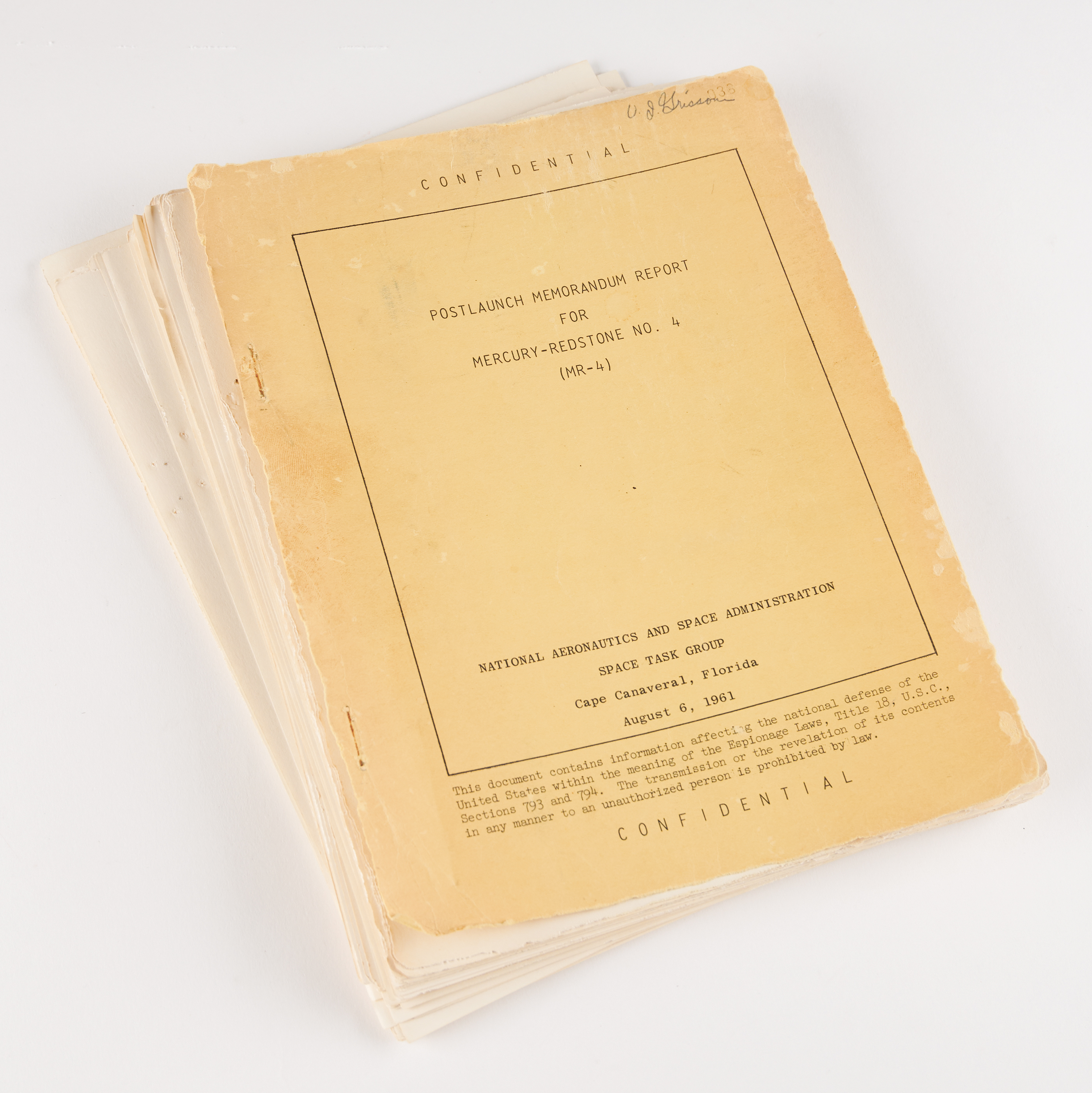
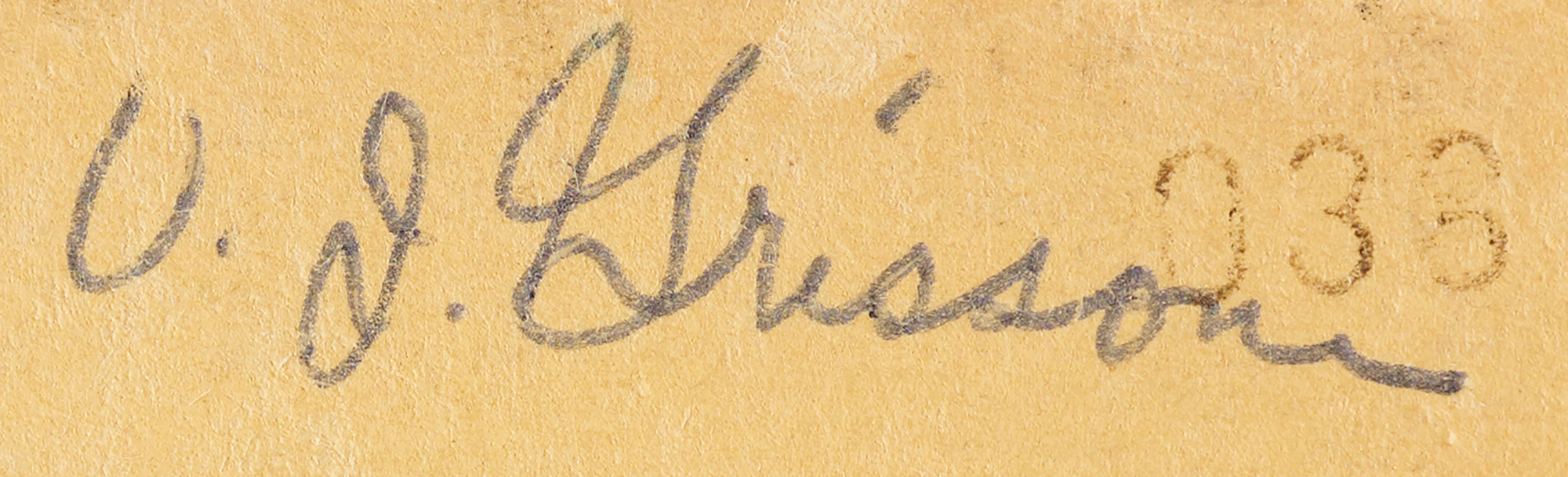
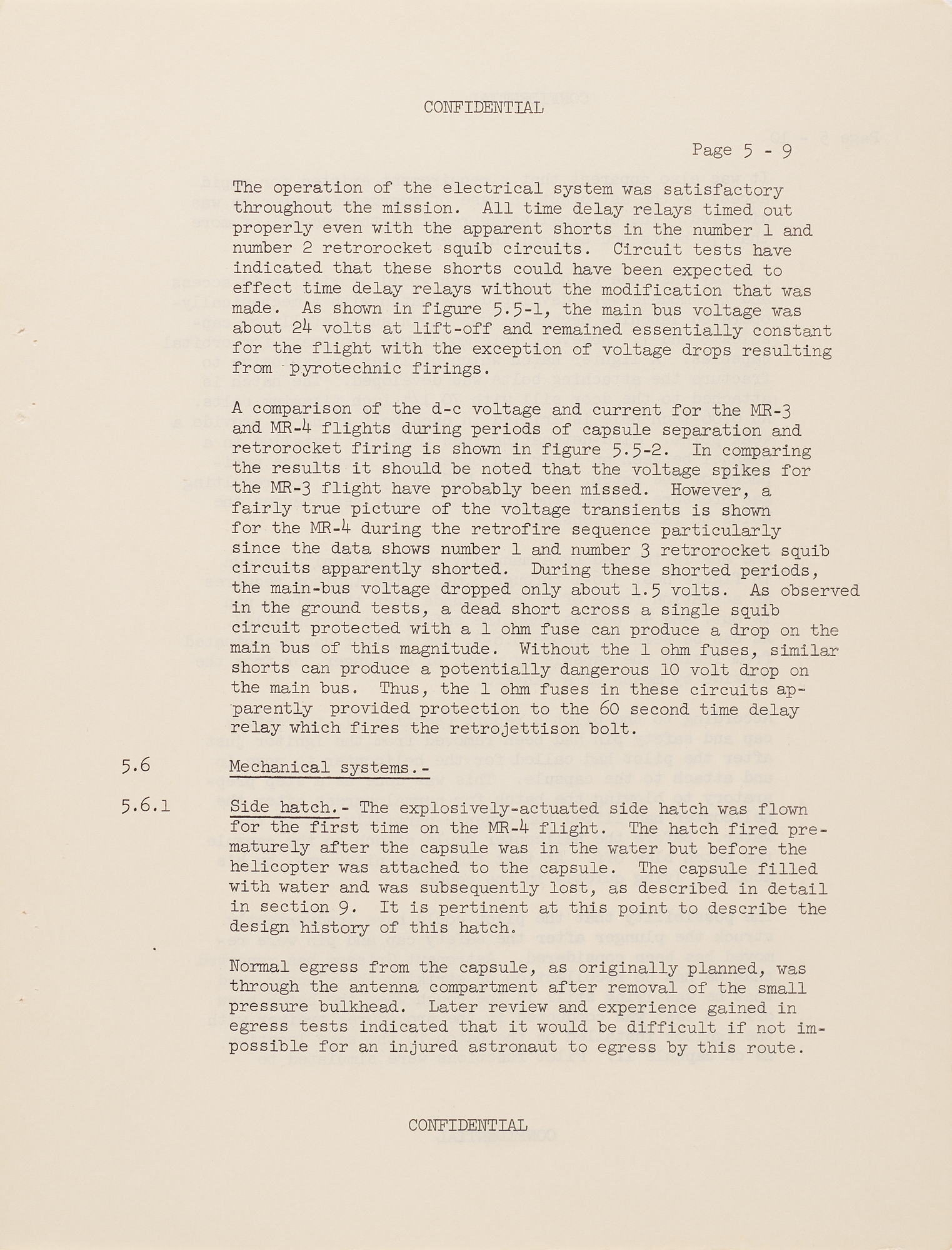
Gus Grissom’s official unbound NASA manual entitled “Postlaunch Memorandum Report for Mercury-Redstone No. 4 (MR-4),” marked “Confidential,” 158 pages, 8 x 10.5, dated August 6, 1961, issued as copy “036” by NASA’s Space Task Group, marked in the upper right corner in ballpoint, “V. I. Grissom.” The manual contains 10 sections, an appendix, and a wide array of tables and figures. The sections include: Introduction; Mission Description; Vehicle Description; Events and Trajectory; Capsule Performance; Booster Performance; Pilot Activities; Flight Control and Network Operations; Recovery; and Mission Critique. The intro reads, in part: “The second Mercury manned space flight (MR-4) was successfully made on July 21, 1961, from the Cape Canaveral Missile Test Center. Virgil I. Grissom was the pilot. The flight was the fourth of a series utilizing the Mercury capsule and a modified Redstone booster. This series of ballistic space flights was designed to provide brief space flight experience for pilots and to advance the qualification of the capsule and capsule systems…The flight was successful except for the recovery phase. After landing, premature actuation of the capsule side hatch resulted in an emergency situation in which the capsule was lost and the pilot, though rescued, had a short but difficult period in the water.”
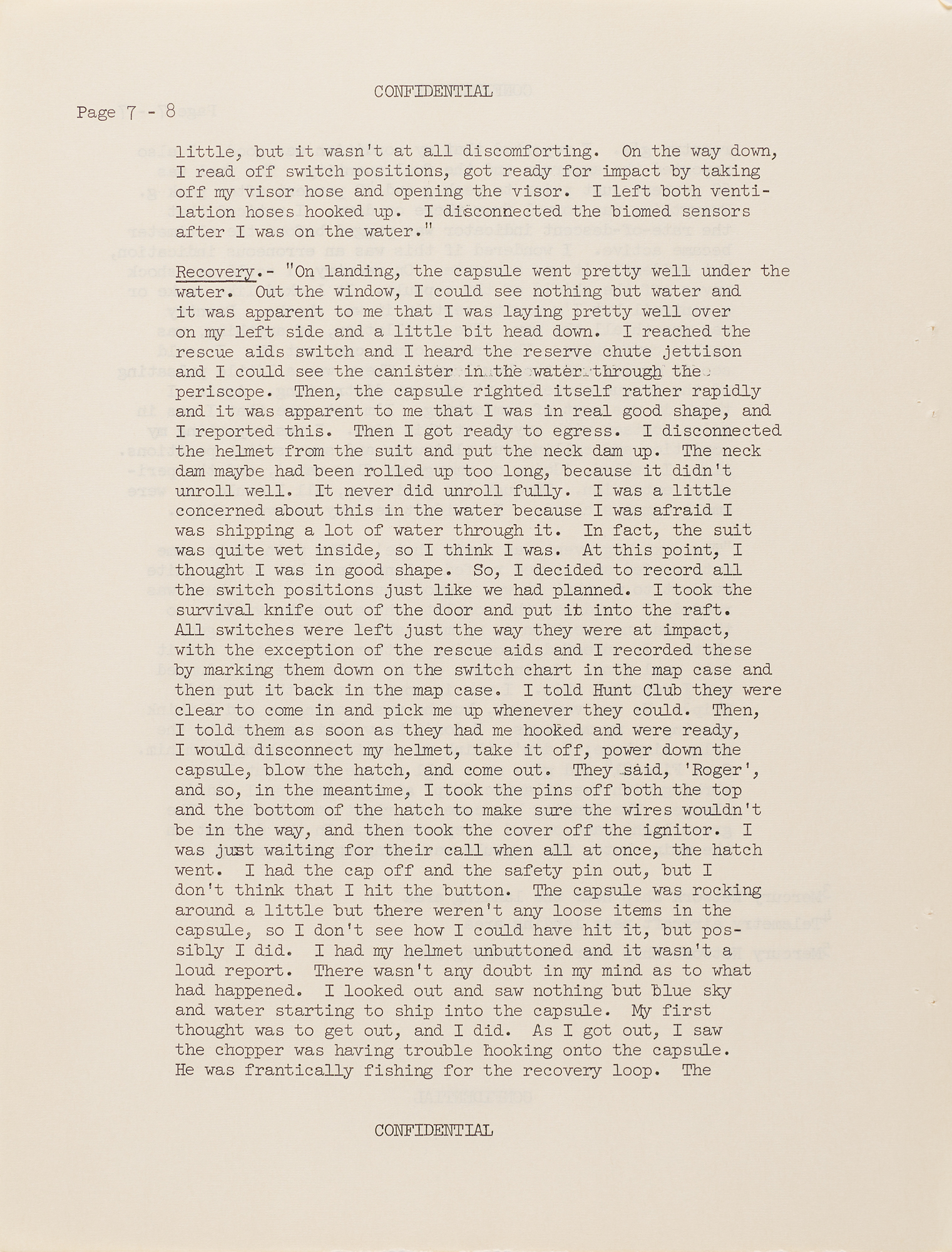
The manual covers Grissom’s nearly tragic splashdown event across several sections, including in the Capsule Performance and Recovery sections, but none are as interesting as Grissom’s personal comments in the “Recovery” portion of the Pilot Activities section, which reads:
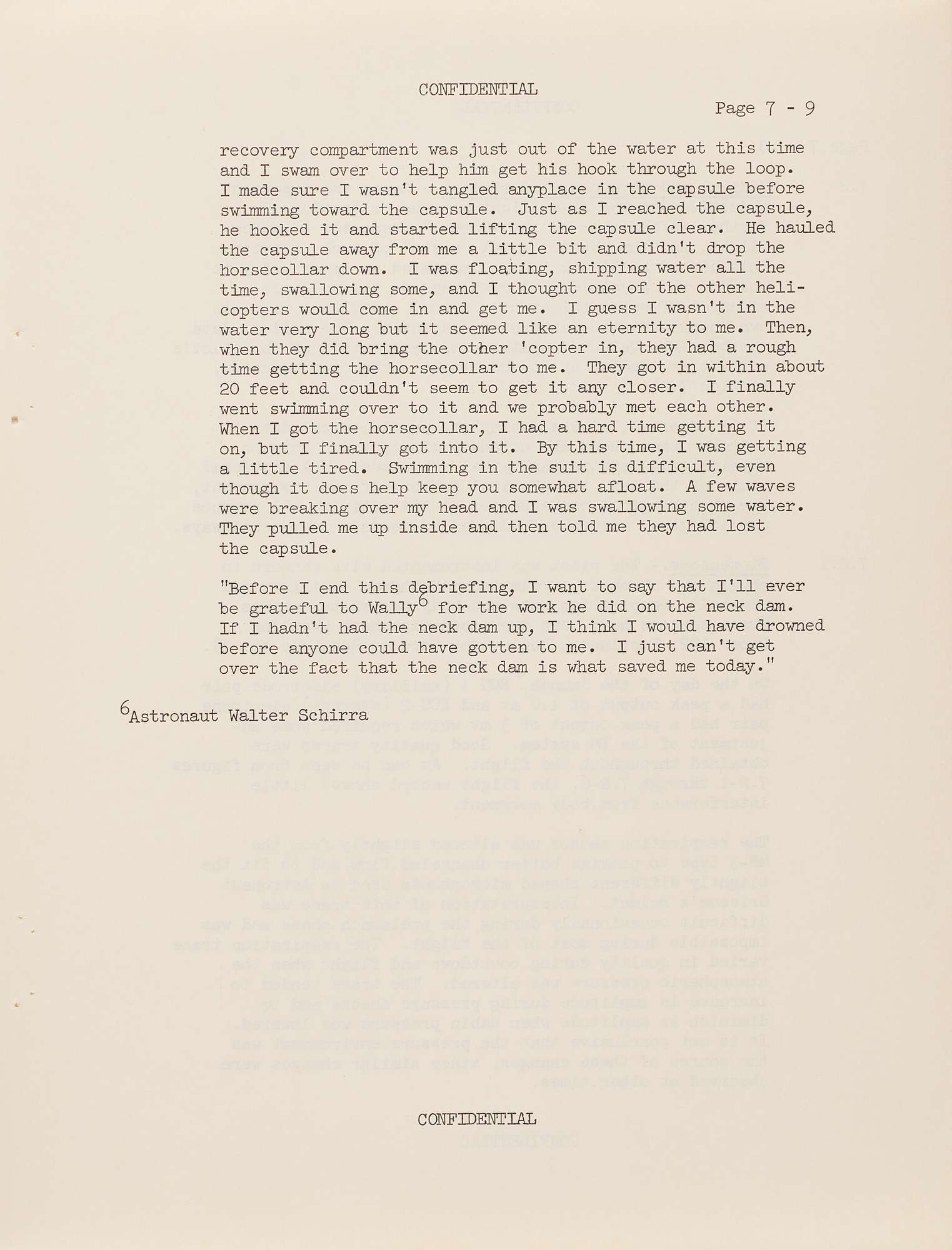
"On landing, the capsule went pretty well under the water. Out the window, I could see nothing but water and it was apparent to me that I was laying pretty well over on my left side and a little bit head down. I reached the rescue aids switch and I heard the reserve chute Jettison and I could see the canister in the water, through the periscope. Then, the capsule righted itself rather rapidly and it was apparent to me that I was in real good shape, and I reported this. Then I got ready to egress. I disconnected the helmet from the suit and put the neck dam up. The neck dam maybe had been rolled up too long, because it didn't unroll well. It never did unroll fully. I was a little concerned about this in the water because I was afraid I was shipping a lot of water through it. In fact, the suit was quite wet inside, so I think I was. At this point, I thought I was in good shape. So, I decided to record all the switch positions just like we had planned. I took the survival knife out of the door and put it into the raft.
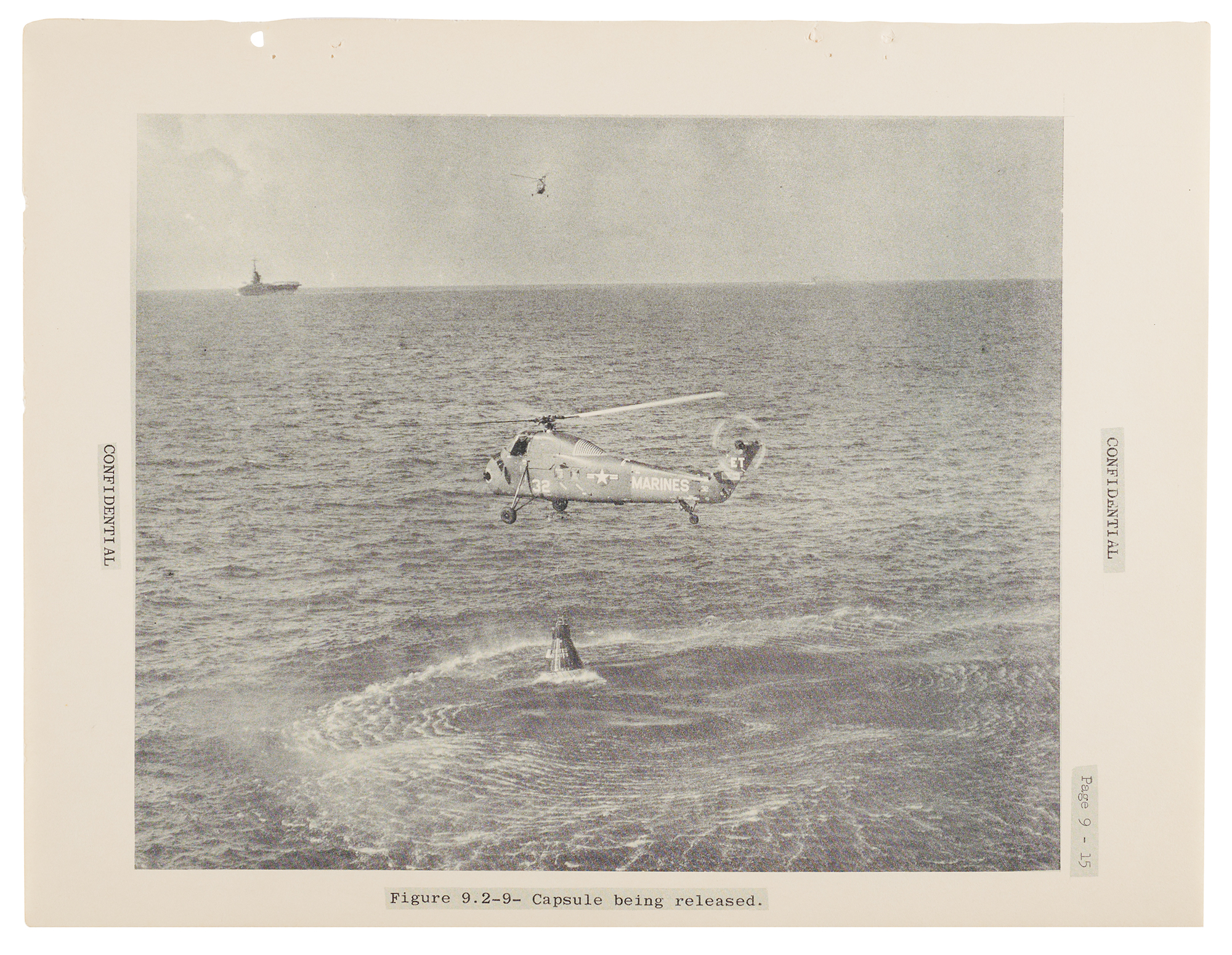
All switches were left just the way they were at impact, with the exception of the rescue aids and I recorded these by marking them down on the switch chart in the map case and then put it back in the map case. I told Hunt Club they were clear to come in and pick me up whenever they could. Then, I told them as soon as they had me hooked and were ready, I would disconnect my helmet, take it off, power down the capsule, blow the hatch, and come out. They said, 'Roger', and so, in the meantime, I took the pins off both the top and the bottom of the hatch to make sure the wires wouldn't be in the way, and then took the cover off the ignitor. I was just waiting for their call when all at once, the hatch went. I had the cap off and the safety pin out, but I don't think that I hit the button. The capsule was rocking around a little but there weren't any loose items in the capsule, so I don't see how I could have hit it, but possibly I did. I had my helmet unbuttoned and it wasn't a loud report. There wasn't any doubt in my mind as to what had happened. I looked out and saw nothing but blue sky and water starting to ship into the capsule. My first thought was to get out, and I did. As I got out, I saw the chopper was having trouble hooking onto the capsule. He was frantically fishing for the recovery loop. The recovery compartment was just out of the water at this time and I swam over to help him get his hook through the loop. I made sure I wasn't tangled anyplace in the capsule before swimming toward the capsule.
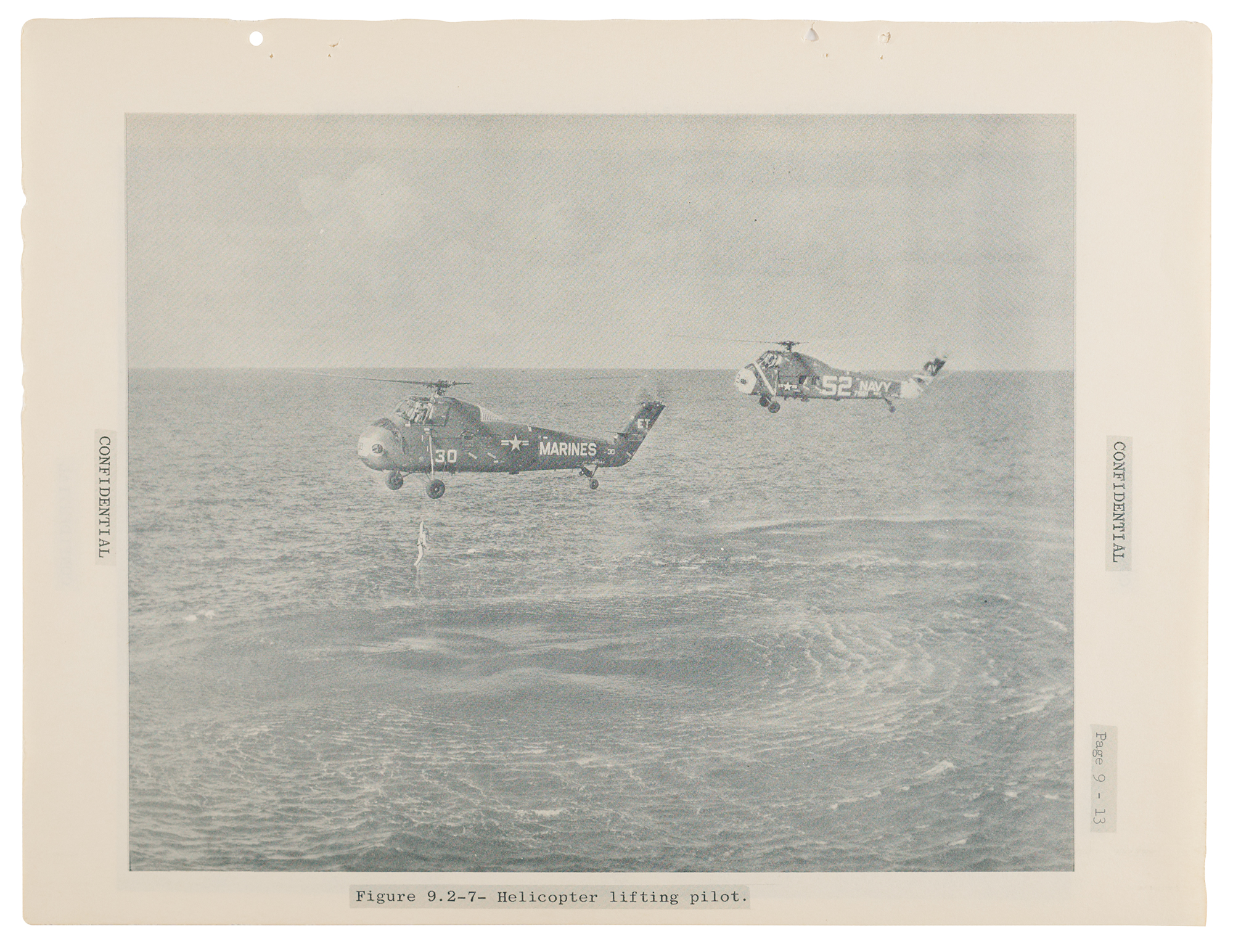
Just as I reached the capsule, he hooked it and started lifting the capsule clear. He hauled the capsule away from me a little bit and didn't drop the horsecollar down. I was floating, shipping water all the time, swallowing some, and I thought one of the other helicopters would come in and get me. I guess I wasn't in the water very long but it seemed like an eternity to me. Then, when they did bring the other 'copter in, they had a rough time getting the horsecollar to me. They got in within about 20 feet and couldn't seem to get it any closer. I finally went swimming over to it and we probably met each other.
When I got the horsecollar, I had a hard time getting it on, but I finally got into it. By this time, I was getting a little tired. Swimming in the suit is difficult, even though it does help keep you somewhat afloat. A few waves were breaking over my head and I was swallowing some water. They pulled me up inside and then told me they had lost the capsule.
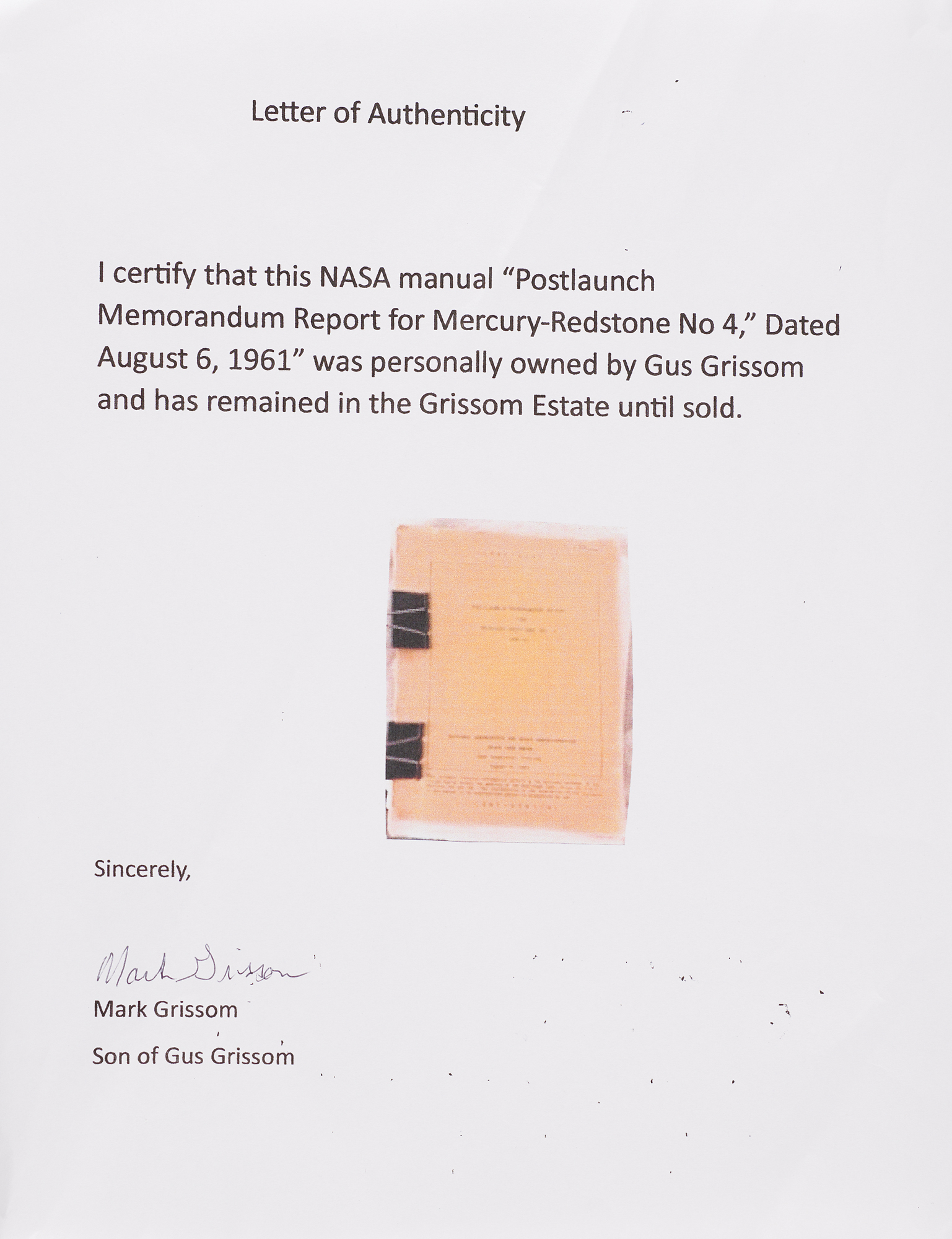
Before I end this debriefing, I want to say that I'll ever be grateful to Wally [Shirra] for the work he did on the neck dam. If I hadn't had the neck dam up, I think I would have drowned before anyone could have gotten to me. I just can't get over the fact that the neck dam is what saved me today." In very good to fine condition, with missing staples and wear to covers and paper edges. Accompanied by a signed letter of authenticity from Mark Grissom, the son of Gus Grissom, who writes: “I certify that this NASA manual ‘Postlaunch Memorandum Report for Mercury-Redstone No. 4,’ dated August 6, 1961, was personally owned by Gus Grissom and has remained in the Grissom Estate until sold.”
A fascinating in-house NASA document deriving from the personal collection of Liberty Bell 7 pilot Gus Grissom, whose historic space flight into low Earth orbit almost ended in disaster. Less than three months after the flight of Alan Shepard's Freedom 7, Grissom earned the distinction of becoming the second American to reach space when his Liberty Bell 7 launched on July 21, 1961. However, unlike the successful splashdown of Shepard, the premature opening of Grissom’s capsule hatch upon Atlantic touchdown nearly led to his drowning. Having already unbuckled most of his harness, Grissom was able to quickly free himself and escape from the sinking craft. After four to five minutes of treading water, an exhausted and relieved Grissom was lifted aboard a recovery helicopter.

