Sold For $375,000
*Includes Buyers Premium
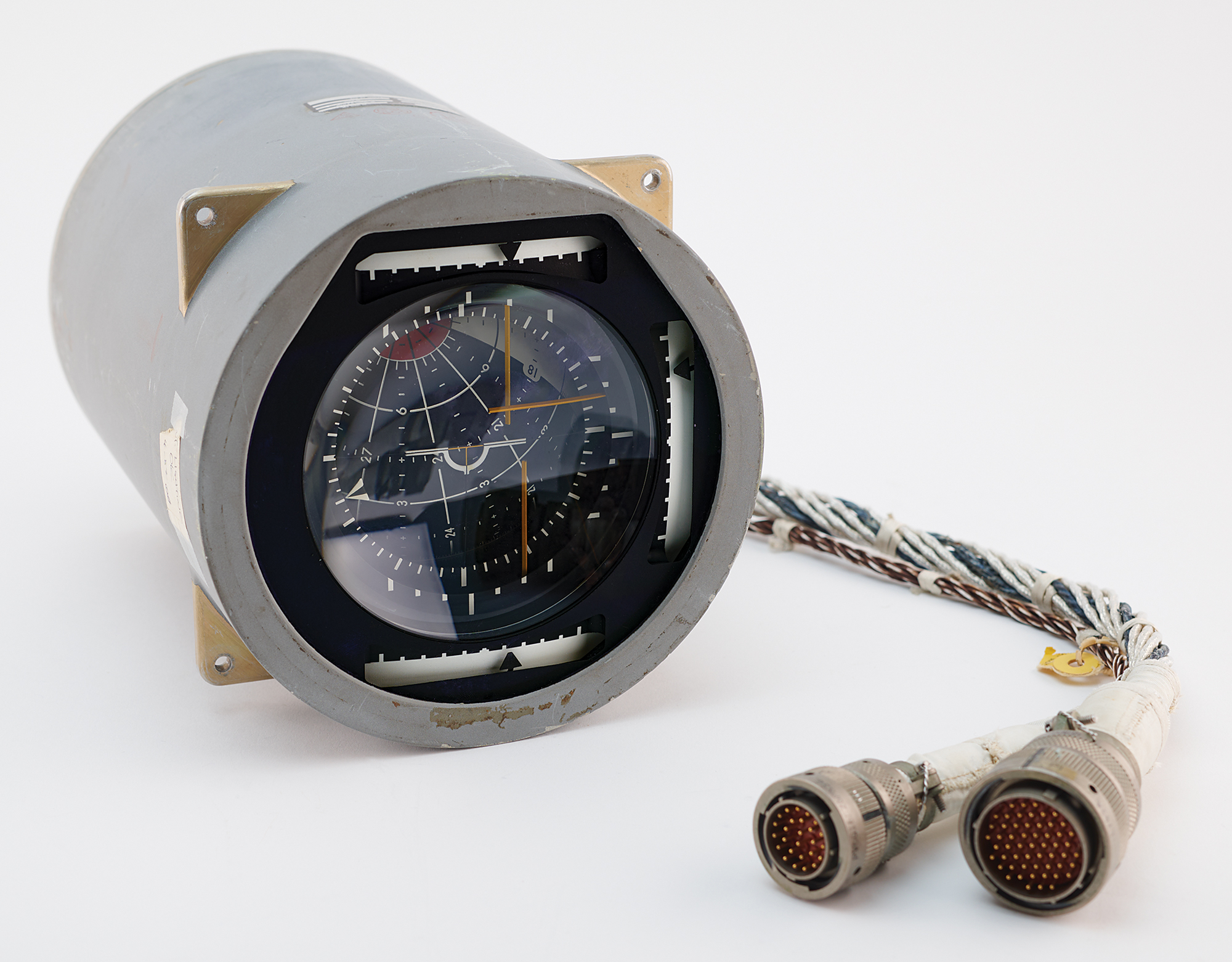
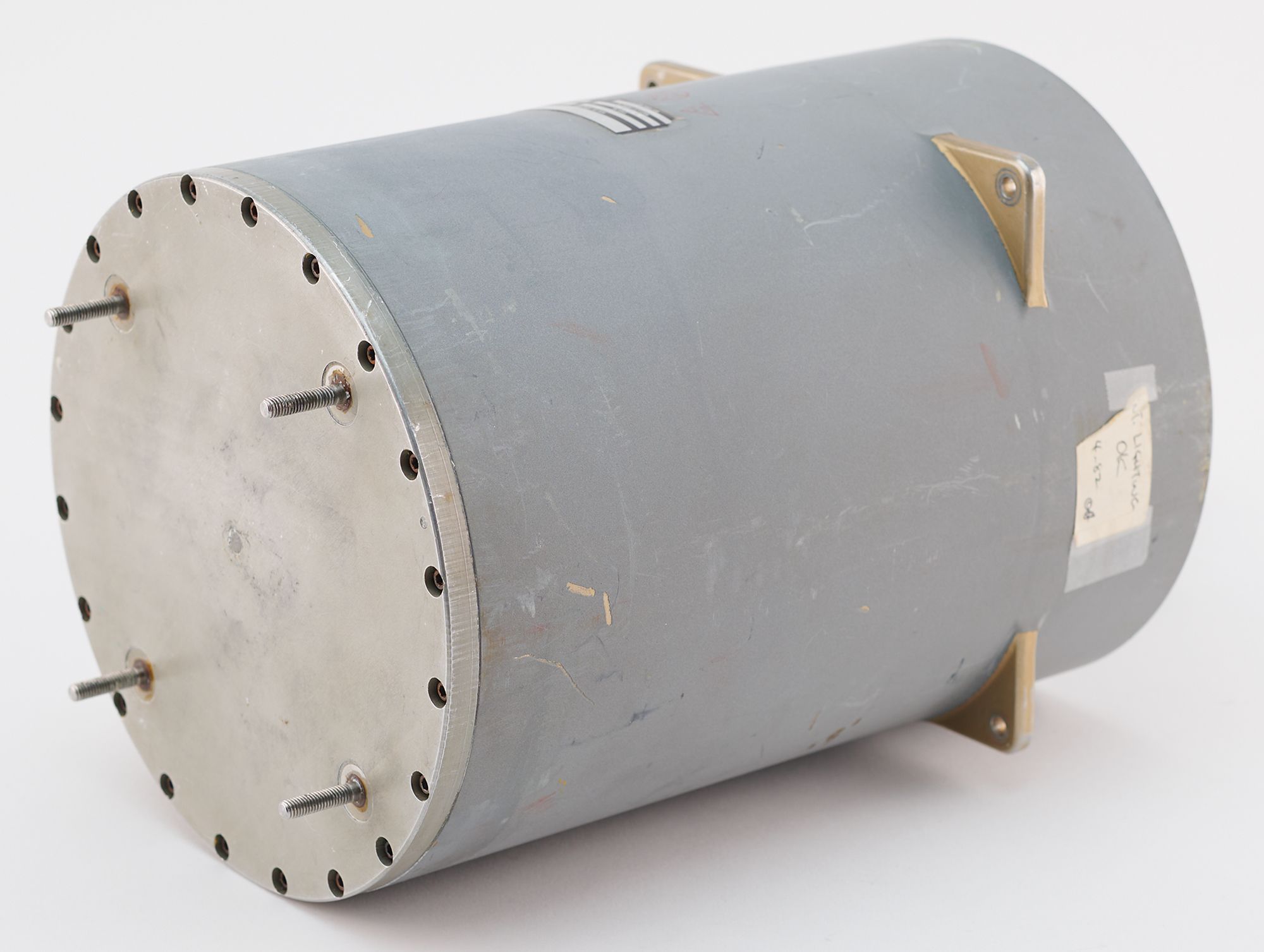
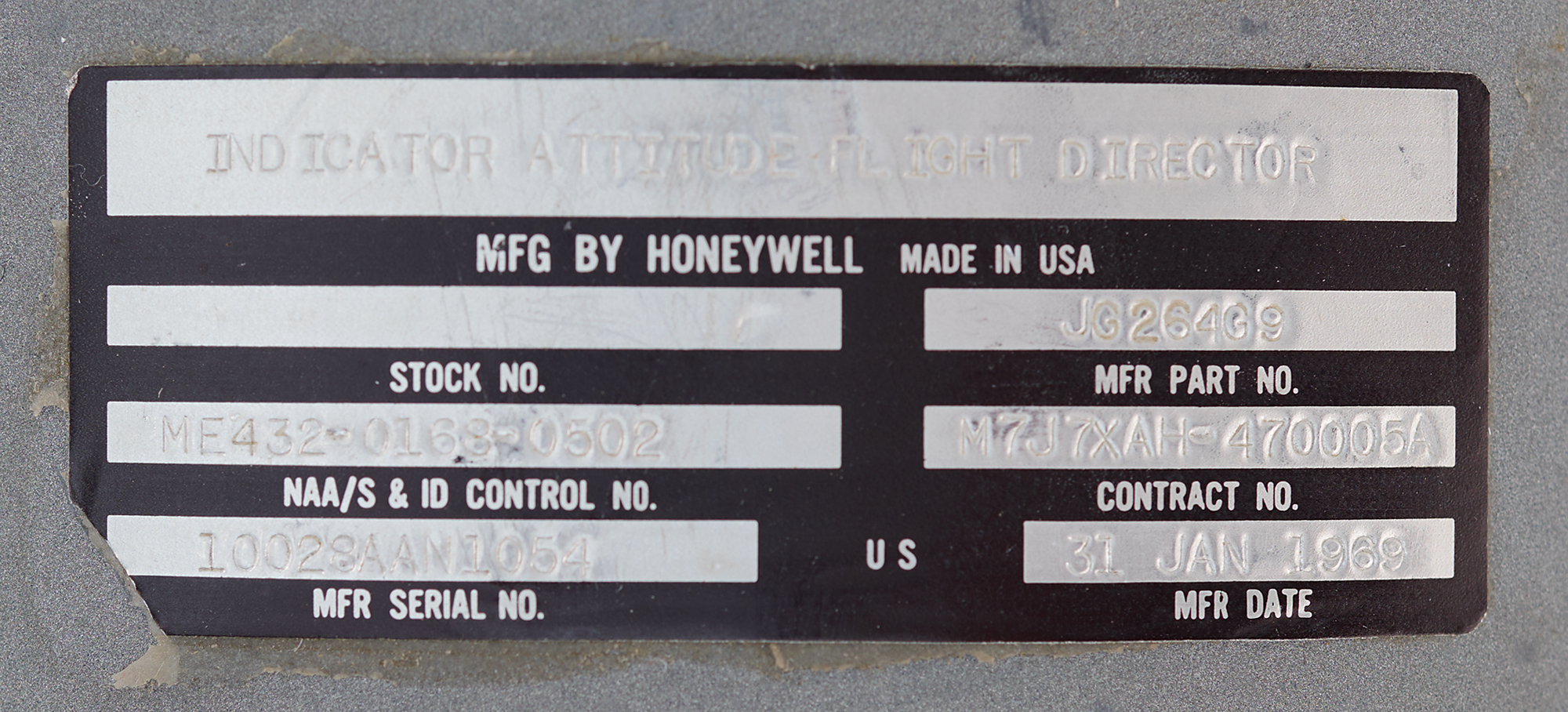
Extraordinary flown Apollo 15 Command Module Flight Director Attitude Indicator (FDAI), universally known to astronauts as the '8 Ball,' measuring 7″ in diameter and 10″ long. Manufactured by Honeywell, the side label reads: "Indicator Attitude Flight Director, NAA/S & ID Control No. ME432-0168-0502, Mfr Serial No. 10028AAN1054, Mfr Part No. JG26469, Contract No. M7J7XAH-4700055, Mfr Date 31 Jan 1969." The instrument retains its two original umbilical cables and bears multiple inspection stamps, including "NAM 289," matching the stamp on the accompanying North American Rockwell "Temporary Parts Removal Tag." Four threaded studs on the back of the unit mounted a coldplate from the spacecraft Environmental Control System, circulating coolant to regulate the temperature of the unit while in use.
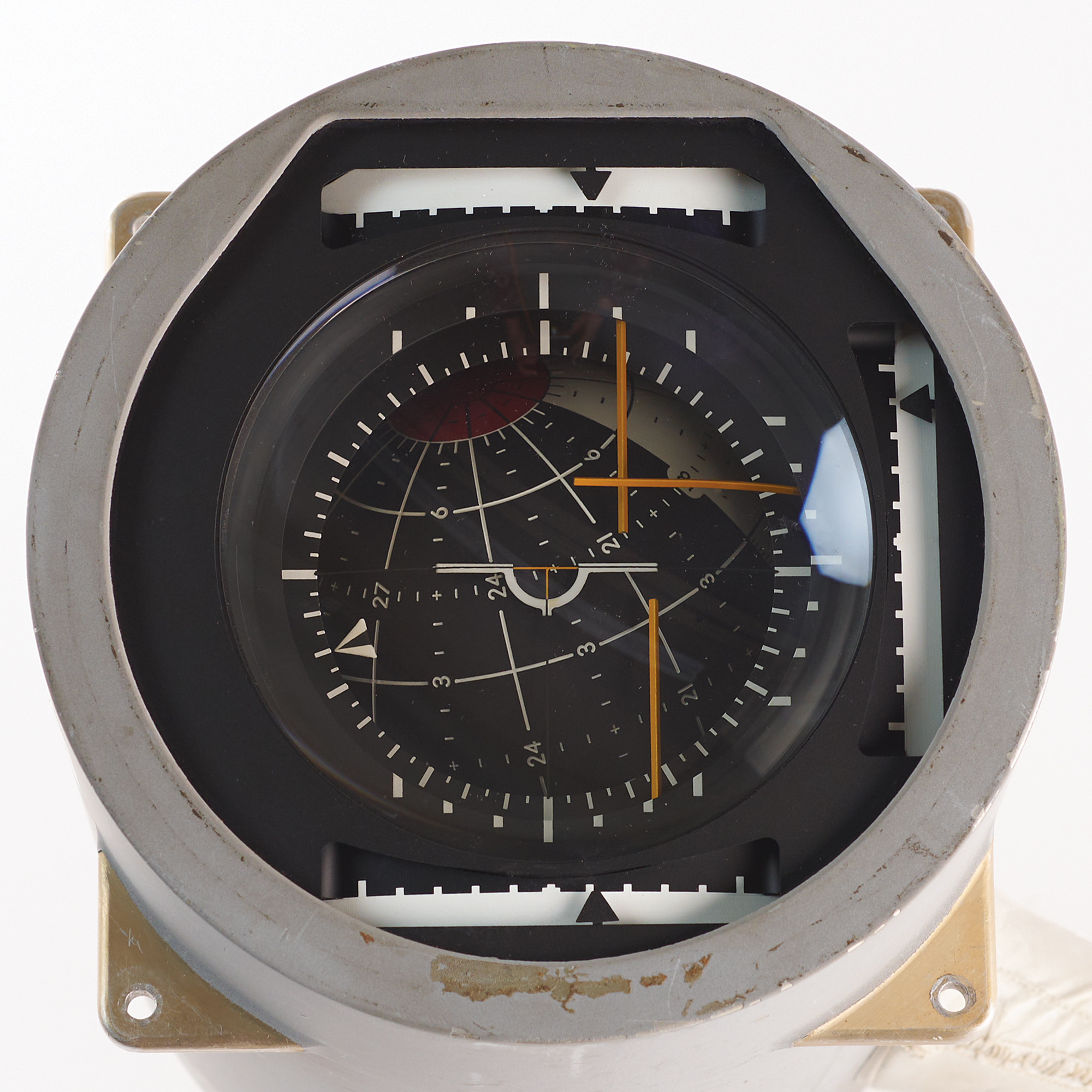
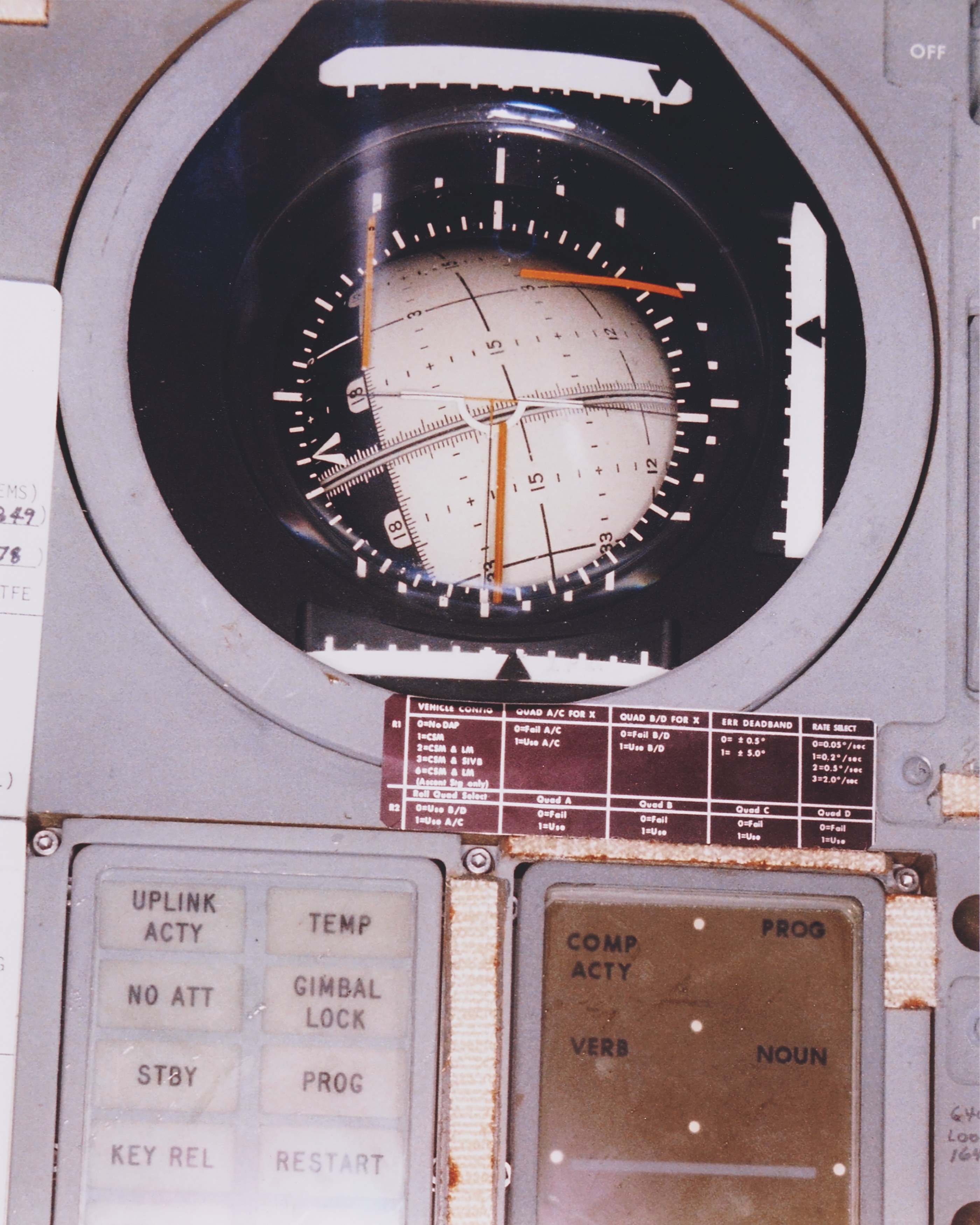
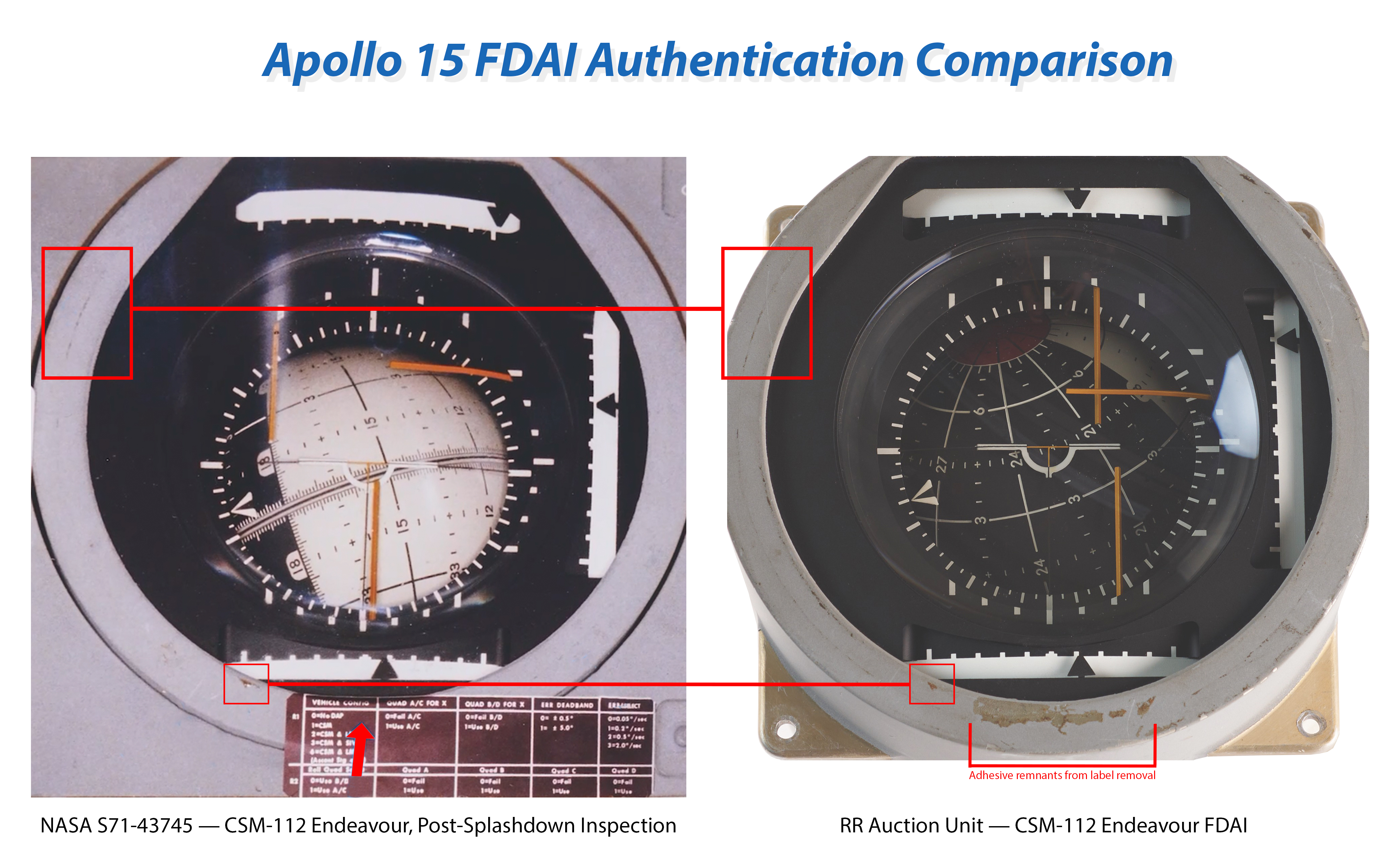
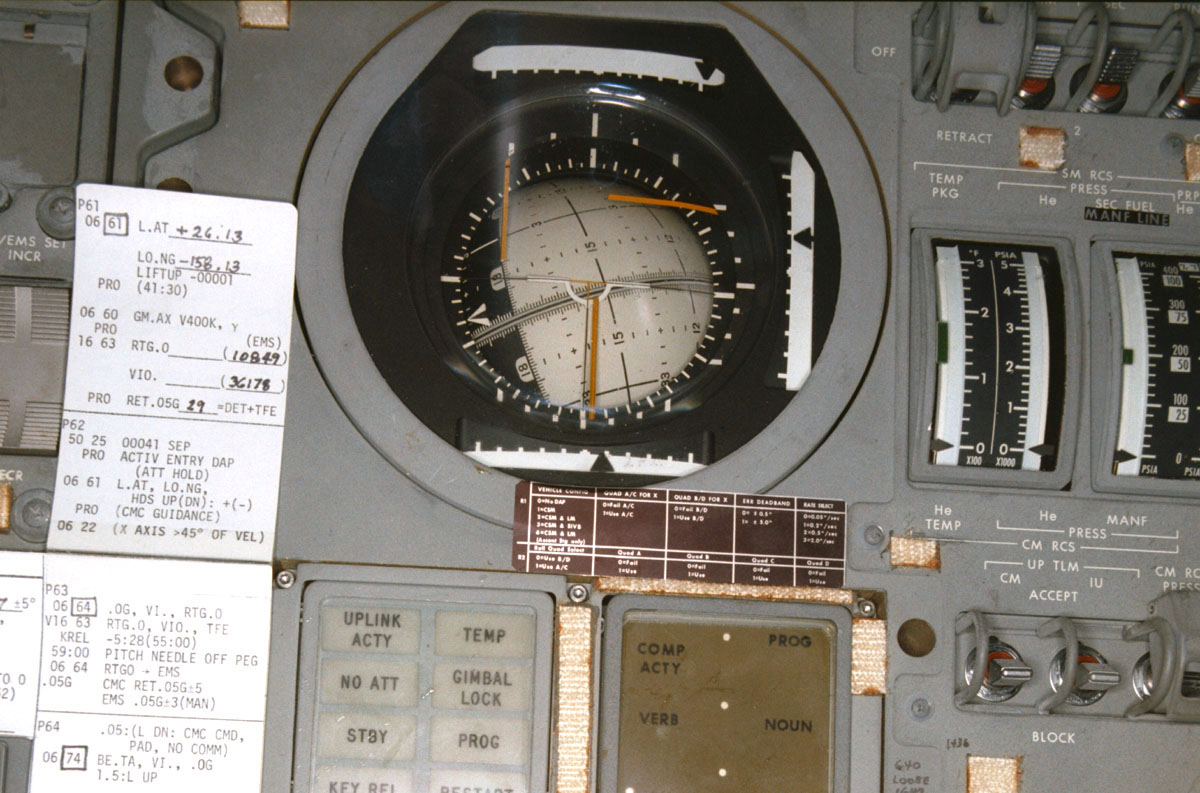
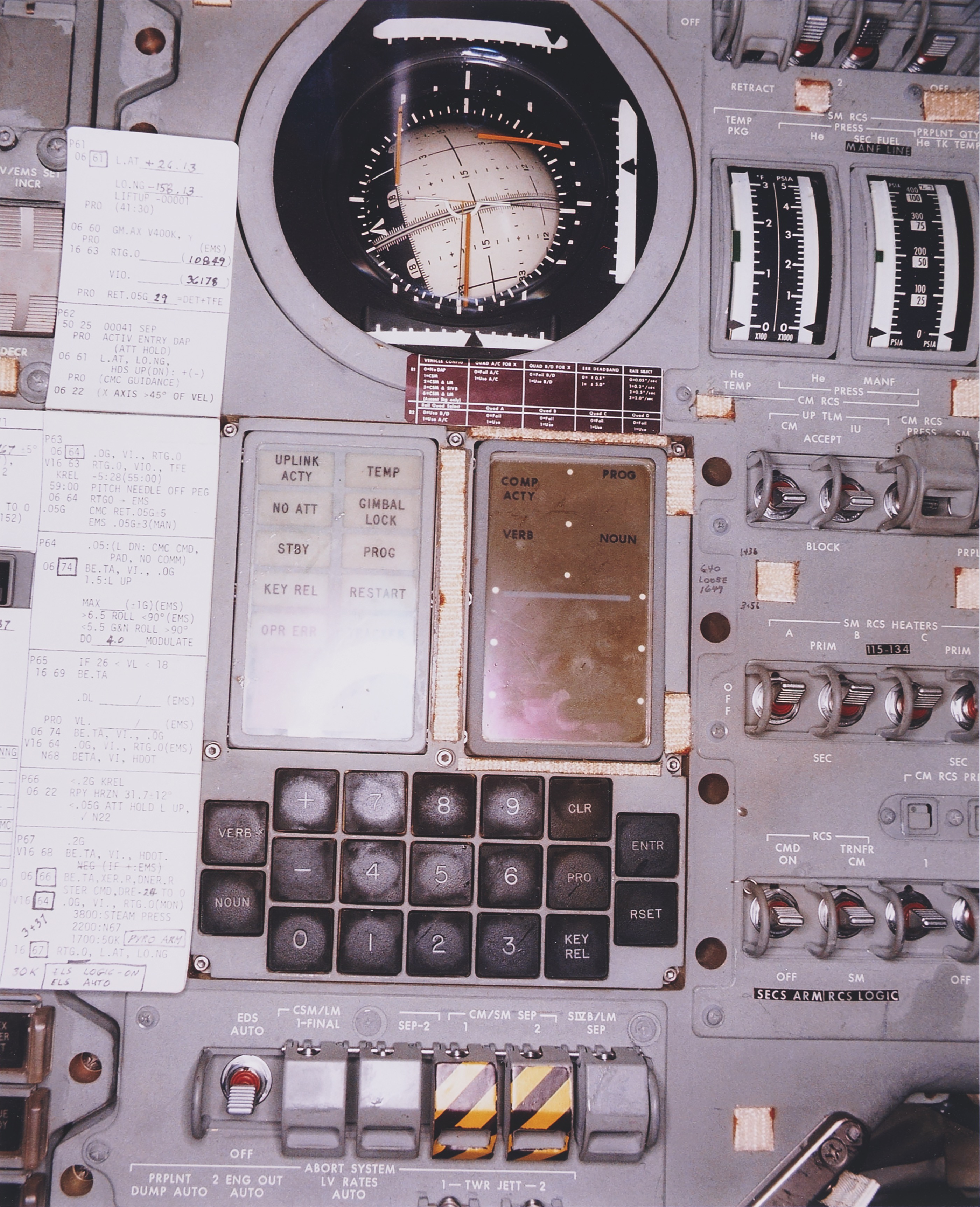
Installed on Panel 2 inside the Apollo 15 Command Module, directly above the Apollo Guidance Computer’s DSKY interface, this FDAI is clearly visible in post-flight interior photographs of Endeavour (specifically in NASA image S71-43745, taken during spacecraft inspection on the recovery ship). Adhesive remnants on the lower bezel correspond to the data placard affixed to the panel during the mission. Another FDAI was installed on Panel 1. Most remarkably, this instrument was exposed to the space environment during Al Worden's historic 38-minute transearth space walk—the first deep-space EVA.
The FDAI was the primary visual reference for spacecraft orientation in three-dimensional space. Pitch and yaw were read directly from the rotating sphere; roll was indicated by a circumferential pointer. Surrounding rate meters displayed rotational velocity about each axis, while three prominent yellow needles showed deviation between current and commanded attitude. Originally conceived as multiple separate instruments, astronauts—many of them test pilots—advocated for a unified display modeled after an aircraft’s artificial horizon, resulting in this elegant and highly intuitive navigational device.
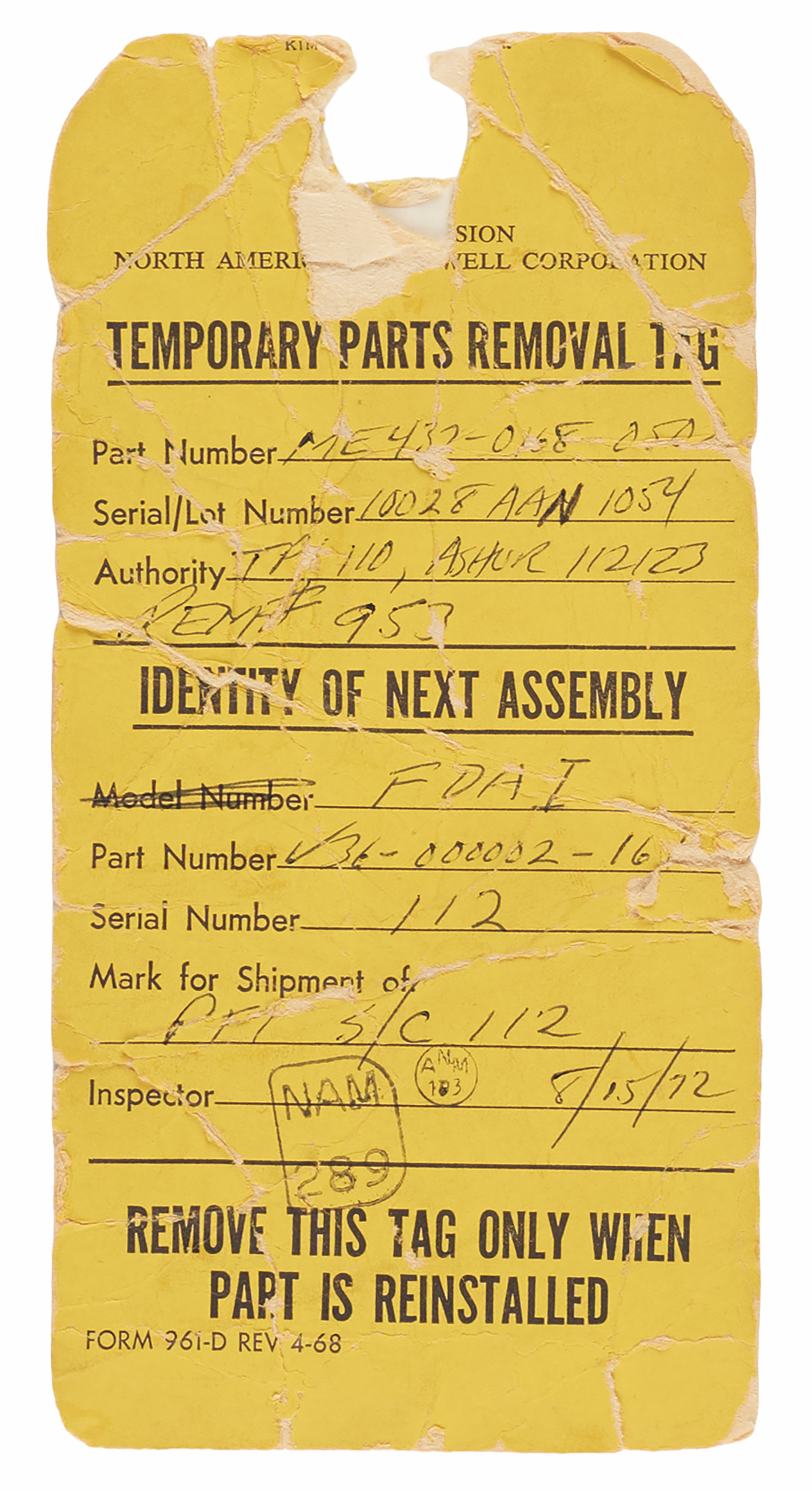
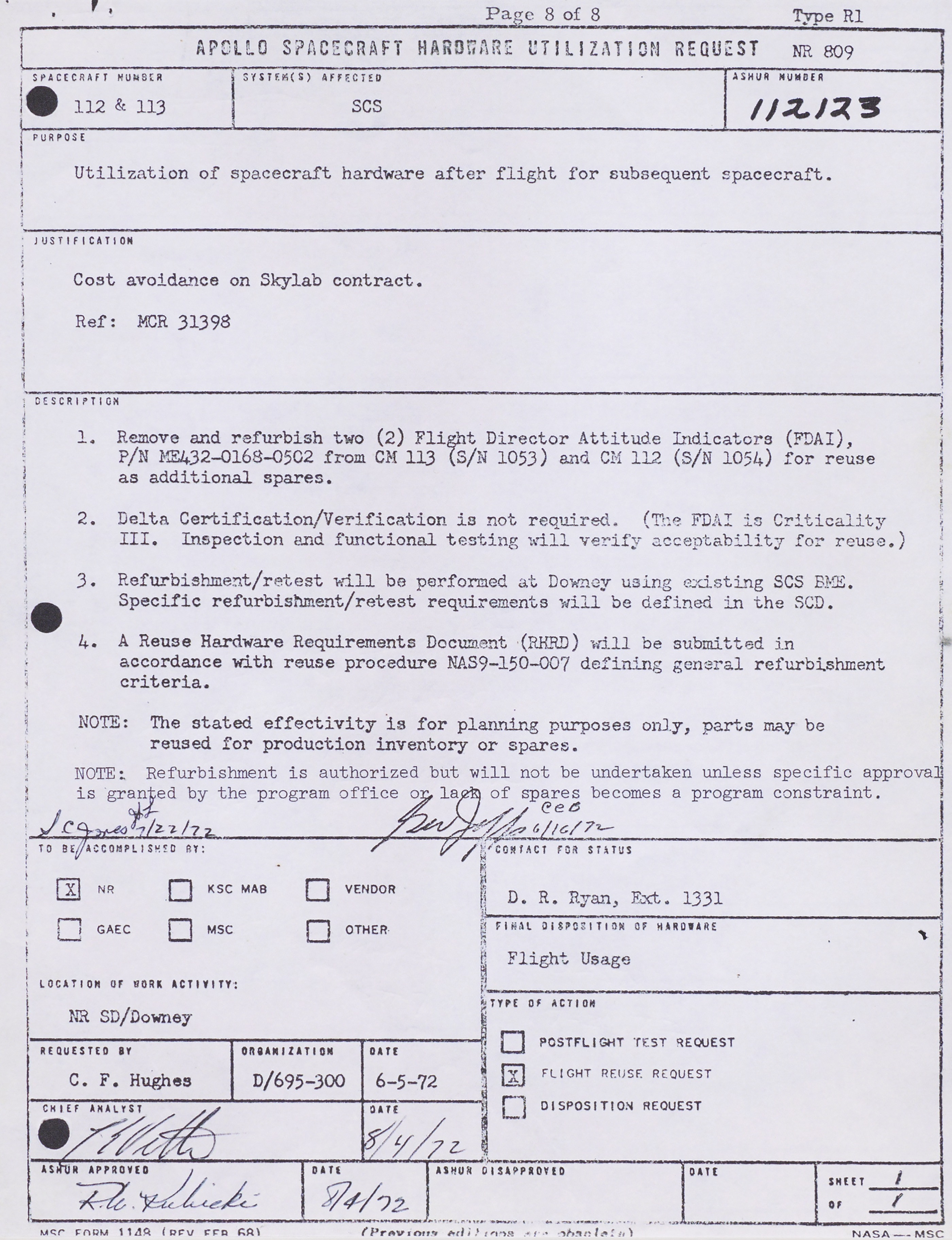
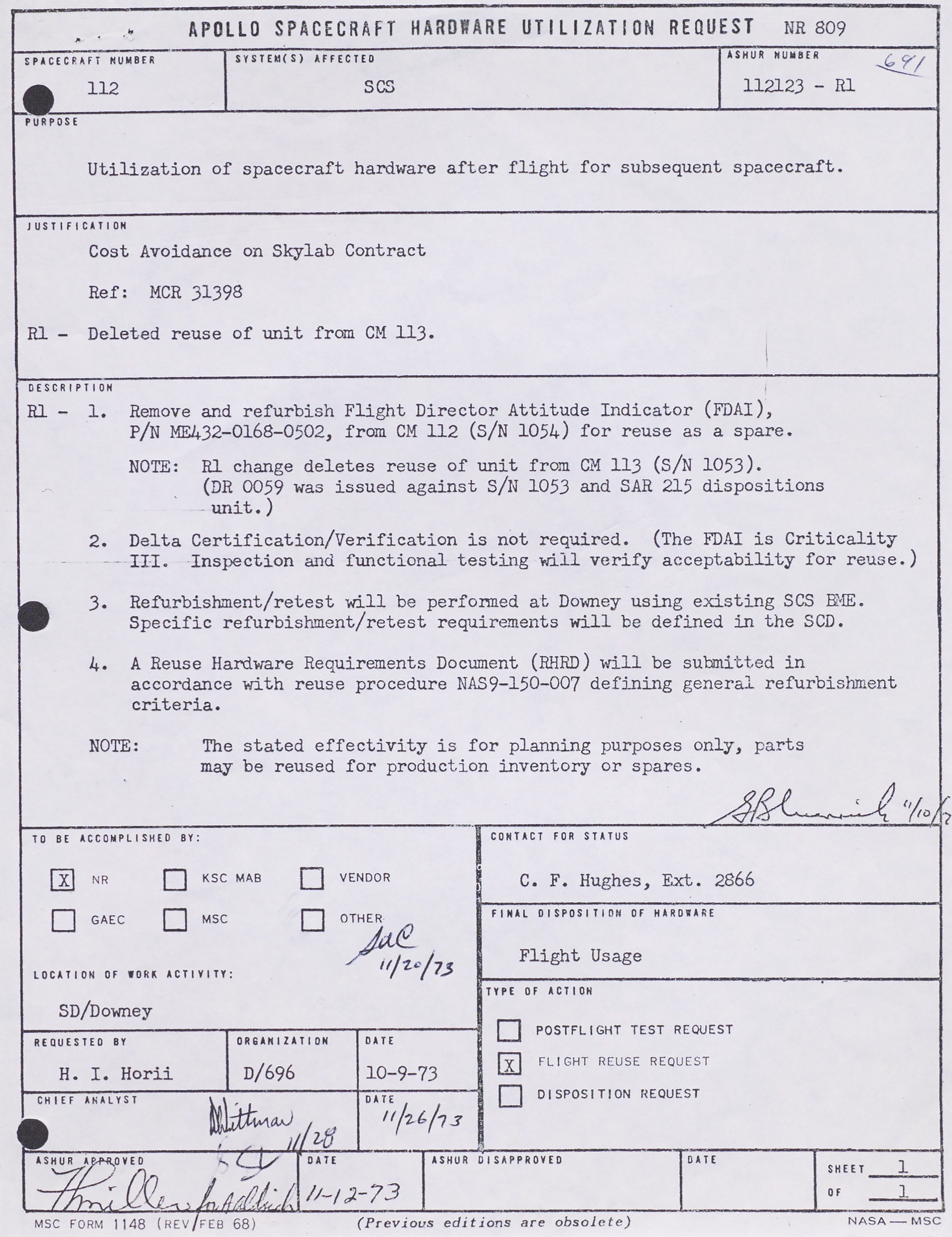
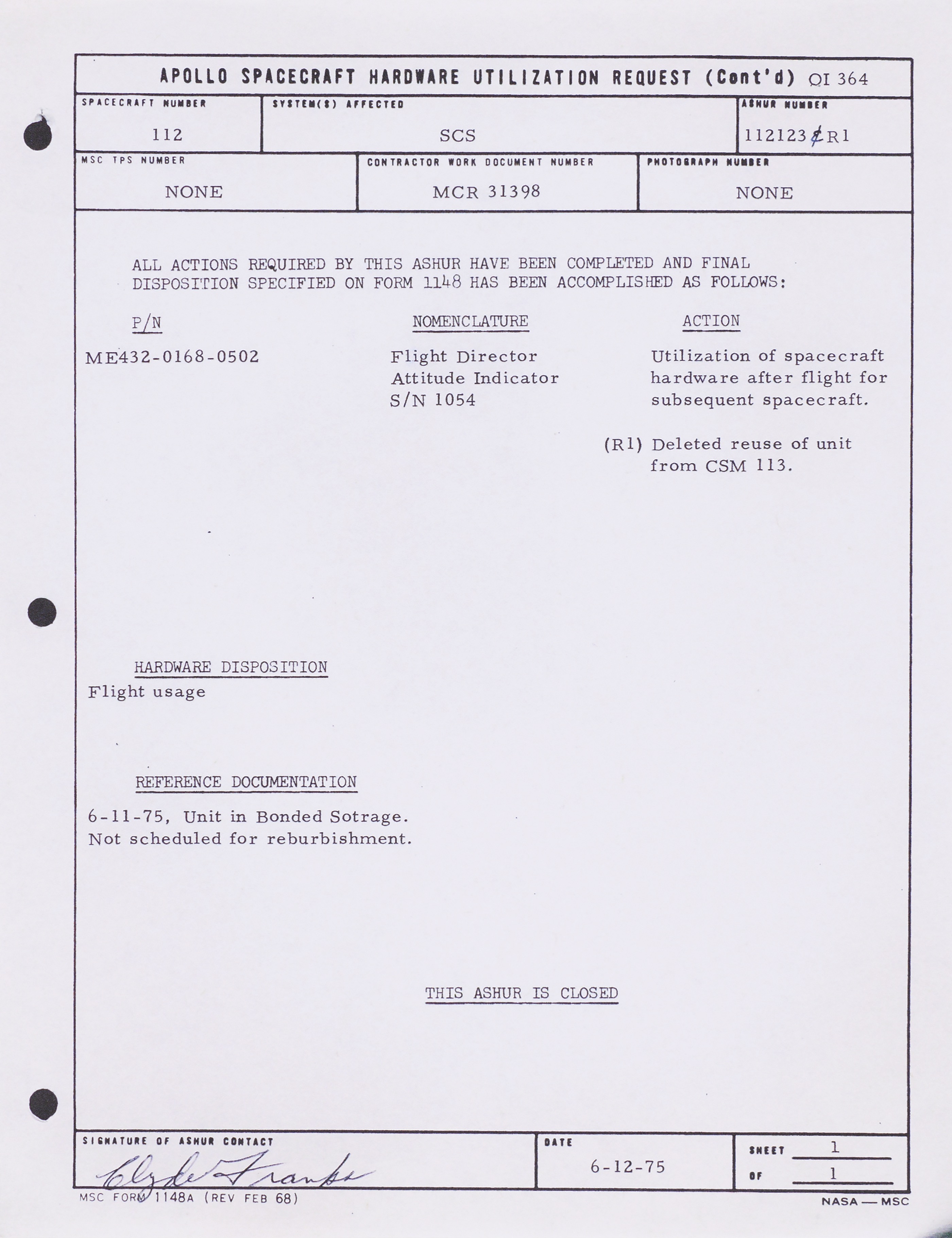
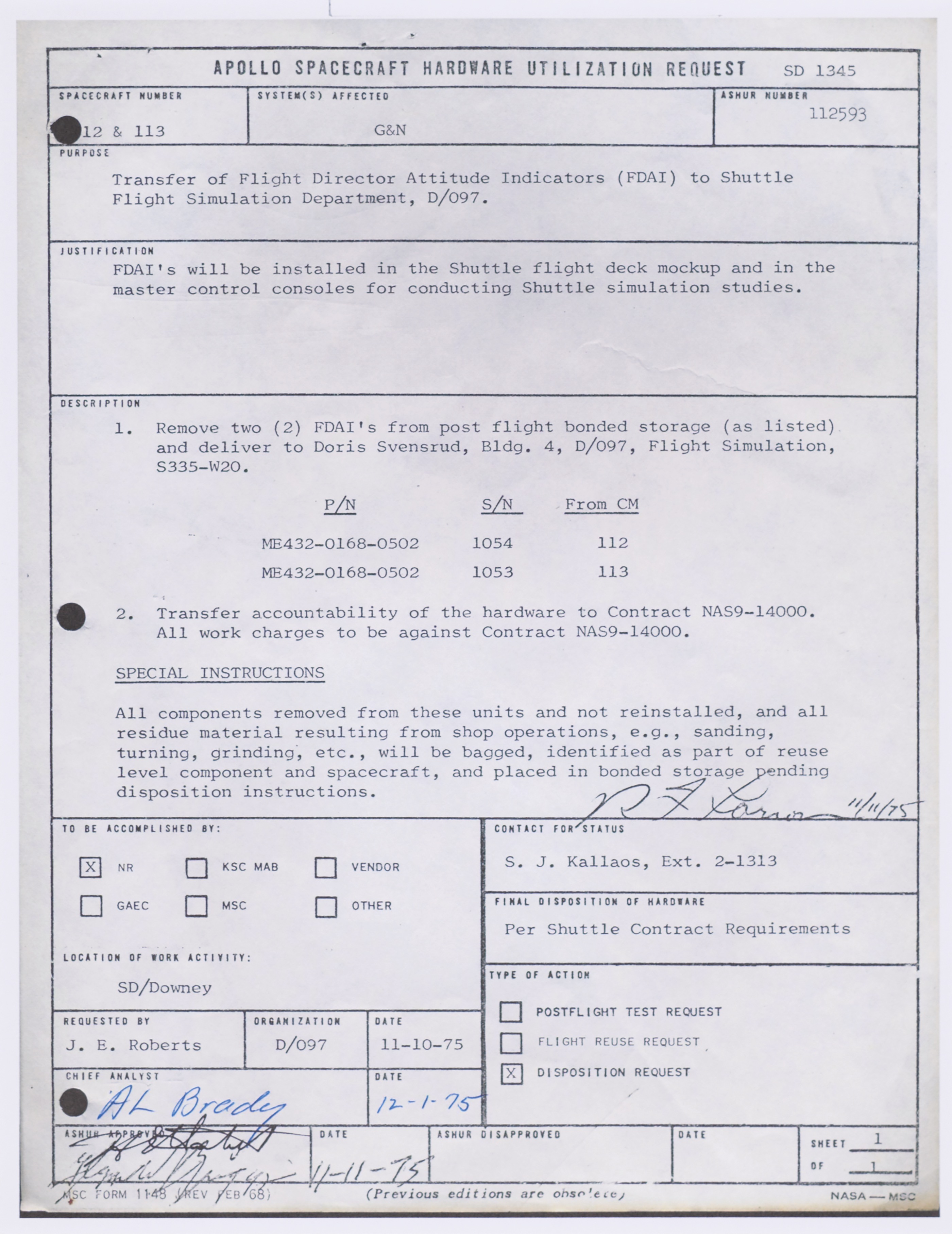
The worn yellow tag documents the precise part and serial numbers, removal authorization, next higher assembly, and vehicle designation: "S/C 112"—Apollo 15’s Command Module Endeavour. It records removal on August 15, 1972. After its Apollo 15 service, this FDAI was retained as a spare in support of subsequent Apollo missions to Skylab, then formally transferred to the Space Shuttle program on November 11, 1975, for simulation studies at Rockwell International. These transfers are fully documented in accompanying copies of Apollo Spacecraft Hardware Utilization Request (ASHUR) records citing the specific part and serial numbers. A later inspection sticker indicates the internal lighting tested “OK” in 1982; the instrument was ultimately retired from active program use in February 1998.
As an extensively documented, flown Apollo 15 navigational instrument with traceable serial-number history across multiple NASA programs, this FDAI stands among the most significant categories of Apollo hardware available to collectors—an authentic operational artifact from mankind’s journeys to the moon.

