Sold For $9,375
*Includes Buyers Premium
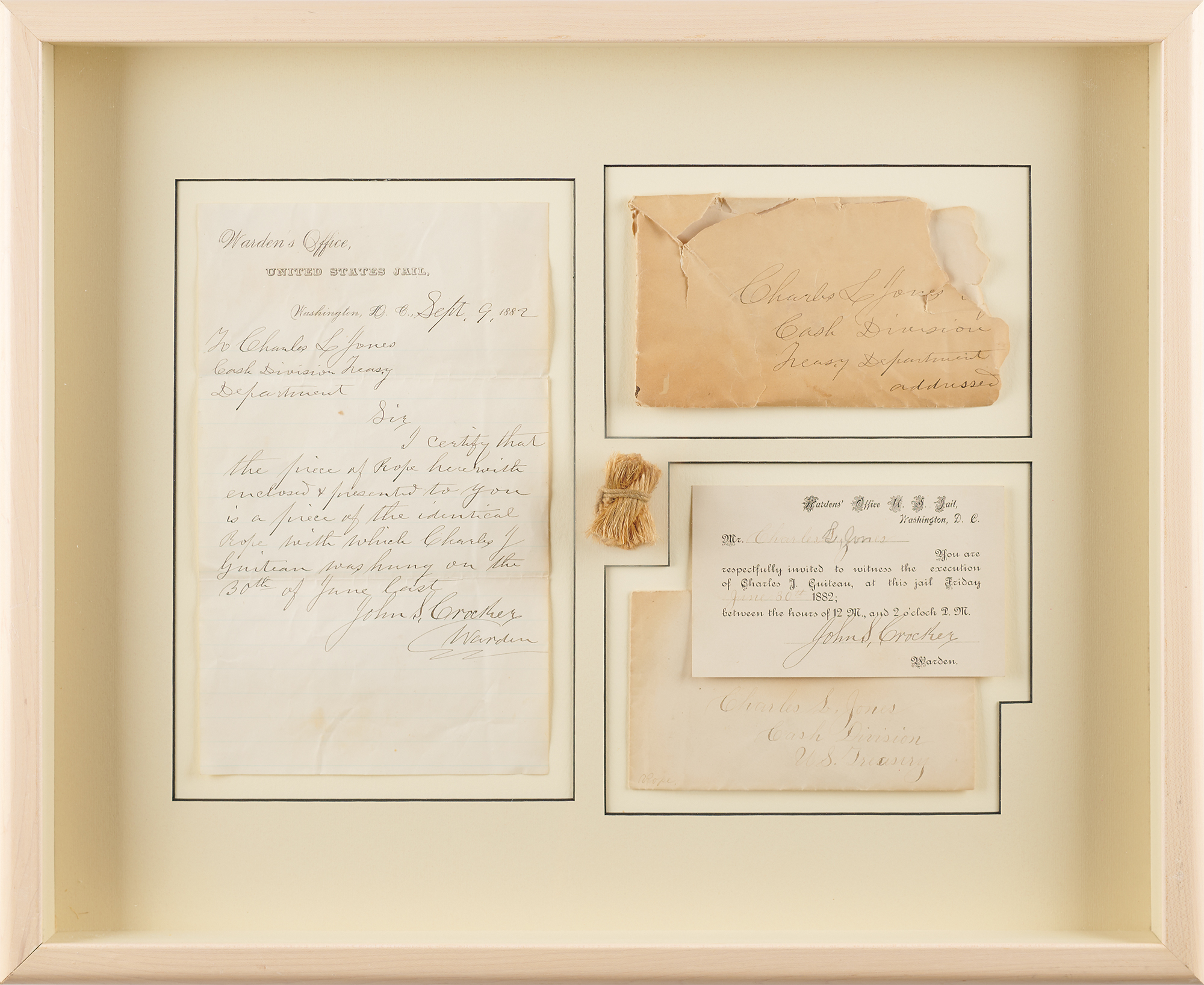
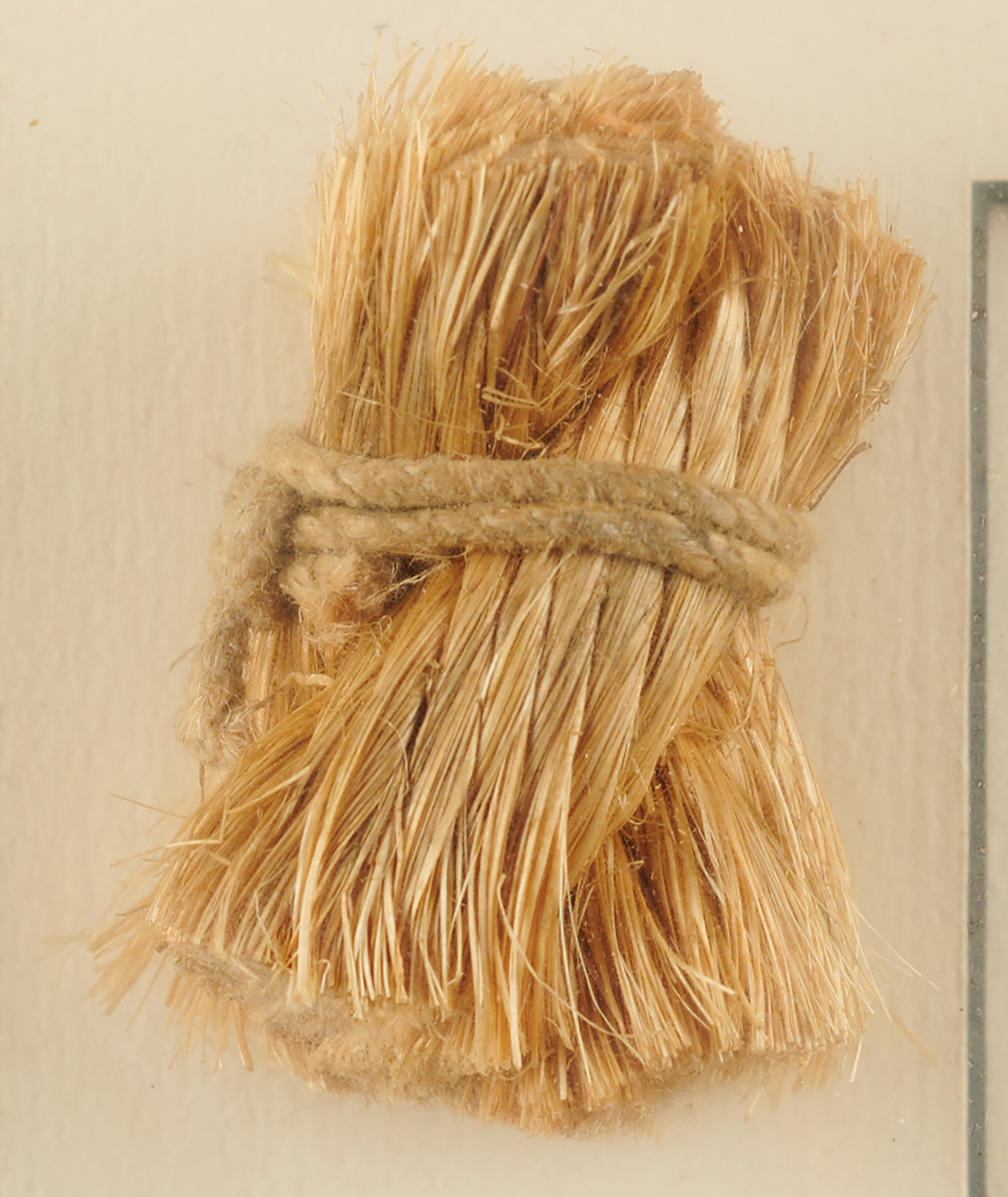
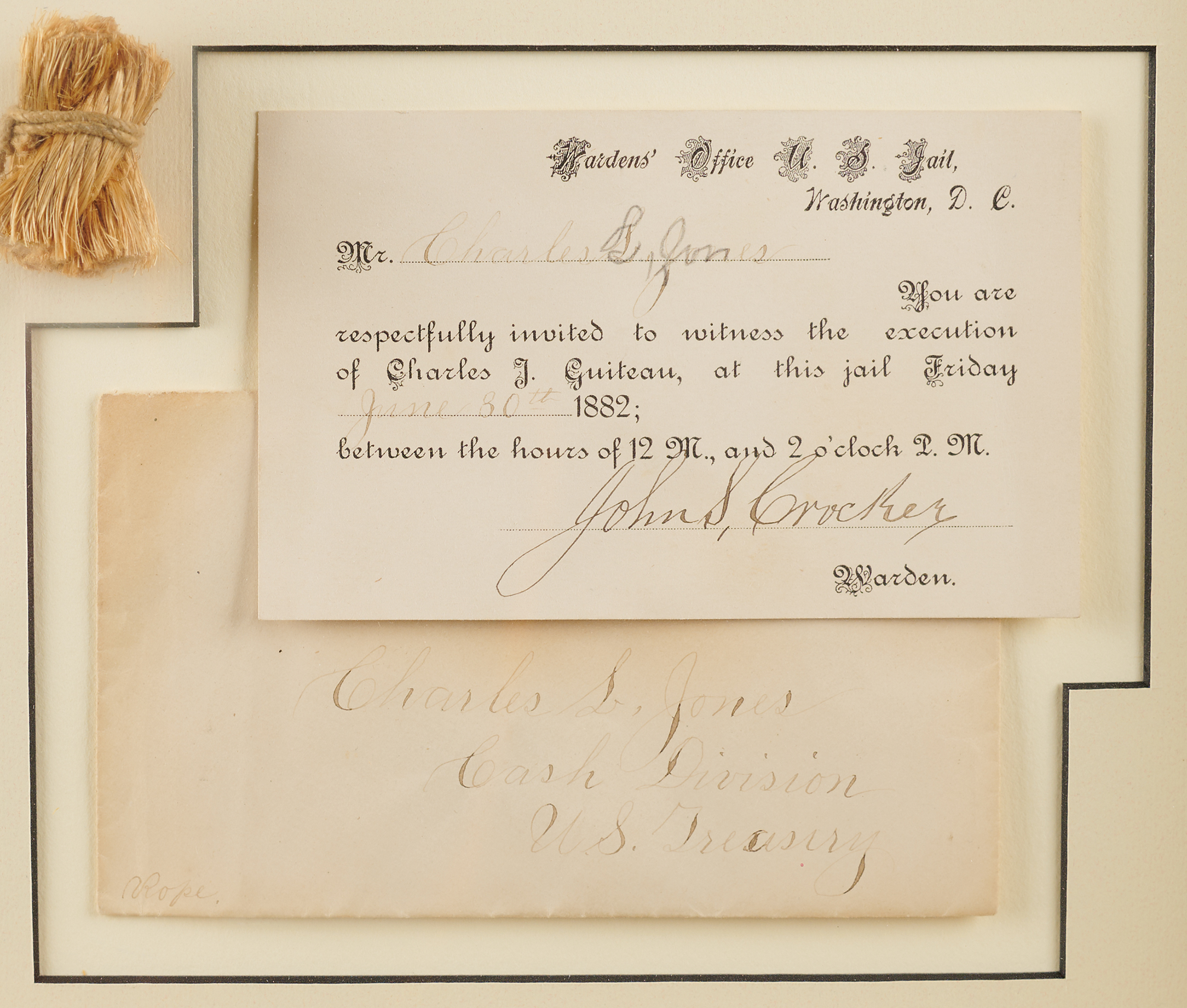
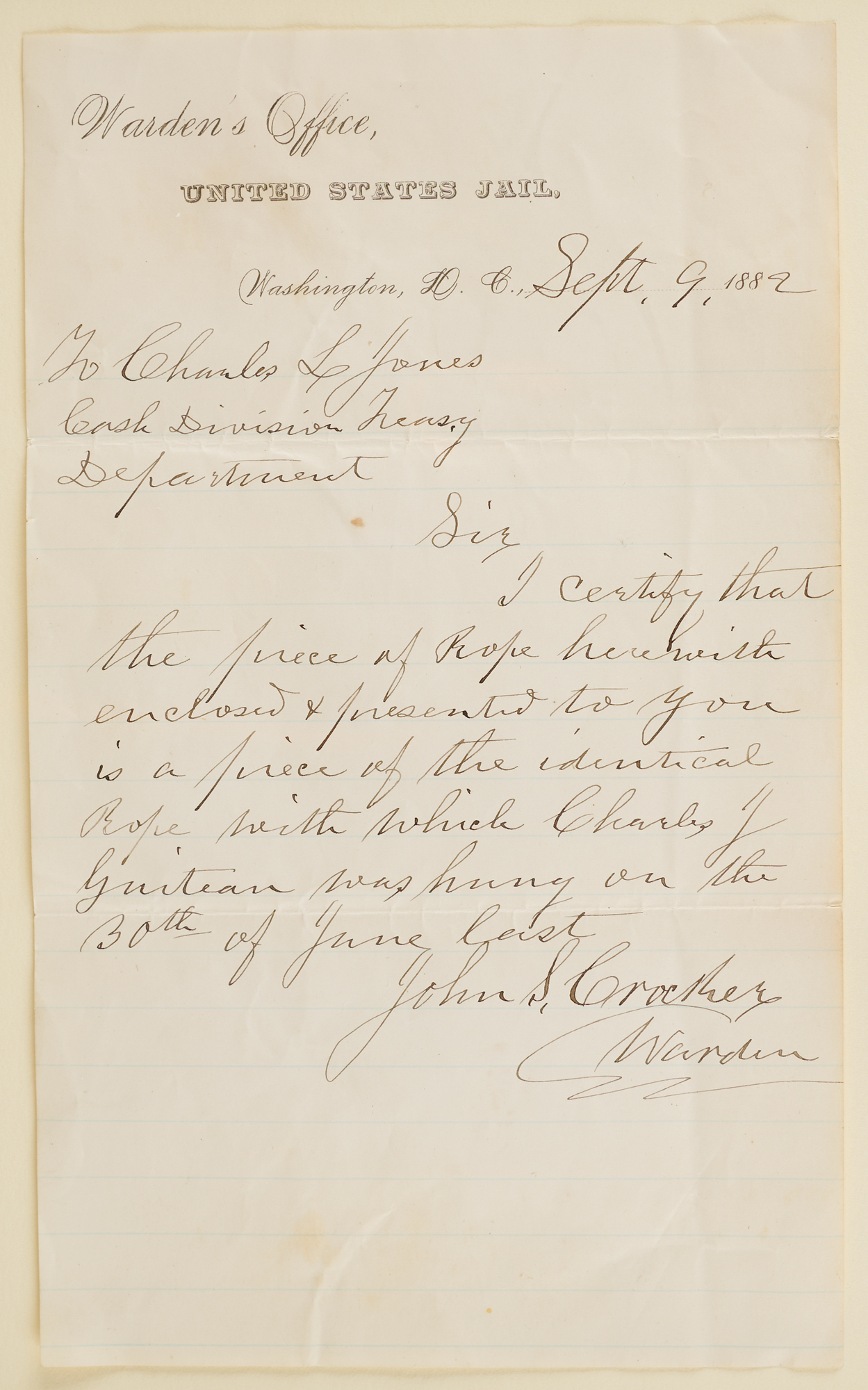
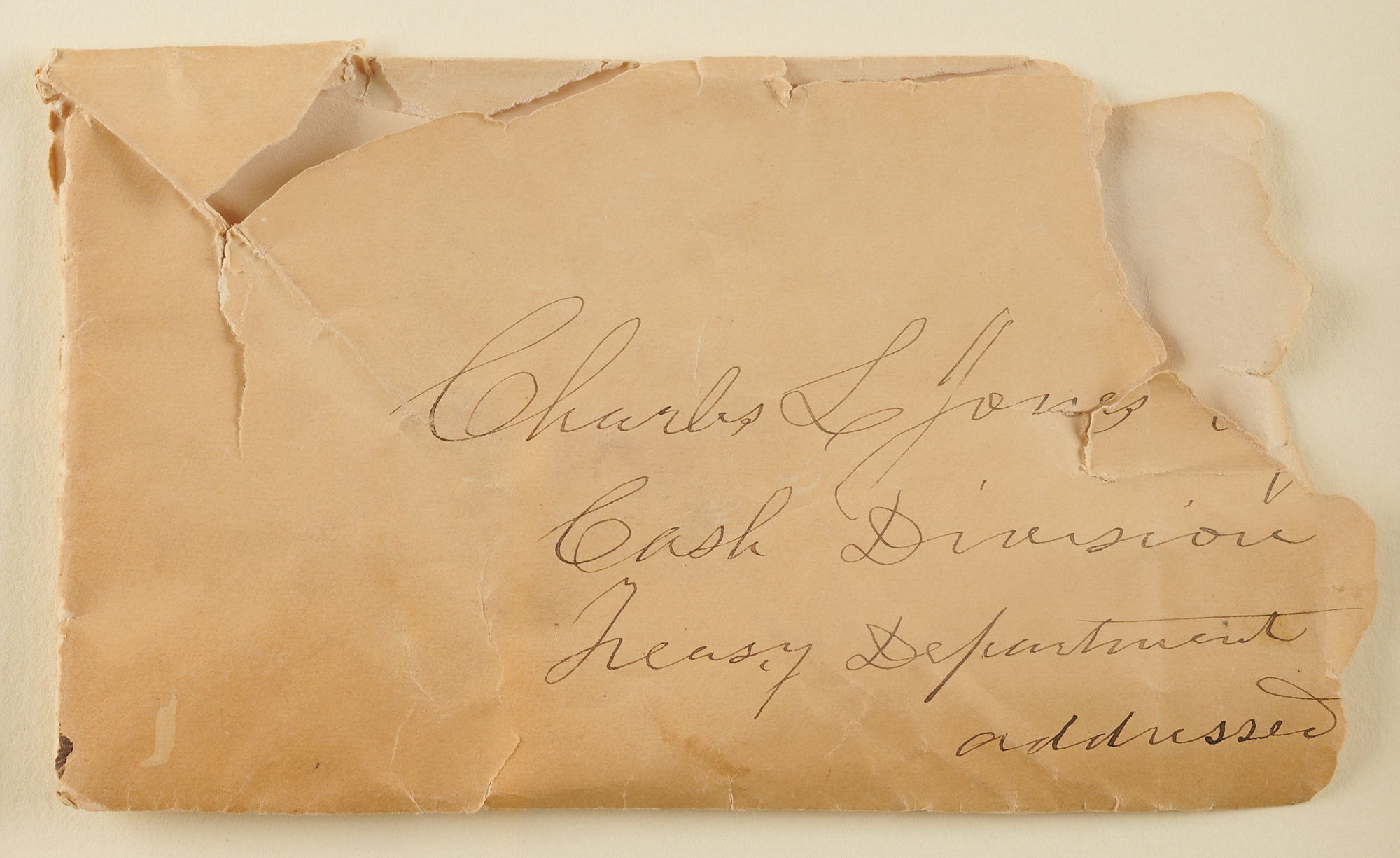
Original 1˝ x 1.25˝ x 1˝ section of hemp rope deriving from the noose used to execute assassin Charles Guiteau at the District of Columbia Jail on June 30, 1882. The braided rope is bound with twine and complemented by an original invitation card for Guiteau’s execution, as well as an ALS from John S. Crocker, warden of the D.C. Jail, certifying the rope as authentic. Both the invitation and the letter are accompanied by their original envelopes, which are addressed to Charles L. Jones, a federal employee with the Treasury Department. All of the items are mounted and framed together to an overall size of 18.5˝ x 15.25˝. In overall fine condition.
The original execution invitation card, 4.75˝ x 3˝, issued to “Charles L. Jones” by the Wardens’ Office U.S. Jail of Washington, D.C., reads: “You are respectfully invited to witness the execution of Charles J. Guiteau, at this jail Friday, June 30th, 1882, between the hours of 12 M., and 2 o’clock P.M.” Signed below in ink by Warden John S. Crocker.
The handwritten letter from Crocker, one page, 5.5˝ x 9˝, Warden’s Office, United States Jail letterhead, September 9, 1882, reads: “I certify that the piece of Rope herewith enclosed & presented to you is a piece of the identical Rope with which Charles J. Guiteau was hung on the 30th of June last.”
After shooting President Garfield on July 2, 1881, Guiteau was initially apprehended and held on charges of attempted murder; it was not until Garfield succumbed to infection from his wounds nearly three months later that he could be brought up on charges of murder. Guiteau was formally indicted for murder on October 14, 1881, pleading not guilty, and the trial began in Washington on November 14, 1881. Although Guiteau would insist on trying to represent himself during the entire trial, the court appointed Leigh Robinson to defend him. Robinson retired from the case after just a few days, and Guiteau's brother-in-law, George Scoville—a real estate attorney—then became lead counsel for the defense, feeling obliged to represent his family member. The assassin was found guilty, sentenced to death on January 25, 1882, and executed by hanging five months later on June 30, 1882.

