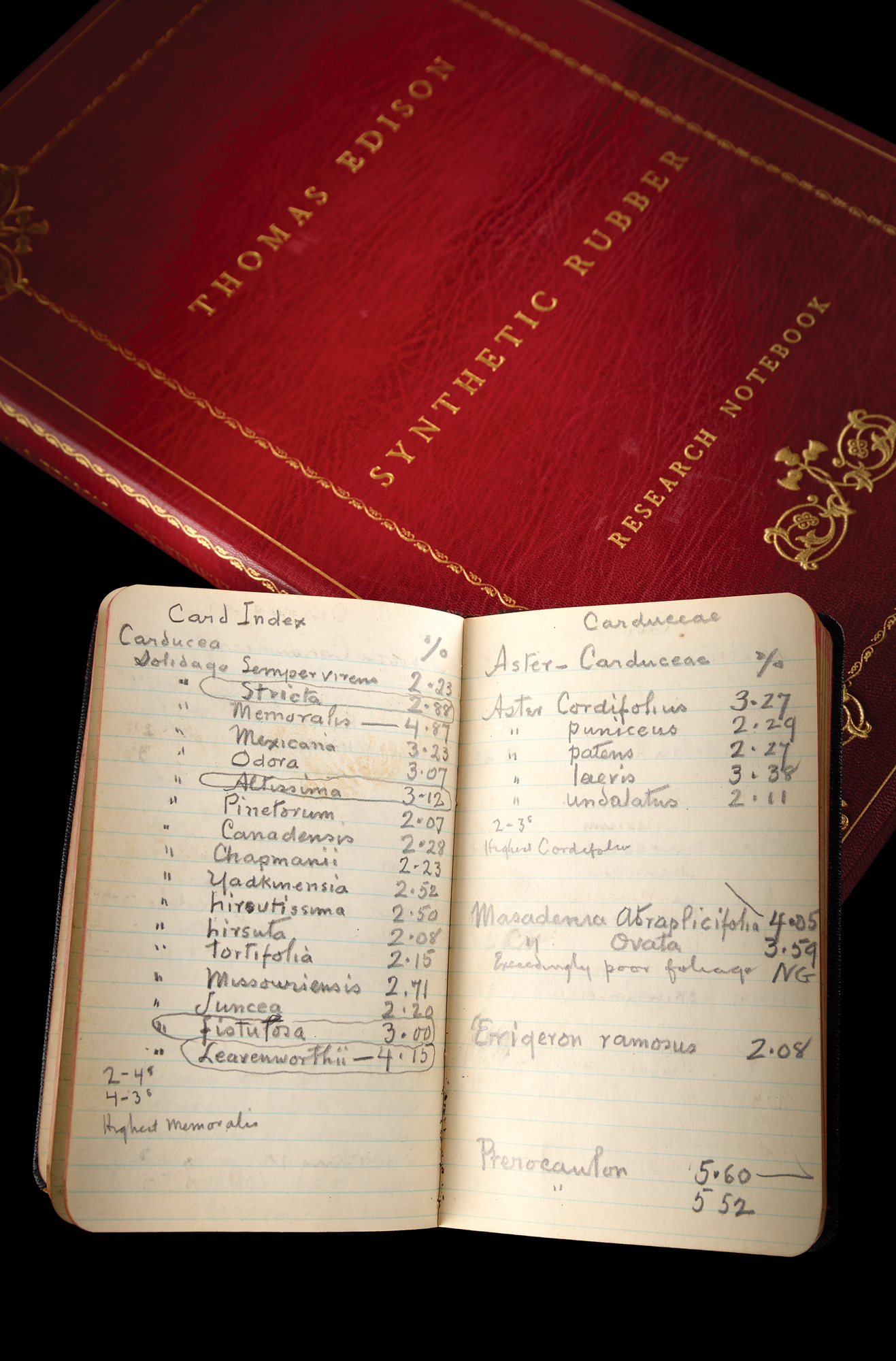
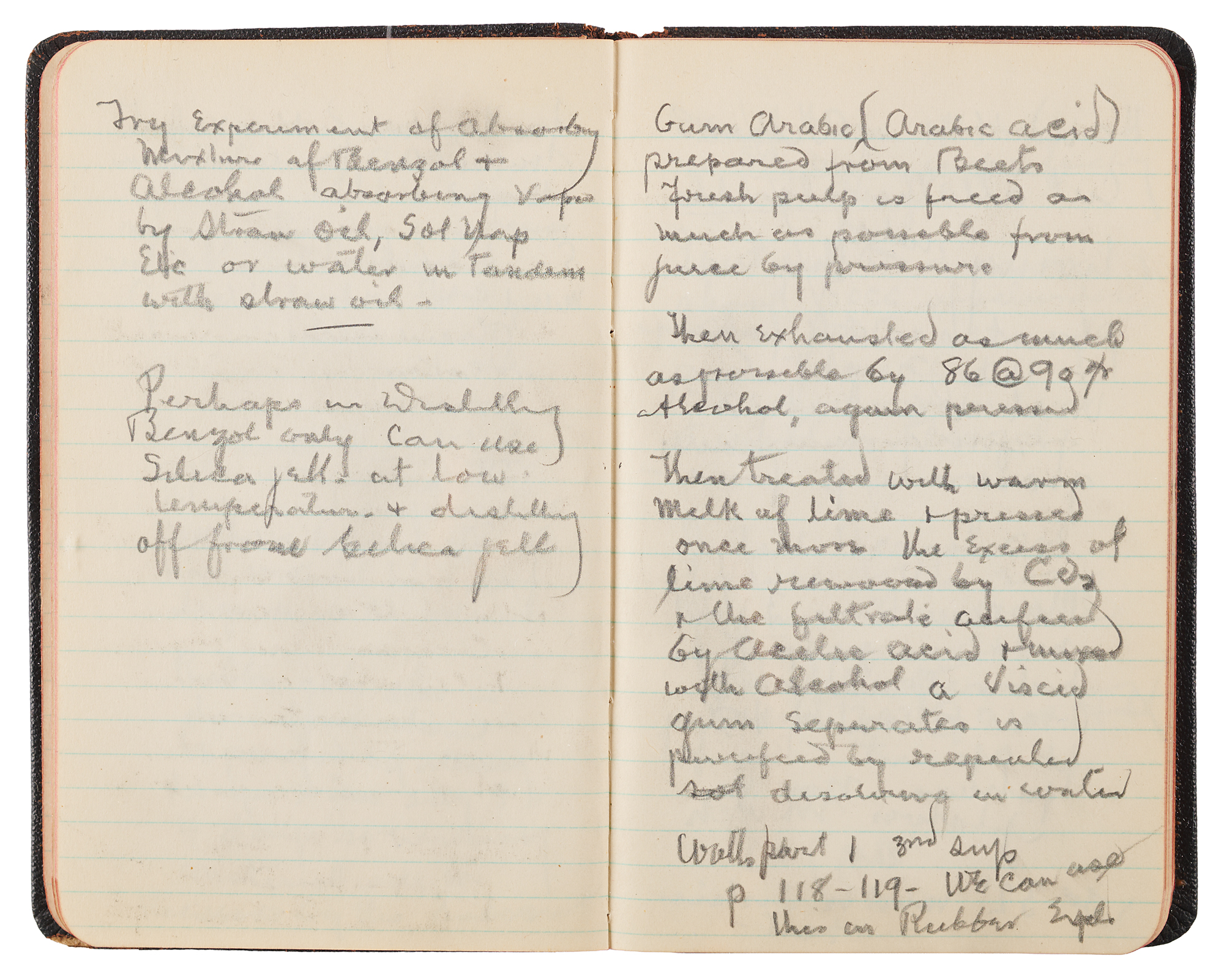
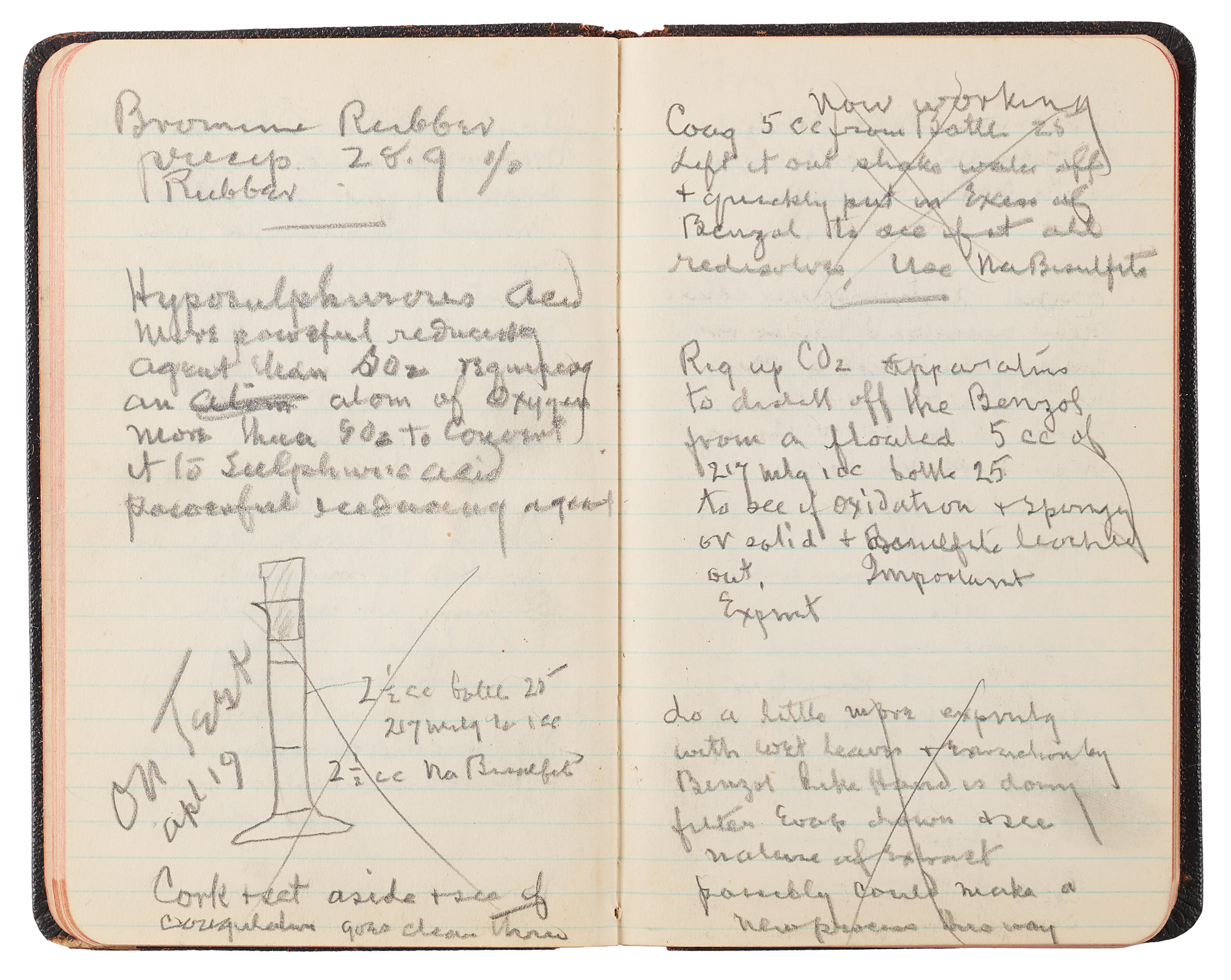
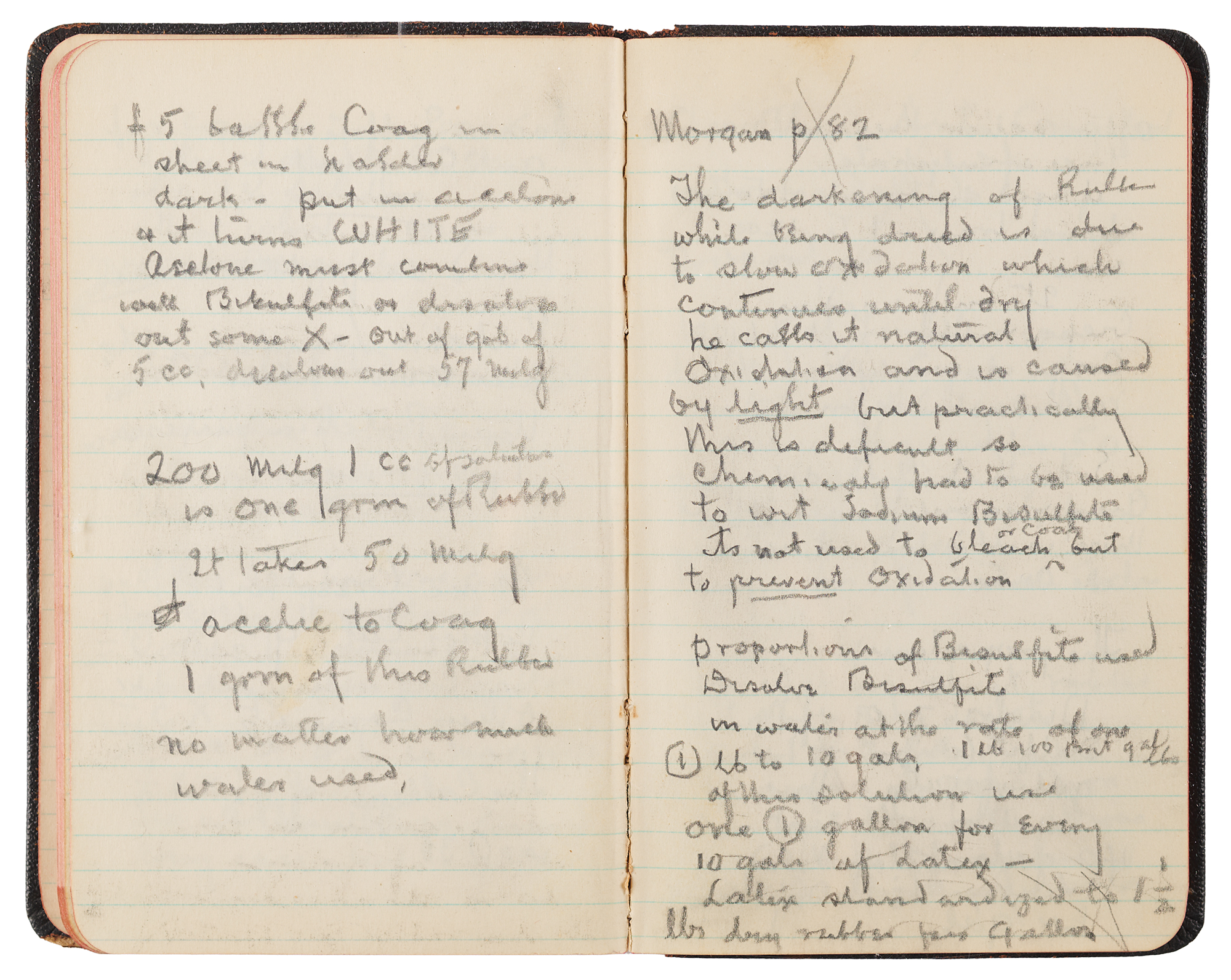
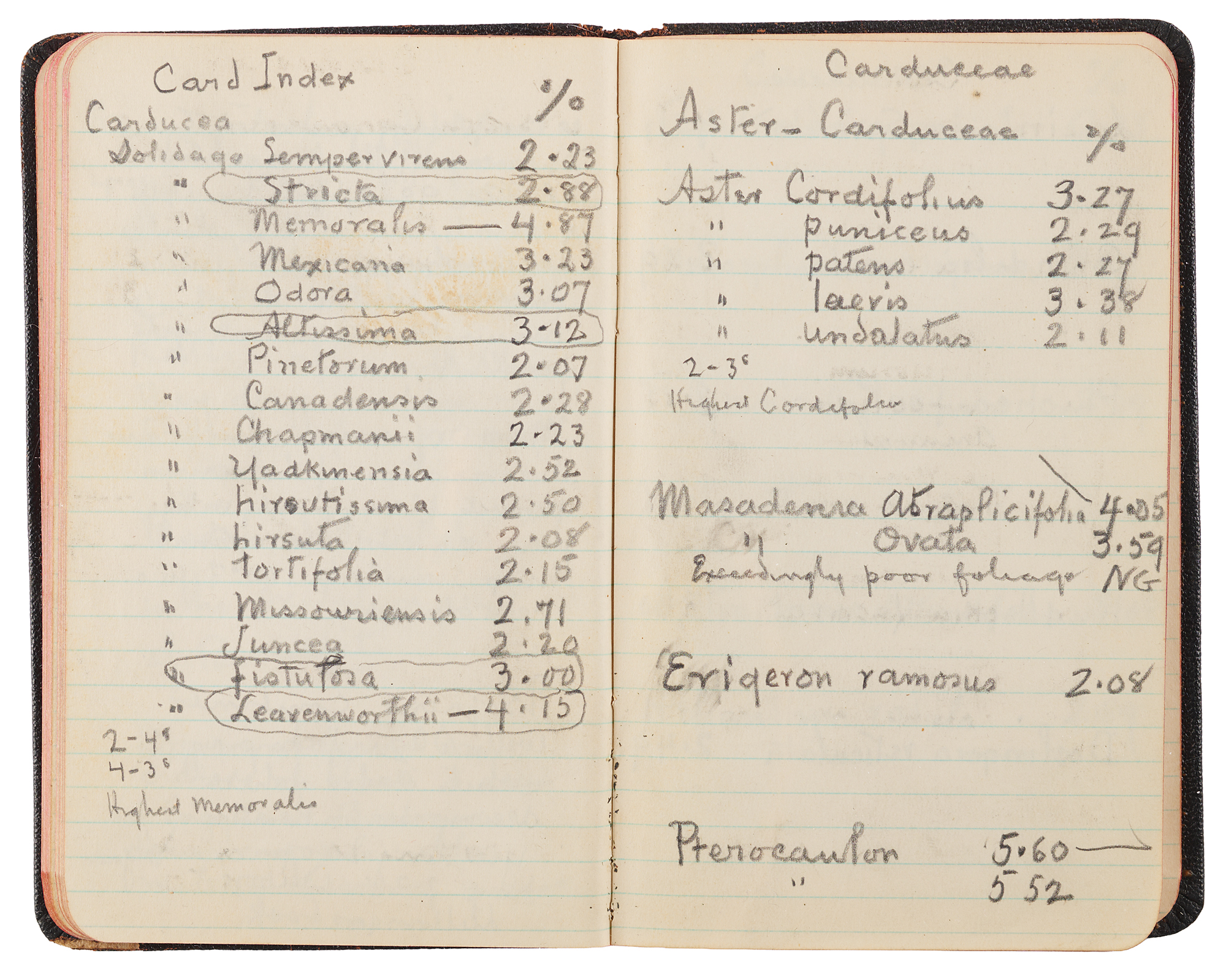
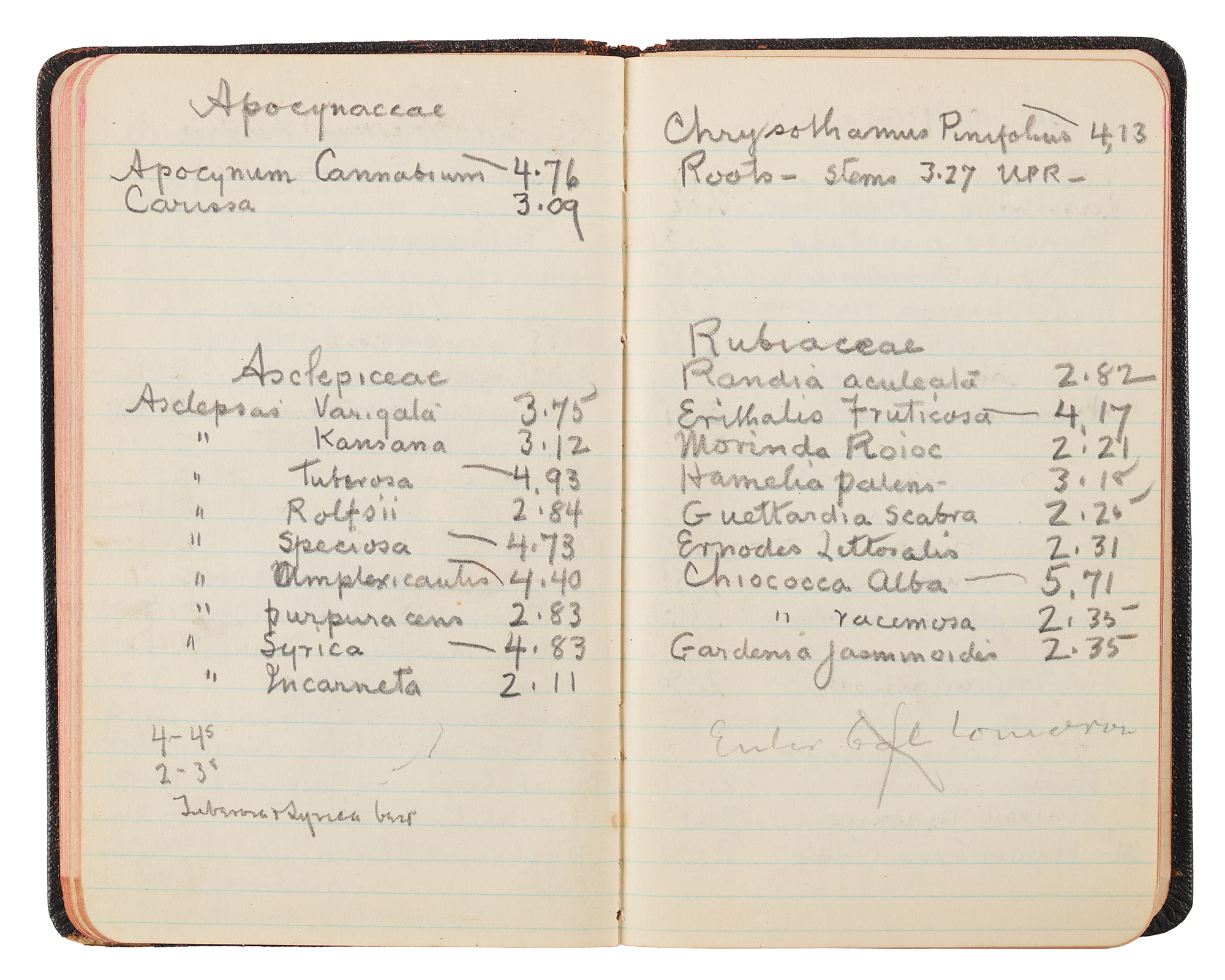
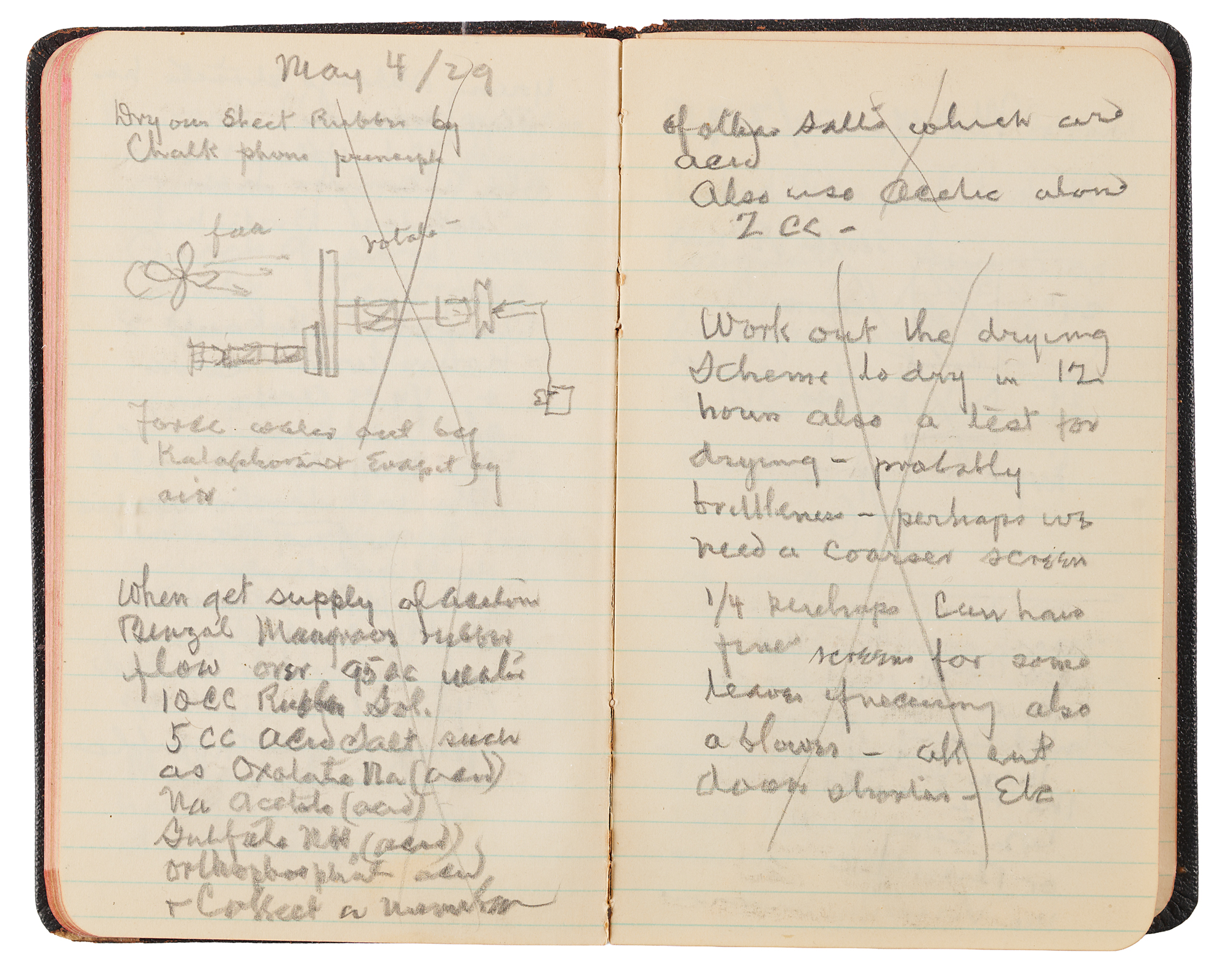
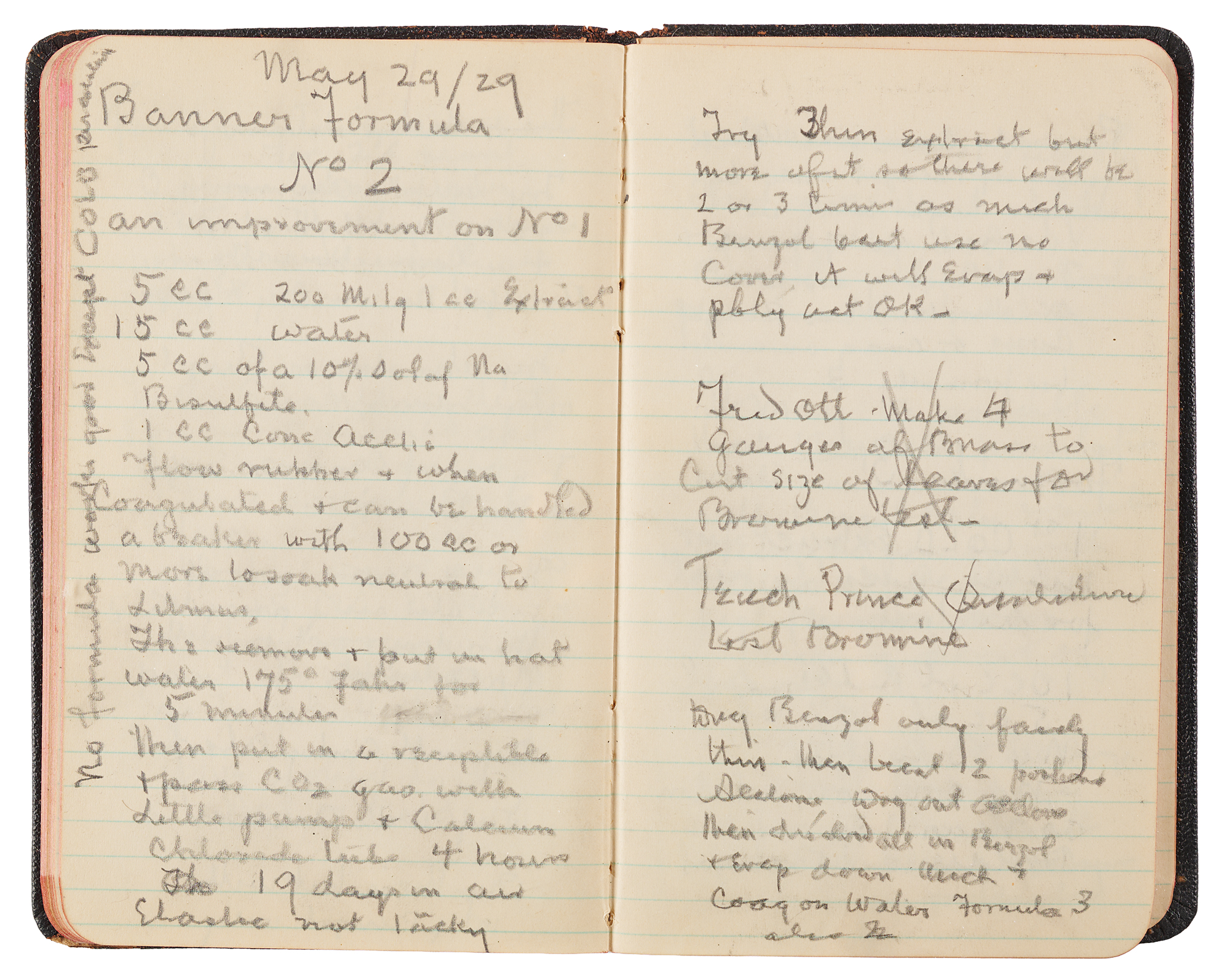
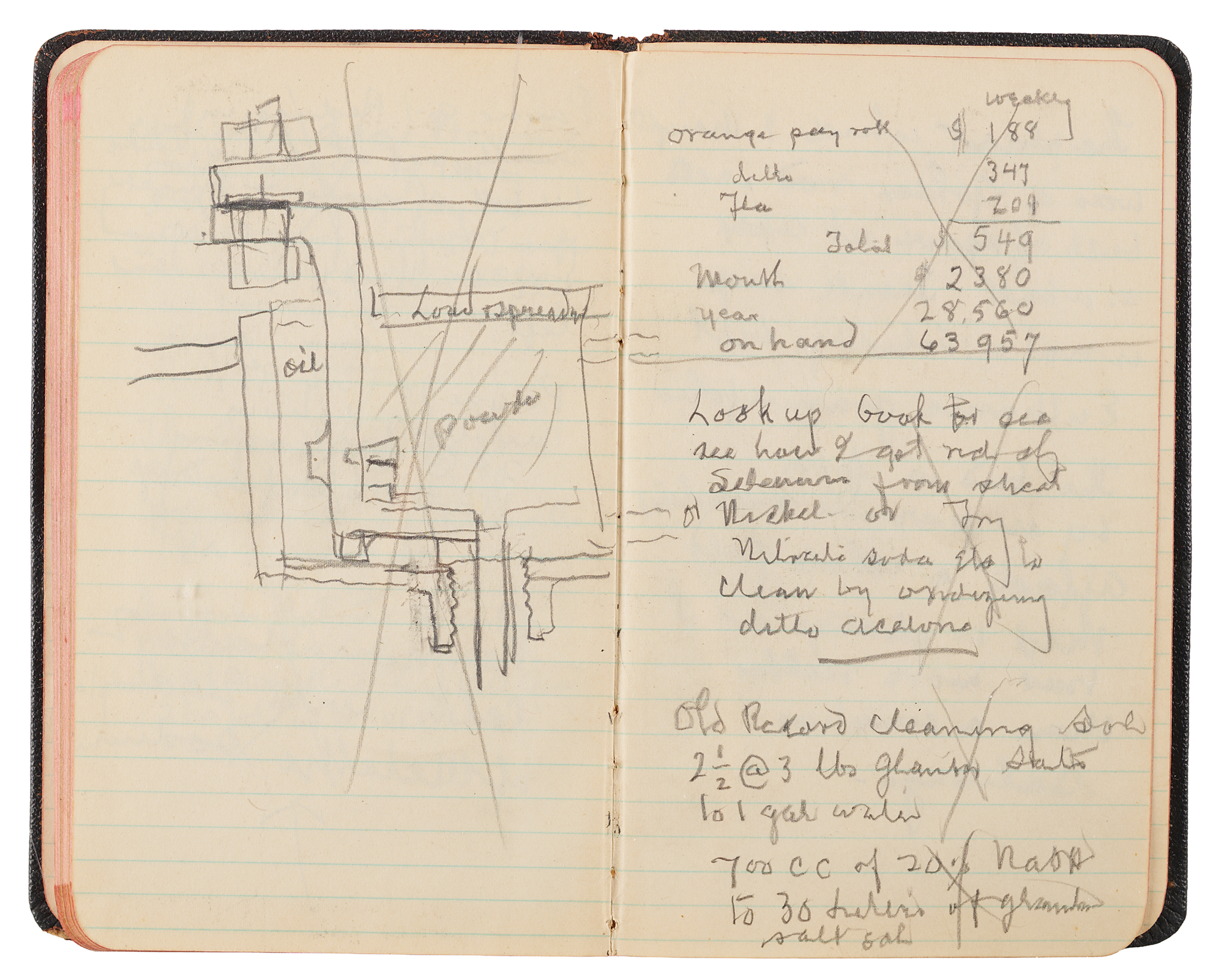
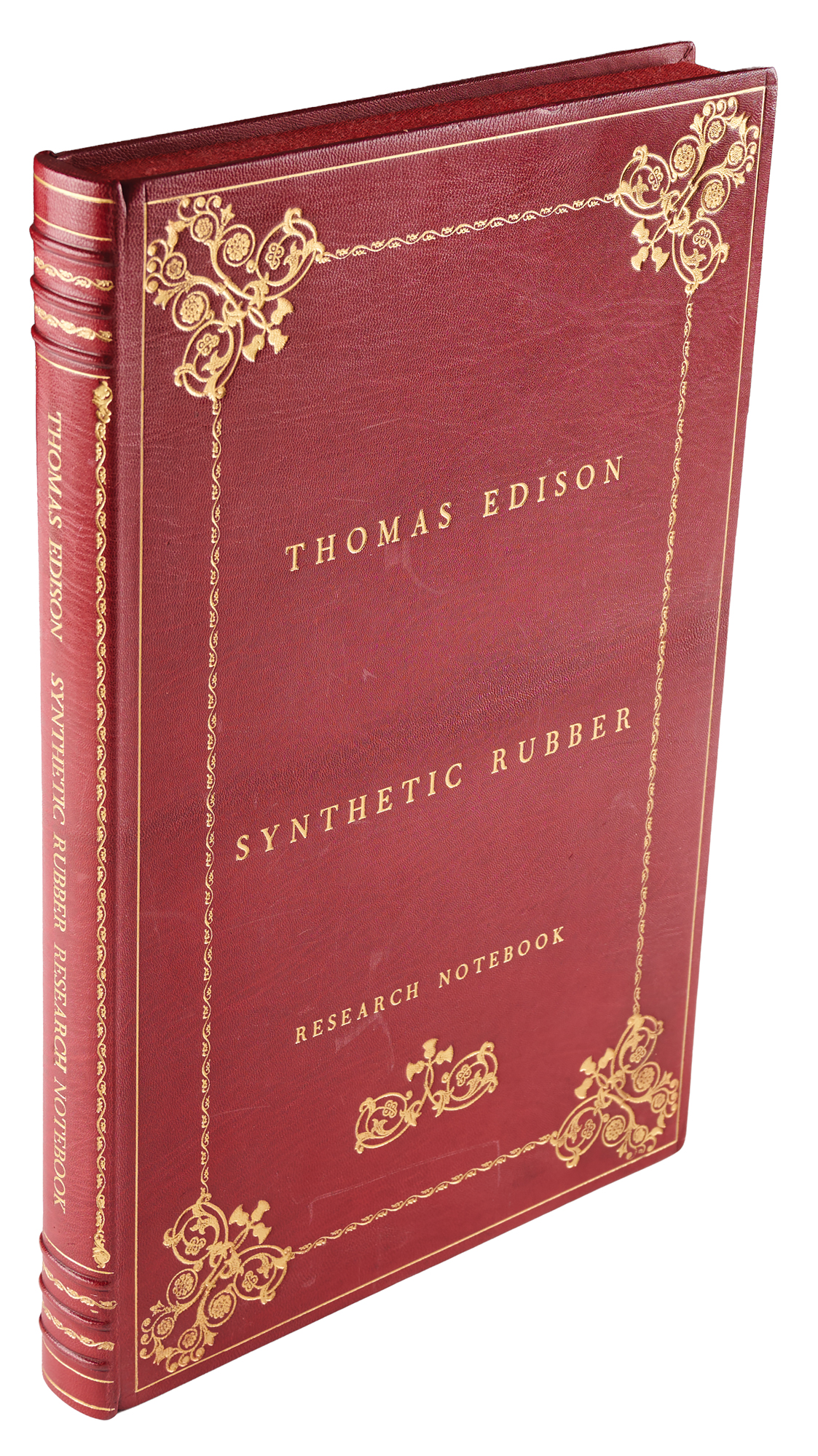
Extraordinary original handwritten botanical laboratory notebook by Thomas Edison, containing 130 handwritten pages in pencil, 4 x 6.75, circa 1929. Towards the end of his life, Edison was attempting to find a practical way of creating rubber from domestic plants. With Henry Ford and Harvey Firestone, he founded the Edison Botanic Research Corporation in 1927 and celebrated his 80th birthday by giving tours of his experimental garden.
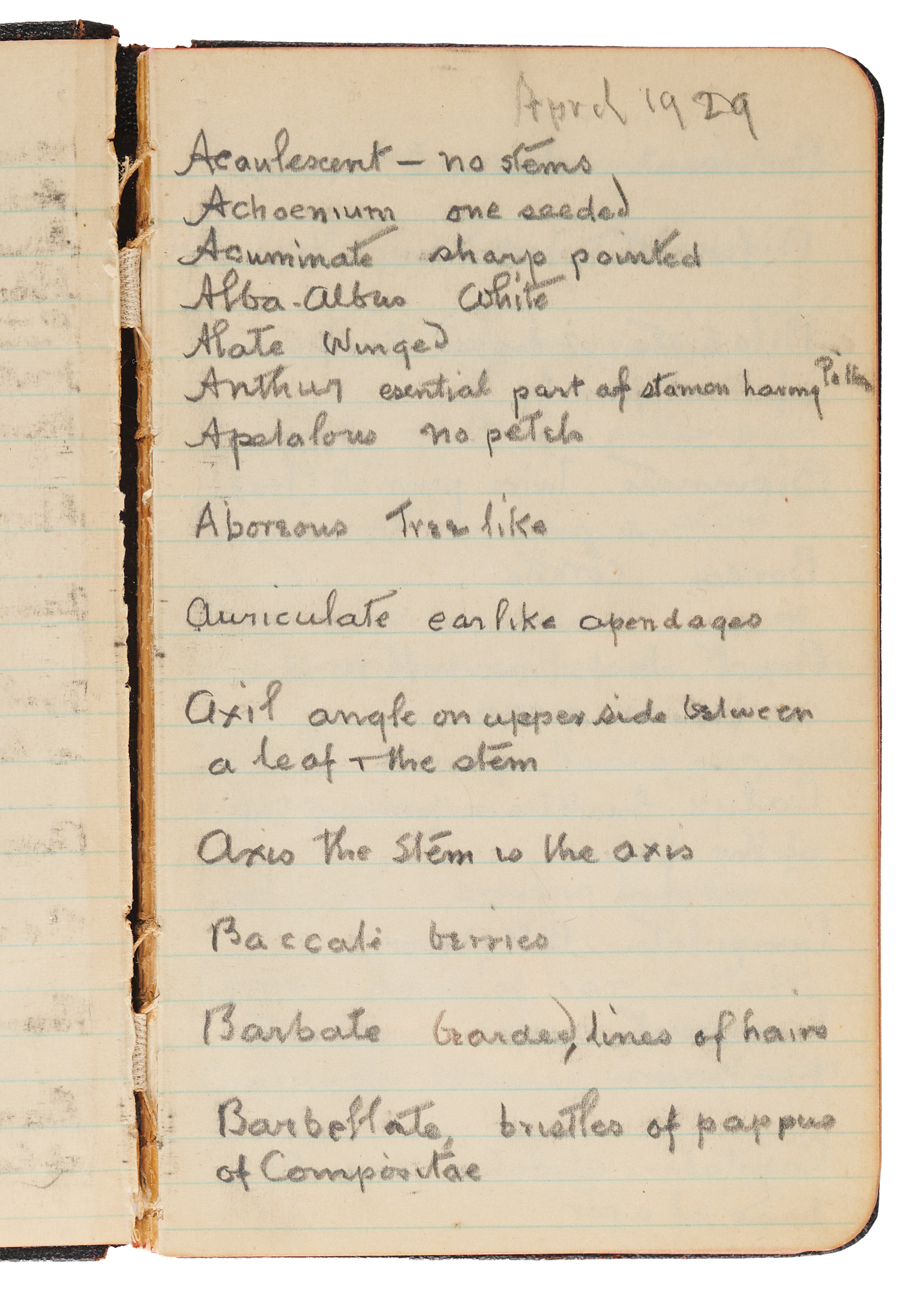
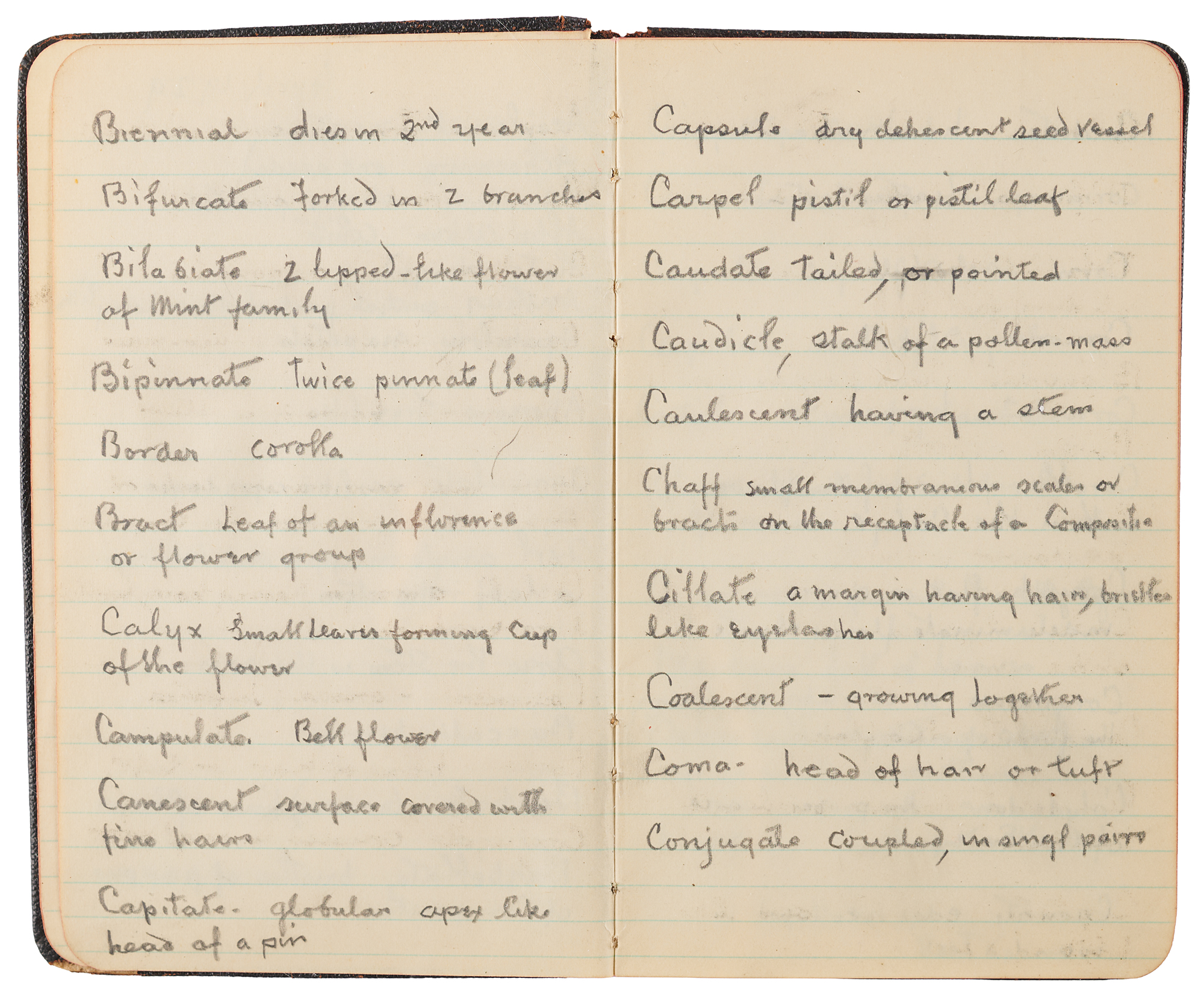
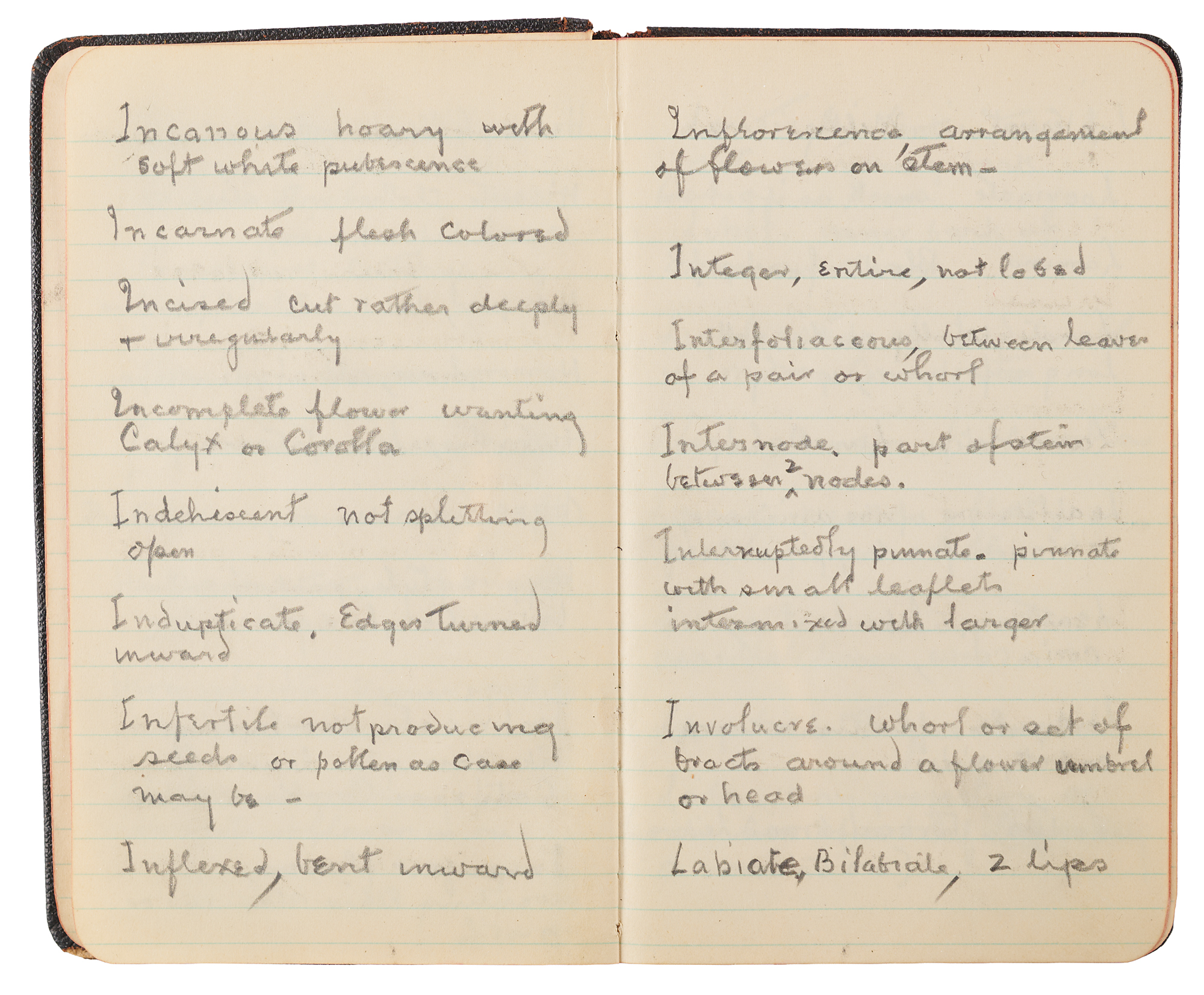
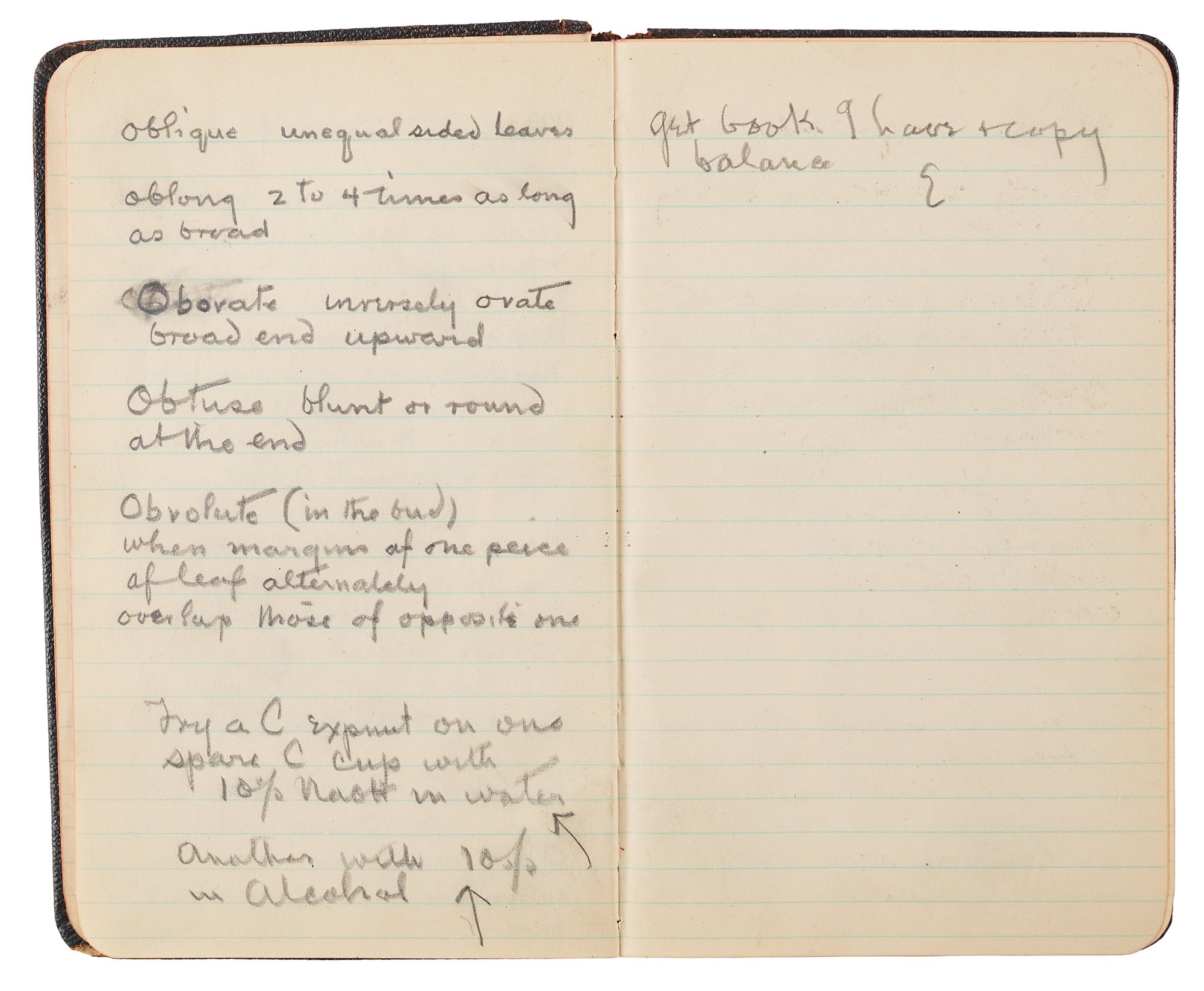
The notebook opens with nineteen pages of fairly comprehensive botanical dictionary definitions, such as "Acaulescent—no stems," "Achoenium—one seeded," "Axil—angle on upper side between a leaf & the stem," "Bifurcate—forked in 2 branches," and "Calyx—small leaves forming cup of the flower," continuing alphabetically through "Obvolute," before ending abruptly with an initialed note: "Get book I have & copy. E."
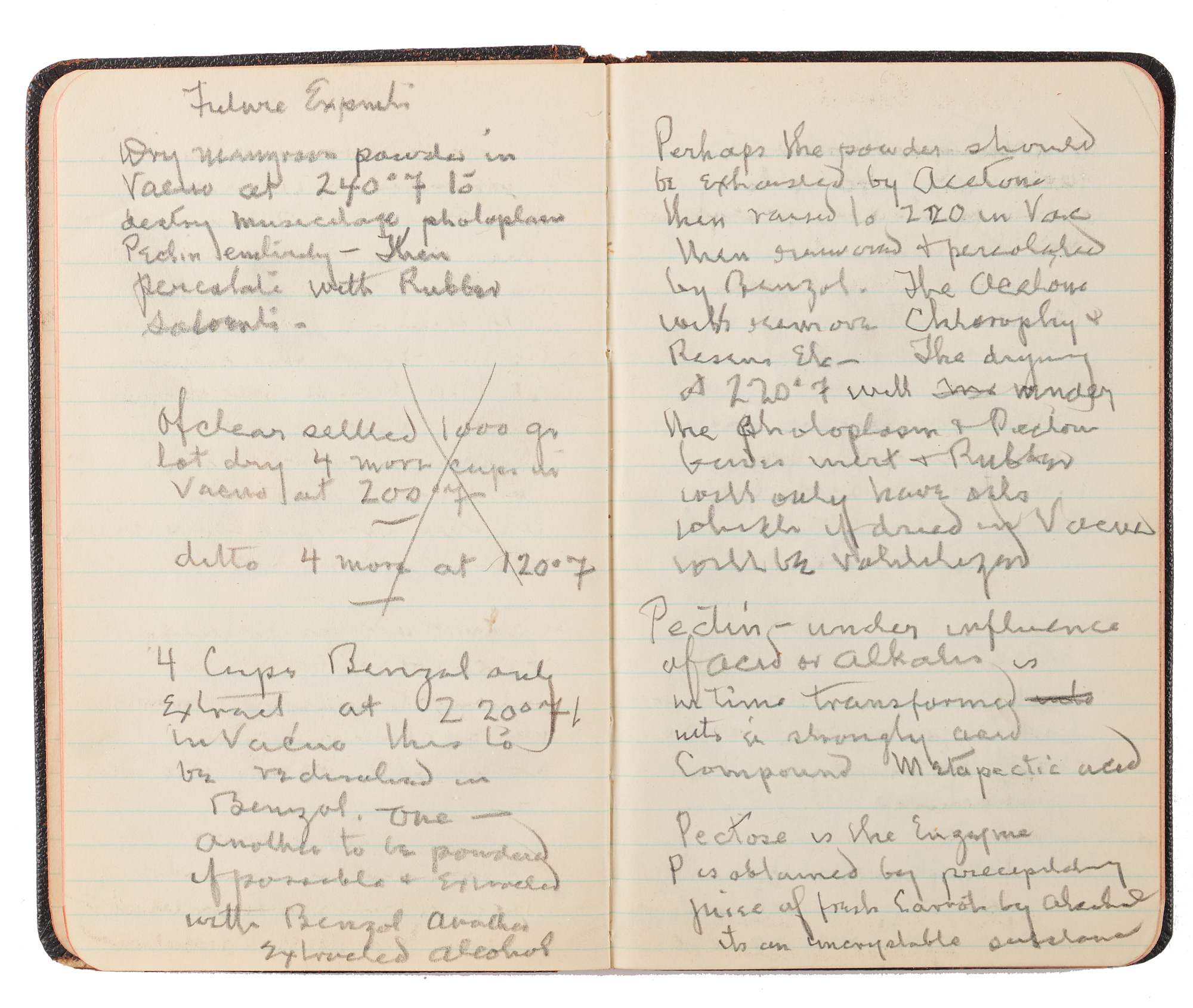
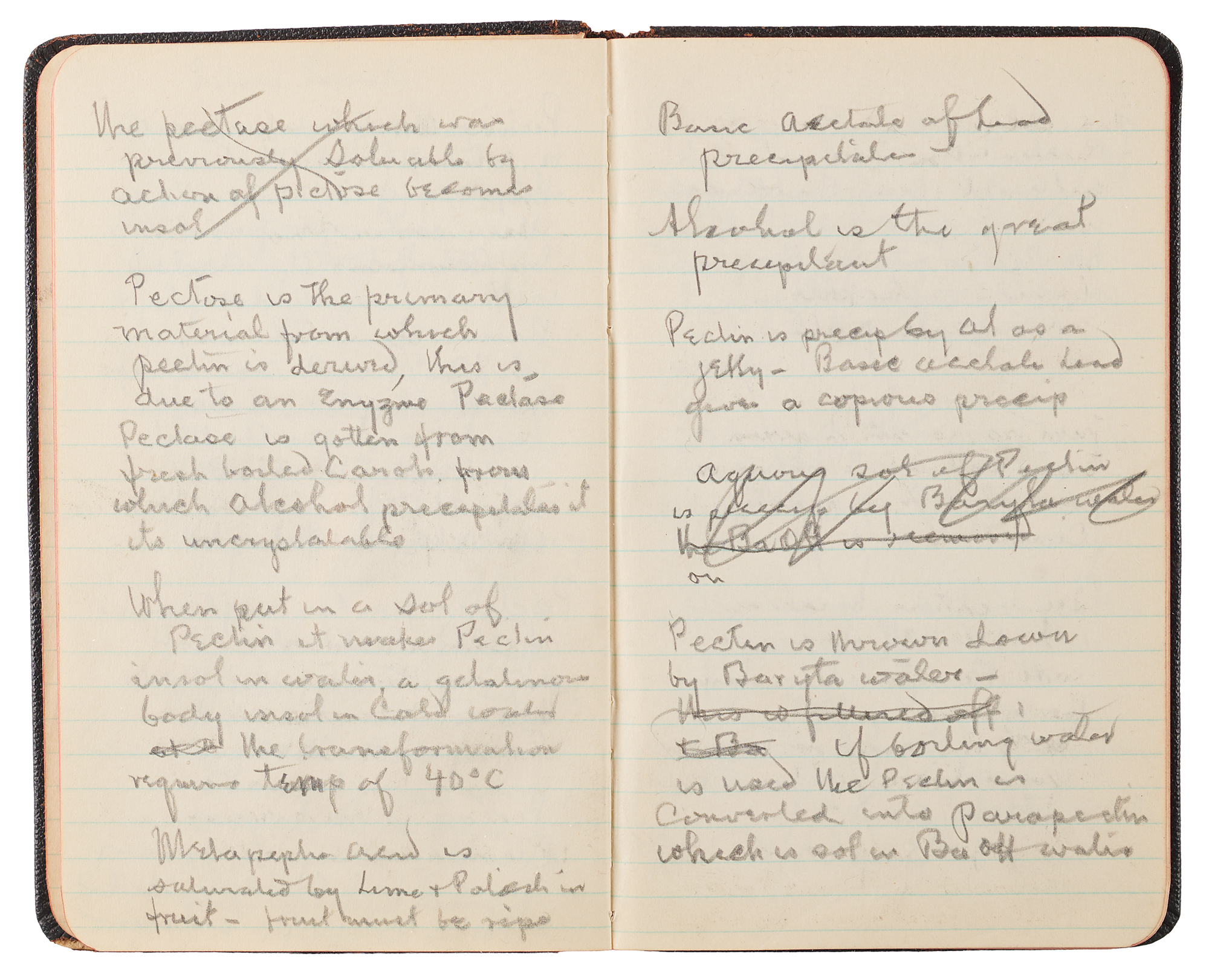
Following several blank pages, Edison continues with over a hundred pages of notes and memos about specific experiments, proposed ideas, inspirations, and scientific recipes—an amalgam documenting Edison's arduous engineering process. One of these notes, in part: "Pectose is the primary material from which pectin is derived, this is due to an enzyme Pectase. Pectase is gotten from fresh Carob."
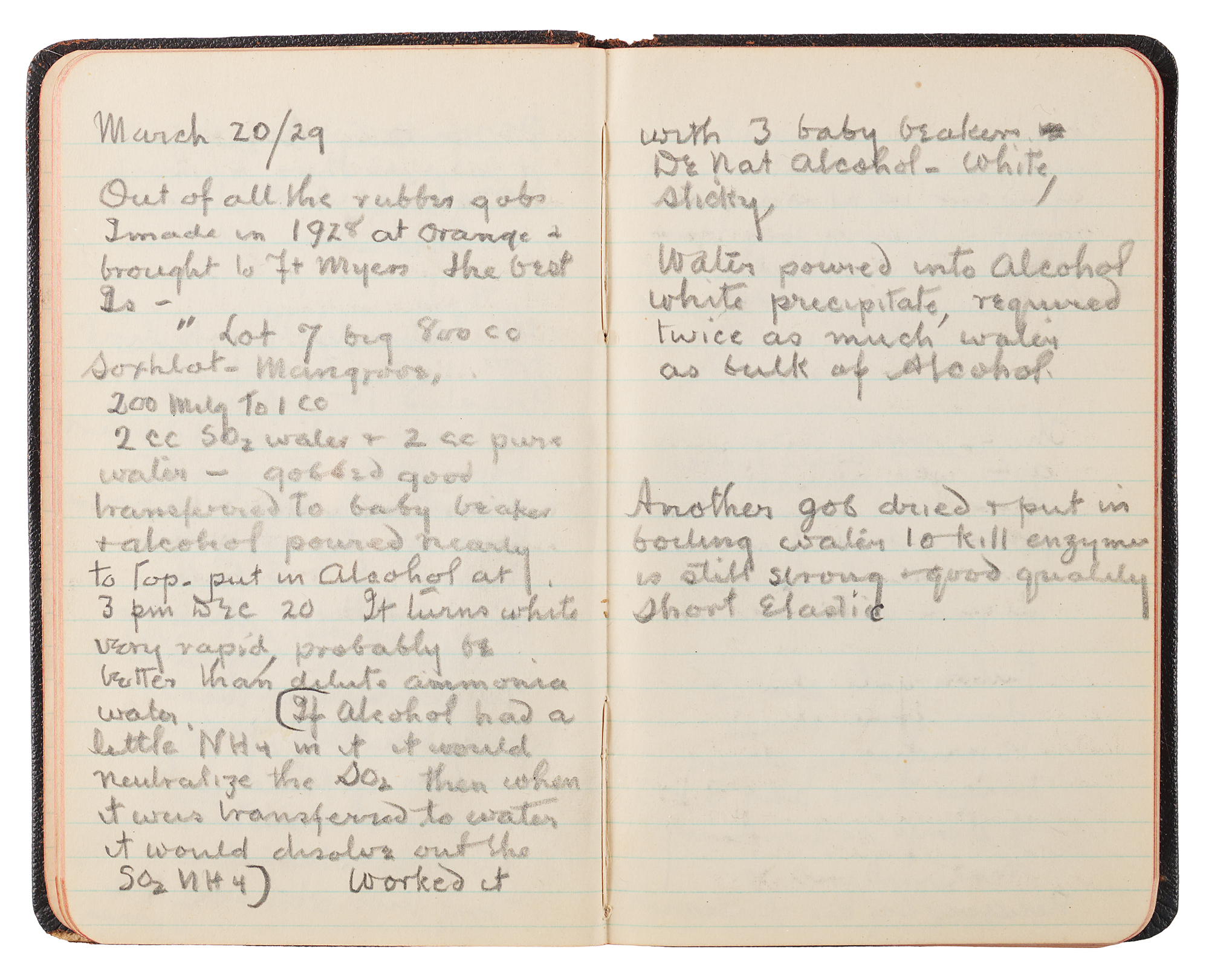
Edison discusses various experiments and extraction processes at length, mentioning benzol, mangrove powder, petroleum, alcohol, ammonia, acetone, sulphate, aldehyde, formaldehyde, chloroform, "gum arabic (arabic acid) prepared from Beets," and other chemicals and materials used in his experiments, while observing some of the properties of the resulting "rubber gobs." Edison notes: "The darkening of Rubber while being dried is due to slow oxidation which continues until dry." On another page, he writes: "In washing rubber in running water, if not running water in tank gets foul. Micro organisms which cause decomposition of the serum products flourish only in the presence of air. The optimal temp seems to be 100.7 in a moist atmosphere."
He also sketches some experimental apparatus, and records an index of values associated with various plants in the Solidago (goldenrod), Aster, Rubiaceae, Asclepiceae families, among others. At the end of the journal, he notes: "The plant which I thought was a Golden rod with bulb of leaves at apex is…not a Solidago but Euthamia graminifolia." In fine condition, with minor damage to the bottom the spine. Housed in a large full morocco clamshell case.
Edison's efforts were not futile: after testing some 17,000 plant samples, he eventually found an adequate source for rubber in the Solidago (Goldenrod) plant. Near the end of 1929, Edison announced that Solidago leavenworthii, also known as Leavenworth's Goldenrod, could be crossbred to give a 12% latex yield; the new variety was named in his honor, Solidago edisoniana.

