Sold For $6,523
*Includes Buyers Premium
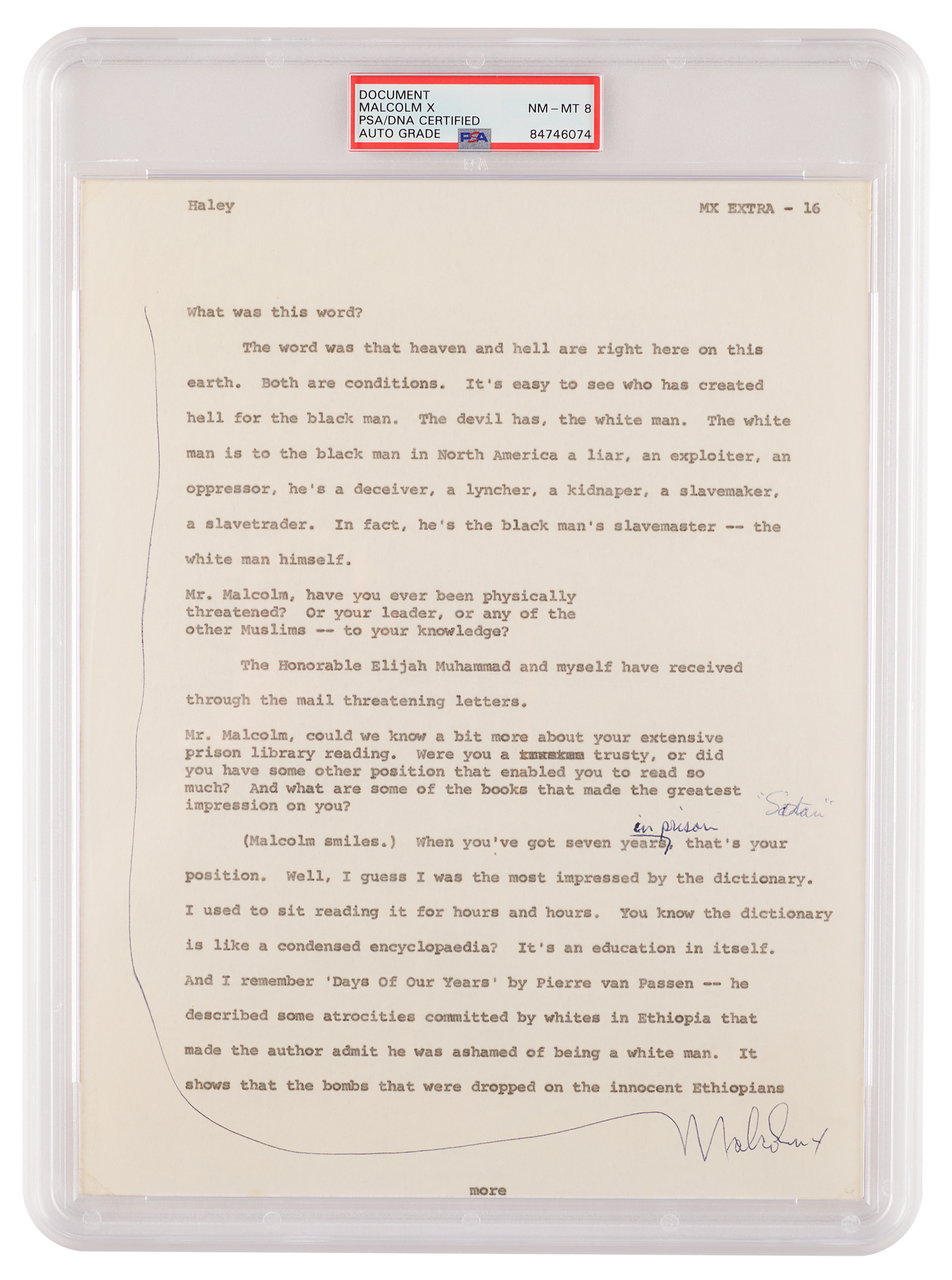
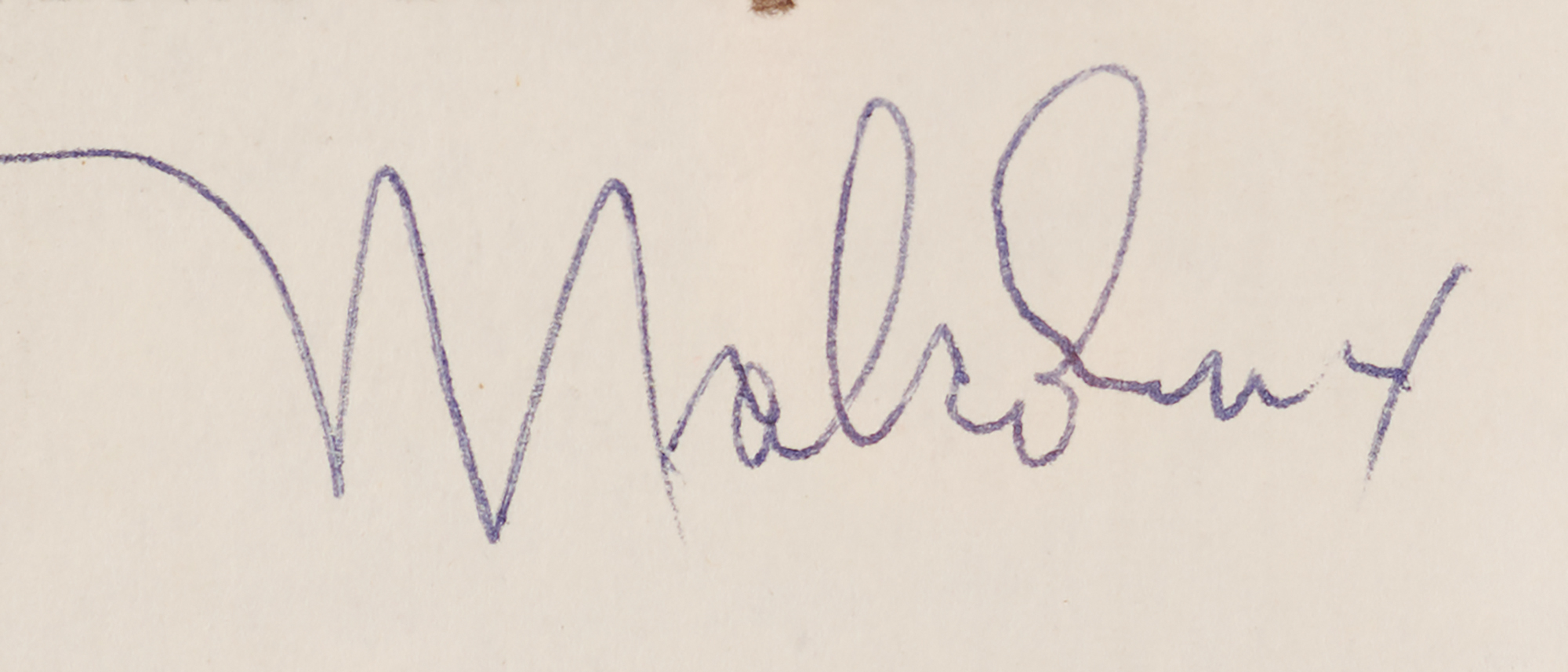
Page ‘MX Extra –16’ from the original typescript of Alex Haley’s 1963 interview of Malcolm X for Playboy magazine, one page, 8.5 x 11, signed "Malcolm X" in the bottom margin (with a marginal line indicating his approval of the contents). In full: [Malcolm X] “What was this word? The word was that heaven and hell are right here on this earth. Both are conditions. It's easy to see who has created hell for the black man. The devil has, the white man. The white man is to the black man in North America a liar, an exploiter, an oppressor, he's a deceiver, a lyncher, a kidnaper, a slavemaker, a slavetrader. In fact, he's the black man's slavemaster — the white man himself.
[Haley] Mr. Malcolm, have you ever been physically threatened? Or your leader, or any of the other Muslims to your knowledge?
[Malcolm X] The Honorable Elijah Muhammad and myself have received through the mail threatening letters.
[Haley] Mr. Malcolm, could we know a bit more about your extensive prison library reading. Were you a trusty, or did you have some other position that enabled you to read so much? And what are some of the books that made the greatest impression on you?
[Malcolm X] (Malcolm smiles.) When you've got seven years in prison, that's your position. Well, I guess I was the most impressed by the dictionary. I used to sit reading it for hours and hours. You know the dictionary is like a condensed encyclopaedia? It's an education in itself. And I remember 'Days Of Our Years' by Pierre van Passen — he described some atrocities committed by whites in Ethiopia that made the author admit he was ashamed of being a white man. It shows that the bombs that were dropped on the innocent Ethiopians.” Malcolm X has written “Satan” in the right margin and added “in prison” to the first line of the last paragraph. In very fine condition. Encapsulated and graded by PSA/DNA as “NM-MT 8.”
Playboy's May 1963 interview with Malcolm X was one of the most famous of Haley’s career and gave most readers their first in-depth look at Malcolm X’s teachings and personality. Supporters and critics viewed the Muslim minister in very different terms. Admirers saw him as a courageous advocate for the rights of African-Americans and condemned crimes against black Americans; detractors accused him of preaching racism, black supremacy, and violence. Nevertheless, he has been described as one of the greatest and most influential African-American leaders in history. Within a year of granting this interview, with America still gripped by ever-growing racial tension, the once-combative black nationalist Malcolm X had repudiated almost every stance in the interview. He had broken with the Nation of Islam movement, fallen out with its leader, Elijah Muhammad, renounced black supremacy, and embraced racial equality and human rights. He was assassinated in Harlem in 1965.
The Marc and Mary Perkins Collection.

