Sold For $5,760
*Includes Buyers Premium
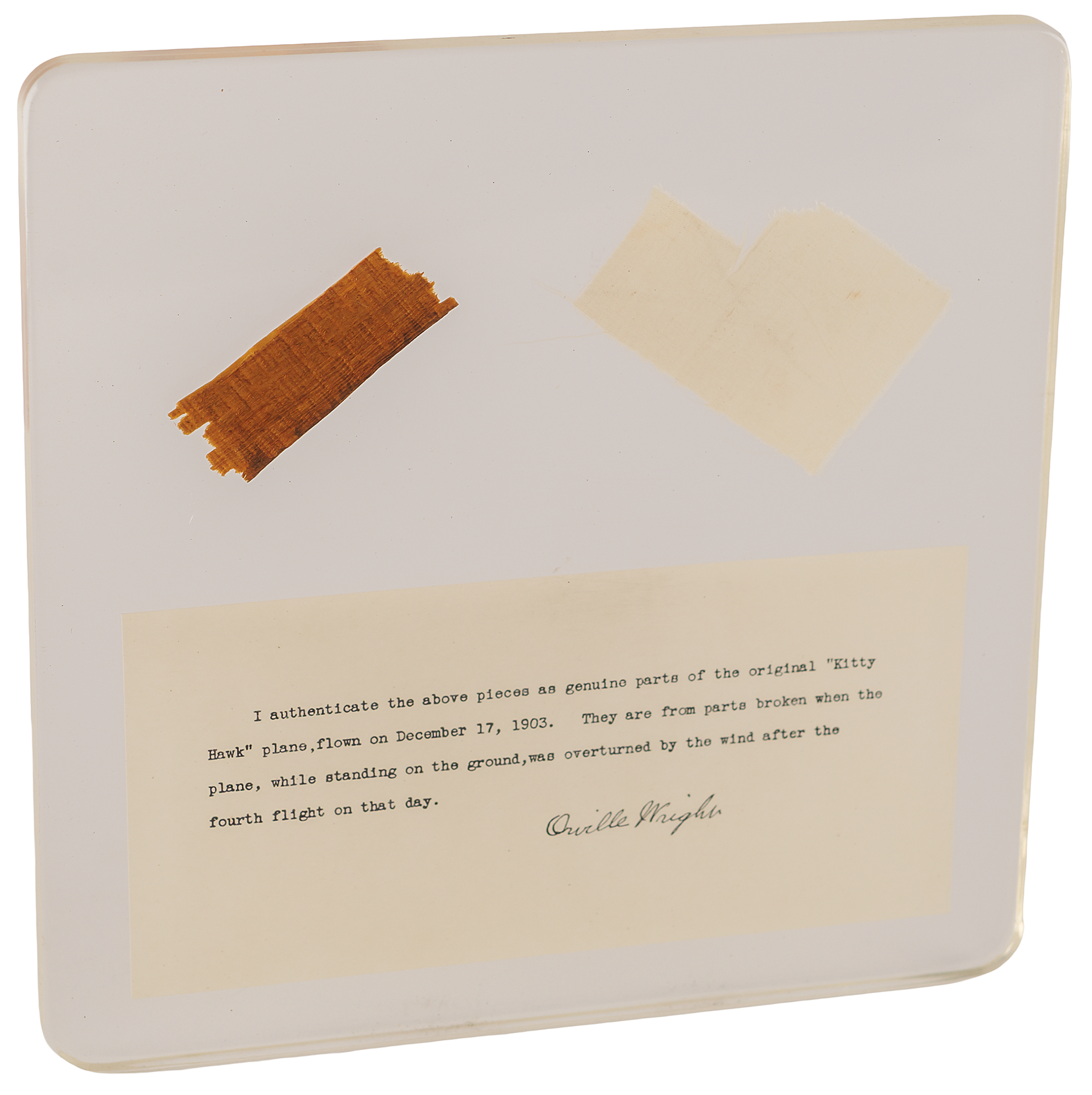
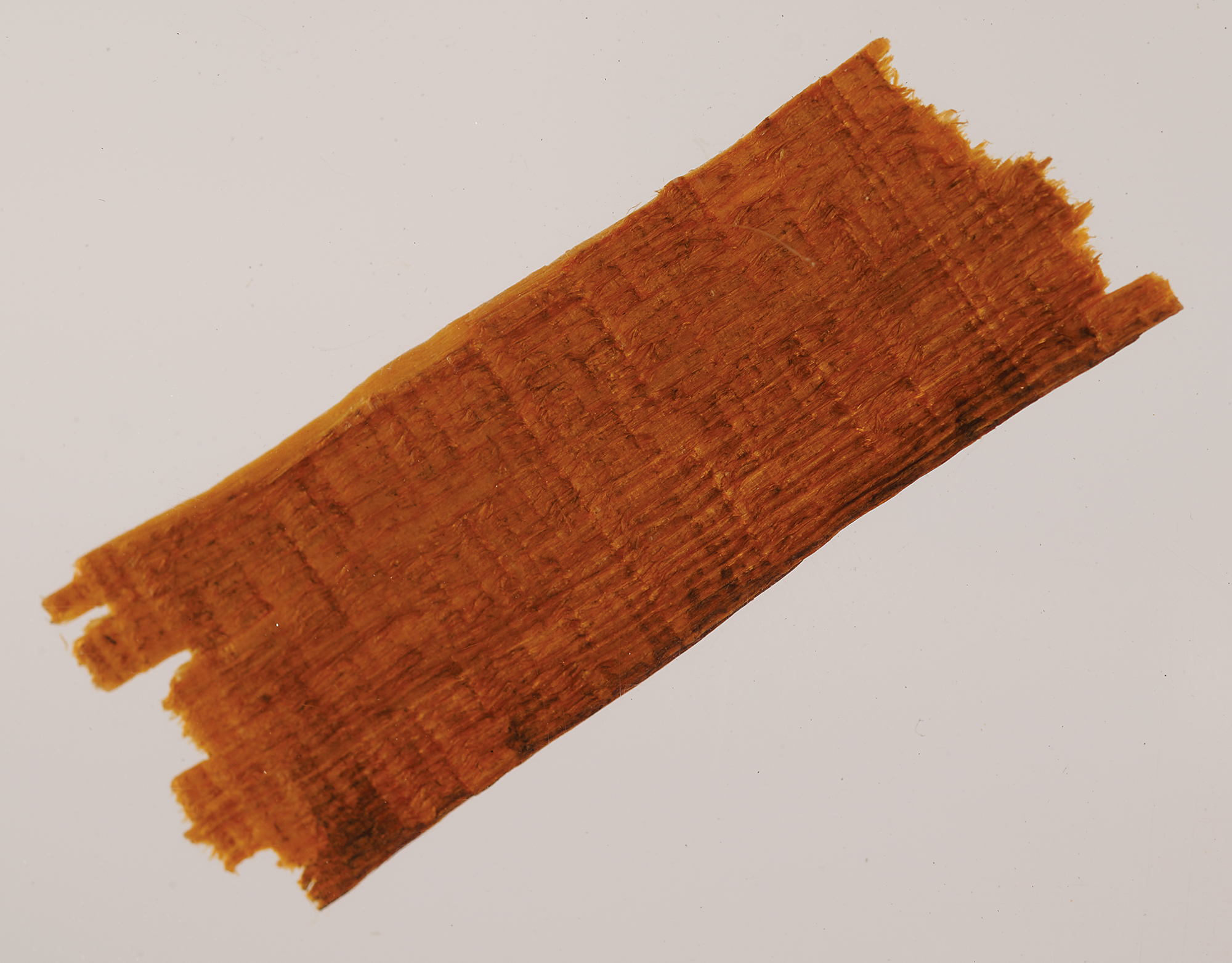
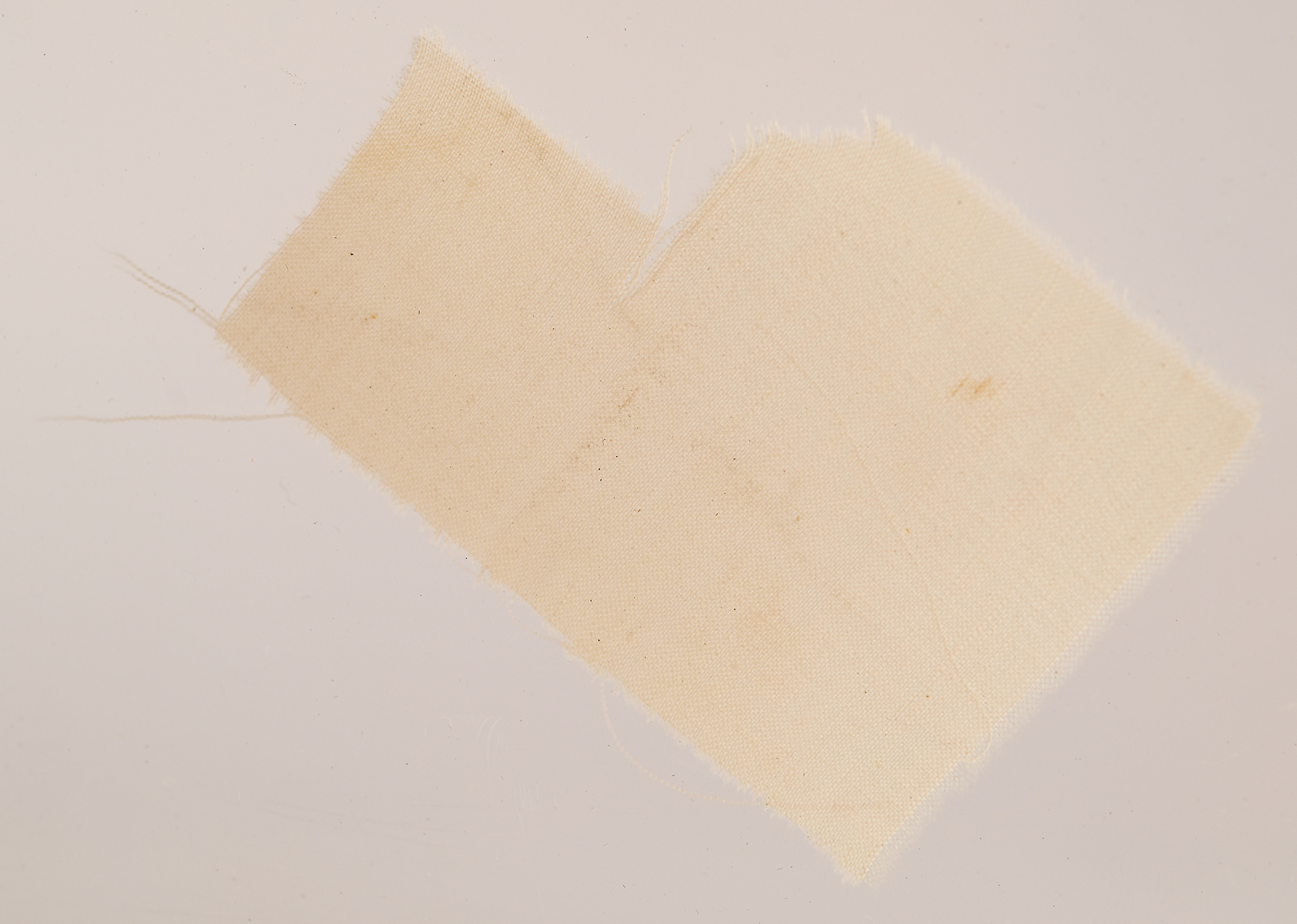
Historic pairing of original artifacts from the Wright Brothers’ 1903 Wright Flyer single-place biplane, which made the world’s first heavier-than-air flight from Kitty Hawk, North Carolina, on December 17, 1903. The lot includes an off-white 2.5˝ x 1.75˝ swatch of wing fabric and a brown 2˝ x .75˝ wooden fragment, both of which are encased in a Lucite plaque, 8˝ x 8˝ x .25˝, which includes a statement of authenticity from Orville Wright, whose preprinted signature is present below. The statement reads: “I authenticate the above pieces as genuine parts of the original ‘Kitty Hawk’ plane, flown on December 17, 1903. They are from parts broken when the plane, while standing on the ground, was overturned by the wind after the fourth flight on that day.”
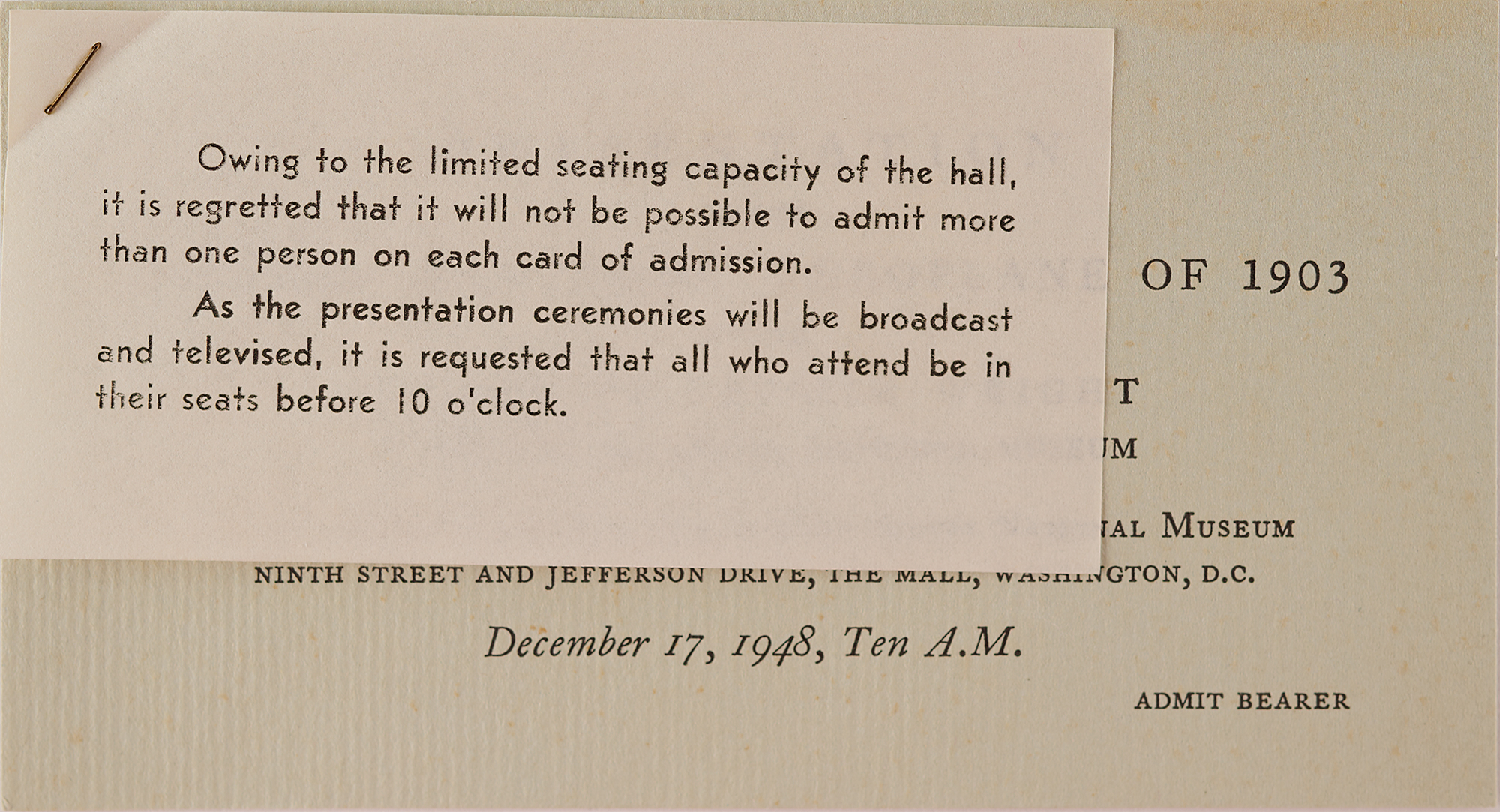
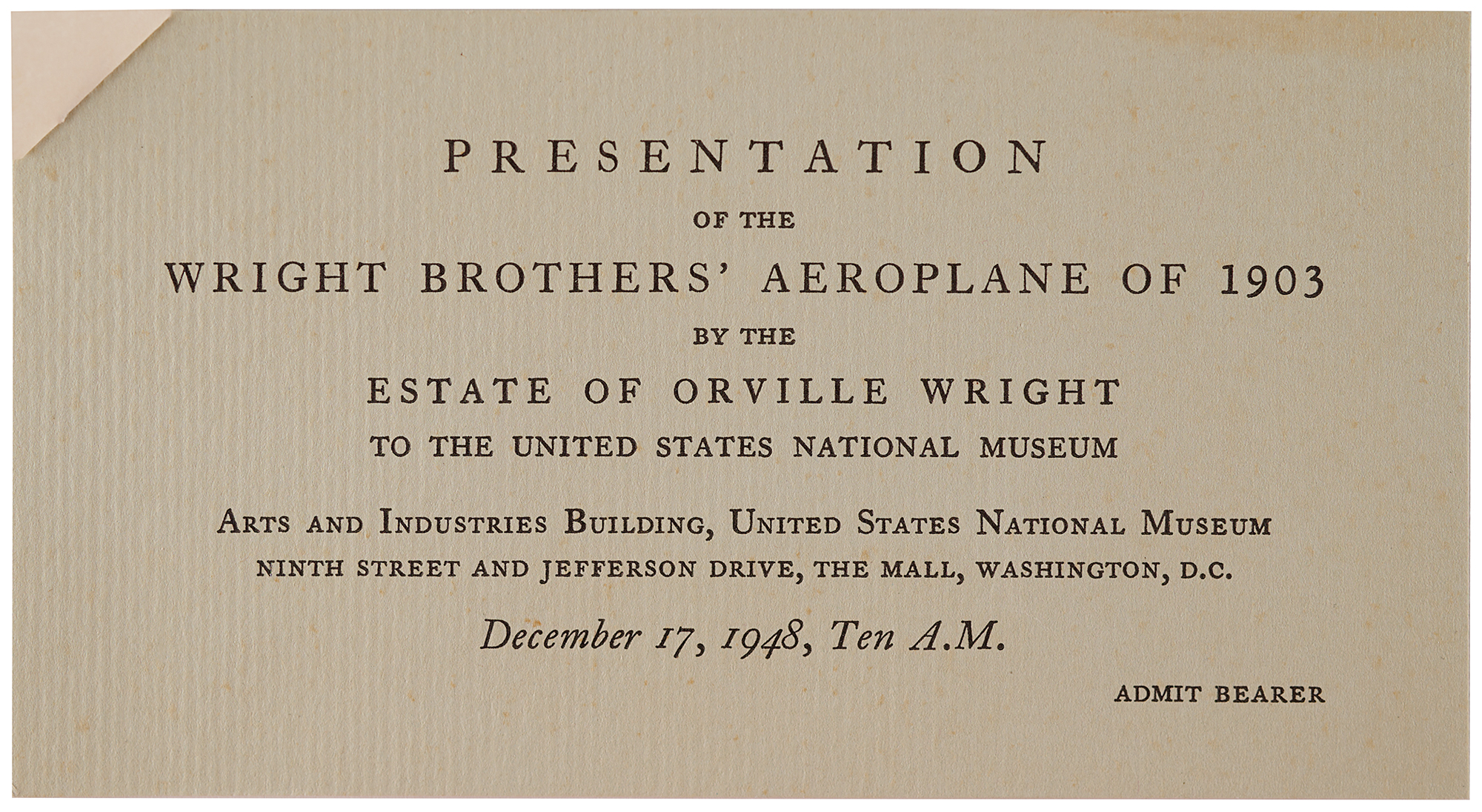
Included is a rare original 5.5˝ x 3˝ admission ticket to the presentation of the Wright Flyer’s long-awaited installation into the Smithsonian Institution on December 17, 1948, which reads: “Presentation of the Wright Brothers’ Aeroplane of 1903, By the Estate of Orville Wright to the United States National Museum.” Stapled to the upper left is a restriction caption indicating that the ticket will not “admit more than one person.” The ticket’s original mailing envelope is included, which is postmarked December 6, 1948, and addressed to “Rodney M. Love, Probate Judge,” from whose collection these artifacts derive. In very fine condition.
Accompanied by a copy of a 1948 letter from Colonel Edward A. Deeds to Judge Love, forwarding the plaque containing “souvenir parts…with a photograph of the letter which Orville had composed and signed,” and four articles (photocopied and original) related to the complicated return of the Wright Flyer and the important role of Judge Rodney Love, who served as probate judge for the Wright estate following the death of Orville Wright. To honor the Wrights’ memory and wishes, Love ensured that every legal and procedural detail was completed before the Smithsonian could receive the Wright Flyer from England. He required the Smithsonian to formally acknowledge, in perpetuity, that the plane was the first in flight. Once that condition was satisfied, he authorized the transfer of the Wright Flyer from the estate to the Smithsonian for the symbolic price of one dollar.
The Smithsonian Institution, led by Secretary Charles Walcott, long refused to credit the Wright Brothers with the first powered, controlled flight, instead favoring former museum secretary Samuel Langley, whose 1903 Aerodrome tests had failed.
In 1925, Orville Wright warned he would send the Flyer to the Science Museum in London unless the Smithsonian recognized the brothers' achievement. When nothing changed, he shipped the aircraft to London in 1928, where it remained—aside from being moved for safety during World War II—until 1948. That year, after research by new Smithsonian secretary Charles Abbot and pressure from President Franklin D. Roosevelt, the Institution finally acknowledged the Wrights’ accomplishment.
A year after Orville’s death, the Flyer returned to Washington and went on display at the Smithsonian’s Arts and Industries Building on December 17, 1948, exactly 45 years after its first flight.

