Sold For $3,336
*Includes Buyers Premium
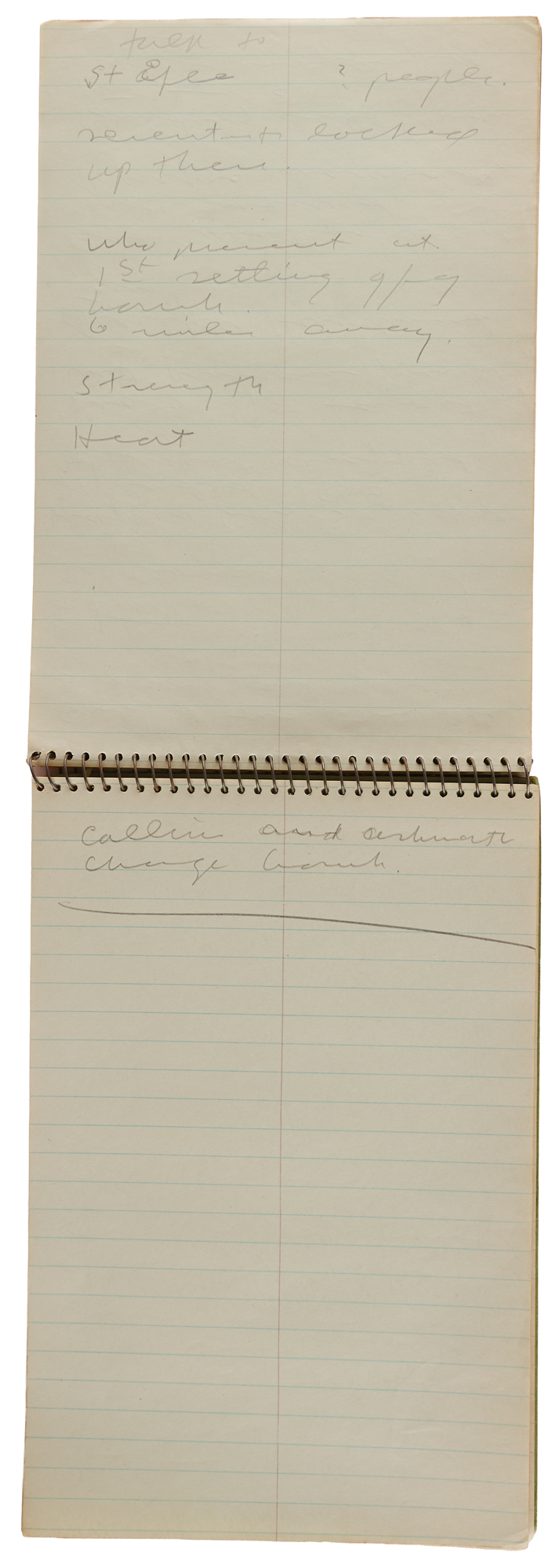
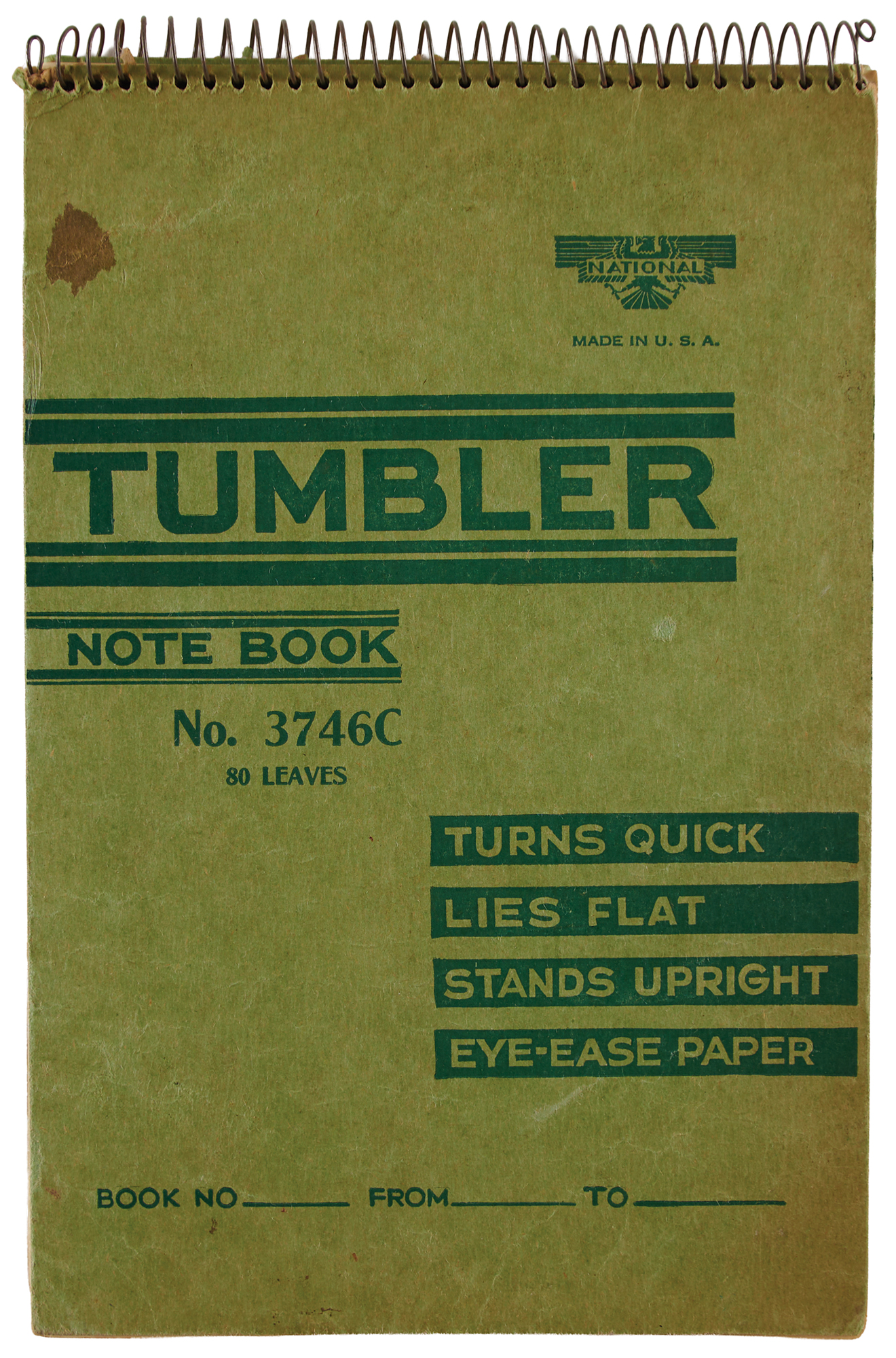
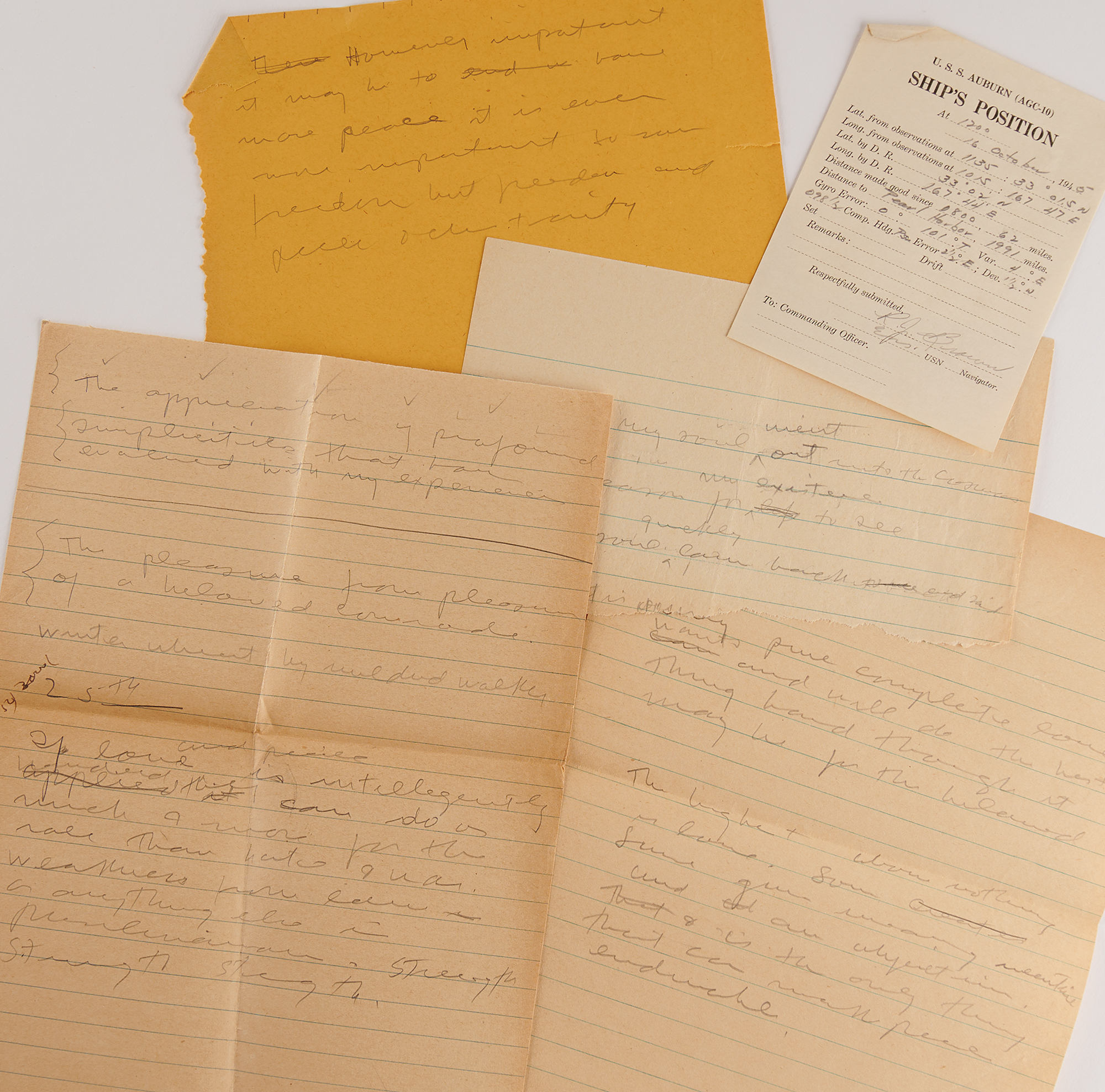
Explorer and pilot (1888–1957) who claimed to be the first to reach the North and South Poles by air. Explorer and naval officer Richard E. Byrd's handwritten notes on J. Robert Oppenheimer, the Manhattan Project, and the first atomic bombs dropped on Japan to end World War II, totaling four pages in the front of a 6 x 9 spiral-bound 'Tumbler' notebook; Byrd writes five more pages of notes in the rear, with four additional pages of notes—jottings on love, courage, peace and other subjects—loosely laid in. Also laid in is a "Ship's Position" slip from the USS Auburn (AGC-10), noting its position on October 16, 1945, locating it 1991 miles from Pearl Harbor during its postwar voyage home from Japanese waters.
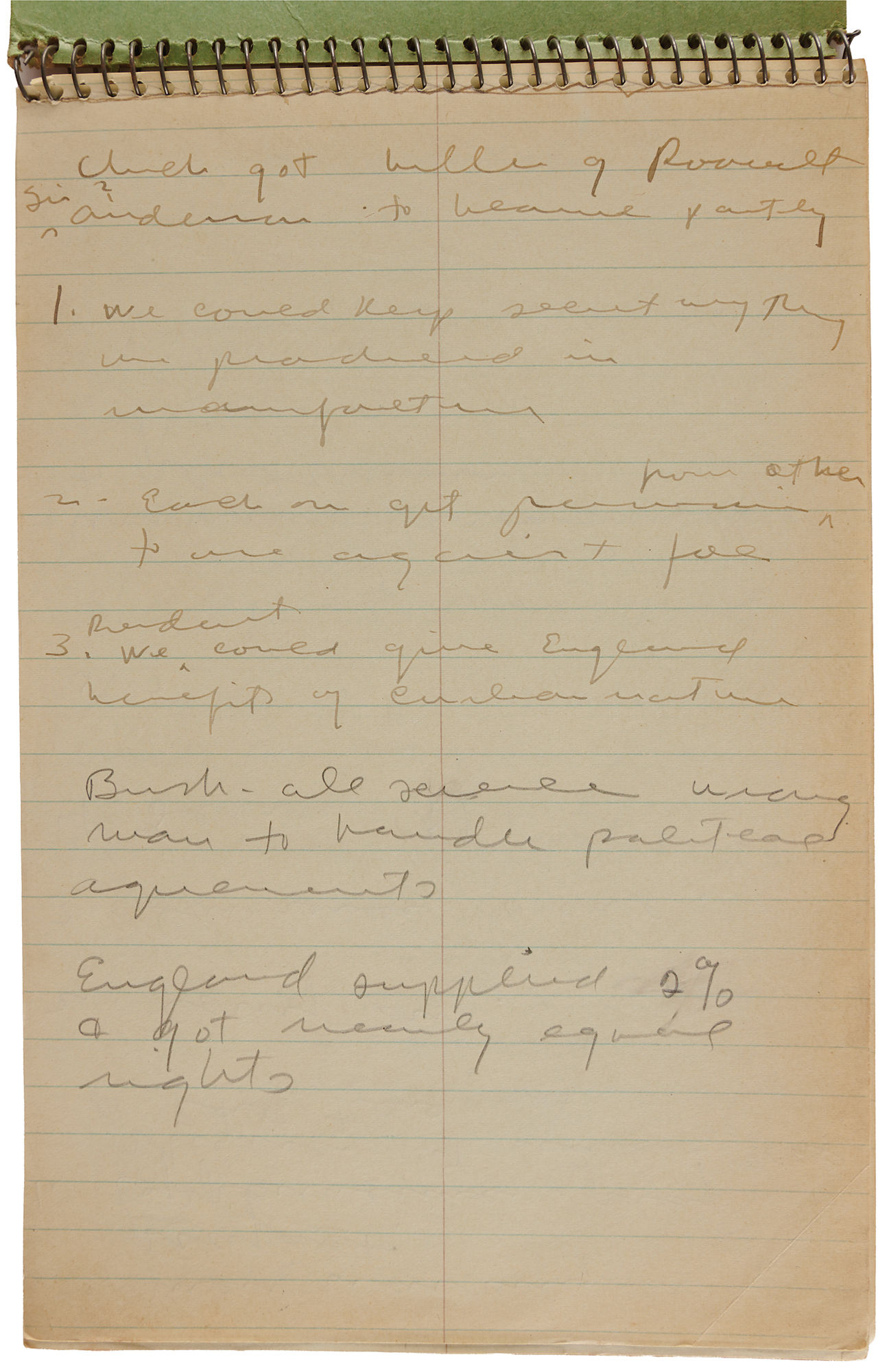
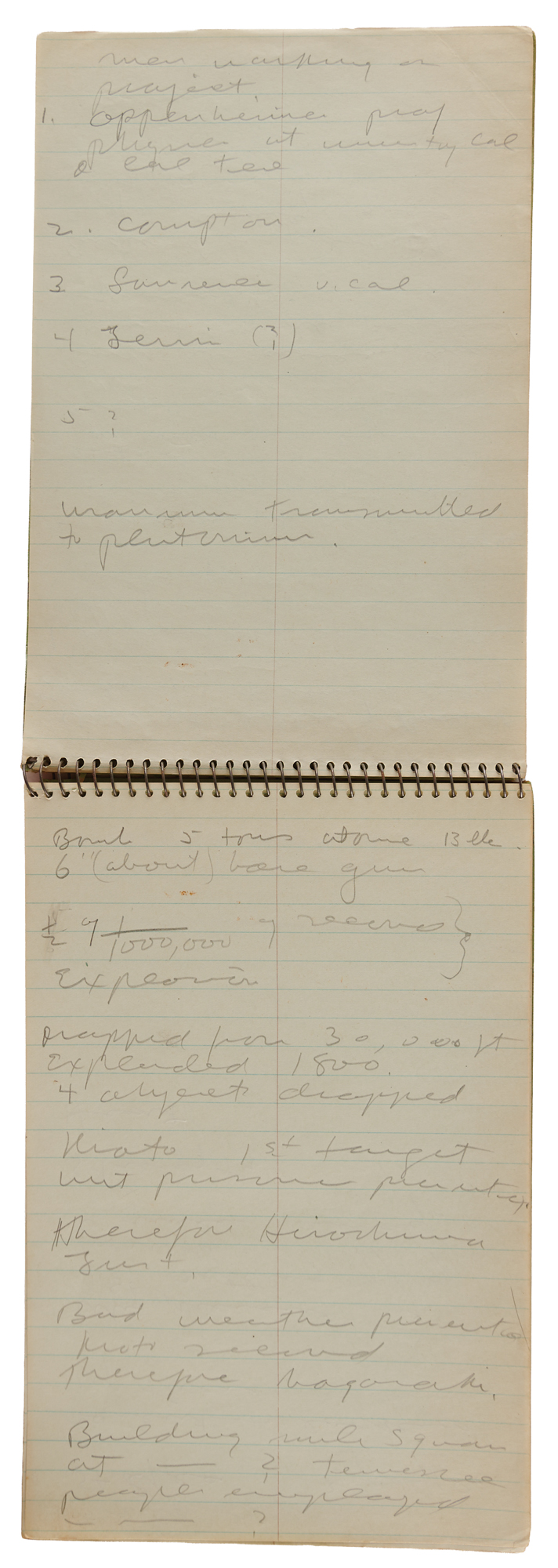
On the Manhattan Project, Byrd writes, in part: "Church[ill] got better of Roosevelt, Sir Anderson to blame partly…We could keep secret anything we produced in manufacturing…Bush—all science, wrong man to handle political agreements…England supplied 2% & got nearly equal rights…Men working on project: 1. Oppenheimer prof. physics at University Cal & Cal Tech, 2. Compton, 3. Lawrence u. cal, 4. Fermi (?) 5. ?, Uranium transmutted to plutonium. Bomb 5 tons…dropped from 30,000 ft, exploded 1800…Kioto 1st target but pressure prevented, therefore Hiroshima first. Bad weather prevented Kioto second therefore Nagasaki." In overall fine condition.
During World War II, Admiral Richard E. Byrd briefly set aside his career in polar exploration when he was recalled to active duty to act as a confidential advisor to Ernest J. King, the U.S. Navy’s Chief of Naval Operations. His expertise in navigation and large-scale operations made him a valuable senior officer, serving on the the South Pacific Island Base Inspection Board, directing a 'Special Navy Mission' to survey various islands in the East and South Pacific in connection with national defense, and participating in the United States Strategic Bombing Survey (USSBS) in 1944–1945. As the war drew to a close, Byrd was present aboard the USS Missouri on September 2, 1945, witnessing Japan’s formal surrender, a moment that symbolized the end of the global conflict and capped his wartime service.
Provenance: Lot 64, Bonhams, June 25, 2024.

