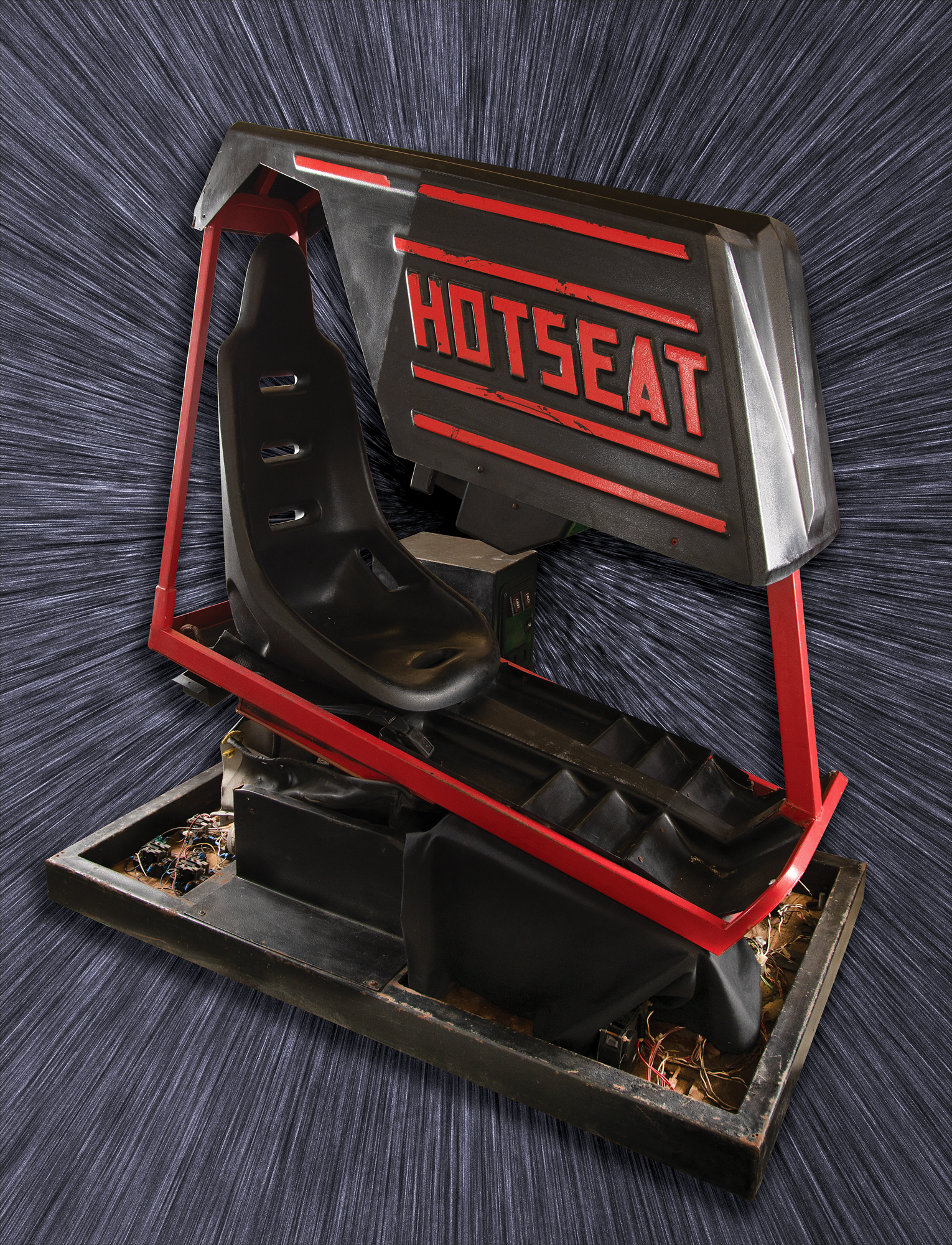
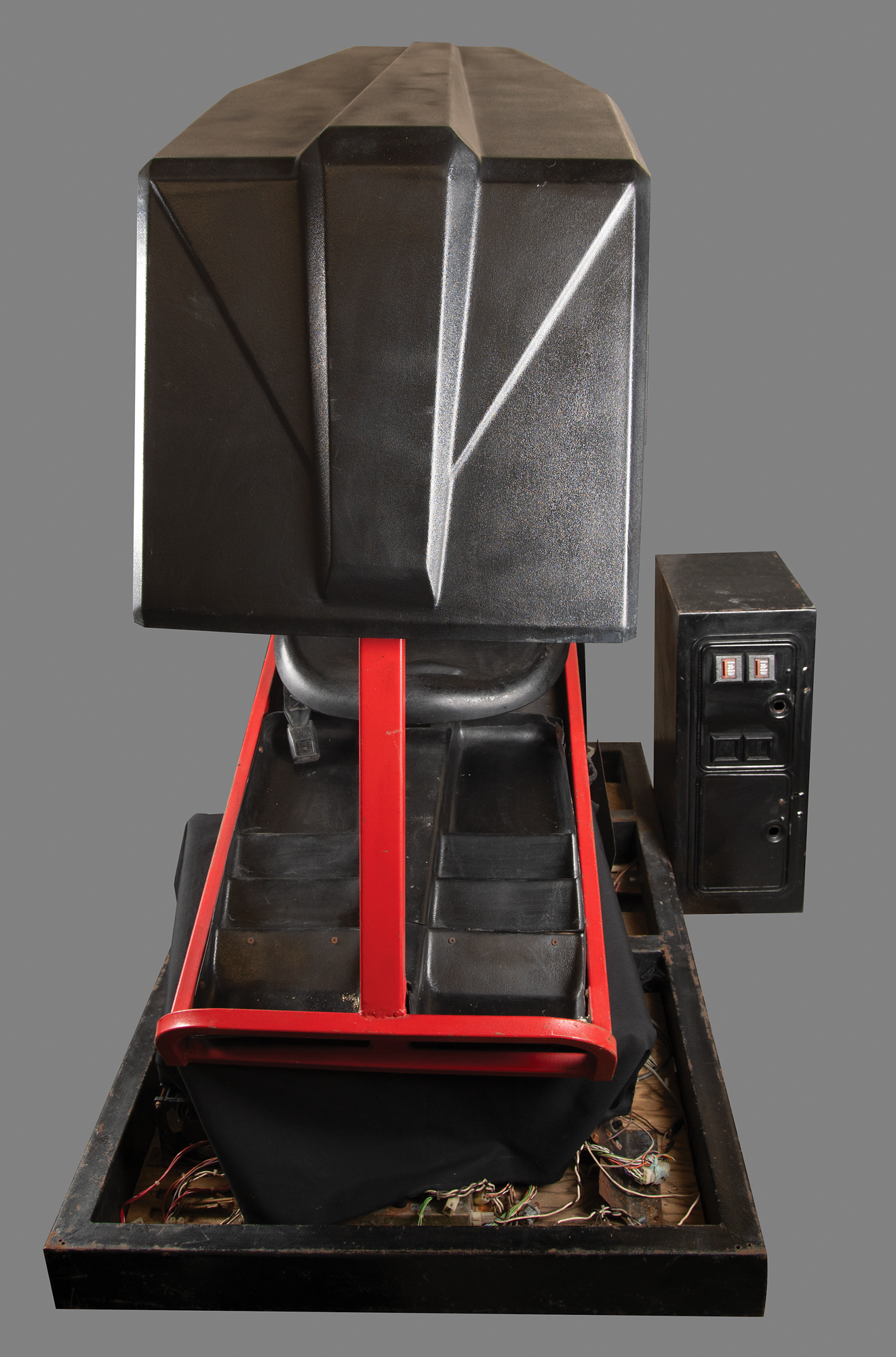
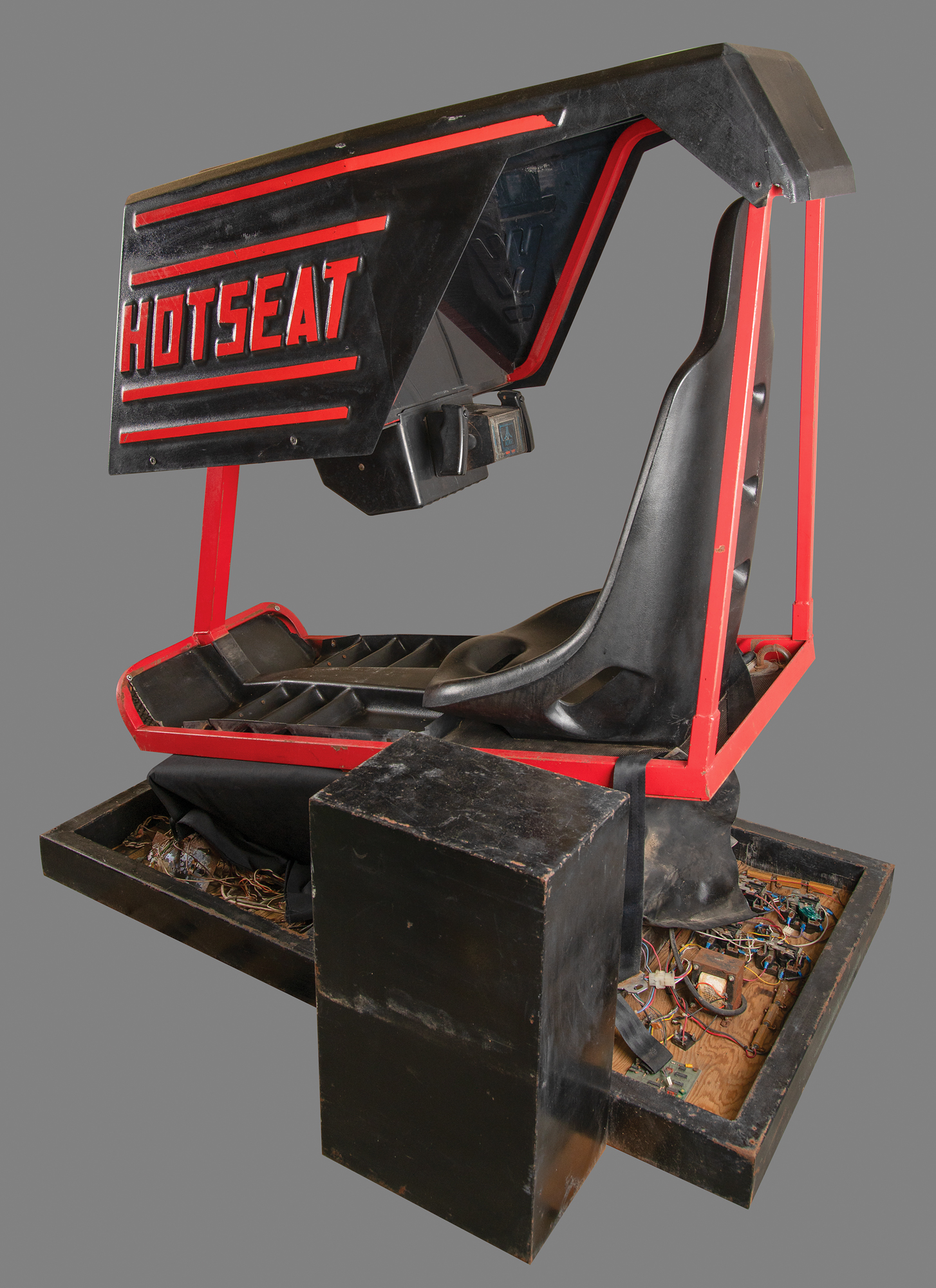
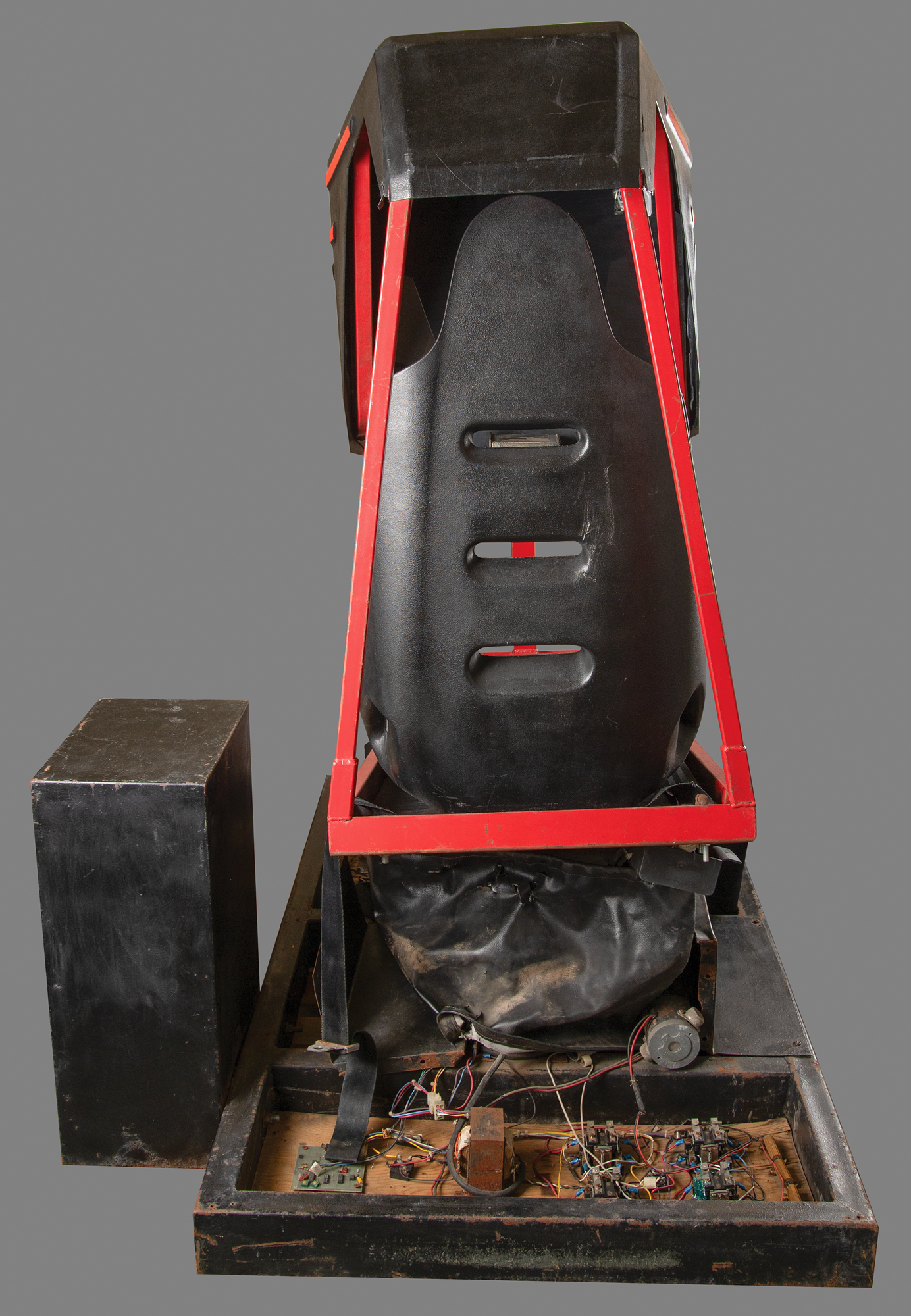
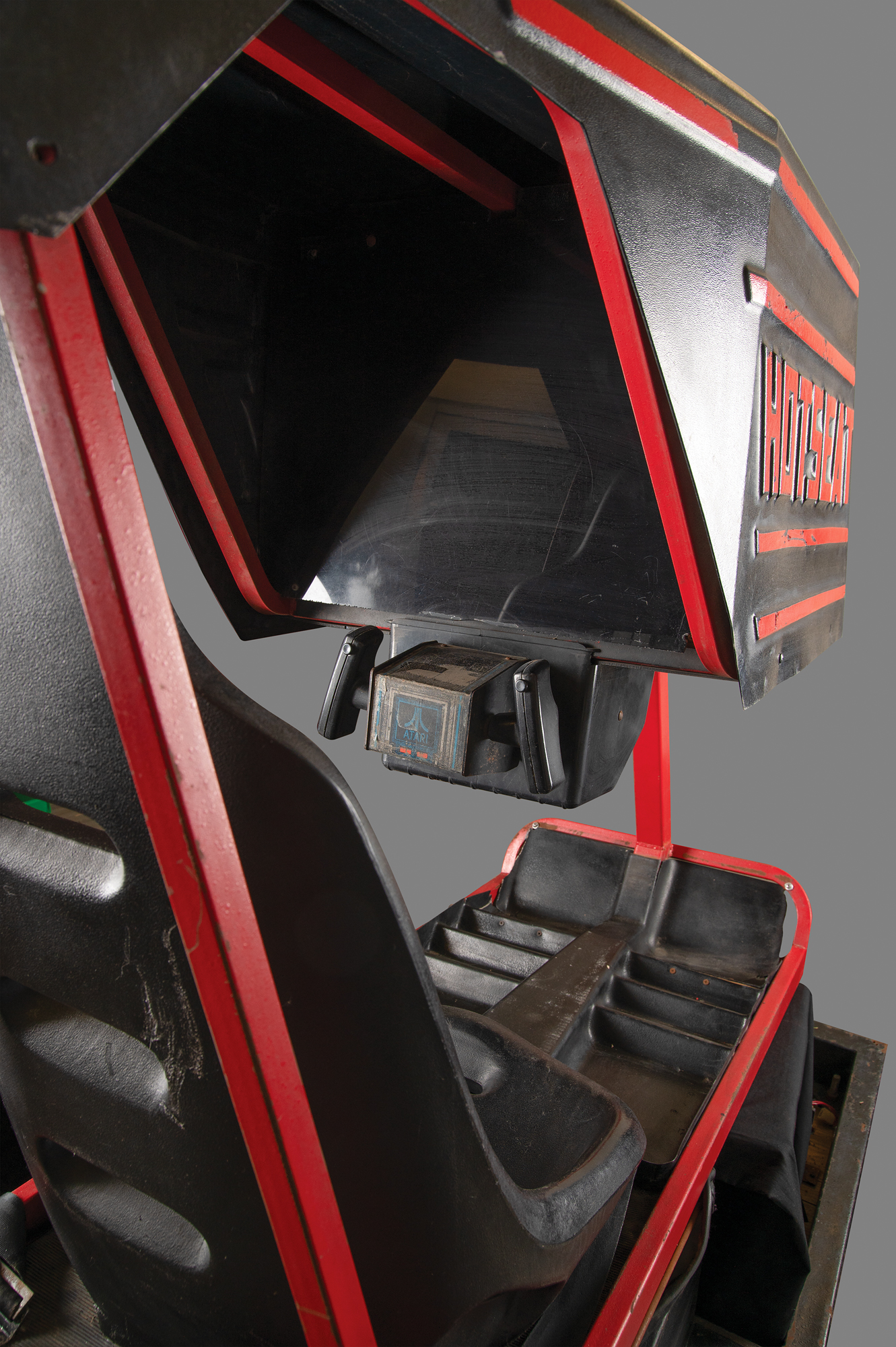
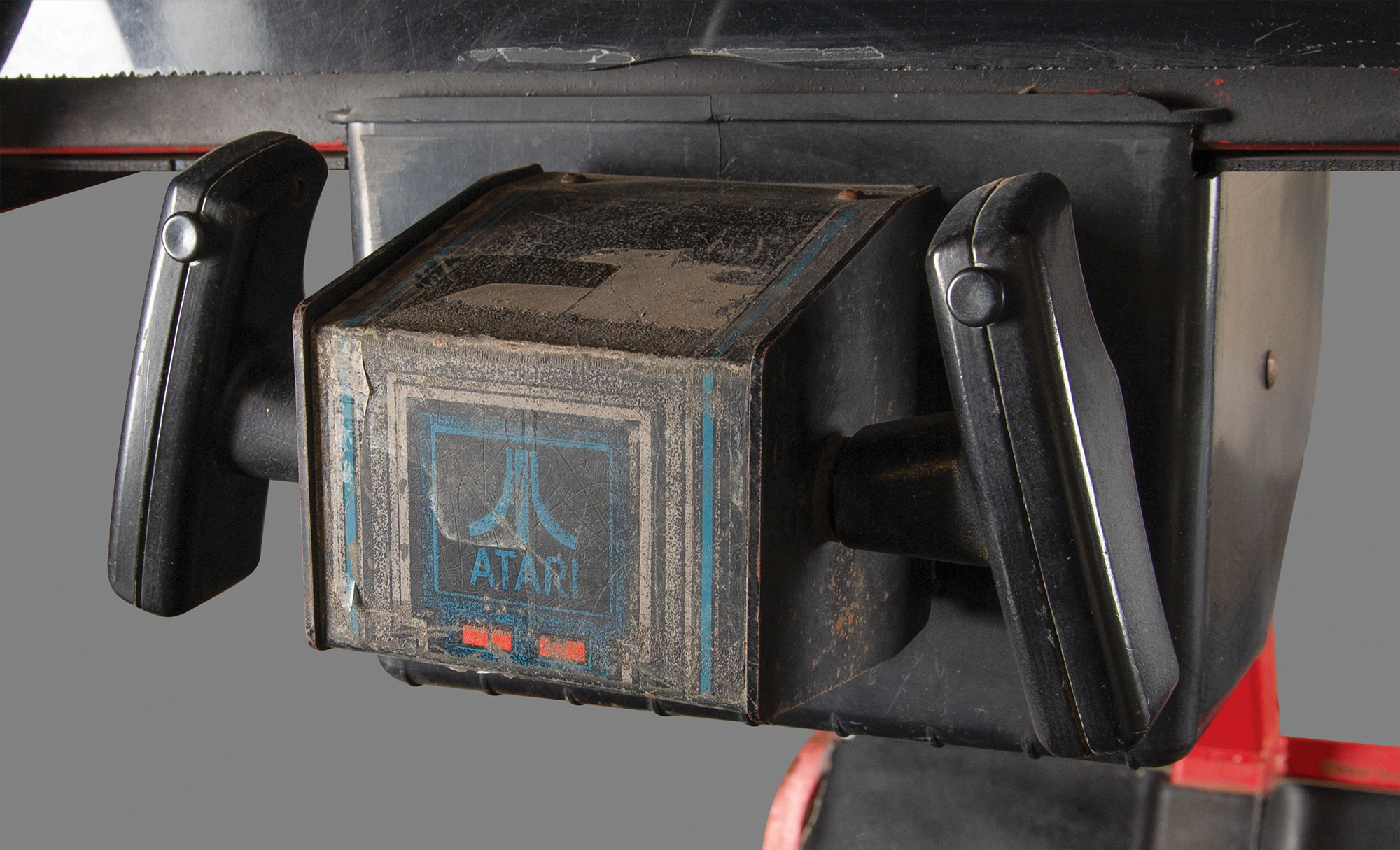
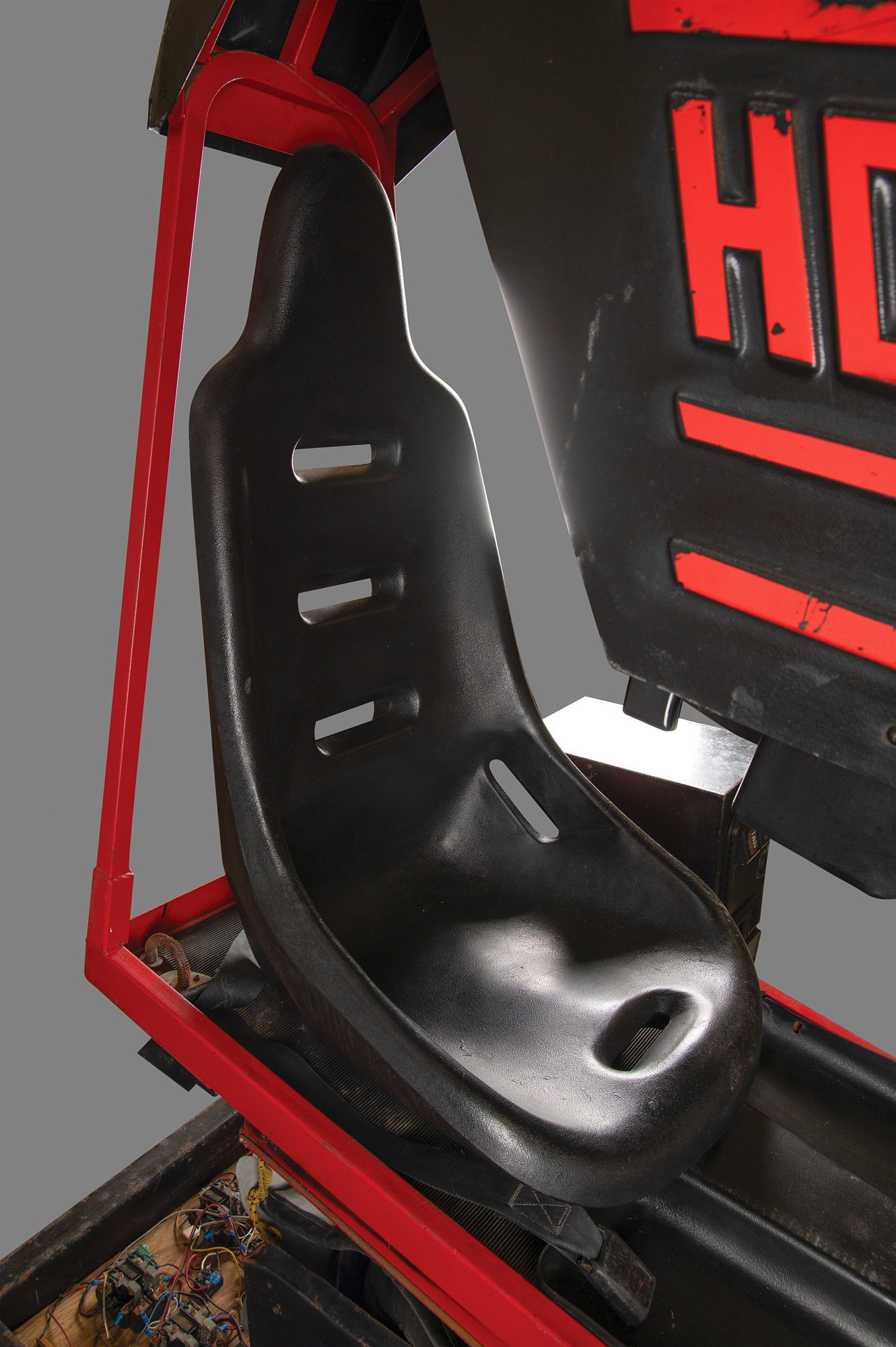
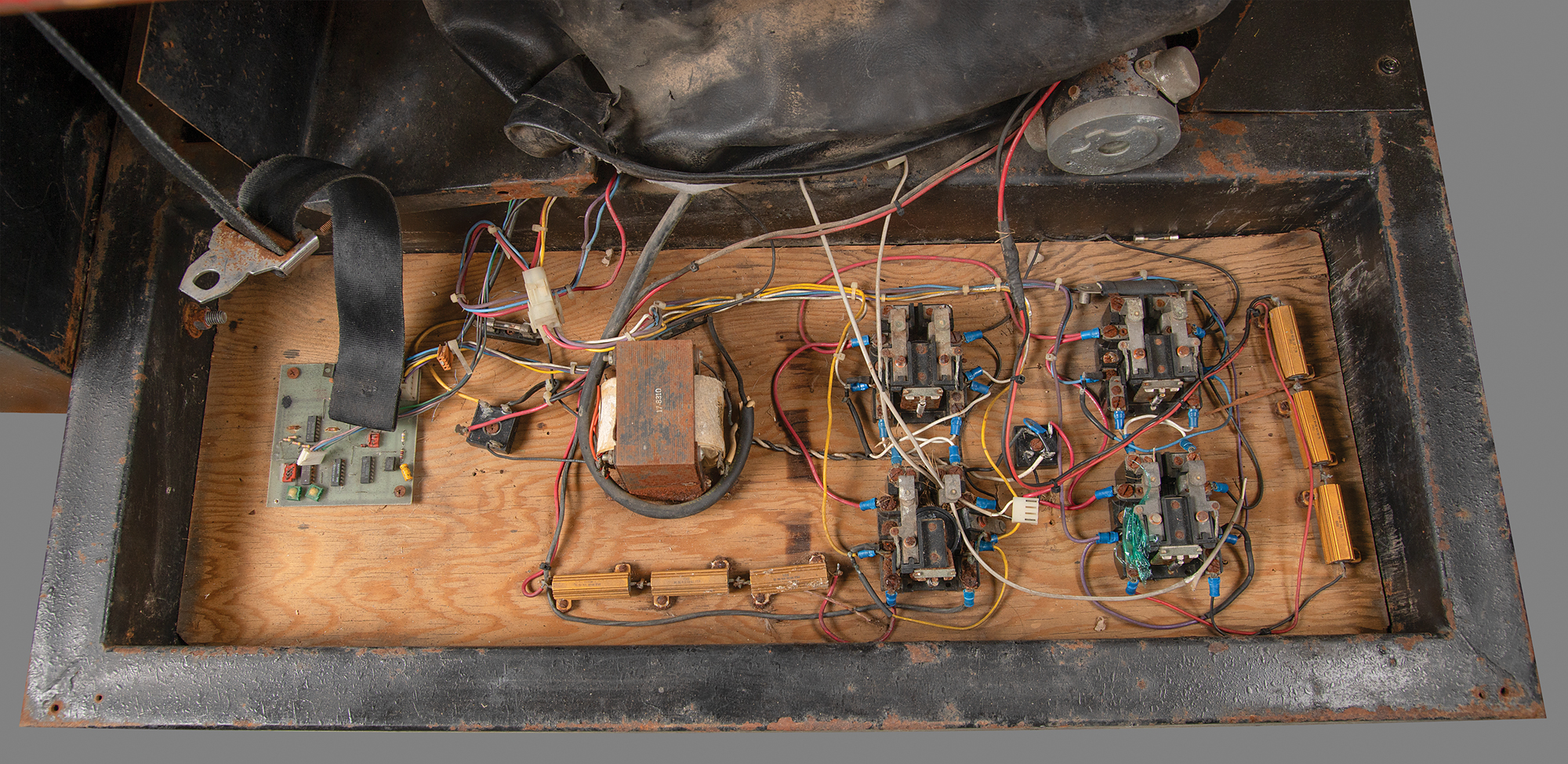
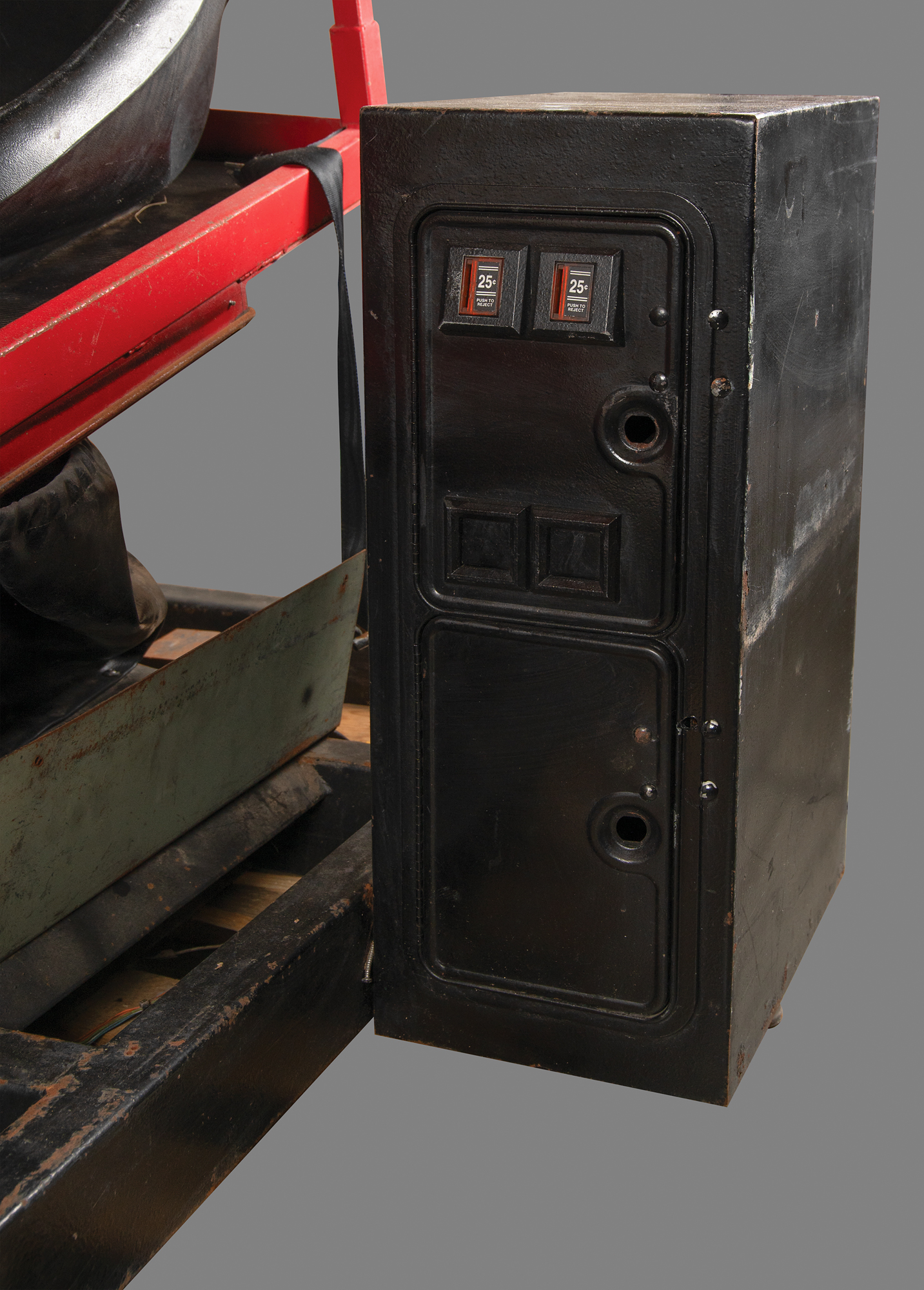
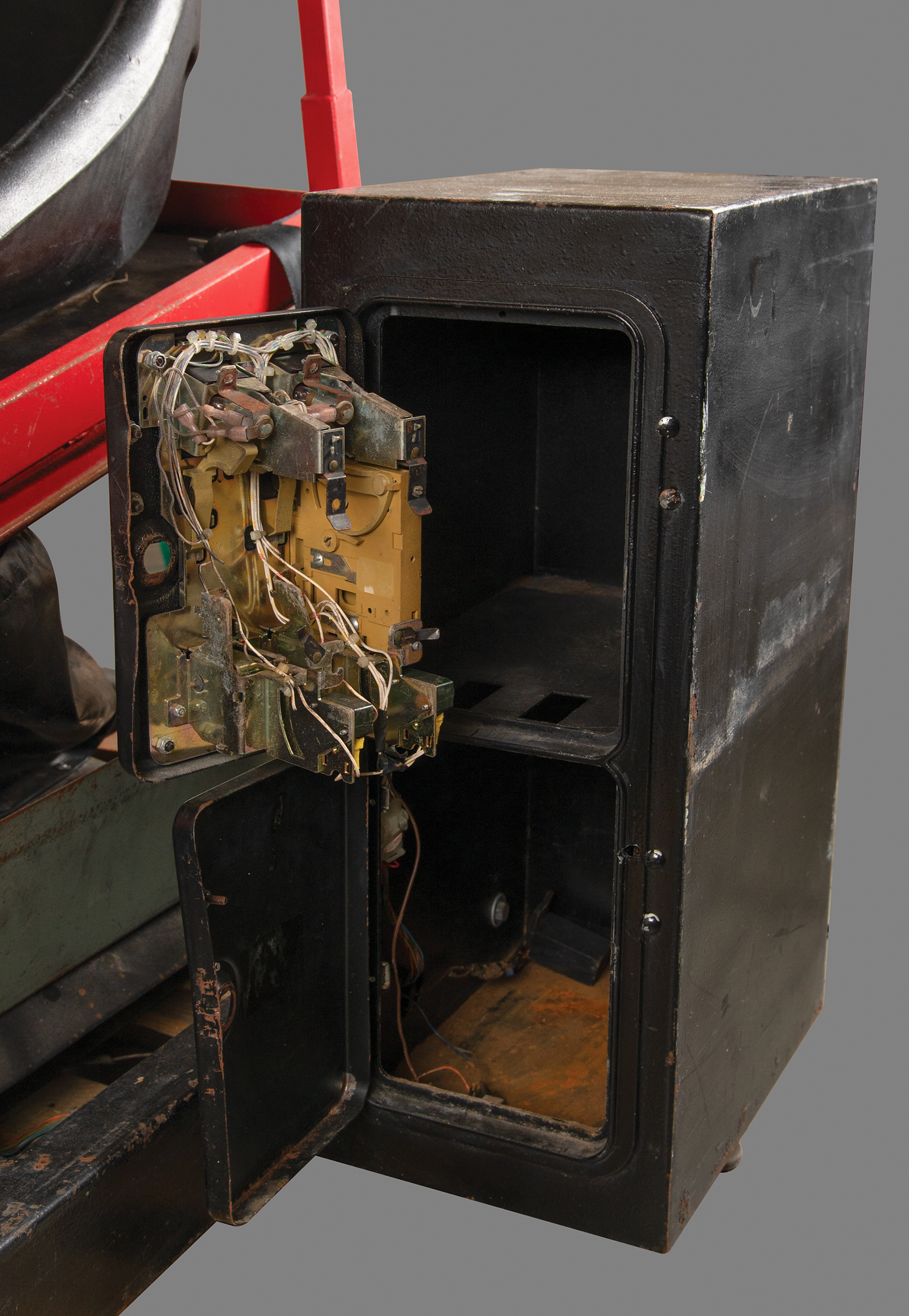
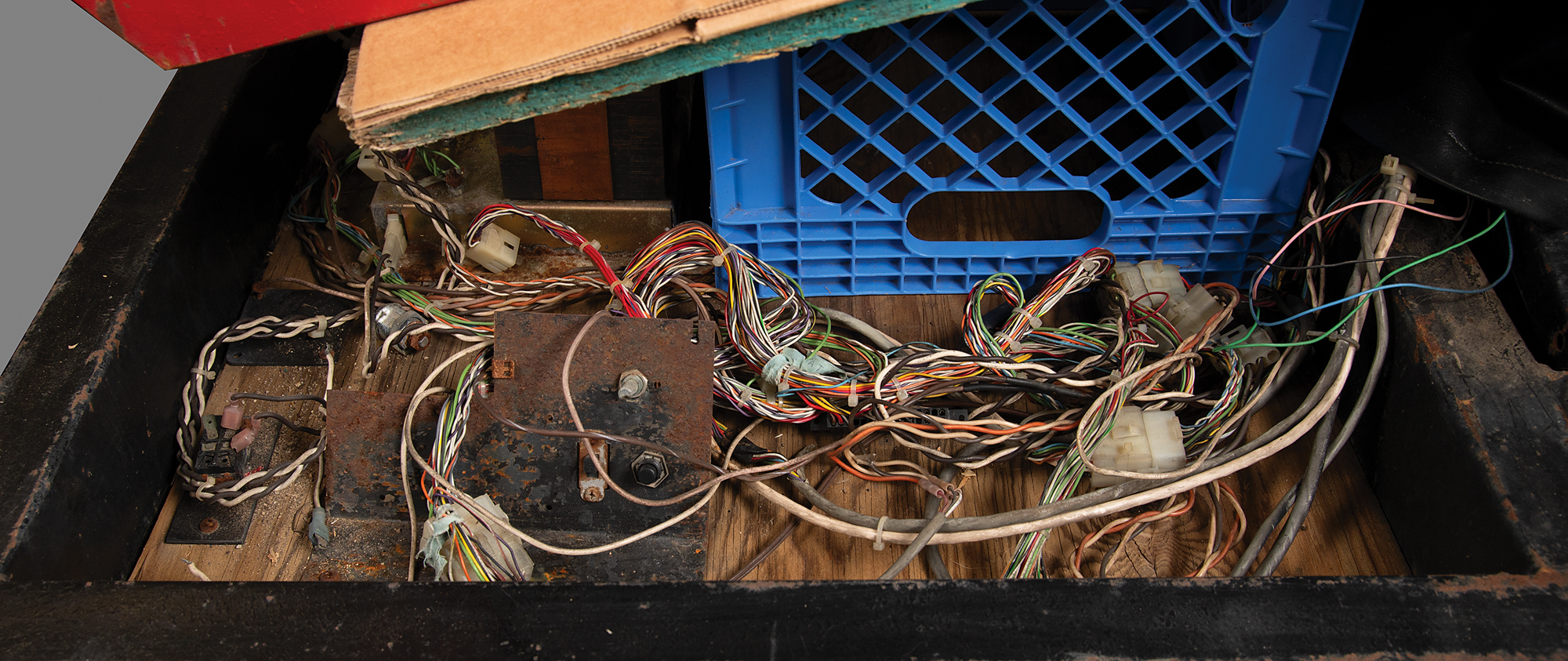
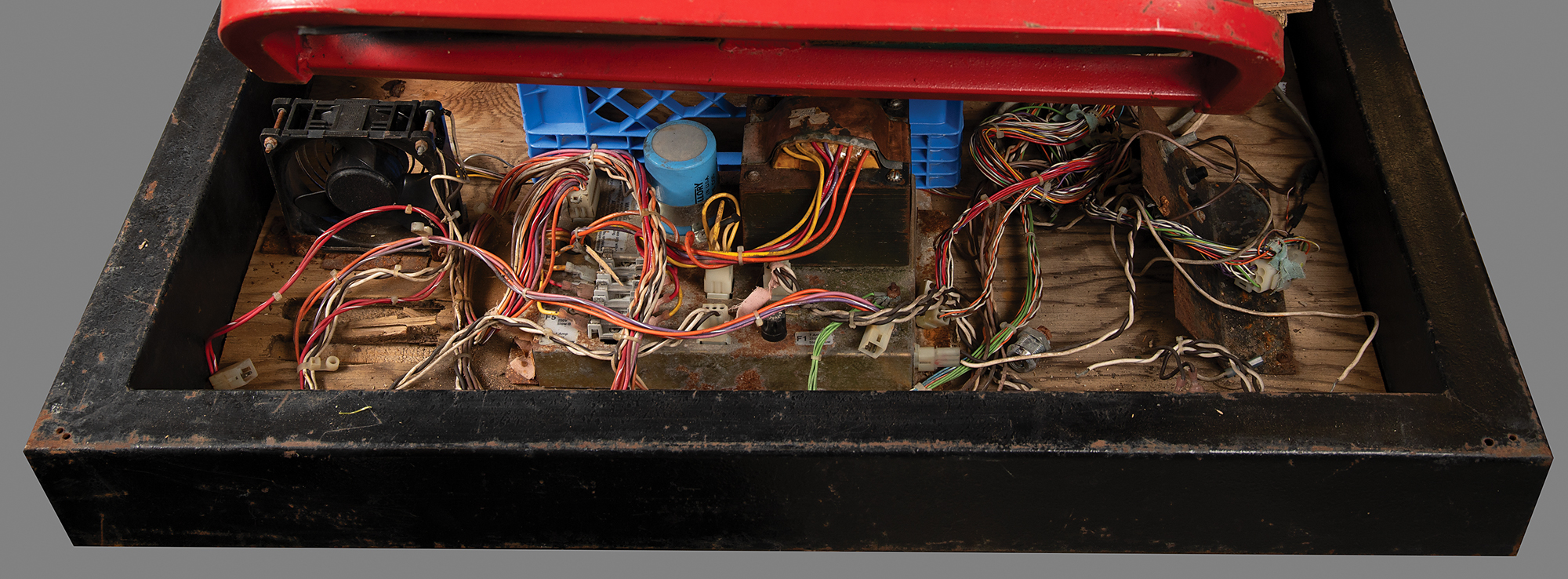
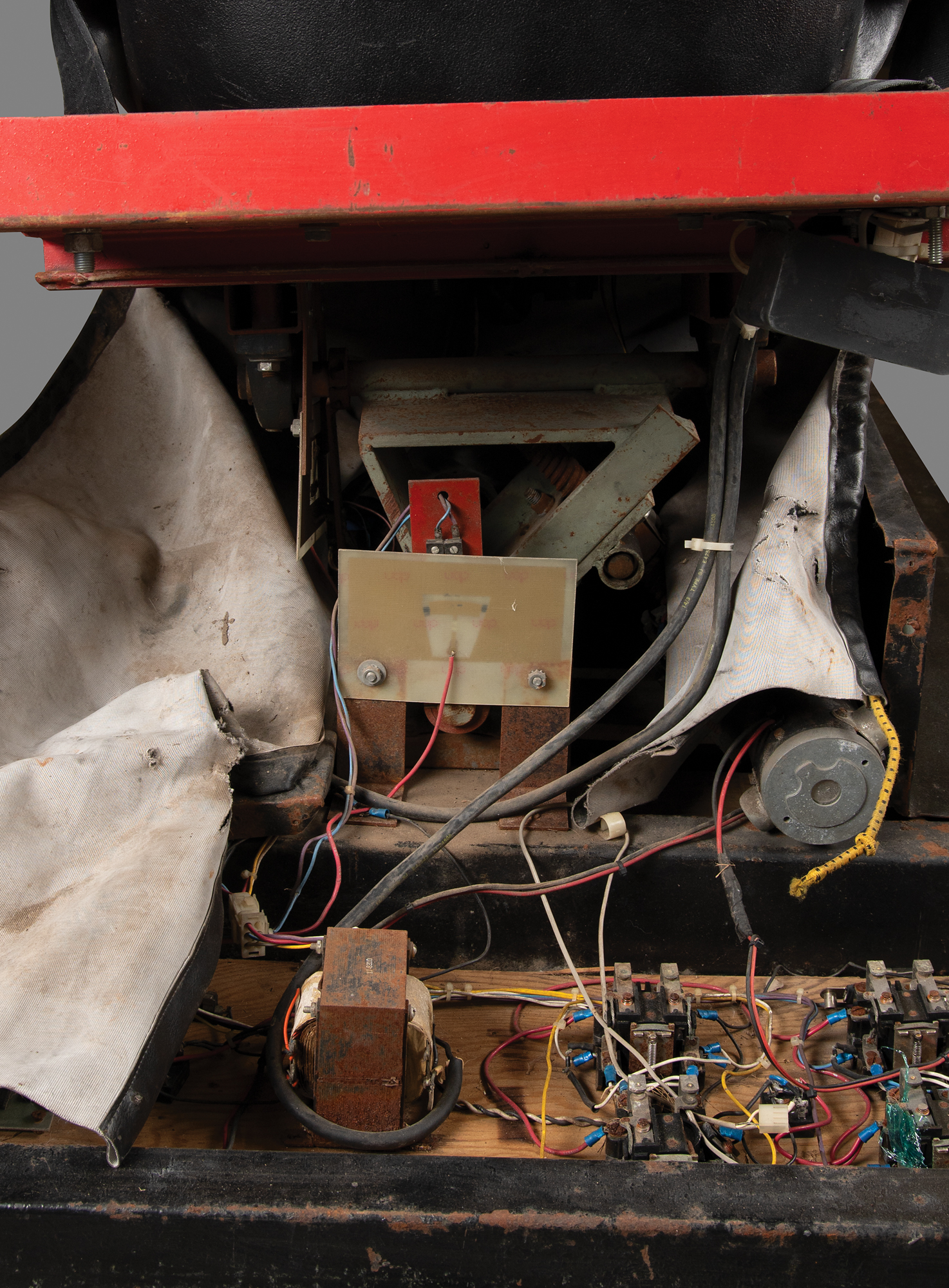
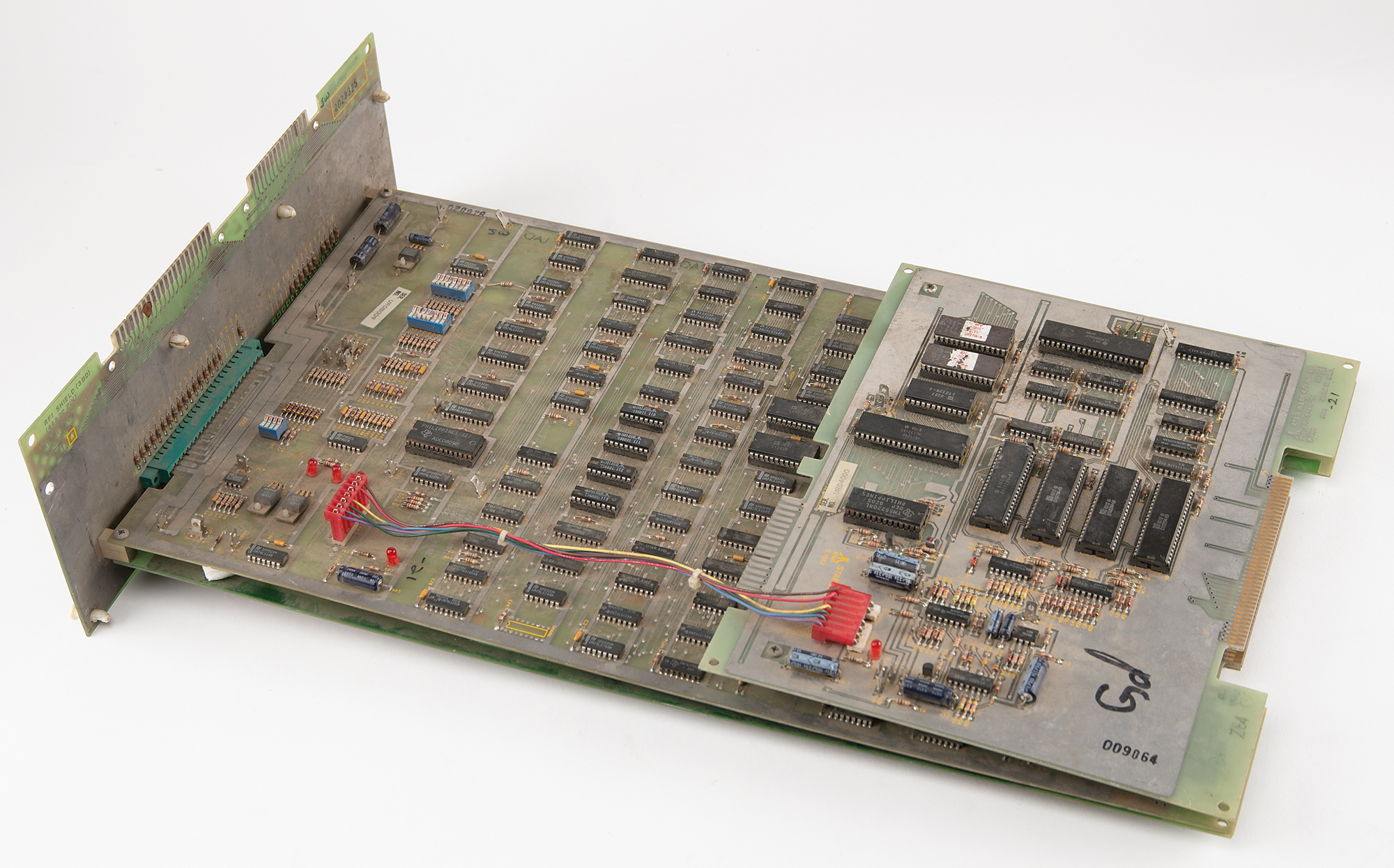
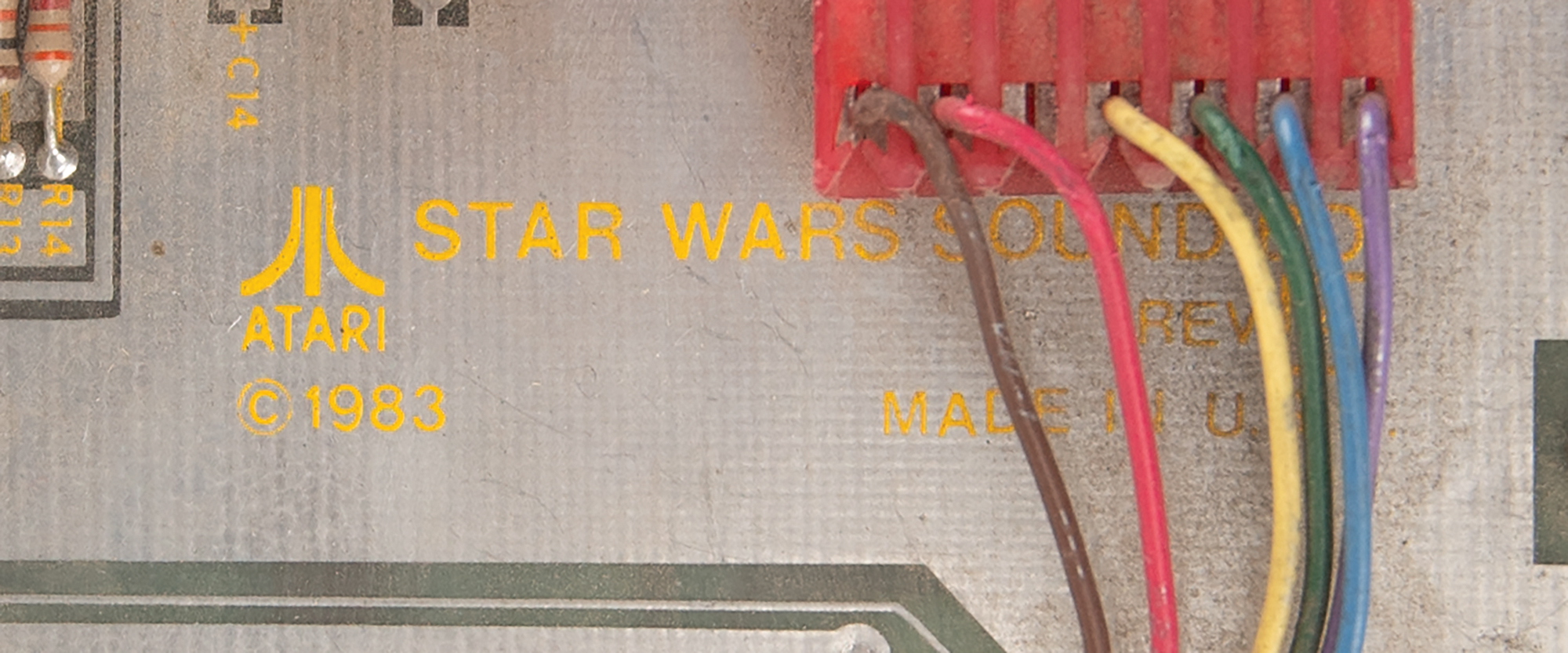
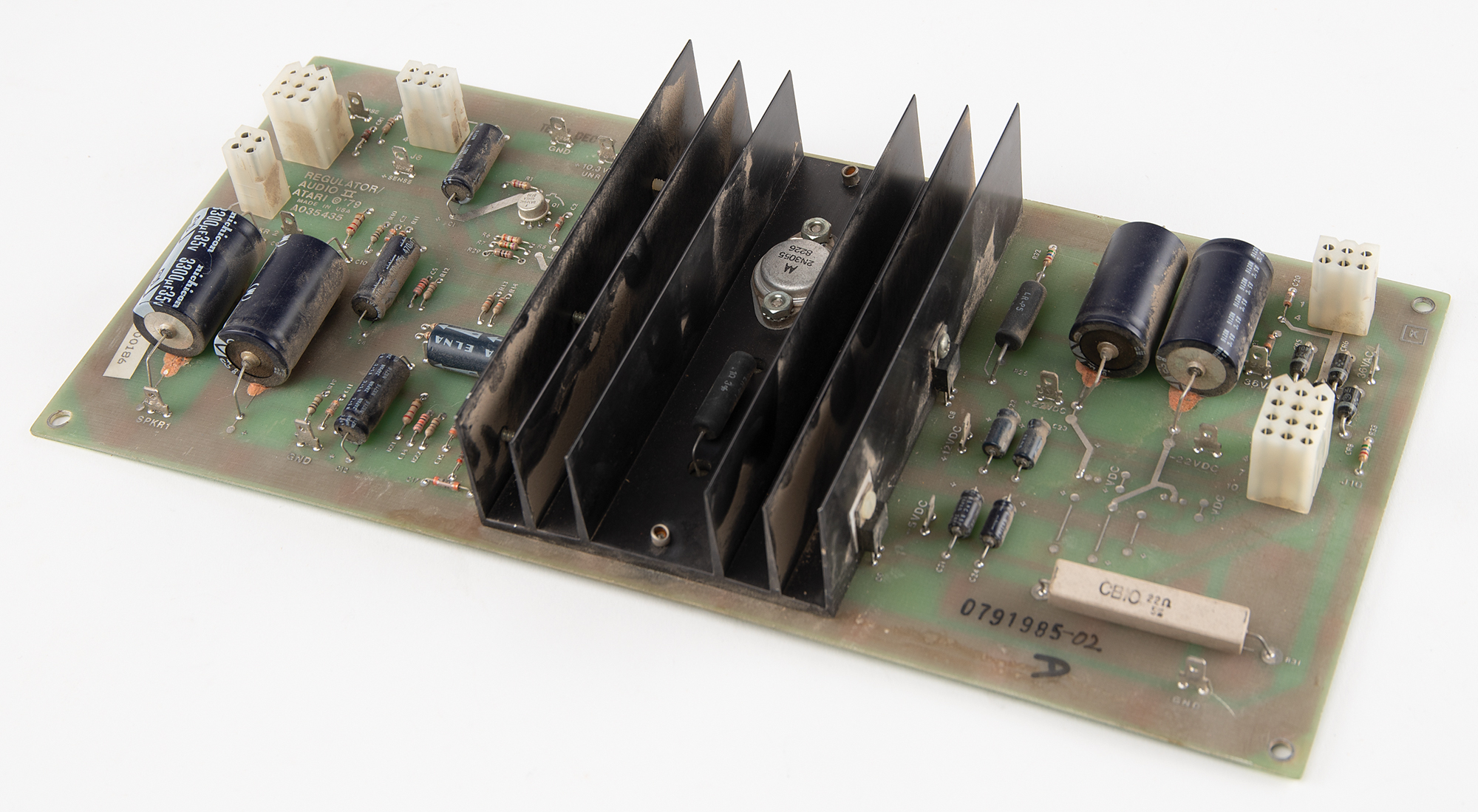
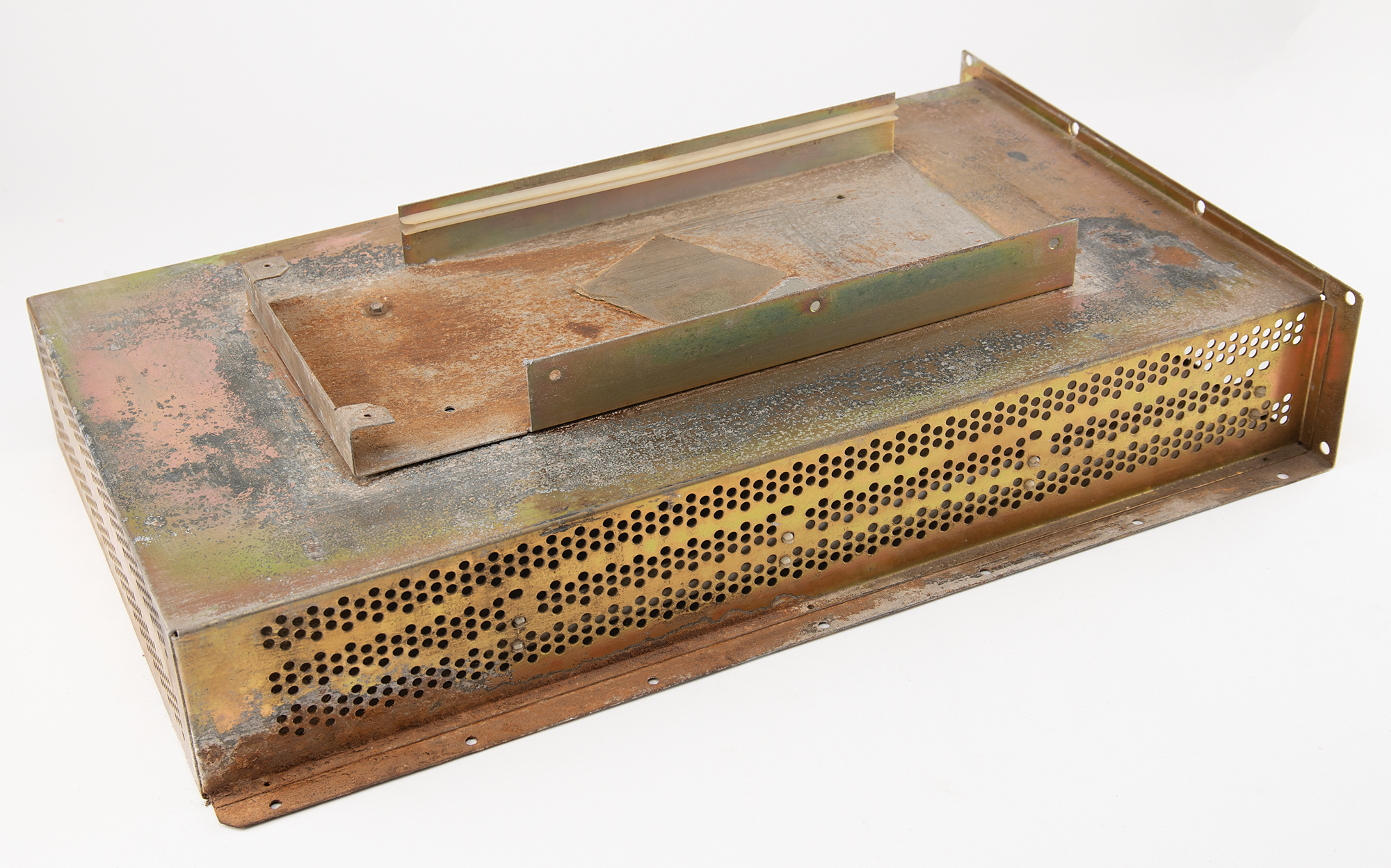
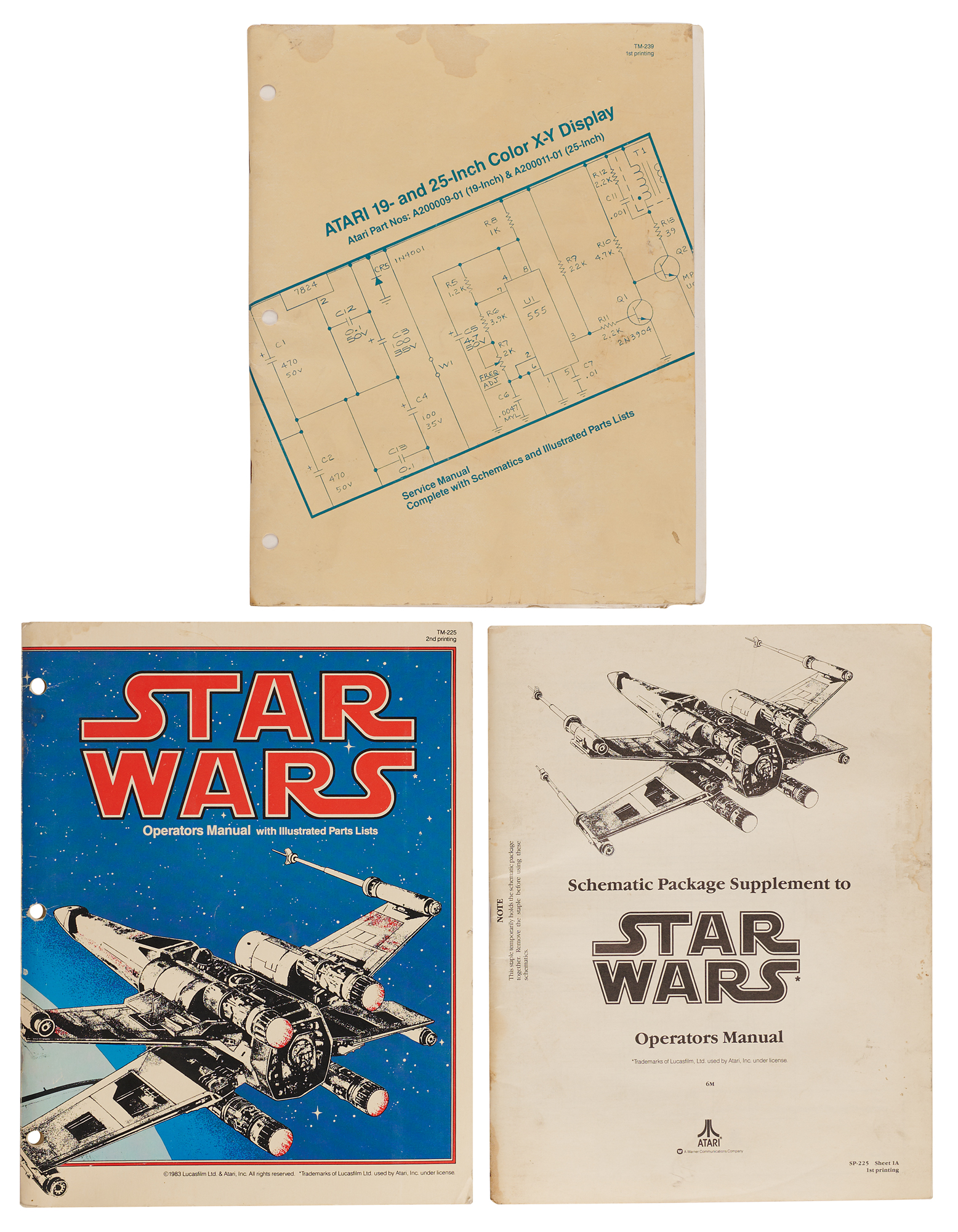
Extremely rare original non-working prototype of The Hotseat System motion-based arcade simulator manufactured by Balance Technology in 1984. The machine, measuring approximately 60˝ x 36˝ x 58˝ and weighing around 300 lbs, was conceived as a true pitch-and-roll flight simulator modeled after the training rigs used for commercial and military pilots. Designed as a universal motion shell, it allowed operators to transplant the core components of popular flying or driving games — such as Williams Blaster or Atari Star Wars — into a cockpit-style cabinet that delivered banking, diving, and climbing sensations. Marketed through the Colorado Game Exchange and priced around $2,000, the Hotseat promised to bring aerospace-style immersion to the arcade floor without requiring a dedicated game. This offered non-working unit includes Atari Star Wars hardware.
Despite its innovation — Hotseat was gaming’s first dual-axis motion simulator — the system struggled immediately. A trio of units brought to the 1985 AMOA Expo reportedly failed to operate for attendees, dampening early confidence, and production numbers remain unclear; Rich Babich, president of the Colorado Game Exchange, states that fewer than 100 were ever built. The cabinet’s most visible legacy ironically came not from the arcade industry but from Hollywood — the company that developed the Hotseat’s gryo base also created the cockpit simulators seen in the 1987 film Project X. With no confirmed surviving examples and almost no documentation, the Hotseat stands today as a rare and intriguing experiment — an ambitious attempt to introduce affordable motion simulation to arcades years before the technology caught on.
By the late 1980s and early 1990s, major manufacturers transformed the idea into commercial hits such as Sega’s After Burner (1987) and the deluxe motion editions of driving games like Sega’s Daytona USA (1994). The most dramatic evolution of the Hotseat’s core concept arrived in Sega’s R-360 (1990), a full 360-degree gyroscopic cabinet that echoed the Hotseat’s flight-simulator roots on a far larger scale. Though currently non-working, this rare Hotseat is a dream restoration project for any serious gamer, engineer, or arcade historian — offering a chance to revive one of the most ambitious and scarcely seen motion simulators of the era.

