Sold For $113,799
*Includes Buyers Premium
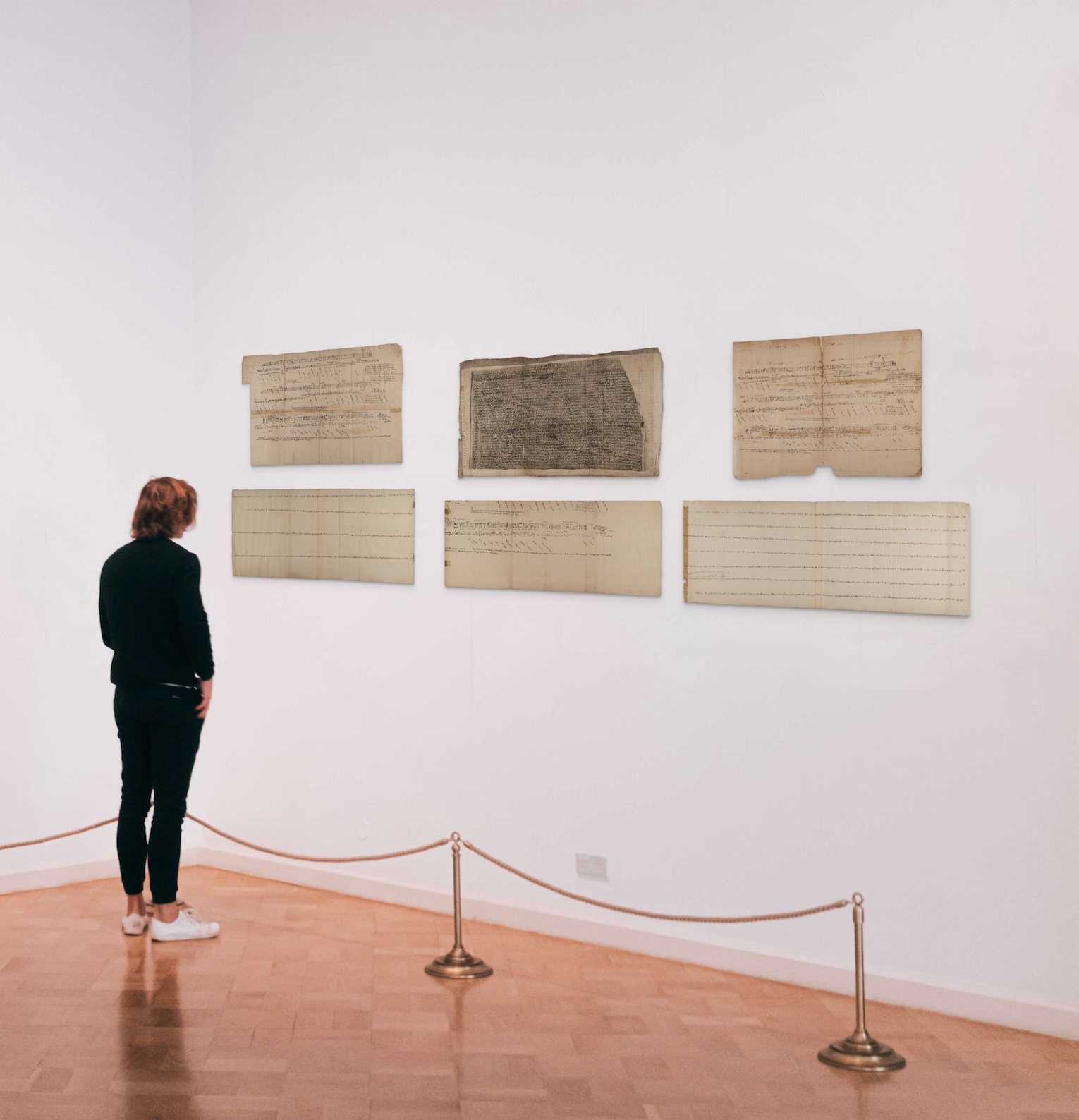
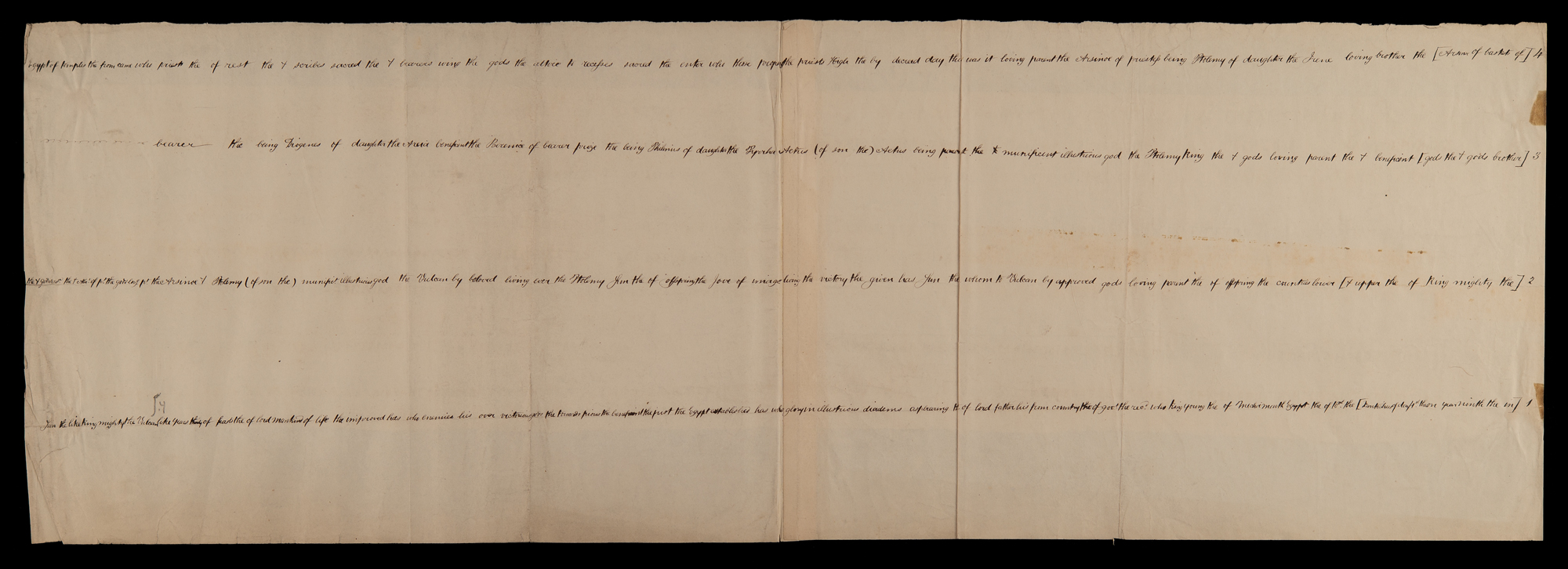
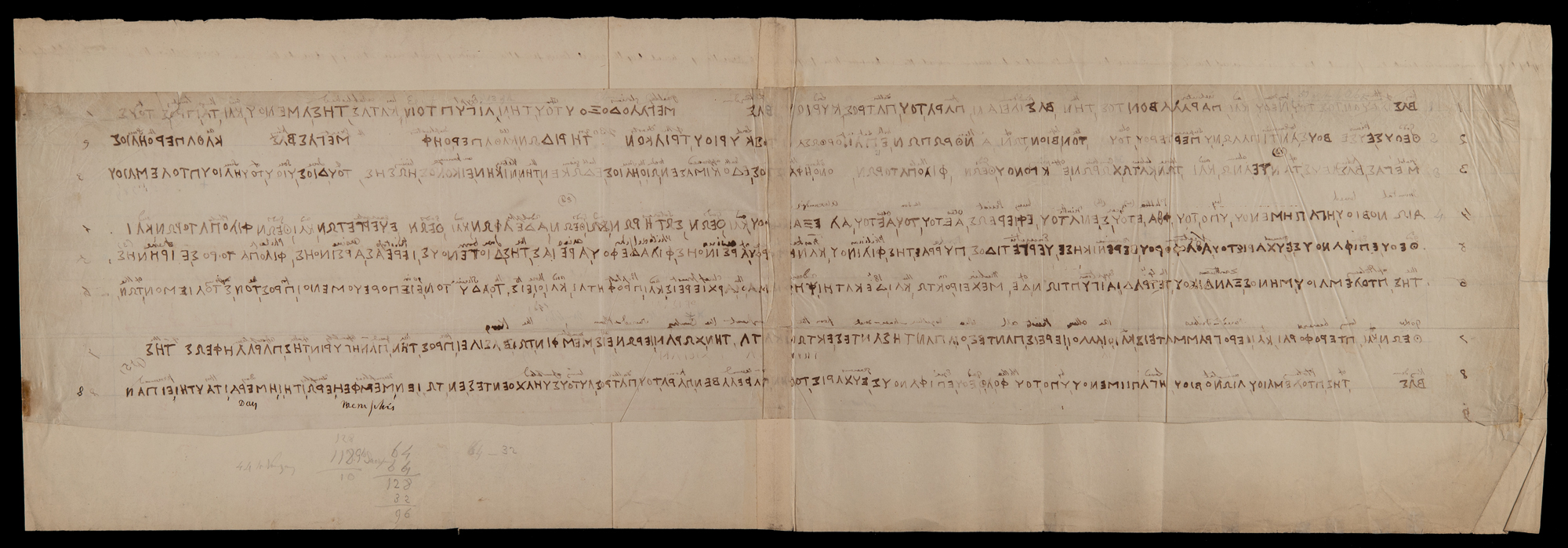
Remarkable archive of early 19th-century British working papers documenting the early efforts to unlock the mysteries of the Rosetta Stone and, by extension, the lost language of ancient Egypt. Discovered by Napoleon’s soldiers in 1799 and seized by the British in 1801, the Rosetta Stone bore the same decree in three scripts—hieroglyphic, Demotic, and Greek—making it the key to bridging the gap between classical scholarship and Egypt’s enigmatic past. Dating to circa 1801–1822—between the British acquisition of the Rosetta Stone and the transliteration of the Egyptian scripts by French philologist Jean-François Champollion—these papers capture the excitement and difficulty of those initial attempts at decipherment. With life-size impressions of the Stone, oversized sheets of comparative texts, and painstaking manuscript translations beautifully housed together in a contemporary blind-stamped leather portfolio titled “Mente et Malleo”—“By Thought and Hammer”—this collection stands as an extraordinary artifact of one of the great intellectual breakthroughs of Western scholarship, and represents the greatest archaeological discovery in human history.
Includes:
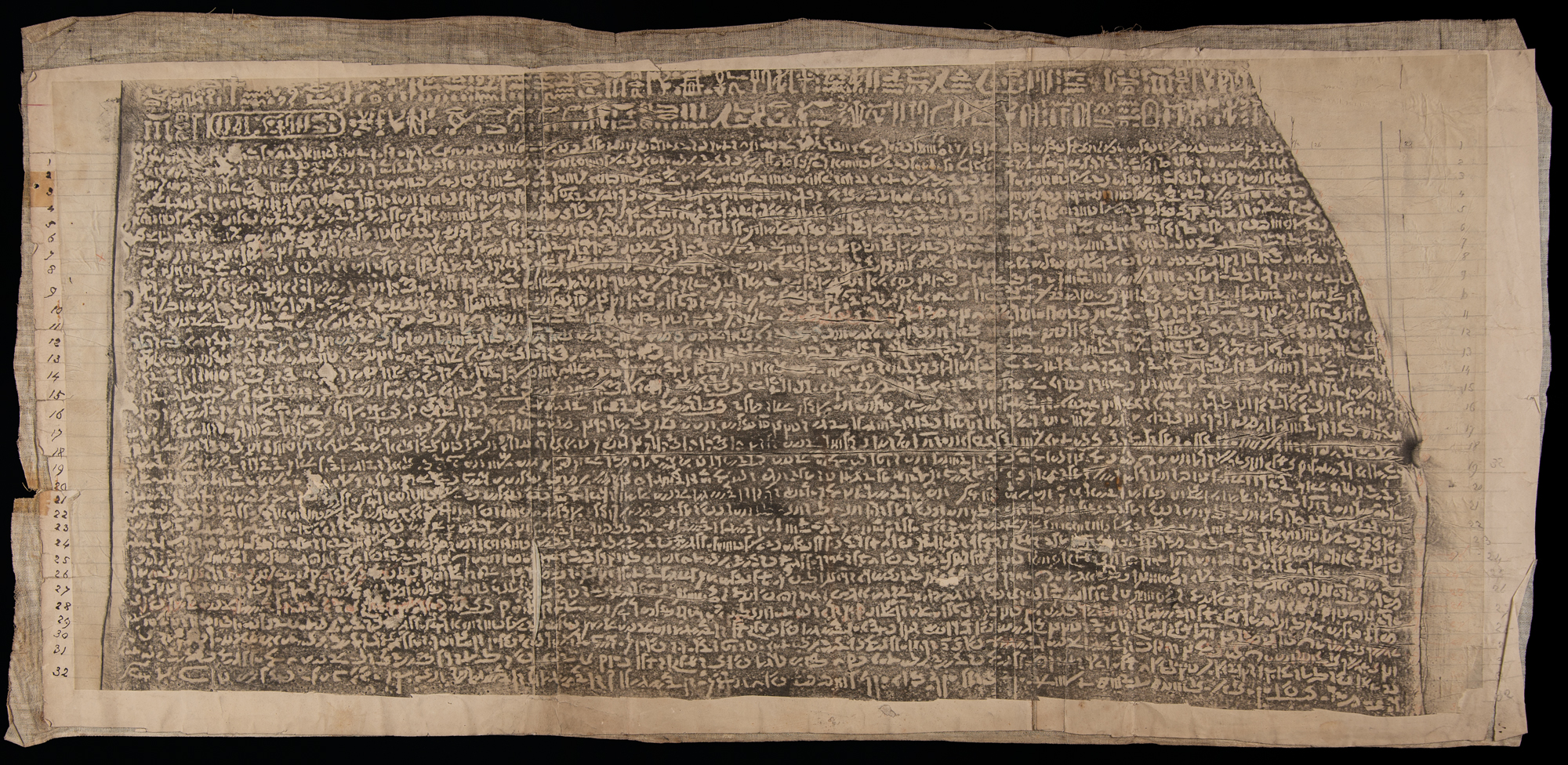
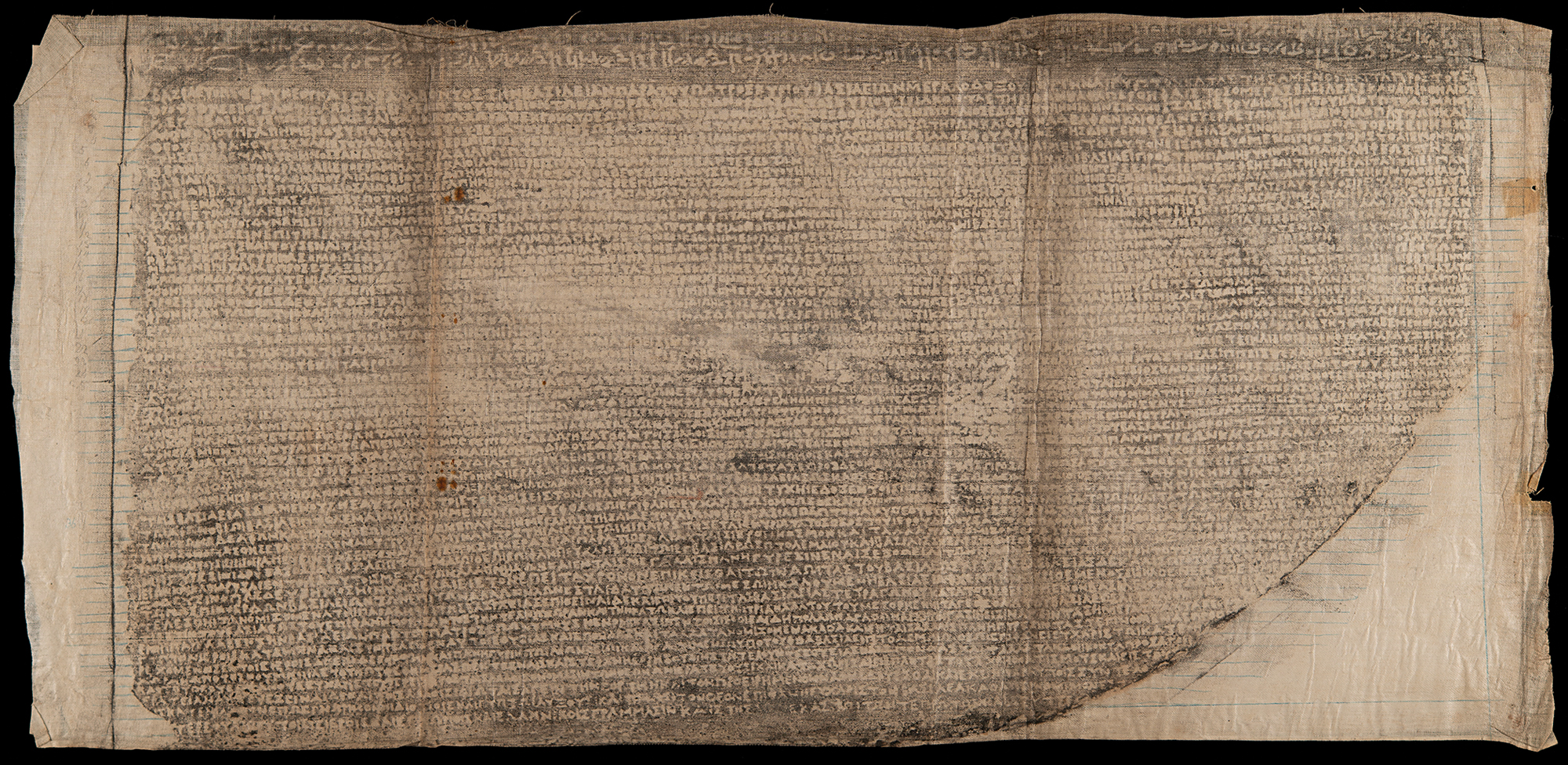
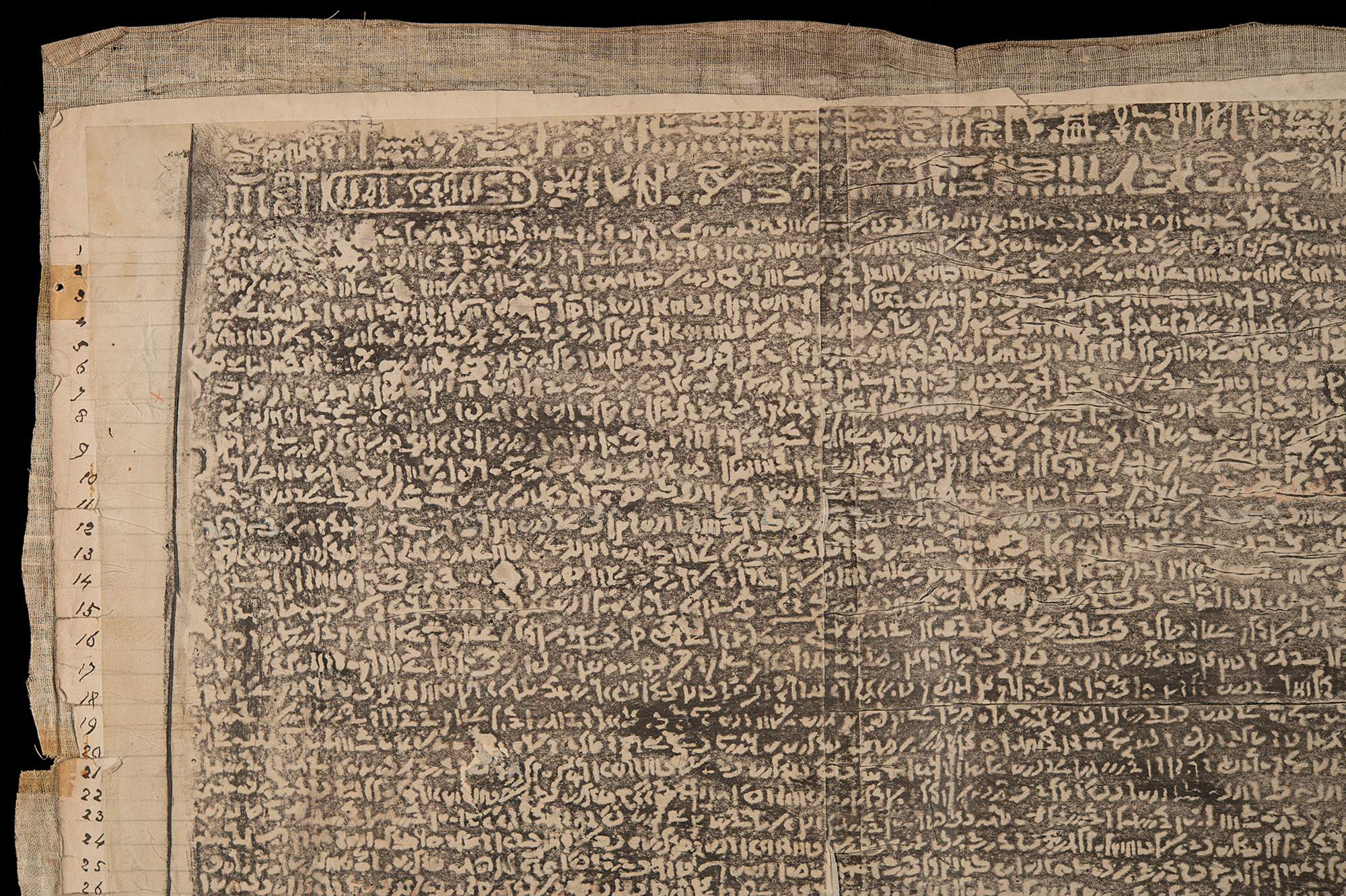
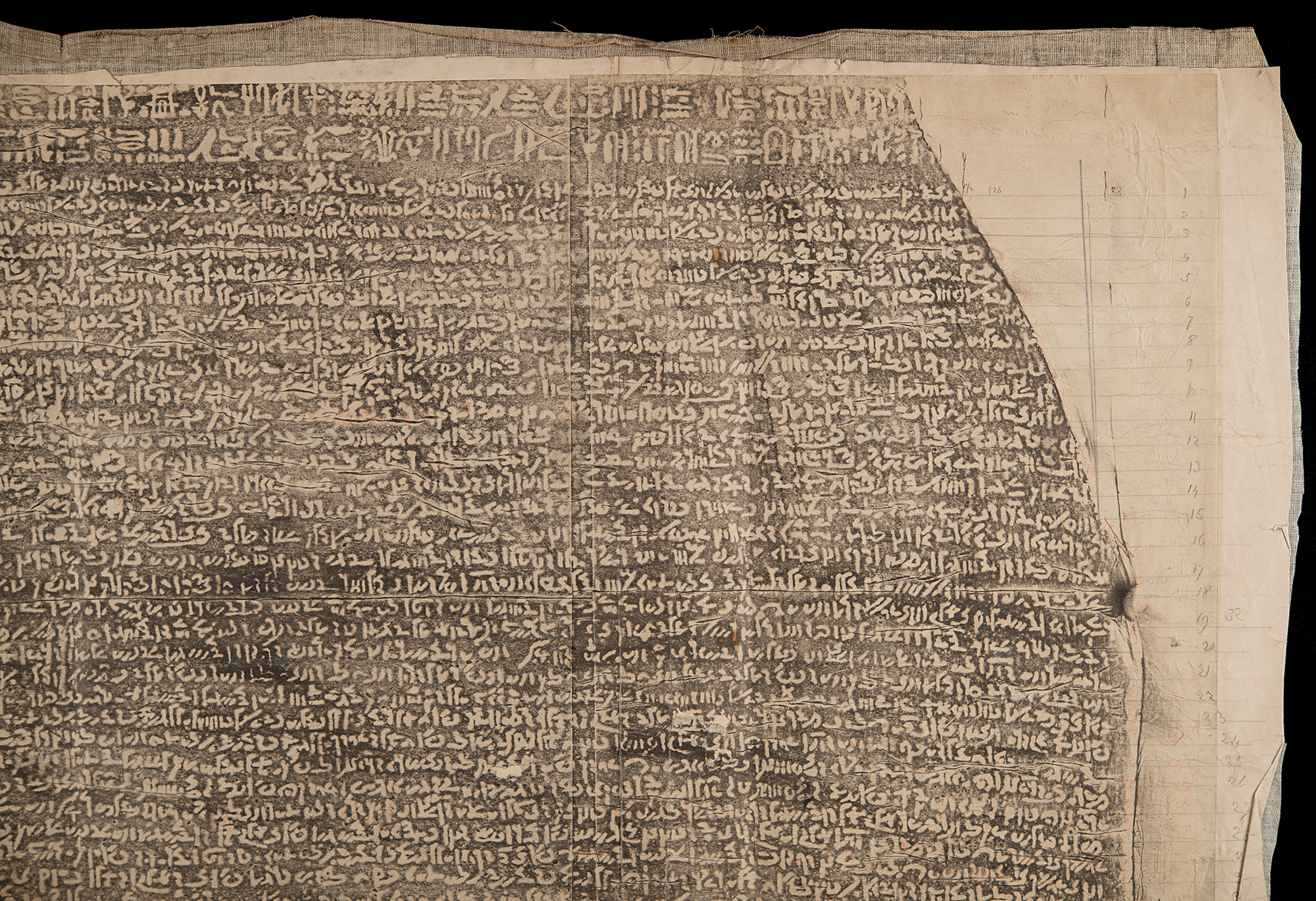
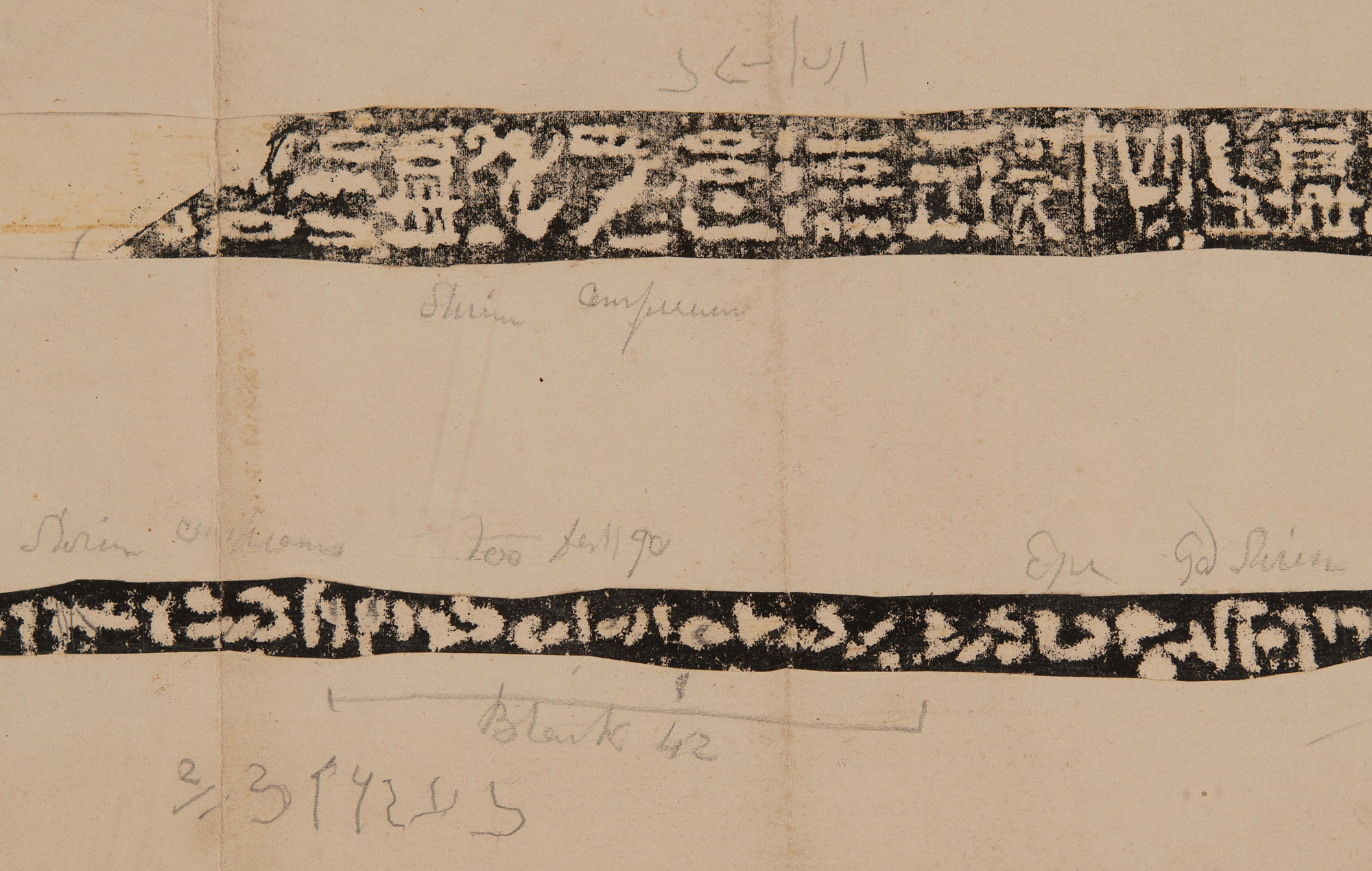
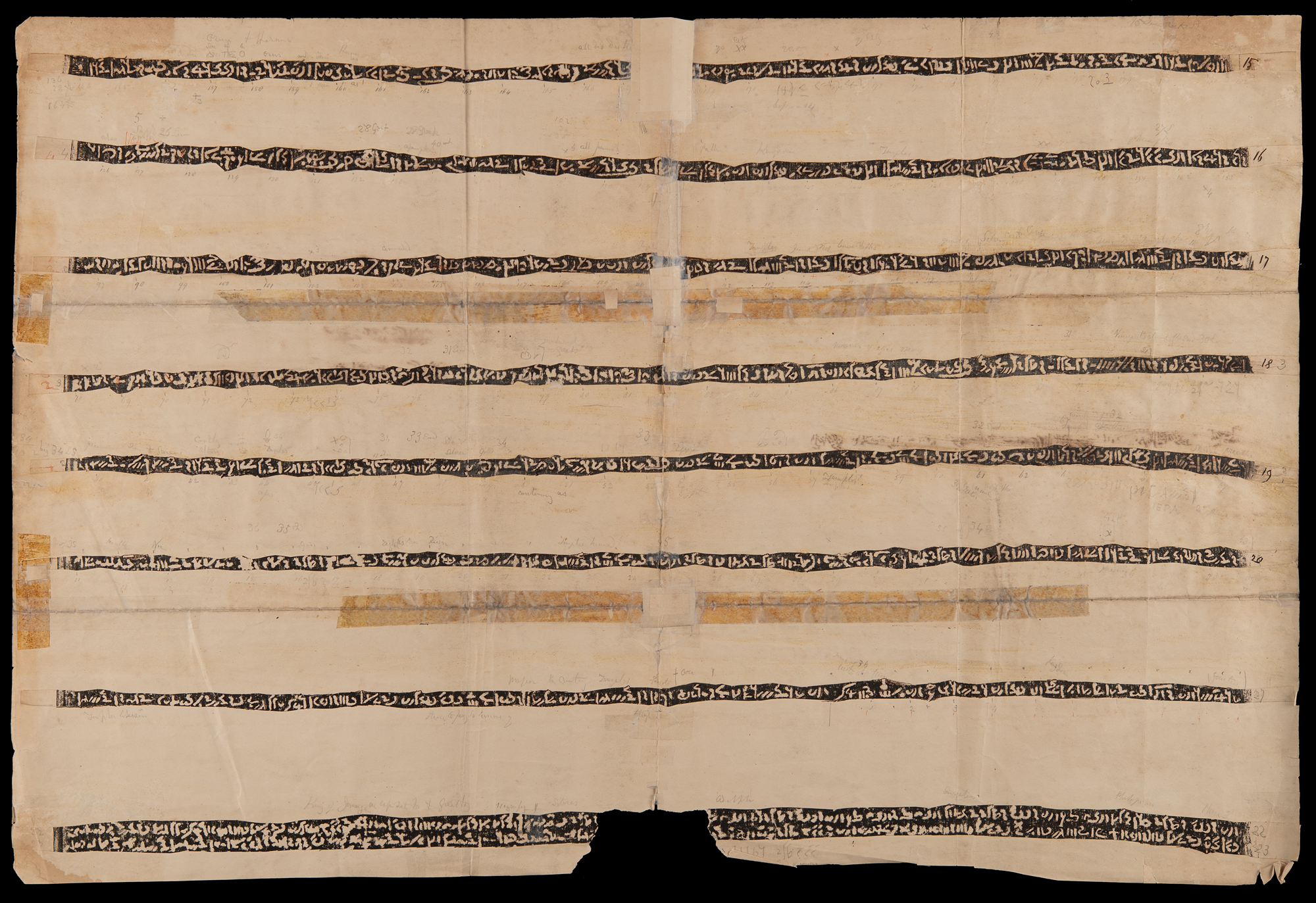
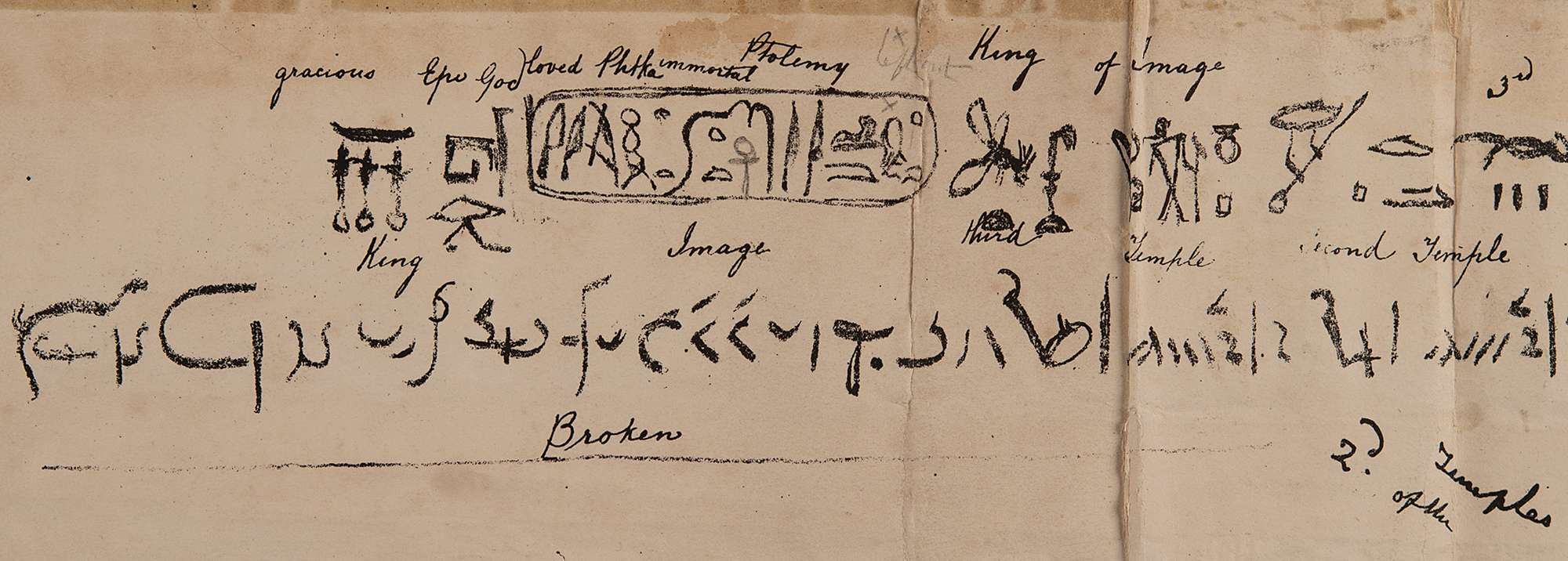
- a life-size 33˝ x 15.5˝ linen-backed print of the central section of the Rosetta Stone, containing the complete 32 lines of enchorial, or Demotic, script numbered in ink, with a couple lines of Ancient Egyptian hieroglyphics at the head. Most significant in the hieroglyphic lines is a cartouche—an elongated oval—at upper left, containing the glyphs for Ptolemy's name—the 'key' to unlocking the mysteries of the Rosetta Stone. On the reverse is a similar print of the complete lower section, translating the Demotic into Greek in 54 lines. Early reproductions of the Rosetta Stone's text were made using a direct-transfer method: the Stone itself was used as a printing block, its surface washed, brushed, and coated with printer's ink, with dampened paper pressed against the stone to create a reverse image of its writing, which could then be read from the back or using a mirror. As these printings are the exact size of the Rosetta Stone (measuring approximately 28.5˝ across), they may be second-generation copies produced from a 'negative' created via these methods.
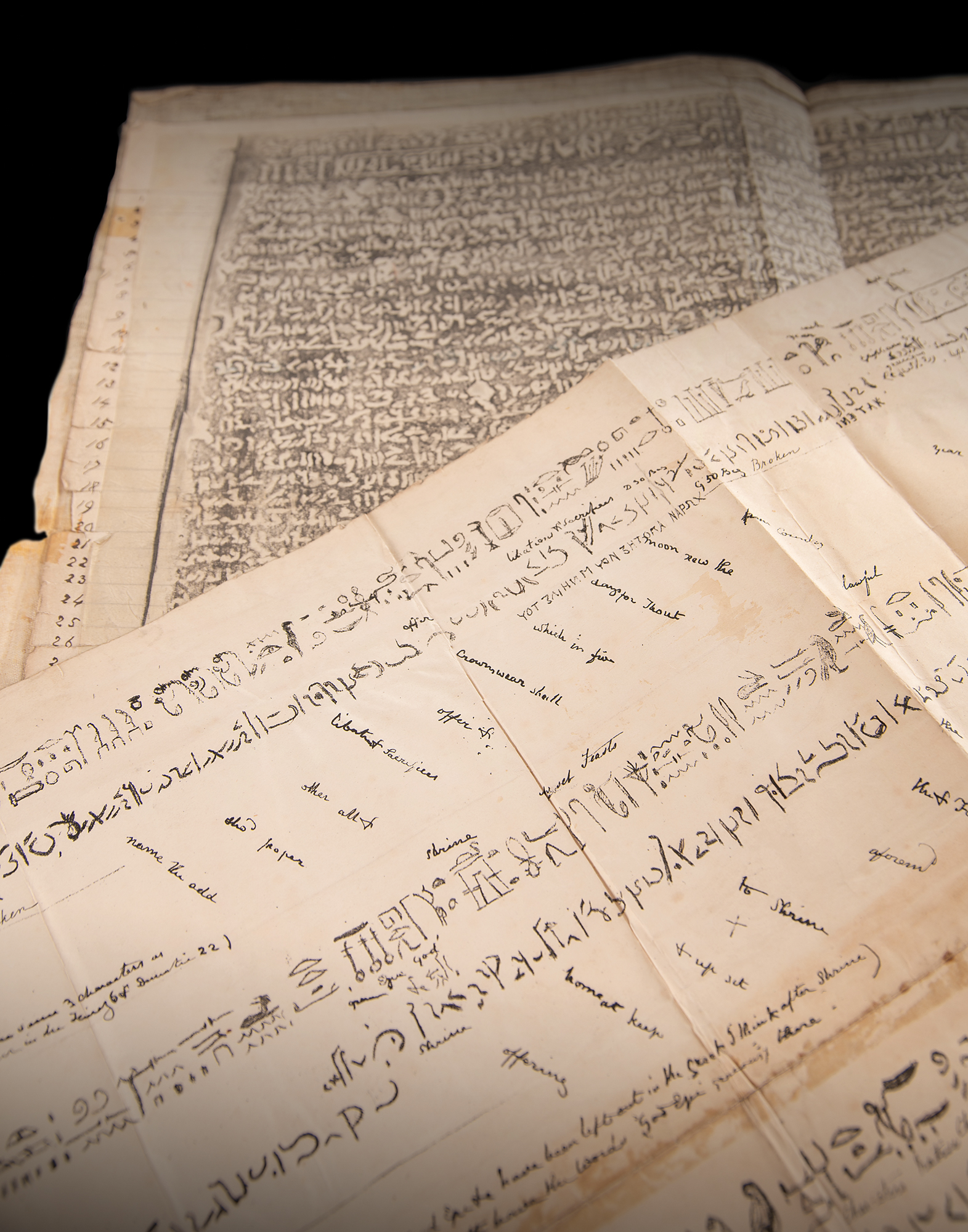
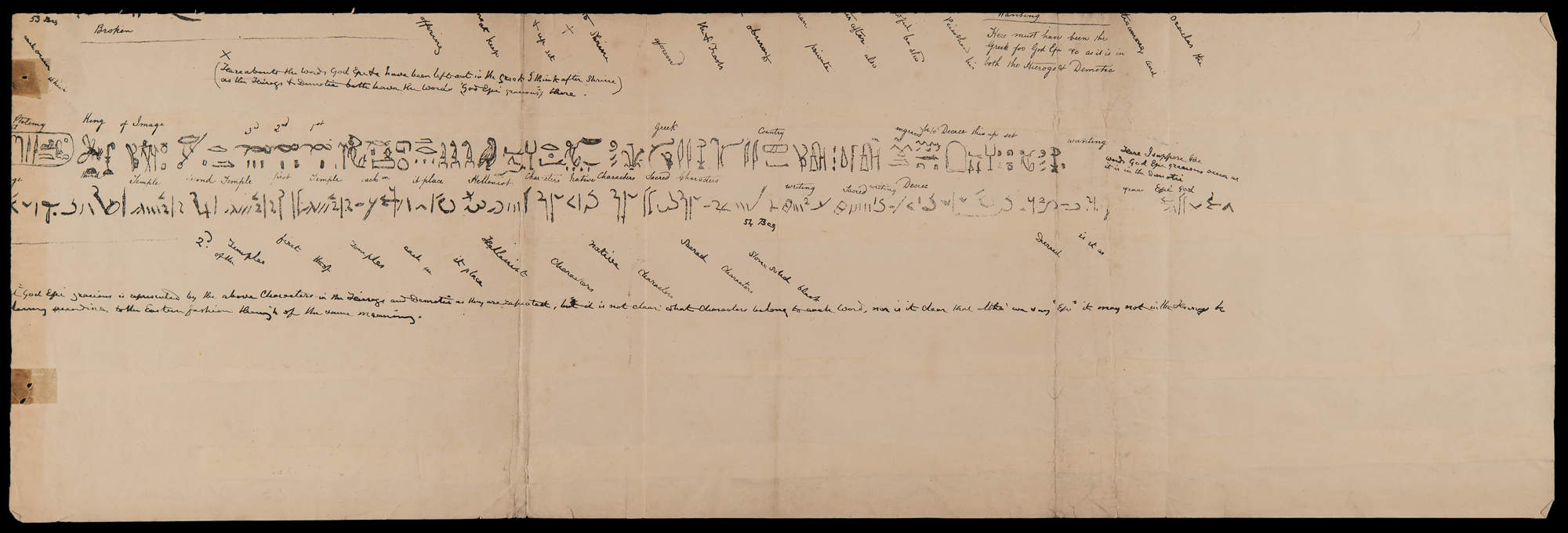
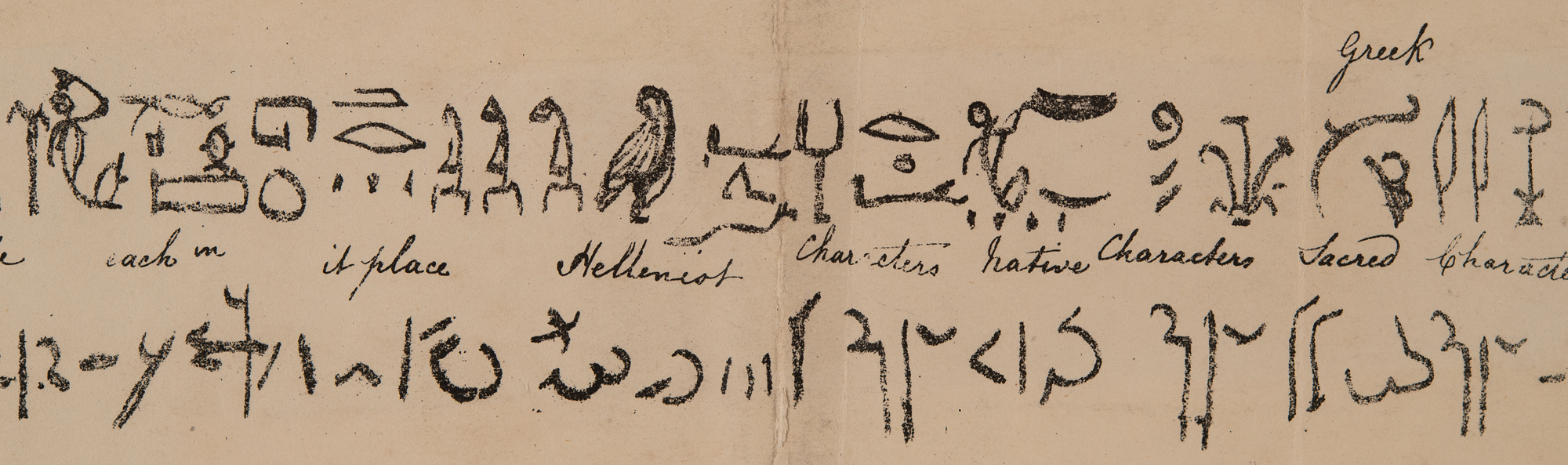
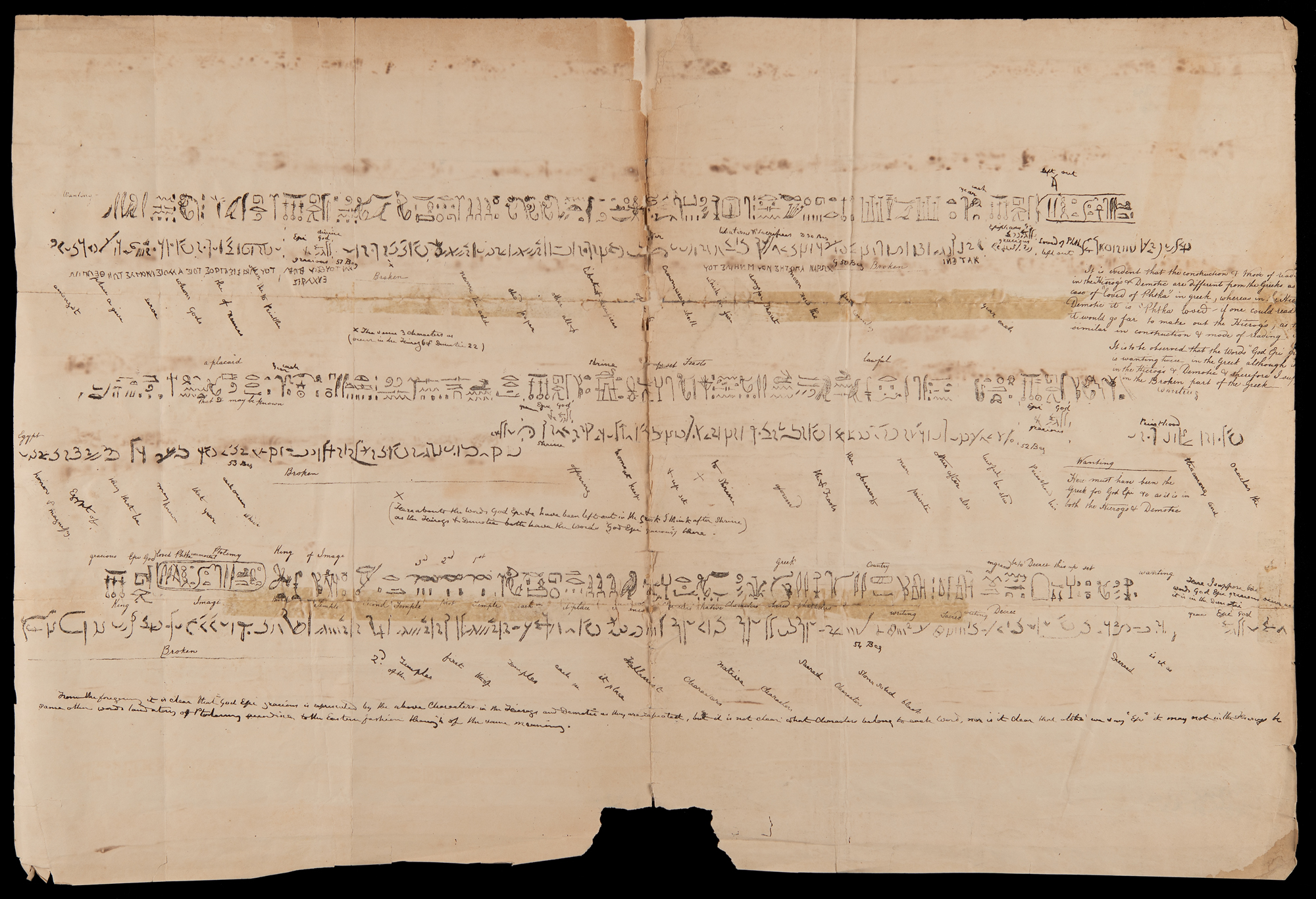
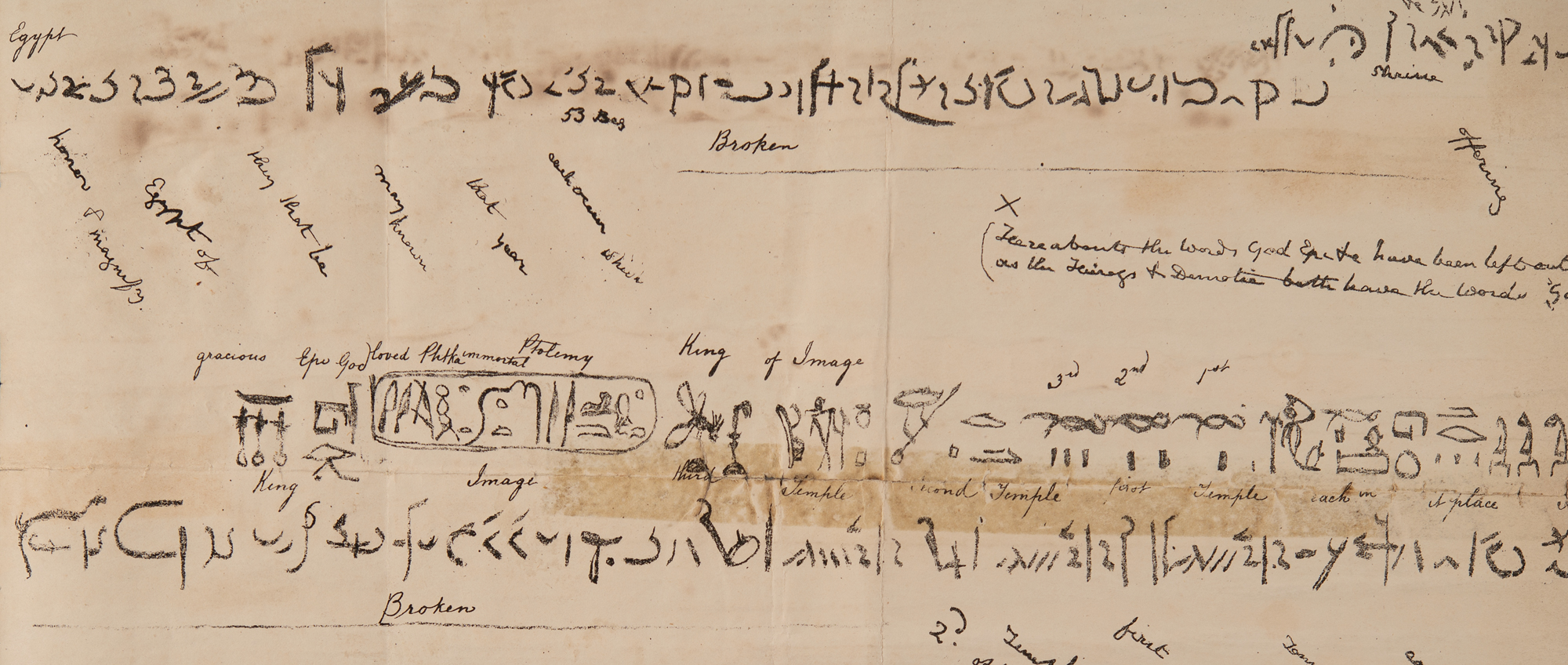
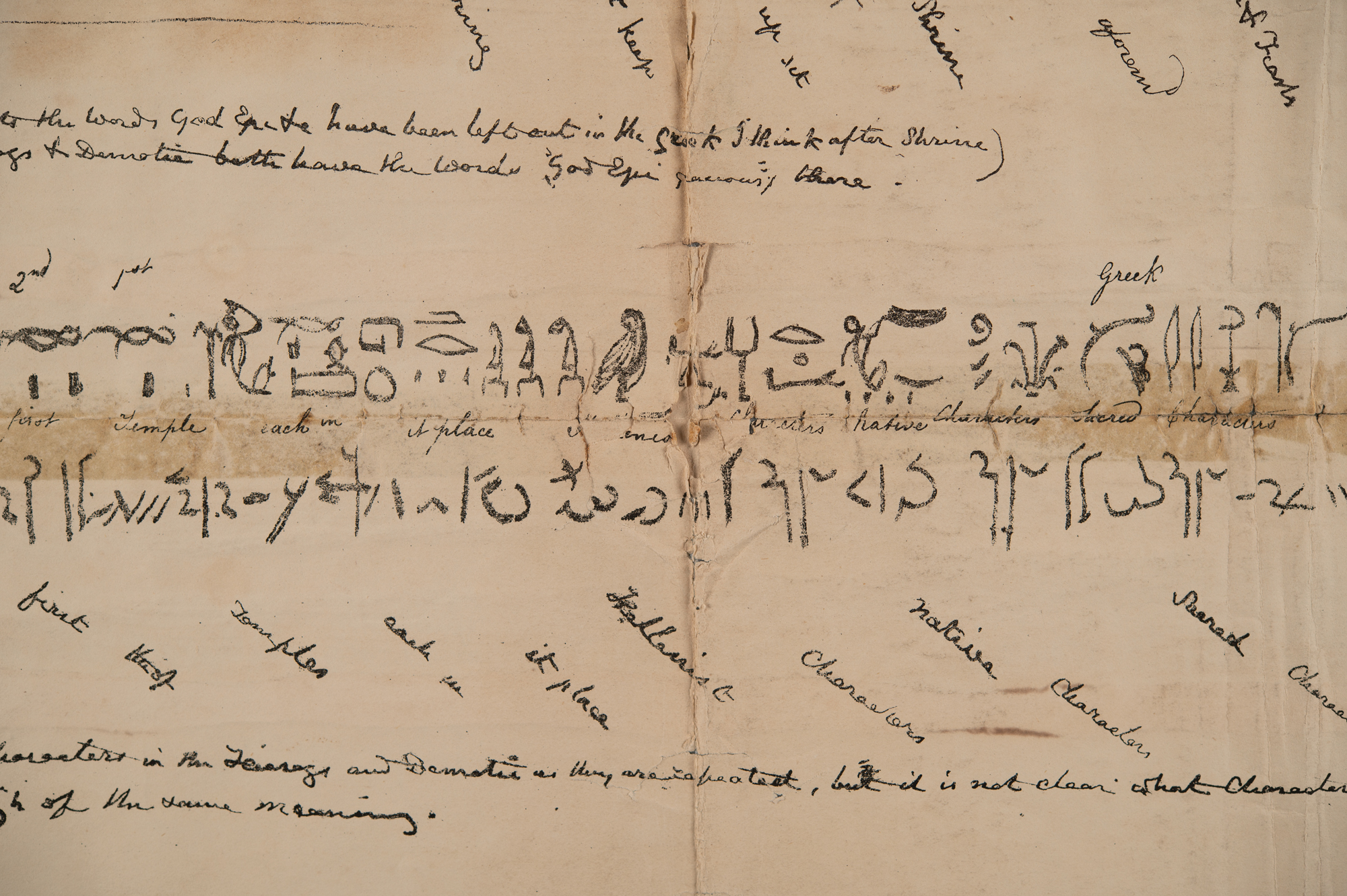
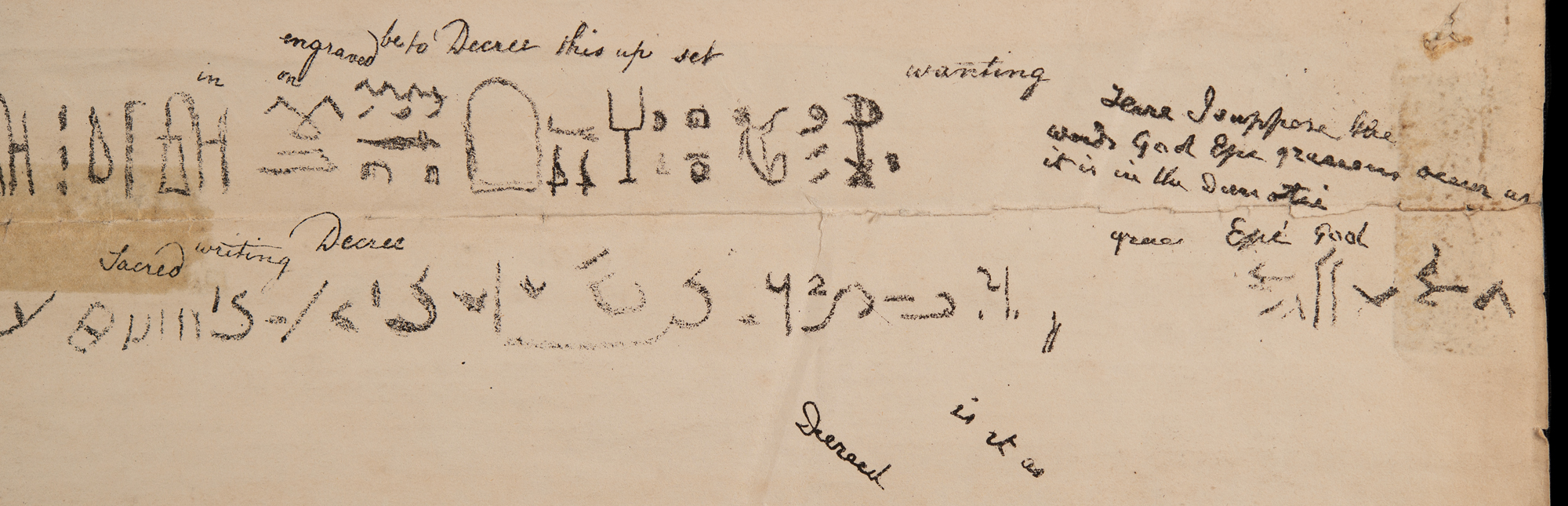
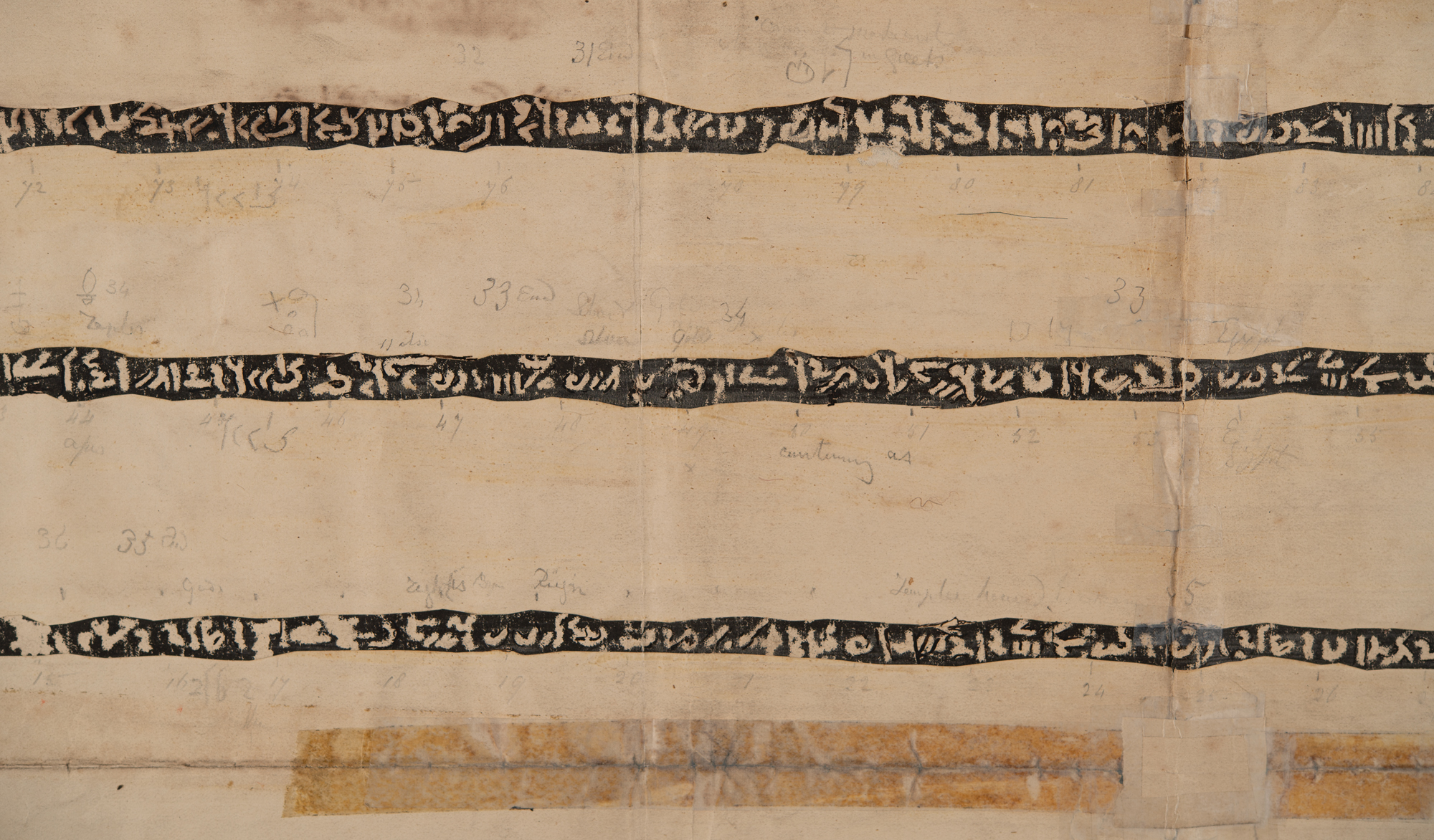
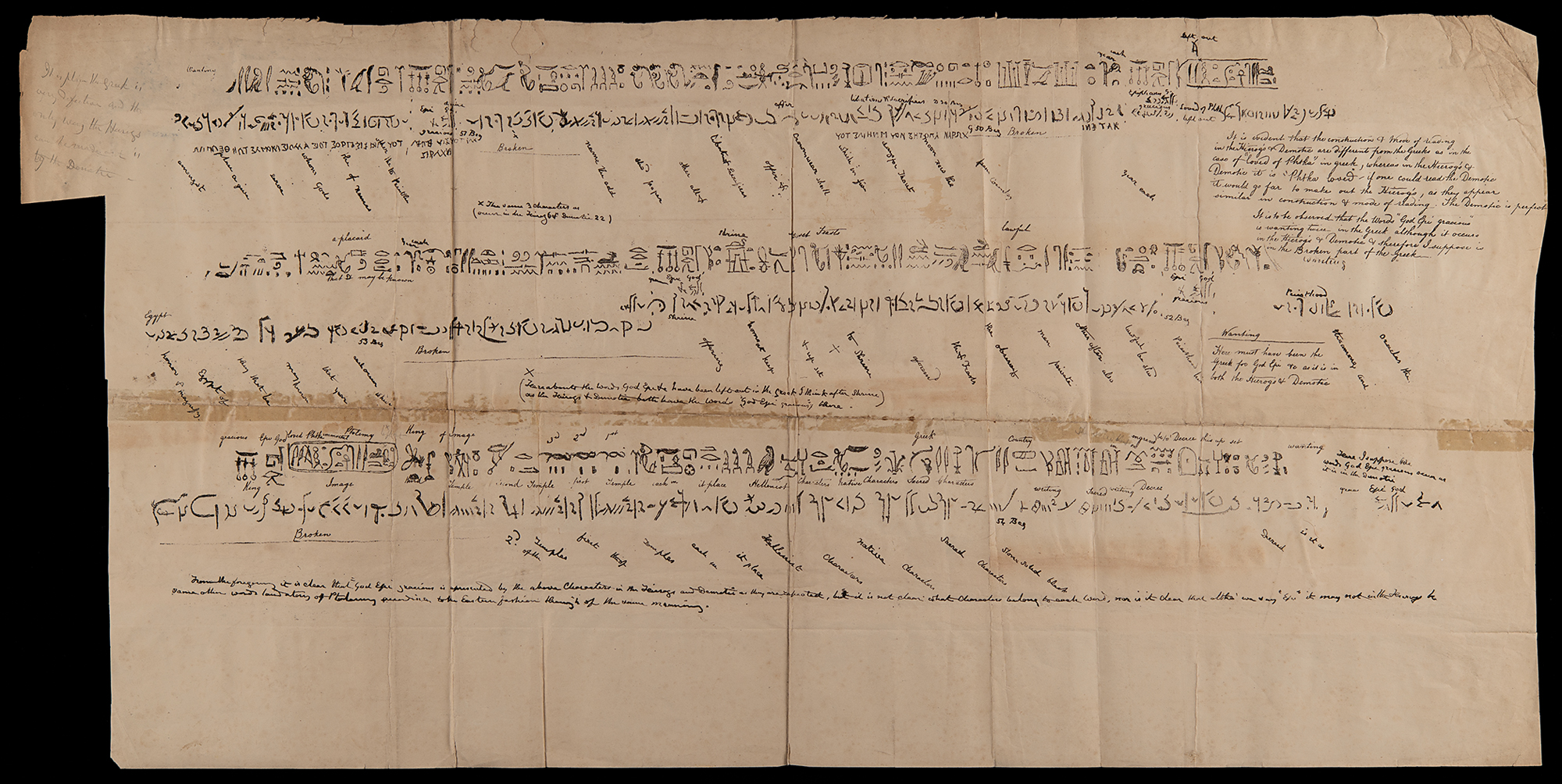
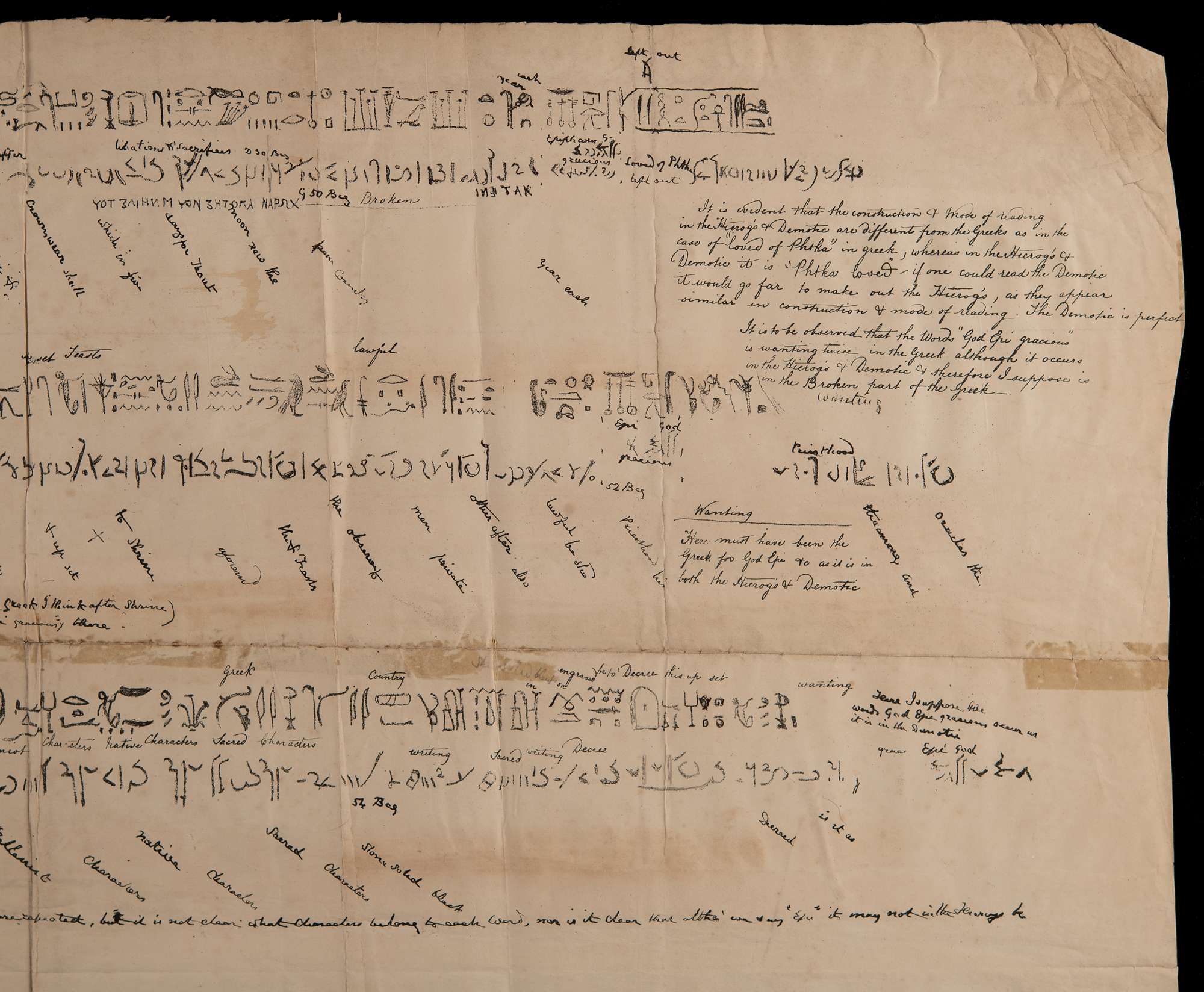
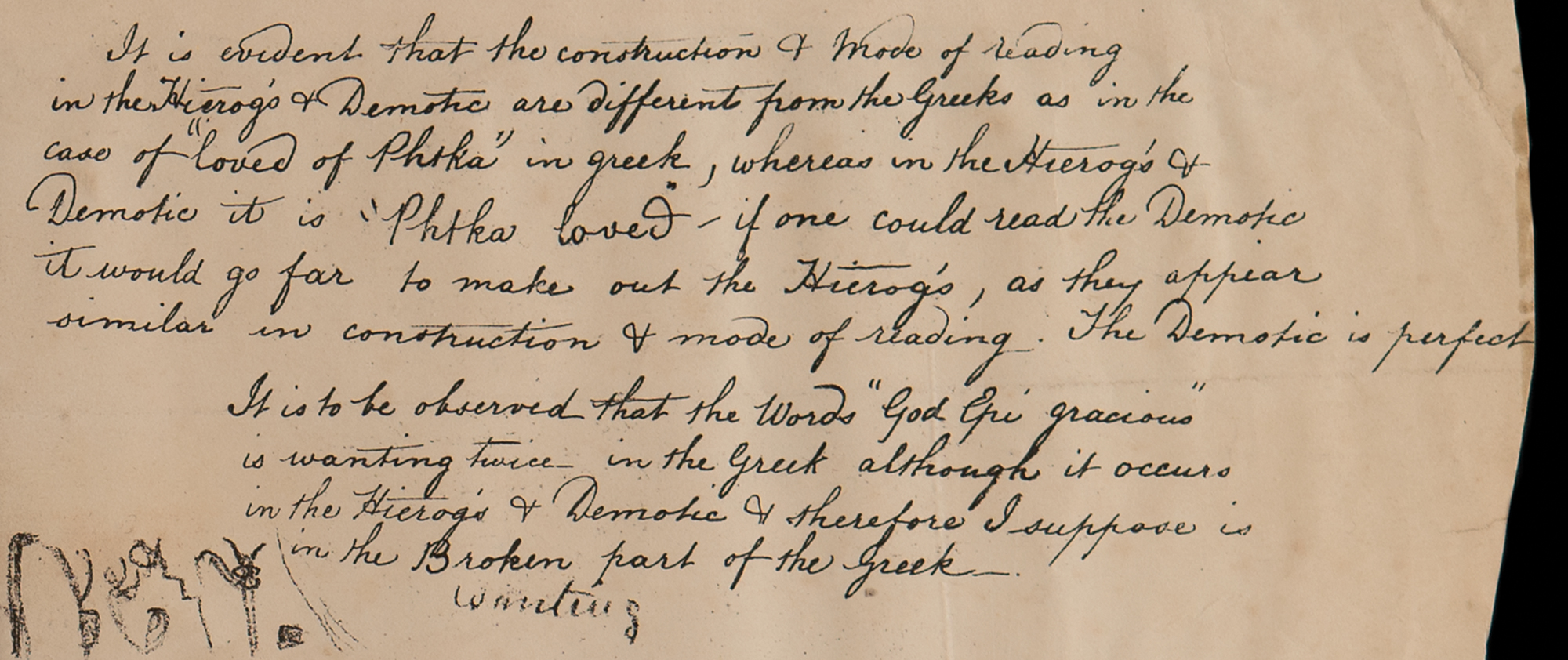
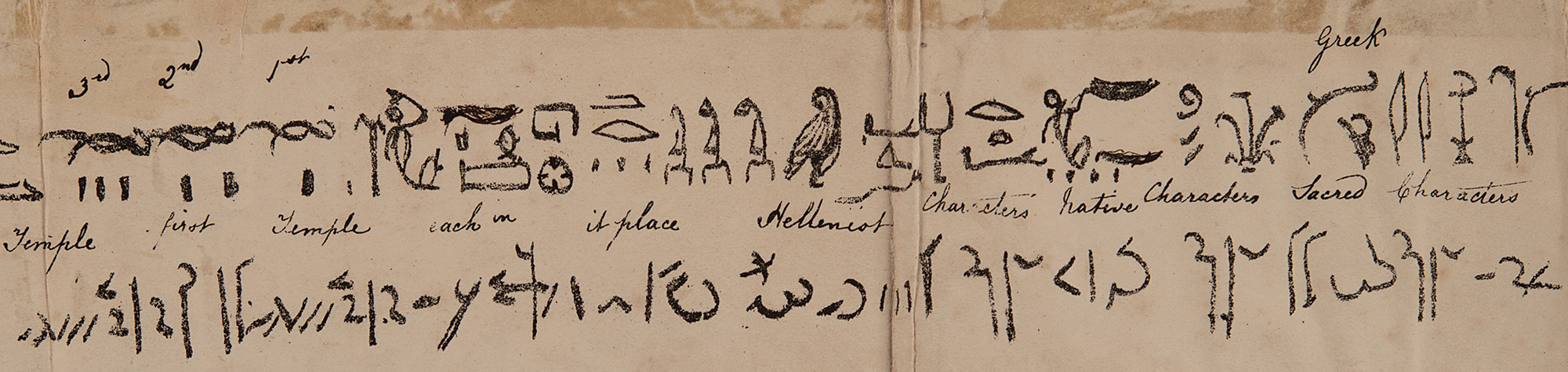
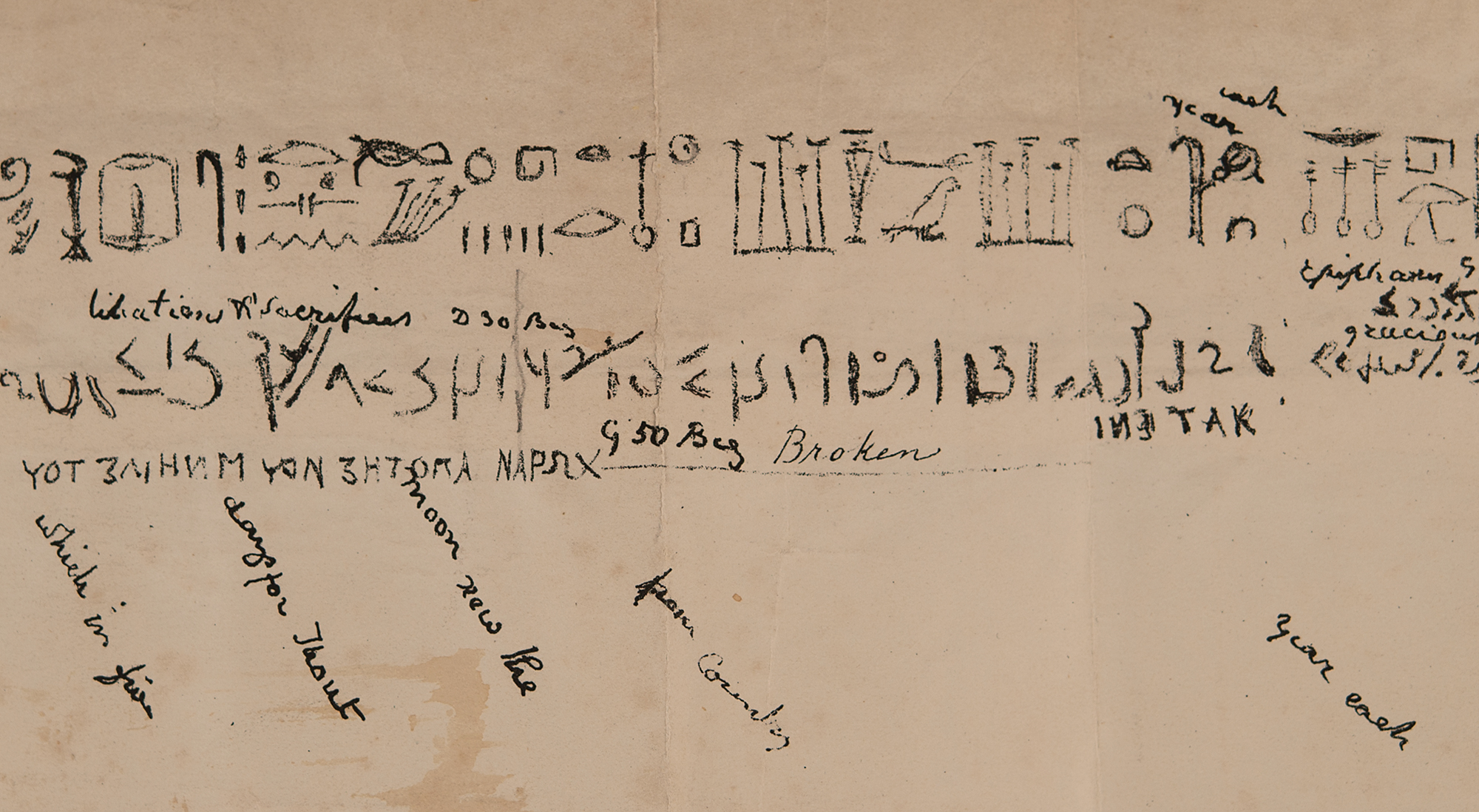
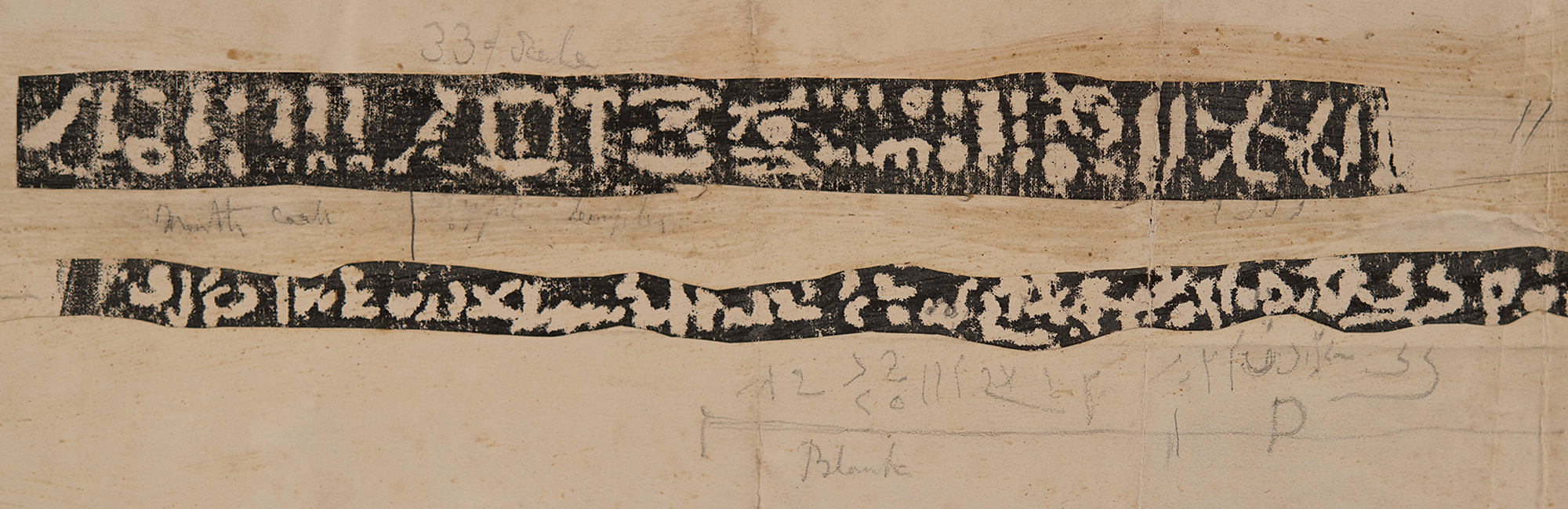
- three large leafs, ranging in size from 32˝ x 10.5˝ to 31˝ x 20.25˝, representing early efforts to decipher to Rosetta Stone. On one side are contemporary lithographic copies of early working texts, placing the hieroglyphics and Demotic side-by-side, along with some of the Greek, with occasional translations into English below. An observation penciled in the left margin of one sheet notes: "It is plain the Greek is very defective and the only way the Harogs [Hieroglyphics] can be made out is by the Demotic." Affixed on the reverse of each leaf are cut-up strips of the reproduced text of the Rosetta Stone; the three pages carry strips of the Demotic text, with two juxtaposing it against the hieroglyphics. Original pencil notations between the strips document attempts at transcription and translation.
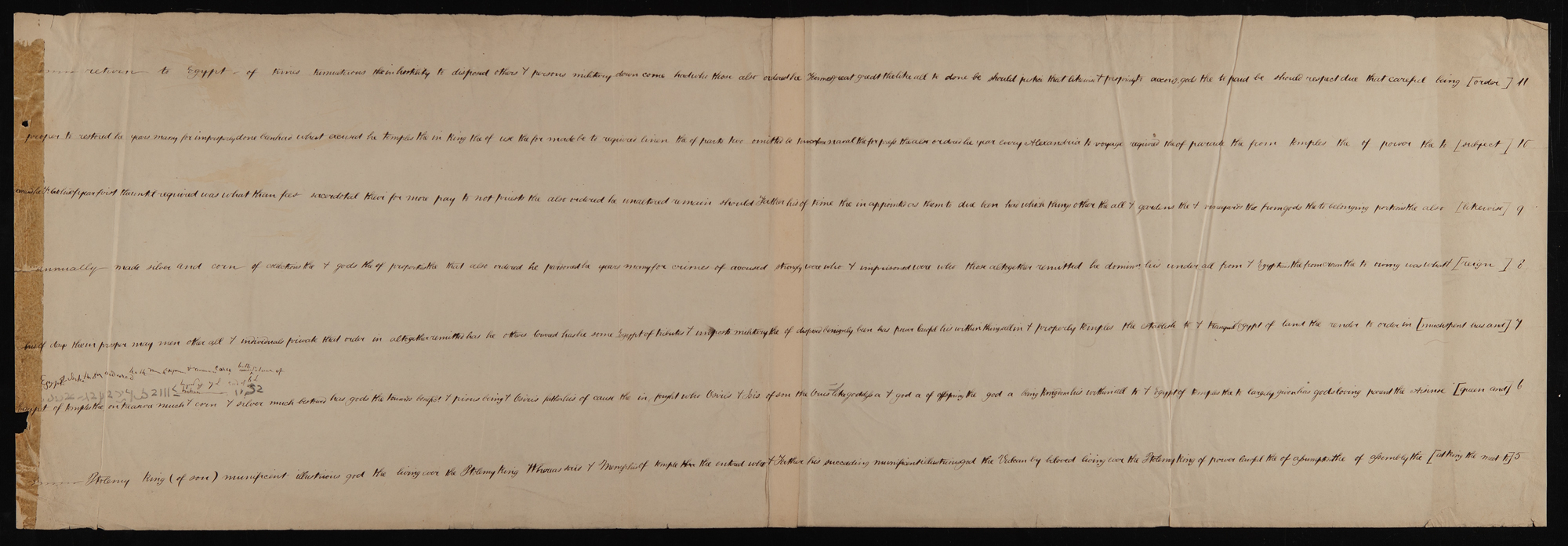
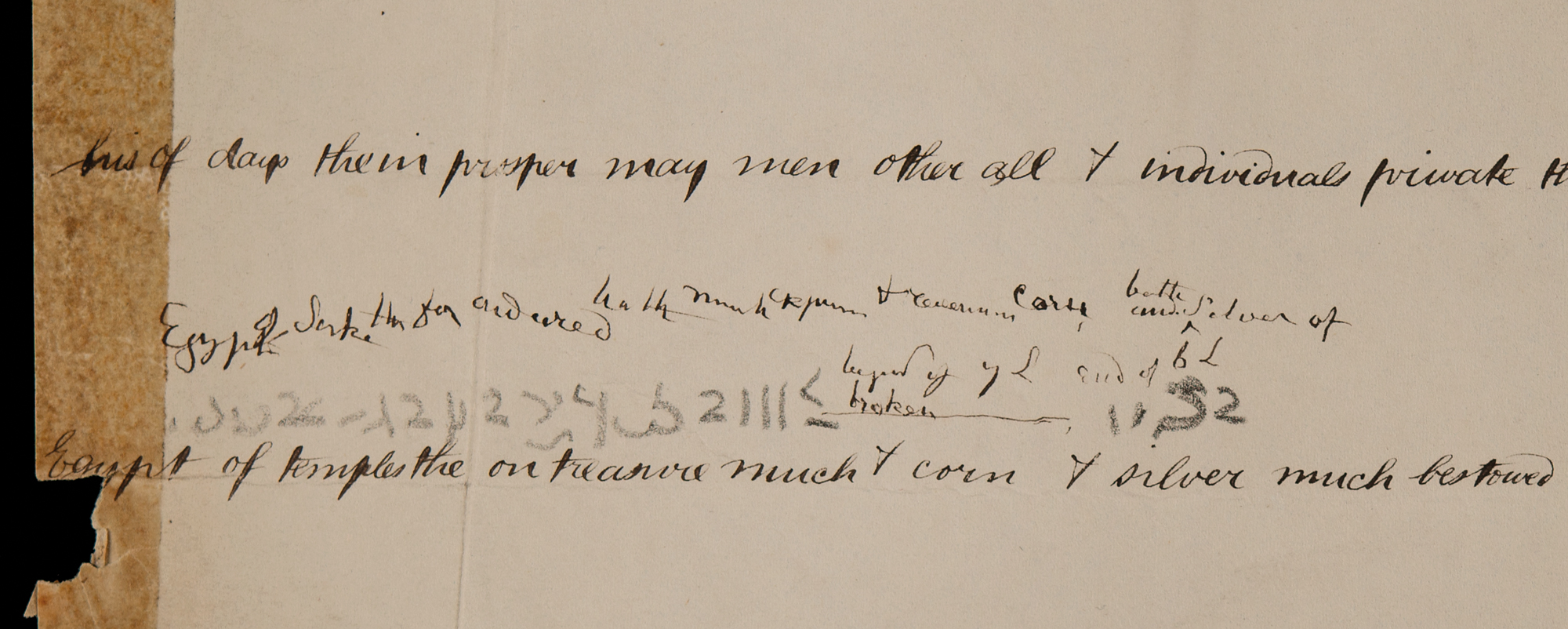
- two 33.5˝ x 11˝ leafs of manuscript translations from the Greek portion of the Rosetta Stone into English, which served as a base for the translation of the Demotic text. On the reverse of the first leaf is a manuscript transcription of a section of Greek text, executed in ink on tracing paper and affixed at its corners to the larger leaf; the text is front facing, and may have been lighted from behind to assist in writing the wide-margined translation on the front page. The 11-line English translation is numbered line-by-line along the right edge.
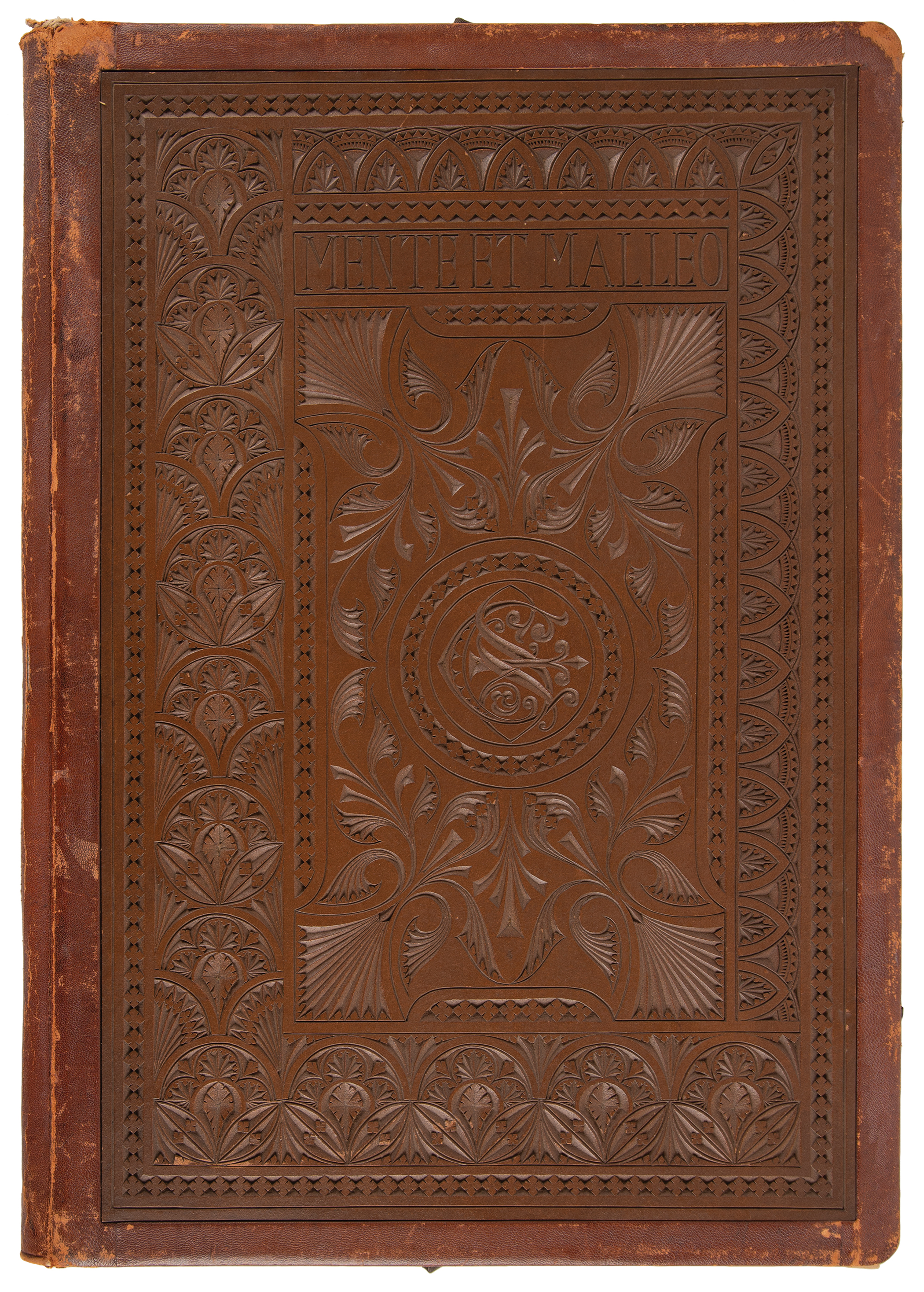
The papers are housed in a contemporary oversized portfolio, 17˝ x 23.25˝, with satin lined folding overlaps and ribbons for secure closure, exquisitely blind-stamped leather boards, titled to front "Mente et Malleo."
In overall very good condition, with folds, creases, and toned tape repairs to several of the oversized sheets. Accompanied by a later 1950 printing of the British Museum's monograph on the Rosetta Stone, which explains the method of decipherment used by researchers like Thomas Young and Jean-François Champollion; the repeated appearance of the cartouche containing the name "Ptolemy" on the Rosetta Stone provided scholars with a crucial starting point for matching hieroglyphic symbols to known Greek letters. By identifying and comparing these symbols, researchers were able to begin deciphering the phonetic system of Egyptian hieroglyphs, thus unlocking the mysteries of the Rosetta Stone and the lost language of Ancient Egypt.

