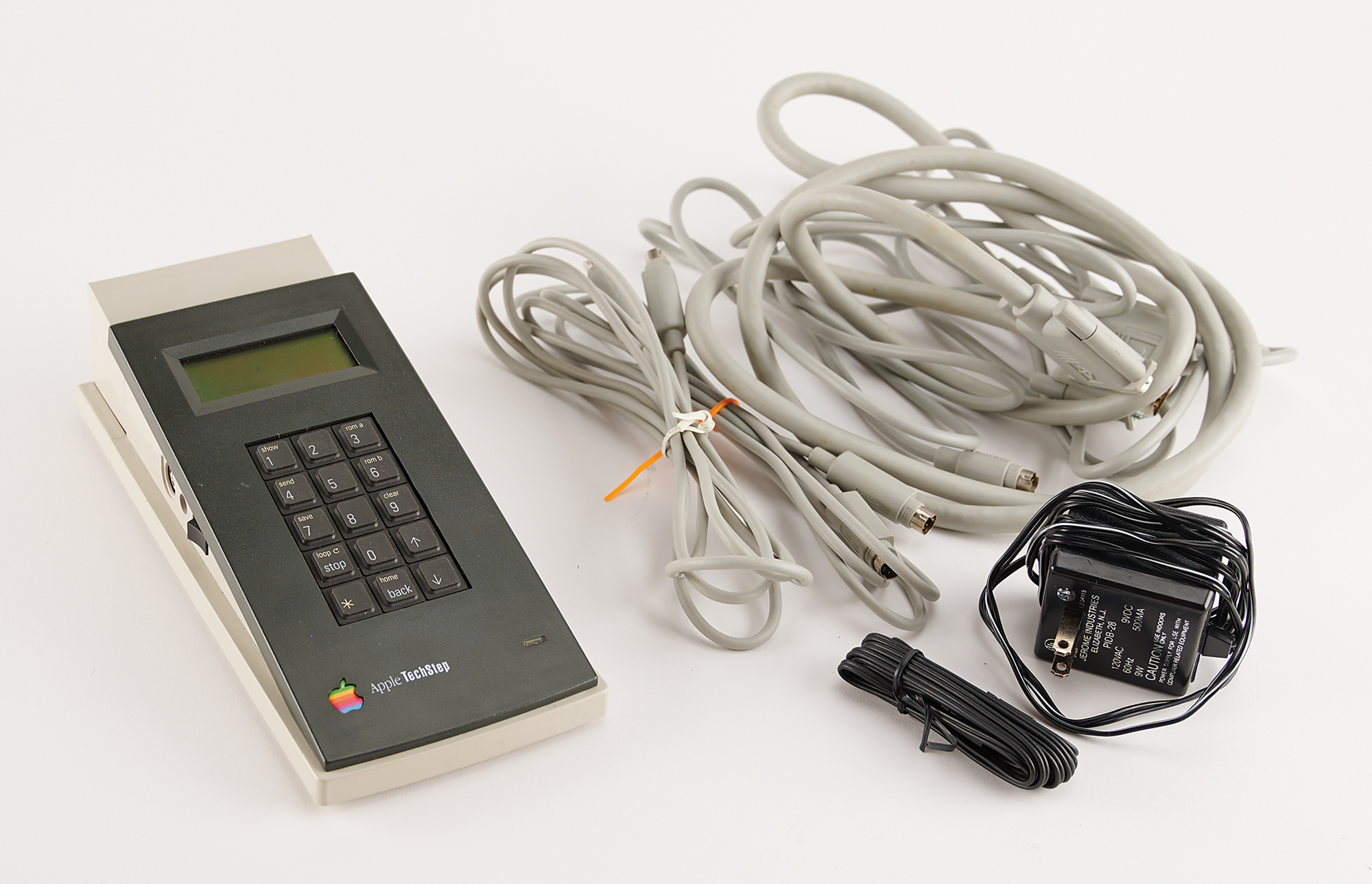
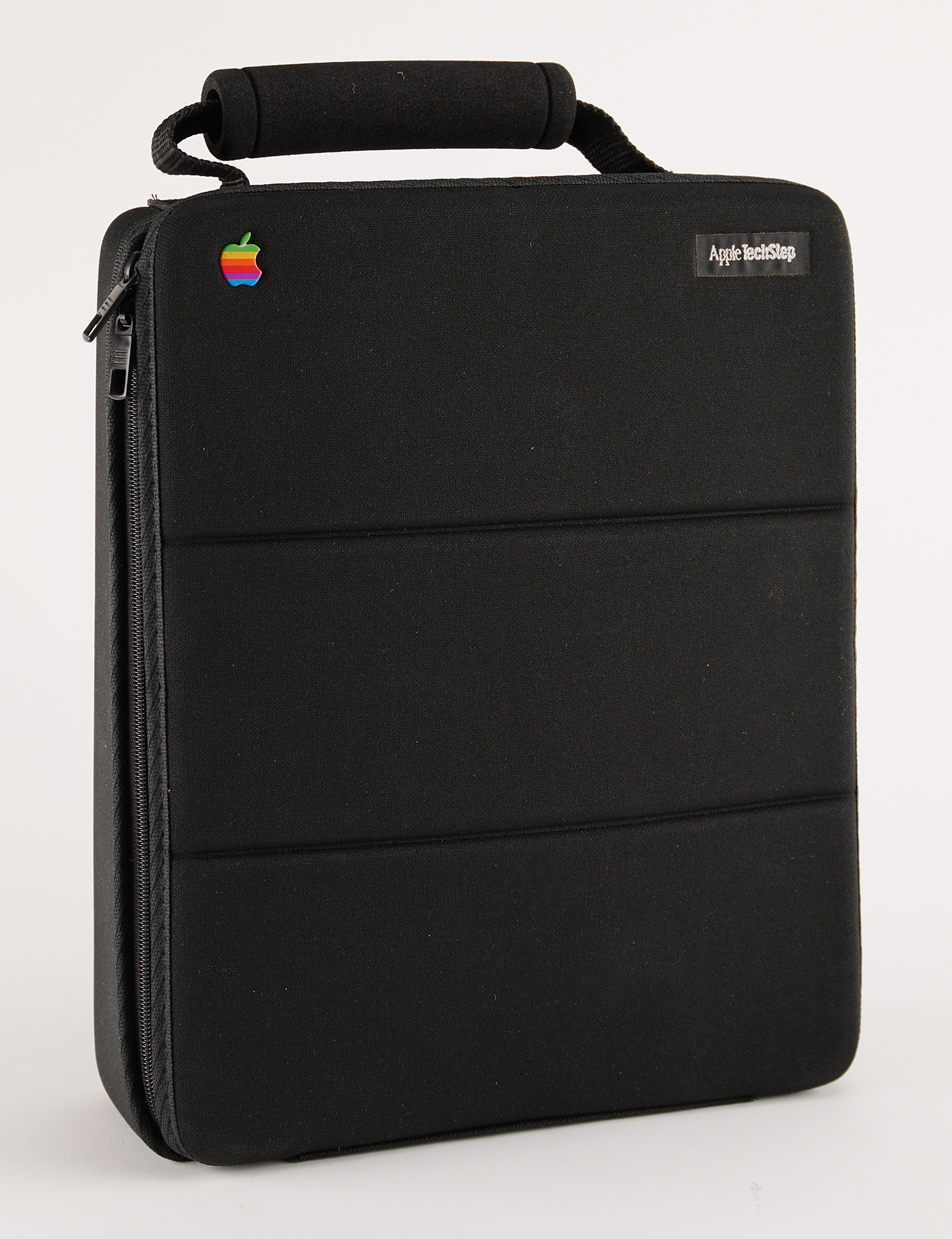
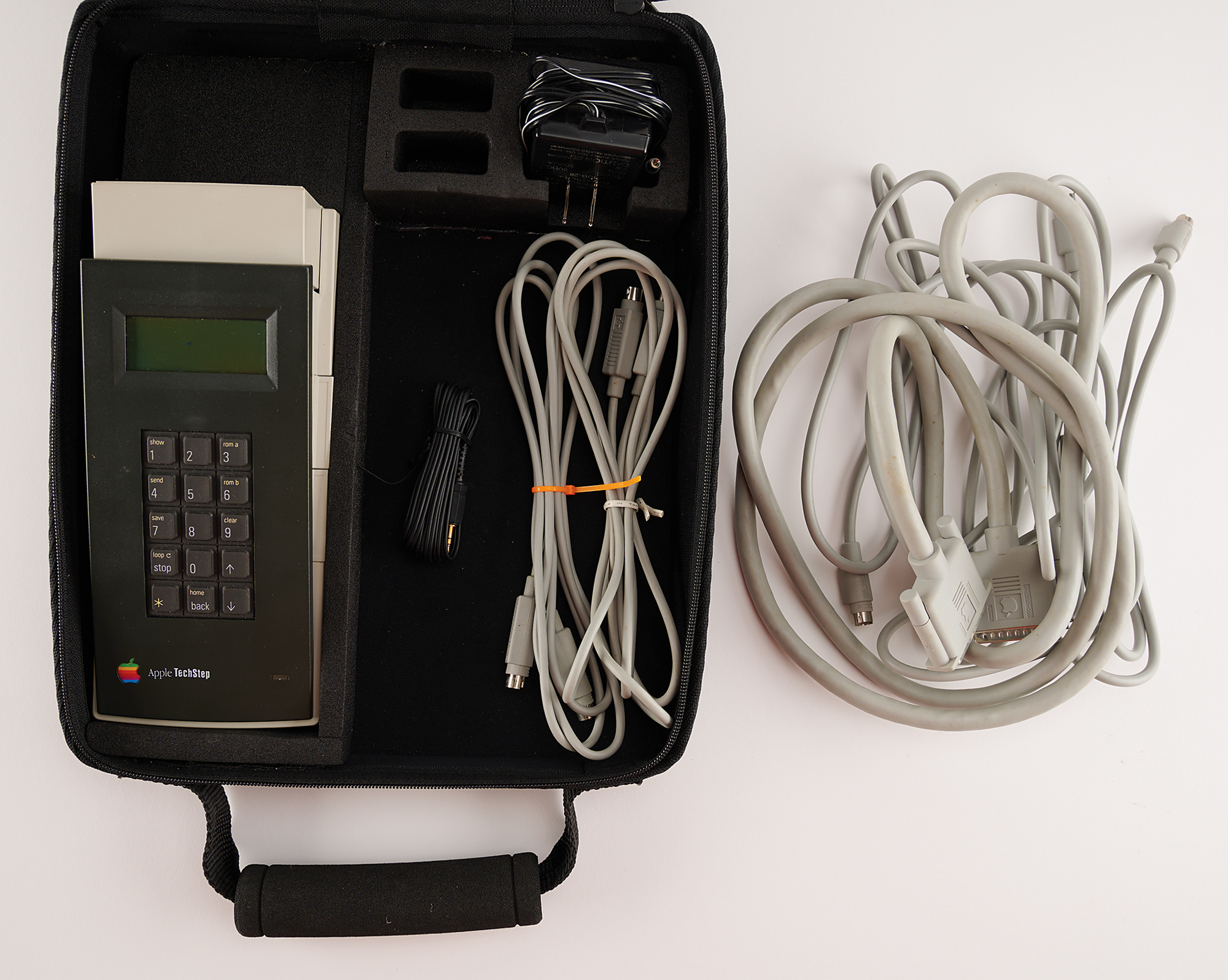
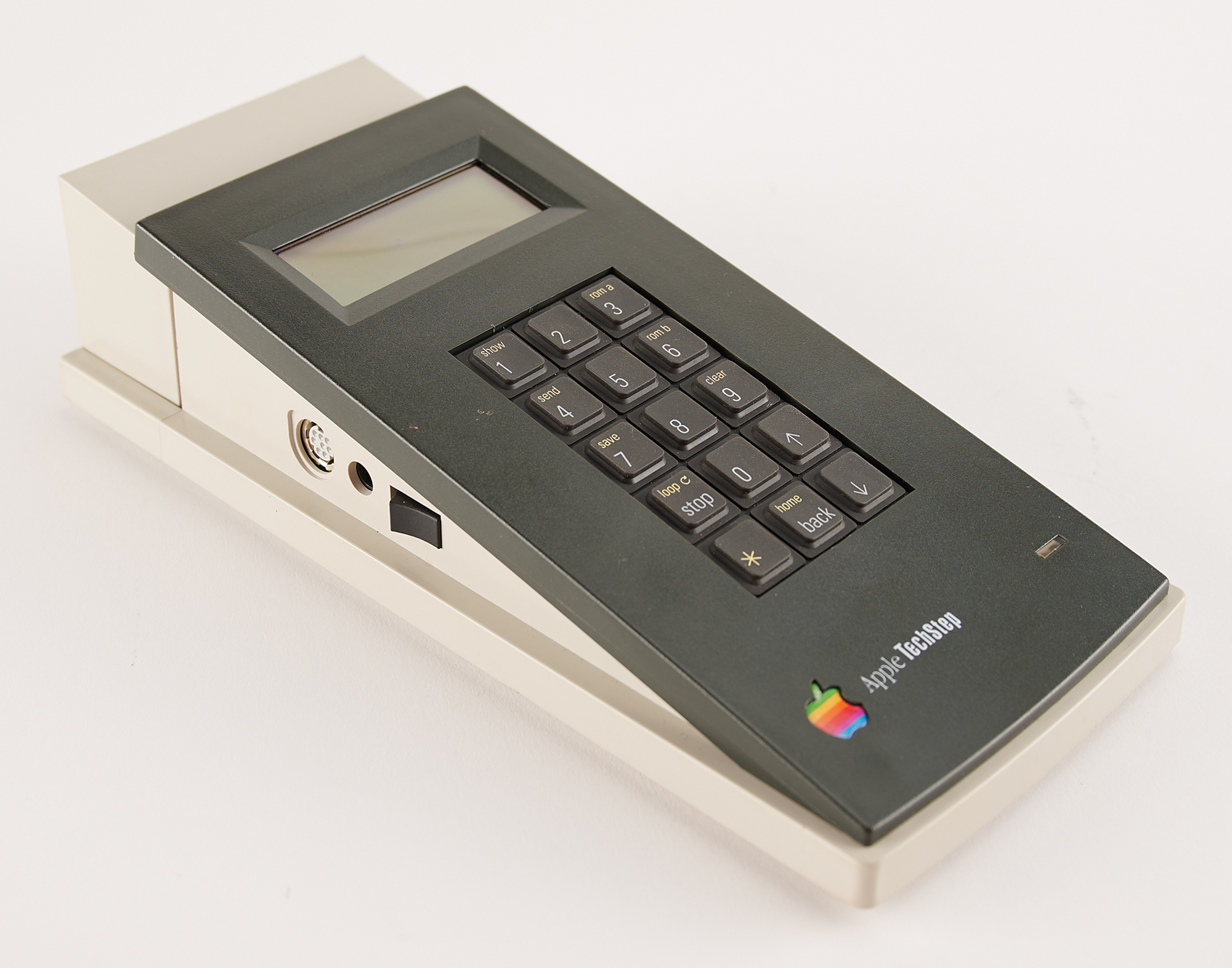
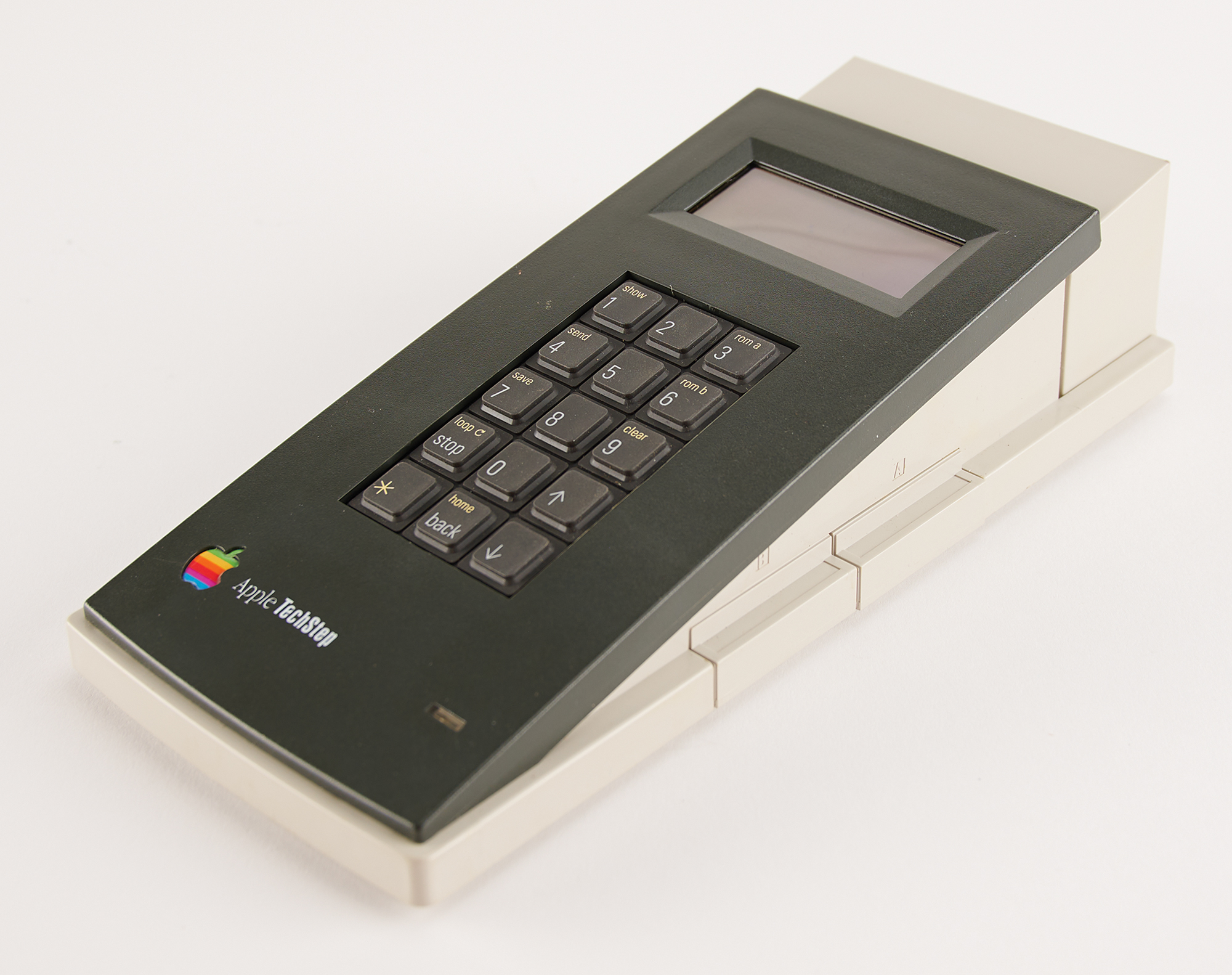
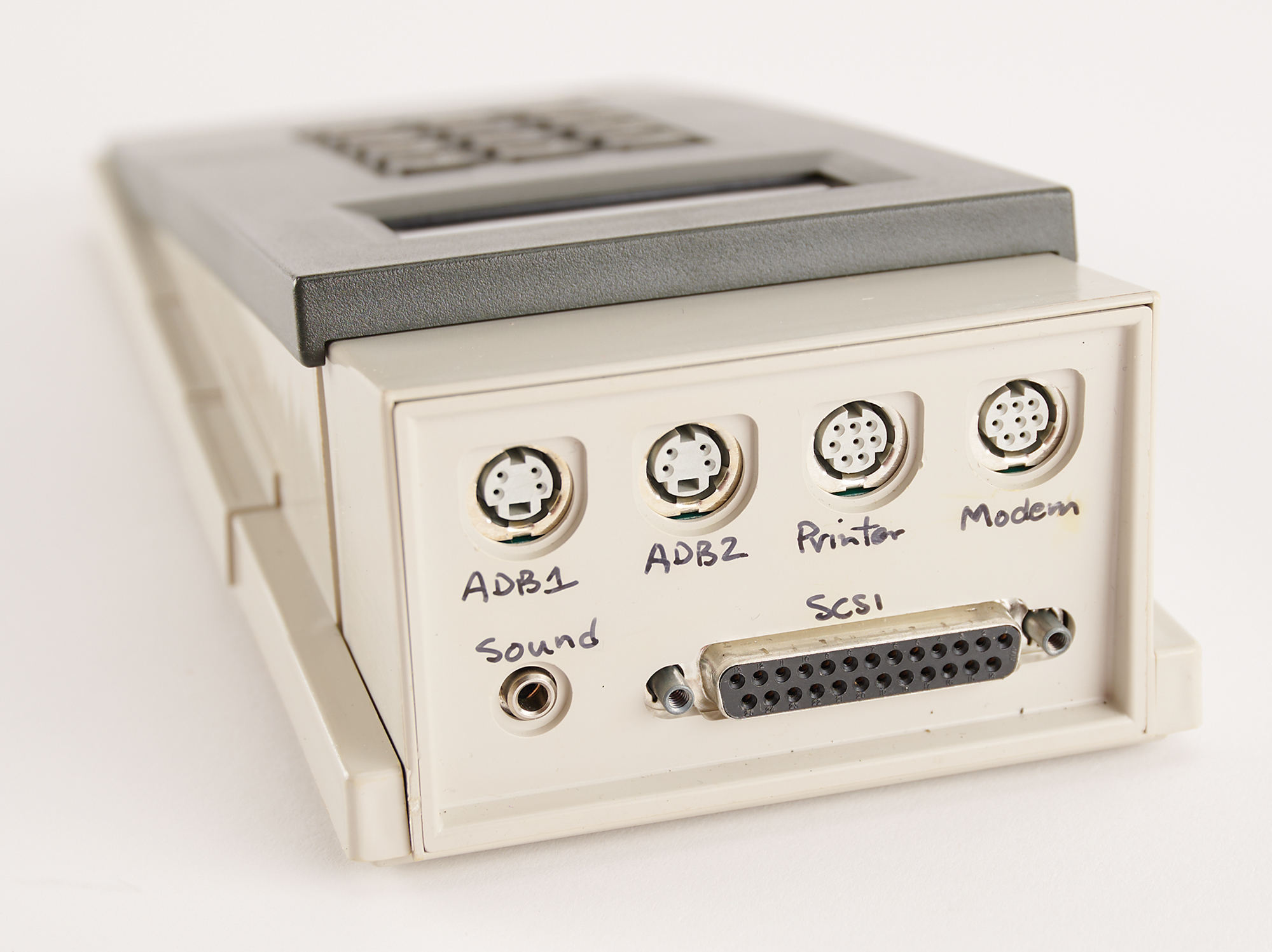
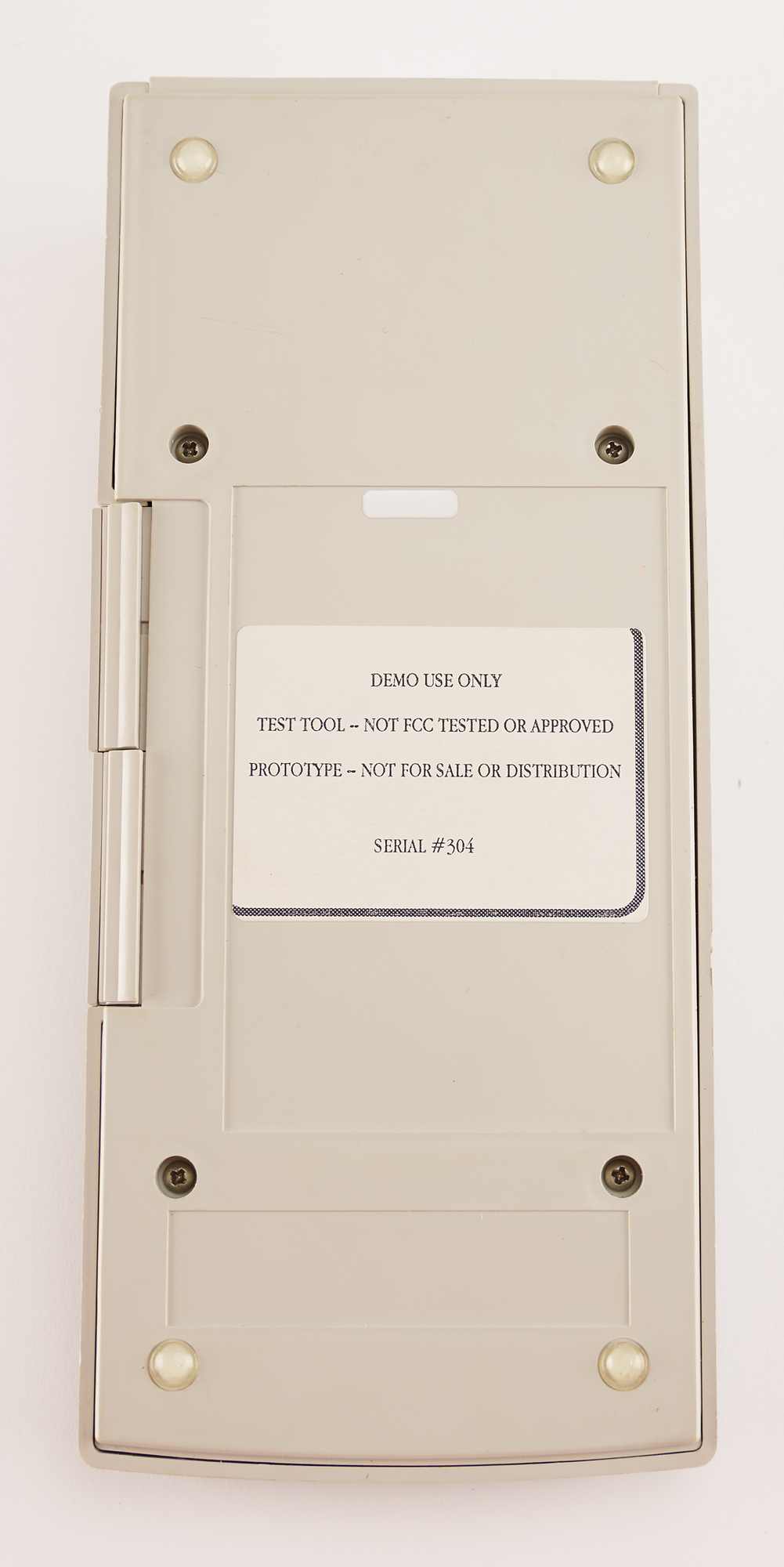
Early working prototype of the Apple TechStep handheld diagnostic tool, deriving from the personal collection of Taylor Pohlman, a former product manager at Apple who left the company in 1982 to cofound Forethought, Inc., developers of the world-famous presentation program PowerPoint. When Pohlman rejoined Apple as Director of Apple Service, he led the team that developed this product, to be used by Apple service technicians. The tool, which measures 4.25˝ x 9.5˝ x 2.5˝, was designed to diagnose and troubleshoot most 68K Macintosh systems, including the Macintosh Classic, Macintosh SE, Macintosh SE/30, Macintosh II, and several others, communicating with the computer over various ports, including SCSI. The underside bears an affixed label marked: "Demo Use Only, Test Tool – Not FCC Tested or Approved, Prototype – Not for Sale or Distribution, Serial #304." The ports on the back of the device are marked in felt tip: "ADB1," "ADB2," "Printer," "Modem," Sound," and "SCSI." The machine, which contains all of its plug-in diagnostic ROMs, is housed in its original padded case with cables and a power supply. In fine, working condition. Accompanied by a signed letter of provenance from Pohlman.
Macworld reports: ‘This little-known diagnostic tool, which allowed technicians to troubleshoot Mac systems, unintentionally represented Apple’s first handheld mobile computer platform. While most consider this small device an accessory, the TechStep itself contains an embedded computer running specialized software from Apple-provided ROM software packs. No third-party development occurred for this limited diagnostic platform.’
Pohlman notes: ‘When I was Director of Apple Service, we started an innovative project to develop a hand-held diagnostic tool to diagnose problems with Mac computers. The device used special ROM-based diagnostic software and connected to ports on the back of various Macintosh computer models, and could remotely control the Macs and troubleshoot them. It was sold exclusively to Apple dealers for the first few years. The unit you're seeing here is an early working prototype of what was eventually shipped in the early 90s, given to me by the development team headed by Patricia McDougal, who reported directly to me at the time. You will note the ‘prototype’ label on the back of the unit, and the hand-lettered cable port labels on the rear of the unit. I have seen one of these for sale online, a final model, but to my knowledge, no other prototypes are still around, certainly not available online.’

