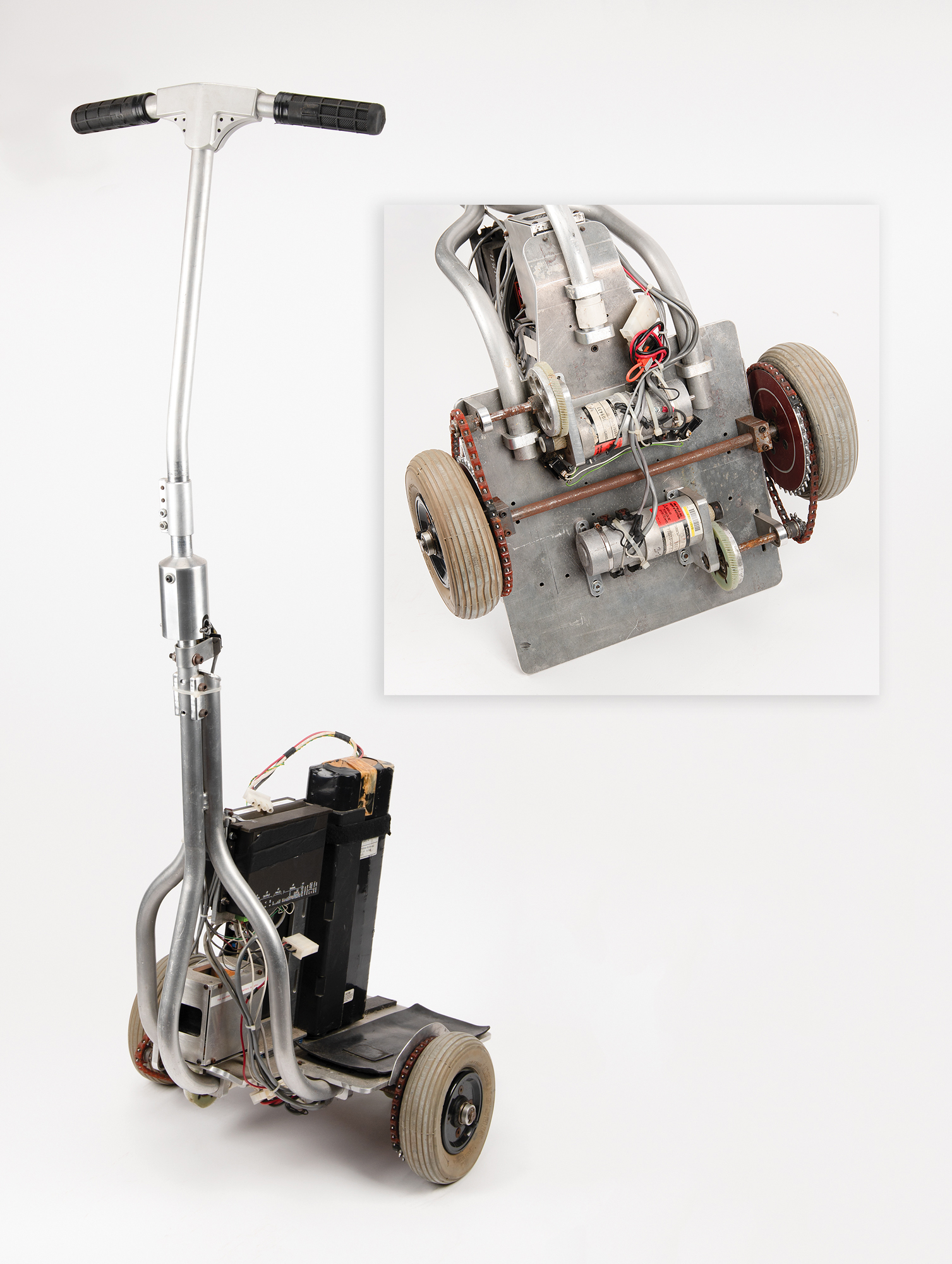
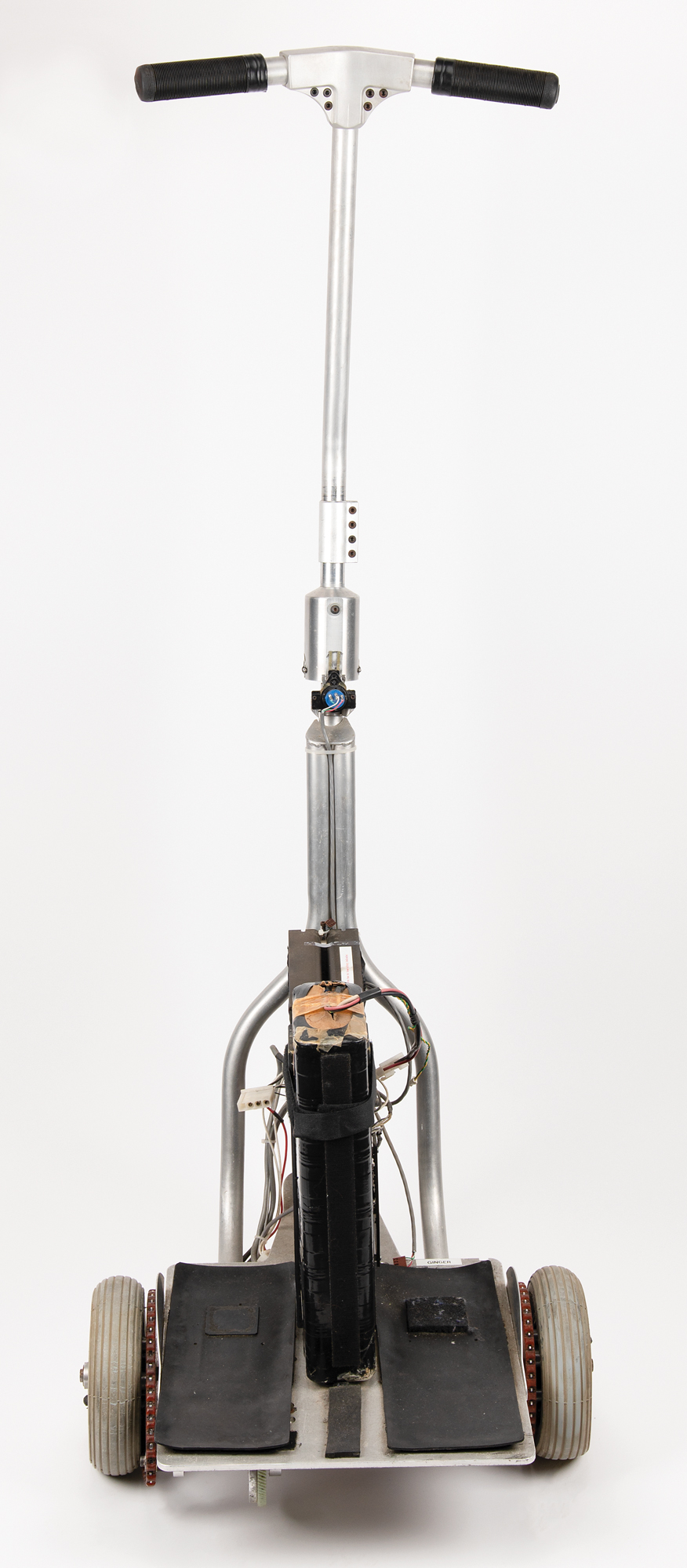
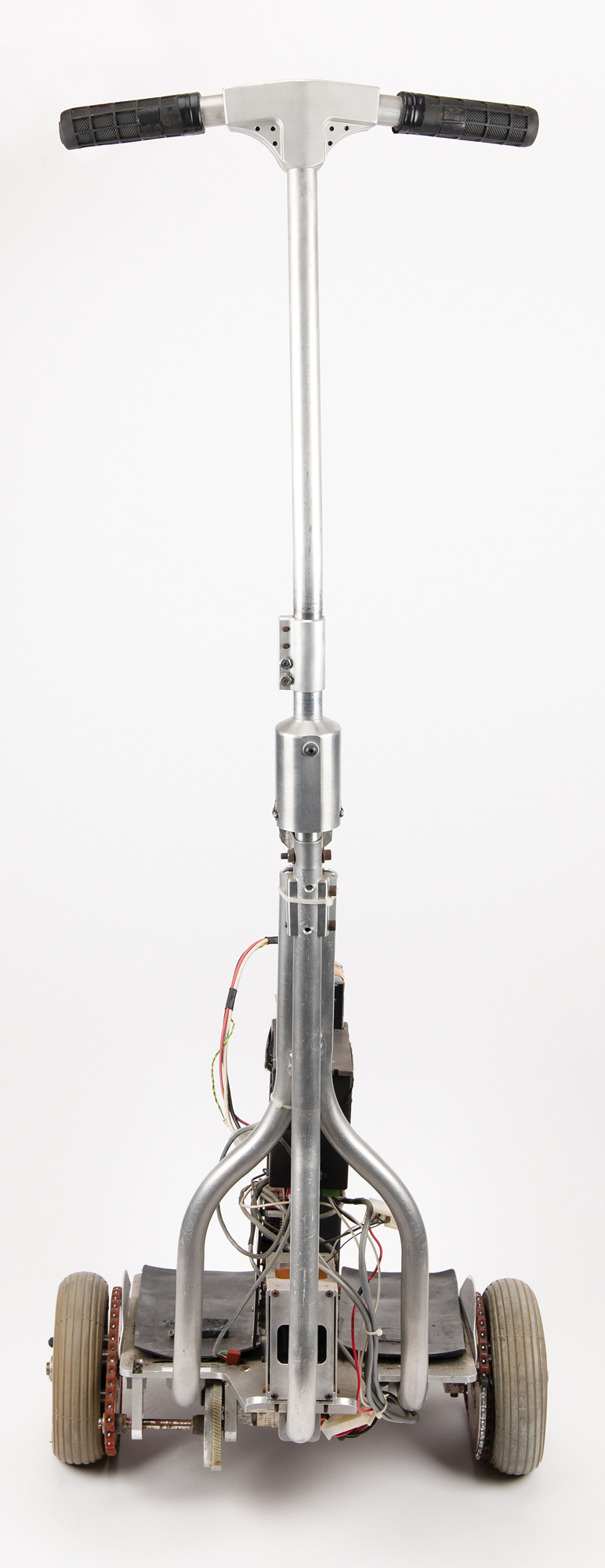
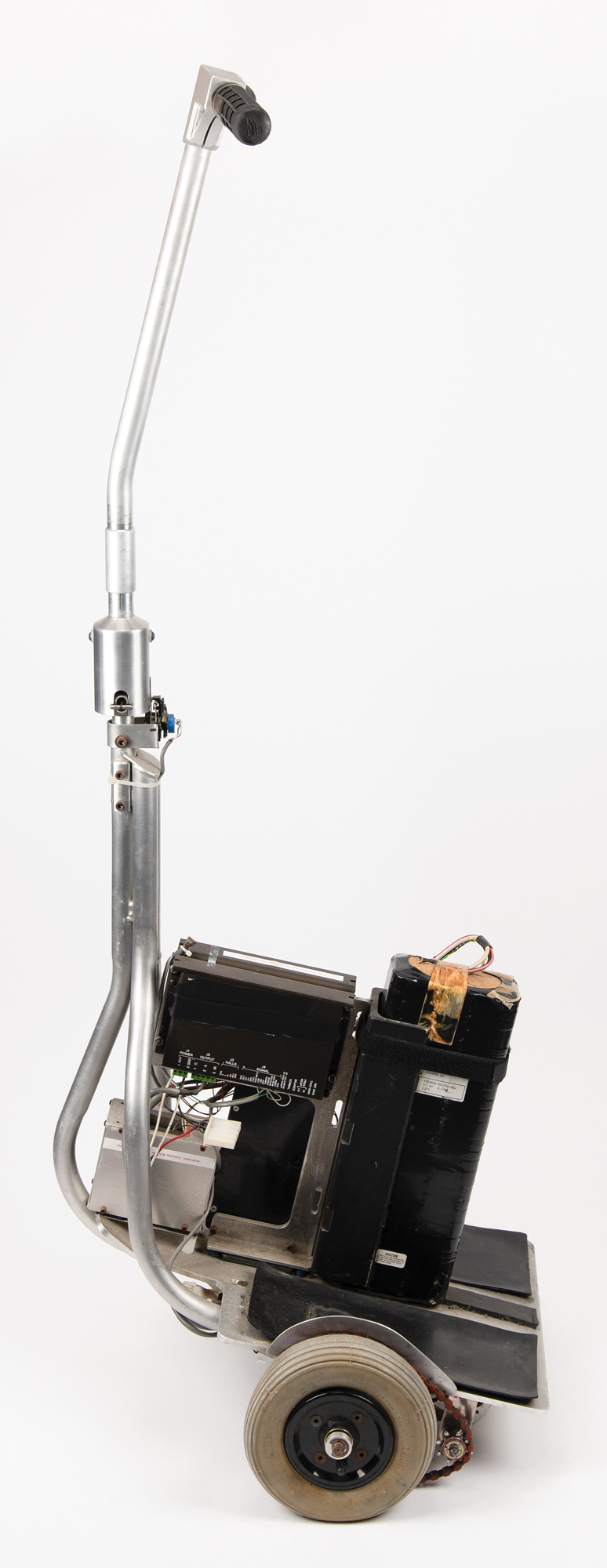
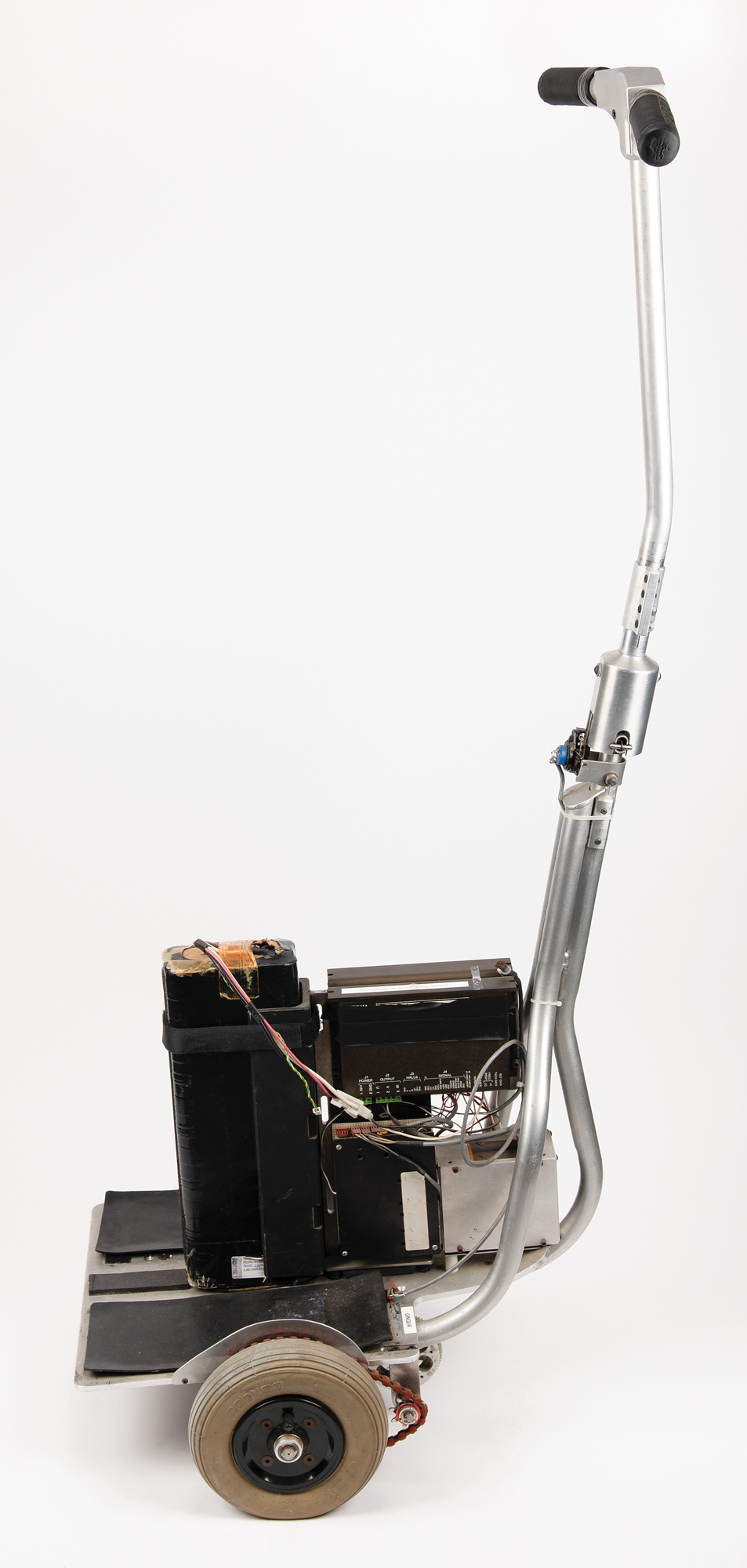
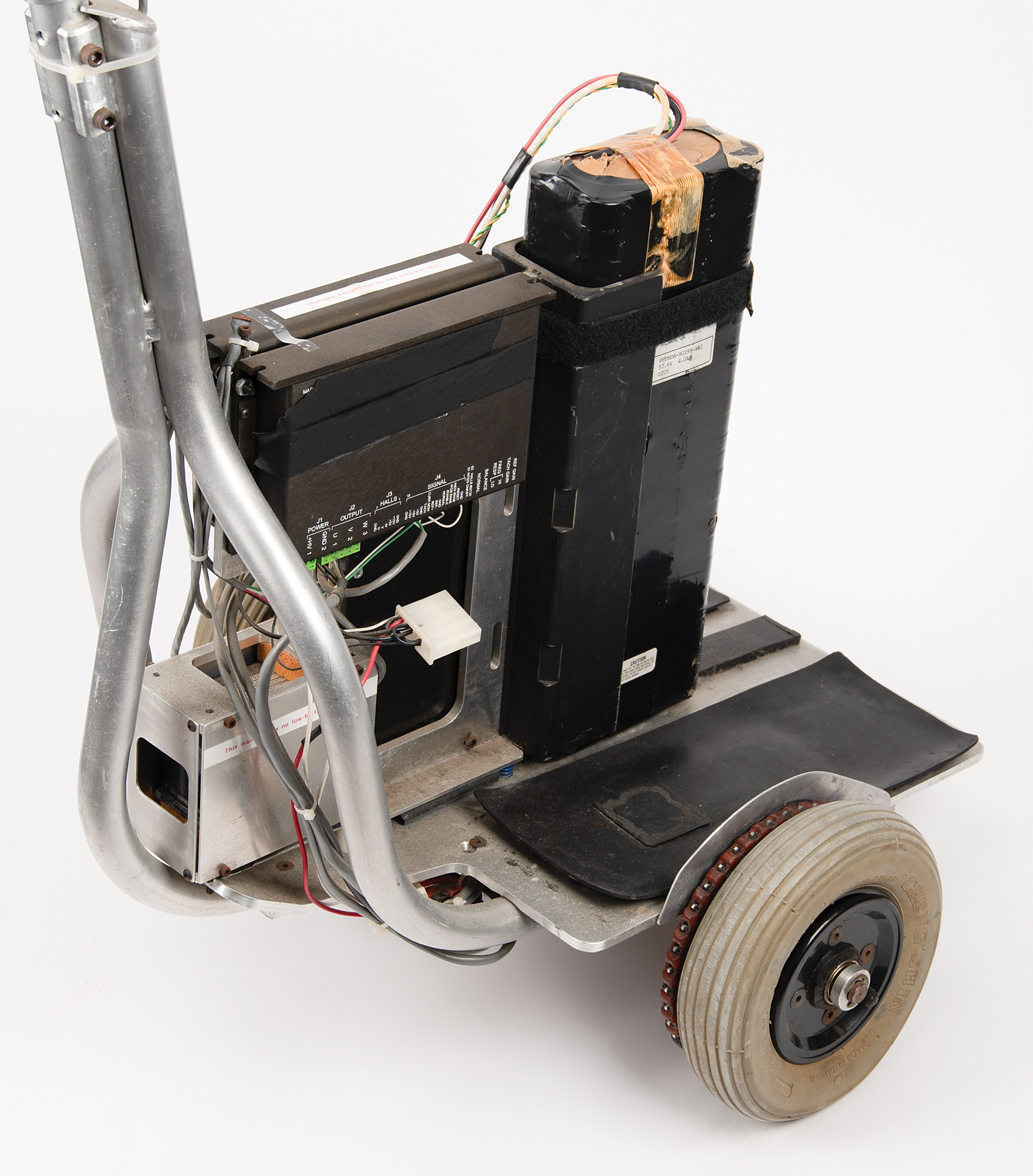
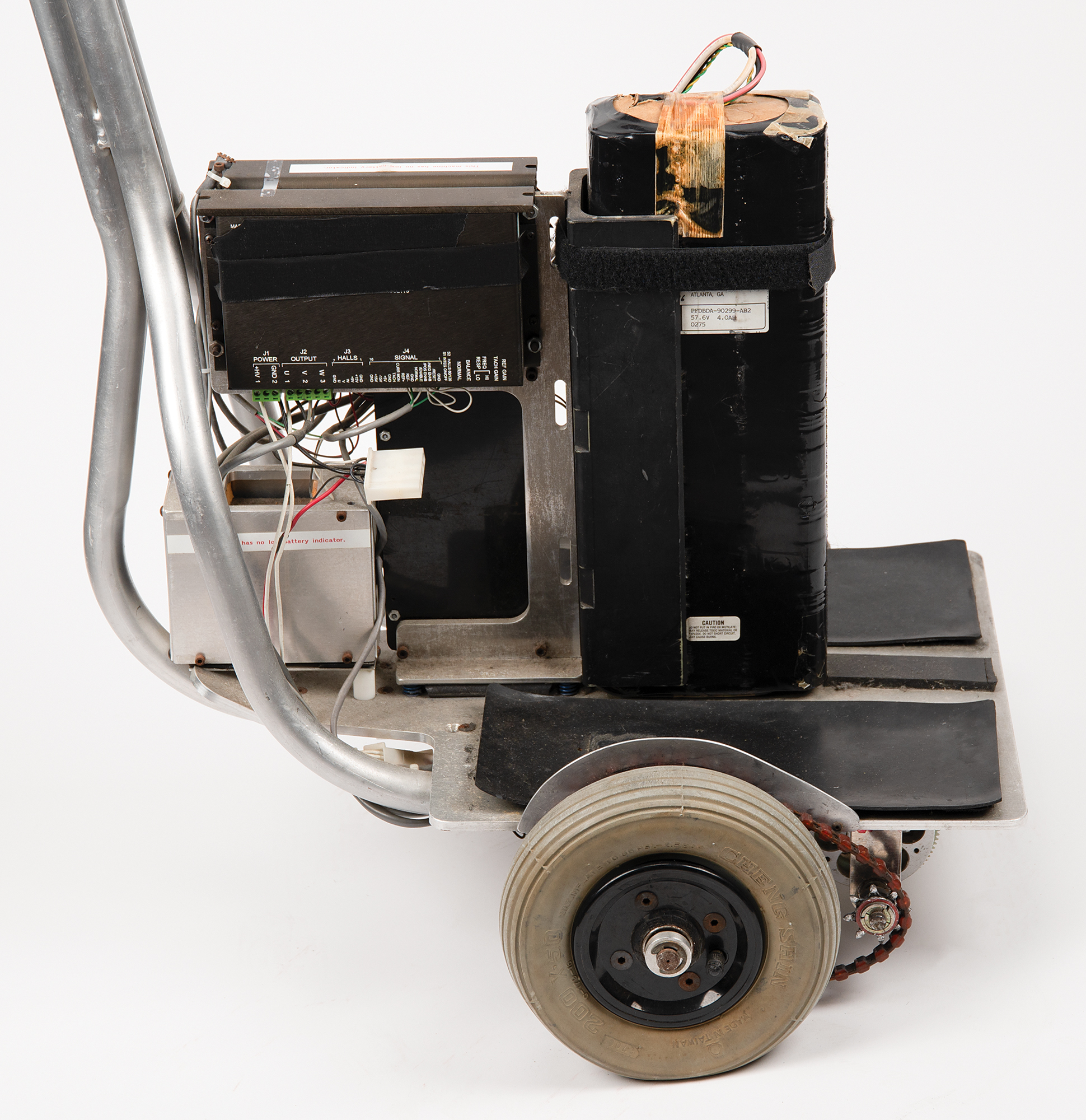


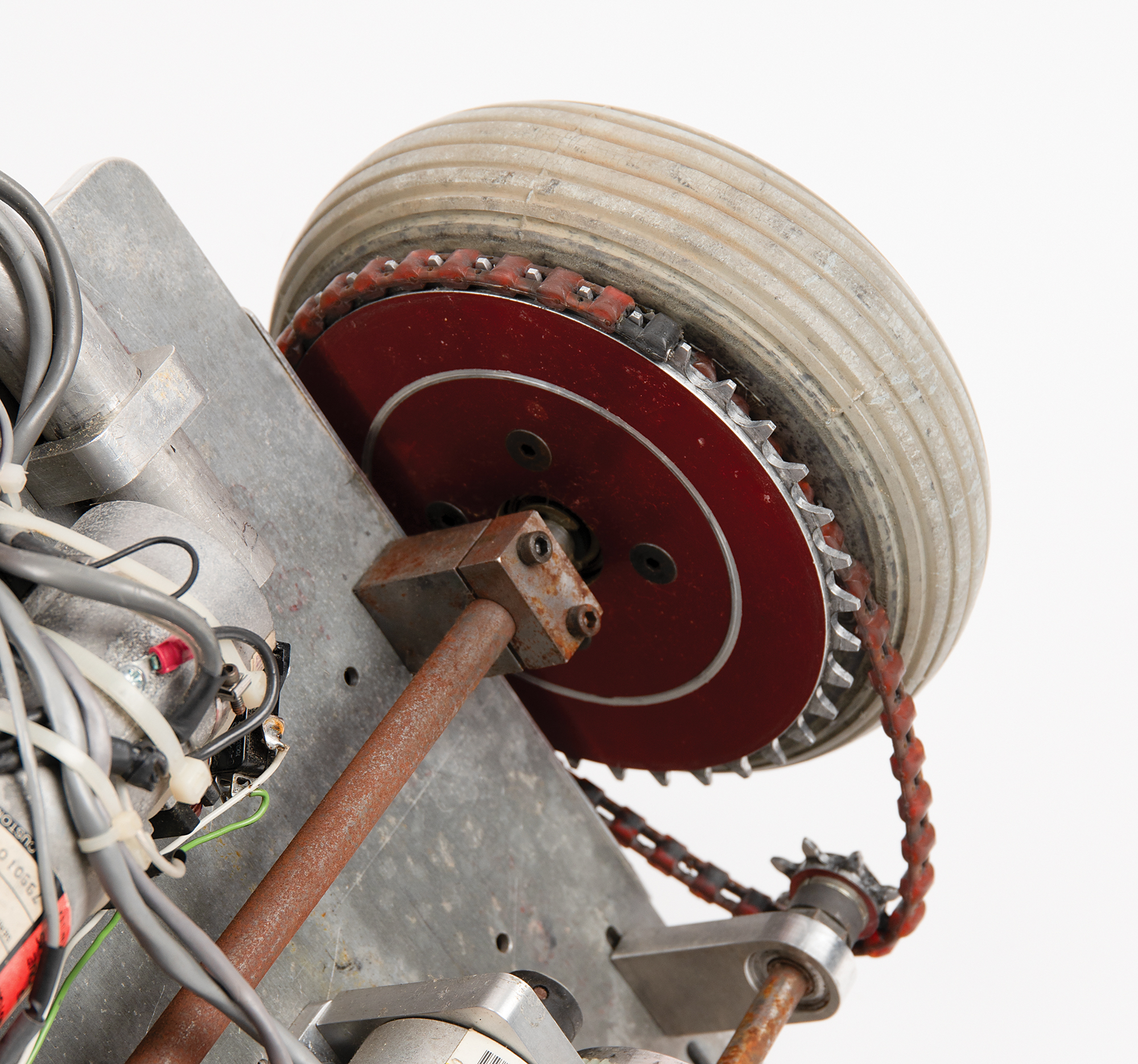
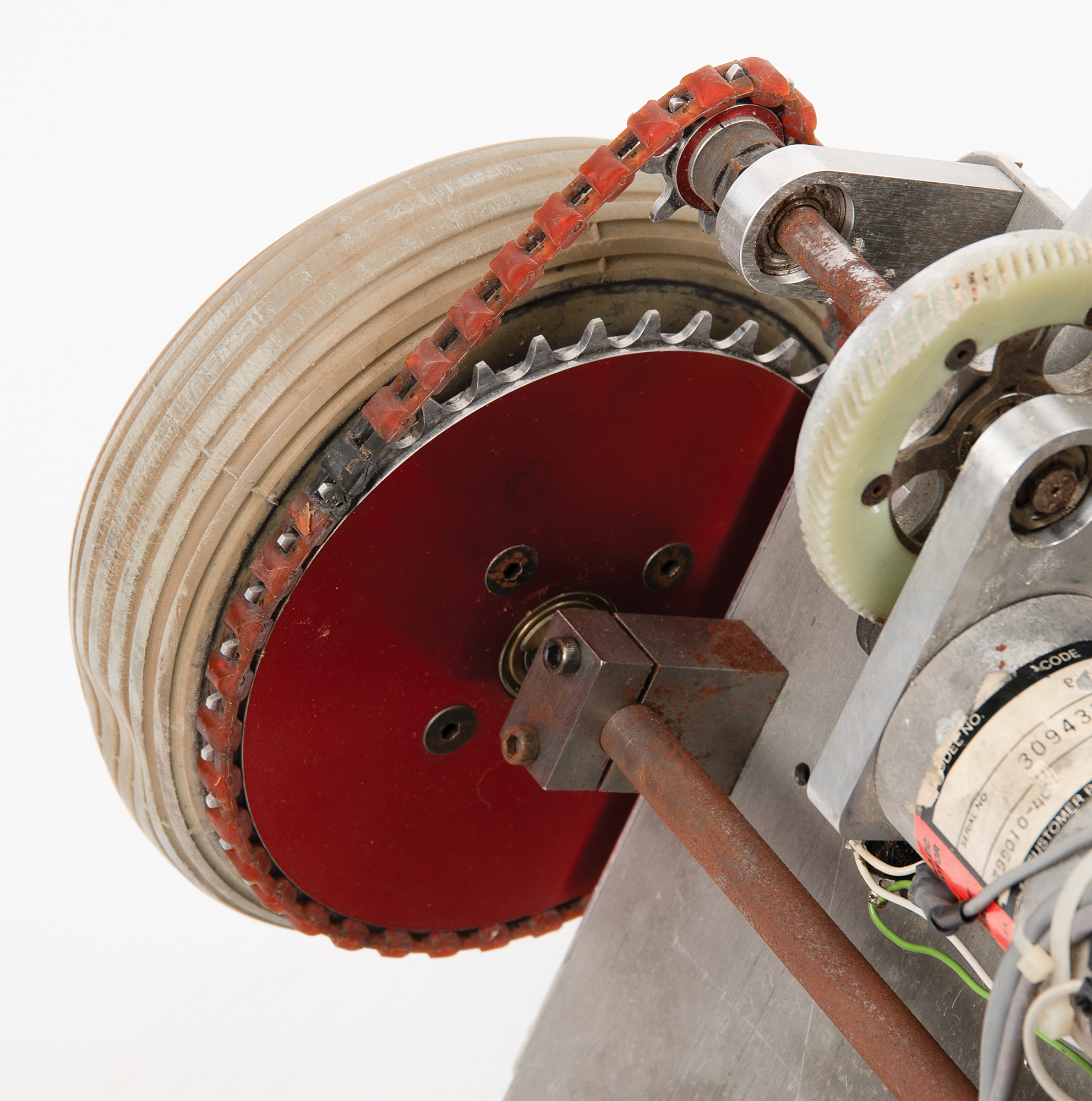

Early engineering concept prototype of the Segway two-wheeled personal transporter, codenamed "Ginger," developed in secret by Dean Kamen in the late 1990s. The product was revealed with much fanfare in December 2001 as a self-balancing personal mobility electric vehicle that was expected to transform urban transportation and revolutionize cities of the future.
The Segway captured the imagination of Silicon Valley and global investors alike at the turn of the century and became synonymous with early 21st-century tech ambition. Backed by notable investors such as Steve Jobs and John Doerr, the project raised over $100 million in development funds and was once heralded as the most anticipated tech reveal since the original Macintosh. Jeff Bezos, an early supporter of the Segway, called it 'one of the most famous and anticipated product introductions of all time.'
Today, the prototype stands not only as a marvel of engineering—featuring breakthrough dynamic stabilization and battery technology—but also as a cultural artifact that marked a pivotal moment in personal mobility and startup mythology.
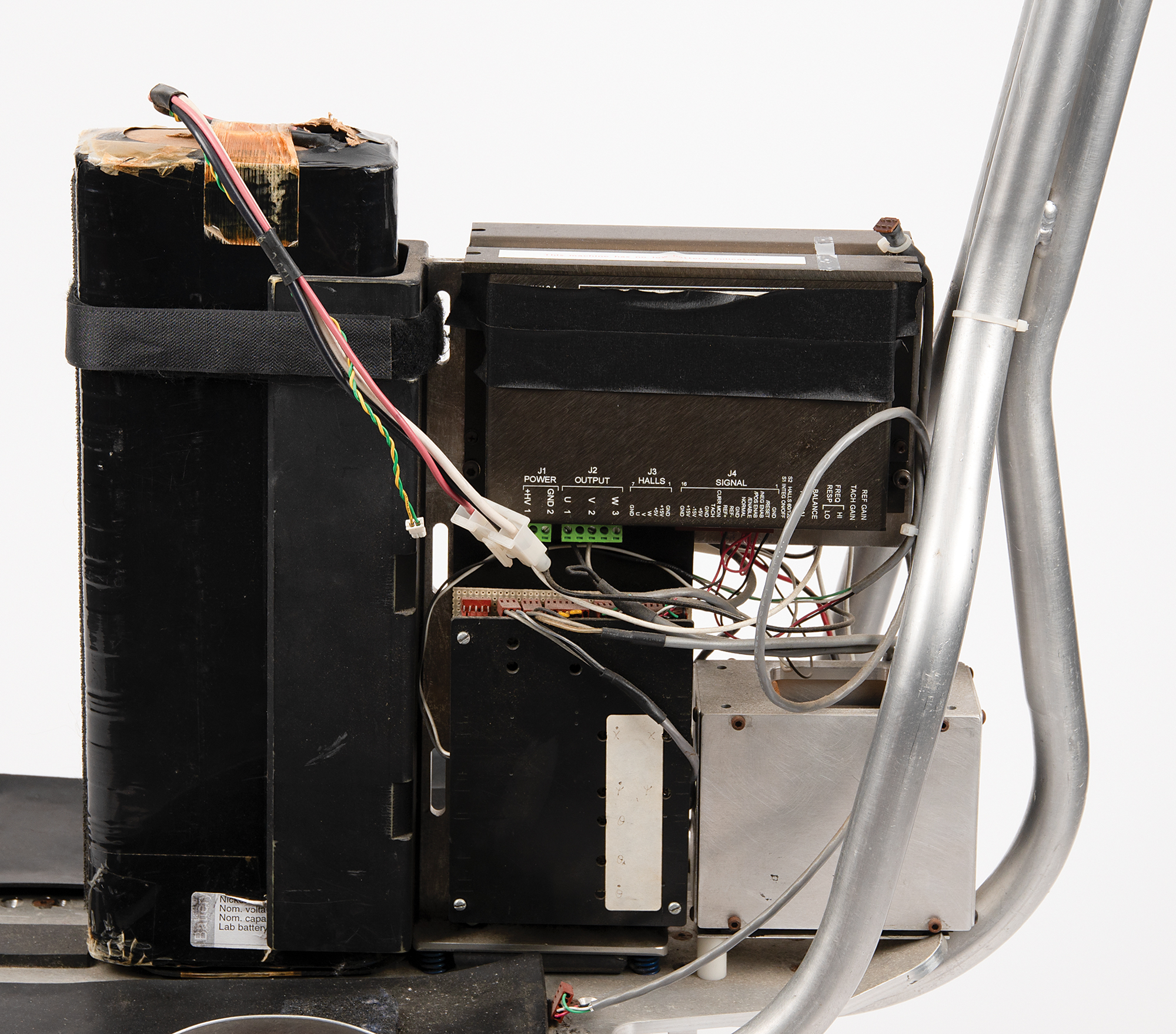
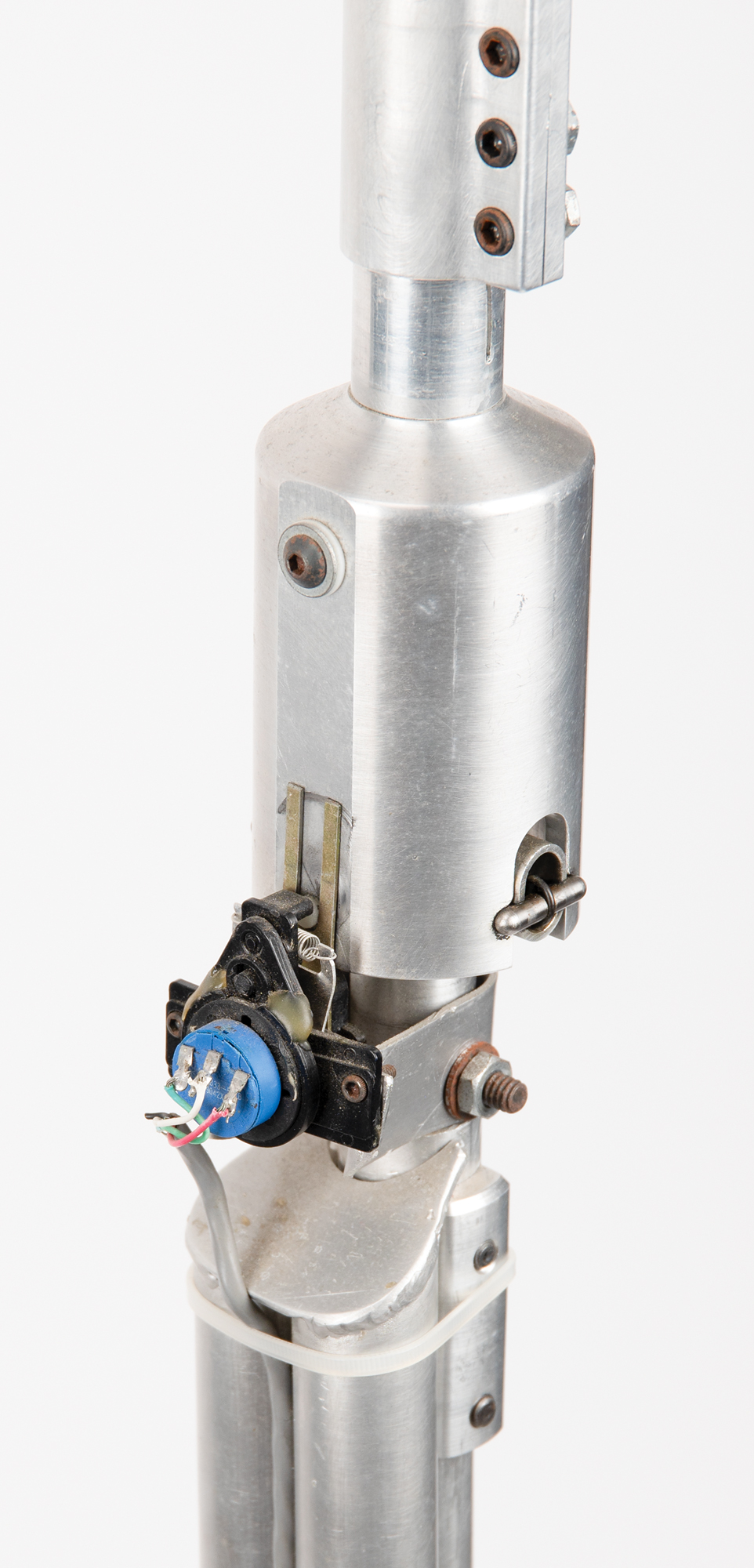
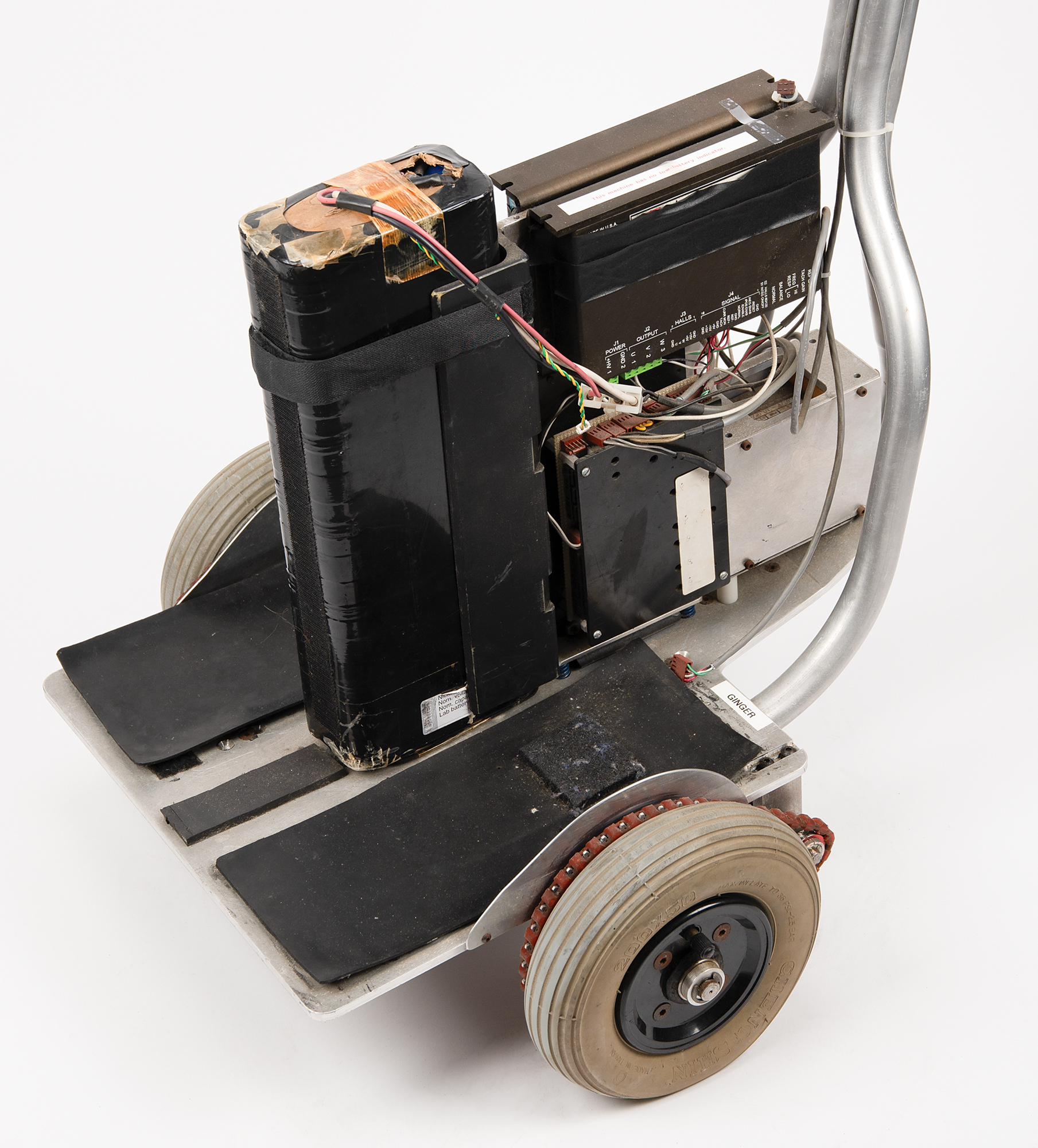
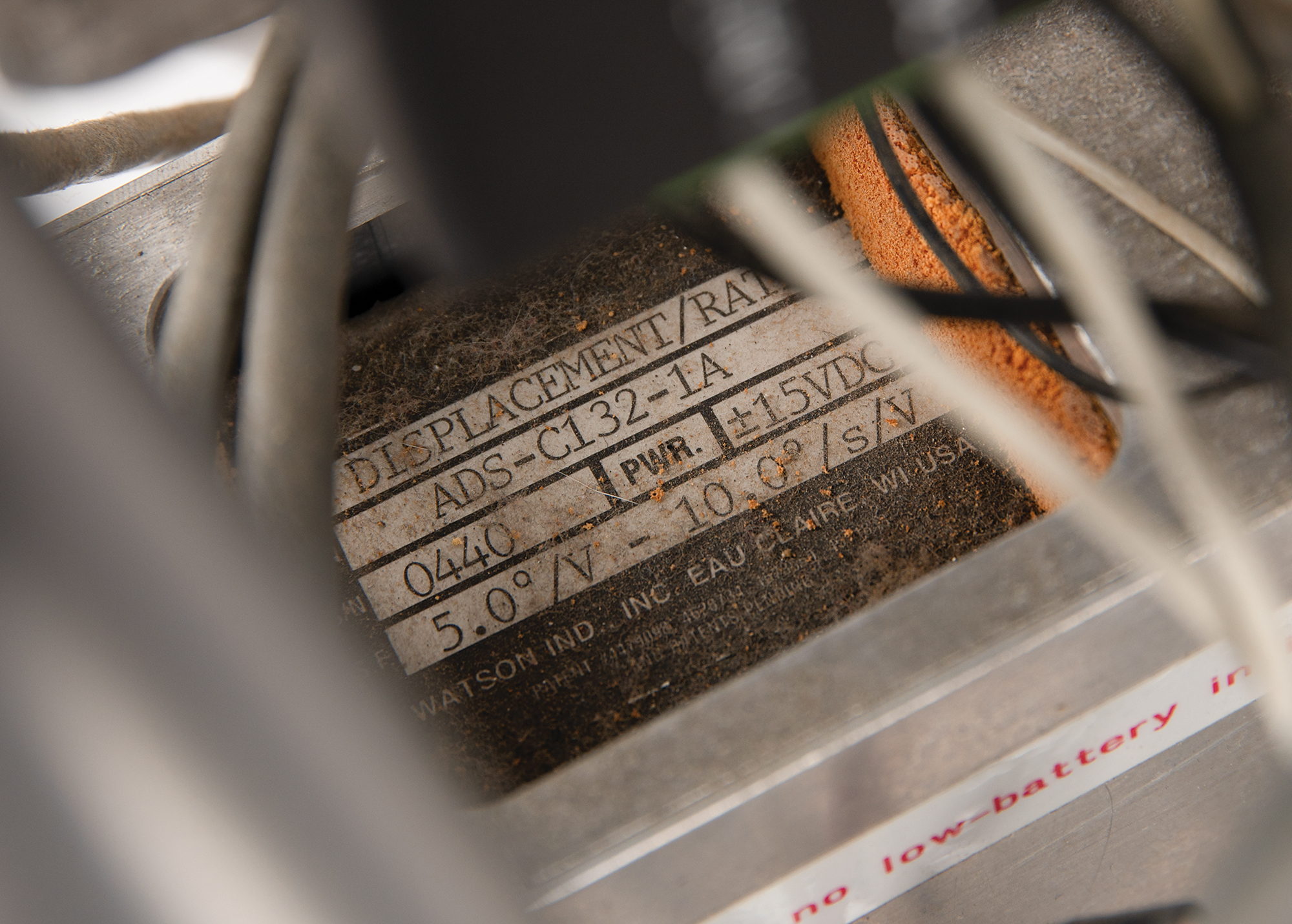
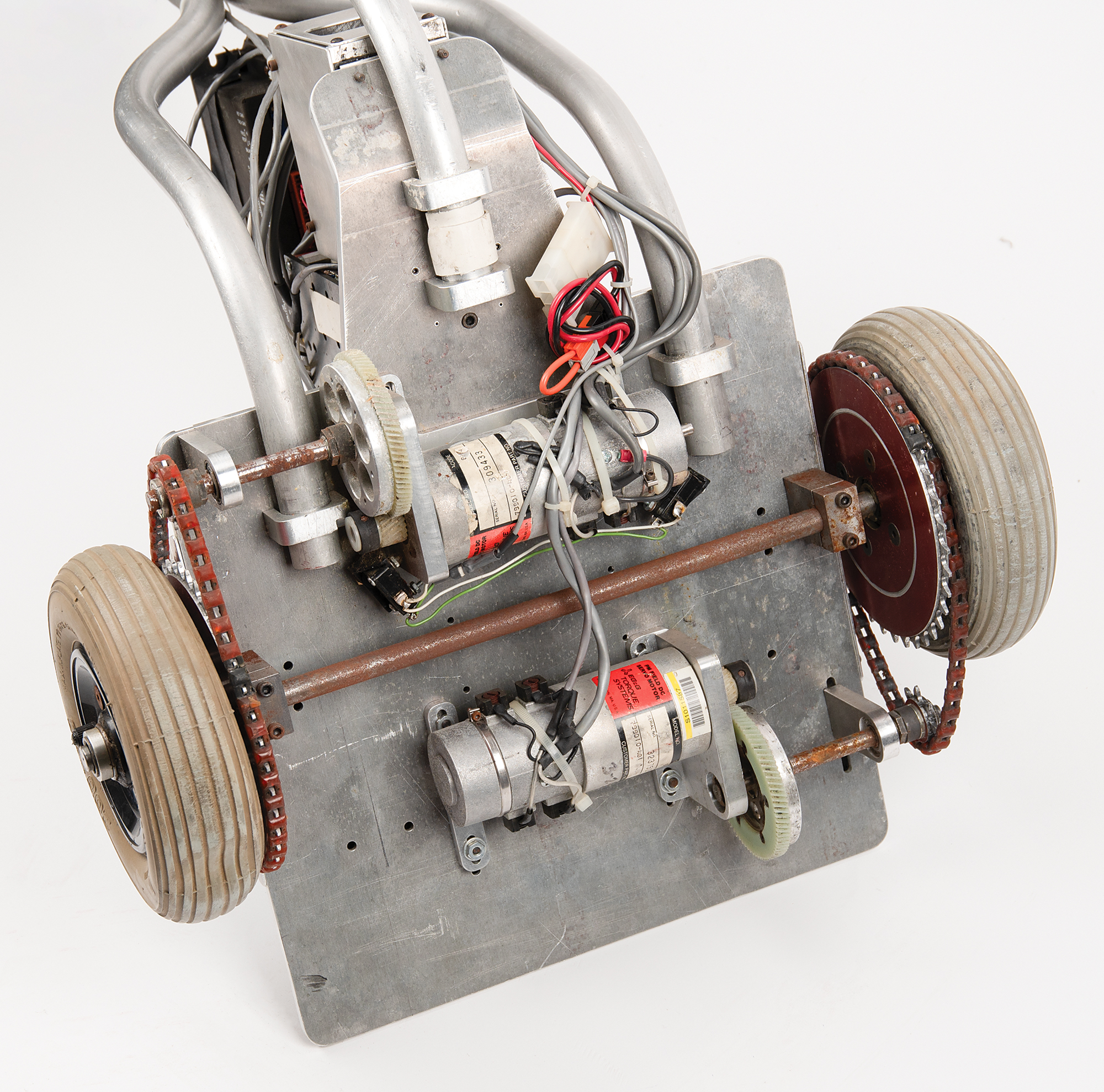
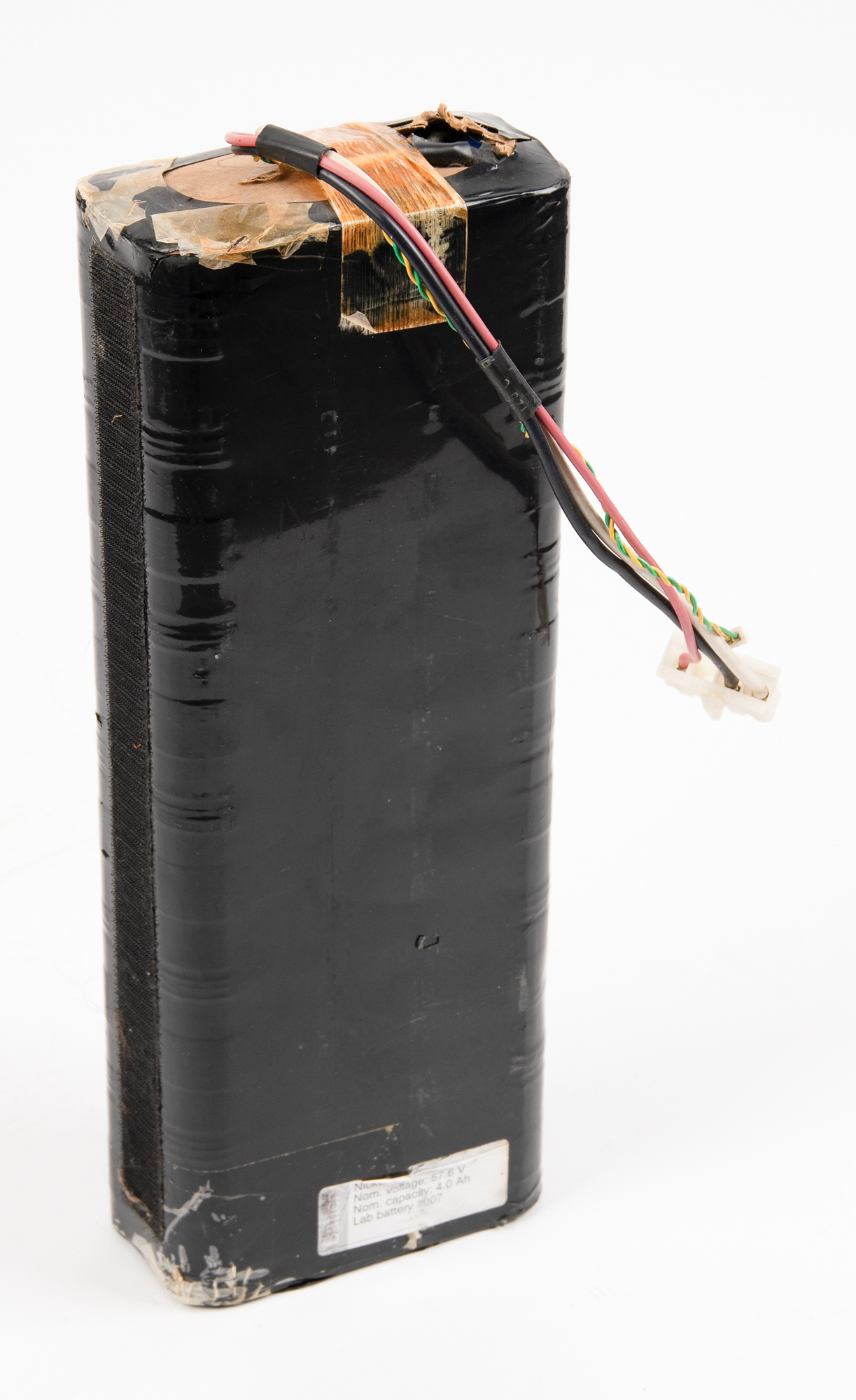
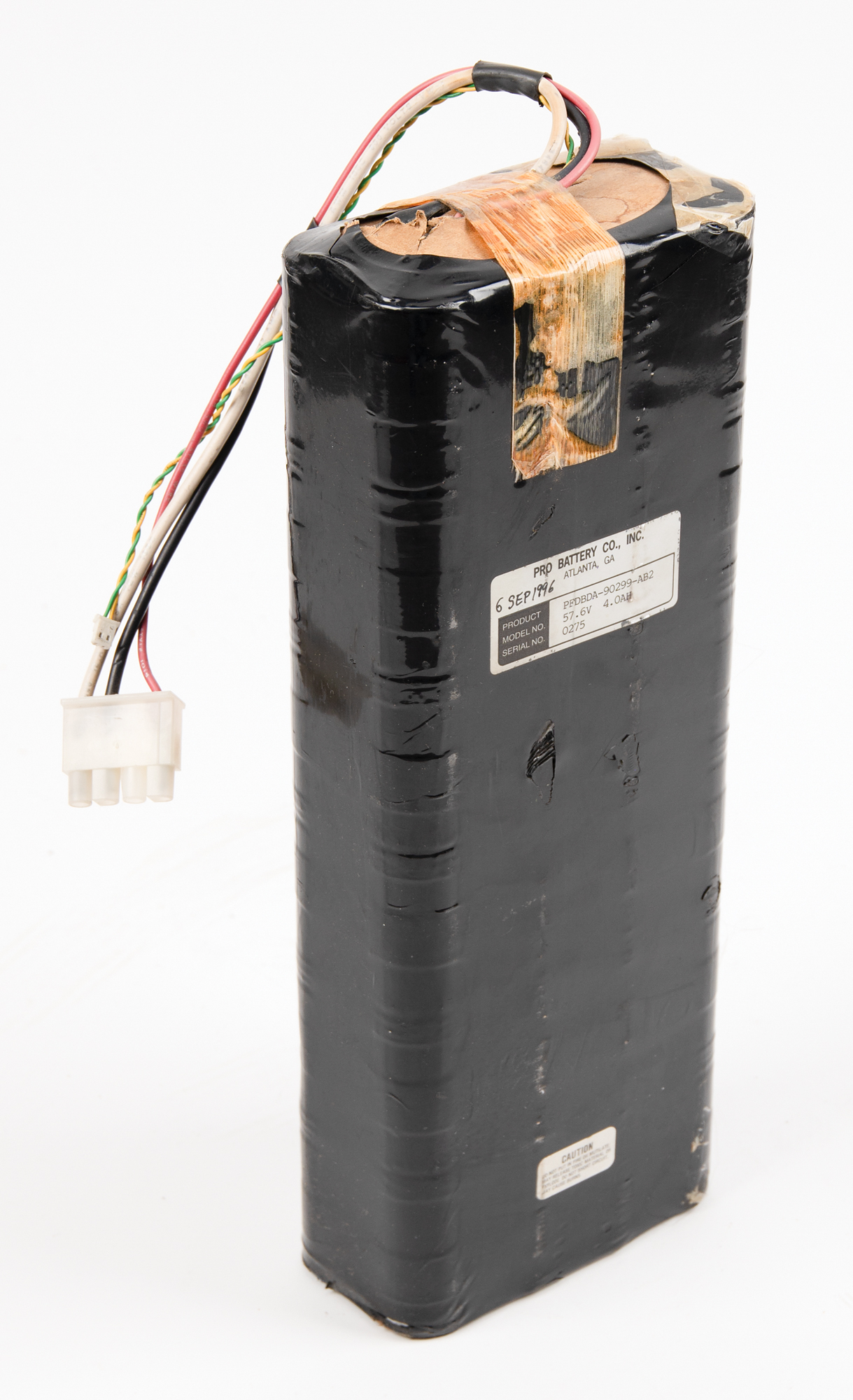
The "Ginger" prototype stands approximately 52˝ tall, with a wheel-to-wheel length of about 19˝ and a front-to-back depth of 21˝. It is equipped with a T-handle grip bar attached to an early prototype version of the 'LeanSteer' tilting switch mechanism, allowing the rider to turn left or right. The platform has two momentary switches underneath the rubber footpads, and a label, "Ginger," toward the front. The central console carries a nickel-cadmium rechargeable battery, controller unit, and chassis housing a Watson Industries displacement/rate gyro system (ADS-C132-1A). The gray 7˝ utility wheels are independently driven by a belt-and-gear system utilizing servo motors mounted on the platform's underside.
The 'Ginger' project—named for dancing actress Ginger Rogers—grew out of Dean Kamen's earlier stair-climbing wheelchair project codenamed 'Fred' (for 'Fred Upstairs,' a pun on Fred Astaire), which was brought to market under the 'iBOT' name. The Segway leveraged the same core technology as the iBOT, repurposed for the consumer-industrial—rather than medical—market.
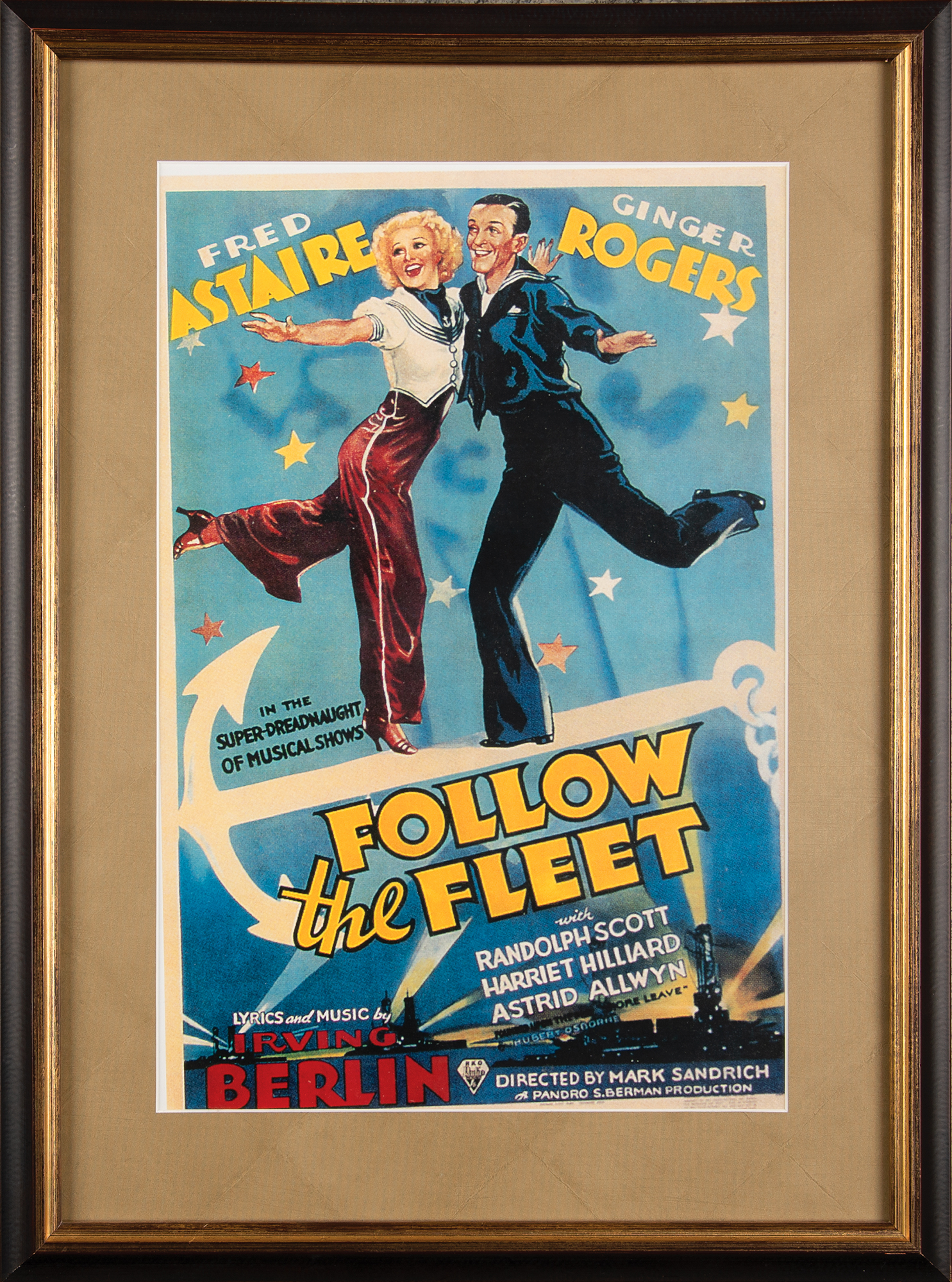
Accompanying the prototype is a framed reprint of the movie poster for the Astaire-Rogers film 'Follow the Fleet,' plus a hardcover copy of the book Code Name Ginger: The Story Behind Segway and Dean Kamen's Quest to Invent a New World by Steve Kemper.
Kemper writes of the first time he laid eyes on Ginger: 'That's the world-shaker? After Dean's buildup it made a drab first impression. Two toy wheels flanked a thin metal platform with a metal T-bar rising from it. Compared to the sleek candy-colored scooters, Ginger looked as plain and stern as a schoolmarm among fashion models. Dean flipped a couple of switches, stepped on to the platform, and leaned forward. Ginger darted off. When he leaned backwards, the machine reversed. He pirouetted Ginger in place like a spinning figure skater; the turning radius was zero. Ginger zipped around the room like a hummingbird, and as quietly. Once animated, this schoolmarm was beautiful…'It's your personal magic carpet,' he said.'
Originates from the collection of James Norrod, who served as President and CEO of Segway Inc. from April 2005 to January 2010, and accompanied by his signed letter of provenance.

