
Sold For $412,481
*Includes Buyers Premium
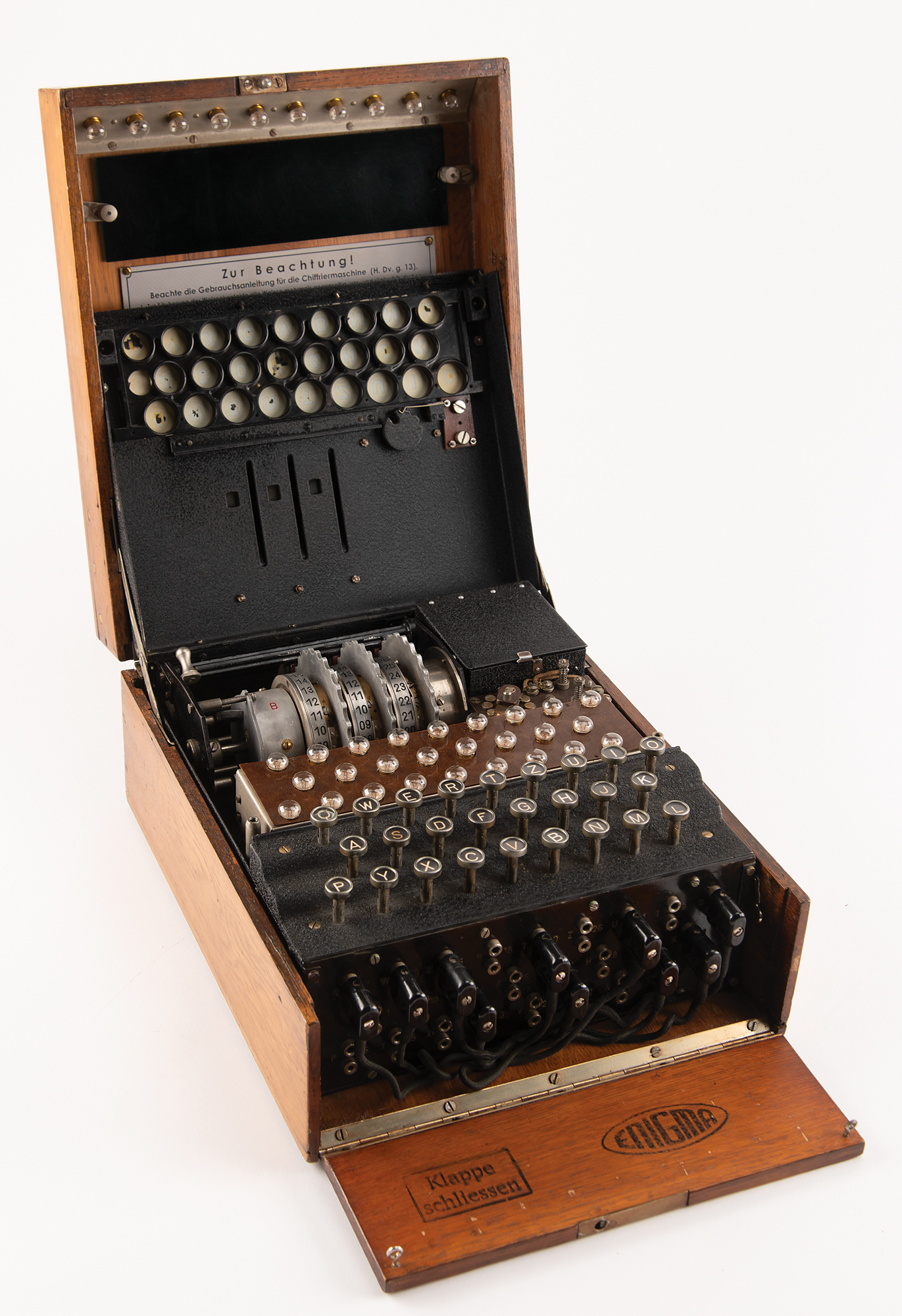
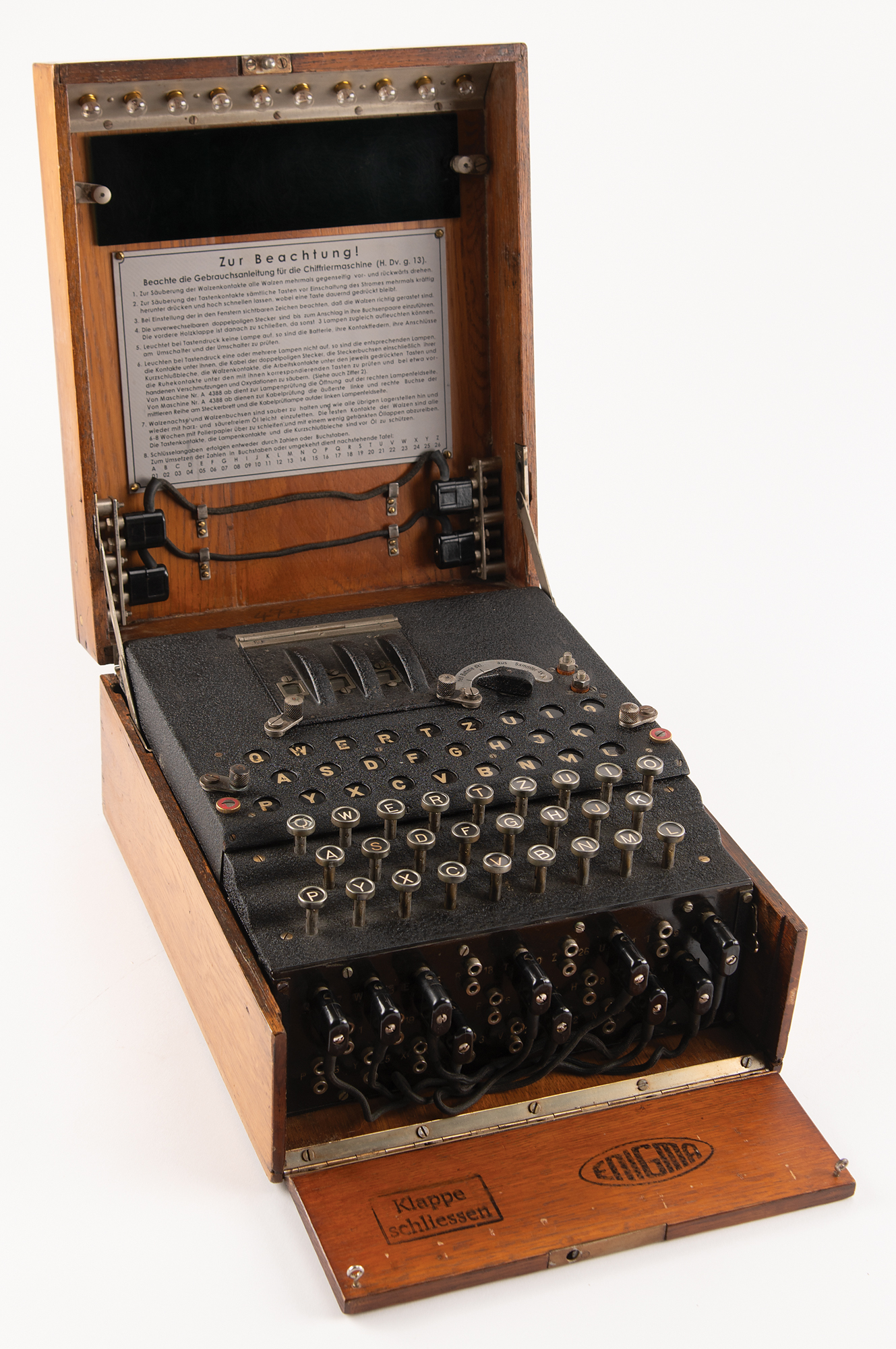
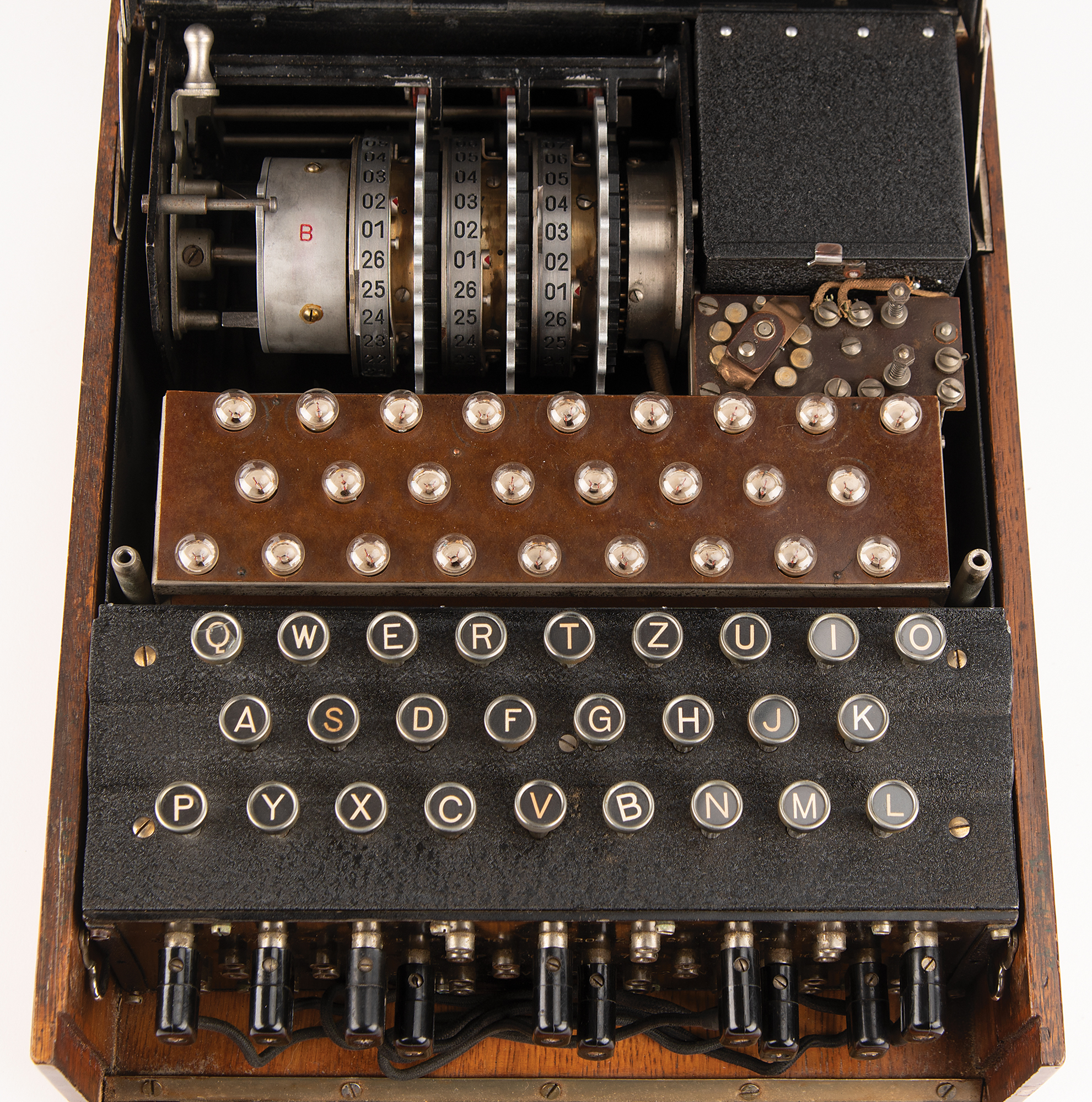
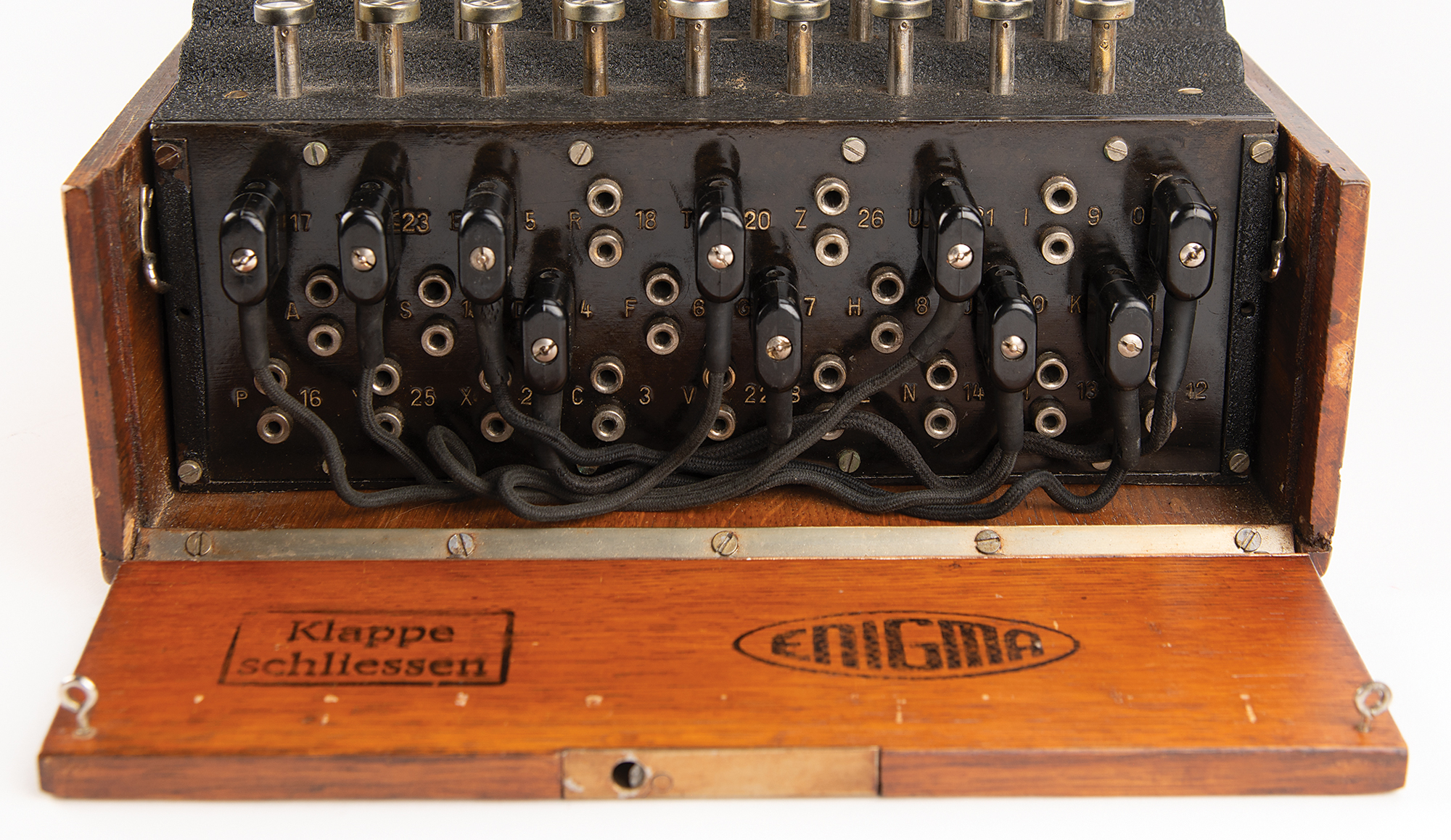
Early three-rotor Enigma I electromechanical cipher machine made for the German military in Berlin by Chiffriermaschinen AG in 1933, during the build up of German forces in violation of the Treaty of Versailles prior to World War II. Based on the chassis of the commercial Enigma D, the Enigma I machine was the standard Enigma machine used by the German military throughout the war. It features an ebonite Steckerbrett [plugboard] on the front, which was exclusive to the German armed forces and exponentially increased the complexity of the code. This version of the Enigma is sometimes referred to as the Heeres [Army] Enigma, Wehrmacht Enigma, or Luftwaffe Enigma due to its military-specific application. This machine would have been used to conceal the pre-war expansion of the German military, in addition to being used in the field during WWII and likely thereafter during the Cold War era.
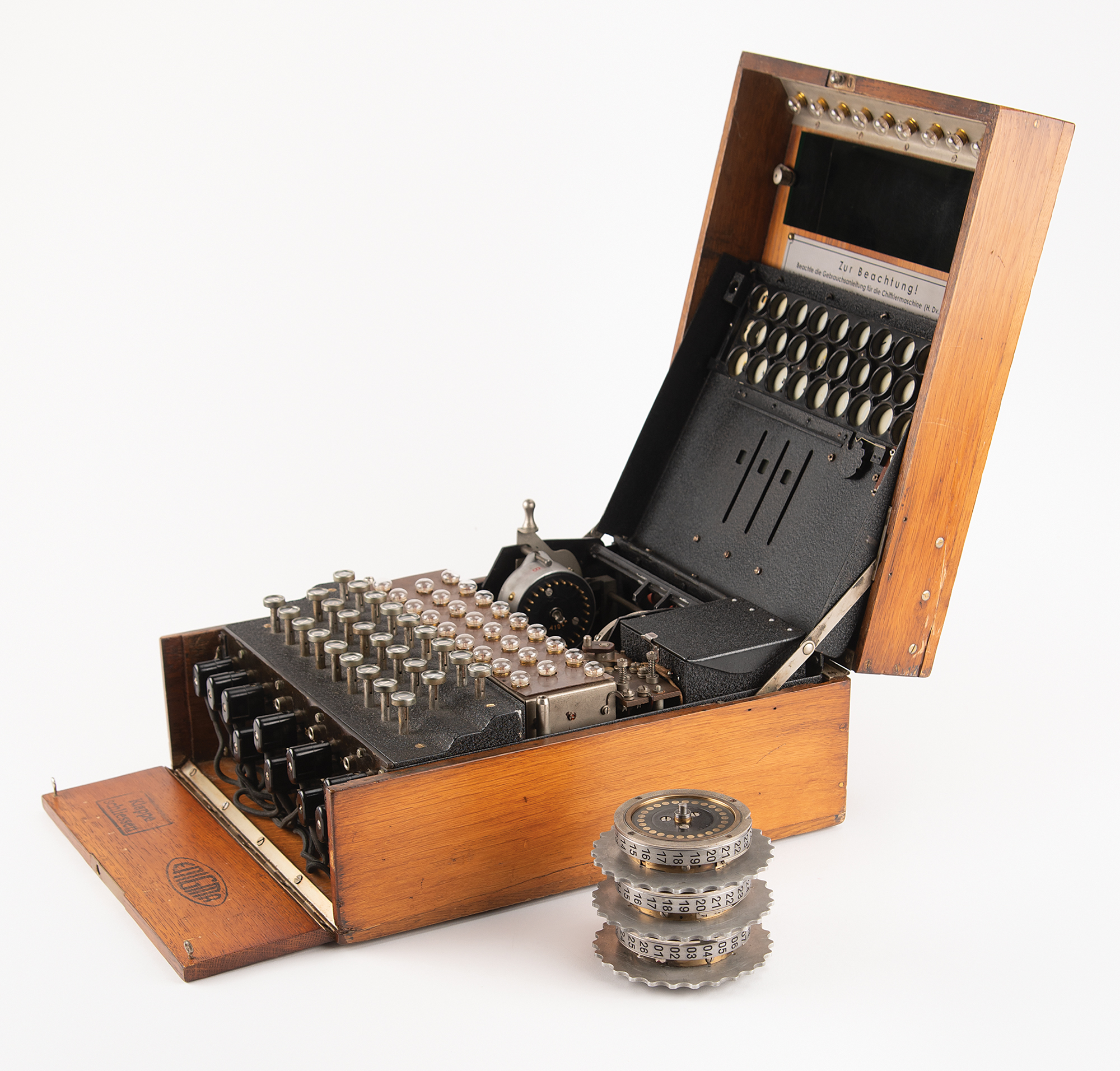
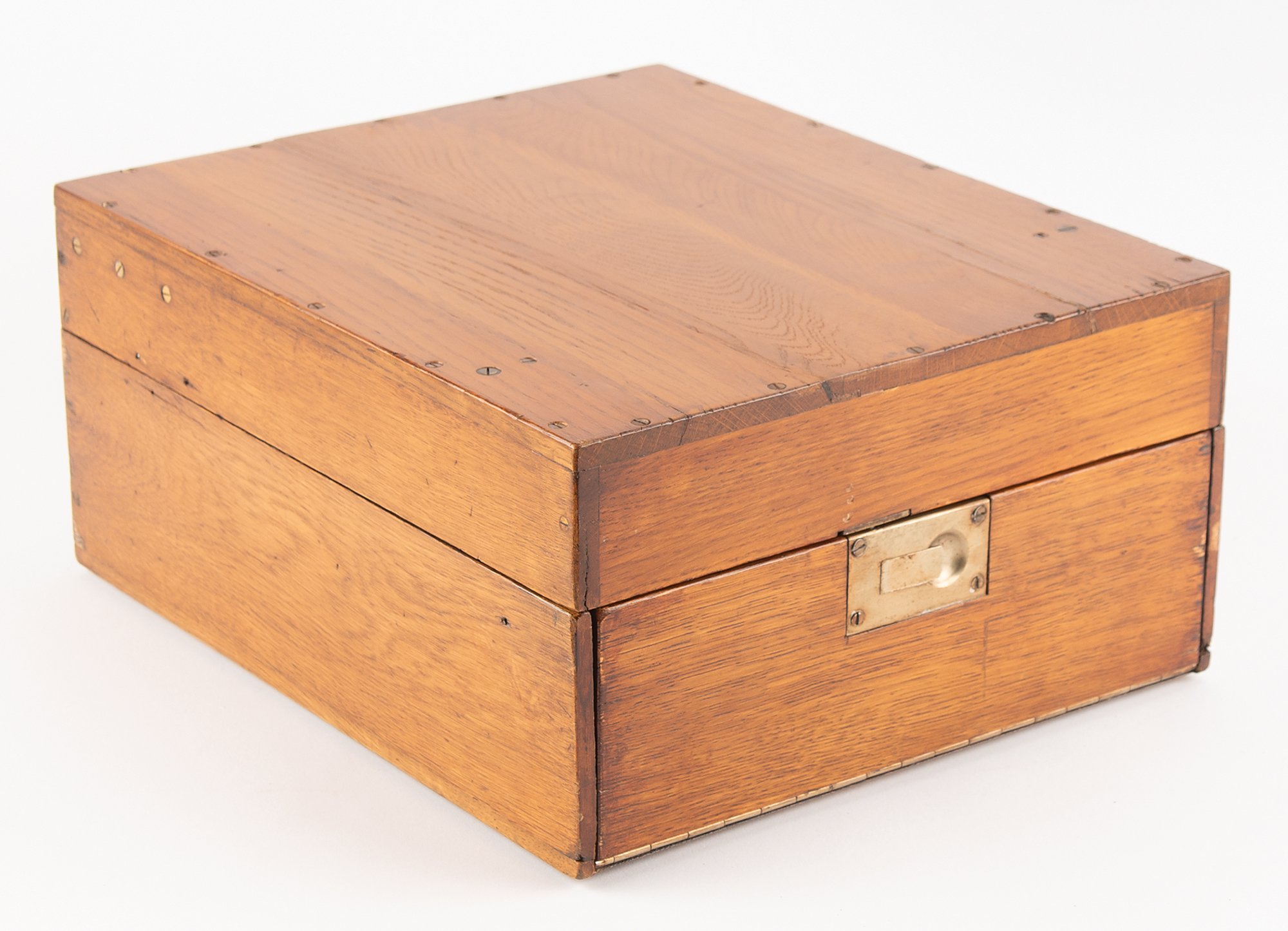
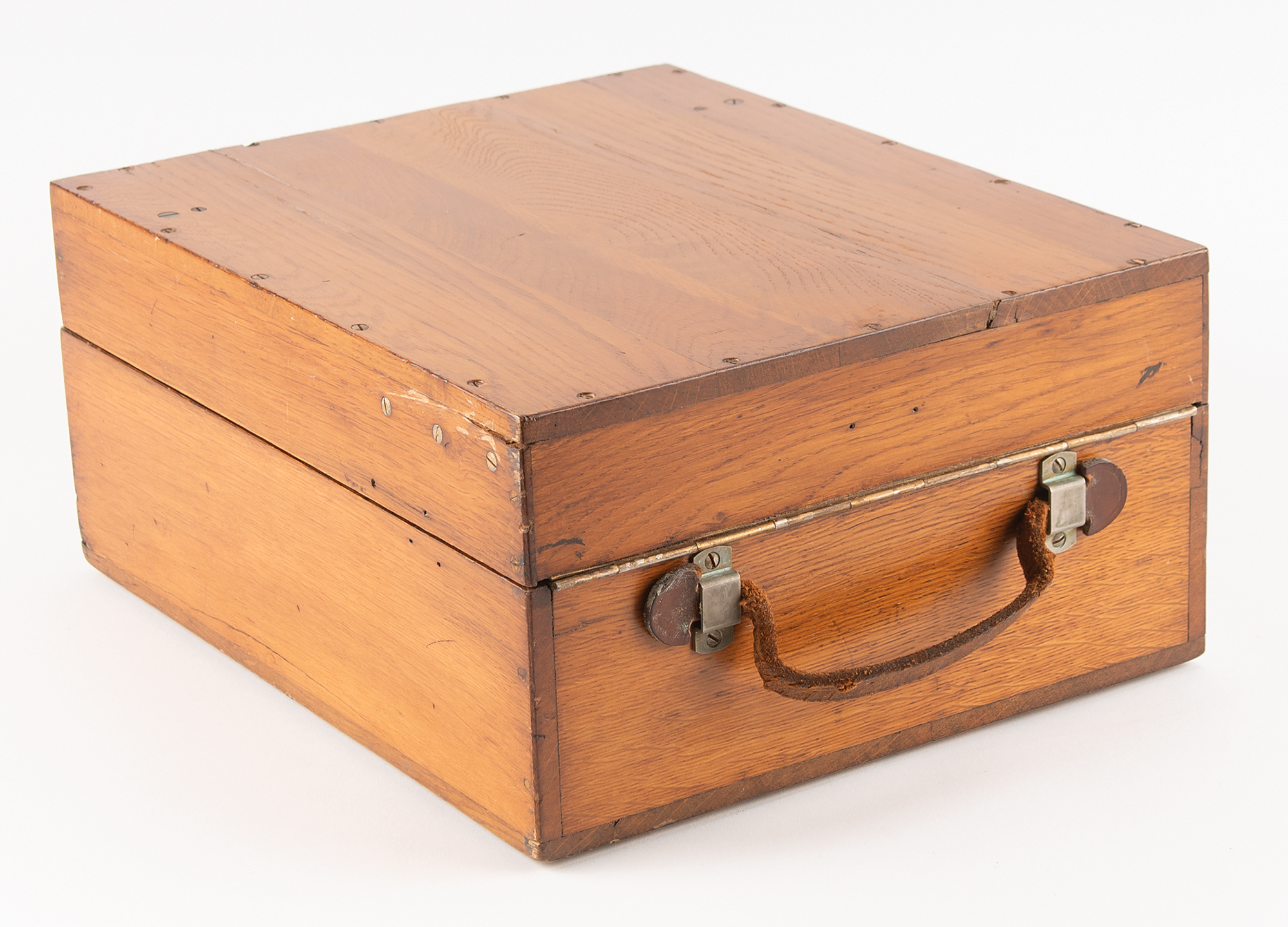
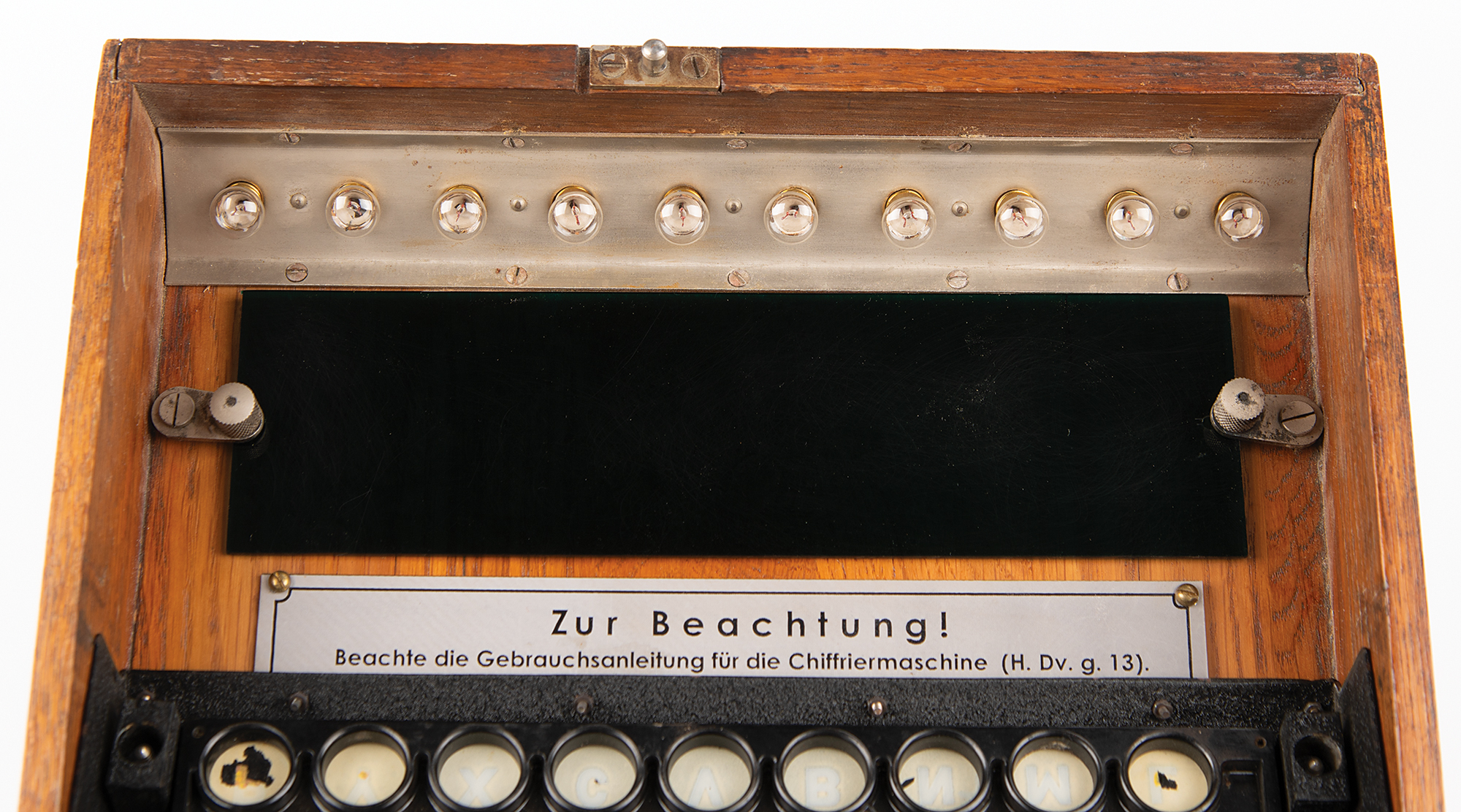
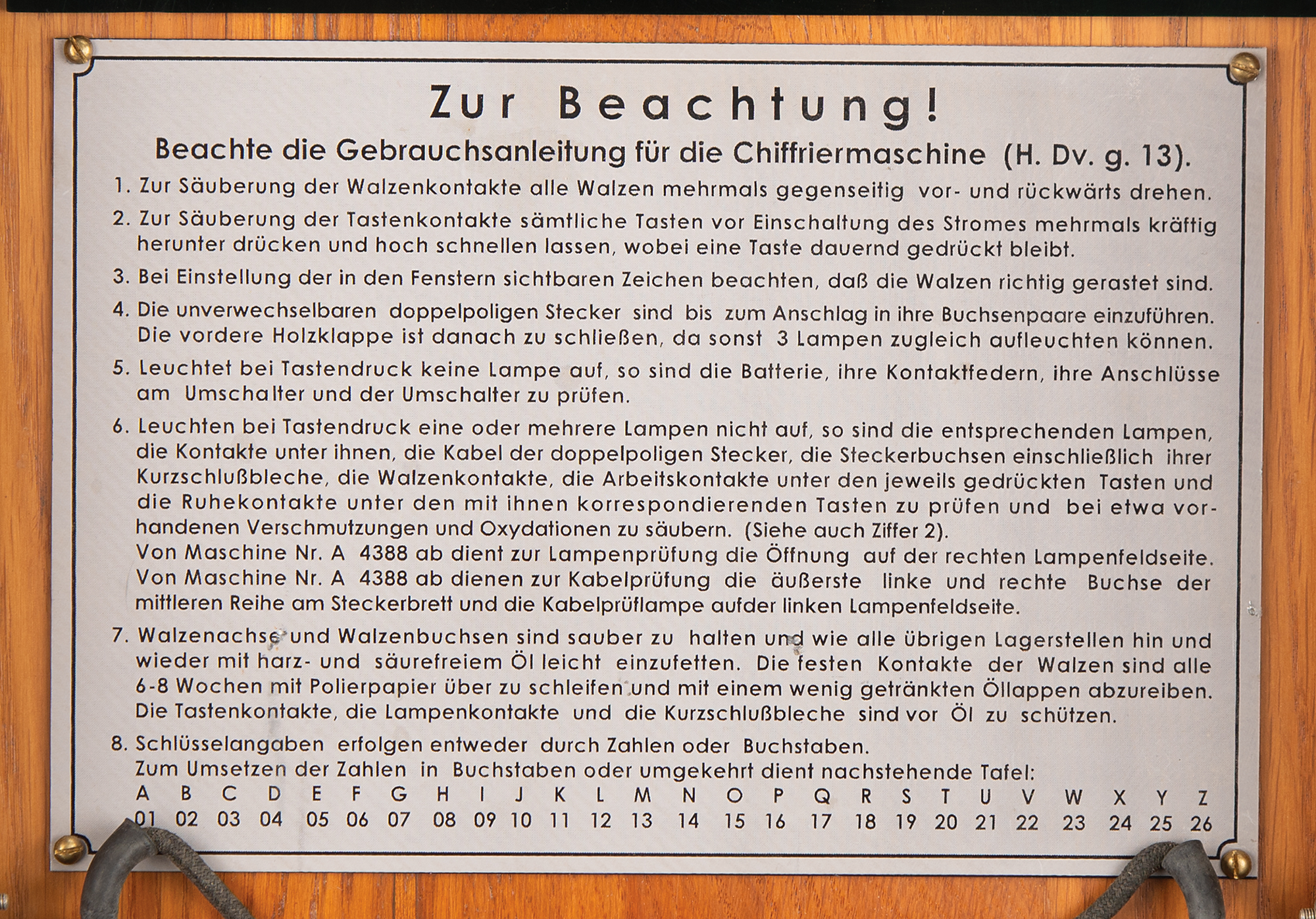
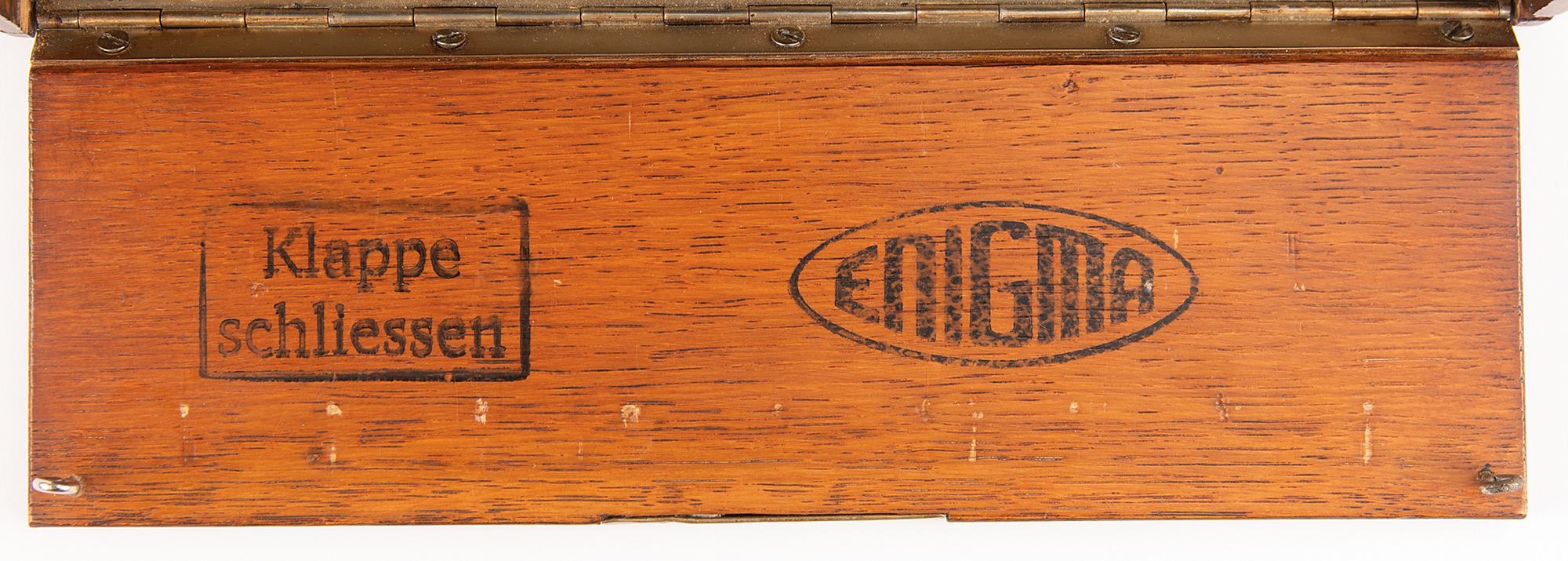
The Enigma machine, serial number "A1024" (stamped into the metal base below the keyboard), is housed in its original stained oak case with hinged lid and hinged front panel, with inlaid brass latching mechanism. Held inside the lid are two spare Stecker cables, 10 spare light bulbs, contrast screen, and original "Zur Beachtung" instructions for cleaning, use, and troubleshooting. The inner front panel is stamped "Enigma" and "Klappe Schliessen," and the case retains its brown leather carrying handle on the back.
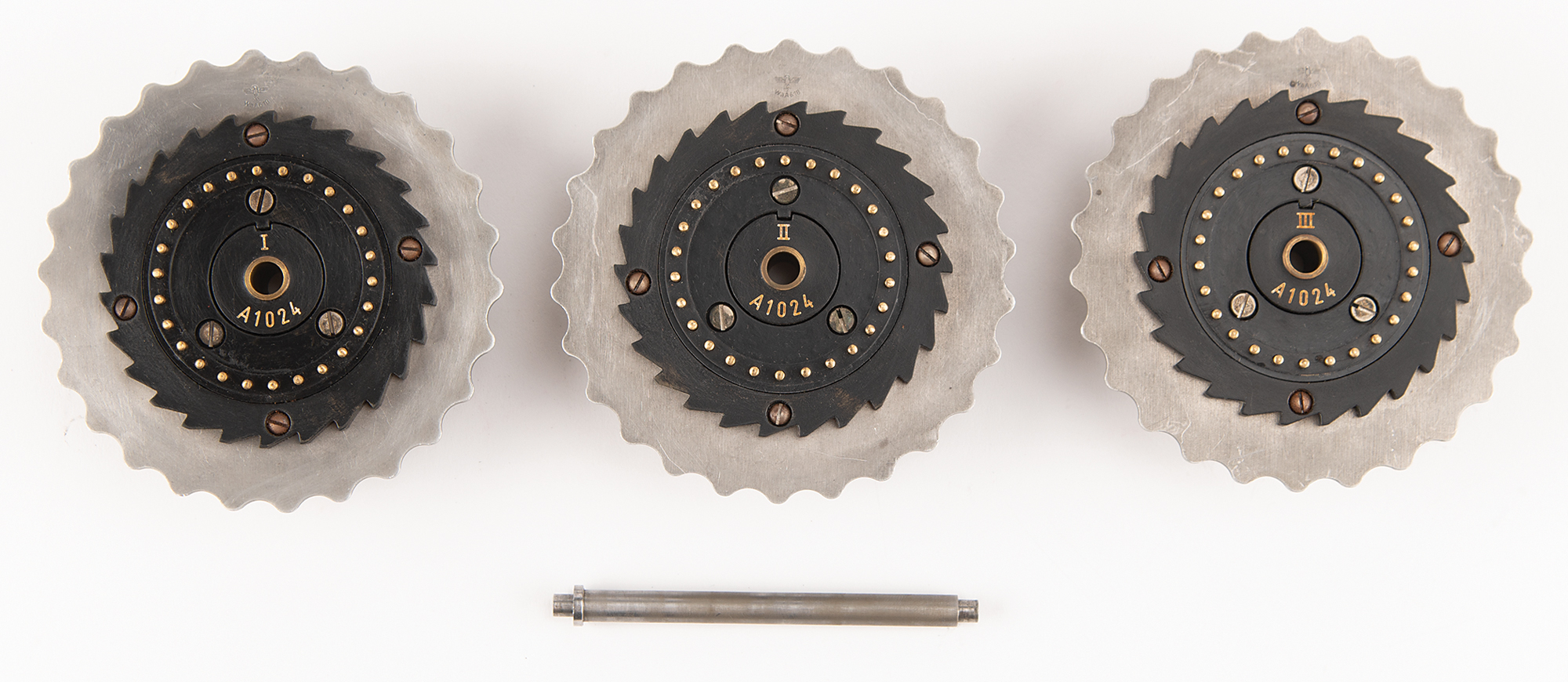
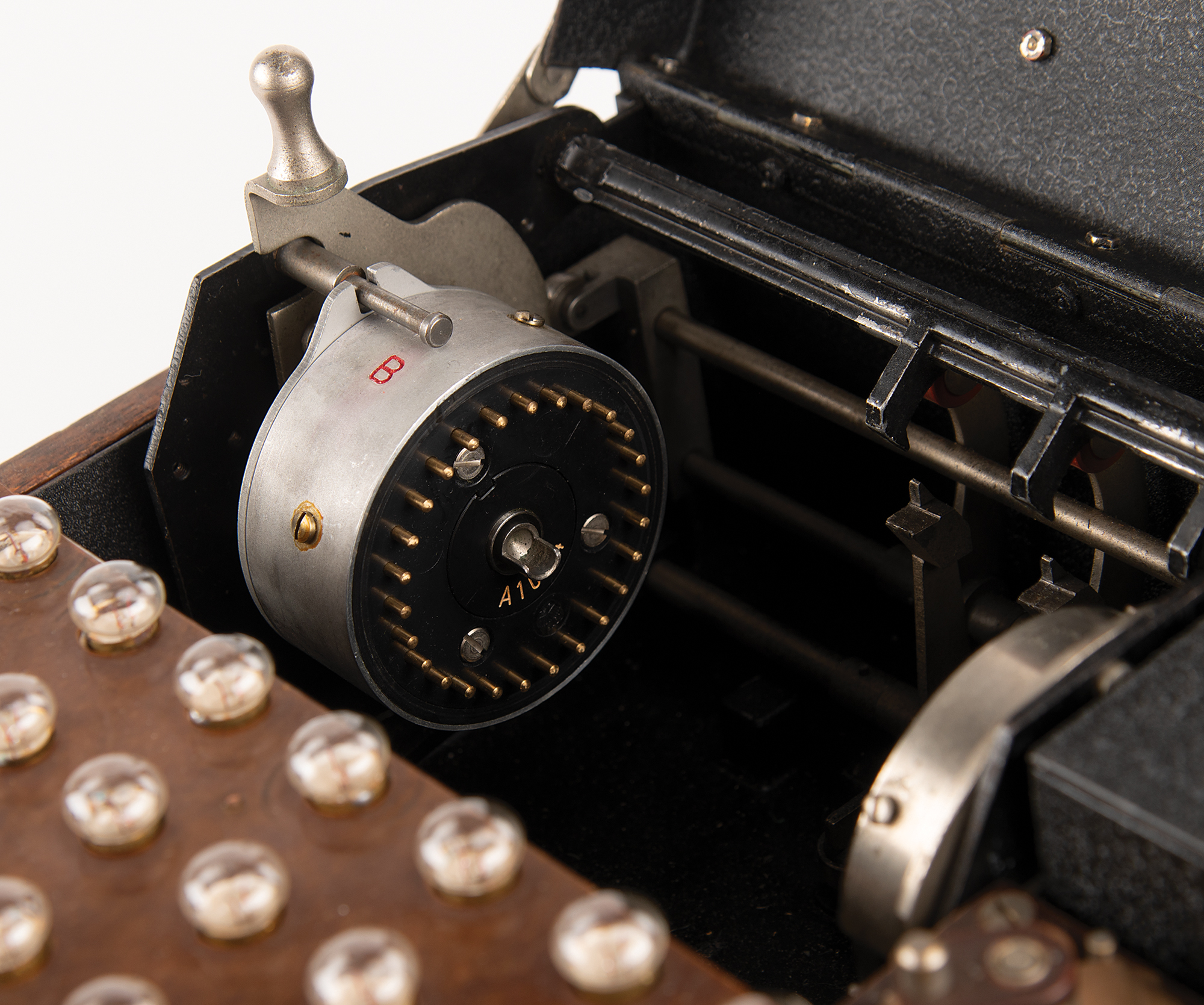
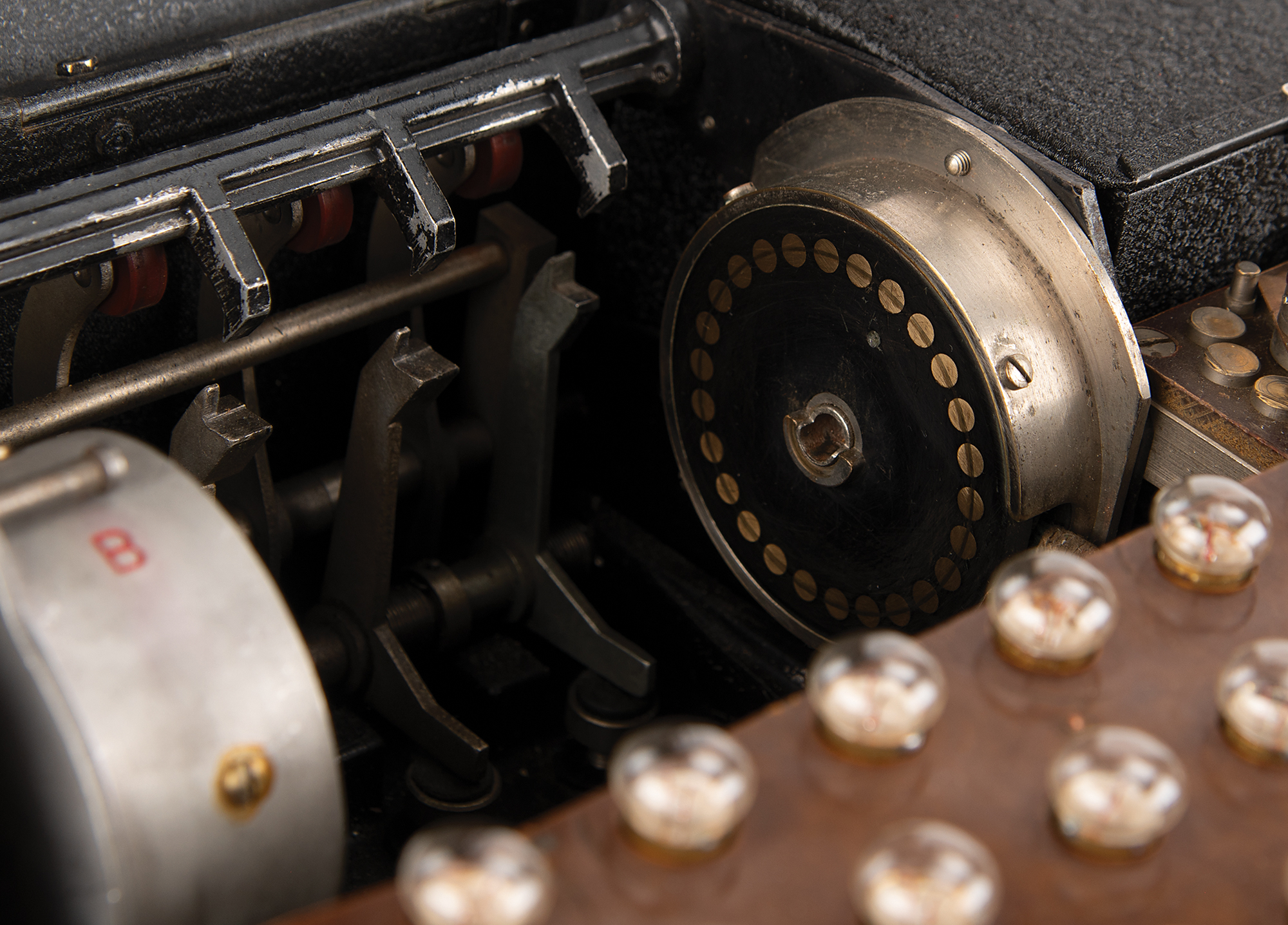
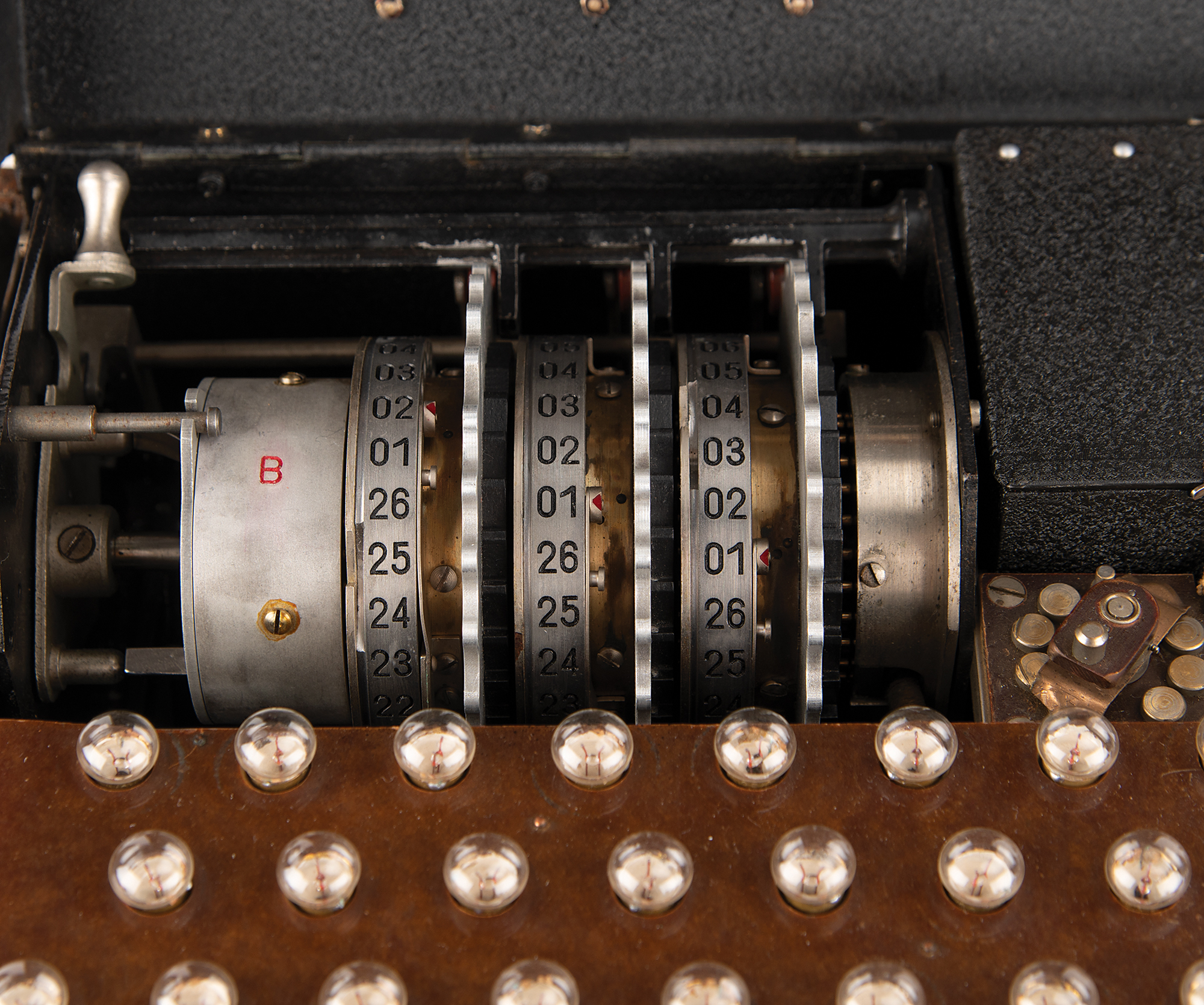
The three included rotors—marked as "I," "II," and "III"—match each other with "A1024" serial numbers. Though the serial numbers of the Enigma machines and their rotors matched when issued, mismatches are typical of field-used machines. Rotors were often swapped out at German communication outposts as they were interchangeable and not dedicated to specific machines. Beginning in 1937, Enigma machines were issued with five rotors in order to increase their cryptographic security. Those machines already in use by the military were issued rotors "IV" and "V."
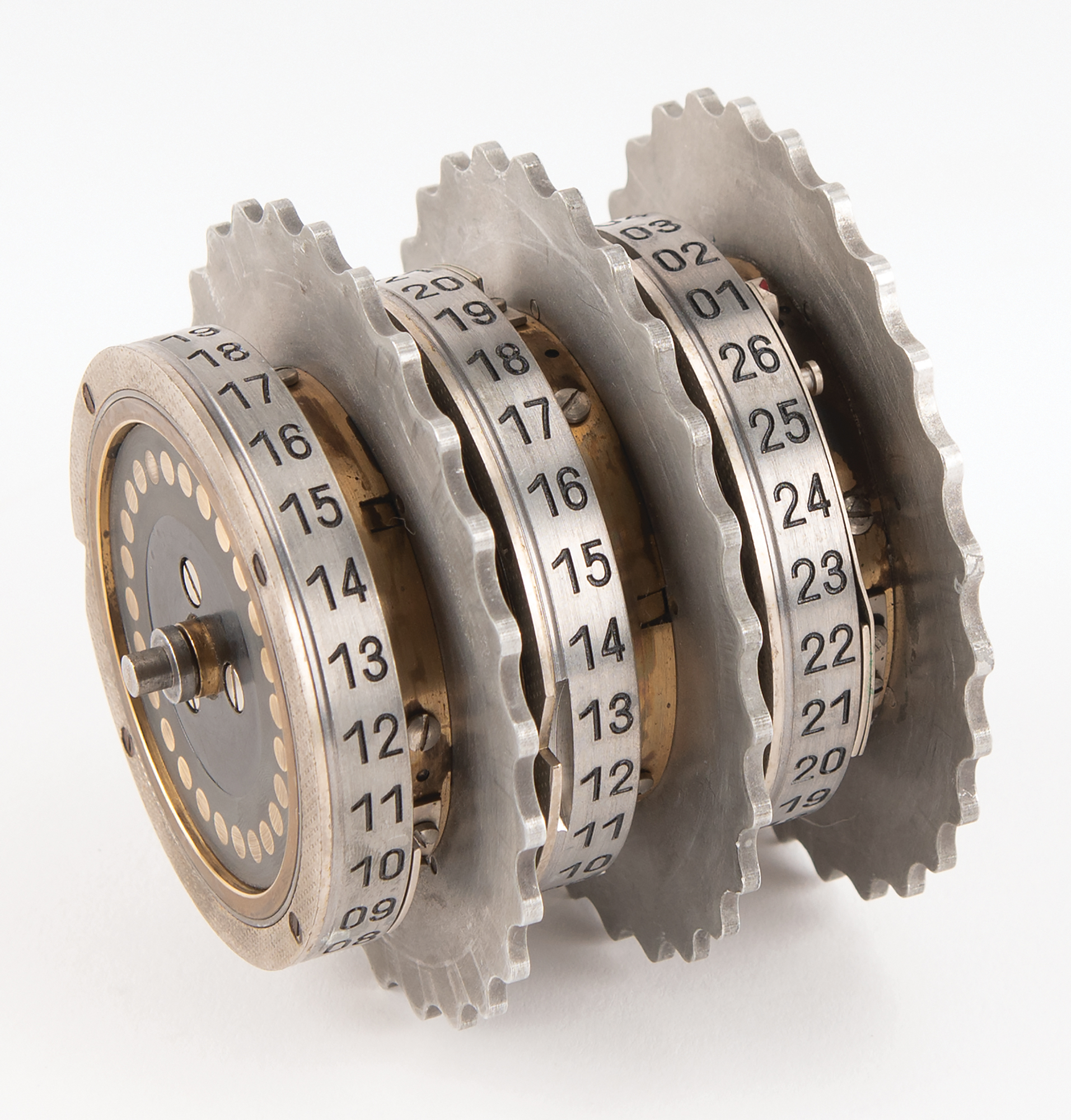
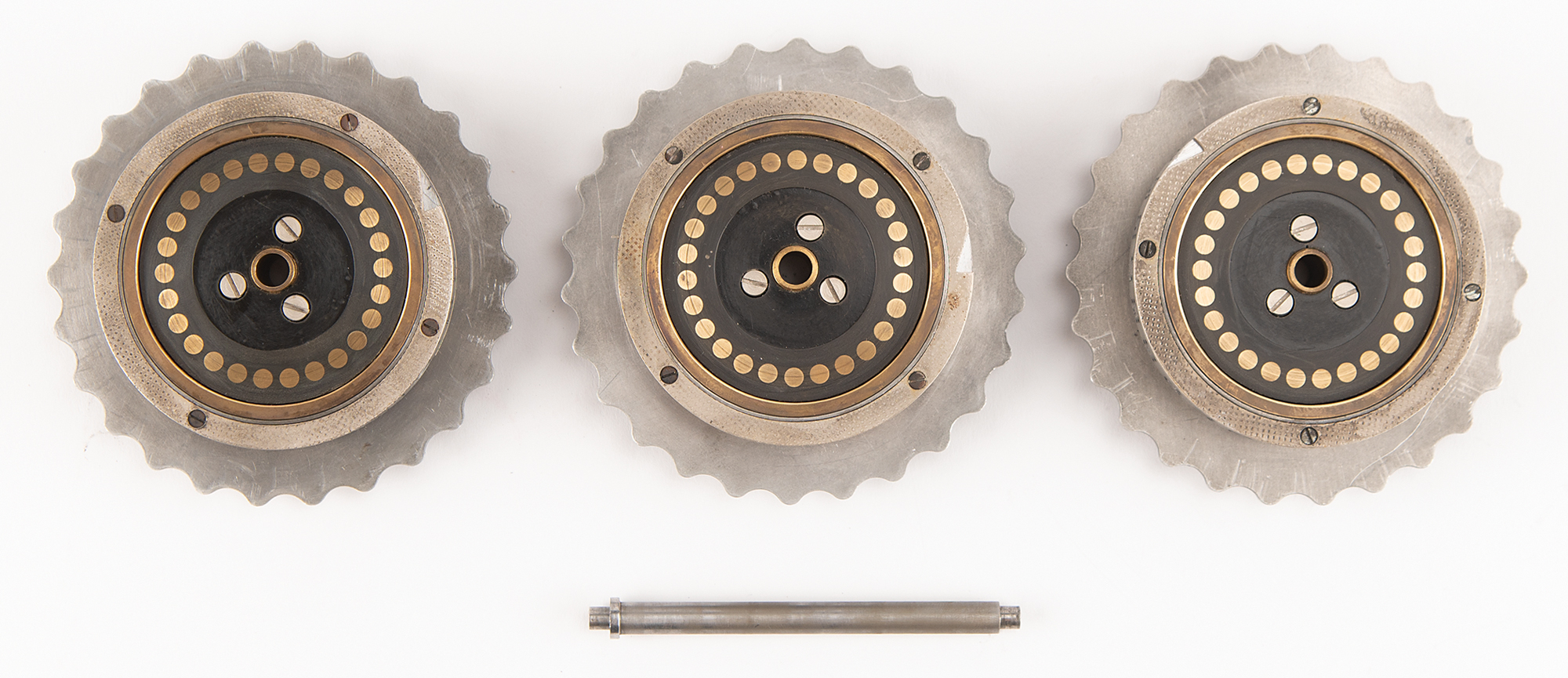
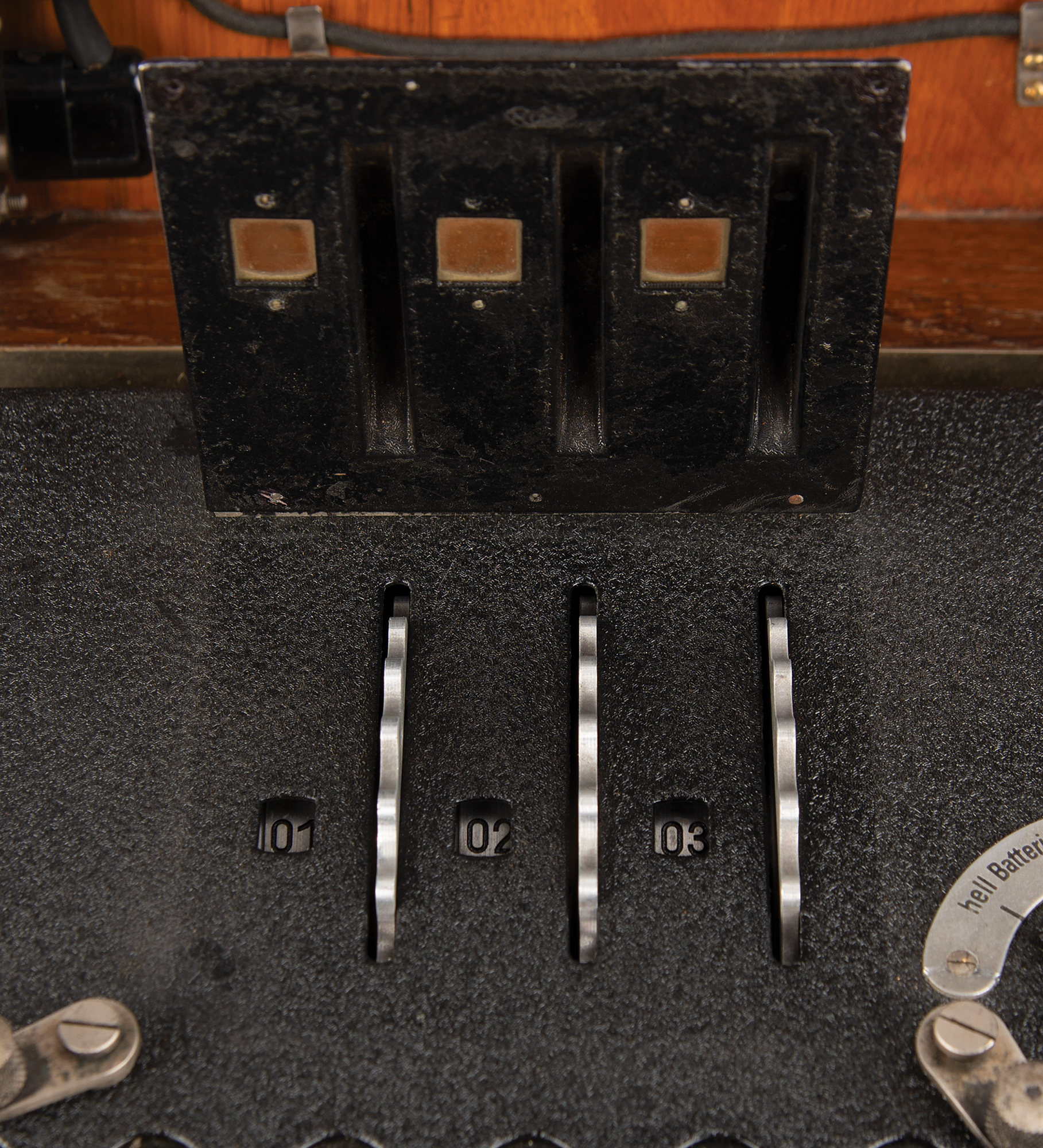
The present rotors demonstrate a progression in design, which changed as resources became scarce over the course of the war. The earliest Enigma rotors featured an all-metal construction, while those produced during World War II had Bakelite thumbwheels and ratchet wheels. With aluminum thumbwheels and Bakelite ratchet wheels, these rotors represent an in-between step in this progression. Each rotor can display one of its 26 numerals through the three windows in the machine's cover. They have spring-loaded brass contacts on the sides corresponding to each of the 26 numbers, and they may be arranged in any order on the internal shaft. The specific settings of the rotors and plugboard were determined on a daily basis via a secret codebook that allowed the German forces to synchronize their Enigma machines.
The Enigma machine has a standard German "QWERTZ" keyboard with 26 white-on-black keys, with matching "QWERTZ" lighted display. When a key is pressed, the corresponding encoded letter—as determined by the specific arrangement of the rotor wheels and plugboard—is illuminated. The rightmost rotor steps once each time a key is pressed. At an adjustable point it triggers the middle rotor to step, and so on. Through this mechanism, an easily crackable simple substitution cipher is avoided—letters are not encoded the same way twice. An encoded message would be written down and transmitted, usually via radio telegraph (a standard World War II-era German Wehrmacht Baumuster T1 telegraph key is included with this machine). In order to decode a message, the Enigma machine on the receiving end would have to be set up with the plugboard and rotor wheels in the same pattern as the sending Enigma: when the encoded message was typed in, the decoded letters would light up, revealing the secret message one character at a time. Since no original batteries have survived, this machine has been modified to use a modern battery pack; it operates at about 75% functionality, as occasional key presses do not result in a lighted encoded letter. Includes a reprint of the Enigma operator manual, original lightbulbs removed from the machine during cleaning and restoration, and some relevant modern literature discussing the Enigma.
First patented in 1918 by Arthur Scherbius, the Enigma machine was developed for use in the transmission of confidential information: in addition to its obvious military and diplomatic applications, the machine found commercial use for the encryption of sensitive financial data. The German military adopted the Enigma as its primary cipher in 1926, after learning that the British had intercepted and interpreted coded German naval messages during World War I. Amidst the subsequent buildup of German forces, Poland felt particularly vulnerable—having been ceded disputed border territories by the Treaty of Versailles—and sought to crack the Enigma. Genius Polish codebreakers—led by Marian Rejewski, Jerzy Rozycki, and Henryk Zygalski—developed techniques for the decryption of Enigma code, and turned over their research to Allied counterparts after Germany's 1939 invasion of Poland. Alan Turing and the other brilliant code breakers at Bletchley Park continued their important work, speeding up the time it took to decode Enigma messages. The code breaking efforts at Bletchley Park led to the development of the world's first computers as technology was pushed to defeat German cipher machines. Historians agree that these decoded messages shortened World War II by about two years, perhaps denying Nazi Germany the time needed to develop nuclear weapons.
This specific Enigma also boasts a noteworthy modern history—it was sold by Bonhams in 2015 to notorious 'pharma bro' and hedge fund founder Martin Shkreli, then subsequently seized by New York state tax officials and sold by Sotheby's in their December 2017 'History of Science and Technology' auction. In a 2016 Vanity Fair profile, Shkreli, who had recently founded Turing Pharmaceuticals, discussed the machine: 'I bought an Enigma machine. I’m conflicted because it’s a Nazi relic. It’s like owning a gas chamber—like, what the fuck?—but it’s a constant reminder that we should use knowledge for good, even if the process is ugly. From the Pythagorean theorem to Fermat’s theorem, the math is ugly, but if you hold your nose during the process of proving it, you get to the right place.'
As a mostly functional example of the German military's famed Enigma machine—with unusual provenance—this is a highly sought-after example of cryptographic and WWII history.

